2027 Best Online MBA in Information Systems Management Programs

Co-Founder and Chief Data Scientist
An online MBA in Information Systems Management is for professionals who want to lead technology-driven business decisions without stepping away from work. The degree sits between business administration and information systems: students learn finance, strategy, operations, leadership, data analytics, cybersecurity, IT project management, and digital transformation.
The decision matters because technology leadership is no longer limited to IT departments. Organizations need managers who can translate business goals into secure, scalable, data-informed systems. The U.S. Bureau of Labor Statistics (2024) estimates job growth for computer and information systems managers to be 15% in the 2024 to 2034 period, which is much faster than the average for many occupations.
This guide explains what an online MBA in Information Systems Management includes, how employers view online credentials, how much programs cost, what admissions requirements to expect, which courses are common, how to compare online and campus formats, and how to evaluate return on investment. It also includes Research.com’s ranked list of online MBA in Information Systems Management programs and practical questions to ask before enrolling.
Best Online MBA in Information Systems Management Programs Table of Contents
- Can you earn an MBA in Information Systems Management fully online?
- Do employers respect an online MBA?
- Are online MBA degrees recognized internationally?
- Online vs. Traditional MBA in Information Systems Management Programs
- How much does an online MBA in Information Systems Management program cost?
- What are the requirements for an online MBA in Information Systems Management program?
- Courses to Expect in MBA in Information Systems Management Programs
- Things to Look for in an Online MBA in Information Systems Management Program
- 2027 Best Online MBA in Information Systems Management Programs
- What is the role of networking in enhancing your online MBA journey?
- How long does it take to complete an online MBA in Information Systems Management?
- How do you evaluate the return on investment of an online MBA in Information Systems Management?
- What are the common challenges in an online MBA in Information Systems Management program?
- Are there scholarship and financial aid options for an online MBA in Information Systems Management?
- What factors drive sustained career success after an online MBA in Information Systems Management?
- How do industry partnerships enhance an online MBA in Information Systems Management?
- Can you complete your online MBA in Information Systems Management in an accelerated format?
- How can you leverage internships and practical experiences in an online MBA in information systems program?
- What are the career opportunities for MBA in Information Systems Management graduates?
- Is an online MBA in Information Systems Management more affordable than traditional programs?
- What are the emerging trends shaping online MBA in Information Systems Management?
Quick Answer: Is an Online MBA in Information Systems Management Worth Considering?
An online MBA in Information Systems Management can be worth considering if you already work in business, technology, operations, analytics, cybersecurity, consulting, or project management and want to move into leadership. The strongest programs are accredited, teach both management and technical decision-making, provide career support, and offer flexibility for working adults.
The degree is not automatically the best option for everyone. If you want a deeply technical role such as software engineering, cloud architecture, or security engineering, a specialized technical master’s degree or certification path may be more direct. If your goal is executive or cross-functional technology leadership, an MBA with an information systems concentration may fit better.
| Choose an online MBA in Information Systems Management if... | Consider another path if... |
| You want to manage technology teams, budgets, vendors, and digital transformation projects. | You want a highly technical individual contributor role that requires intensive coding, systems engineering, or security operations training. |
| You need flexibility because you plan to keep working while studying. | You learn best through daily in-person interaction and campus-based networking. |
| You want a business credential that also signals technology fluency. | You already have an MBA and only need targeted technical upskilling. |
| You are comparing leadership roles such as information systems manager, IT consultant, cybersecurity manager, ERP consultant, or CTO-track positions. | You need the lowest-cost credential possible and can meet your goals through certifications or an MSIS instead. |
Can you get a degree completely online?
Yes. Many universities now offer online MBA in Information Systems Management programs that can be completed without relocating or attending regular campus classes. These programs usually deliver coursework through learning management systems, video lectures, discussion boards, live sessions, group projects, and virtual office hours.
The format has become a mainstream option for working professionals. Among U.S. universities surveyed, 64% reported more online MBA applications than the previous year (GMAC, 2024). That growth reflects a practical reality: many MBA students cannot pause their careers, move to another city, or attend classes on a fixed daytime schedule.
A strong online MBA in Information Systems Management should cover the same broad leadership outcomes expected from a business graduate program. Students learn how to evaluate business processes, manage information systems, use data for decision-making, assess cybersecurity risk, and lead technology-related change. The emphasis is not just on using tools; it is on deciding which systems, investments, processes, and governance models support business goals.
Online learning can be especially useful for professionals who already work in technology-enabled environments. Students often apply class assignments directly to their current organizations, which can make the degree more immediately practical than a purely theoretical program.
The labor market context also matters. Computer and information systems managers are in high demand, with a 15% estimated job growth in the 2024-2034 period (U.S Bureau of Labor Statistics, 2024). An online MBA does not guarantee promotion or a specific salary, but it can help professionals build the leadership and business foundation often expected for management roles.
If you do not have an undergraduate business degree, you may still be eligible for many MBA programs. Research.com explains this pathway in more detail in its guide to whether you can get an MBA without an undergraduate degree in business.
Will employers take my online degree seriously?
Employers are most likely to take an online MBA seriously when it comes from an accredited, recognizable institution with clear academic standards. In many hiring conversations, the school’s reputation, accreditation, curriculum, your work history, and your demonstrated skills matter more than whether the courses were delivered online or on campus.
Accreditation is the first credibility checkpoint. Business schools may hold accreditation from organizations such as AACSB or ACBSP, which signals that the program has gone through an external quality review. Applicants should verify accreditation directly through the school and accreditor before enrolling.
Employer views of online education are not uniform. In one survey, 55% of companies viewed online credentials as equivalent to traditional credentials. At the same time, 39% considered online credentials lower in quality, while 16% viewed them as higher in quality. This means school selection still matters. A weak online program can hurt your return on investment, while a reputable program can help you make a stronger case for advancement.
To improve employer confidence, choose a program that clearly lists accreditation, faculty qualifications, required credits, learning outcomes, career services, and alumni outcomes. It is also smart to use the MBA to build a portfolio of work: analytics projects, cybersecurity risk assessments, IT strategy plans, ERP case studies, and capstone deliverables can make your abilities easier to demonstrate.
If you are still weighing the broader value of the credential, Research.com’s guide on whether getting an online MBA is worth it can help you compare costs, flexibility, and career outcomes.
Ultimately, the degree is only one part of your profile. Hiring and promotion decisions also depend on your experience, communication ability, leadership record, technical judgment, and performance in a competitive job market.
Are online degrees recognized all over the world?
Online MBA recognition varies by country, employer, industry, and institution. A degree from an accredited and reputable university is generally easier to explain internationally than a credential from an unaccredited or unfamiliar provider. However, students who plan to work abroad should not assume that every employer, government agency, or professional body will evaluate online degrees the same way.
There is strong demand for MBA talent in some markets and institutions. For example, 93.1% of Wharton MBA graduates received job offers three months after graduation in 2024 (Wharton, 2024). That figure reflects one institution’s outcomes and should not be treated as a universal result for all MBA graduates. Still, it shows why applicants often care about institutional reputation and career services when comparing programs.
Before enrolling, international students and globally mobile professionals should ask three questions: Is the university regionally or nationally recognized in its home country? Does the business school hold relevant programmatic accreditation? Will the credential be accepted by employers, licensing bodies, immigration authorities, or graduate schools in the country where you plan to use it?
If your career target is multinational consulting, finance, technology leadership, government contracting, or international education, contact admissions offices and employers directly. Ask whether the transcript or diploma identifies the program as online and whether that distinction has affected graduates in your target region.
Online vs. Traditional MBA in Information Systems Management Programs
Online and campus-based MBA in Information Systems Management programs can teach similar academic content, but the learning experience is different. The right choice depends on your schedule, career stage, learning style, networking goals, and budget. Even programs that appear flexible, including some of the easiest MBA program options, still require substantial reading, writing, teamwork, and case analysis.
| Factor | Online MBA in Information Systems Management | Traditional campus MBA |
| Schedule | Often designed for working adults, with asynchronous courses, evening sessions, or part-time pacing. | Usually follows a fixed academic calendar with in-person class meetings. |
| Location | Can be completed from home or another location with reliable internet access. | Requires regular campus attendance and may require relocation. |
| Networking | Depends heavily on virtual events, group projects, alumni platforms, and student initiative. | Offers more spontaneous in-person interaction with classmates, faculty, and recruiters. |
| Learning style | Best for students who are self-directed and comfortable communicating online. | Best for students who prefer live classroom discussion and face-to-face structure. |
| Career fit | Strong option for professionals who want advancement without leaving work. | May be better for students seeking immersive recruiting, campus clubs, and full-time career switching. |
| Cost considerations | May reduce relocation, commuting, and housing expenses, though tuition varies widely. | May include higher indirect costs, especially for students who stop working or move. |
Flexibility and convenience
The main advantage of the online format is control over time and location. Many students complete coursework before work, after work, on weekends, or during travel. This flexibility is especially valuable for managers, consultants, military students, parents, and professionals with unpredictable schedules.
Learning environment
Online programs require discipline. Students must keep up with deadlines, contribute to discussions, coordinate group projects across time zones, and ask for help before they fall behind. Campus programs provide more built-in structure because students meet faculty and peers in person on a recurring schedule.
Networking and classroom dynamics
Campus programs usually make informal networking easier. Students can meet before and after class, attend speaker events, and participate in clubs. Online students can still build strong networks, but they need to be intentional: attend virtual events, participate in team projects, request informational interviews, and stay active in alumni communities.
Program duration
Online programs may offer accelerated, part-time, or self-paced options. Campus programs often follow a more fixed sequence. Before choosing a format, compare not only the advertised completion time but also course availability, maximum time allowed, summer options, and whether prerequisites can delay progress.
Is an online degree cheaper?
An online MBA can be cheaper, but it is not automatically the lowest-cost route. Tuition policies vary by school. Some online programs charge the same rate as campus programs, while others offer lower tuition or flat-rate pricing. Students also need to compare fees, technology charges, residency requirements, books, software, and graduation costs.
Cost savings often come from indirect expenses. Online students may avoid relocation, commuting, parking, and campus housing. They may also be able to keep earning income while enrolled. According to one education cost analysis, 73% of colleges that offered lower tuition rates for online education cited market competition as a factor. The same source noted that about 63% of institutions charge less for online courses because students are not using campus activities, facilities, maintenance, and security in the same way.
The practical takeaway: compare total cost, not tuition alone. A lower per-credit price can be offset by more required credits, extra fees, or limited transfer credit.
Is an online degree as good as a regular degree?
An online MBA can be academically comparable to a campus MBA when it is offered by an accredited institution, taught by qualified faculty, and supported by rigorous assessments. The delivery format alone does not determine quality. A strong online program should still require case analysis, team projects, applied technology work, presentations, exams, and strategic decision-making.
The better question is whether the format fits your goals. If you need flexibility and already have professional experience, online study can be a strong match. If you want intensive in-person recruiting, campus clubs, and daily peer interaction, a traditional format may be more useful.
How much does an online MBA in Information Systems Management program cost?
The cost of an online MBA in Information Systems Management program varies widely, typically ranging from $20,000 to over $65,000 for the entire program. Tuition depends on the institution, residency rules, credit requirements, fees, technology resources, program length, and whether the school is public or private. Our research team estimates that the average cost of MBA management information systems programs is around $33,500.
Do not compare programs only by advertised tuition. A program with lower tuition but more required credits may cost more than a higher per-credit program with fewer credits. Students should also ask whether the program requires campus residencies, proctored exam fees, course materials, analytics software, cybersecurity labs, or international immersion fees.
| Cost item | Why it matters | Question to ask |
| Tuition per credit or total program tuition | This is the largest direct cost for most students. | Is tuition locked for the cohort, or can it increase while I am enrolled? |
| Required credits | More credits can raise total cost even when the per-credit rate looks affordable. | How many credits are required after transfer or foundation course review? |
| Fees | Technology, graduation, library, student services, and course fees can add up. | Which fees are mandatory for online students? |
| Residency or travel | Some “online” programs include required in-person weekends or immersions. | Are any campus visits required? |
| Lost income | Full-time study can reduce income; part-time study may extend the timeline. | Can I realistically continue working while enrolled? |
| Employer tuition support | Employer reimbursement can materially reduce out-of-pocket cost. | Does my employer cover accredited online MBA coursework? |
If the total price is beyond your budget, Research.com’s guide on how to fund MBA programs outlines financing options and cost-reduction strategies.
Is an online MBA in Information Systems degree worth it?
An MBA in management information systems can be worth it when the credential supports a specific career move: promotion into management, transition from technical work into strategy, entry into IT consulting, leadership in cybersecurity governance, or advancement toward executive technology roles. The value is weaker if you enroll without a clear goal, choose an unaccredited program, or pay more than your likely career benefit can justify.
The career market is favorable for some related roles. As of May 2024, the median annual salary of computer and information systems managers is $171,200 (U.S. Bureau of Labor Statistics, 2025). Graduates may pursue a range of information systems careers in the United States, although salary outcomes depend on experience, location, employer, industry, and performance.
Students who ask, “Is management information systems a good major in this economy?" should think beyond a simple yes or no. Management information systems is valuable when paired with business judgment, communication, project execution, and the ability to manage risk. Employers rarely hire leaders for technical knowledge alone.
An MBA also broadens the answer to “what can you do with a business administration degree?" The degree can support roles in operations, consulting, analytics, IT governance, product management, risk management, and executive leadership. In general, having a graduate degree can increase your salary. Those with advanced degrees tend to earn more than $1,840 per week. People with only a bachelor's degree earn around $1,543 per week.
The best ROI comes from matching program cost to career intent. A lower-cost accredited program may be a better decision than a prestigious but expensive option if your employer values the credential similarly. Conversely, a more expensive program may make sense if it provides stronger recruiting access, alumni connections, or industry partnerships in your target field.
What are the requirements for an online MBA in Information Systems Management program?
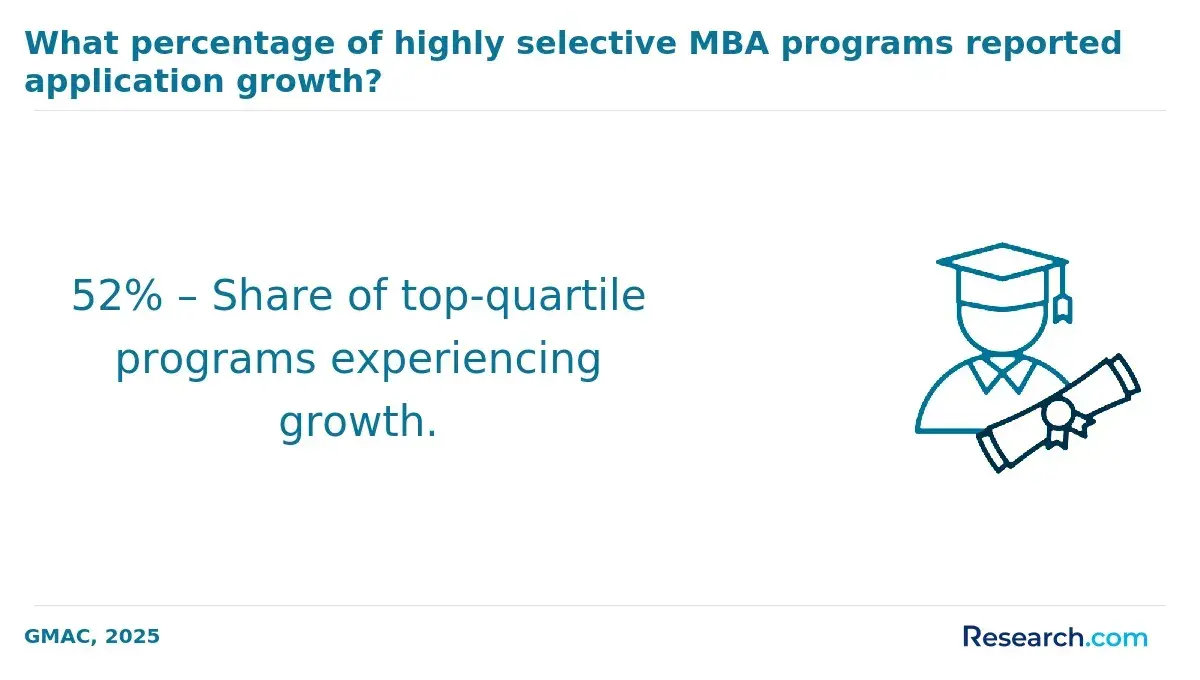
Admissions requirements vary, but most online MBA in Information Systems Management programs evaluate academic readiness, professional experience, writing ability, leadership potential, and fit with the program. Graduate school acceptance rates can be competitive. The most prestigious graduate schools can have acceptance rates as low as 4% (Stapleton, 2024). Others can range from 11% to 27%.
Applicants should prepare early because a rushed application can weaken an otherwise strong profile. Review deadlines, test policies, transcript rules, recommendation requirements, and prerequisite expectations before starting the application.
- Bachelor’s degree. Most programs require a bachelor’s degree from an accredited institution. The major does not always need to be business, technology, or information systems, but applicants from unrelated fields may need foundation courses.
- Professional experience. Many programs prefer applicants with relevant work history, especially for MBA tracks tied to technology leadership. The amount of work experience required can vary but is often around two to five years.
- GMAT or GRE scores. Some schools still require standardized tests, while others are test-optional or offer waivers for applicants with strong professional or academic credentials.
- Letters of recommendation. Recommendations usually come from supervisors, managers, professors, or professional mentors who can describe your leadership, judgment, work ethic, and readiness for graduate study.
- Statement of purpose or essays. Schools use essays to understand why you want the MBA, why information systems management fits your goals, and how you will contribute to the program.
- Resume. Your resume should show career progression, technical exposure, leadership responsibilities, measurable achievements, and relevant certifications or projects.
- Official transcripts. Programs typically require transcripts from all previously attended colleges and universities.
Applicants from nontechnical backgrounds should not assume they are disqualified. However, they should show evidence of quantitative ability, digital literacy, project experience, or readiness to learn technical material. Applicants from technical backgrounds should show that they can communicate with business stakeholders and lead teams, not just solve technical problems.
General Requirements
Beyond documents and test scores, admissions teams look for students who can succeed in a management-focused graduate program. For computer and information systems managers, O*NET highlights several important abilities. Five especially relevant skills include:
- Management of personnel resources. Technology leaders must hire, coach, motivate, and assign people effectively.
- Critical thinking. Managers need to compare alternatives, question assumptions, and identify weak points in proposals or systems.
- Coordination. Information systems work often requires aligning IT teams, vendors, executives, finance, security, and end users.
- Judgment and decision-making. Leaders must weigh cost, risk, operational impact, and strategic value before approving technology decisions.
- Complex problem-solving. Information systems managers often diagnose ambiguous business and technology problems before selecting a solution.
What are the technological requirements of students for online learning?
Online MBA students need dependable technology. At a minimum, expect to use a reliable internet connection, a laptop or desktop computer, a current web browser, a webcam, a microphone, office productivity software, and the school’s learning platform. A tablet may be useful for reading, but a full keyboard is typically better for writing papers, preparing spreadsheets, joining live sessions, and completing analytics assignments.
Information systems coursework may also involve database tools, development environments, enterprise resource planning (ERP) software, data visualization platforms, cybersecurity labs, or collaboration tools. Before enrolling, ask whether the school provides software licenses or whether students must buy subscriptions separately.
Technical comfort matters. Students should know how to upload assignments, join video meetings, manage files, troubleshoot basic connection issues, collaborate in shared documents, and communicate professionally in online discussions. Strong time management is just as important as hardware because online courses often move quickly.
Courses to Expect in an Online MBA in Information Systems Management Program
An online MBA in Information Systems Management typically combines core MBA courses with specialized information systems coursework. Students may study accounting, finance, marketing, operations, leadership, strategy, and economics alongside data analytics, cybersecurity, IT governance, enterprise systems, and technology project management.
| Course area | What students learn | Why it matters for technology leadership |
| Data Analytics and Business Intelligence | How to interpret data, build dashboards, use statistical reasoning, and turn information into business recommendations. | Leaders must use evidence to prioritize investments, evaluate performance, and identify operational opportunities. |
| Cybersecurity and Risk Management | Security policies, risk assessment, compliance, incident response, and governance. | Managers must protect systems and data while balancing cost, usability, and regulatory obligations. |
| IT Project Management | Project planning, budgets, timelines, stakeholders, agile or traditional methods, and implementation risk. | Technology investments fail when projects are poorly scoped, underfunded, or disconnected from business needs. |
| Strategic Technology Management | How technology supports competitive advantage, innovation, digital operations, and organizational change. | Executives need managers who can connect systems decisions to business strategy. |
| Emerging Technologies and Digital Innovation | Business uses of artificial intelligence, blockchain, the Internet of Things (IoT), and other developing technologies. | Managers must evaluate new tools realistically rather than adopt technology because it is fashionable. |
Students interested in security leadership may also compare MBA coursework with specialized cyber programs. Research.com’s guide to cyber security degree cost can help you understand how a cybersecurity-focused degree differs from an MBA concentration.
So, what can you do with a business management degree in information systems? Graduates may pursue roles such as computer and information systems manager, information security manager, ERP consultant, IT consultant, business intelligence leader, or chief technology officer. The industries with the most computer and information systems managers employed are computer systems design and related services (120,490), management of companies and enterprises (54,750), and software publishers (30,440).
Things to Look for in an Online MBA in Information Systems Management Program
The best program is not always the highest-ranked or most expensive one. The right choice is the program that matches your career goal, budget, schedule, learning style, and employer expectations. Use the following criteria to compare options.
- Accreditation. Look for institutional accreditation and, when possible, business school accreditation from AACSB, ACBSP, or IACBE. Accreditation affects credibility, transferability, employer reimbursement, and sometimes eligibility for financial aid.
- Curriculum depth. Review the course list carefully. A strong information systems MBA should include both business fundamentals and technology-focused management courses such as analytics, cybersecurity, ERP, IT strategy, and project management.
- Faculty qualifications. Faculty should bring academic knowledge, industry experience, or both. Look for instructors who understand current technology management problems, not just general business theory.
- Learning platform quality. Online students need reliable course delivery, clear assignment instructions, accessible lectures, collaboration tools, and responsive technical support.
- Schedule flexibility. Confirm whether courses are asynchronous, synchronous, cohort-based, self-paced, part-time, full-time, or accelerated. Flexibility on paper is not always flexibility in practice.
- Student support. Online students should have access to advising, tutoring, library services, disability services, writing help, technical support, and career coaching.
- Career services and alumni network. Ask whether online students receive the same career support as campus students, including resume reviews, mock interviews, networking events, and employer access.
- Affordability and aid. Compare total program cost, employer reimbursement rules, scholarships, loan options, and payment plans.
| Question to ask before enrolling | Why it matters |
| Is the business school accredited by AACSB, ACBSP, or IACBE? | Programmatic accreditation can strengthen employer confidence. |
| Will the diploma or transcript identify the program as online? | This may matter for some international employers or credential evaluations. |
| Are online students eligible for the same career services as campus students? | Career support can influence ROI as much as coursework. |
| How often are information systems courses updated? | Technology management content can become outdated quickly. |
| Are there required residencies or live sessions? | Hidden schedule requirements can create work or travel conflicts. |
| Can transfer credits or foundation waivers reduce cost? | Credit policies can change total tuition and completion time. |
| What practical projects will I complete? | Applied work helps demonstrate skills to employers. |
2027 Best Online MBA in Information Systems Management Programs
Research.com reviewed online MBA in Information Systems Management options using publicly available information and key factors such as reputation, accessibility, alumni outcomes, affordability, and program features. Rankings are a starting point, not a final decision. Students should still verify tuition, accreditation, curriculum, admissions policies, and course availability directly with each university.
1. University of Maryland-College Park
The University of Maryland-College Park offers an online MBA with an Information Systems option for students who want to manage technology, analytics, cybersecurity, and digital decision-making in organizational settings. The program combines business leadership with technical management topics and gives students access to faculty, alumni, and corporate connections. The UMD online MBA program can be completed in 24 months.
- Program Length: 24 months
- Tracks/concentrations: Information Systems and Business Analytics, Accounting, Finance, Marketing, Supply Chain Management
- Cost per Credit: $828.00 (in-state); $1,805.00 (out-of-state)
- Required Credits to Graduate: 54
- Accreditation: Association to Advance Collegiate Schools of Business (AACSB)
2. Central Michigan University
Central Michigan University offers an online MBA option for students preparing for leadership in information technology and business operations. The program includes topics such as analytics, cybersecurity, project management, and decision-making. Students can choose from three tracks: general, ERP Emphasis using SAP Software, or Cybersecurity.
- Program Length: 16 months
- Tracks/concentrations: General, ERP Emphasis using SAP Software, Cybersecurity
- Cost per Credit: $808
- Required Credits to Graduate: 36
- Accreditation: Association to Advance Collegiate Schools of Business (AACSB)
3. Florida Atlantic University
Florida Atlantic University provides an AACSB-accredited online MBA option with Management Information Systems coursework. The program is designed for professionals who want to use information and communication technologies to address business problems. Students can choose electives or pursue a concentration in Management Information Systems.
- Program Length: 16 – 23 months
- Tracks/concentrations: Web-Based Business Management, Information Technology Project Management, Information Security Management, Excel for Business Analytics, and IT Technology Sourcing Management
- Tuition Cost: $303.71
- Required Credits to Graduate: 40-46
- Accreditation: Association to Advance Collegiate Schools of Business (AACSB)
4. New Jersey Institute of Technology
The New Jersey Institute of Technology offers an MBA in Management Information Systems for students who want to combine business management with technology leadership. The program emphasizes managing IT projects, systems, and organizations and also supports networking, mentoring, and career development through industry and alumni connections.
- Program Length: 2 years (full-time) or 3 years (part-time)
- Tracks/concentrations: None
- Cost per Credit: $1,112
- Required Credits to Graduate: 48
- Accreditation: Association to Advance Collegiate Schools of Business (AACSB)
5. DeSales University
DeSales University offers an online MBA in Information Systems for students interested in managing data, cybersecurity, business intelligence, and technology projects. The program is designed with flexible pacing and can be completed in as little as one year or up to six years, depending on the student’s schedule.
- Program Length: 12-72 months
- Tracks/concentrations: None
- Cost per Credit: $915
- Required Credits to Graduate: 36
- Accreditation: Accreditation Council for Business Schools and Programs (ACBSP)
What is the role of networking in enhancing your online MBA journey?
Networking is one of the biggest differences between a high-value online MBA experience and a purely transactional one. Online students do not automatically meet classmates in hallways or attend campus events after class, so they need to build connections deliberately.
Useful networking activities include joining virtual alumni events, attending employer webinars, participating actively in group projects, contacting faculty during office hours, volunteering for student leadership roles, and setting up informational interviews with classmates who work in target industries. These relationships can lead to mentorship, project collaboration, referrals, and better understanding of career paths in information systems management.
Accelerated and flexible programs can still offer strong networks when they are designed well. Students comparing fast-track options can review Research.com’s accelerated MBA online rankings to understand how compressed programs balance speed, support, and professional connection.
How long does it take to complete an online MBA in Information Systems Management?
Completion time depends on credit requirements, course load, transfer policies, foundation courses, cohort structure, and whether the student enrolls full-time or part-time. Many accelerated options can be completed in as little as 12 to 18 months, while part-time or blended formats may take 24 to 36 months.
Students should ask whether courses are offered every term or only once per year. A program may advertise flexibility, but limited course rotation can delay graduation. For a broader explanation of MBA timelines, see Research.com’s guide to how long does an MBA take.
How do you evaluate the return on investment of an online MBA in Information Systems Management?
ROI should be evaluated before enrollment, not after graduation. Start by estimating the full cost of attendance, including tuition, fees, books, software, travel, and possible lost income. Then compare that investment with realistic career benefits: promotion potential, access to management roles, employer reimbursement, salary growth, job stability, and the value of the alumni network.
A simple ROI review should include three scenarios: conservative, expected, and optimistic. In the conservative scenario, assume no immediate promotion and evaluate whether the degree still helps you stay competitive. In the expected scenario, estimate likely advancement based on your current employer and industry. In the optimistic scenario, consider what happens if the MBA helps you move into a higher-paying management or consulting role.
Applicants trying to reduce risk can compare programs that combine accreditation, flexibility, and cost control. Research.com’s list of affordable online MBA options can help narrow the search.
What are the common challenges in an online MBA in Information Systems Management program?
Online MBA students often struggle with time management, limited face-to-face interaction, group coordination, technology issues, and competing work or family responsibilities. Information systems courses can add another layer of difficulty because students may need to use analytics tools, databases, enterprise systems, or security concepts that are new to them.
The best way to manage these challenges is to choose a program with strong support and to set up a realistic weekly schedule before classes begin. Block study time, clarify group project expectations early, use advising services, attend optional live sessions, and contact instructors before small issues become major problems.
Cost pressure can also be a challenge. Students comparing flexible graduate business options may find Research.com’s guide to affordable executive MBA programs useful, especially if they already have substantial professional experience.
Are there scholarship and financial aid options for an online MBA in Information Systems Management?
Many accredited online MBA programs provide financial aid counseling, scholarships, grants, loans, payment plans, or employer partnership discounts. Availability varies by school, student status, citizenship, academic record, professional background, and application timing.
Students should ask admissions and financial aid offices about institutional scholarships, merit awards, need-based aid, graduate assistantships, military benefits, employer reimbursement documentation, and whether online students qualify for the same aid as campus students. Apply early because some awards have priority deadlines.
Students who want an accredited business program at a lower price can also compare Research.com’s guide to the most affordable AACSB online MBA programs.
What factors drive sustained career success after an online MBA in Information Systems Management?
Long-term career success depends on more than earning the credential. Graduates need to keep developing technical awareness, leadership credibility, communication skills, and industry knowledge. Technology changes quickly, so managers must stay current with analytics, cybersecurity, automation, cloud systems, data governance, privacy expectations, and AI-enabled operations.
Programs that support sustained success usually offer career coaching, alumni mentoring, employer events, leadership development, and applied projects. Transparent graduate outcomes are also helpful because they show whether students are using the degree for promotions, career changes, or executive advancement.
Some students compare information systems management with other specialized MBA fields. For example, Research.com’s guide to low cost online MBA in healthcare management can help students who are deciding between technology leadership and sector-specific management.
How do industry partnerships enhance an online MBA in Information Systems Management?
Industry partnerships can make an online MBA more practical. When schools work with employers, advisory boards, technology firms, or professional associations, students may gain access to current case studies, guest speakers, live projects, mentorship, and recruiting opportunities.
For information systems management, this matters because textbook examples can become outdated quickly. A program connected to industry is more likely to discuss current challenges such as cybersecurity governance, ERP modernization, AI adoption, vendor risk, digital transformation, cloud migration, and analytics strategy.
Students interested in project leadership should also compare programs and credentials that emphasize project execution. Research.com’s guide to a cheap project manager degree online may be useful for learners who want a more specialized project management route.
Can you complete your online MBA in Information Systems Management in an accelerated format?
Yes, some online MBA in Information Systems Management programs offer accelerated formats. These programs compress coursework into shorter terms or heavier course loads, allowing motivated students to finish sooner. Accelerated study can reduce time away from career goals, but it is demanding.
Before choosing an accelerated format, confirm whether you can handle the weekly workload, group projects, readings, exams, and technology assignments while working. Accelerated programs are best for students with strong time management, employer support, and fewer outside constraints during the program.
Students specifically looking for speed can review Research.com’s guide to online 1 year MBA options.
How can you leverage internships and practical experiences in an online MBA in Information Systems program?
Practical experience is especially important in information systems management because employers want evidence that graduates can apply business and technology concepts in real settings. Online students should look for programs that include applied projects, consulting assignments, internships, simulations, or capstones.
- Virtual internships. Some programs help students find remote internships or project-based work with partner organizations. These opportunities may involve analytics, cybersecurity planning, IT project coordination, or system implementation support.
- Capstone projects. Capstones allow students to solve a business technology problem and produce a portfolio-ready deliverable, such as an IT strategy plan, data dashboard, risk assessment, or implementation roadmap.
- Corporate partnerships. Programs with employer relationships may offer live cases, mentorship, guest lectures, and access to industry problems that reflect current market needs.
- Professional certifications. Some students pair the MBA with certifications such as PMP, CISSP, or AWS to show specialized expertise. Certifications should be chosen based on target roles, not collected randomly.
- Networking events and career fairs. Virtual recruiting events can help students meet employers, ask about internships, and understand which skills are most valued in the field.
Students who already work full-time can often use their current workplace as a learning laboratory. Ask whether course projects can be based on real organizational challenges, provided confidentiality rules are followed.
What are the career opportunities for MBA in Information Systems Management graduates?
Graduates of an online MBA in Information Systems Management can pursue leadership roles that require both business judgment and technology fluency. The degree is especially relevant for professionals who want to manage systems, teams, vendors, data, risk, and digital transformation initiatives.
| Role | Typical focus | How the MBA helps |
| Information Systems Manager | Oversees technology infrastructure, systems performance, budgets, staff, and alignment with business goals. | Builds skills in leadership, IT strategy, operations, finance, and decision-making. |
| IT Consultant | Advises organizations on systems integration, workflow improvement, technology investments, and digital operations. | Develops business analysis, communication, and strategic problem-solving abilities. |
| Data Analyst or Data Scientist | Uses data to identify patterns, evaluate performance, and support decisions. | Adds business context and stakeholder management to technical analytics work. |
| Chief Technology Officer (CTO) | Guides technology strategy, innovation, architecture, and digital transformation at an executive level. | Supports the transition from technical execution to organizational leadership. |
| Cybersecurity Manager | Manages security policies, risk programs, compliance, incident response, and protection of sensitive data. | Connects security decisions to business risk, governance, budgeting, and leadership. |
| Enterprise Resource Planning (ERP) Consultant | Helps organizations implement and optimize integrated systems for finance, inventory, HR, and operations. | Combines process knowledge, change management, project management, and enterprise systems strategy. |
Industries that may hire MBA information systems graduates include finance, healthcare, technology, government, manufacturing, retail, consulting, software, and education. Job titles and salaries vary by experience, location, employer, and prior technical background.
Students comparing related programs may also review Research.com’s guide to the cheapest online MBA in Information Technology programs.
Is an online MBA in Information Systems Management more affordable than traditional programs?
An online MBA in Information Systems Management may be more affordable than a traditional program when it reduces travel, relocation, housing, parking, and lost income. However, online does not always mean cheap. Some online MBAs have premium tuition, required residencies, or fees that raise the total price.
Cost benefits of online programs
- Lower indirect expenses. Students may avoid commuting, campus housing, relocation, and some on-campus fees.
- Ability to keep working. Many online MBA students remain employed, which can reduce the opportunity cost of graduate school.
- Flexible pacing. Part-time enrollment can spread costs over a longer period, while accelerated study may reduce time to completion.
Additional cost-saving strategies
- Check residency tuition rules. Public universities may have different tuition rates for in-state and out-of-state students.
- Ask about scholarships and grants. Some schools reserve awards for online MBA students, working professionals, veterans, or students in specific concentrations.
- Use employer benefits. Employer tuition reimbursement can reduce out-of-pocket cost if the program meets company rules.
- Compare accelerated options carefully. Faster completion may lower some costs, but the workload can be intense.
- Consider alternatives. A Master’s in Information Systems (MSIS) or targeted IT certifications may be more cost-effective for some technical career goals.
Balancing cost and quality
Affordability should not come at the expense of credibility. Prioritize accreditation, curriculum relevance, faculty quality, student support, and career services. A very cheap program that employers do not trust may have poor ROI.
Exploring affordable options
Budget-conscious students can start with Research.com’s guide to online MBA programs under 10k.
What are the emerging trends shaping online MBA in Information Systems Management?
Online MBA programs in Information Systems Management are being shaped by the same forces changing modern organizations: artificial intelligence, data-driven decision-making, cybersecurity risk, cloud platforms, automation, digital transformation, and remote collaboration. Programs that remain useful must update coursework as business technology changes.
Students should look for curricula that treat emerging technology as a management issue, not just a technical topic. For example, AI adoption requires governance, ethics, risk management, workflow redesign, employee training, and performance measurement. Cybersecurity requires executive accountability and budgeting, not only technical defense. Data analytics requires quality data, privacy controls, and clear business questions.
Prospective students comparing concentrations can review Research.com’s guide to MBA specializations to see how information systems management compares with other business tracks.
The Importance of Accreditation in Online MBA Programs
Accreditation is one of the most important checks before enrolling in an online MBA. It helps students confirm that a program has met external academic standards and can affect employer reimbursement, transfer credit, financial aid eligibility, and employer confidence. Recognized business accreditors include AACSB, ACBSP, and IACBE.
Students comparing online MBA programs with top executive MBA programs should understand that accreditation does not guarantee a specific job or salary. It is a quality signal, not an outcome guarantee. Still, choosing an accredited program reduces the risk of paying for a credential that employers may question.
Accredited online business schools can provide access to faculty, digital resources, peer networks, and structured curricula. If you are early in your search, Research.com’s guide to accredited online business schools can help you compare broader business education options.
Common Mistakes to Avoid When Choosing an Online MBA in Information Systems Management
| Mistake | Why it can hurt you | Better approach |
| Choosing a program without checking accreditation | An unaccredited or poorly recognized credential may have limited value with employers. | Verify institutional and business school accreditation before applying. |
| Focusing only on tuition | Fees, credit requirements, travel, software, and lost income can change the true cost. | Calculate total program cost and compare it with realistic career benefits. |
| Assuming online means easy | Graduate business coursework can be demanding, especially with work and family obligations. | Review weekly workload, course format, and support services. |
| Ignoring career services | A degree without networking or career support may produce weaker ROI. | Ask whether online students receive resume help, coaching, recruiting access, and alumni support. |
| Choosing a concentration without a career goal | Information systems management is broad; unclear goals can lead to unfocused coursework. | Map electives to target roles such as IT manager, cybersecurity manager, ERP consultant, or analytics leader. |
| Assuming salary outcomes are guaranteed | Pay depends on experience, industry, location, employer, and performance. | Use salary data as context, not a promise. |
| Overlooking technical readiness | Analytics, cybersecurity, ERP, and project tools may be challenging without preparation. | Strengthen digital literacy and ask about software expectations before starting. |
Key Insights
- An online MBA in Information Systems Management is best for professionals who want to lead technology-enabled business decisions, not just learn technical tools.
- Employer acceptance depends heavily on accreditation, school reputation, curriculum quality, work experience, and the skills you can demonstrate.
- Costs vary widely, typically ranging from $20,000 to over $65,000 for the entire program, with an estimated average around $33,500 for MBA management information systems programs.
- The strongest programs combine core MBA training with practical coursework in analytics, cybersecurity, IT project management, enterprise systems, and digital strategy.
- Online study can be flexible and cost-effective, but it requires discipline, proactive networking, and careful review of support services.
- ROI is strongest when the program is tied to a clear career goal such as information systems management, IT consulting, cybersecurity leadership, ERP consulting, or executive technology strategy.
- Before enrolling, verify accreditation, total cost, course format, career services, technology requirements, and whether the program’s outcomes match your professional goals.
References:
- Gray, K. (2026, January 26). Class of 2026 Salary Projections Are Promising. NACEWeb. https://www.naceweb.org/job-market/compensation/class-of-2026-salary-projections-are-promising
- National Association of Colleges and Employers. (2025, January). NACE 2025 Winter Salary Survey. NACEWeb. https://www.wcupa.edu/_services/careerDevelopment/facultyStaff/documents/NACE%202025%20Winter%20Salary%20Survey.pdf
- UC Berkeley Haas. (2025). Full-Time MBA Employment Report, Class of 2025. https://mba.haas.berkeley.edu/hubfs/Website%20Pages/Full-Time/Graphics/Employment%20Report/Haas%20FTMBA%202025%20Employment%20Report%20Tables%20FINAL-s.pdfNACE 2025 Winter Salary Survey
- U.S. Bureau of Labor Statistics. (2025). Management occupations. BLS.
- U.S. Bureau of Labor Statistics. (2025). Computer and information systems managers. BLS.
Other Things You Should Know About Online MBA in Information Systems Management Programs
Graduates can pursue roles such as IT manager, Chief Information Officer (CIO), or systems consultant. These positions often require expertise in IT strategy and systems management, which the 2027 best online programs aim to provide.
Applicants typically do not need prior programming, but many programs prefer basic coursework in accounting, statistics, and business analytics. Some schools require a foundational IT or management information systems course before core classes. Admissions offices may waive these prerequisites for candidates with relevant professional experience.