
2027 How Long Does It Take to Get an MBA? Costs & Program Duration

Co-Founder and Chief Data Scientist
An MBA can be a major career investment, but the two questions most applicants need answered first are practical: how long will it take, and what will it actually cost? Those answers depend on the program format, course load, school pricing model, financial aid, work situation, and whether you choose a general, specialized, online, part-time, executive, accelerated, or dual-degree path.
This guide explains the real time and cost trade-offs behind MBA programs so you can compare options with fewer surprises. You will learn typical MBA timelines, what drives total cost of attendance, how online and part-time programs compare with full-time formats, how employer sponsorship and financial aid can reduce the burden, and how to judge whether an MBA makes sense for your career goals.
Quick Answer: How Long Does an MBA Take and How Much Does It Cost?
Most MBA programs take one to five years to complete. A traditional full-time MBA usually takes about two years, an accelerated MBA can take 12 to 18 months, a part-time MBA often takes three to five years, and an executive MBA commonly takes about two years. According to the Education Data Initiative, the average cost of an MBA program is $62,820, with a range between $44,640 and $71,140. Highly ranked MBA programs can cost much more, especially when tuition, living expenses, fees, insurance, relocation, and lost income are included.
Key Takeaways of the Costs and Duration of MBA Programs
- Tuition is only one part of MBA cost. Fees, books, housing, insurance, transportation, travel, networking events, and lost income can materially change the total cost of attendance.
- The fastest MBA is not always the best value. Accelerated formats reduce time away from work, but they may offer less flexibility for internships, networking, career exploration, or family responsibilities.
- Part-time, online, hybrid, and executive MBA formats can help students keep working while studying, but longer timelines can increase total fees and delay the full career benefit of the degree.
- Program choice should start with career goals. A student seeking a career switch may need a different format from a manager trying to advance within the same employer.
- A GMAC report notes that full-time one-year MBAs are the most preferred program type among global candidates, while candidates in North America show stronger preference for programs lasting 19 months or more.
- MBA completion timelines by program type
- Factors that can shorten or lengthen an MBA
- Flexible MBA schedules for working adults and parents
- Ways to accelerate or slow down MBA progress
- How longer enrollment affects tuition and financial aid
- Full-time vs. part-time MBA course loads
- Online MBA vs. campus MBA timelines
- Typical MBA cost ranges
- What is included in MBA cost of attendance
- Part-time MBA costs compared with full-time MBA costs
- Online MBA cost-effectiveness
- Accreditation, rankings, and MBA quality
- Executive MBA value for experienced professionals MBA quality factors
- How to balance MBA price and quality
- Risks and challenges of earning an MBA
- How MBA specializations can improve career fit
- Business administration vs. business management
- Digital innovation in MBA programs
- Working while studying and employer sponsorship
- How an MBA can support career success
- Matching MBA duration to career goals
- Long-term MBA return on investment
How long does it take to complete an MBA program?
An MBA can take as little as one year or as long as five years, depending on how the program is designed and how many courses you take at a time. The most common MBA degree formats differ in pace, intensity, scheduling, and career use case.
| MBA format | Typical completion time | Best fit | Main trade-off |
| Full-time MBA | About two years | Students who can study intensively and may want career switching, internships, recruiting access, or a full campus experience | Usually requires a heavier time commitment and may involve leaving full-time work |
| Part-time MBA | Three to five years | Working professionals who need to keep earning income while completing the degree | Takes longer and may require sustained time management over several years |
| Accelerated MBA | 12 to 18 months | Students who want the fastest path and can handle condensed coursework | Less room for schedule flexibility, career exploration, or breaks |
| Executive MBA | About two years | Experienced professionals, managers, and executives who want leadership-focused coursework while remaining employed | Often intensive and may require significant professional experience |
| Dual MBA | Longer than a traditional two-year MBA, depending on the second degree | Students combining business training with another graduate field such as law, public health, or healthcare leadership | More time, more credits, and usually higher total cost |
| Specialized MBA | Often two to three years on average, depending on format | Students targeting a specific field such as finance, marketing, business analytics, health care, or information technology | More focused curriculum, but less broad than a general MBA |
A traditional full-time MBA generally requires students to take classes across two semesters per year, often completing several courses each semester. Part-time MBA students usually take fewer classes per term because the format is built around full-time employment, family duties, or both. Accelerated programs compress the same general graduate business training into a shorter schedule, which can be appealing but demanding.
Dual-degree options can be valuable when business skills must be paired with another profession. For example, graduates of online nursing programs who want to move into healthcare administration may consider combining business education with a healthcare-focused graduate pathway. Specialized MBAs work differently. Like accounting certificate programs, they concentrate training in a defined area rather than treating business administration as one broad field.
The 2025 GMAC Prospective Students Survey shows that more than 76% of Gen Z candidates prefer to obtain an MBA compared to 20% of millennial candidates. The report connects this difference to younger candidates’ flexibility in entering and exiting graduate management education and their interest in building networks. Older candidates may already have established careers, professional networks, work obligations, and family responsibilities, which can make a full-time MBA harder to manage.
The same report also shows that MBA length preferences vary by region. The chart below presents candidate preferences in North America.
What factors influence the duration of MBA programs?
The type of MBA is the biggest driver of completion time, but it is not the only one. Two students in the same school can finish at different speeds if they choose different course loads, specializations, internships, or leave policies.
- Program format. A full-time master’s degree program structure usually follows a set timeline, while part-time and online formats may allow students to stretch coursework over more terms.
- Credit load. Students who take more credits per semester finish faster. Students who reduce their course load to manage work, caregiving, travel, or health needs will take longer.
- Prerequisites and waivers. Some programs require foundational courses before advanced MBA coursework. Others waive prerequisites for students with relevant academic or professional experience.
- Specializations and electives. Concentrations can improve career fit, but extra electives may add time if they go beyond the standard curriculum.
- Internships, consulting projects, and co-ops. Practical work experiences can strengthen employment outcomes but may require additional scheduling commitments.
- Capstone, thesis, or major project. Programs that require an applied project, research component, or defense may take longer than coursework-only options.
- Personal circumstances. Job demands, parenting, relocation, health, military service, and financial pressure can all affect pace.
Applicants should connect timeline decisions to career goals. A student planning to continue into doctoral study should first understand what a doctorate degree may require in time, research preparation, and funding. A student trying to change industries may benefit from an internship even if it extends the program. A student trying to advance inside the same company may prefer a shorter or more flexible option.
Recent GMAC data also suggests that applied experience can matter. The GMAC Enrolled Students Survey found that a considerable share of graduate management education students who participated in internships or work projects received offers during their job search, with the share even higher among professional MBA students.
Are there flexible scheduling options for MBA students with work or family commitments?
Yes. Many MBA programs are intentionally designed for adults who cannot stop working or step away from family responsibilities. The best format depends on how much control you need over class time, pace, location, and workload.
| Flexible option | How it usually works | When it makes sense | What to check before enrolling |
| Part-time MBA | Evening, weekend, or reduced-load schedules | You want to stay employed full-time while earning the degree | Maximum time allowed, course availability, and whether career services support part-time students |
| Online MBA | Remote coursework, often with asynchronous materials and flexible weekly deadlines | You need location flexibility or cannot commute regularly | Accreditation, technology requirements, live session expectations, and residency requirements |
| Hybrid MBA | A mix of online coursework and in-person classes or residencies | You want flexibility but still value face-to-face networking | Travel costs, required campus visits, and class meeting frequency |
| Executive MBA | Weekend, evening, cohort, or intensive residency schedules | You already have substantial experience and want leadership development without leaving work | Experience requirements, employer support, travel demands, and cohort expectations |
Part-time MBA programs are usually built for working professionals and parents. Students may take fewer classes each term and complete the degree over a longer period. Online MBA programs can be especially useful for students who need to study from anywhere. Some programs also let applicants consider the best online MBA programs, no GMAT required, if standardized testing is a barrier.
Hybrid delivery can be a good middle ground. Some of the best degrees online combine remote coursework with limited in-person meetings, allowing students to keep flexibility while still building relationships with classmates and faculty.
GMAC data also indicates that undergraduate background may influence preferred MBA format. Candidates with computer science or engineering backgrounds tend to seek full-time MBAs, while those with arts/humanities, math/science, and social science/law backgrounds are more likely to prefer EMBAs and flexible MBAs.
Can I accelerate or decelerate my progress in an MBA program?
Many MBA programs allow students to move faster or slower than the standard plan, but the rules vary by school. Before enrolling, ask whether the program permits accelerated terms, heavier credit loads, course waivers, leaves of absence, or extended completion windows.
Ways to finish an MBA faster
- Choose an accelerated format. Some master’s degree program types use intensive terms, summer coursework, or condensed modules to shorten completion time.
- Take more credits per term. A heavier course load can reduce the number of semesters needed, but it can also make work-life balance harder.
- Use approved credit waivers. Students with prior coursework or relevant professional experience may be allowed to skip certain foundation courses.
- Complete independent study or applied projects. Some programs allow approved projects to substitute for standard coursework.
- Enroll year-round. Summer and intersession courses can help students maintain momentum instead of waiting for fall or spring terms.
Ways to slow down without leaving the program completely
- Take fewer courses. Reducing credits can help during busy work seasons, caregiving periods, or major life changes.
- Use an extended timeline. Some schools allow part-time students to complete requirements over several years.
- Request a leave of absence. Programs may allow approved breaks for health, family, career, travel, or personal reasons.
Speed should not be the only goal. Students often ask how quickly they can finish because they want to begin seeing a return on investment. That makes sense. However, rushing through an MBA can reduce time for networking, internships, leadership projects, career coaching, and recruiting. Slowing down can increase cost and delay outcomes, but it may also prevent burnout.
Some schools design flexibility directly into the MBA experience. The University of Texas at Dallas (UT Dallas) lets matriculants choose evening or daytime classes, term of entry, course load, delivery format, and pace. The Kellogg School of Management at Northwestern University lets part-time MBA students choose a traditional or accelerated path, offers remote course options each quarter, and provides weekend or evening MBA scheduling.
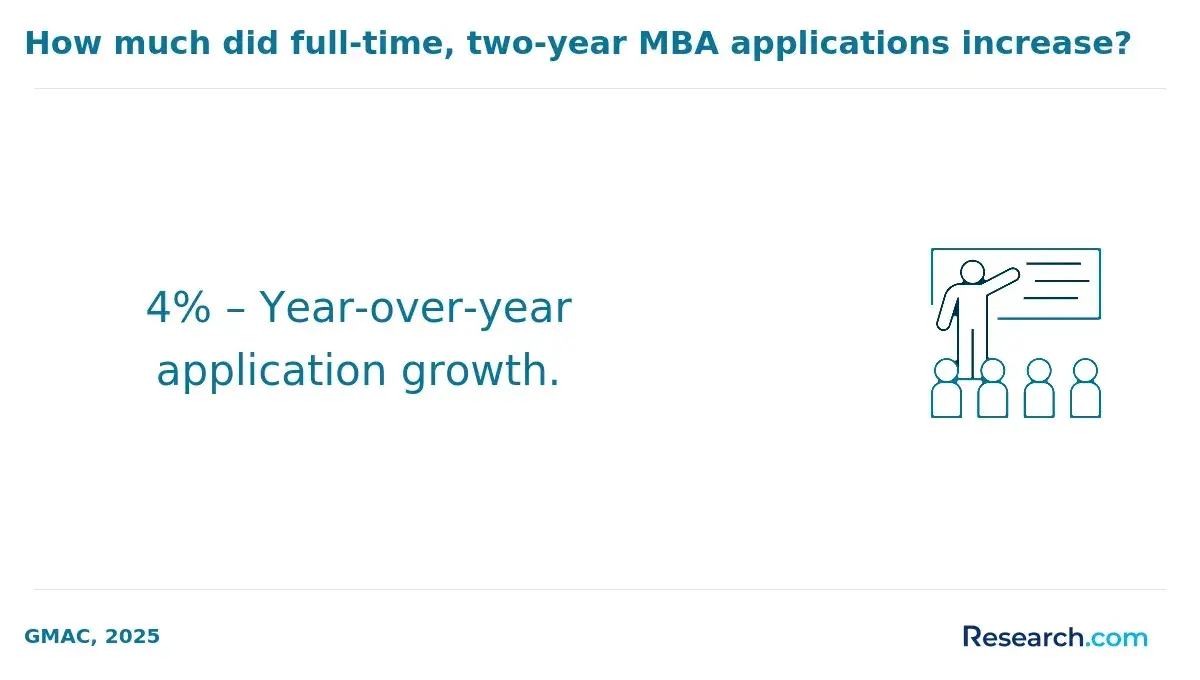
Flexible options are also responding to applicant demand. A 2024 Statista report shows that flexible MBA programs in the U.S. received growing applications in 2024, second only to full-time two-year MBAs, which had the largest share of increases.
What are the implications of extending the duration of an MBA program on tuition and financial aid?
Extending an MBA can help students manage work and personal responsibilities, but it can also change the financial picture. A longer timeline may affect tuition, aid disbursement, loan repayment, and opportunity cost.
- Additional tuition and fees. If your school charges by term, semester, or year, staying enrolled longer may mean paying more fees even if the per-credit tuition stays the same.
- Scholarship and fellowship limits. Some awards are tied to a standard program length. Extending enrollment may reduce, delay, or end eligibility.
- Loan timing and interest. Borrowers who extend their studies may carry debt longer and may pay more interest over time. Students who drop below required enrollment levels may also trigger repayment earlier than expected.
- Lost or delayed earnings. A longer program can postpone career moves, promotions, job searches, or salary increases connected to the MBA.
- Living and personal expenses. Housing, insurance, transportation, and other costs can continue for additional terms.
Because financial aid packages are often built around the expected length of the program, students should talk with the financial aid office before reducing their course load or requesting an extension. Ask how the change affects scholarships, loan eligibility, satisfactory academic progress, employer reimbursement, and repayment timing.
The 2025 GMAC Prospective Students Survey found that cost remains a major barrier for potential MBA students and other graduate management education candidates, with 48% of global respondents naming it among their top three concerns. That makes financial planning essential before choosing a slower timeline.
How does the course load differ between full-time and part-time MBA programs?
Full-time and part-time MBA programs differ less in academic level than in weekly intensity. Both can cover finance, marketing, strategy, operations, leadership, analytics, and organizational behavior. The difference is how quickly students complete those requirements.
Full-time MBA programs
- Students may take 12-18 credits per semester, depending on the program structure and requirements.
- The degree is commonly planned around two academic years, with students often taking classes in fall, spring, and sometimes summer terms.
- Students usually devote most of their time to coursework, networking, internships, student organizations, and recruiting.
- The format can be strong for career changers because it often provides structured recruiting and internship access.
Part-time MBA programs
- Students often take around 6-9 credits per semester, depending on program policies and personal schedules.
- Classes are commonly offered in evenings, on weekends, online, or in hybrid formats.
- Students may take one course during a demanding work period and more courses during a lighter term.
- The format helps students keep earning income but often extends completion to three to five years.
Full-time MBAs remain a popular option for most MBA candidates. The chart below shows global preferences for different MBA formats.
How does an online MBA compare to an on-campus MBA in terms of duration?
An online MBA is not automatically shorter or longer than an on-campus MBA. The timeline depends on whether the program is full-time, part-time, accelerated, cohort-based, or self-paced. The biggest difference is usually flexibility, not academic level.
| Factor | Online MBA | On-campus MBA |
| Scheduling | Often designed for working adults with asynchronous or flexible coursework | More likely to use fixed class times and campus-based activities |
| Completion pace | May allow part-time, accelerated, or self-paced study depending on school policy | Often follows a structured semester or cohort plan |
| Work compatibility | Usually easier to combine with full-time employment | May be harder to combine with full-time work, especially in immersive programs |
| Networking format | Virtual networking, online teams, possible residencies | In-person classes, clubs, recruiting events, and campus networks |
| Best fit | Students needing geographic flexibility or continued employment | Students who want face-to-face learning, campus resources, and immersive recruiting |
Online MBA programs may accept transfer credits or course waivers, just as campus programs may. However, applicants should not assume every online program is self-paced or inexpensive. Some require live class meetings, residencies, group projects, travel, or fixed cohorts. Always review the academic calendar and graduation requirements before estimating your timeline.
How much does it cost to get an MBA?
The cost of an MBA depends on school type, reputation, format, location, tuition model, financial aid, and personal expenses. A low per-credit price can still become expensive if the program requires many credits, repeated fees, travel, or extra terms.
Average MBA cost
The Education Data Initiative reports that the average cost of an MBA program is $62,820, ranging between $44,640 and $71,140. More affordable options exist, especially online. In Research.com’s review for this guide, the most affordable online MBA programs charged $250 to $500 per credit.
Costs at highly ranked business schools
Top-ranked MBA programs can be much more expensive, with costs ranging from $100,00 to over $250,000 per year. Stanford Graduate School of Business is one of the more expensive M7 business school options, with a total cost of attendance of $130,746 for S.Y. 2024-2025 for a single student.
Debt and starting salary examples
Statista data lists the following average student debt and starting salaries for MBA graduates from several top U.S. business schools:
| Business school | Average student debt | Starting salary |
| UVA Darden | $114,043 | $186,974 |
| UC Berkeley | $110,102 | $175,221 |
| UNC Kenan-Flagler | $107,994 | $154,161 |
| Duke Fuqua | $105,084 | $182,080 |
| Yale School of Management | $104,882 | $178,198 |
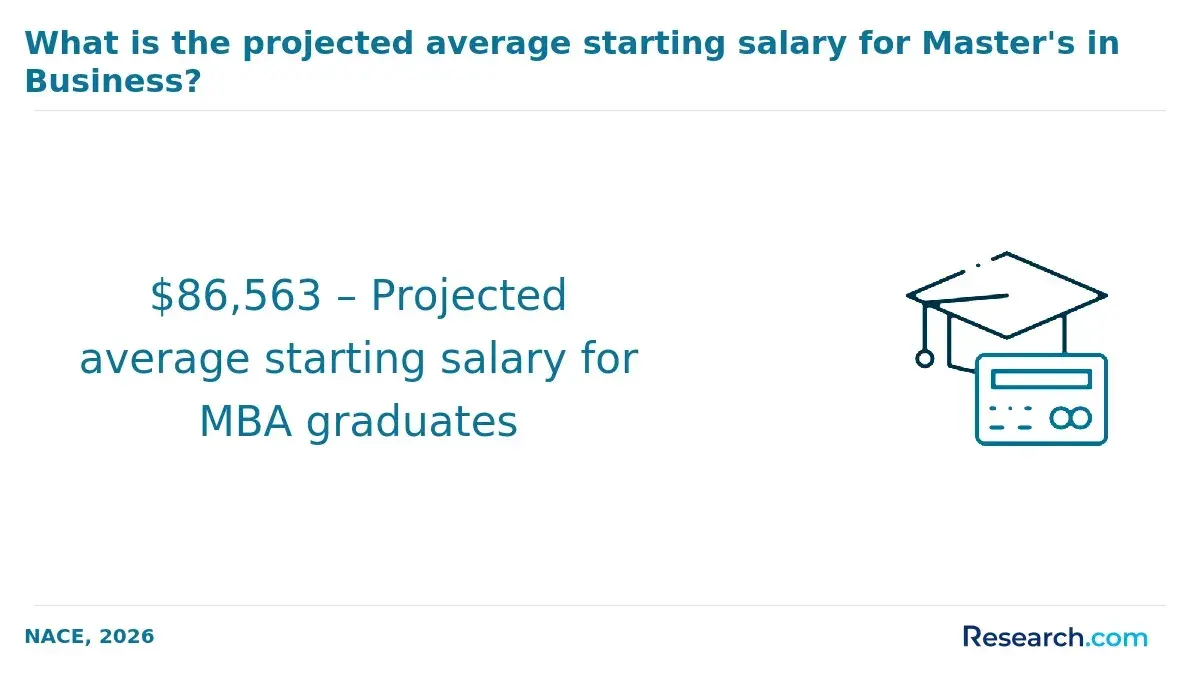
These figures can help frame the financial decision, but they should not be treated as guaranteed outcomes. Salary depends on industry, location, prior experience, employer, school network, specialization, and market conditions.
Applicants worried about cost or admissions barriers may want to compare schools that offer MBAs that don’t require GMAT scores, scholarships, employer-friendly formats, and flexible enrollment options.
What are the main components of MBA program costs?
The true cost of an MBA is the full cost of attendance, not just tuition. A program that looks affordable on a tuition page may become less affordable once mandatory fees, travel, books, and living costs are included.
- Tuition. Schools may charge per credit, per semester, per year, or by program. Compare the full degree price, not only the advertised rate.
- Mandatory fees. Application, registration, technology, student activity, health, parking, graduation, and administrative fees can add up across several terms.
- Housing and living expenses. Full-time students and students who relocate may need to budget for rent, food, transportation, healthcare, and local cost-of-living differences.
- Books and supplies. Course materials, software, cases, subscriptions, and textbooks may vary by class.
- Travel and networking. Residencies, study abroad, recruiting events, conferences, internships, and required campus visits can create additional costs.
- Insurance and health fees. Some programs require health insurance or student health fees, especially for full-time students.
- Lost income. Full-time students may give up salary while studying. This opportunity cost can be one of the largest financial factors.
Stanford Graduate School of Business lists the following one-year cost-of-attendance items for a single student:
- Tuition - $82,455
- Living Expenses - $19,008
- Housing - $20,880
- Medical Insurance - $7,620
- Health Fee - $783
About half of MBA students end up with debt after completing their degree. Debt is not always avoidable, but unnecessary debt often comes from underestimating non-tuition costs, borrowing for lifestyle expenses, or failing to use scholarships, employer benefits, or lower-cost formats.
Are part-time MBA programs less expensive than full-time programs?
Part-time MBA programs can be less expensive in the short term because students take fewer credits each semester and often keep working. However, they are not automatically cheaper overall. The final price depends on the per-credit rate, total credits, fees, program length, employer support, and whether the student’s career benefit is delayed.
Tuition structure
Part-time programs commonly charge by credit. Full-time programs may charge by semester or academic year. A part-time student can reduce the amount due each term by taking fewer classes, but the full degree may still be costly if the per-credit price is high.
For example, some top part-time MBA programs cost more than full-time options. The University of California Berkeley charges $3,708 per unit for its top-ranked part-time MBA. With a minimum requirement of 42 units, tuition alone totals at least $155,736.
By comparison, Indiana University Kelley School of Business lists an annual full-time MBA cost of attendance of $55,776 for residents or $81,386 for non-residents. Across a two-year full-time MBA, that equals approximately $111,552 or $162,772.
Annual affordability vs. total cost
Part-time study can make payments more manageable because costs are spread out. But longer enrollment can also mean more semesters of fees, delayed salary gains, and years of balancing school with work. Full-time study may require stepping away from income, but it can move students back into the job market faster.
| Question | Part-time MBA | Full-time MBA |
| Can I keep working? | Usually yes | Often difficult, depending on program intensity |
| Is the annual cost lower? | Often yes because fewer credits are taken per term | Often higher because students carry a full course load |
| Is the total degree cost always lower? | No | No |
| When is it a strong fit? | You need income continuity and schedule flexibility | You want immersion, faster completion, and structured recruiting |
Are online MBA programs more cost-effective than traditional MBAs?
Online MBA programs can be more cost-effective when they reduce relocation, commuting, housing, campus fees, and lost wages. They may be especially valuable for students who can keep working full-time while studying. However, online does not always mean inexpensive. Some online MBAs charge premium tuition, require residencies, or include technology and program fees.
The best way to compare value is to calculate total cost of attendance, not just tuition. Include required credits, fees, books, software, travel, on-campus residencies, and the number of months or years until graduation. For a deeper cost comparison, review Research.com’s guide to online MBA cost.
How do accreditation and rankings impact MBA program quality?
Accreditation and rankings answer different questions. Accreditation helps confirm that a school or business program meets recognized academic quality standards. Rankings compare programs using selected measures such as reputation, student outcomes, selectivity, faculty strength, career services, or return on investment.
Applicants should treat accreditation as a quality screen and rankings as one input, not the whole decision. A highly ranked school may not fit your budget, schedule, specialization, geography, or employer reimbursement rules. A lower-cost accredited program may be a better fit if it has strong career support in your target industry.
If affordability is a priority, compare accredited options carefully and review Research.com’s guide to an online MBA affordable pathway.
Is an executive MBA a cost-effective option for experienced professionals?
An executive MBA can be cost-effective for professionals who already have substantial work experience and want to move into higher leadership, strategy, or executive roles without leaving their careers. The value is strongest when the curriculum directly supports the student’s current industry, promotion goals, or employer leadership pipeline.
EMBA programs often use weekend, evening, or residency schedules. That structure can reduce opportunity cost because students continue earning while studying. However, EMBA tuition can be high, and the workload can be intense. Applicants should compare employer sponsorship, cohort quality, alumni network, leadership curriculum, travel requirements, and post-graduation outcomes before deciding. For lower-cost options, explore Research.com’s guide to an affordable EMBA.
How can you balance cost and quality in an MBA program?
The best MBA is not always the cheapest or the highest ranked. The strongest choice is the program that meets your career goal at a cost you can reasonably manage. Start with accreditation, then compare curriculum, faculty, career services, employer connections, alumni network, flexibility, total cost, and graduation timeline.
Questions to ask before choosing an MBA
- Is the school properly accredited, and does my employer recognize the credential?
- What is the total cost of attendance, including fees, books, travel, insurance, and living costs?
- How long do students in my chosen format actually take to graduate?
- Does the program support my target industry, role, or specialization?
- Are career services available to online, part-time, and executive students, or mainly full-time students?
- Can I transfer credits, receive course waivers, or adjust my course load?
- What scholarships, fellowships, employer benefits, or payment plans are available?
- Will the schedule realistically work with my job and family responsibilities?
Students who want a lower-cost accredited business degree may want to compare options such as the cheapest online AACSB MBA programs while still reviewing curriculum quality, student support, and career relevance.
What are the potential risks and challenges of pursuing an MBA?
An MBA can improve career options, but it also carries financial, academic, and personal risk. The decision should be based on realistic outcomes, not assumptions that the degree will automatically produce a promotion or salary increase.
| Common risk | Why it matters | Better approach |
| Borrowing without calculating total cost | Tuition is only part of the cost, and debt can grow with fees and living expenses | Build a full budget before applying |
| Choosing only by ranking | A ranked school may not fit your industry, schedule, or finances | Compare outcomes, cost, flexibility, and employer relevance |
| Ignoring opportunity cost | Leaving work can mean lost income and delayed advancement | Compare full-time, part-time, online, and employer-sponsored options |
| Assuming online always costs less | Some online programs charge high tuition or require travel | Review total cost, residency requirements, and fees |
| Underestimating workload | MBA study can strain work, family, and health | Choose a realistic course load and ask about leave policies |
| Picking a specialization too narrowly | A narrow track may limit flexibility if career goals change | Choose a concentration that supports both current and future goals |
Specialized lower-cost programs may reduce financial risk if they align with a clear career path. For example, students targeting healthcare leadership can compare options such as the cheapest online MBA with specialization in healthcare management.
How can elective specializations in an MBA program enhance career outcomes?
MBA specializations can help students translate broad business training into a clearer career direction. Concentrations in areas such as finance, marketing, business analytics, healthcare management, entrepreneurship, technology, or project management allow students to build job-relevant knowledge while still completing core business coursework.
A specialization is most useful when it matches a target role or industry. For example, a student pursuing operations leadership may benefit from analytics and supply chain coursework, while a student moving into healthcare administration may need healthcare finance, policy, and organizational leadership. Students interested in project-focused roles can also compare an MBA concentration with separate credentials such as the cheapest online project management degree.
Should I choose business administration or business management for my MBA?
Business administration and business management overlap, but they are not always identical in emphasis. Business administration often covers broad organizational functions such as finance, marketing, operations, accounting, strategy, and analytics. Business management may focus more heavily on people, teams, leadership, decision-making, and organizational execution.
The better option depends on your career goal. Choose a broader administration focus if you want cross-functional business training or may change industries. Choose a management-focused path if your main goal is to lead teams, improve operations, or advance within a current organization. For a deeper comparison, review Research.com’s guide to business administration or business management.
How are digital innovations transforming the MBA experience?
Digital tools are changing how MBA students learn, collaborate, and apply business concepts. Online platforms, virtual teamwork, interactive simulations, adaptive learning tools, remote case discussions, and data-driven assignments are increasingly common in business education. These tools can make programs more flexible and can help students practice decision-making in realistic business scenarios.
Digital delivery is especially important for working professionals because it can reduce commuting and make group work possible across locations. Still, students should check whether digital tools improve learning or simply replace in-person contact. Ask how faculty interact with students, how teams collaborate, how networking is supported, and whether career services are available remotely. Experienced professionals comparing digitally delivered leadership formats may also review online executive MBA options.
Can I work part-time or receive employer sponsorship to help cover MBA costs?
Yes. Many MBA students work while studying, and some receive employer tuition assistance. These options can substantially change the affordability of an MBA, but they require careful planning.
Working while enrolled
Part-time, online, hybrid, and executive MBA programs often allow students to keep working full-time or part-time. Continuing to earn income can reduce borrowing and preserve career momentum. The challenge is workload. Students should ask how many hours per week classes, readings, group projects, and assignments typically require.
Employer sponsorship and tuition reimbursement
Some employers help pay for MBA study through tuition reimbursement, sponsorship, or education benefits. These programs may cover part or all of tuition and may also offer flexible schedules or paid time for coursework. In return, employees may need to remain with the company for a set period after graduation.
Employers may also limit which programs qualify for reimbursement. Some require students to enroll in online MBA programs accredited by recognized accrediting bodies. Before applying, request the policy in writing and confirm eligible schools, grade requirements, reimbursement caps, repayment obligations, and whether fees or books are covered.
How to choose the right MBA program format for your career goals
The right MBA format depends on what you need the degree to do. A full-time MBA is often best for students seeking an immersive experience, a major career pivot, internships, and structured recruiting. A part-time MBA is stronger for working professionals who want to keep earning income while building business credentials over three to five years.
An online MBA can work well for students who need location flexibility and a schedule that fits around employment or family responsibilities. Students targeting analytics roles, for example, may compare an affordable online MBA in Business Analytics if they want flexible graduate business training with a technical focus.
Executive MBA programs are usually best for experienced professionals with leadership responsibilities. They can help students advance within an organization, strengthen executive decision-making, and expand senior-level networks without taking a full career break.
How can an MBA contribute to career success?
An MBA can support career success when the degree aligns with a clear professional objective. It can build business knowledge, strengthen leadership skills, expand networks, and help students qualify for roles that require advanced management training.
- Leadership development. Courses in strategy, organizational behavior, ethics, and management can help students lead teams and make higher-level decisions.
- Broader business fluency. MBA students study multiple business functions, which can help them work across finance, marketing, operations, analytics, and human resources.
- Professional network growth. Classmates, faculty, alumni, employers, and project partners can become valuable career contacts.
- Career mobility. An MBA may help students move into management, shift industries, or qualify for senior roles.
- Specialized knowledge. Concentrations can help students target fields such as finance, data analytics, entrepreneurship, marketing, healthcare, or technology.
- Flexible advancement paths. Students who need a faster option may consider 1 year MBA programs online accredited, provided the workload and format fit their schedule.
The degree is most valuable when students use it actively: choosing relevant electives, building relationships, completing applied projects, using career services, and targeting roles that reward graduate business training.
How do career goals influence the choice of MBA program duration?
Career goals should drive MBA duration. If you need a fast credential to return to work quickly, 12 month MBA online programs may be worth comparing. These options can reduce time in school, but they require strong time management and may leave less space for internships or career exploration.
If you want to change industries, build a new network, or explore multiple functions, a traditional two-year MBA may offer more room for internships, student leadership, recruiting, and specialization. If you want to keep working, a part-time or online MBA may be the better fit even if it takes longer. If you already hold a senior role, an executive MBA may provide the leadership focus and peer network you need without requiring a full career break.
What is the long-term return on investment of an MBA?
The long-term return on investment of an MBA depends on total cost, debt, lost income, career outcomes, industry, school network, specialization, and how quickly the graduate can translate the degree into better opportunities. A strong ROI usually comes from a clear match between program choice and career strategy.
Applicants should compare the total cost of education with realistic post-graduation earnings, promotion potential, job mobility, and the value of the network. Salary expectations should be specific to the field. For example, students evaluating accounting-focused graduate business paths can review information related to MBA in accounting salary while still considering school cost, debt, and career fit.
Common MBA Cost and Timeline Mistakes to Avoid
- Looking only at tuition. Always include fees, books, travel, insurance, housing, and lost income.
- Assuming the fastest program is the best program. Accelerated formats can be efficient, but they may reduce time for internships, networking, and recruiting.
- Choosing an online MBA without checking requirements. Some online programs require live sessions, residencies, or travel.
- Ignoring accreditation. Accreditation can affect employer recognition, transferability, and confidence in academic quality.
- Underestimating part-time fatigue. Studying while working can last several years and requires sustained discipline.
- Assuming salaries are guaranteed. Outcomes vary by school, industry, prior experience, geography, and labor market conditions.
- Not asking about employer reimbursement rules early. Some employers restrict eligible programs or require employees to stay after graduation.
Key Insights
- An MBA usually takes one to five years. Full-time programs commonly take about two years, accelerated programs take 12 to 18 months, part-time programs often take three to five years, and EMBAs commonly take about two years.
- The average MBA cost reported by the Education Data Initiative is $62,820, with a range between $44,640 and $71,140, but top-ranked programs can cost substantially more once full cost of attendance is included.
- The right MBA format depends on career intent. Career changers often benefit from full-time programs with internships and recruiting support, while working professionals may get better value from part-time, online, hybrid, or executive formats.
- Online and part-time MBAs can reduce opportunity cost by allowing students to keep working, but they are not automatically cheaper. Always compare full degree cost, fees, travel, and time to completion.
- Extending an MBA can protect work-life balance but may affect scholarships, loan timing, total fees, and delayed career gains.
- Accreditation, career services, curriculum relevance, employer recognition, and alumni network are as important as price when judging MBA value.
- The best MBA decision starts with a budget and a career plan: know what role you want, what credential employers value, how much debt you can manage, and how quickly the program can help you reach the next step.
References:
- Graduate Management Admission Council (2024). Application Trends Survey – 2024 Summary Report. https://www.gmac.com/-/media/files/gmac/research/admissions-and-application-trends/2024_ats.pdf
- Graduate Management Admission Council (2025). Corporate Recruiters Survey – 2025 Summary Report. https://www.gmac.com/-/media/files/gmac/research/employment-outlook/2025-corporate-recruiters-survey/summary-report.pdf GMAC Enrolled Students Survey
- Graduate Management Admission Council (2025). GMAC Prospective Students Survey – 2025 Summary Report. https://www.gmac.com/-/media/files/gmac/research/prospective-student-data/2025/2025_pss_final.pdf
- Graduate Management Admission Council (September 2025). Who wants a business master's degree? https://files.eric.ed.gov/fulltext/ED679096.pdfGMAC Prospective Students Survey
- Haas School of Business (n.d.). Cost & Financing. https://ewmba.haas.berkeley.edu/cost-and-financing
- Hanson, M. (November 2024). Average Cost of a Master’s Degree. Education Data Initiative. https://educationdata.org/average-cost-of-a-masters-degree
- Kelley School of Business (n.d.). Tuition, Financial Aid & Scholarships. https://kelley.iu.edu/programs/full-time-mba/admissions/tuition-aid-scholarships.html
- Korhonen, V. (January 2024). Top U.S. business schools 2022, by average debt and starting salary of MBA grads. Statista. https://www.statista.com/statistics/239773/forbes-ranking-of-the-best-us-business-schools
- Stanford Graduate School of Business (n.d.). Cost of Attendance. https://www.gsb.stanford.edu/programs/mba/tuition-financial-aid/cost-attendance
Other Things You Need to Know About the Costs and Duration of MBA Programs
In 2027, MBA program costs range from $30,000 to over $200,000, depending on the institution and program type. Traditional full-time MBAs typically take two years to complete, while accelerated or online programs offer one-year options for faster completion.
Many MBA programs accept either the GMAT or GRE, and there is no universal cutoff. Competitive full-time programs often report median GMAT scores around 650 to 730, while strong GRE results usually fall near 155 to 165 per section. Some schools also offer test waivers.
In 2027, MBA students can explore various financial aid options including scholarships, grants, employer sponsorships, and student loans. Many universities offer merit-based scholarships, while companies may provide financial support for employees pursuing MBAs.


