2027 AI Doctorate Degrees for International Students

Co-Founder and Chief Data Scientist
Many international students face challenges when seeking doctorate degrees that can bridge their undergraduate backgrounds with a career in artificial intelligence. Complex admission requirements, limited program flexibility, and unclear accreditation often hinder their transition. For professionals aiming to pivot into this dynamic field, choosing the right program is critical to future success.
This article explores accessible, accredited AI doctorate options designed for those with unrelated undergraduate degrees. It highlights flexible pathways and practical considerations, helping prospective students make informed decisions and maximize their chances of gaining advanced credentials that align with career goals in artificial intelligence.
Key Things You Should Know
- In 2026, AI doctorate programs increasingly emphasize interdisciplinary research, combining computer science, ethics, and domain-specific expertise to meet evolving industry demands.
- International students represent over 40% of AI PhD enrollments in top U.S. universities, reflecting strong global interest and competitive scholarship opportunities.
- The average funding package for AI doctorate candidates covers tuition and a living stipend, with many programs offering research assistantships, enhancing accessibility for international scholars.
What is an AI doctorate degree in the United States?
An AI doctorate degree in the United States usually involves advanced research within computer science or information science departments. These PhD programs focus on areas such as machine learning, natural language processing, robotics, and computer vision. Students develop new AI algorithms, systems, and theoretical models through rigorous coursework and independent research.
Doctoral degrees in artificial intelligence for international students often include interdisciplinary opportunities that combine AI with neuroscience, economics, or other fields. Prospective students should carefully review faculty research interests, program specifics, and funding availability when applying. Many programs require proficiency in programming languages like Python, R, or C++ to support complex problem-solving and algorithm design.
Graduates pursue careers as researchers, professors, or AI engineers within academia and industry, benefiting from robust doctoral training. According to the National Science Foundation's 2024 Survey of Earned Doctorates, over 5,000 doctorates in computer and information sciences were awarded in the latest year, highlighting the competitiveness and scale of AI doctorate programs in the United States.
Students aiming to enter these programs may find value in exploring accelerated computer science degree options that can sometimes fast-track foundational learning. Institutions like MIT, Stanford, and Carnegie Mellon are known for specialized AI PhD tracks, including machine learning and data science.
What are the best accredited AI PhD programs for international students?
Top universities offering AI doctorate degrees to international students include Carnegie Mellon University, ranked #1 in Artificial Intelligence by U.S. News & World Report. Carnegie Mellon's interdisciplinary PhD program integrates machine learning, robotics, and computer vision, supported by strong industry collaborations, making it ideal for students pursuing impactful research.
Other prestigious programs at Stanford University, Massachusetts Institute of Technology (MIT), and the University of California-Berkeley offer extensive research facilities and funding options tailored to international candidates. MIT's PhD program emphasizes deep learning and natural language processing.
When choosing the best accredited AI PhD programs for international students, consider these:
- Accreditation and rankings verified by sources like U.S. News & World Report.
- Alignment of research areas with your interests, such as reinforcement learning or computer vision.
- Availability of scholarships, assistantships, and visa sponsorship.
- Faculty expertise and publication records in leading AI conferences.
- Networking and internship programs with technology companies.
Eligibility typically involves standardized tests like the GRE, though some waive them for strong research backgrounds. Language proficiency tests such as TOEFL or IELTS are generally required. International students should also factor in visa policies, campus diversity, and support services.
Programs located near tech hubs often have better internship and job placement prospects. For students exploring options, comparing these factors alongside affordability is crucial. Exploring mechanical engineering programs online can also provide insight into accessible STEM education pathways.
What are the admission requirements for international applicants to AI doctoral programs?
International applicants aiming for AI doctoral programs in the U.S. must meet strict admission requirements for international students in AI doctoral programs, demonstrating academic excellence and research potential. Typically, a master's degree in computer science, engineering, mathematics, or a related STEM field is essential, though some programs may consider exceptional candidates holding only a bachelor's degree.
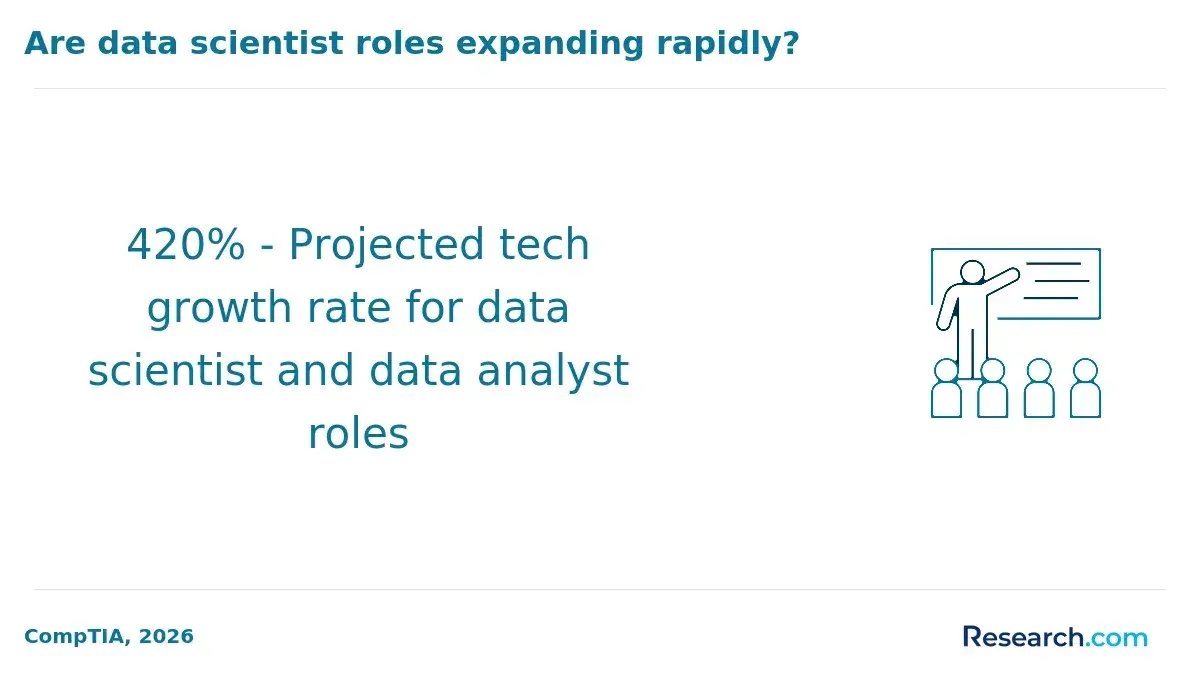
Standardized test scores are a critical component. The Graduate Record Examination (GRE), especially the quantitative section, is often required or recommended, but applicants should verify each program's current stance, as some have waived GRE requirements. English language proficiency proof is mandatory, with TOEFL iBT scores commonly needing to be at least 90 and 100+.
Eligibility criteria for international applicants to artificial intelligence PhD courses also include providing application materials such as official transcripts, letters of recommendation, a detailed statement of purpose, a curriculum vitae highlighting research experience, and proof of English proficiency through TOEFL or IELTS scores.
Applicants face challenges in showing relevant research experience. Practical engagement with AI frameworks, published research, or internships can bolster applications. Some programs require a writing sample or proposal. Visa and financial documentation are often requested after admission, alongside meeting deadlines for submitting credentials and test results.
Prospective students may also explore pathways beginning with the best online master's in artificial intelligence as a foundation for doctoral studies.
Can international students earn an AI doctorate online in the United States?
International students cannot earn a full AI doctorate entirely online from United States universities due to federal regulations. The Student and Exchange Visitor Program (SEVP), managed by the Department of Homeland Security, limits F-1 visa holders to no more than three online or distance education credits per term, typically equivalent to one class. This restriction means most doctoral coursework and research must be completed on campus.
Fully online AI doctorate programs do not satisfy the full-time study requirements necessary to maintain visa status. Given these constraints, earning a doctorate in AI remotely from United States universities is challenging. AI doctorates usually involve significant research, lab work, and in-person participation in seminars and teaching, all requiring physical presence.
Some programs offer hybrid formats with limited online components, but the majority of credits must be earned on-site. Students seeking flexibility should consider these points:
- Enroll in institutions offering hybrid AI doctorate programs allowing some online coursework.
- Plan for on-campus residency to meet research and credit requirements.
- Consult designated school officials (DSOs) early to ensure compliance with F-1 visa regulations.
- Explore optional practical training (OPT) and research opportunities that complement doctoral work.
Maintaining legal status while pursuing an AI doctorate requires strict adherence to federal policies, which also helps ensure smooth graduation and post-degree employment in the U.S. For those interested in furthering their education in related fields, consider exploring the best data science master's programs as a more flexible alternative.
What core coursework and research areas are covered in AI doctoral programs?
Doctoral programs in artificial intelligence focus on foundational and advanced topics to build expert knowledge and research skills. Core courses often include machine learning, neural networks, natural language processing, computer vision, robotics, and reinforcement learning. Programs also stress mathematical foundations such as probability theory, statistics, linear algebra, and optimization.
Research trends highlight a sharp rise in multimodal AI models, reflecting increased interest in integrating diverse data types for more versatile systems. Other significant research areas encompass explainable AI, fairness and bias mitigation, autonomous systems, and AI ethics. According to the Stanford University AI Index Report, this growth signals how doctoral candidates align their projects with industry and societal needs.
Students often engage in practical projects addressing real-world challenges, such as combining visual and textual data for healthcare diagnostics or applying reinforcement learning to autonomous vehicle navigation. Hands-on experience with AI frameworks like TensorFlow and PyTorch is typical, enhancing readiness for careers in academia or industry innovation.
Interdisciplinary collaboration is a hallmark of many programs, encouraging integration of computer science, cognitive science, and statistics. This equips students to enhance model interpretability and scalability across various domains, preparing them to tackle complex AI challenges.
How long does an AI doctorate take, and what are typical milestones?
The median duration for completing a doctorate in artificial intelligence in the U.S. is about six years, based on data from the National Science Foundation's 2024 Survey of Earned Doctorates. This timeframe aligns with trends in computer and information sciences and can vary due to program design, research demands, and individual progress.
Typical milestones during this period include:
- Years 1-2: Core coursework in machine learning, algorithms, data structures, and mathematics, alongside developing research interests and selecting advisors.
- Years 2-3: Qualifying or comprehensive exams to assess readiness for research and advancement to candidacy.
- Years 3-5: Conducting original research involving experiment design, AI model development, and publishing papers, with milestones like proposal defense and article submissions.
- Years 5-6: Finalizing the dissertation, refining research results, writing, and defending the work before faculty and peers.
Additional factors such as project complexity, industry internships, collaboration, and program flexibility may lengthen the process. International students should consider visa regulations and funding constraints that could affect their timeline. These stages guide prospective students in planning a realistic academic path that balances research depth with timely completion.
What does an AI doctorate cost, and what funding options exist?
Doctorate programs in artificial intelligence across the U.S. typically charge annual tuition ranging from $10,000 to $50,000. Costs depend on institution type, residency, and program reputation. Public universities offer lower tuition for in-state students, while international and out-of-state students usually face higher fees.
The National Science Foundation (NCSES) 2024 Survey of Earned Doctorates highlights that most doctoral candidates in computer and information sciences receive financial support primarily from research assistantships. These positions waive tuition and provide stipends in exchange for research work, helping cover both living and educational expenses.
Additional funding avenues include:
- Teaching assistantships offering tuition remission and monthly stipends.
- Fellowships based on academic merit with no work obligations.
- University scholarships targeting international STEM students.
- External grants and scholarships from governmental or private sources.
International students should prioritize applying for assistantships as these are the most reliable funding options. Eligibility may require separate applications or prior research experience, with early application increasing chances of receiving support. Consulting university financial aid and STEM-focused office resources is strongly recommended.
Though sticker prices for an AI doctorate can seem high, structured funding through assistantships and fellowships often reduces costs substantially, making full funding achievable for many qualified students.
What visa rules and work authorizations affect AI doctoral students?
Most international AI doctoral students study in the U.S. on an F-1 visa, which permits full-time education but restricts work to campus jobs or Curricular Practical Training (CPT) during their studies. After graduation, Optional Practical Training (OPT) allows 12 months of employment related to their field.
Because many computer science and machine learning programs qualify as STEM fields, students can apply for a valuable 24-month OPT extension. This extension creates up to 36 months of practical work authorization, providing AI students a critical window to build industry experience without immediate H-1B sponsorship.
The 24-month STEM OPT extension requires employers to participate in E-Verify and can be renewed once. Many students use this period to prepare for H-1B visa applications, which are limited by annual caps and lottery selection. AI doctoral candidates with J-1 visas may also be eligible for Academic Training, but eligibility varies.
Key tips for navigating visa and work authorization include:
- Verify your program's CIP code for STEM OPT eligibility through your international student office.
- Carefully plan the timing of OPT and STEM OPT to optimize work opportunities.
- Ensure employer compliance with OPT reporting and E-Verify requirements.
- Explore other visa options and understand the competitiveness of the H-1B process.
These policies significantly enhance international AI doctoral students' ability to gain U.S. industry experience. Staying informed about the Department of Homeland Security STEM OPT list and coordinating with school resources will maximize career opportunities in this competitive market.
What jobs can you get with an AI doctorate in the United States?
Holders of an AI doctorate in the United States typically qualify for senior-level roles that demand advanced research and development expertise. Job postings emphasizing machine learning skills are often targeted toward senior, lead, and staff positions, reflecting the specialization expected from PhD graduates.
Common roles include research scientist, lead machine learning engineer, AI architect, and applied scientist. Research scientists focus on developing new AI models, refining algorithms, and publishing their findings, requiring expertise in machine learning theory, statistical methods, and software implementation.
Applied scientists combine research with practical applications, leading teams to integrate AI solutions into products or services. Titles may include AI product scientist or senior data scientist, with an emphasis on translating complex research into scalable technologies. Lead machine learning engineers and AI architects oversee large-scale system design and deployment.
Beyond tech companies, AI PhDs find opportunities in healthcare analytics, autonomous systems, finance, and defense, creating domain-specific models that address challenges like medical diagnostics and fraud detection.
- Senior, lead, and staff positions dominate AI PhD job postings
- Roles span research scientist, applied scientist, and AI architect
- Expertise includes deep theoretical knowledge and leadership
- Industries served include healthcare, finance, and defense
An AI doctorate opens pathways to impactful roles combining innovative research and leadership, making it crucial for candidates to emphasize seniority and experience aligned with their credentials.
What are typical salaries and job outlook for AI PhD graduates?
AI PhD graduates often pursue careers as computer and information research scientists, data scientists, machine learning engineers, or academic researchers. The median annual wage for computer and information research scientists was $145,080, providing a strong salary baseline for AI doctorate holders in the U.S. job market.
Demand for AI PhD holders is growing rapidly across technology, healthcare, finance, and defense sectors. The U.S. Bureau of Labor Statistics projects a 22% growth rate for computer and information research scientists through 2032, driven by advancements in AI research, autonomous systems, and big data analytics.
Salary varies by role and employer:
- Industry roles at major tech firms often start above $150,000, with senior or specialized positions exceeding $200,000 annually
- Academic positions generally offer lower starting salaries but include tenure-track roles and research funding
- Government and national laboratories provide competitive pay with research stability
Regional differences affect salary and job availability. States like California, Washington, and Massachusetts usually offer higher salaries due to concentrated tech hubs. International students should also consider visa regulations and may benefit from internships or postdoctoral fellowships to gain U.S.-based experience.
Overall, AI PhD graduates can expect strong starting salaries near the $145,000 median and significant job growth in research-driven institutions and technology-focused regions.
Other Things You Should Know About Artificial Intelligence
Successful AI doctoral students need strong problem-solving and critical-thinking abilities to navigate complex research challenges. Communication skills are equally essential, as scholars must write research papers, present findings, and collaborate with multidisciplinary teams. Time management and perseverance also play a key role in completing rigorous doctoral programs.
International students should engage with the global research community by subscribing to leading AI journals, attending conferences, and joining professional organizations such as AAAI or IEEE. Many universities provide access to academic databases and online seminars, which are valuable for staying current. Networking with faculty and peers also helps in learning about emerging trends.
Ethics is a critical component of AI research, especially regarding data privacy, bias in algorithms, and the societal impact of AI applications. Doctoral programs increasingly require students to address these issues in their research proposals and projects. Understanding and applying ethical frameworks ensures responsible AI development and deployment.
In 2027, international students seeking AI doctorates can access a variety of funding options. Common sources include university scholarships, government grants, and research assistantships. Many universities have specific funds allocated for international research students. Additionally, external funding from international organizations and industry partnerships is often available.
References
- Top 10 AI graduate degree programs https://www.cio.com/article/350315/top-10-ai-graduate-degree-programs.html
- PhD in Artificial Intelligence: Salary, Career Scope 2026 https://collegevidya.com/blog/phd-artificial-intelligence-salary-career-scope/
- USAJOBS connects job seekers with federal jobs across the United States and around the world as the official employment site for the federal government https://ai.usajobs.gov/
- AI Paygrades https://aipaygrad.es/
- Aiindex https://aiindex.stanford.edu/
- Protect Yourself: USCIS using LinkedIn and AI to Check for Status Violations for Foreign Students https://www.pogueimmigrationlaw.com/news/view/1185/protect-yourself--uscis-using-linkedin-and-ai-to-check-for-status-violations-for-foreign-students
- Hiring the Future: Navigating New Immigration Policies for AI and STEM Talent - Jackson Lewis https://www.jacksonlewis.com/insights/hiring-future-navigating-new-immigration-policies-ai-and-stem-talent
- Navigating AI Policies for PhD Students in 2025: A Doctoral Researcherâs Guide https://www.thesify.ai/blog/phd-ai-policies-2025
- Ph.D. in Artificial Intelligence https://www.ucumberlands.edu/academics/graduate/phd-artificial-intelligence
- Work Limits and Rules for PhD Students https://www.applykite.com/blog/phd-guide-work-limits-rules-phd-students