2027 Career Change Guide: Switching Into Social Work in Your 30s or 40s

Co-Founder and Chief Data Scientist
Changing into social work in your 30s or 40s is usually a licensing and education decision before it is a job search decision. If you already have a degree in another field, the central question is not whether you must “start over,” but which accredited pathway gets you to the role you want without wasting time, money, or field placement opportunities.
Social work can fit career changers who want direct client work, mental health practice, community advocacy, child and family services, healthcare support, school-based roles, policy work, or nonprofit leadership. The right degree depends on your current education, whether you want clinical licensure, how much flexibility you need, and what your state licensing board requires.
This guide explains the main social work degree options, how online and campus programs compare, what accreditation to verify, what admissions committees look for, and what career outcomes may follow. It is written for adults who already have professional and life experience and need a clear, practical route into the field.
Key Things You Should Know
- Social work careers often require a Master of Social Work (MSW), with programs increasingly offering flexible online options suitable for mid-career changers in their 30s or 40s.
- The U.S. Bureau of Labor Statistics projects 12% job growth for social workers from 2024 to 2034, driven by aging populations and expanded mental health services.
- Licensure varies by state but typically requires an MSW and supervised experience; median social worker salary in 2025 is around $58,000, with higher earnings in healthcare and school settings.
What does a social work degree involve and what can you do with it?
A social work degree prepares students to help individuals, families, groups, and communities respond to problems that may involve poverty, trauma, mental illness, housing insecurity, substance use, aging, disability, family conflict, or barriers to healthcare and education. The training is broad because social workers often operate at the intersection of personal need, public systems, and community resources.
Coursework commonly covers human behavior, social welfare policy, ethics, research, diversity and cultural responsiveness, assessment, interviewing, case management, advocacy, and intervention methods. Programs also include supervised field education, where students apply classroom learning in agencies such as hospitals, schools, mental health clinics, child welfare organizations, community nonprofits, or government programs.
The degree level matters. A Bachelor of Social Work can support entry-level and supervised roles, while a Master of Social Work is typically the key degree for advanced practice, clinical training, and many leadership or specialized positions. Some professionals later pursue an online PhD social work program if their goals include research, teaching, policy leadership, or high-level administrative work.
| Degree level | Common preparation | Typical career direction |
| BSW | Generalist social work practice, policy, ethics, field education | Case management, advocacy, community services, supervised social service roles |
| MSW | Advanced generalist or clinical practice, specialization, supervised practicum | Clinical social work, school social work, healthcare social work, program leadership, specialized practice |
| PhD or DSW | Research, advanced practice, leadership, teaching, or policy analysis | Higher education, research, executive leadership, advanced systems-level work |
Career options include clinical social worker, case manager, child welfare specialist, school social worker, healthcare social worker, mental health practitioner, substance abuse specialist, gerontology social worker, policy advocate, program coordinator, and social services administrator. The best fit depends on whether you prefer direct counseling, systems navigation, crisis support, community organizing, or program management.
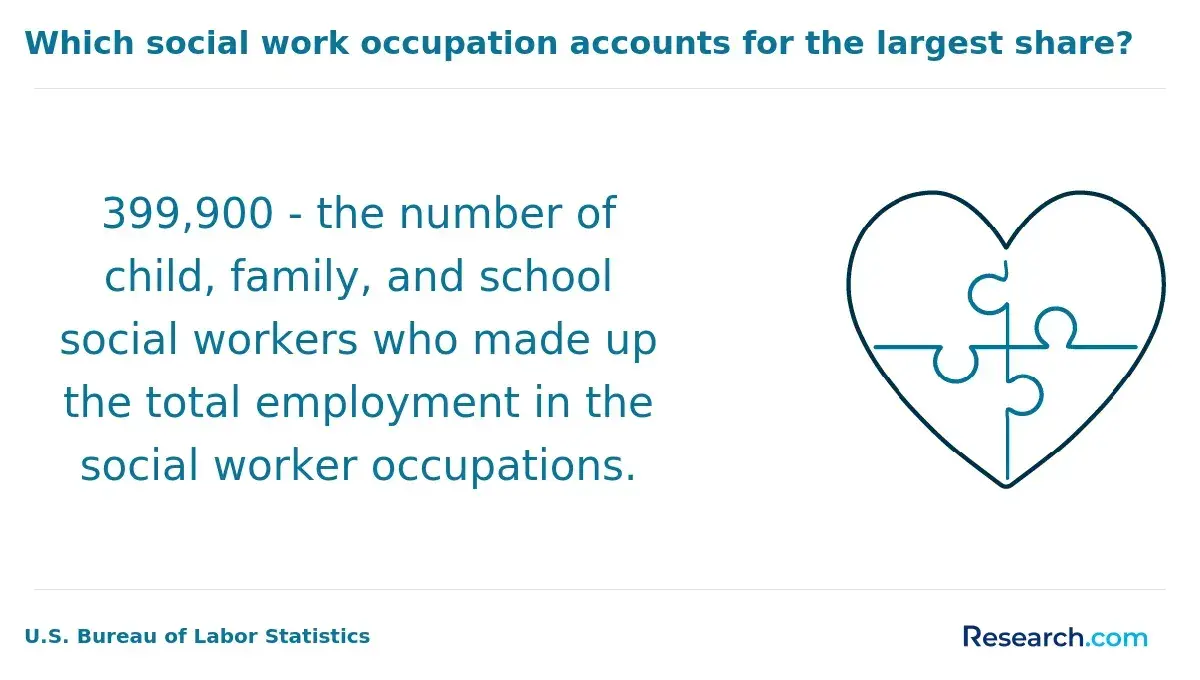
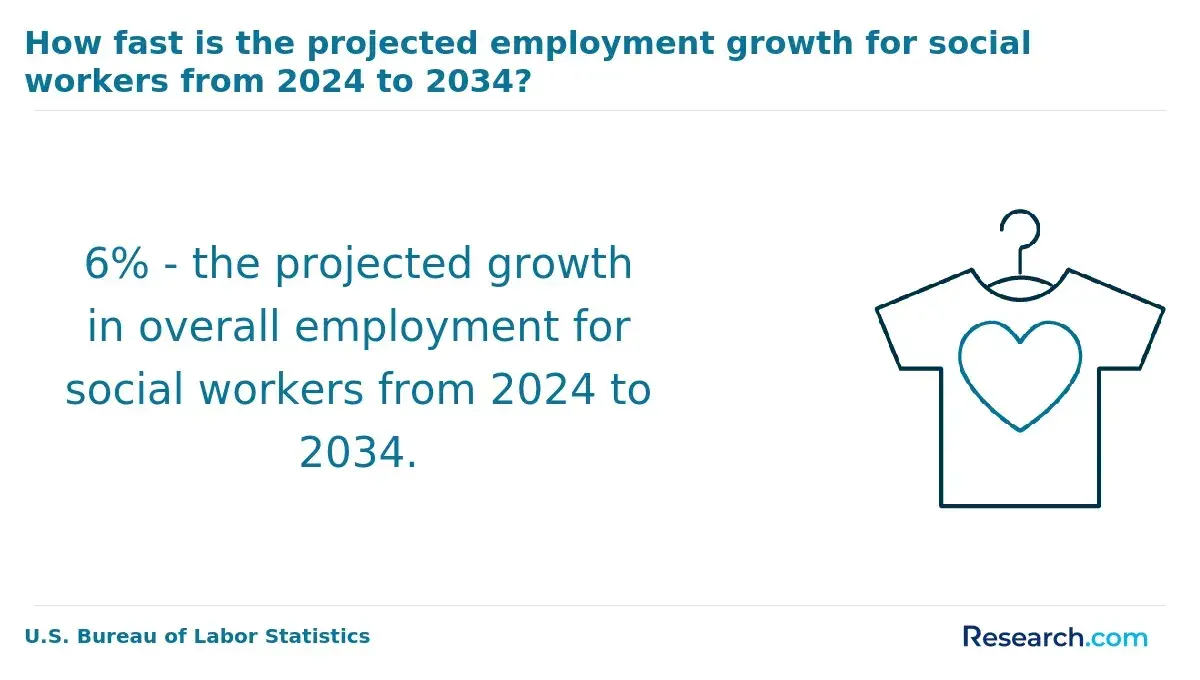
The Bureau of Labor Statistics forecasts 74,000 job openings annually for social workers between 2024 and 2034, driven by replacement needs and a 6% growth rate exceeding the average for all occupations. For career changers, that demand can create openings, but licensure, practicum experience, and specialization still strongly affect access to specific jobs.
Before choosing a program, identify the role you want first. If your goal is therapy or independent clinical practice, plan around MSW admission, clinical fieldwork, supervised post-graduate hours, and state licensure. If your goal is advocacy, case management, or nonprofit work, a BSW or non-clinical MSW track may be enough, depending on the employer and state rules.
What are the educational requirements to become a licensed social worker?
The education required to become a licensed social worker depends on the level of license and the scope of practice allowed in your state. Social work licensing is state-regulated, so titles, acronyms, supervised-hour requirements, and exam rules can differ. However, most pathways are built around a CSWE-accredited BSW or MSW.
At the bachelor’s level, a Bachelor of Social Work from a program accredited by the Council on Social Work Education can support entry-level licensure such as Licensed Bachelor Social Worker (LBSW), where available. These licenses usually involve supervised, non-independent practice. They may qualify graduates for case management, community services, advocacy, and agency-based support roles, but they generally do not authorize independent clinical diagnosis or therapy.
For independent clinical work, the Master of Social Work is the standard educational route. An MSW with appropriate clinical coursework and supervised field education is typically required before graduates can pursue a Licensed Clinical Social Worker credential. The LCSW credential permits diagnosis and treatment of mental health conditions independently, subject to state rules. With clinician or private practice roles employing 35% of social workers, this pathway is especially important for people who want counseling, psychotherapy, or behavioral health careers.
Career changers who already have a bachelor’s degree in another field often do not need to earn a second bachelor’s degree. Many apply directly to MSW programs that accept students from non-social-work academic backgrounds. If you need flexibility, online masters social work programs may help you complete coursework while working, though field placements and state licensure requirements still require careful planning.
| Goal | Common education route | Important licensing consideration |
| Entry-level supervised social service work | BSW or related bachelor’s degree, depending on employer | Some states offer bachelor-level licensure such as LBSW |
| Advanced non-clinical social work | MSW | May involve state licensure or certification depending on role |
| Independent clinical practice | CSWE-accredited MSW with clinical preparation | Requires exams and supervised post-graduate clinical hours for LCSW eligibility |
Do not rely only on a school’s general description of “licensure preparation.” Before enrolling, compare the curriculum and field placement structure with your state board’s current requirements. This is especially important if you plan to study online in one state but seek licensure in another.
What degree pathways exist for career changers entering social work?
Career changers have more than one route into social work. The best pathway depends on whether you already hold a bachelor’s degree, whether that degree is in social work, and whether your target job requires clinical licensure.
If you do not already have a bachelor’s degree, a BSW is the most direct undergraduate route. It introduces generalist social work practice and usually includes required field education. This option can make sense for people who are earlier in their college journey or who want entry-level agency roles before deciding whether to pursue graduate school.
If you already have a bachelor’s degree in another field, the MSW is often the more efficient choice. Many MSW programs are designed for students from unrelated majors, including psychology, sociology, education, healthcare, criminal justice, business, and the humanities. These students usually complete the full MSW curriculum because advanced standing is typically reserved for BSW graduates.
Students who already hold a BSW may qualify for advanced standing MSW programs, which can reduce time to completion. This can be valuable for adults who want to move quickly into advanced practice or clinical licensure preparation. However, applicants should confirm that their prior BSW meets the program’s recency, GPA, and accreditation requirements.
| Your background | Likely pathway | Best for |
| No bachelor’s degree | BSW | Building a foundation for entry-level social work and possible graduate study |
| Bachelor’s degree in another field | Traditional MSW | Career changers seeking advanced practice or clinical licensure preparation |
| BSW from an accredited program | Advanced standing MSW | Faster graduate study for students with recent social work preparation |
| MSW already completed | Post-master’s certificate or specialization | Additional expertise, licensure preparation, or a shift into a focused practice area |
Post-master’s certificates can help MSW graduates deepen expertise in areas such as clinical practice, school social work, healthcare, gerontology, substance abuse, community practice, or leadership. They are not a substitute for required licensure, but they can strengthen a resume or support a move into a specialized setting.
Online, hybrid, evening, and part-time MSW formats can be especially useful for adults managing work, caregiving, and financial responsibilities. The trade-off is that field placements still require scheduled hours in approved settings. Before enrolling, ask how the program helps students secure placements near home and whether evening or weekend placement options are realistic.
With 37% of social workers likely to change jobs within 12 months and 58% motivated by higher salary (Agents of Change, 2026 State of Social Work Report), program choice should be tied to career mobility as well as admission convenience. If income is a major factor in your decision, review local salary patterns, licensure expectations, and specialization demand. For broader planning, research how much does social workers make by state and role before committing to a program.
The length and cost of a social work degree depend on the degree level, enrollment pace, institution type, residency status, and whether you qualify for advanced standing. For career changers, the biggest cost is not only tuition; it is also the time needed for field education, reduced work hours, books, fees, transportation, and licensure-related expenses.
A bachelor's degree in social work (BSW) typically requires four years of full-time study. A master's degree in social work (MSW) usually takes two years beyond the bachelor's degree. Accelerated MSW programs are available, allowing students with a BSW to complete the degree in one year. Doctoral options, such as PhD or DSW programs, are less common and often demand three to five years of study.
| Program type | Typical time commitment | Who it may fit |
| BSW | Four years of full-time study | Students without a bachelor’s degree who want foundational social work preparation |
| Traditional MSW | Two years beyond the bachelor’s degree | Career changers with a non-social-work bachelor’s degree |
| Accelerated MSW | One year for students with a BSW | BSW graduates who meet advanced standing requirements |
| PhD or DSW | Three to five years of study | Professionals pursuing research, teaching, advanced leadership, or high-level practice expertise |
Costs vary significantly based on institution type and location. Public universities generally charge between $5,000 and $15,000 annually for in-state students, while private universities can cost from $15,000 to $40,000 per year. Online social work programs might offer flexible scheduling and affordability but typically fall within the same price range. Additional expenses include textbooks, fieldwork placements, and licensing exam fees.
For adults changing careers, part-time enrollment can reduce short-term pressure but extend the time before graduation and licensure. Full-time enrollment may shorten the path but can make employment and caregiving harder to manage. Accelerated options can be efficient, but they may be intense and less forgiving for students balancing multiple responsibilities.
When comparing costs, ask each program for the total estimated cost of attendance, not just tuition per credit. Also ask whether field placements require daytime availability, whether students may use an employer as a placement site, and whether scholarships, assistantships, employer tuition benefits, or federal aid are available.
An MSW often qualifies graduates for licensure and higher-paying roles. For instance, social and community service managers earn a median salary of $77,030, the highest in the social work field, according to the Careers in Psychology, Social Work Employment Outlook & Salary Guide 2026. This does not guarantee a specific salary after graduation, but it shows why many students evaluate graduate education as a long-term career investment.
After graduation, social work career outcomes depend heavily on degree level, field placement experience, licensure status, specialization, and location. A new graduate with a BSW will usually pursue different roles from an MSW graduate working toward clinical licensure. Employers also value applicants who can show practical experience with specific populations or systems.
Common early roles include case manager, child welfare specialist, mental health counselor, school social worker, healthcare social worker, community outreach worker, family services worker, substance abuse counselor, victim advocate, housing support specialist, and program coordinator. These roles may involve assessment, service planning, crisis support, documentation, referrals, advocacy, and coordination with agencies or care teams.
For graduates pursuing clinical work, the LCSW pathway can open doors to psychotherapy, behavioral health treatment, private practice, hospital-based mental health roles, and advanced counseling positions. This route requires more than graduation; it typically includes supervised clinical experience, licensing exams, and ongoing compliance with state rules.
| Career direction | Common settings | What to prepare for |
| Clinical social work | Mental health clinics, hospitals, private practices, behavioral health agencies | MSW, supervised clinical hours, licensure exams, state approval |
| Child and family services | Child welfare agencies, family service nonprofits, schools, courts | Trauma-informed practice, documentation, crisis response, multidisciplinary collaboration |
| Healthcare social work | Hospitals, hospice programs, rehabilitation centers, community health organizations | Care coordination, discharge planning, patient advocacy, insurance and resource navigation |
| Community and policy work | Nonprofits, government agencies, advocacy organizations | Program development, community engagement, policy analysis, grant or outcome reporting |
According to data from Keuka College's report The Future of Social Work, 89.9% of social work graduates in 2020 were female. The profession is becoming more diverse, with 66.2% identifying as White and 22.3% as Black/African American. Workforce composition can shape mentorship, representation, client relationships, and organizational culture, so students may want to consider the diversity and inclusion commitments of programs and employers.
Career changers can use prior experience to stand out. Teachers may transition into school or child and family work. Healthcare professionals may be strong candidates for medical social work. Managers may move toward program administration. People with experience in criminal justice, ministry, nonprofit service, human resources, or counseling-adjacent roles may also bring transferable skills, though they still need the required social work education and licensure for protected roles.
The most practical strategy is to choose field placements that point toward your intended job. A placement in a hospital, school, behavioral health clinic, child welfare agency, or community nonprofit can become a resume anchor, a source of references, and sometimes a path to employment.
What certifications or specializations are available within the social work field?
Certifications and specializations help social workers align their training with specific populations, settings, or practice methods. Some credentials are required for legal scope of practice, while others are optional professional markers that may strengthen credibility or support advancement.
The Licensed Clinical Social Worker credential is one of the most important credentials for professionals who want to provide mental health therapy in clinical settings. It usually requires an MSW, supervised clinical experience, an exam, and approval from the state licensing board. Because requirements vary, students should confirm the exact LCSW pathway in the state where they plan to practice.
Other notable certifications include Certified School Social Work Specialist (C-SSWS) for education-related roles and Certified Advanced Social Work Case Manager (C-ASWCM) for professionals managing complex client cases. These credentials may be useful for social workers who want to demonstrate focused expertise beyond the baseline degree.
Specializations often focus on populations or service fields such as healthcare, child and family services, gerontology, substance abuse, mental health, school social work, trauma-informed practice, community organization, policy, and administration. For example, healthcare social work requires understanding medical systems, discharge planning, patient advocacy, and interdisciplinary care teams. Gerontology focuses on aging-related needs, caregiver support, long-term care, and end-of-life issues. Substance abuse social work may involve recovery support, relapse prevention, co-occurring disorders, and coordination with treatment providers.
| Specialization or credential | Common focus | Planning consideration |
| LCSW | Clinical assessment, diagnosis, therapy, independent mental health practice | Requires state licensure steps, supervised hours, and exam preparation |
| C-SSWS | School-based social work and student support | May require education-system knowledge and state-specific school requirements |
| C-ASWCM | Advanced case management | Useful for complex service coordination and systems navigation roles |
| Healthcare social work | Hospitals, hospice, rehabilitation, community health | Field placement in a healthcare setting can be especially valuable |
| Substance abuse social work | Recovery services, addiction treatment, behavioral health | Additional certification may be helpful depending on employer and state rules |
Choose a specialization based on the work you want to do every day, not only on what sounds marketable. A clinical path may offer broader earning potential, but it also involves emotionally demanding practice, supervision requirements, and licensure maintenance. Policy or macro practice may involve less direct counseling but more systems-level advocacy, program design, and organizational work.
Prospective social workers should compare certifications with state licensure requirements early. Many qualifications require supervised clinical hours and continuing education, so it is easier to plan them before graduation than to correct gaps later. State licensing boards, professional associations, faculty advisors, and field supervisors can help clarify which credentials are essential, optional, or unnecessary for your intended role.
Other Things You Should Know About Social Work
Yes for clinical licensure in most states: a CSWE-accredited MSW is typically required, along with supervised post-degree hours and the ASWB clinical exam. Some states allow a bachelor's-level social work license for nonclinical roles, but independent therapy usually requires the MSW path.
Yes, many social work programs accept students without previous direct experience. However, gaining volunteer or paid experience in related human services or community organizations can strengthen your application and better prepare you for graduate studies and professional practice. Field placements during education also provide essential hands-on learning opportunities.
In 2027, social workers need to complete 30 continuing education hours biennially to maintain their license. These requirements include ethics courses and can vary by state. Accredited organizations like NASW provide resources for fulfilling these hours.
In 2027, career changers can access scholarships, grants, and loan forgiveness programs. Federal programs like the Public Service Loan Forgiveness (PSLF) can help manage education costs for those entering social work, provided they meet qualifying employment conditions.
- Types of Social Workers: Exploring the Many Fields in Which They Serve https://www.umassglobal.edu/blog-news/types-of-social-workers
- How to become a social worker https://basw.co.uk/careers/how-become-social-worker
- MSW Programs by State: Campus vs Hybrid vs Online MSW Programs https://www.masterofsocialwork.com/states/
- How to make your mid career switch to social work successful - Save The Social Worker https://www.savethesocialworker.com/blog/mid-career-switch-to-social-work/
- Comparing Social Service Degrees https://socialworklicensemap.com/social-work-resources/comparing-social-service-degrees/
- Guidelines to Navigate a Career Change in Your 30s and 40s - Leading Edge https://leading-edge-coaching.com/the-leaders-edge/guidelines-to-navigate-a-career-change-in-your-30s-and-40s
- Types of Social Work Degrees https://www.socialworkers.org/Careers/Career-Center/Explore-Social-Work/Types-of-Social-Work-Degrees
- Social Worker Certifications: Best Credentials to Advance Your Career | Teal https://www.tealhq.com/career-paths/social-worker-certifications
- Sagepub https://sagepub.com
- Social Work Masters Prerequisites: Discover 7 Critical Pieces - Prereqcourses https://www.prereqcourses.com/social-work-masters-prerequisites/