2027 How to Move From Case Management Into Clinical Social Work

Co-Founder and Chief Data Scientist
Case managers who want to move into clinical social work are usually not starting from zero. They already understand client systems, documentation, referrals, crisis response, and service coordination. The gap is that clinical social work requires a different legal scope of practice: graduate clinical training, supervised therapy experience, and state licensure before a professional can independently assess, diagnose, and treat mental health conditions.
This guide explains how to make that transition without wasting time or choosing the wrong program. It covers the differences between case management and clinical practice, the education and licensure steps, what to look for in an MSW program, whether online study can work, expected coursework, admissions requirements, cost and timeline considerations, and the careers and salaries available after licensure.
Key Things You Should Know
- Transitioning from case management to clinical social work requires obtaining a master's degree in social work (MSW) and clinical licensure, which 65% of professionals achieve within five years.
- The clinical social work role offers expanded responsibilities, including mental health diagnosis and therapy, requiring advanced assessment skills and supervised clinical hours.
- Projected job growth for clinical social workers is 13% through 2031, faster than average, reflecting rising demand for mental health services across healthcare settings.
What is a case manager and how does clinical social work differ?
A case manager helps clients access services and stay connected to the systems that support daily stability. This may include housing, medical care, benefits, employment services, transportation, food assistance, substance use programs, or child and family resources. The work is highly client-facing, but it is usually focused on assessment, advocacy, service planning, documentation, referrals, and follow-up rather than psychotherapy.
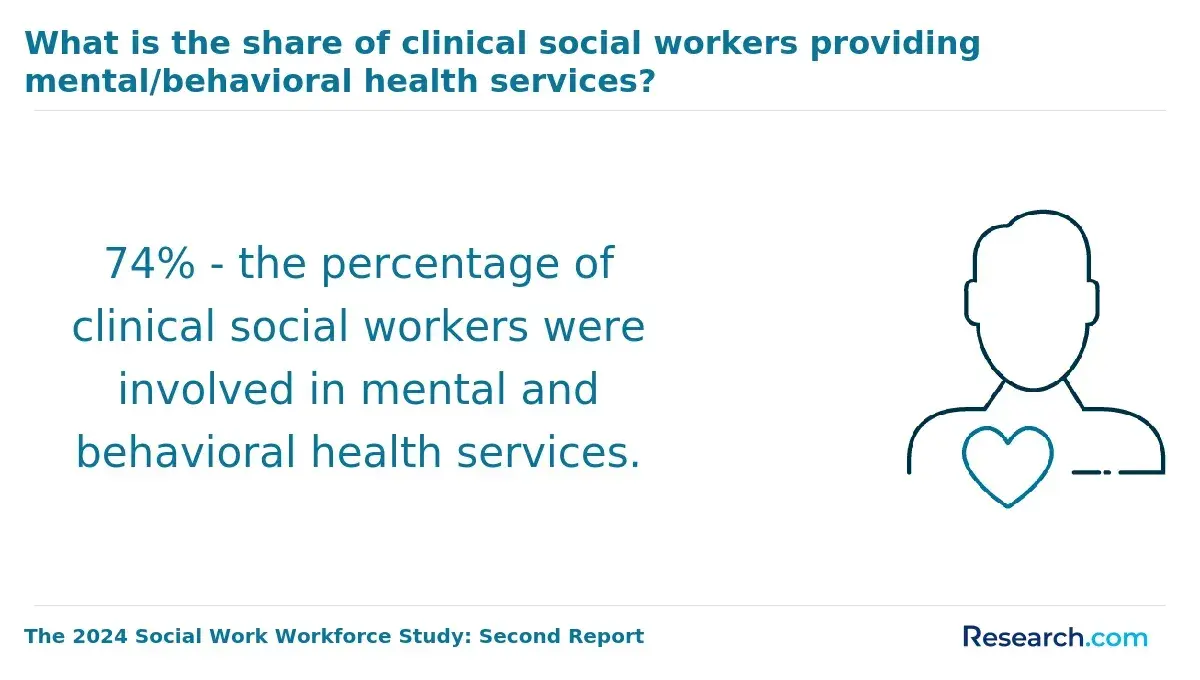
Clinical social work has a broader and more regulated scope. Licensed clinical social workers provide mental health assessment, treatment planning, psychotherapy, crisis intervention, and clinical documentation. In many states, they may diagnose and treat mental, emotional, and behavioral disorders after meeting education, supervision, examination, and licensing requirements.
The practical difference is not whether the professional cares for clients; both roles do. The difference is what the professional is legally trained and licensed to do.
- Primary function: Case managers coordinate services; clinical social workers provide clinical assessment and treatment.
- Typical education: Case management roles may accept a bachelor’s degree or related experience; clinical social work generally requires an MSW.
- Licensure: Independent clinical practice requires state licensure, commonly the LCSW or equivalent.
- Client work: Case managers address practical barriers; clinical social workers address mental health, behavioral health, and psychosocial treatment needs.
- Example: A case manager may help a client secure emergency housing; a clinical social worker may treat anxiety, trauma, depression, or substance use issues connected to housing instability.
Case management experience can be a strong foundation for clinical social work because it builds interviewing skills, cultural humility, systems knowledge, and comfort working with vulnerable populations. However, it does not replace graduate clinical education or supervised clinical hours. Professionals who want deeper academic or leadership preparation may also consider advanced pathways such as a PhD in social work, depending on their long-term goals.
Compensation can also be a factor in the decision. In 2026, mental health and substance use social workers earned an average of $85,369, with top earners reaching $140,026, making clinical social work a potentially strategic path for case managers who want more clinical responsibility and room for advancement.
What education is required to transition from case management to clinical social work?
The central education requirement is a Master of Social Work (MSW) from a program accredited by the Council on Social Work Education (CSWE). For most people moving from case management into clinical social work, the MSW is the required graduate degree for clinical licensure eligibility.
An MSW prepares students for clinical practice in ways that case management experience usually does not. Coursework and field education typically cover mental health assessment, diagnosis, therapeutic methods, ethics, social work theory, human behavior, research, policy, and supervised practice. The goal is to build the judgment required to treat clients safely and ethically, not just connect them to services.
There are two common entry paths:
- Traditional MSW: For students with a bachelor’s degree in a field other than social work. Applicants may come from psychology, sociology, criminal justice, human services, public health, education, or unrelated fields.
- Advanced standing MSW: For students who already hold a Bachelor of Social Work (BSW). These programs can shorten the path because students have already completed foundational social work coursework.
Working case managers should compare format, field placement support, accreditation, cost, and licensure alignment before enrolling. Online, hybrid, part-time, and full-time formats may all be viable, but the program must still satisfy clinical education and fieldwork requirements. If affordability is a priority, reviewing the cheapest MSW online options can help narrow the search, provided each program is properly accredited and appropriate for the state where you plan to seek licensure.
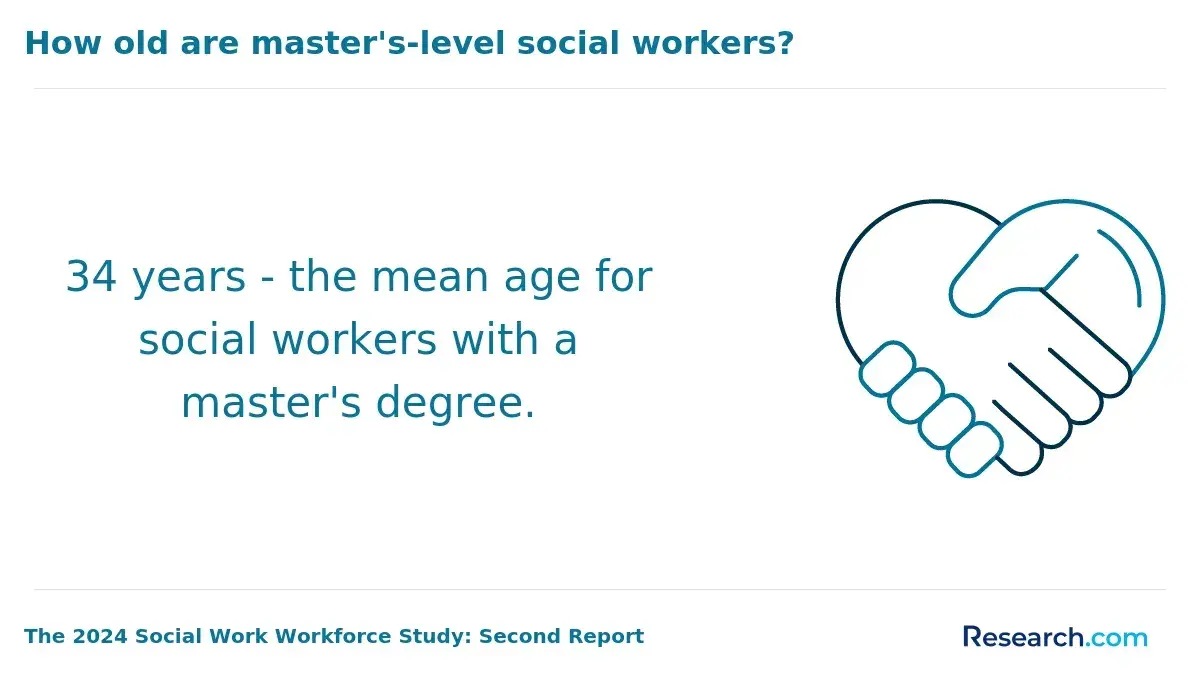
After the MSW, independent clinical social work practice typically requires supervised post-graduate clinical experience and a licensing exam. Licensure requirements vary by state but generally include 3,000 hours of supervised clinical experience and passing the Association of Social Work Boards (ASWB) clinical exam. Because requirements are state-specific, applicants should check the licensing board in the state where they intend to practice before selecting a program.
The labor market supports the value of this training. Employment of social workers is projected to grow 6% with around 74,000 openings annually, indicating continued demand across healthcare, mental health, social services, schools, and community-based settings.
How do I get licensed as a clinical social worker in the US?
Clinical social work licensure in the US is controlled by state boards, so the exact title and process vary. Many states use the Licensed Clinical Social Worker (LCSW) credential, while others use similar titles. The usual path includes a CSWE-accredited MSW, supervised post-graduate clinical experience, a clinical licensing exam, a board application, and continuing education after licensure.
The basic sequence is straightforward:
- Earn a CSWE-accredited MSW. Students who need a shorter route may compare fastest MSW program online options, but speed should not outweigh accreditation, clinical placement quality, or state licensure fit.
- Complete required clinical coursework and field education. The MSW should include clinical practice preparation, not only generalist or administrative training.
- Register for post-graduate supervised practice if your state requires it. Many states require supervised clinical experience before independent practice.
- Accumulate supervised clinical hours. States typically require supervised clinical experience ranging from 2,000 to 4,000 hours over two to three years.
- Pass the Association of Social Work Boards (ASWB) clinical exam. This exam assesses clinical knowledge, ethics, assessment, intervention, and professional judgment.
- Apply to the state licensing board. Applicants usually submit transcripts, supervision verification, exam results, background documentation, and fees.
- Maintain the license. Continuing education units (CEUs) may be necessary to maintain your license.
Case managers should pay close attention to supervision rules. Some states specify who can supervise, how often supervision must occur, whether group supervision counts, what documentation is required, and how many hours must involve direct clinical contact. Poorly documented supervision can delay licensure even when the work itself was legitimate.
The demand for clinical social workers remains strong in many regions. In California, salaries are competitive and job growth is projected at 14% through 2033-well above the national average (University of the Pacific Social Work Blog). Still, licensure portability is limited; moving to another state can require additional paperwork, verification, or requirements. Anyone planning to relocate should compare state rules early.
The best MSW programs for case managers moving into clinical roles are not simply the fastest or cheapest programs. They are programs that combine CSWE accreditation, a strong clinical curriculum, high-quality field placements, licensure alignment, and support for students who are shifting from coordination work into therapy-focused practice.
Look for programs with a clear clinical or direct-practice concentration. These should include training in assessment, diagnosis, treatment planning, ethics, psychopathology, crisis intervention, and evidence-based interventions. A strong program should help students move from “What services does this client need?” to “What clinical formulation, treatment plan, and intervention approach fit this client’s needs?”
Program features that matter most include:
- Clinical social work tracks emphasizing mental health, psychotherapy, behavioral health, or direct practice.
- Field placements in clinical settings such as hospitals, community mental health centers, outpatient clinics, integrated care teams, substance abuse centers, or school-based mental health programs.
- Coursework in diagnosis and treatment rather than a curriculum focused mainly on administration, policy, or macro practice.
- Faculty with clinical experience who understand licensure, supervision, documentation, and ethical practice.
- State licensure transparency so students know whether the program supports clinical licensure where they plan to work.
- Support for working professionals including part-time schedules, evening courses, online options, and realistic field placement planning.
Common concentrations that fit this goal include clinical social work, mental health, integrated behavioral health, trauma-informed practice, substance use counseling, child and family practice, and healthcare social work. Accredited MSW programs typically require at least 900 supervised clinical hours, meeting state licensing requirements and ensuring graduates are prepared for independent practice.
Field education is especially important for former case managers. A placement that mainly involves resource coordination may feel familiar but may not build enough therapy, assessment, and treatment-planning experience. When comparing programs, ask where clinical students are placed, who supervises them, what client populations they serve, and whether the work includes direct clinical practice.
According to the U.S. Bureau of Labor Statistics, healthcare social workers experienced a 15% employment growth since 2018, a faster rate than many healthcare fields. That growth reinforces the value of choosing an MSW that develops both clinical competence and systems-level understanding. For applicants still weighing the broader return on investment, asking is social work a good degree can be useful, but the better question is whether a specific MSW program supports the licensure and clinical career you want.
You can complete the classroom portion of many clinical MSW programs online, but clinical social work training is not entirely virtual. Even when courses are delivered online, students must complete supervised fieldwork in approved practice settings. For licensure, those practicum and internship hours are essential.
Online MSW programs can work well for case managers who need to keep working while earning the degree. Many programs use asynchronous coursework, live online seminars, virtual skills labs, and local field placements. The key is to confirm that the program is CSWE-accredited and that it is designed to support clinical licensure in the state where you plan to practice.
Before enrolling, ask the program direct questions:
- Is the MSW accredited by the Council on Social Work Education (CSWE)?
- Does the program offer a clinical or direct-practice pathway?
- Will the school help secure local field placements, or must students find their own?
- Does the curriculum meet educational requirements for your target state licensing board?
- Are there required campus visits, residencies, skills intensives, or in-person seminars?
- What happens if a student cannot find an approved placement near home?
State rules matter. Some states may have specific expectations for field education, supervision, distance learning, or in-person components. Prospective students should verify requirements with the relevant licensing board before committing to an online program.
Job projections from sources like PMC and NIH highlight an 11% growth rate in substance use and mental health social work by 2032, underscoring demand for qualified clinicians. An accredited online clinical social work degree can be a practical route into the field, but only if the fieldwork, accreditation, and licensure requirements line up.
- Fully online MSW coursework is available through many accredited programs.
- Local, supervised internships are still mandatory for licensure preparation.
- CSWE accreditation is a nonnegotiable factor for most clinical licensure pathways.
- Licensing board requirements should be checked before enrollment, not after graduation.
MSW programs typically require a bachelor’s degree from an accredited institution. The degree does not always have to be in social work, although applicants with a BSW may qualify for advanced standing if the program offers that option. Case managers without a social work degree can still be competitive if they show strong academic readiness, relevant experience, and a clear reason for pursuing clinical practice.
Common admission requirements include:
- Official transcripts from all colleges attended.
- A minimum undergraduate GPA near 3.0, although some programs review applicants with lower GPAs holistically.
- Letters of recommendation, often two or three, from supervisors, faculty, or professionals who can speak to readiness for graduate study and client-facing work.
- A personal statement explaining career goals, commitment to social work values, relevant experience, and interest in clinical practice.
- Resume or CV showing employment, volunteer work, internships, certifications, and human services experience.
- Interview, if required, to assess communication skills, maturity, ethical awareness, and fit for the program.
- GRE scores, if required, though some schools waive or no longer require them.
- English proficiency scores such as TOEFL or IELTS for some international applicants.
Applicants without a social work background may need to complete prerequisite or foundation coursework in areas such as human behavior, social welfare policy, research, and social work practice. Advanced standing applicants usually need a BSW from an accredited program and may face additional recency or GPA requirements.
A strong application should not simply say that the applicant wants to help people. It should explain why clinical social work is the right next step, how case management experience has prepared the applicant, what populations the applicant wants to serve, and how the program’s field education and curriculum match those goals.
According to Jacksonville State University Social Work, social workers focusing on mental health and substance abuse are expected to grow 11% from 2022 to 2032. Admissions committees know the field needs qualified professionals, but they still look for applicants who can handle graduate-level reading, ethical decision-making, supervision, and emotionally demanding clinical work.
For most case managers, the MSW takes 2 to 3 years depending on prior education, enrollment status, and program format. Full-time traditional MSW programs usually take about two years. Part-time programs may take three years or longer, which can be more realistic for professionals who need to keep working.
Students who already have a BSW may qualify for accelerated or advanced standing MSW programs and complete the degree in about one year. Students without a BSW usually complete the full foundation and advanced curriculum.
MSW costs vary widely, with total tuition ranging between $20,000 and $60,000. Public universities often cost less for in-state students, while private universities may charge higher tuition. Online programs are not automatically cheaper; some charge the same tuition for online and campus students, while others add technology or distance-learning fees.
When estimating the true cost, include more than tuition:
- University fees, technology fees, and graduation fees
- Books, software, and clinical documentation tools
- Transportation or commuting costs for field placement
- Reduced work hours during internships
- Background checks, immunizations, liability insurance, or site-specific requirements
- Licensing application fees and exam fees after graduation
- Post-graduate supervision costs if your employer does not provide approved supervision
Financial aid, employer tuition assistance, scholarships, public university pricing, and part-time enrollment can make the degree more manageable. However, students should be cautious about taking on high debt for a program that does not clearly support clinical licensure in their target state.
The timeline to full independent clinical licensure is longer than the MSW alone. After graduation, future clinical social workers must complete state-required supervised clinical hours and pass the relevant licensing exam. These requirements vary by state and may add several years before independent practice is allowed.
Employment for healthcare social workers is projected to grow 10% from 2022 to 2032, fueled by aging populations and expanded services, according to Jacksonville State University Social Work. That outlook can support the investment, but the best decision depends on tuition, debt, salary expectations, licensure goals, and the type of clinical role you want.
What is the job outlook for clinical social workers?
The job outlook for clinical social workers is strong because mental health, substance use, healthcare, aging services, schools, and community programs continue to need professionals who can combine clinical skill with systems knowledge. Licensed clinical social workers numbered over 325,000 professionals in the regulated workforce, reflecting a large and established profession.
Employment for clinical social workers is expected to expand faster than average, with growth estimates of 12% or more over the next decade. Demand is supported by the integration of behavioral health into hospitals, outpatient clinics, primary care, schools, community agencies, telehealth programs, and private practices.
Employers value clinical social workers because they can often bridge therapy, care coordination, crisis response, family support, resource navigation, and interdisciplinary teamwork. This is one reason case managers can be strong candidates for the transition: they already understand systems and client barriers, then add clinical assessment and treatment skills through the MSW and licensure process.
Opportunities vary by geography and specialization. Urban areas may offer more employers and specialized clinical settings, while rural and underserved areas may have shortages that create openings for licensed clinicians. Specialties in substance abuse, trauma, child welfare, serious mental illness, healthcare, and integrated behavioral health often see strong demand.
The main career advantage comes with clinical licensure. A master’s degree alone may qualify graduates for many social work roles, but independent clinical practice typically requires supervised experience and a state license. This credential can improve job mobility, salary potential, and eligibility for roles involving diagnosis, psychotherapy, and mental health billing.
Staying current on state licensing rules, continuing education, telehealth regulations, and healthcare delivery trends is essential. These insights are based on the PMC/NIH report Varying Estimates of Social Workers.
Other Things You Should Know About Social Work
Successful clinical social workers need strong communication and active listening skills to understand client needs effectively. They must also have critical thinking abilities to develop appropriate treatment plans and the emotional resilience to handle challenging situations. Cultural competence and empathy are crucial for working with diverse populations.
To transition into clinical social work in 2027, case managers should complete a Master's in Social Work (MSW) with a clinical focus. Pursuing state licensure as a Licensed Clinical Social Worker (LCSW) is crucial, as is gaining supervised experience and developing skills in therapy and assessment.
Most states require about 3,000 hours of post-MSW supervised clinical practice, completed over roughly 2 to 3 years. The hours must usually include direct client contact, documented supervision, and approval by the state licensing board before the candidate can sit for the clinical exam.
Maintaining licensure requires clinical social workers to complete continuing education credits regularly, ensuring they stay current with new practices and ethical standards. They often attend workshops, conferences, and specialized training sessions. Membership in professional organizations like the National Association of Social Workers also provides valuable resources and networking opportunities.
- Clinical vs. Generalist Social Work: Why Choose a Clinical Online Master of Social Work? https://onlinedegrees.keuka.edu/blog/clinical-vs-generalist-social-work
- Case Manager vs Social Worker: What’s the Difference? | RCC https://rehabcarecoord.com/whats-the-difference-between-a-case-manager-and-a-social-worker/
- Top 15 Highest‑Paying Pharmacy Jobs in the UK 2025 (Including Salaries) https://apexlearning.org.uk/highest-paying-social-work-jobs-uk-2026/
- Clinical Social Work Guide - Careers, Education & Salaries https://www.onlinemswprograms.com/careers/clinical-social-work/
- High-demand social work roles in 2026: trends and opportunities https://socialwork.pacific.edu/blog/high-demand-social-work-roles-2026-trends-and-opportunities
- Licensed Clinical Social Worker - Florida Board of Clinical Social Work, Marriage & Family Therapy and Mental Health Counseling https://floridasmentalhealthprofessions.gov/licensed-clinical-social-worker/
- Clinical Social Work Programs in the USA https://www.mswhelper.com/blog/clinical-social-work-programs-in-the-usa
- Social Work Master's Degree Prerequisites https://www.psychology.org/social-work/masters/
- MSW curriculum https://socialwork.wayne.edu/msw/curriculum
- Explore Social Work https://www.socialworkers.org/Careers/NASW-Career-Center/Explore-Social-Work