2027 How to Finish an AI Bachelor's Degree Faster

Co-Founder and Chief Data Scientist
Many students with unrelated backgrounds face long timelines and high costs when pursuing a bachelor's degree in Artificial Intelligence. Delays often result from rigid program requirements and limited credit transfers. For working professionals, balancing coursework with job demands complicates progress. Accelerating completion not only reduces expenses but also speeds entry into a competitive job market. This article explores practical strategies to finish an AI bachelor's degree faster in 2026. It highlights flexible learning options, efficient credit utilization, and essential planning tactics tailored for those seeking a career pivot into Artificial Intelligence.
Key Things You Should Know
- Accelerated AI bachelor's programs often allow credit for relevant prior learning, enabling completion up to 30% faster than traditional timelines.
- Integrating internships or cooperative education into your AI degree can both enrich experience and reduce time by bridging coursework with work-based learning.
- Online and hybrid AI degree formats have grown by 40% since 2024, offering flexible pacing options that support faster graduation schedules.
What are the fastest ways to complete an AI bachelor's degree in 2027?
Competency-based education (CBE) programs offer the fastest degree programs for artificial intelligence by allowing students to advance through demonstrated mastery rather than fixed credit hours. According to the Council for Adult and Experiential Learning (CAEL), learners in CBE can complete their degrees 1 to 2 years faster than traditional formats, making these accelerated artificial intelligence bachelor's degree options ideal for students with prior knowledge or relevant work experience.
Flexible scheduling is another key feature of these programs, enabling students to progress at their own pace. Hybrid models combining online and in-person classes further support more efficient study by reducing commuting time. Maximizing credit transfer from Advanced Placement (AP), dual enrollment, or prior coursework can also shorten time to graduation by eliminating unnecessary classes.
Enrolling in summer and intersession courses accelerates degree completion by delivering full courses in condensed terms, allowing students to earn credits year-round. Pairing these strategies with internships can provide practical experience and potential course credit, enhancing both education and employability.
For those exploring career paths, reviewing opportunities connected to an artificial intelligence degree jobs can clarify how these accelerated options align with industry demands and long-term goals.
Which accredited universities offer accelerated AI bachelor's degree programs?
Several accredited universities in the United States offer accelerated AI bachelor's degree programs designed to help students graduate faster while maintaining educational quality. The University of Florida provides an accelerated online AI track through its computer science program, allowing completion in as few as three years. Northeastern University offers a combined bachelor's and master's pathway in artificial intelligence with flexible scheduling to reduce total degree time.
Arizona State University supports an accelerated AI bachelor's program available both online and on campus, emphasizing project-based learning to enhance skill acquisition. Purdue University Global offers a competency-based AI bachelor's degree where students progress after mastering key skills, significantly shortening completion time for motivated learners. These options are among the best online accredited accelerated artificial intelligence bachelor's degrees available today.
The Online Learning Consortium's 2024 survey highlights that over 200 U.S. universities offer online computer science or AI-related bachelor's degrees, with approximately 40% providing accelerated or flexible completion options. This growth reflects an expanding focus on programs tailored to working professionals and non-traditional students seeking faster degree pathways.
Students pursuing which accredited universities offer accelerated AI bachelor's degree programs in the United States should prioritize schools offering credit transfers, condensed terms, or competency-based assessments. Accreditation by bodies like ABET, integration of practical AI applications, and flexible pacing aligned with career demands are important factors. For further insights, explore the data science master rank to understand affordable and reputable degree options.
How much does an AI bachelor's degree cost, and what financial aid options are available?
The ai bachelor degree cost in the United States varies considerably by institution and program format. Public in-state universities average approximately $104,405 for a four-year degree, while many online programs offer more affordable tuition ranging from $30,000 to $80,000. These online alternatives often provide greater flexibility, benefiting working professionals without sacrificing curriculum quality.
Financial aid options for ai bachelor's degree students play a crucial role in reducing expenses. Completing the Free Application for Federal Student Aid (FAFSA) opens access to federal grants, loans, and work-study programs. Pell Grants, available to eligible low-income students, do not require repayment and significantly ease the financial burden. Additionally, state-specific STEM grant programs can benefit those pursuing AI-related degrees.
Scholarships from organizations like the Association for Computing Machinery (ACM) and industry partners target AI and technology students, often requiring demonstration of academic achievement or extracurricular involvement. Employer tuition reimbursement programs also help working students offset costs. Federal student loans typically offer lower interest rates and income-driven repayment plans compared to private alternatives, helping students manage debt responsibly.
Applying early to scholarships and grants increases the chances of funding before enrollment. For more information on affordable educational paths in this field, consider exploring programs listed in the AI masters degree rankings, which highlight accessible online options for advancing your AI education.
What is the typical curriculum and core coursework in an AI bachelor's degree?
A typical curriculum in an AI bachelor degree program dedicates about 35-40% of coursework to mathematics and statistics, essential for grasping algorithms and data analysis. Core subjects like linear algebra, calculus, probability, and statistical inference equip students with the quantitative tools necessary for machine learning and data modeling.
Technical electives focused on AI, including machine learning, neural networks, and deep learning, usually comprise 20-25% of the program. These courses cover supervised and unsupervised learning methods, natural language processing, and computer vision. Hands-on projects often involve Python, TensorFlow, or similar frameworks to develop and evaluate models.
The core coursework for an AI bachelor's degree also emphasizes foundational computer science topics such as data structures, algorithms, and programming languages. Complementary classes in databases, software engineering, and cloud computing prepare students to build scalable AI systems.
Many programs incorporate ethical considerations, AI safety, and societal impacts to foster responsible development. Interdisciplinary classes might explore robotics or human-computer interaction, enhancing practical abilities. Capstone projects or research components integrate technical knowledge to solve real-world problems, providing vital experience for industry roles or graduate study.
The ACM/IEEE Computer Science Curricula 2024 guidelines govern this balance, ensuring a rigorous education aligned with market demands. Prospective students interested in further education may explore options like a master data science online.
What are the admission requirements for an AI bachelor's degree program?
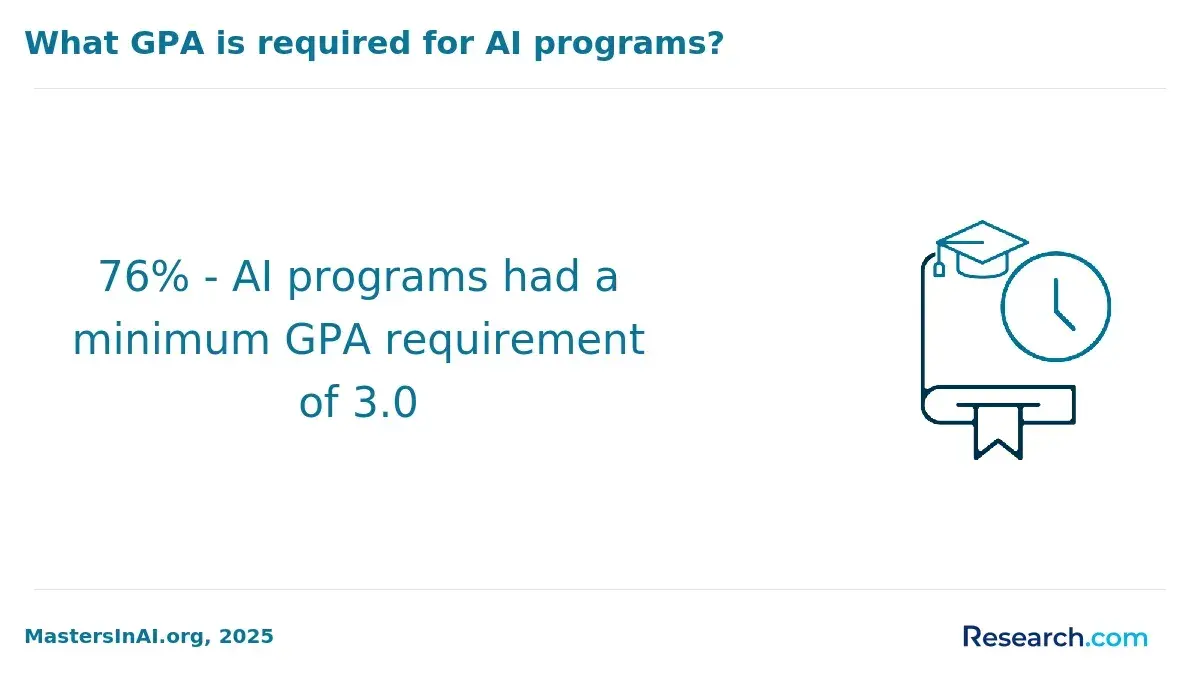
Admission to AI bachelor's degree programs increasingly focuses on academic achievements and demonstrated skills rather than standardized tests. By 2024, 73% of accredited universities reduced or eliminated standardized testing for computer science and AI programs, placing greater emphasis on a minimum 3.0 GPA and coursework in math, computer science, and science.
Applicants are typically expected to submit a portfolio featuring coding projects, research papers, or AI competition participation. This portfolio-based evaluation often replaces traditional entrance exams, showcasing practical skills and problem-solving abilities.
Many universities also require letters of recommendation from instructors or mentors familiar with the applicant's technical skills and work ethic. A personal statement outlining motivation and career goals in AI is often necessary as well.
Requirements may differ for freshmen versus transfer students. Transfers usually must provide transcripts evidencing completion of core courses like programming, calculus, and statistics. International applicants face the same academic standards and often need to demonstrate English proficiency via TOEFL or IELTS, although some institutions waive this if prior education was in English.
Prospective students should carefully review individual university criteria, which increasingly favor holistic assessment with a portfolio and GPA prioritized over standardized tests.
How do online AI bachelor's degrees compare to on-campus programs in terms of speed and outcomes?
Online AI bachelor's degrees offer a notable speed advantage over traditional on-campus programs without compromising outcomes. According to the 2024 Learning House survey on online degree outcomes, 31% of online graduates finish their degrees one semester earlier thanks to flexible schedules and accelerated courses. This flexibility benefits working professionals and non-traditional students by allowing them to fit coursework around jobs and family commitments.
Employment prospects for online AI bachelor's graduates are strong, with a 92% job placement rate within six months, matching on-campus programs. Employers increasingly value online degrees, especially from accredited institutions offering rigorous curricula. Program structure influences completion speed; many online programs utilize asynchronous learning, permitting students to access materials anytime and progress faster. Others offer competency-based education where skill mastery allows early advancement. In contrast, on-campus programs usually follow fixed semester calendars, limiting acceleration opportunities. Hybrid programs combine online and in-person components to offer moderate flexibility.
Students should carefully assess how online programs manage course availability, prerequisite order, and internship requirements, as these impact overall duration and job readiness. Additionally, strong remote career services are essential for securing job placement comparable to on-campus resources. Online AI degrees provide a faster, effective path to workforce entry when aligned with student goals and institutional support.
What career roles and job titles can you pursue after earning an AI bachelor's degree?
Graduates with a bachelor's degree in artificial intelligence can pursue a variety of technical and analytical careers. Common roles include machine learning engineer, AI research scientist, and data scientist. LinkedIn's 2024 Jobs Report highlights a 74% increase in AI-related job postings year-over-year, with these roles representing 58% of entry-level positions requiring a bachelor's degree.
Machine learning engineers create algorithms that help systems learn from data, often working in sectors like healthcare, finance, and tech. Proficiency in programming languages such as Python, as well as frameworks like TensorFlow or PyTorch, is essential at the entry level.
AI research scientists develop innovative machine learning techniques and refine algorithms, typically within research labs or technology companies focused on emerging fields like autonomous vehicles, robotics, or speech recognition.
Data scientists interpret complex data sets combining AI methods with statistics to generate insights that drive business intelligence and efficiency. Other career options include AI software developer, AI product manager, and AI ethics specialist, each with unique skills and certification needs.
Building a project portfolio and mastering AI frameworks during undergraduate studies significantly boosts employability. Prospective students aiming to succeed should consider which AI career aligns with their interests and strengths, enabling a focused educational and internship path.
What is the job outlook and salary potential for AI bachelor's degree graduates?
The outlook for AI bachelor's degree graduates is exceptionally strong, with a projected growth rate of 35% through 2032, far exceeding the average for all occupations, according to the U.S. Bureau of Labor Statistics 2024 Occupational Outlook Handbook. Industries such as technology, healthcare, finance, and manufacturing demonstrate robust demand for AI talent. Starting salaries typically range from $95,000 to $115,000, offering a 22% premium over traditional computer science roles, highlighting the high value placed on specialized AI skills.
Career paths include machine learning engineer, data scientist, AI software developer, and robotics programmer. Success in these roles requires strong programming skills, algorithm knowledge, and practical experience with neural networks and data modeling. Internships or cooperative education programs can boost employability and salary offers early in one's career. Location also impacts earnings; major tech hubs like Silicon Valley, Seattle, and Austin offer higher pay but come with increased living costs.
Graduates considering accelerated program completion should balance the advantage of early entry into the workforce with gaining hands-on project experience, which employers highly value. A portfolio showcasing AI projects or contributions to open-source software significantly improves job prospects. Overall, AI bachelor's degree holders enter a rapidly expanding, well-compensated sector in U.S. technology labor markets.
Are there certifications or professional credentials that complement an AI bachelor's degree?
Certifications and professional credentials enhance an AI bachelor's degree by boosting practical skills and employability. Data from Coursera's 2024 Skills Gap Report reveals 63% of AI bachelor holders pursue at least one certification within two years of graduation. Among the most valuable are the Google Cloud AI and AWS Machine Learning certifications, which can increase salaries by 18% to 24% on average.
These credentials offer hands-on training with cloud platforms and machine learning tools, areas where many AI programs focus more on theory. For instance, the Google Cloud Professional Machine Learning Engineer certification requires candidates to design and deploy machine learning models on Google Cloud, directly matching job requirements in AI engineering. Similarly, the AWS Certified Machine Learning - Specialty demonstrates proficiency in building AI solutions with Amazon Web Services.
Other respected certifications include Microsoft Certified: Azure Data Scientist Associate and credentials from IBM and NVIDIA that emphasize AI deployment and ethical practices. These help fill skill gaps in automated decision-making and responsible AI applications.
Students and professionals should choose certifications aligned with their career goals, whether in AI research, software engineering, or cloud architecture. Combining an AI degree with targeted certifications addresses the demand for both deep theoretical knowledge and practical expertise.
How do prior college credits, CLEP exams, and transfer credits accelerate AI degree completion?
Prior college credits, CLEP exams, and transfer credits can significantly shorten the time needed to complete an AI bachelor's degree by reducing required courses. According to the CLEP 2024 Impact Study by the College Board, students transferring 30-45 credit hours can cut their degree time by 12 to 18 months, while CLEP exam credits reduce time-to-degree by 6 to 9 months. This results in fewer semesters enrolled, allowing for earlier graduation and faster entry into the workforce.
Transfer credits from accredited institutions are applicable when course equivalencies match AI program requirements. For instance, students who have completed foundational computer science or mathematics courses can often bypass introductory AI classes. Since acceptance policies vary widely, a careful transcript evaluation by the receiving school is crucial.
CLEP exams offer a flexible, cost-effective way to waive general education or prerequisite courses. Exams in subjects like calculus, statistics, or programming languages can accelerate degree progress, especially benefiting working professionals or those with prior knowledge.
Students should request transfer credit evaluations early and consult academic advisors to identify which CLEP exams align with their AI curriculum. Maintaining detailed syllabi and learning outcome documentation supports transfer approval. In some cases, combining transfer credits and CLEP exam results can shorten AI bachelor's degree completion by up to two years, enabling faster career advancement.
Other Things You Should Know About Artificial Intelligence
In 2027, online courses offer flexibility, allowing students to learn at their own pace and on their own schedule. They often provide accelerated formats, enabling students to complete coursework faster. Access to a diverse array of resources and the ability to learn from global experts also contribute to speeding up the degree process.
Yes, most AI bachelor's programs include practical components such as labs, projects, and internships that provide hands-on experience. These activities expose students to real-world AI applications, enhancing their technical skills and preparing them for industry demands. Many programs also encourage participation in research or coding competitions.
Interdisciplinary learning broadens students' perspectives by linking AI with fields like computer science, cognitive science, ethics, and data science. This approach fosters a deeper understanding of AI's societal impact and ethical considerations. It also equips students to collaborate across diverse teams and adapt to emerging AI technologies.
Yes, many students find the technical complexity of AI concepts and the fast pace of technological development challenging. Balancing theory with practical programming tasks can also be demanding. Time management and consistent study habits are key to overcoming these challenges and successfully completing the degree.
References
- 16 Artificial Intelligence Career Paths https://www.calmu.edu/news/artificial-intelligence-career-paths
- Undergraduate https://ai.seas.upenn.edu/academics/undergraduate/
- Cost to Study Artificial Intelligence in 2026 https://checkmateittech.com/cost-to-study-artificial-intelligence-usa/
- Accelerate Your Education At AIU® https://www.aiuniv.edu/admissions/accelerate-prior-learning-credits
- What Are the Career Paths After a Bachelor of Science in AI https://tetr.com/blog/what-are-the-career-paths-after-a-bachelor-of-science-in-ai
- University Degree vs AI Bootcamp: Which is Best Career Path? https://agilefever.com/university-degree-vs-ai-bootcamp-which-is-best/
- 11 Best AI Certifications in 2025 to Deepen Your Technical Knowledge | DigitalOcean https://www.digitalocean.com/resources/articles/ai-certifications
- Accelerated BSc. in AI https://smceducation.com/bachelor-in-ai/
- Are Online Programs Typically More Streamlined Than In-Person Options? https://elearningindustry.com/are-online-programs-typically-more-streamlined-than-in-person-options
- Top 10 AI certifications and courses for 2025 https://www.techtarget.com/whatis/feature/10-top-artificial-intelligence-certifications-and-courses