2027 Best Online Master's in Finance for Commercial Banking Careers

Co-Founder and Chief Data Scientist
Securing a master's in finance tailored for commercial banking careers often demands navigating rigid scheduling conflicts, especially for mid-career professionals balancing work and family. Nearly 60% of graduate students now prefer online programs for their flexibility, according to the National Center for Education Statistics, revealing a notable shift toward accessible learning that accommodates nontraditional students.
This growth reflects increased employer emphasis on agile upskilling as banks face rapid regulatory and technological changes. Choosing a program that aligns with these dynamics impacts not just credentialing but timely career advancement and role readiness. This article evaluates top online master's in finance programs designed specifically for commercial banking professionals seeking practical outcomes and flexible pacing.
Key Things You Should Know
- Specialized online master's in finance programs with commercial banking concentrations show 12% higher job placement rates within 6 months than general finance degrees, according to the Federal Reserve's 2024 labor market review.
- Employers prioritize applied analytics and regulatory compliance skills, causing a mismatch for candidates from programs lacking current banking-specific curricula; 67% of hiring managers reported skills gaps in 2025 surveys by the CFA Institute.
- Tuition premiums averaging 20-30% for top-tier online degrees require longer ROI horizons; professionals funded through employer tuition assistance see 15% faster promotions than self-funded peers, per Georgetown University financing data.
What is an online master's in finance and how does it prepare you for commercial banking careers?
Online master's degrees in finance for commercial banking careers emphasize applied skills that align closely with daily banking operations such as loan structuring and asset-liability management. With a 38% rise in interest for online business master's programs, professionals face a tradeoff between the convenience of remote learning and limited in-person networking, which can impact the development of communication skills essential for team-based banking roles.
Employers increasingly prioritize candidates who demonstrate proficiency in financial modeling software, regulatory compliance, and data analysis-capabilities strengthened by case-based curricula. For working bankers aiming to pivot, for example into credit risk management, online programs that integrate macroeconomic factors with bank-specific risk metrics offer a more accelerated and practical route than traditional formats.
Students must critically assess programs for meaningful live interactions or collaborative projects that support practical skill-building. Additionally, candidates benefit from selecting degrees that provide strong alumni networks and career services, which can influence employment opportunities in competitive banking environments.
Understanding how an online finance master's degree prepares for banking jobs involves acknowledging these operational realities and making informed decisions about program format and outcomes. Those seeking practical affordability and focused results may consider options from online master's in finance, which balance cost and career impact effectively.
Which online master's in finance programs are best for advancing into commercial banking roles?
Programs recognized as the best online master's in finance programs for commercial banking careers distinguish themselves through targeted curricula that reflect specific employer demands in banking. Specialized coursework-such as commercial lending, credit analysis, and financial institutions management-aligns closely with the skill sets regional banks prioritize when hiring for roles like credit analyst or loan officer.
Programs integrating case studies and bank-driven simulations tend to produce graduates who transition more smoothly into these positions, offering tangible advantages over generalist degrees. Prospective students evaluating top online finance degrees for advancing in commercial banking should consider institutional ties to financial hubs or local banks.
These connections often translate into internship opportunities and networking pipelines, critical in an industry driven as much by relationships as by credentials. Curricular elements addressing emerging fields like fintech and predictive analytics also prepare candidates to meet evolving operational needs where technology enhances decision-making and efficiency.
Trade-offs between program duration and depth are especially relevant for working professionals. Longer formats with part-time structures offer flexibility and steady professional progression but may delay access to senior roles compared to more concentrated one-year programs. Evaluating these aspects alongside transparent graduate employment data and accreditation status remains essential for informed decision-making.
According to the U.S. Bureau of Labor Statistics, financial analysts and personal financial advisors-often entry points into commercial banking-are projected to grow 6% and 10% respectively through 2034, indicating sustained demand for analytical expertise combined with sector knowledge.
Those seeking the most efficient pathway may also explore easiest and fastest online MBA programs, which can serve as alternative routes into finance leadership roles with practical business management training.
How do online and on-campus master's in finance programs compare for commercial banking careers?
Deciding between online master's in finance versus on-campus programs for commercial banking hinges largely on professional status and geographic flexibility rather than curriculum differences. On-campus degrees maintain an edge in direct recruiting, alumni networks, and immersive experiences critical for recent graduates or those switching careers.
In contrast, online formats accommodate working professionals by blending study with ongoing employment, preserving income and workplace ties while expanding skill sets. Experienced banking professionals typically gain more from online master's in finance programs by leveraging flexible schedules without geographical constraints, though they face fewer spontaneous mentorship encounters.
Entry-level candidates often benefit from the structured environment of traditional programs, which embed financial modeling labs and facilitate in-person recruiter access, still highly favored in commercial banking hiring practices. Salary premiums post-graduation are similar across both formats when accreditation and program rigor meet industry norms.
The 2024 GMAC Corporate Recruiters Survey reports a 53% median salary uplift for master's graduates in finance roles over bachelor's holders, irrespective of delivery mode. Candidates should prioritize verified employment outcomes over assumptions about format superiority.
- On-campus programs require full-time attendance and often geographic relocation, limiting accessibility for mid-career professionals.
- Online programs demand strong self-discipline, compensating with flexible, work-integrated learning but less face-to-face networking.
- Commercial banking recruiters prefer top-tier on-campus graduates for entry positions; senior-level professionals often use online degrees to credentialize skills.
Prospective students exploring the fastest MBA programs online should weigh these factors in light of their career trajectory and immediate professional context, recognizing that employer perceptions and practical constraints drive outcomes as much as educational content.
What accreditation and quality standards should online finance master's programs meet for banking employers?
Regional accreditation remains the non-negotiable baseline for online master's in finance programs targeting commercial banking careers. Without recognition from U.S. Department of Education or Council for Higher Education Accreditation (CHEA) bodies, degrees often lack transferability and professional credibility, limiting access to certifications such as CFA or FRM.
Employers in this space particularly scrutinize programs with specialized business school accreditation like AACSB, which correlates strongly with curriculum rigor, faculty expertise, and measurable student outcomes. Banking recruiters favor graduates demonstrating verified mastery of quantitative skills-risk management, financial modeling, regulatory compliance-alongside applied learning experiences such as case studies with real bank data or simulative credit assessments.
When candidates come from non-AACSB or unaccredited schools, hiring managers commonly require supplementary proof of competence via certifications or extensive practical experience. Workforce data from GMAC's 2024 employer survey finds that 73% of corporate recruiters rate graduates of high-quality online business master's programs as equally prepared or better prepared than graduates of equivalent on-campus programs.
This indicates that quality standards for online finance degrees recognized by banking employers hinge heavily on accreditation and applied learning benchmarks, not delivery format alone. Prospective students must vet these credentials rigorously to avoid pursuing degrees that do not facilitate competitive employment outcomes.
Those assessing accredited online master's in finance programs for commercial banking should weigh real-world implications beyond tuition, such as employer perceptions, career acceleration barriers, and curriculum depth. For comparative approaches in advanced business credentials, resources on online eMBA programs provide a useful reference frame.
What courses and specializations in an online finance master's support commercial banking career paths?
Quantitative rigor and applied risk management define the functional core of online master's in finance programs aimed at commercial banking roles. Candidates lacking coursework in financial econometrics, statistical programming with Python or R, and machine learning will not meet the growing demand banks have for data-driven decision-making. With 78% of banks increasing hiring for advanced analytics and modeling skills within the next few years.
Specializing in credit risk, regulatory compliance, and fixed income broadens a graduate's fit for roles spanning credit underwriting to treasury and asset-liability management. These areas emphasize practical knowledge of Basel III/IV frameworks, stress testing, and loan portfolio optimization-realities not captured by overly theoretical curricula. Programs without regulated risk frameworks or hands-on data tool experience risk leaving graduates underprepared for critical banking functions.
Employers prioritize candidates who apply predictive credit scoring and scenario analysis software effectively to enhance portfolio resilience amid market volatility. For working professionals pivoting toward commercial banking, programs integrating projects with real banking datasets and compliant risk-reporting tools reduce the gap between classroom theory and operational demands.
- Courses combining applied quantitative methods, financial modeling, and risk management address essential skill gaps.
- Credit risk and regulatory frameworks specialization directly supports compliance and portfolio oversight roles.
- Demonstrated proficiency with statistical software and regulatory standards improves job readiness and employer confidence.
What are typical admission requirements for online master's in finance programs focused on banking?
Admission criteria for online master's in finance programs tailored to commercial banking prioritize measurable academic and professional benchmarks aligned with sector demands. Candidates typically hold a bachelor's from accredited institutions in relevant disciplines such as finance or economics, with minimum GPAs often around 3.0, though competitive programs enforce higher thresholds.
Crucially, GRE or GMAT scores remain standard requirements unless waived for substantial banking experience, where applicants must instead provide detailed resumes reflecting work in areas like credit analysis or financial risk management. Programs stress the importance of applicants' professional recommendations-usually two letters confirming analytical acuity, leadership, and quantitative skills-and a personal statement linking career objectives specifically to commercial banking functions like loan underwriting or regulatory compliance.
Quantitative preparation through prior coursework in calculus or statistics is essential to manage core subjects like asset valuation and bank portfolio management effectively. Some schools incorporate interviews to evaluate communication aptitudes necessary for customer-facing and collaborative roles intrinsic to banking.
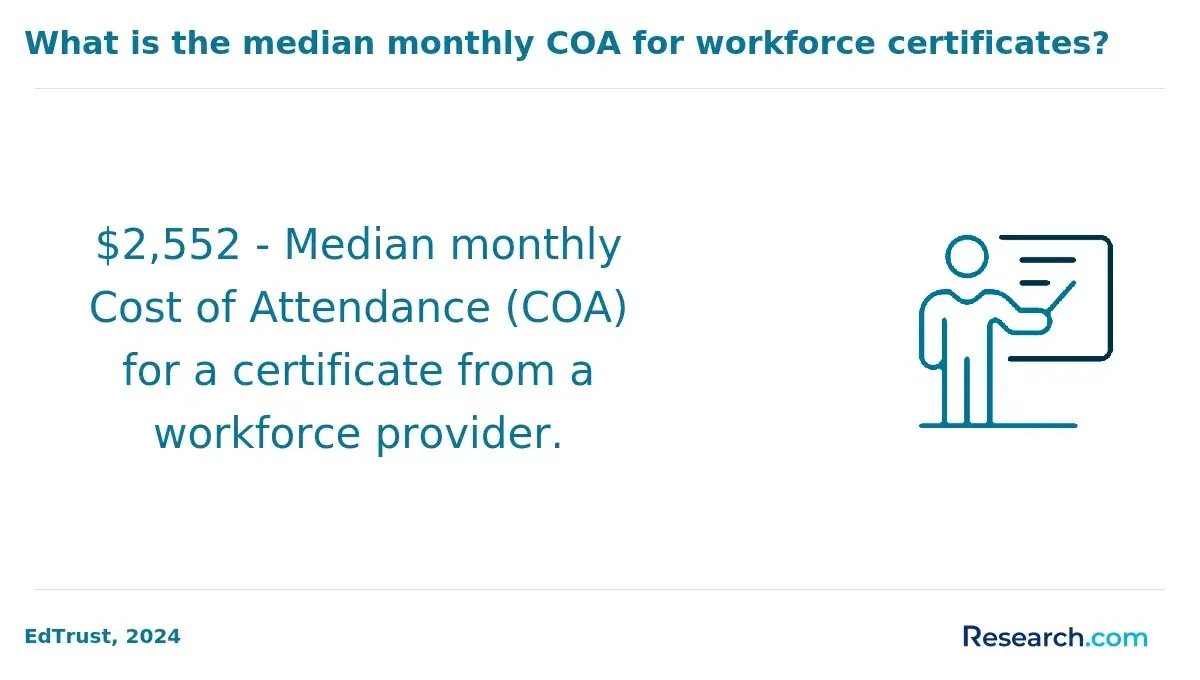
Financial factors also bear heavily on admission decisions. Tuition varies widely, with top-tier online MS in Finance costing from approximately $885 per credit to over $2,500 per six-credit term at public universities, highlighting the impact of employer tuition assistance policies on accessibility. Prospective students must weigh program rigor, admission demands, and costs against their targeted roles-particularly those requiring regulatory expertise or advanced quantitative finance skills.
- Typical admission requirements: bachelor's degree (finance, economics, accounting, business), minimum 3.0 GPA
- Standardized tests: GRE/GMAT often required unless waived with relevant banking experience
- Supporting materials: two professional recommendations and personal statement aligned with banking goals
- Quantitative readiness through prior coursework in calculus, statistics, or corporate finance
- Some programs require interviews assessing communication skills
- Tuition costs vary from $885 to over $2,500 per credit or term, impacting affordability and access
How long do online master's in finance programs take and what do they typically cost?
Condensed online master's in finance programs-typically 18 to 24 months full-time-offer a clear advantage for professionals targeting swift transitions or advancement within commercial banking sectors. Yet, this accelerated pace often requires balancing heavier coursework against minimizing income disruption, presenting a tangible tradeoff between depth of specialization and timing.
Programs usually demand 30 to 45 credits focused on core financial theory, quantitative analysis, and specialized banking skills like credit analysis and risk management. Selecting a program involves weighing price against recognition; tuition ranges broadly from $20,000 at public institutions to $70,000 or more at private ones. Beyond sticker price, students must factor in additional costs such as technology fees and materials.
Employers prioritize degrees with direct relevance to commercial banking roles. Data from the GMAC Corporate Recruiters Survey note that over 90% of finance and accounting recruiters see specialized finance degrees as value-adding for early-career hires. Graduates from overly generic programs risk diminished hiring appeal despite similar credit loads or cost.
Decision-making should integrate these workforce realities: accelerated tracks reduce opportunity cost but might limit elective exploration; longer programs offer flexibility but increase total investment, delaying full workforce participation. Evaluating program content, cohort composition, and employer engagement is essential to maximize the strategic value of the degree within banking careers.
What commercial banking jobs can you get with an online master's in finance?
An online master's in finance equips graduates with quantitative and regulatory expertise critical for roles such as credit analysts, loan officers, risk managers, and portfolio managers within commercial banking. For instance, a credit analyst may use these skills to structure loans for mid-sized enterprises, addressing competitive pressures regional banks face in diversifying their portfolios.
This implies that the degree's value depends significantly on practical applicability to evolving commercial banking demands rather than theoretical knowledge alone. Loan officers optimizing approvals must reconcile credit risk management with portfolio growth, a balance increasingly stressed by regulatory shifts post-2024. Similarly, risk managers leverage mastery of financial modeling and compliance to influence enterprise-level strategies.
Portfolio managers apply these competencies to navigate capital adequacy constraints while expanding assets. Employers favor candidates demonstrating proficiency in these intersecting domains. The QS Business Master's Rankings 2026 report over 60% international enrollment in top finance programs, mirroring the global nature of credit risk and regulatory compliance in commercial banks with cross-border operations.
This dynamic mandates graduates proactively seek programs integrating global finance perspectives to meet multinational banking complexities. Challenges remain with internship access for online students and the need to understand regional economic and regulatory nuances. Graduates should prioritize targeted networking and industry engagement during and after study to bridge gaps between academic foundations and employer expectations.
What salaries and bonus structures can commercial bankers with a finance master's expect?
Base salaries for commercial bankers with a master's in finance vary widely, from about $85,000 at entry-level middle-market banks to $135,000 or more at senior analyst or relationship manager positions in major financial centers. However, total compensation often hinges on bonus structures, which average 15% to 30% of base salary and can exceed 50% for positions focused on deal origination, product development, or risk analytics.
Deloitte's 2024 banking report notes that approximately 70% of global banks are increasing investments in AI and advanced analytics, making data fluency a crucial differentiator. For example, a commercial banker specializing in credit risk analytics who skillfully applies AI tools and predictive models can enhance loan portfolio outcomes, securing higher bonuses and faster salary growth.
Conversely, those without technical and data competencies risk stagnating near lower pay brackets despite advanced finance credentials. Employers clearly value the fusion of quantitative technical skills with finance expertise, resulting in significant compensation disparities based on demonstrated analytics capabilities. Prospective students should prioritize programs emphasizing hands-on quantitative finance tools to improve marketability in tech-driven banking roles.
- Mastery of AI and predictive analytics increases bonus eligibility and career mobility within commercial banking.
- Employers differentiate heavily between traditional finance knowledge and combined finance-analytics skillsets.
- Banking sectors investing in advanced analytics demand candidates prepared for evolving technical challenges.
How can prospective students evaluate and choose a reputable online finance master's for banking?
Choosing a master's in finance over a two-year MBA can sharply reduce both time and financial outlay for those targeting commercial banking roles. Unlike the broader MBA, a finance master's curriculum should concentrate on applied skills like risk management, credit analysis, and financial modeling-competencies directly valued by banking employers.
Employers increasingly rely on these specialized master's programs as talent pipelines, making alumni placement statistics a critical metric. Accreditation from organizations such as AACSB or EQUIS further signals the program's academic rigor and industry alignment, which can influence long-term credential recognition.
Practical format considerations affect feasibility for working professionals. Programs combining asynchronous learning with proactive career support, including finance-specific interview coaching, help bridge education to employment. Peer cohorts rich in finance experience contribute tangible, real-world perspectives beyond textbook theory.
Tradeoffs become apparent when broader leadership roles are the goal. While an MBA offers cross-functional leadership skills, its extended duration and higher cost can delay workforce re-entry and inflate opportunity costs. For a finance professional seeking specialized expertise and expedited placement in banking, the master's in finance offers a focused, cost-efficient pathway.
Key decision points include:
- Confirming curriculum depth in advanced banking topics over general business courses
- Evaluating placement rates in targeted finance roles as a proxy for employer trust
- Assessing how program format and peer composition support learning and career transition
Other Things You Should Know About Finance
Yes. Many 2027 online finance master’s programs require a 3-credit capstone, practicum, or applied portfolio in the final term. These projects often use commercial lending, credit analysis, or risk-management cases and are completed before graduation, usually after core coursework is finished.
The workload in online finance master's programs varies widely but often demands 15 to 20 hours per week, including readings, assignments, and group projects. Working professionals must realistically assess their capacity to maintain performance at work while managing academic deadlines. Programs offering part-time pacing or asynchronous coursework improve the chance of balancing both but may extend time to graduation.
Employer acceptance of online finance degrees is increasing, especially when the program holds strong regional or national accreditation and has industry-relevant curricula. However, top-tier banks and competitive roles may still prefer degrees from well-known traditional institutions due to perceived rigor and networking advantages. Selecting an online program with ties to the banking industry or well-established alumni can mitigate some employer concerns.
Financial aid options for 2027 online master's in finance programs include federal loans, grants, and scholarships. Many universities offer specialized scholarships for finance students. Check specific program pages for eligibility and application deadlines to maximize aid opportunities.
References
- Best Online Finance Degrees: A Comprehensive Guide https://lumsx-bbb.lums.edu.pk/fast-dispatch/best-online-finance-degrees-a-comprehensive-guide-1767646612
- Trusted Partners | LIBF https://www.walbrook.ac.uk/libf/partnerships/accreditation/
- Investment Banker Salary Revealed: The Real Numbers for 2026 https://finsimco.com/blog/investment-banker-salary-revealed-the-real-numbers-for-2025
- Investment Banking Masters Programs https://mergersandinquisitions.com/investment-banking-masters-programs/
- 10 best Masters in Finance courses for careers in trading https://www.ifsc.ie/news/10-best-masters-in-finance-courses-for-careers-in-trading
- How to find a good master's degree in finance? - ESCE https://www.esce.fr/en/faq-all-the-answers-to-your-questions/how-to-find-a-good-masters-degree-in-finance/
- Masters in Finance | Online Masters and MBA Degrees in Finance | What is a Financial Planner? | What does a Financial Planner do? https://www.financialplannerworld.com/masters-in-finance/
- What to do after a master's in finance https://www.ipag.edu/en/blog/what-do-after-masters-finance
- Non-Target School? Here are the Top 10 Master of Finance Degree Programs to Win a Job in Investment Banking https://thewriteresume.com/top-10-master-of-finance-degree/
- Jobs for MSc Finance Graduates https://www.global-business-school.org/content-type/blog/jobs-msc-finance-graduates/