2027 First Finance Roles for Sales Professionals Moving Into Financial Careers

Co-Founder and Chief Data Scientist
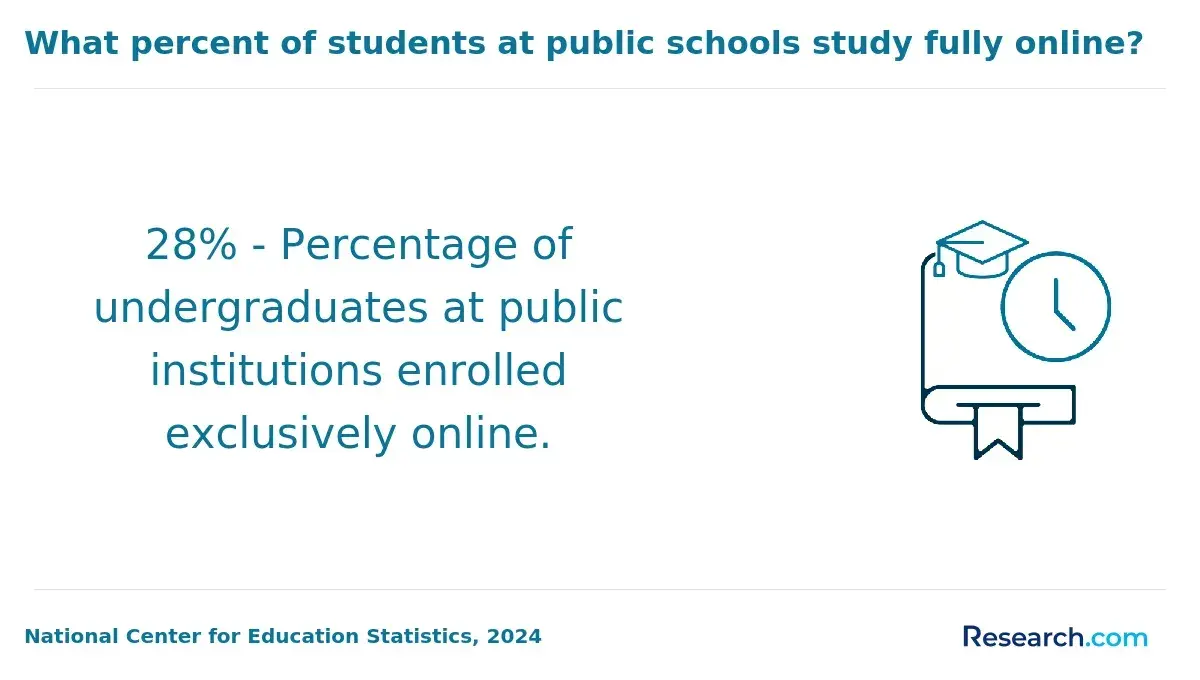
Transitioning from sales to finance confronts professionals with the practical hurdle of credibility and skill validation in a domain defined by precision and regulatory scrutiny. Nearly 40% of adult learners now pursue nontraditional, flexible education platforms, according to the National Center for Education Statistics, signaling a shift that widens access but complicates program selection amid varying employer recognition.
Sales professionals must navigate this evolving landscape to pinpoint learning pathways that deliver relevant competencies, timely credentials, and tangible career leverage. This article examines entry-level finance roles aligned with sales backgrounds and strategies to overcome credential, experience, and market-entry barriers effectively.
Key Things You Should Know
- Entry roles in finance for sales professionals often favor candidates with targeted certifications over general business degrees, with 62% of hiring managers prioritizing credentials like CFA or CFP, per the CFA Institute 2024 report.
- The average transition period ranges from 12 to 18 months, during which opportunity costs rise; Bureau of Labor Statistics data shows a 15% earnings dip for career changers before regaining parity.
- Employers increasingly demand quantitative skills-candidates lacking proficiency in financial modeling face 40% lower interview success rates according to LinkedIn Workforce Insights 2024, pressuring reskilling investments.
What are the best first finance roles for sales professionals transitioning into financial careers?
Sales professionals transitioning into financial careers must negotiate the balance between leveraging existing client management skills and meeting stringent licensing requirements. Personal financial advisor roles exemplify this tension, offering a viable entry point for those with strong interpersonal skills who commit to earning certifications like the CFP (Certified Financial Planner). The median 2024 salary for this role was $99,580, with potential to exceed $239,200, a relevant consideration for those evaluating entry level finance jobs for sales experts.
Alternative pathways include financial services and insurance sales agents, which demand deep product knowledge and successful navigation of licensing exams such as FINRA Series 6 or 7. These roles reward prior sales experience but require ongoing compliance training, affecting initial earnings and time-to-market.
Operational finance positions-such as credit analysts or underwriting assistants-suit sales professionals inclined toward analytical tasks over direct client interaction. These roles facilitate progression into credit risk or corporate finance sectors, though formal education in finance or economics expedites advancement. Practical experience in regulated industries still adds tangible value.
Real-world candidates must assess the impact of licensing processes against their current abilities, as employers prioritize a blend of technical competence and client-centric skills for financial advisory roles. For efficient upskilling, some pursue accelerated paths like a 6 month MBA to shorten credentialing timelines and enhance employability in the best finance roles for sales professionals transitioning careers.
How can sales experience translate into core skills employers seek for entry-level finance jobs?
Sales experience imparts core competencies that often align with entry-level Finance roles, especially in client interaction, negotiation under pressure, and data interpretation. Employers value these transferable skills, yet they expect candidates to bridge a practical knowledge gap in areas such as financial modeling and regulatory frameworks. Sales skills transferable to entry level finance roles include strategic communication, quantitative reasoning, and resilience under fluctuating targets-all relevant to managing portfolio deadlines or market volatility.
Consider a sales professional moving into a financial analyst position within technology-driven Finance sectors, where salaries for entry-level analysts typically range from $64,000 to $75,000 in 2025. Their ability to analyze customer data translates well to market trend evaluation, but employers will also look for competence in technical finance tools. Supplementing sales acumen with targeted finance education or credentials reduces this employability gap, enabling clearer alignment with job expectations.
From a workforce perspective, candidates without prior internships must frame their sales background as evidence of analytical and interpersonal strengths adapted to Finance contexts. Sales basics-persuasive communication, data interpretation, and problem-solving-form a foundation that, when paired with deliberate upskilling, enhances career pivot viability. Individuals exploring such shifts should consider the relative ease and practical benefits of formal study options such as the easiest MBA programs to complement experience.
Ultimately, recognizing these sales-to-finance skill connections allows professionals to create focused narratives for resumes and interviews, addressing employer expectations with a realistic balance of strengths and educational investment.
What education, degrees, or certificates help sales professionals qualify for finance roles?
Sales professionals aiming for finance roles must prioritize credentials that combine quantitative foundation with practical application. While a bachelor's degree in finance, accounting, economics, or business administration is essential for grasping core principles, employers place equal or greater weight on demonstrated financial modeling skills, regulatory knowledge, and analytical capacity. Among the best degrees for sales professionals transitioning into finance careers, those offering rigorous quantitative coursework aligned with industry demands are most valuable.
Certifications significantly impact employability, especially when paired with internships or project experience. The Chartered Financial Analyst (CFA) designation remains the gold standard for investment banking and asset management but demands a substantial time investment and a multi-year exam sequence. Alternatively, certifications like Financial Modeling & Valuation Analyst (FMVA) or Series 7 licensing provide more immediate relevance for sales-to-finance pivots involving client advisory or securities. Hiring data illustrates this: candidates holding a business degree plus certificates such as the FMVA and relevant internships can secure entry-level analyst roles with base salaries from $85,000 to $100,000, often reaching $150,000 total compensation including bonuses.
Key tradeoffs involve balancing the upfront time and cost of certification preparation against faster market entry. For those with limited financial background, starting with modular courses on valuation and accounting fundamentals is advisable before certification attempts to avoid exam failure and extended transitions. Sequencing education-starting with finance basics, then certification, followed by hands-on experience-optimizes readiness. Sales professionals should also consider flexible options like best MBA programs online under $30k for expanding finance expertise while minimizing opportunity costs.
Which beginner finance positions offer the strongest long-term career paths and advancement options?
Entry-level finance positions for long-term career growth are best evaluated through the tangible skills and advancement pathways they offer. Financial analyst roles provide accelerated advancement driven by rigorous data analysis and forecasting aptitudes, but typically limit early client interaction. Conversely, fintech sales associate roles merge sales proficiency with technical competency, benefiting from a projected 16.5% CAGR in fintech revenue growth from 2022 to 2028, per Grand View Research. This unique hybrid skill set prepares workers for evolving digital finance ecosystems though it may require continuous technical upskilling and often features slower promotion trajectories.
Credit analyst roles emphasize risk assessment capabilities that translate well to lending management and regulatory compliance, crucial in both banking and consumer finance sectors. Employers usually require bachelor's degrees plus relevant internships or certifications for analyst jobs, contrasting with fintech sales roles that prioritize proven sales results alongside foundational finance knowledge.
Professionals aiming to pivot between these roles face clear tradeoffs: sales backgrounds must acquire financial modeling and regulatory comprehension to transition effectively into analyst tracks, while those seeking client-facing positions should explore fintech companies where sales acumen aligns with strong industry growth.
For prospective students weighing educational investments, programs targeting intermediate skills combined with certifications can be decisive. Exploring affordable online MBA programs no GMAT can offer flexible pathways to bridge domain expertise with managerial skills in finance.
When targeting beginner finance roles with strong advancement opportunities, the choice between analyst versus fintech sales paths hinges on personal skills, market dynamics, and willingness to engage in continuous learning.
How do salaries and bonuses compare across common first finance jobs for former sales reps?
Former sales professionals transitioning into finance roles encounter significant variation in starting salaries and bonus structures driven by job function, industry, and company scale. Corporate financial analysts typically begin with base salaries between $65,000 and $85,000, supplemented by bonuses usually amounting to 10%-15% of base pay. Contrarily, entry-level commercial banking or financial advisory roles start lower-around $55,000 to $70,000-but offer higher bonus potential of 20%-25%, reflecting their sales-oriented incentives.
The decision between steadier analyst roles and commission-heavy advisory positions involves tradeoffs in income predictability versus upside. Former sales reps moving into financial advisory positions can see starting salaries near $60,000, but commissions and bonuses can double or triple earnings depending on client acquisition outcomes. Corporate finance roles provide more stable compensation but less income variability.
U.S. Bureau of Labor Statistics projections indicate 7% growth in corporate financial analyst jobs through 2032, adding over 900,000 positions. This demand intensifies competition, making technical competencies-financial modeling, data analytics-critical alongside sales skills.
Key considerations for candidates include:
- Weighing bonus volatility against steady salary growth and clearer advancement tracks.
- Industry context: fintech firms may blend sales and technical expectations differently than traditional banks.
- Certification and verifiable technical skills increasingly shape starting salary ceilings.
Balancing these factors is essential when leveraging sales experience for finance roles, influencing total compensation and long-term career trajectories.
Should career changers pursue an online or campus-based finance degree to move out of sales?
Choosing between campus-based and online finance degrees hinges on balancing employer access with personal scheduling realities, directly affecting entry-level hiring outcomes. Campus programs give candidates distinct advantages in recruiting, internships, and faculty mentorship critical for roles such as credit analysts, where starting salaries range between $60,000 and $70,000, according to 365 Financial Analyst's compensation data. These in-person experiences foster employer relationships not easily replicated online.
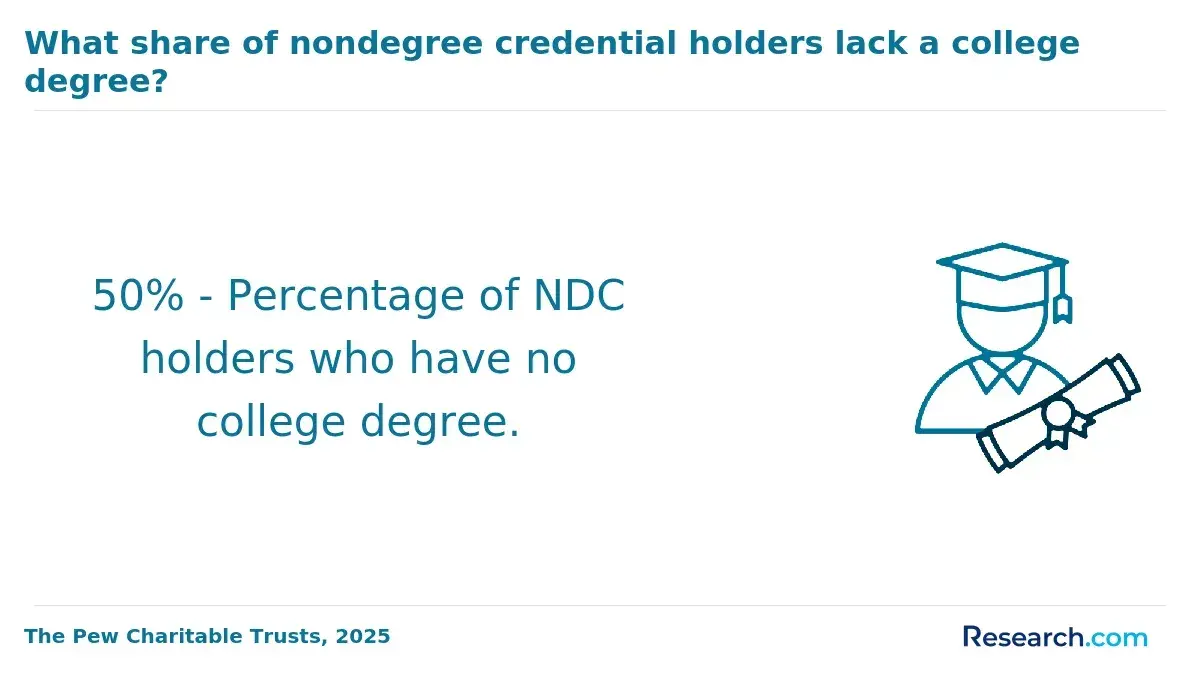
In contrast, online finance degrees offer necessary flexibility for those maintaining sales positions or other demanding work schedules. Yet, they often require students to compensate for limited networking opportunities through active engagement in virtual internships and alumni groups to counter perceptions of reduced rigor.
Consider a sales representative in financial services prioritizing fast transition into finance through campus-based internships and direct recruiter contact. Meanwhile, a retail sales professional managing family obligations might select online programs for asynchronous course delivery but must deliberately create networking momentum virtually. These pathways underline a core tradeoff:
- Campus degrees accelerate job placement in financial hubs via direct recruiter presence.
- Online degrees demand disciplined self-directed networking to match campus-level employment access.
Prospective finance career changers must weigh these real-world differences to align educational choices with their immediate constraints and long-term labor market expectations.
Employer Confidence in Online vs. In-Person Degree Skills, Global 2024

How can I evaluate accreditation and program quality for finance degrees and certificates?
Institutional accreditation from recognized bodies such as the U.S. Department of Education or CHEA forms the baseline for validating finance programs, with regional accreditations signaling broad employer acceptance. However, specialized accreditations like AACSB provide added value primarily for bachelor's and master's degrees rather than brief certificates, which limits their influence on credential prestige for quick pivots.
Assessing program outcomes requires scrutinizing graduation rates and transparent employment data. For instance, roles like internal wholesaler or financial sales in North America have documented compensation ranges of $65,000-$110,000 with average commissions near $30,000, per American First Finance 2024 sales data. Programs lacking clear ties between curriculum and such job markets or employer networks often fail to justify their cost or time investments.
Curricular depth should encompass quantitative skills, regulatory knowledge, and recognized certifications (e.g., Series 6 or CFA basics). Hands-on elements such as internships or capstone projects specifically focused on financial sales build practical readiness and networking advantages. Overly theoretical programs without applied training risk leaving graduates underprepared for client-facing sales roles.
Students balancing current sales jobs must consider program delivery-hybrid or evening options mitigate conflict with work. Finally, be aware that certificates expedite entry but may cap upward mobility and salary potential relative to accredited finance degrees, reflecting a strategic tradeoff between speed and long-term credential weight.
What finance coursework and technical skills best prepare sales professionals for analyst roles?
Success as a sales professional transitioning into analyst roles in finance hinges on targeted coursework that goes beyond basic theory to include practical, quantitative, and technical skills directly applicable to employer demands. Core classes such as financial accounting, corporate finance, and statistics form the analytical foundation necessary for interpreting company performance and risk. Yet, the ability to use Excel proficiently for financial modeling and scenario analysis remains non-negotiable, given the expectation to manage and manipulate complex datasets efficiently in real-world settings.
Technical competencies in SQL and Python are increasingly essential, particularly in sectors like fintech and investment banking where automating data workflows and performing advanced quantitative analysis differentiate candidates. Without these skills, workflow inefficiencies and limited data insights can handicap performance and job prospects.
The combination of finance coursework with industry-specific certifications or hands-on projects significantly elevates employability. For example, sales professionals aiming for financial planning roles within healthcare must navigate regulatory requirements alongside core financial principles, making experiential learning critical. The workforce demands contextual application, not just abstract knowledge.
According to the U.S. Bureau of Labor Statistics data summarized by Handshake, the median annual wage for business and financial occupations is $76,570-approximately 68% higher than the $45,760 median for all occupations. This wage differential underscores the tangible return on investment for sales professionals who strategically develop deep finance expertise and technical capabilities.
What licenses and certifications matter most when shifting from sales into finance positions?
Licenses and certifications signal concrete readiness in finance roles, but the strategic choice and timing of credentials define market access and career viability. For sales professionals pivoting into finance, the FINRA Series 7 and Series 63 licenses form an essential baseline within a 6-12 month horizon. These licenses authorize client-facing securities transactions and state-level compliance, prerequisites across wealth management and brokerage employment.
The Chartered Financial Analyst (CFA) credential carries distinct long-term value in corporate finance and asset management but demands years of study and passing three rigorous exams. For example, an analyst role in New York City with a starting salary of $80,000-$100,000 may list CFA candidacy as preferred, not mandatory, reflecting the credential's deferred ROI.
Practical advancement often requires balancing concurrent pursuit of Series licenses with CFA Level 1 candidacy and work experience. Employer requirements will differ notably by sector, as investment banking and retail brokerage emphasize different assessments and proficiencies.
Beyond formal certifications, proficiency in Excel modeling, financial statement interpretation, and regulatory frameworks is non-negotiable. Candidates underestimate the complexity of managing these studies alongside full-time work, which necessitates disciplined, realistic planning.
- Series 7 and 63 licenses within one year provide market entry.
- CFA offers advanced skills but requires multi-year investment.
- Supplement certification with technical finance skills.
How can mid-career sales professionals strategically plan a timeline and budget for entering finance?
Transitioning from sales to finance demands a well-structured timeline rooted in clear credential targets and realistic budgeting. For example, mid-career sales professionals aiming for certifications like CFP or CFA should expect a 1-3 year commitment involving costs between $3,000 and $7,000, covering exams and preparatory courses. Beyond exam fees, annual expenses around $1,000 for continuing education and potential retakes are common.
Choosing part-time or evening classes helps maintain income while gaining credentials, a necessary strategy given that full-time degree programs cost upward of $30,000 and can lead to 12-18 months of reduced earnings. This risk is significant for SaaS sales professionals eyeing finance advisory roles, who must anticipate a temporary income dip before approaching finance salaries exceeding $250,000 according to 365 Financial Analyst's 2025 data.
To manage this transition effectively, break it into phases:
- Months 1-6: Evaluate finance knowledge, select certification paths, and budget for associated fees.
- Months 7-24: Complete course requirements, pass exams, and accumulate relevant experience via internships or part-time roles.
- Months 25-36: Pursue full-time finance roles and advanced credentials.
Employers expect a blend of technical ability and client management. Sales experience offers valuable transferable skills, but professionals must strategically address finance knowledge gaps within budget and timeline constraints. This calibrated approach helps minimize financial exposure while positioning candidates for sustainable income growth in line with 365 Financial Analyst's compensation benchmarks.
Other Things You Should Know About Finance
Sales professionals moving into finance in 2027 should focus on mastering analytical and quantitative skills, as these are crucial for evaluating financial data. Understanding financial software and systems, developing a keen attention to detail, and learning effective communication for translating complex finance concepts are also vital.
Start with the SEC’s Regulation S-P, FINRA Rule 2111, and anti-money-laundering controls under the Bank Secrecy Act. These rules shape client data handling, suitability standards, and transaction monitoring, which are core expectations in entry-level finance roles that involve customer contact or account support.
Certifications such as CFA or CFP add measurable credibility but often require significant study time that may delay entry-level employment. For sales professionals prioritizing quick transition, basic certifications or targeted courses in financial modeling or compliance offer more immediate value and employer recognition. Prioritize certifications based on the targeted role's technical demands rather than general prestige to balance cost, learning curve, and employability.
Employers expect rapid upskilling in areas like Excel, financial analysis software, and regulatory knowledge within the first 1-3 years; failure to meet these benchmarks limits advancement. Sales professionals should prioritize mastering these technical skills early to maintain competitive standing, as communication skills alone are insufficient for sustained success. Continuous learning and demonstrated technical competence are critical for transitioning beyond entry-level finance roles.
References
- The Pros and Cons of Different Sales Compensation Plans https://www.janek.com/blog/the-pros-and-cons-of-different-sales-compensation-plans/
- Top 14 Financial Analyst Skills https://www.kbwfinancial.com/financial-analyst-skills/
- Top 5 questions about sales compensation (Full Version) | Sales Talent Agency https://www.salestalentagency.com/blog/top-5-questions-about-sales-compensation-2/
- How to switch careers to finance: A practical guide for professionals https://www.manchester.ac.ae/blog-post/how-to-switch-careers-to-finance
- Accreditations for study programs - Centrum Współpracy Międzynarodowej https://international.uew.pl/accreditations-for-study-programs/
- The changing face of finance careers https://www.icas.com/news-insights-events/news/continuous-professional-development-cpd/the-changing-face-of-finance-careers
- Is Finance a Good Career Path? Predictions for 2040 https://mergersandinquisitions.com/is-finance-a-good-career-path/
- 4 Essential Skills for Entry-Level Finance Professionals https://www.thelasallenetwork.com/4-essential-skills-for-entry-level-finance-professionals/
- Do Finance Professionals Need to Move Outside of Finance to Progress Their Career? https://fpa-trends.com/article/do-finance-professionals-need-move-outside-finance-progress-their-career
- Jobs After-Sales: 13 Common Career Changes For Salespeople in 2025 https://www.cirrusinsight.com/blog/common-career-changes-for-salespeople