2027 Best Online Finance Degrees for Banking Careers

Co-Founder and Chief Data Scientist
Securing a competitive role in banking demands credentials that align tightly with industry expectations and accommodate complex, evolving career timelines. Many prospective finance professionals juggle full-time jobs, family obligations, and geographic limitations, making traditional campus programs unfeasible. The National Center for Education Statistics reports a 15% rise in enrollment among adult online learners since 2023, signaling growing demand for accessible, flexible degree options. This trend reveals a broader shift toward education models that support workforce transitions without sacrificing rigor or employer recognition.
This article evaluates online finance degrees optimized for banking careers, guiding strategic choices based on program flexibility, credibility, and practical career outcomes.
Key Things You Should Know
- Data from the U.S. Bureau of Labor Statistics shows 15% growth in finance occupations by 2032, pressuring degree seekers to prioritize programs integrating financial modeling and AI application over traditional theory-heavy curricula.
- Employers report 62% higher preference for graduates with certifications embedded within online finance degrees, emphasizing the necessity to select programs offering CFA or FRM exam preparation to bypass entry-level hiring bottlenecks.
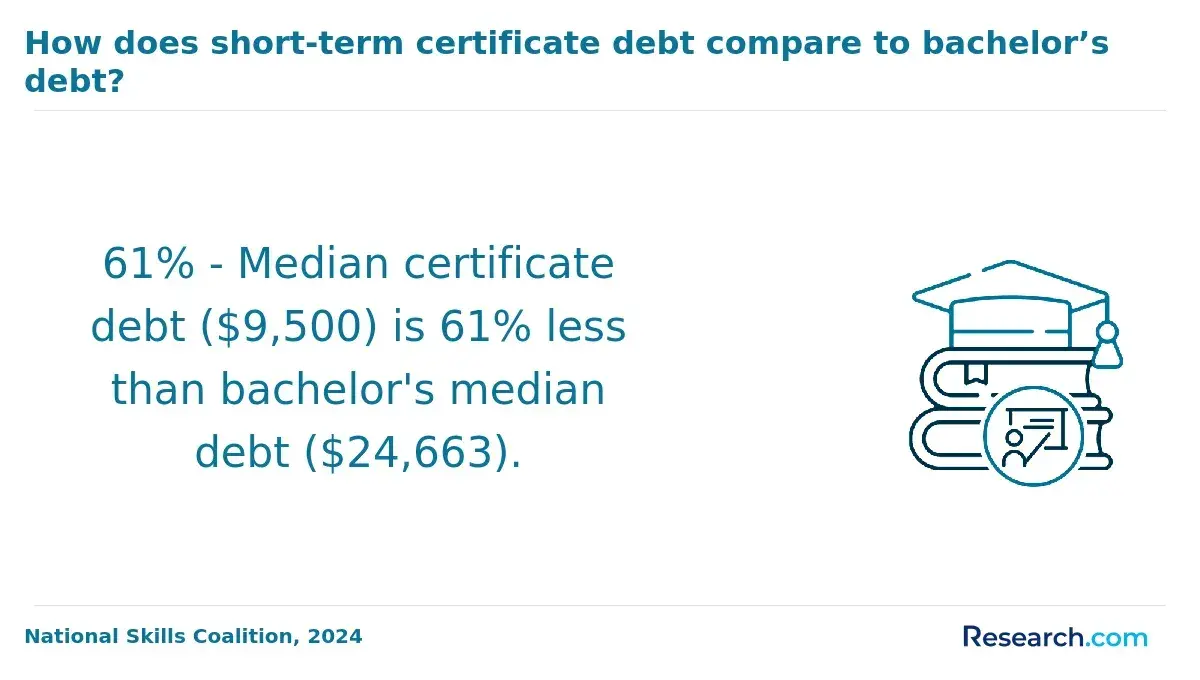
- Median debt for online finance graduates reached $28,700 in 2024 according to the National Center for Education Statistics, forcing candidates to weigh accelerated degree formats against cost inflation and delayed career advancement risks.
What is an online finance degree and how can it prepare you for banking careers?
Deciding to pursue an online finance degree carries practical consequences for those targeting banking careers, notably in how it shapes work-study balance and hiring outcomes. For instance, a professional seeking to shift into commercial banking can strategically access key modules like credit analysis and loan structuring without pausing employment, reducing opportunity costs and maintaining income stability. This targeted flexibility exemplifies how an online finance degree benefits for banking careers by focusing on applicable skills such as financial analysis, risk assessment, investment strategies, and regulatory compliance.
Salary data confirms this focus translates into real-market value: graduates report a median annual wage of $99,503, about 17% above the median for all business majors. Such figures align with employer preferences for specialized financial expertise as reported by authoritative sources tracking employment trends.
Banking's growing reliance on financial technology and tighter regulation means programs integrating real-time tools, simulations, and compliance frameworks better prepare candidates for the current demands they will face. However, an online finance degree prepares for banking jobs only when paired with rigorous accreditation and access to practical experience. Difficulty securing internships remains a critical hurdle; students must vet institutions for virtual or local placement options to gain hands-on banking exposure that complements theoretical study.
Those weighing accelerated educational options might also consider research on the shortest MBA program pathways to optimize timing and career returns.
Which types of online finance degrees are best for launching or advancing a banking career?
Online finance degrees tailored for banking careers demand an emphasis on practical skills such as financial analysis, risk management, and regulatory compliance, directly matching employer expectations in this sector. A bachelor's in finance or financial management introduces essential disciplines like investment strategies and credit analysis necessary for entry-level banking roles such as loan officers or credit analysts. For professionals aiming for roles like personal financial advisors, investment bankers, or compliance officers, advanced degrees in finance, financial engineering, or business administration with a finance focus provide rigorous quantitative training and leadership development.
Employers now often require candidates to complement theoretical learning with expertise in financial technologies and data analytics due to increasing digitization within banking operations. For example, applicants with an online Bachelor's in finance who also have coding skills in Python or SQL are better positioned for specialized roles involving algorithmic trading or fraud detection systems.
The projected 13% growth in employment for personal financial advisors from 2022 to 2032 highlights a surge in demand for graduates equipped with client advising and portfolio management skills, particularly those attending programs with strong internship opportunities or industry connections. Prospective students evaluating the best online finance degrees for banking careers in the US should weigh curriculum depth, faculty expertise, and program flexibility carefully.
Deciding between undergraduate and graduate pathways hinges on whether the goal is entry-level access or strategic advancement. Candidates balancing work and study may also explore online MBA programs with finance concentrations that integrate practical, market-aligned skills.
Top online finance programs for banking professionals reflect these realities by combining technical mastery with adaptability to evolving financial regulations and technologies.
How do online finance programs for banking compare to traditional on-campus options?
Online finance degrees versus traditional on-campus banking programs reveal critical tradeoffs in outcomes and flexibility that must inform student decisions. Traditional formats provide tangible networking through direct access to professors, guest speakers, and established internship pipelines-advantages that often translate into smoother recruitment for banking roles. Employers in this sector seek candidates who pair applied skills with industry connections, making these experiential opportunities decisive in hiring.
Online programs need to offset these gaps with structured virtual internships, case simulations, and mentoring to remain competitive. For working professionals balancing employment with upskilling, online formats offer unmatched flexibility, though success depends heavily on proactive engagement beyond the classroom. Candidates must invest considerable effort to develop real-world contacts and certification credentials valued by hiring managers.
Comparing flexibility and outcomes of online finance education for banking careers illustrates these dynamics. Salary benchmarks underscore the value of strong credentials: financial examiners earn a median $99,780 annually, with top professionals surpassing $188,000, reflecting the premium on specialized skills like risk assessment and regulatory compliance.
To maximize professional traction, students should:
- Select accredited programs with banking-focused finance tracks.
- Activate virtual mentorships and industry events actively.
- Obtain recognized professional certifications alongside their degree.
Prospective students interested in accelerated pathways might explore the shortest MBA program online to complement finance skillsets efficiently.
What accreditation and program quality standards should online finance degrees for banking meet?
Employers in banking increasingly expect finance degrees that go beyond regional accreditation to include specialized recognition from bodies like ACBSP or AACSB, reflecting program quality criteria for banking finance degrees online. AACSB accreditation, in particular, signals rigorous curriculum standards, faculty expertise, and measurable student outcomes critical for roles requiring compliance and advanced financial analysis.
Program design must prioritize current industry realities. A curriculum integrating up-to-date banking regulations, risk management techniques, financial modeling, and data analytics sharpens workforce readiness. For example, career switchers benefit most from programs offering flexible pacing and experiential learning such as real-world banking case studies or virtual loan assessment simulations, which better translate theory into practice.
Students should also confirm that online finance degrees maintain active advisory boards composed of banking leaders to avoid knowledge gaps on emerging fintech trends and evolving compliance standards. Without this connection, graduates risk obstacles navigating the complexities of advancement in highly regulated banking environments.
A 2024 survey shows 94% of online business degree holders reporting positive ROI, highlighting that practical outcomes and reputation matter when assessing accreditation standards for online finance degrees in the US. Those targeting accelerated education paths might explore 12 month MBA programs as a strategic option blending speed with credential relevance.
What courses and specializations in online finance programs are most valuable for banking roles?
Banking roles increasingly demand nuanced expertise beyond traditional finance coursework. Emphasizing financial analysis, risk management, and regulatory compliance aligns with employer expectations for professionals who can navigate corporate finance, investment strategies, and the complexities of financial modeling. Proficiency in banking laws, Anti-Money Laundering (AML), and ethics addresses the compliance risks integral to audit roles within financial institutions.
Specializing in fintech and data analytics provides tangible advantages by meeting the sector's pivot toward technology-driven services. For example, credit analysts incorporating predictive analytics have documented a 15% reduction in default rates compared to conventional approaches. Such data-driven skills enable interpretation of complex datasets necessary for credit scoring and fraud detection, increasingly governed by AI and regulatory oversight.
Tuition costs ranging from $42 to $448 per credit offer a practical alternative to the national four-year average near $70,000, allowing mid-career professionals to reskill without risking significant debt or income loss. This cost-efficiency expands access but requires candidates to self-manage pacing and practical application to maintain employability momentum.
Practical software competencies with Bloomberg terminals, Excel VBA, and SAS frequently distinguish candidates for roles in treasury management and investment analysis. Certifications or demonstrated proficiency in these tools can significantly improve hiring and promotion prospects by blending technical fluency with regulatory and analytical insights.
What are the typical admission requirements for online finance degrees focused on banking?
Applicants targeting online finance degrees with a banking emphasis confront a distinct set of criteria shaped by employer expectations and practical program alignment. A regionally accredited bachelor's degree with a GPA above 3.0 is a baseline, but more decisive is proven competency in quantitative areas like statistics, accounting, or economics. These foundational skills are non-negotiable for navigating banking roles requiring analytical precision and regulatory adherence.
While standardized tests such as the GMAT or GRE are often optional-especially at AACSB-accredited programs favored for their rigorous standards-strong scores can still differentiate candidates in competitive admissions. Given that fewer than 6% of business schools worldwide hold AACSB accreditation, prioritizing such programs correlates directly with enhanced recognition by employers and can open doors in more selective banking sectors.
Admission also hinges on professional readiness demonstrated through resumes and letters of recommendation that validate relevant experience in financial services or risk management. Statements of purpose allow programs to assess alignment between candidate goals and curriculum focus, particularly in programs balancing synchronous interaction and asynchronous flexibility to accommodate working professionals.
For example, a mid-level banking analyst aiming to transition into compliance or managerial functions must evaluate programs offering practical financial modeling and up-to-date regulatory coursework. Failure to meet quantitative prerequisite courses or underestimating technology and scheduling demands can delay progress and undermine career pivots.
Finally, applicants should anticipate budgeting for application fees and the possibility of prerequisite courses, considering that disruptions in education sequencing may slow advancement in an industry continually influenced by shifting banking regulations and technology adoption.
How long do online finance degrees take, and what do they cost for banking students?
Completing an online finance degree for banking careers requires careful consideration of timing and return on investment, as program length and cost vary widely and directly impact employability. Associate degrees typically take two years full-time, while bachelor's programs generally span four years but can be accelerated to three with continuous coursework or transfer credits. Working professionals and part-time students often extend this timeline beyond five years, which can delay wage growth despite spreading out expenses.
Cost differences are significant, with public universities charging $15,000-$30,000 for in-state bachelor's tuition versus more than $50,000 at private institutions; additional fees for technology, materials, and exams add to the financial burden. Specialized tracks like corporate finance, investment, risk management, and FinTech influence both duration and price because they may require more coursework or certifications.
Employers prioritize candidates with applied skills relevant to the specialized banking roles they seek, especially in segments like financial risk management, where employment growth is projected at 16% through 2032. Accelerated programs might enable quicker entry but can limit networking and specialization depth, which are crucial for advancing to mid- and senior-level roles such as investment analyst or corporate treasury.
- Longer pacing reduces immediate financial strain but postpones earning potential and career movement.
- Choosing between deep specialization and rapid completion depends on career ambitions and labor market competition.
What banking careers can you pursue with an online finance degree, and what do they involve?
Online finance degrees provide access to varied banking roles-financial analyst, credit analyst, loan officer, and risk manager-each demanding distinct skills and sector-specific knowledge. Financial analysts require advanced quantitative and modeling capabilities for investment advising, while credit analysts must evaluate borrower risk within strict regulatory frameworks, primarily in retail and commercial banking. Loan officers balance client interaction with compliance and risk checks, and risk managers apply data analytics and regulatory expertise to mitigate institution-wide financial risks.
Although employer acceptance of online degrees is growing-61% of HR professionals in a 2024 Wiley survey regard them comparable to traditional credentials-practical experience remains a decisive factor. Candidates with internships or banking experience hold a clear advantage during hiring.
Effective career entry requires proactive skill-building during studies, including internships and mastery of specialized tools like Bloomberg Terminal for analysts or SAS for risk professionals. Sector choice influences workflow and expectations: retail banking emphasizes compliance and client service; investment banking demands deeper technical and deal execution skills, often accompanied by greater stress and longer hours.
Prospective students should align coursework with targeted banking functions and anticipate supplementary credentialing (e.g., CFA, FRM) to enhance employer confidence. Reputation of the granting institution still influences credibility but must be paired with verifiable competencies to navigate employer skepticism and long-term career development.
What salary ranges and advancement opportunities can finance graduates expect in banking?
Starting salaries for finance graduates entering banking typically range from $55,000 to $75,000, varying by institution size and location. Positions such as credit analysts or loan officers generally align with this bracket. As professionals gain experience and credentials like CFA or FRM certifications, mid-career earnings can rise to between $90,000 and $130,000, while senior roles in corporate banking or risk management often surpass $150,000. For example, a graduate who pairs an online degree with a summer internship at a regional bank often accelerates promotion to management compared to peers lacking direct experience.
Online finance degrees have gained broad acceptance, with over 30% of U.S. undergraduates enrolled exclusively in distance education. This modality supports working professionals balancing jobs and studies but may reduce access to internships and mentorship critical to nuanced skill development. Employers consistently value candidates combining academic knowledge with real-world application, which impacts salary growth and role mobility.
Prospective students should carefully evaluate online programs for embedded experiential learning opportunities and consider commitments to certification pathways. Balancing flexibility against practical workforce exposure affects long-term advancement. Wage increases within banking require proactive development beyond the degree to meet evolving demands for hybrid finance and technological skills.
How is the job outlook for banking and finance roles, and what skills are employers seeking?
Banking and finance employment is growing at roughly 6% through 2026, driven less by traditional roles and more by demand for skills in data analytics, financial modeling, and digital technology integration such as AI and blockchain. A loan officer moving into risk analysis, for example, must combine advanced statistics with cross-functional collaboration to navigate increasingly complex regulatory landscapes. This dual skill set now outweighs usual credentials in hiring decisions.
Financial professionals pursuing online finance degrees should weigh practical curriculum content heavily, prioritizing programs with hands-on analytics, compliance training, and fintech components. Graduates lacking these applied skills face longer job searches and lower initial salaries, underscoring the operational cost of inadequate preparation.
Employers play a significant role in affordability; 48% offer tuition assistance, which often determines whether education can proceed without significant debt. This support, however, varies widely across industries and firms and should factor into program selection as much as curriculum quality.
Key considerations for candidates include:
- Balancing quantitative skill development with technical adaptability to remain market-relevant
- Evaluating employer tuition benefits alongside program relevance
- Recognizing communication and problem-solving as equally vital for client-facing finance roles
Aligning education closely with workforce expectations reduces friction between degree completion and meaningful employment.
Other Things You Should Know About Finance
The reputation of the institution offering the online finance degree heavily influences recruitment outcomes in banking. Top-tier or well-known programs carry weight with employers, often offsetting the lack of in-person networking. Conversely, lesser-known or unaccredited programs can hinder access to entry-level and advancement opportunities, regardless of individual skill. Prioritizing programs with recognized standing and demonstrable graduate outcomes improves employment prospects in competitive sectors such as investment banking or corporate lending.
Professionals must balance flexibility with academic rigor to match their career goals. While flexibility allows continued employment and income, programs lacking sufficient challenge may not develop the advanced quantitative and analytical skills banks demand. Opting for programs that maintain strong curricula and provide interactive, application-based learning-even if less flexible-better positions students for promotions or transitions into specialized banking roles. Rigor translates directly to employer confidence in a candidate's readiness.
Yes. Employers and graduate schools usually expect the university to hold regional accreditation from a recognized U.S. accreditor, such as the Higher Learning Commission or Middle States Commission. Without it, credits may not transfer, and some banks may reject the degree for tuition reimbursement or promotion review.
References
- What Major is Best for Finance? Top 10 Picks https://zoetalentsolutions.com/what-major-is-best-for-finance/
- Online bachelor's in finance degrees | edX https://www.edx.org/bachelors/online-bachelors-degree-finance
- Why study finance online | Edology https://www.edology.com/blog/accounting-finance/why-study-finance-online/
- Traditional Banking Vs. Digital Banking: Key Differences https://www.meniga.com/guides/traditional-banking-vs-digital-banking/
- Online Banking vs Traditional Banking: Which one is right for you? - Sends https://sends.co/blog/online-banking-vs-traditional-banking-which-one-is-right-for-you
- Trusted Partners | LIBF https://www.walbrook.ac.uk/libf/partnerships/accreditation/
- Bachelor in Finance, Banking and Investment https://admission.euba.sk/programmes/bachelor-in-finance-banking-and-investment
- Digital bank vs traditional bank: Which to choose? https://www.raisin.com/en-ie/banking/digital-and-traditional-banks/
- Best Degrees, Majors & Courses for Banking & Finance Careers (2025) - Bankers By Day https://www.bankersbyday.com/best-degrees-for-a-career-in-banking/
- Online Bachelor's in Finance https://www.monroeu.edu/academics/undergraduate-programs/school-business-and-accounting/online-bachelors-finance