2027 Online Finance Degrees With Financial Planning Career Alignment

Co-Founder and Chief Data Scientist
Professionals seeking to transition into financial planning increasingly confront a fragmented online education landscape with varying program rigor, limited admissions flexibility, and misaligned curricula. Recent data from the National Center for Education Statistics shows a 15% surge in adult enrollment in online business and finance-related degrees, signaling strong demand but also heightened competition for programs that balance convenience with employer-recognized credentials. This trend reflects a broader workforce shift toward modular, competency-based learning models that can accelerate career mobility without sacrificing depth of expertise. This article evaluates online finance degrees that align with financial planning careers, helping readers identify programs that maximize employability and fit within real-world timing and resource constraints.
Key Things You Should Know
- Online finance degrees aligned with financial planning often omit comprehensive CFP Board-approved coursework, delaying eligibility for certification and reducing immediate employer readiness, per CFP Board 2024 certification reports.
- Employers increasingly prioritize candidates with practical financial modeling and regulatory compliance experience; online programs lacking integrated internships or projects see 18% lower hire rates according to the National Association of Colleges and Employers 2024 data.
- Cost-efficient online finance degrees can save up to 40% compared to traditional programs but typically extend time-to-completion by 25%, affecting opportunity costs and delaying career advancement per U.S. Department of Education 2024 findings.
What is an online finance degree with a financial planning focus, and who is it best for?
A degree specializing in financial planning within an online finance degree framework targets professionals aiming to meet employer demand for advisors skilled in investment strategies, retirement planning, tax optimization, and risk management. This path suits those without prior finance backgrounds by incorporating foundational courses like financial accounting and economics, making the transition to advisory roles more feasible. Yet, self-discipline remains critical as asynchronous learning and certification prep, including the CFP® exam, require rigorous time management.
This specialization is particularly relevant for working adults in sectors such as insurance, real estate, or banking who want to pivot toward advisory services. Unlike theoretical programs, its practical curriculum emphasizes client relationship management and regulatory compliance, aligning closely with what firms seek. The ongoing need for personalized wealth management amidst aging populations drives a 17% growth forecast for personal financial advisor roles over the next decade, underscoring the tangible employment prospects tied to this degree.
Balancing work and study often demands a program's flexibility, making online formats with a financial planning focus a strategic choice for students not able to attend onsite classes. For an informed comparison of program options emphasizing accelerated, online delivery, prospective candidates should consult resources like the degree in finance, which ranks top accelerated finance programs.
How do online finance degrees prepare you specifically for financial planning careers?
The value of online finance degree programs with financial planning specialization lies in their ability to impart actionable skills aligned with employer expectations rather than solely theoretical knowledge. For example, professionals shifting from unrelated sectors must quickly master portfolio analysis and regulatory compliance to meet Certified Financial Planner (CFP) prerequisites and industry standards. Without explicit integration of recognized credentials and hands-on coursework, graduates risk limited employability in advisory roles that require nuanced client financial data interpretation and tailored wealth management recommendations.
Employers prioritize candidates who demonstrate proficiency in synthesizing technical financial concepts with interpersonal communication, a capability often developed through case studies, simulation software, and client engagement training embedded in these programs. The CFP Board's reporting of over 103,000 credentialed professionals in the U.S. reflects ongoing market growth and a competitive landscape demanding practical competence.
Students pursuing these online finance degree programs with financial planning specialization contend with logistical challenges such as balancing work and study and securing real-time mentorship. Many programs offer asynchronous coursework paired with live virtual workshops and emphasize internships or practicum experiences to bridge classroom learning with actual client portfolio management and regulatory environments.
Those evaluating related graduate pathways should consider not only curriculum depth but practical application and credential guidance. For cost-sensitive prospective students comparing options, resources like the cheapest online MBA listings provide a parallel perspective on affordability and program value.
What types of online finance degrees support financial planning paths (certificate, bachelor's, master's)?
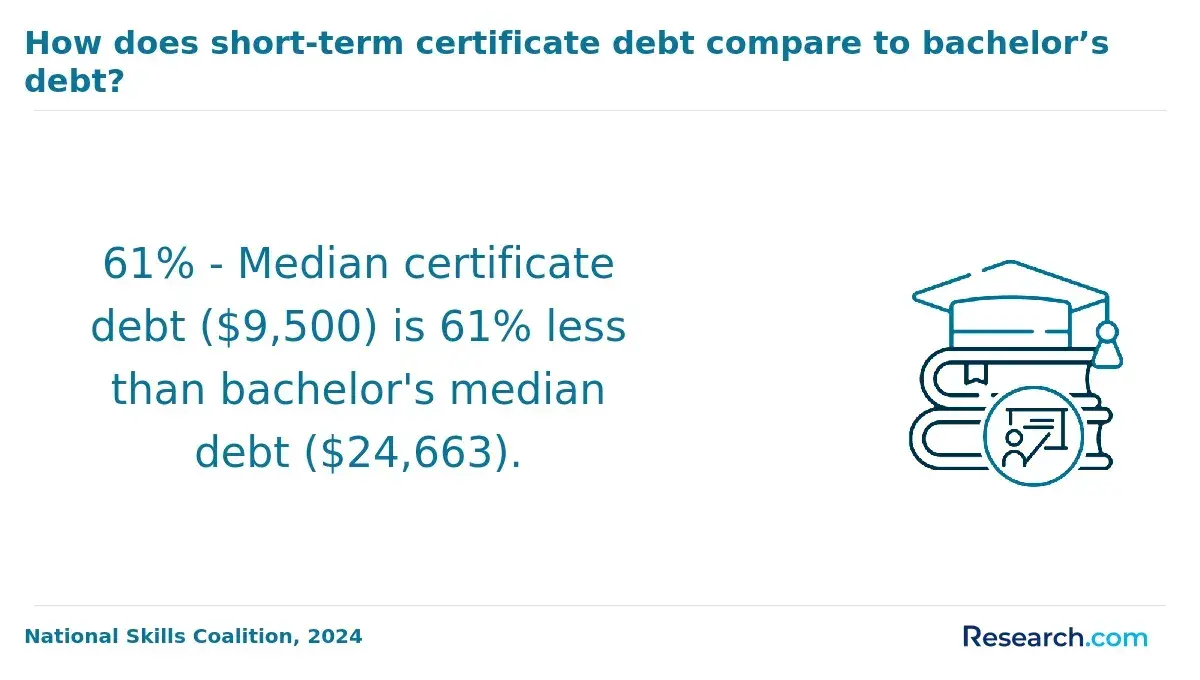
Online finance degree programs for financial planning careers vary notably in scope and impact, with certificate, bachelor's, and master's options each serving distinct workforce needs. Certificates offer rapid skill acquisition but seldom fulfill Certified Financial Planner (CFP) requirements or open doors to senior roles, making them suitable primarily for targeted upskilling in niche areas. Bachelor's degrees remain the standard credential for entry-level planners, aligning with employer expectations through comprehensive coursework in ethics, risk management, and investments. However, candidates must weigh public versus private tuition costs-averaging $11,610 in-state and $43,350 respectively-against potential networking and recruiting benefits of private institutions.
Master's degrees in finance or financial planning enhance quantitative and regulatory expertise, positioning graduates for leadership, estate planning, or complex portfolio management roles. The higher cost and time commitment can delay workforce entry and increase debt burdens, affecting short-term return on investment. Many working professionals pursue online master's pathways for flexibility and credential value tied to higher median salaries, though preparation time for CFP exams and firm preferences may limit access to certain positions.
Employment outcomes reflect these tradeoffs: bachelor's degree holders often enter advisory or paraplanning roles, while master's graduates pursue senior analyst or managerial jobs. Selecting accredited finance certificates and degrees for financial planning requires assessing program recognition, career timing, and geographic licensing constraints. For those balancing affordability and advanced qualifications, exploring options like an MBA under 10k can provide strategic pathways to leadership.
How do online finance programs compare with on-campus options for quality and flexibility?
Online finance degree program quality comparison often revolves around balancing academic rigor with flexibility. Online programs accommodate working professionals managing unpredictable schedules, while maintaining standards evidenced by a 63% first-time CFP exam pass rate reported by the CFP Board in March 2025. This pass rate indicates that effective online programs can meet industry proficiency demands, particularly for certification-focused learners.
On-campus programs offer direct interaction with peers and instructors, supporting experiential learning critical for roles like investment banking or corporate finance. This face-to-face environment facilitates employer networking and hands-on problem solving, key for candidates seeking entry-level analyst positions in metropolitan financial centers. However, online learning benefits those requiring flexible, commute-free study options, such as financial planners balancing client work with academic commitments.
Tradeoffs include differences in practical immersion. Employers hiring for analytics or regulatory compliance often prefer candidates with internships or in-person project experience, traditionally more accessible on campus. To address this gap, online curriculums increasingly integrate virtual simulations and synchronous group work. Prospective students should evaluate how delivery mode aligns with their career objectives and lifestyle.
For those exploring educational pathways beyond finance, opportunities like medical assistant classes online also illustrate the expanding role of flexible online learning across professions.
The choice between flexible online versus on-campus finance degrees ultimately hinges on career trajectory priorities and the value placed on direct employer engagement versus study convenience.
What accreditation and program quality standards should online finance students look for?
Accreditation from recognized regional bodies like the Higher Learning Commission ensures that online finance degrees hold legitimate value with employers and graduate programs. Beyond institutional accreditation, alignment with program-specific standards such as AACSB directly impacts quality and employer relevance by enforcing faculty expertise and curriculum rigor.
For those aiming at financial planning careers, verifying alignment with CFP Board curricular standards is critical. Programs without this focus often result in additional certification hurdles post-graduation, delaying employment or diminishing competitiveness. Given that 27% of personal financial advisors operate independently, curricula must extend beyond theory to include entrepreneurship and compliance training-skills essential for navigating regulatory challenges and client acquisition in freelance practice.
Experiential components like virtual simulations or internships serve as practical bridges between academic concepts and workplace readiness. Their absence can signal credential inflation where degrees fail to deliver applied skills, negatively affecting job placement.
Additionally, comprehensive student support encompassing career advising specific to finance roles, CFP exam preparation, and networking opportunities plays a significant role in long-term employability. Programs lacking these resources risk leaving graduates credentialed yet disconnected from relevant hiring channels.
What courses and specializations in an online finance degree support financial planning roles?
Programs aimed at financial planning require a precise balance of analytical rigor, industry-aligned curriculum, and practical exposure to match employer expectations. Core courses generally cover investment analysis, portfolio management, risk assessment, and retirement planning, supplemented by specialized instruction in tax law, estate planning, and insurance principles. These foundational skills support real-world decision-making, especially when integrated with data analytics and financial modeling tools that enable tailored client strategies.
Specializations like Personal Financial Planning, Wealth Management, and Financial Advisory directly align with requirements for CFP certification, emphasizing ethics and regulatory frameworks. Employers increasingly seek candidates who pair quantitative acumen with client communication skills developed through behavioral finance and scenario-based exercises. For example, students trained to design strategies for diverse client profiles-from affluent families managing intergenerational wealth to middle-income clients focusing on debt reduction-demonstrate essential adaptability.
Tuition differences highlight critical tradeoffs: high-cost programs such as the $72,000 University of Wisconsin-Madison option often provide stronger industry networks and internship access, whereas lower-cost options like Florida State University's $21,658.80 in-state rate may limit these benefits, affecting post-graduation placement. Technology proficiency, including regulatory compliance tracking and financial software, increasingly dictates job readiness across traditional and fintech-driven advisory roles.
- Core finance course focus: investments, portfolios, risk, retirement planning
- Specializations tied to CFP standards and ethics
- Employer preference for strong analytical and communication capabilities
- Cost versus industry connection tradeoffs in program selection
- Emerging need for tech skills to navigate regulatory and fintech landscapes
What are typical admission requirements and application materials for online finance programs?
Admission to online finance programs demands not only academic baseline qualifications but also a strategic understanding of how these credentials align with workforce expectations. A bachelor's degree with a minimum GPA around 2.5 to 3.0 is a baseline; however, programs increasingly emphasize quantitative proficiency in math, statistics, or introductory finance as essential for success in advanced coursework. Graduate programs often expect GRE or GMAT results unless offset by relevant professional experience or qualifying credentials, underscoring the value of documented career progress.
Application strength hinges significantly on evidence of analytical capability and leadership potential. Submitting two to three recommendation letters that specifically attest to these qualities can differentiate candidates in a competitive pool. Practical experience enhances applications, particularly for roles projecting a 13% employment growth in financial management, by showcasing measurable outcomes in budgeting, forecasting, or advisory functions within résumés.
Additional hurdles include demonstrating proficiency in financial modeling tools like Excel through certifications or portfolios, and for international candidates, verified English language skills via TOEFL or IELTS. Balancing these requirements alongside professional duties requires early preparation to meet application deadlines and avoid missed enrollment cycles.
Applicants without direct finance backgrounds can counterbalance gaps with strong analytical credentials such as CPA or CFA candidacy. Admissions committees ultimately prioritize quantifiable skills and career intentions over mere academic record, reflecting the pragmatic demands of the finance job market.
How long do online finance degrees take, and what do they typically cost?
Completing an online finance degree involves balancing time, cost, and career objectives with realistic workforce outcomes. Associate degrees typically require about two years, while bachelor's degrees generally take four years full-time. However, part-time enrollment or accelerated formats create a wide spectrum of timelines, often extending bachelor's completion to five or six years for working adults. Graduate finance degrees usually span one to two years but can lengthen if pursued part-time.
Cost varies dramatically: public universities may charge $10,000 to $30,000 total tuition for online bachelor's programs, whereas private institutions can exceed $40,000 to $60,000. Paying per credit hour from $300 to $1,000 is a common model for professionals seeking flexibility. Graduate programs command higher fees, frequently starting near $20,000 and rising significantly with program prestige.
The practical choice depends on professional timelines, financial capacity, and the immediacy of entering the labor market. For example, a newly graduated personal financial advisor benefits from completing a bachelor's degree within four years to leverage median wages around $99,580, according to the U.S. Bureau of Labor Statistics. Longer program durations or higher costs require justification through targeted career advancement or credentialing, such as CFP certification.
Online degrees that embed actionable financial planning skills improve employability by aligning curricula with employer expectations. Students should critically evaluate program pacing against their work-life balance and potential ROI.
What financial planning jobs, salaries, and advancement opportunities can this degree lead to?
Earning a bachelor's degree in finance is a necessary baseline for entering personal financial advising, but it rarely secures access to upper-tier roles or top compensation on its own. The U.S. Bureau of Labor Statistics notes this credential as standard, yet a clear gap exists between possessing the degree and achieving meaningful career progress.
Financial planners who rely solely on their degree typically see median salaries near $94,170 annually. However, location and specialization heavily influence earning potential. For instance, advisors in metropolitan financial centers or those focusing on niches like estate, tax, or retirement planning can exceed $150,000 after gaining several years of experience.
Advancing beyond entry-level requires industry certifications like the CFP® designation, critical for expanding client trust and unlocking managerial opportunities. Without such credentials, many professionals remain confined to general advisory roles with limited growth. Increasing responsibilities often involve portfolio management, team leadership, or specialization in risk or corporate planning.
Employers now expect proficiency with technology platforms and compliance regulations alongside traditional finance knowledge. Those who fail to build practical experience or augment their credentials with internships, licensing, or targeted training face stagnant salary growth and fewer promotions.
- The job outlook projects a 17% growth rate from 2024 to 2034 in personal financial advisor positions.
- Graduates must couple degrees with hands-on experience and professional licenses to remain competitive.
- Professional certifications and practical skills critically impact long-term career mobility and compensation structures.
Which certifications and licenses (like CFP) align with an online finance degree in planning?
Possessing a Certified Financial Planner (CFP) credential significantly influences employability and role scope for online finance graduates focusing on financial planning. Firms increasingly require CFP certification for client-facing advisory roles, limiting those without it to analyst or associate positions with lower autonomy and compensation. For example, a graduate joining a regional advisory team without CFP status may handle primarily data analysis, whereas their CFP-certified peers manage client portfolios directly, commanding higher wages.
The pathway to CFP involves coursework aligned with board requirements, a comprehensive exam, and two to three years of relevant experience, closely matching many online finance curricula. Verifying that one's degree meets CFP education standards is a fundamental step before exam eligibility. Additional licensure, such as Series 65 registration, is mandatory for managing securities in client interactions, emphasizing the difference between planning and purely analytical finance roles.
Alternatives like the Personal Financial Specialist (PFS) certification suit CPAs aiming for financial planning, while the Chartered Financial Analyst (CFA) designation targets those prioritizing investment analysis over direct client advisory work. Graduates prioritizing corporate finance may find CFA or CPA credentials more aligned with job demands.
Deciding whether to pursue CFP certification involves weighing the upfront time and financial investment against accelerated access to fiduciary responsibilities and market demand, especially in metropolitan areas where CFP credentialing is a baseline. Continuing education and adherence to fiduciary standards are ongoing commitments, reinforcing that certification is a career-long undertaking rather than a one-time achievement.
Other Things You Should Know About Finance
Employers increasingly accept online finance degrees when the program is from an accredited institution with a strong reputation. However, some hiring managers still prefer candidates with traditional, on-campus degrees due to perceived rigor and networking opportunities. For career advancement in financial planning, prioritize programs offering practical, hands-on experience and opportunities for certification alignment, as these factors carry more weight than delivery format alone.
Online finance programs with financial planning components demand a significant time investment, equivalent to traditional degrees. Students must manage asynchronous lectures, extensive readings, case studies, and quantitative assignments while balancing professional or personal commitments. Successful candidates prioritize structured scheduling and active engagement with interactive elements to avoid falling behind; underestimating workload leads to suboptimal learning outcomes and risks delaying graduation.
A CFP Board-registered program usually includes six required content areas: general financial planning principles, risk management and insurance, investment planning, income tax planning, retirement savings and income planning, and estate planning. Many programs also require a capstone course, and the CFP exam itself is administered by the CFP Board.
References
- CFP Certification Guide & Requirements | Accounting.com https://www.accounting.com/certifications/certified-financial-planner/
- Online Bachelor's Degree in Finance | CSU Global | Accredited https://csuglobal.edu/academic-programs/undergraduate-degrees/bachelors-degree-finance
- Online vs. On-Campus: Which Mode of Learning Is Best for You? https://www.onlinemastersdegrees.org/student-resources/which-mode-of-learning-is-best/
- Top Financial Planning Certifications - Amplified Planning https://www.amplifiedplanning.com/blog/financial-planning-certifications
- MBA Accredited Schools | OnlineMBA.com https://www.onlinemba.com/resources/what-is-accreditation/
- Online vs. In-Person Finance Courses: Which Learning Format is Right for You? – CPE Compare https://cpe-compare.com/online-vs-in-person-finance-courses-which-learning-format-is-right-for-you/
- Streamlining Accreditation Preparation with Program Review https://www.qualitymatters.org/qa-resources/resource-center/articles-resources/streamline-accreditation-prep
- Quality Standards and Accreditation of Distance Education Programs in a Pandemic - OJDLA https://ojdla.com/articles/quality-standards-and-accreditation-of-distance-education-programs-in-a-pandemic
- Finance Degrees Guide (Program Types & Jobs You Can Pursue) https://www.allbusinessschools.com/finance/degrees/
- Direct path to CFP certification | FP Canada https://fpcanada.ca/about-our-certifications/paths-to-certification/cfp-certification