2027 Online Finance Degrees With Cross-Industry Finance Mobility

Co-Founder and Chief Data Scientist
Mid-career professionals aiming to shift into finance or those balancing full-time jobs face persistent barriers accessing traditional degree programs. Rigid schedules, geographic limitations, and outdated in-person expectations often obstruct entry into high-value roles across banking, asset management, and corporate finance.
Meanwhile, the National Center for Education Statistics reports a 34% growth in fully online finance-related degree enrollments since 2024, signaling an expanding acceptance of remote credentials by hiring managers. This shift is nontrivial: it reflects evolving workforce norms where cross-industry mobility demands timely, flexible education aligned with direct career outcomes. This article analyzes the top online finance degrees designed to facilitate such mobility and practical advancement decisions.
Key Things You Should Know
- Online finance degrees reduce geographic barriers but face a 2.3-year median completion time, per NCES 2024, imposing opportunity costs that may delay strategic career pivots into higher-wage roles.
- Employers increasingly demand hybrid skillsets; 62% of CFA Institute surveyed firms prioritize cross-industry adaptability, pressuring candidates to combine finance expertise with data analytics or technology credentials alongside degrees.
- Credential inflation persists: median starting salaries for online finance grads lag on average 9% behind traditional program peers, implying that degree modality influences immediate employer valuation and mobility potential.
What is an online finance degree and how does it support cross-industry finance careers?
Online finance degrees offer measurable benefits for career mobility by equipping students with analytical and financial literacy skills applicable across sectors such as healthcare, technology, and government. For example, a graduate might apply financial modeling to optimize hospital budgets or evaluate tech startup valuations without needing immediate sector-specific credentials.
However, transitioning between industries frequently requires additional regulatory knowledge and contextual business understanding, which often demands targeted certifications or practical experience alongside the degree. The pathway supports cross-industry careers by fostering adaptable competencies like data interpretation, budgeting, and compliance, yet the degree alone does not guarantee seamless mobility due to employer expectations for nuanced sector expertise.
Students contemplating an online finance degree should evaluate programs for rigorous quantitative content and experiential learning opportunities that mitigate limited in-person networking. Labor market data reinforces the strategic value of finance expertise: business and financial roles are projected to grow 7% over the next decade, with median wages significantly above the overall occupational median.
Still, the competitive advantage hinges on supplementing the degree with specialized knowledge relevant to targeted industries. To inform decisions about accelerated educational pathways, prospective students may consult the top accelerated MBA programs as part of broader career planning.
How do online finance degrees compare with on-campus programs for quality and employer respect?
Online finance degrees from regionally accredited institutions maintain academic rigor and employer respect comparable to on-campus counterparts, especially in North America where employer respect for online finance degrees matters most. For example, Western Carolina University charges about $42 per credit for its online B.S.B.A. in finance, totaling roughly $4,630 for in-state students, a fraction of the $70,000 average for traditional four-year tuition.
Hiring managers prioritize accreditation, relevant curriculum, and measurable skills over delivery mode. Candidates with quantitative strength and practical experience-through internships or projects-particularly in banking, fintech, or corporate finance, meet or exceed expectations. That said, sectors like investment banking or consulting often favor graduates with on-campus networks and face-to-face collaboration skills.
Practically, online finance degrees offer essential schedule flexibility for working professionals but require students to independently secure experiential opportunities. On-campus students typically access internships via career fairs and faculty connections, a distinct advantage in relationship-driven finance roles.
Prospective students should balance these tradeoffs: online programs provide foundational knowledge cost-effectively and flexibly, while on-campus paths excel in employer networking and embedded experiential learning. Those interested in graduate options might explore an MBA without GMAT, which can complement either path.
What types of online finance degrees best support cross-industry mobility and career switching?
Finance degrees that facilitate cross-industry career mobility hinge on blending foundational financial knowledge with adaptable skills such as data analysis, risk management, and strategic decision-making. Programs prioritizing quantitative courses like financial modeling and statistics alongside technology proficiencies in Excel, SQL, or Python equip graduates to navigate sectors ranging from banking and healthcare to technology and energy.
This applied versatility is critical for professionals seeking flexible finance degree programs supporting career switching. Employers expect candidates who can apply financial expertise combined with problem-solving and effective communication across diverse environments. For instance, a graduate trained in risk management can transition seamlessly from insurance roles to cybersecurity firms because the underlying risk assessment frameworks are transferable.
Similarly, data-driven finance professionals often move into consulting or analytics positions within non-financial industries, leveraging both quantitative rigor and business insight. The Foundation for Research on Equal Opportunity as cited by U.S. News quantifies return on investment, showing a finance bachelor's from Florida State University with an adjusted ROI of $563,529 and Arizona State University-Tempe offering $447,037.
These figures, factoring completion rates and costs, highlight the necessity of selecting programs with tangible financial outcomes that influence long-term employability and market relevance. Prospective students targeting career pivots should seek curricula featuring real-world projects, applied electives in corporate finance or fintech, and internships aligned with their desired industries.
Staying aware of evolving financial service trends optimizes specialization choices. Additionally, individuals evaluating program affordability may consider the cheapest 1-year online MBA programs as strategic educational pathways that balance cost with career flexibility.
What accreditation and program quality standards should an online finance program meet?
Successfully navigating a career pivot within finance demands programs that go beyond basic accreditation; they require robust quality assurance criteria for online finance degrees that prioritize both market relevance and academic rigor. Regional accreditation recognized by the U.S. Department of Education or the Council for Higher Education Accreditation forms a baseline, but specialized accreditation from the AACSB or ACBSP confirms curriculum alignment with employer expectations in sectors where competitive differentiation matters most.
Programs lacking current, practice-oriented curricula risk producing graduates whose skills stagnate, limiting their ability to adapt amid a 3.6% monthly cross-industry worker mobility rate reported by the Urban Institute. Employers value candidates proficient in compliance, risk management, and financial modeling-skills best learned through embedded certifications or experiential learning linked to real-world financial challenges.
For example, finance professionals transitioning into tech or healthcare need sector-specific training to master complex regulatory frameworks. Effective online finance program accreditation standards in the United States must also mandate transparent program outcomes, including graduate employment statistics and employer satisfaction metrics. Faculty expertise blending academic knowledge and industry experience further enhances program credibility.
Comprehensive student support, focusing on tailored career counseling for cross-industry moves, completes the ecosystem necessary for meaningful advancement. For professionals assessing advanced options, reviewing offerings such as the executive MBA can reveal how certain programs integrate these higher-level quality standards.
What core courses and specializations do online finance degrees typically offer?
The effectiveness of an online finance degree hinges on mastering core competencies-financial accounting, corporate finance, investment analysis, and risk management-while integrating applied skills like financial modeling. Programs that neglect specialized tracks risk producing graduates with overly narrow expertise, inhibiting cross-industry mobility.
For instance, those focusing on financial technology develop capabilities in blockchain and automation tools demanded by fintech firms, whereas wealth management specializations center on portfolio strategy and client advisory skills vital to private wealth firms. Electives in regulatory compliance, business intelligence, and sustainability finance expand employability beyond traditional banking, a notable advantage as healthcare, energy, and manufacturing increasingly require finance professionals fluent in these areas.
Capstone projects simulating real-world financial challenges serve as practical demonstrations of skill, often differentiating candidates in competitive job markets. Metropolitan hubs like New York City, Columbus (Ohio), and Chicago lead in finance degree output, but online programs democratize access for candidates from lower-cost regions, where mastering geographically agnostic skills such as financial data analysis can provide competitive leverage.
Graduates combining foundational finance acumen with specialized applied skills align better with evolving roles demanding hybrid finance-technology fluency.
- Core coursework in accounting, corporate finance, and risk management
- Specializations in fintech, wealth management, and treasury
- Electives enhancing cross-sector applicability
- Capstone projects showcasing practical impact
- Geographic flexibility through online accessibility
What are typical admission requirements for accredited online finance degree programs?
Admission to accredited online finance degree programs balances academic readiness with workforce relevance, shaping who successfully transitions into technical roles. Many programs require a verified high school diploma or equivalent plus official transcripts, often with minimum GPA thresholds of 2.5-3.0, signaling baseline quantitative competence. Transfer students face similar demands with college transcripts and prerequisite coursework in subjects like accounting and statistics.
Graduate programs add complexity by expecting a bachelor's degree, professional recommendations, and sometimes standardized tests (GMAT/GRE) or work experience to demonstrate analytical skills valued in advanced finance sectors. Notably, employers in corporate finance or investment banking prioritize candidates from programs that reflect such rigor, as it correlates with the candidate's ability to handle complex financial models and risk assessment.
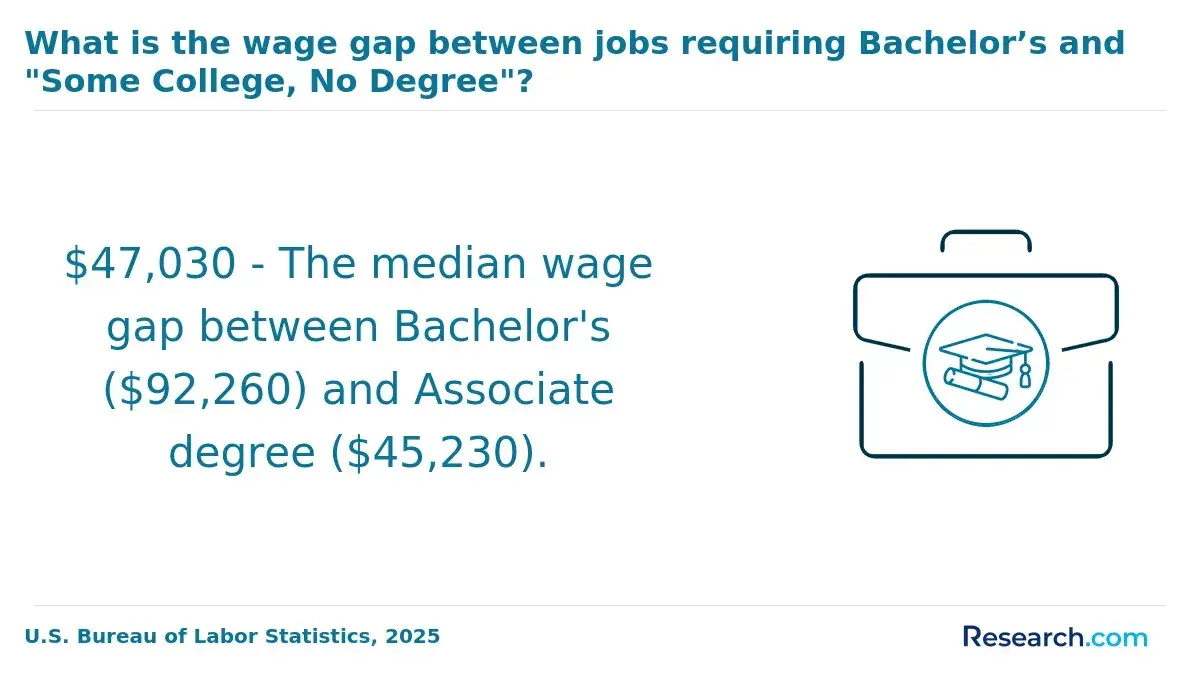
Over 7 million U.S. workers populate finance-related occupations, yet nearly half of these roles do not mandate four-year degrees. This reality opens pathways via certificates or associate degrees, especially for individuals leveraging existing work experience-a practical option for those unable to commit to traditional academic timelines but still needing relevant credentials.
However, prospective students must be aware of logistical hurdles including digital application processes, proof of English proficiency for non-native speakers, and the need for reliable technology, all of which can affect accessibility and completion.
- Minimum GPA requirements vary, commonly 2.5-3.0 for undergraduates
- Standardized tests are increasingly optional but can be required at selective schools
- Graduate finance programs often include work experience and recommendation letters
- Non-degree credentials may suffice for 10 of 23 finance occupations
- English proficiency tests and technology access remain practical admission barriers
How long do online finance degrees take and what do they cost to complete?
Completing an online finance degree requires a deliberate appraisal of time investment relative to career objectives and current employment demands. Bachelor's programs commonly span four years for full-time students, though accelerated formats or part-time pacing can alter this timeline. Master's degrees typically take one to two years, with part-time or executive options facilitating working professionals' scheduling needs.
Cost considerations extend beyond tuition, which varies notably between public institutions-ranging from $7,000 to $15,000 annually in-state-and private schools, where fees can escalate to $50,000 per year. Additional expenses include technology fees, textbooks, and other mandatory materials. Flat-rate tuition models, available at some schools, may benefit students able to take heavier course loads by shortening overall program duration.
Finance graduates entering mid-career should evaluate degrees through the lens of employability and industry mobility. Data from the Federal Reserve Bank of Richmond indicates sectors with significant management roles experience inter-industry workforce movement rates upward of 80%, implying that finance credentials can facilitate pivoting across diverse fields like wholesale trade or entertainment.
Degrees emphasizing applied skills such as financial modeling, data analytics, and strategic management align well with industries showing frequent talent exchange. Prioritizing programs with practical curricula and active employer networks can enhance return on investment by enabling graduates to respond nimbly to evolving market requirements.
What finance and non-finance careers can graduates pursue across different industries?
The practical value of an online finance degree hinges on navigating the tension between specialization and adaptability amid shifting industry demands. Graduates typically encounter roles demanding strong quantitative expertise, such as corporate finance analyst or risk analyst, yet these roles vary widely by sector and regulatory environment, from banking to healthcare and government.
Finance skills also serve as a foundation for cross-functional careers. For example, in healthcare, financial graduates may transition into revenue cycle management, where understanding both finance and patient operations is critical. Technology companies seek candidates who combine financial modeling with technical proficiency-like ERP systems or advanced Excel-and strategic pricing capabilities.
Workforce data indicate significant job mobility, with 1.1 million job changes recorded in Australia over one year and a 12% turnover rate among younger workers. This labor fluidity reinforces the advantage for finance graduates who cultivate transferable skills that employers increasingly prioritize, including data interpretation and regulatory compliance.
Graduates face tradeoffs when shifting industries-gaining domain-specific knowledge is necessary but enhances longer-term career resilience and flexibility. Employers prefer candidates with hybrid expertise over narrowly specialized ones, especially in digital-first economies where finance functions embed within broader business operations.
- Finance roles vary in complexity and regulatory scope by industry, requiring adaptability
- Cross-disciplinary technical skills heighten employability beyond pure finance jobs
- High job mobility favors graduates with transferable competencies and sector agility
- Strategic specialization versus diversification is a key decision affecting career longevity
What salary ranges and job outlook can online finance graduates expect in various sectors?
Entry-level salaries for online finance graduates average around $54,600, but these figures obscure wide variation driven by sector-specific dynamics. For instance, roles in corporate finance within technology or healthcare frequently approach or exceed this benchmark, while public sector finance jobs pay less due to budget restrictions and slower wage increases.
Career growth hinges on strategic choices: pivoting toward investment banking or asset management can drive salaries past $100,000 by mid-career, as evidenced by Northeastern University alumni averaging $102,867 at age 45. In contrast, nonprofit or government financial roles may cap earnings earlier but offer greater job security and benefits-an important tradeoff for many professionals prioritizing stability over income.
Employers prioritize technical expertise-data analysis, financial modeling, and regulatory know-how-making certifications like the CFA or CPA essential complements to an online degree. Graduates must navigate differing credential requirements across sectors and regions to optimize their career trajectory.
- Demand for finance professionals is projected to grow 10% through 2032, exceeding average occupation growth rates.
- Urban centers with dense financial industries typically offer higher starting pay than rural areas.
- Early assessment of certification paths aligned with targeted roles can reduce credentialing challenges later.
How can students choose a reputable online finance program aligned with their career goals?
Choosing an online finance program requires balancing credential recognition, curriculum precision, and tangible career outcomes against cost and format limitations. Accreditation from bodies like AACSB or ACBSP serves as a baseline validation, but students must also verify course relevance to targeted sectors such as corporate finance, risk management, or fintech. For instance, an individual pursuing a role in corporate finance should ensure the program covers mergers and acquisitions, cash flow modeling, and financial reporting.
Cost is a decisive factor, particularly when comparing on-campus versus online offerings. Northeastern University's example shows an online finance bachelor's degree priced at $64,920 versus $248,000 on-campus, a 74% tuition reduction that may significantly reduce debt and opportunity cost. However, this saving can affect networking prospects and employer perception, which remain important in finance's relationship-driven industries.
Strong career services, internships, and industry projects help bridge the online format's experiential gaps and improve graduate employability. Prospective students should review graduate employment rates and employer feedback to assess program market traction, especially when shifting careers or entering emerging areas like ESG investing or data analytics.
Finally, alignment with professional certifications such as CFA or CFP enhances a program's applicability. Candidates must weigh financial feasibility, skill applicability, and employer recognition to ensure their chosen program supports both immediate job prospects and longer-term professional mobility.
Other Things You Should Know About Finance
Online finance degrees often offer modular coursework and asynchronous options, but the workload remains rigorous due to the quantitative and analytical demands. Students balancing full-time jobs should prioritize programs with clear, predictable schedules and strong academic support to avoid burnout. Programs that integrate timed exams or synchronous discussions limit flexibility, so careful selection based on teaching format and pacing is essential for sustained progress without sacrificing quality.
Employers increasingly accept accredited online finance degrees but remain discerning regarding the institution's reputation and program rigor. Candidates benefit from degrees tied to ranked schools or programs with extensive industry partnerships. For cross-industry mobility, employers prioritize proven analytical skills, internships, and certifications alongside the degree rather than the delivery mode alone. Graduates must actively demonstrate applied competencies beyond coursework to overcome any lingering bias toward online formats.
Many online finance programs require a supervised internship or practicum of 120 to 150 hours in a finance, accounting, banking, or corporate treasury setting. Some schools also allow approved internships in insurance, consulting, or fintech, with faculty review and employer verification before credit is awarded.
References
- Accreditation processes for technical programs https://edquip.co/blog/accreditation-processes-for-technical-programs
- Does My Online Degree Matter? - Grace Christian University https://gracechristian.edu/blog/does-my-online-degree-matter/
- Top Online Degree Paths for Career Switchers in 2025 https://dsuonline.com/resources/blogs/top-online-degree-paths-for-career-switchers-in-2025/
- Online Finance Degrees: Curriculum, Careers, and ROI https://bluenomics.com/online-finance-degrees-curriculum-careers-and-roi
- The Need of Accreditation in Online Degree Programs https://www.onlinecu.in/blog/cu/the-importance-of-accreditation-in-online-degree-programs.php
- What Major is Best for Finance? Top 10 Picks https://zoetalentsolutions.com/what-major-is-best-for-finance/
- Online Bachelor's Degree in Finance | CSU Global | Accredited https://csuglobal.edu/academic-programs/undergraduate-degrees/bachelors-degree-finance
- Occupational Outlook https://www.gannon.edu/academic-offerings/engineering-and-business/undergraduate/finance/occupational-outlook/
- Top 10 Online MBAs for Switching Careers | FIND MBA Online https://findmbaonline.com/lists/top-10-online-mbas-for-switching-careers
- Best Finance Degrees Online | Accounting.com https://www.accounting.com/degrees/finance/bachelors/best-online-programs/