2027 Banking Roles You Can Target With a Finance Degree

Co-Founder and Chief Data Scientist
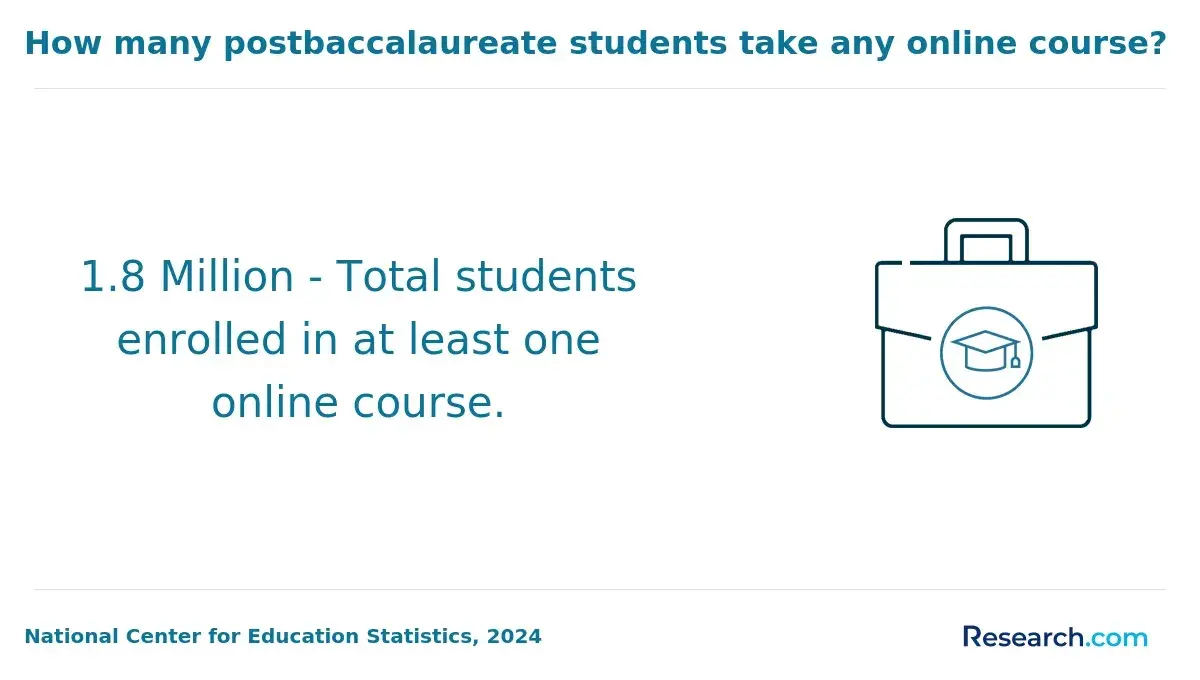
Landing a role in banking often hinges on navigating a crowded applicant pool where advanced skills and relevant experience set candidates apart. The current market demands increasingly specialized knowledge, with banks prioritizing professionals who can adapt to emerging technologies, comply with evolving regulations, and manage complex portfolios simultaneously. Growth in online Finance degree enrollments, rising 14% since 2023 according to the National Center for Education Statistics, signals a shift toward flexible learning but also intensifies competition as more candidates acquire credentials remotely.
Understanding distinct banking roles aligned with one's qualifications helps strategize entry or advancement effectively. This article outlines key banking positions open to Finance degree holders and how to target them for a competitive edge.
Key Things You Should Know
- Investment banking roles require upwards of 1,500 hours of unpaid internship experience on average, limiting access to candidates without elite university networks, per recent CareerX industry data.
- Corporate treasury positions increasingly demand advanced analytics skills, with 62% of employers in Deloitte's 2024 survey prioritizing Python and machine learning proficiency over traditional accounting knowledge.
- Public sector banking roles see slower salary growth but offer a median cost-to-entry of 25% less than private sector, making them viable for candidates balancing debt and immediate employment needs, according to U.S. Bureau of Labor Statistics.
What are the main banking careers you can pursue with a finance degree?
In evaluating banking career paths with a finance degree in the United States, one must balance specialization demands against job market realities. Corporate and investment banking roles remain pivotal; corporate bankers manage business accounts and structure loans critical to company operations, while investment bankers concentrate on capital raising and M&A, requiring intense analytical skill and resilience in high-pressure environments.
Risk management positions sit between these roles, requiring rigorous credit and market risk evaluation skills that align with tightening regulatory frameworks. However, retail banking and customer service positions face significant contraction-teller jobs are expected to decline by 15% from 2024 to 2034 due to automation and digital banking growth. This contraction signals limited long-term advancement without additional technical skills or niche expertise.
Finance graduates targeting commercial lending or wealth management must prepare for roles that emphasize client interaction and personalized financial advisory. These paths reward strong interpersonal abilities and relevant certifications beyond the degree. Conversely, investment banking demands mastery of financial modeling and long hours, often accompanied by high stress and turnover.
Overall, prospective candidates should recognize that retail banking offers easier entry but shrinking opportunities, while investment and corporate banking require deeper specialization with more robust career trajectories. For those considering advanced credentials, pursuing an online masters in finance can better position graduates in top banking roles for finance graduates in the US.
What education, skills, and experience do banks look for in finance graduates?
Banks consistently prioritize finance graduates who pair a relevant degree with advanced analytical and quantitative skills alongside practical experience from internships or cooperative education programs. A bachelor's degree in finance, economics, accounting, or business administration remains the baseline qualification, but employers increasingly demand proficiency in data analysis software, financial modeling, and risk assessment tools. Competence in Excel, SQL, and platforms like Bloomberg Terminal is often required for commercial and corporate banking roles, reflecting the operational expectations placed on entry-level hires seeking roles in this competitive field of education and skills required for finance graduates in banking.
Beyond technical expertise, communication and problem-solving capabilities profoundly affect employability. For instance, credit analysts must distill complex financial statements into clear risk evaluations comprehensible to stakeholders with varying financial literacy. Similarly, relationship managers need emotional intelligence and negotiation acumen to sustain and grow client portfolios, illustrating the nuanced qualifications banks seek in finance degree holders.
Work experience gained through internships or part-time engagements at financial institutions substantially enhances hiring prospects by aligning academic knowledge with real-world workflows. Given projections that business and financial occupations will add roughly 942,500 openings annually through 2034, candidates without specialized internships or certifications such as the CFA often encounter slower professional advancement. Targeted professional development and networking at industry events become essential strategies to offset this disadvantage. Exploring options like learning whether can you transfer MBA credits may also influence career trajectory by impacting further education pathways.
Ultimately, banks seek graduates capable of navigating increasingly complex regulatory environments while promoting sustainable profitability and client satisfaction. The gap between academic preparation and workplace demands requires prospective finance professionals to weigh tradeoffs such as specialization versus broad exposure, practical competencies versus academic credentials, and the timing of professional certification in shaping their employability and career progression.
What entry-level banking roles are available to recent finance majors?
Entry-level banking positions for finance graduates reveal a clear tension between remuneration, workload, and career trajectory. Investment banking analyst roles offer the highest initial pay-base salaries from $110,000 to $120,000 and total compensation reaching $150,000 to $220,000-but demand mastery in financial modeling, valuation, and extensive hours often exceeding 70 per week. This role suits candidates with strong academic records, internship experience, and networking skills within elite firms.
Less intense but viable alternatives, such as credit analyst and financial risk analyst roles, provide steadier hours and sustainable work-life balance. Credit analysts, critical to lending institutions, start between $60,000 and $80,000, focusing on borrower assessment, regulatory compliance, and industry analysis. Financial risk analysts-earning roughly $70,000 to $90,000-require quantitative and statistical aptitude to manage diverse asset risks. Both paths align with banking career opportunities for recent finance majors seeking long-term stability.
Commercial banking associates bridge client interaction and credit analysis at regional and community banks, offering practical experience for relationship management tracks. Prospective candidates must weigh these roles' tradeoffs in compensation, work intensity, and cultural fit to ensure career sustainability within the first five years.
For those balancing cost and career pivot considerations, affordable credentials may supplement finance degrees; a noteworthy resource is the cheapest online MBA programs, offering cost-effective upskilling.
How do commercial banking and retail banking careers differ for finance graduates?
Careers in commercial banking versus retail banking for finance graduates diverge sharply in complexity, skill requirements, and compensation trajectories. Commercial banking roles demand proficiency in financial modeling, risk assessment, and regulatory compliance, with a focus on managing corporate relationships, large-scale lending, and treasury services. For instance, a finance graduate targeting commercial banking may frequently negotiate loan terms that directly impact corporate operations, requiring strong credit risk modeling expertise.
Retail banking, by contrast, centers on individual clients, providing standardized products like deposits, personal loans, and mortgages. Retail bankers rely more on customer service and sales capabilities, guiding consumers through loan applications or retirement planning without the specialized quantitative rigor seen in commercial roles. This distinction affects day-to-day duties and educational emphasis.
The differences between commercial and retail banking roles for finance degree holders extend to compensation and job demands. Risk analysts in commercial banking often manage multi-million-dollar portfolios and can expect salaries ranging from $70,000 to $150,000 by 2026 in the US, highlighting the sector's increasing regulatory complexity. Retail banking analysts focus on credit risk for mass-market loans, involving less complex underwriting and lower pay scales.
Finance graduates weighing these paths must consider tradeoffs: commercial banking offers higher strategic challenges and pay but demands rigorous quantitative skills and longer hours. Retail banking provides steadier schedules and more frequent client interactions but generally lower salaries and less specialization. Those evaluating an MBA or other advanced education might explore MBA programs easy to get into to strategically pivot or advance in their careers.
What corporate and investment banking roles can a finance degree prepare you for?
Deciding between regulatory compliance and deal-focused roles after earning a finance degree impacts career stability and day-to-day work experiences. Compliance officers, fueled by escalating federal mandates, are increasingly vital as finance grows more regulated. Entry-level compliance salaries start near $75,000, climbing to $160,000 at senior levels, according to OphyAI's 2026 salary benchmarks. These roles demand precision in interpreting regulations and implementing internal controls, fitting candidates with strong legal and quantitative skills.
Conversely, investment banking associates concentrate on deal structuring, mergers and acquisitions, and capital raising. While these roles offer higher prestige and compensation potential, candidates typically need additional credentials such as a CFA designation or extensive internship experience to overcome high competition. The workload is more volatile, often involving long hours and intense project cycles.
Finance graduates also fill critical roles as financial analysts, credit analysts, and risk managers. Analysts supporting corporate treasury handle valuation and forecasting, requiring quantitative rigor. Risk managers deploy data modeling to assess operational, credit, and market risks, needing fluency in financial instruments and regulations.
- Tradeoff: Compliance offers steady regulatory-driven growth but can involve repetitive documentation.
- Tradeoff: Investment banking demands volatility tolerance and networking agility for career advancement.
Prospective students should weigh how their aptitude for analytical rigor, regulatory detail, and work-life balance preference aligns with these pathways before committing to a finance specialization.
What are typical salaries and bonus structures in common banking roles?
Compensation in U.S. banking roles hinges heavily on the scale of client assets managed and career seniority, making income paths far from uniform. Wealth and portfolio managers typically earn between $70,000 and $200,000 annually, but this range widens as client book size increases, with senior directors frequently surpassing $300,000 when factoring bonuses.
Bonuses often match or exceed base salaries and vary sharply with performance metrics. For example, entry-level analysts might earn $80,000 to $120,000 in base pay, supplemented by bonuses ranging from 30% to 70%. Meanwhile, associates and vice presidents can see bonuses equal to or greater than 100% of their base, contingent on deal flows and client retention.
These disparities highlight a fundamental tradeoff: steady pay with modest upside versus volatile income tied to asset performance and deal success. Consider a portfolio manager at a boutique firm managing $500 million in assets-income stability and incremental growth contrast significantly with counterparts at multinational banks overseeing billions, who face higher earnings volatility but access greater upside potential.
Prospective finance professionals must weigh this variability carefully, recognizing how compensation structures reflect firm size, role focus, and market conditions. This knowledge aids in negotiating realistic packages and aligning educational investments with career goals in finance.
What is the job outlook for banking careers and how is the industry changing?
Banking careers increasingly demand adaptability to technological shifts and regulatory complexities, forcing professionals to prioritize advanced analytical and risk management skills over routine transactional tasks. For example, treasury professionals in sectors like manufacturing or energy must expertly navigate volatile interest rate environments and sophisticated hedging strategies to mitigate financial risks, a challenge requiring more than traditional finance knowledge.
The evolving job market reduces entry-level positions affected by automation but expands mid-level and senior roles emphasizing compliance, strategic advisory, and client relationship management. Candidates proficient in data analytics platforms, financial programming, and cybersecurity awareness are notably preferred by employers. Continuous certification and niche specialization, such as sustainable finance or fintech integration, are becoming non-negotiable for maintaining employability.
Compensation trends confirm this shift: senior corporate treasurers at large firms can expect total pay exceeding $200,000 by 2026, underscoring the premium on expertise in liquidity and risk management during unstable rate cycles. Education programs without robust practical exposure to emerging financial instruments and cross-disciplinary competencies may limit graduates' career resilience.
Prospective students and professionals must balance the tradeoff between foundational finance skills and specialized capabilities, aiming to align their educational investment with evolving employer demands and sector transformations.
Which licenses and professional certifications help you advance in banking?
Advancing in banking with a finance degree increasingly demands a strategic balance between regulatory licenses and technology-focused certifications. Traditional credentials like the Series 7 and Series 63 licenses remain essential for roles centered on securities trading and investment advice, but they provide limited leverage for careers intersecting with fintech and AI-driven finance.
Specialized credentials such as the Certified Treasury Professional (CTP) or Chartered Financial Analyst (CFA) credential are valuable for commercial or retail banking positions, demonstrating expertise in cash and portfolio management. However, the rapid expansion of fintech-highlighted by over 100,000 new jobs globally and an AI-in-finance market forecast to reach $30 billion by 2026 according to OphyAI-signals a need for proficiency in data analytics, blockchain, and AI.
Certifications like Certified FinTech Practitioner (CFtP) or AI-specific credentials are becoming essential complements rather than replacements to FINRA or other regulatory licenses. Employers increasingly expect candidates who can merge compliance knowledge with practical technology skills, especially in algorithmic trading or digital asset management.
Consider a banking analyst pivoting to AI-enhanced credit risk modeling: foundational finance certifications such as the CFA or CPA remain necessary, but pairing them with machine learning credentials improves employability and relevance. This dual focus entails tradeoffs in time and cost, requiring candidates to prioritize credentials aligned with targeted roles rather than acquiring multiple general licenses.
How can you choose the best on-campus or online finance program for banking?
Selecting an effective finance program requires evaluating how well it equips students with quantifiable skills and access to employer networks, rather than relying on program reputation alone. Candidates targeting roles like FP&A manager, with salaries ranging from $90,000 to $180,000 according to OphyAI's 2026 benchmarks, must find coursework that addresses advanced managerial finance and corporate strategy.
Internships or cooperative education integrated within the curriculum significantly boost employability by providing practical exposure to banking-specific regulations and client interactions. While in-person programs often support richer networking opportunities, high-quality online options with live sessions and capstone projects can deliver comparable outcomes for motivated learners.
Working professionals switching to finance benefit from part-time or hybrid models that balance workload and learning but must be wary of programs that compromise rigor, as this directly impacts earning potential-starting salaries for senior financial analysts average around $110,000.
Employer partnerships and career services are critical; banks prioritize graduates from programs with proven recruitment pipelines emphasizing technical and ethical competencies. Ignoring these factors can result in costly but ineffective education paths that fail to align with the strict salary benchmarks across finance specialties.
- Strong quantitative skills: financial modeling, risk management
- Internship opportunities that enhance real-world readiness
- Program flexibility balanced against curriculum depth
- Institutional ties to banking employers for recruitment pipelines
How can internships, networking, and early career steps boost your banking prospects?
Entry into banking quantitatively favors candidates who supplement academic credentials with targeted internships and strategic networking. Practical exposure at quant funds or specialized financial boutiques provides critical empirical experience, such as implementing Python or R in real-world models-skills necessary for quantitative analyst roles where base compensation hovers around $150,000, per OphyAI's 2026 data.
Networking accelerates hiring prospects by penetrating the often circuitous referral channels at top financial institutions. Early roles as financial analysts or risk associates build track records that justify salary growth to approximately $250,000 at mid-career levels. This progression reflects employer preferences for demonstrated adaptability beyond academic performance.
Choosing internships aligned with one's target banking niche-be it investment banking, risk management, or quantitative trading-avoids costly missteps associated with specialization mismatches. Failing to secure relevant early experience often extends job searches and limits access to senior quant salaries surpassing $400,000.
Employers focus heavily on observable competencies proven under market conditions rather than solely on academic standing. Internships and initial roles serve as objective benchmarks of technical proficiency and cultural fit. These factors reshape the candidate profile, mitigating the risk of untested hires in an environment where long-term potential hinges on real-world performance.
Other Things You Should Know About Finance
A finance degree alone provides a solid foundation but rarely guarantees immediate placement in competitive banking roles. Employers increasingly expect candidates to hold certifications like CFA or pass licensing exams such as the Series 7 alongside their degree. Prioritize programs or pathways that offer integrated exam preparation or opportunities to gain relevant certifications early to improve marketability.
Courses in financial accounting, corporate finance, credit analysis, and statistics are the most useful for commercial banking. Employers also value Excel modeling and loan underwriting knowledge. Many banks prefer candidates who completed at least 12 to 18 credits in finance, accounting, or economics.
Specializing within your finance degree can significantly improve your competitiveness for certain banking roles. Concentrations in areas like financial analysis, risk management, or financial modeling align better with employer expectations and real-world job functions. For a practical approach, choose specializations that match your targeted sector, as generalist degrees may limit access to specialized roles and advancement opportunities.
References
- How to enter a career in finance https://www.cisi.org/cisiweb2/careers-in-finance/how-to-enter-a-career-in-finance
- What careers are possible with a finance degree? https://www.rmit.edu.vn/study-at-rmit/study-areas/business/what-jobs-can-you-do-with-a-finance-degree-top-common-jobs
- Investment Banking Salaries – That Much Can You Really Earn https://www.preplounge.com/en/blog/finance/investment-banking/salary/overview
- Investment Banking Certification: Why It Won't Help You https://mergersandinquisitions.com/investment-banking-certification/
- Why You Should Start Networking as a Student – and How to Do It https://amplifyme.com/blog/why-you-should-start-networking-as-a-student
- Reimagining today's workforce helps banks shape their future https://www.ey.com/en_ao/insights/banking-capital-markets/how-can-reimagining-todays-workforce-help-banks-shape-their-future
- Ophy https://ophy.ai
- Must-Have Skills for Accounting & Finance Graduates Entering Singapore’s Competitive Job Market https://www.lsbf.edu.sg/blog/accountancy-and-finance/must-have-skills-for-accounting-finance-graduates-entering-singapores-competitive-job-market
- The Future of Finance Jobs in 2026 https://www.stcusa.com/resource-center/career/finance-jobs-outlook/
- Banking Industry https://collegegrad.com/industries/banking