2027 Online Finance Degrees With Strong Treasury and Cash Management Training

Co-Founder and Chief Data Scientist
Missing critical knowledge in treasury and cash management can cost corporate finance professionals millions in liquidity missteps amid volatile markets. Financial decision-makers increasingly juggle complex cash flow forecasting and risk mitigation, yet 42% of finance professionals report insufficient formal training in these areas, according to a CFPB workforce study from early 2024.
The rise in online education options reflects this gap, offering flexible access for working adults balancing career shifts without pausing income streams. However, variability in curriculum depth and practical application demands rigorous scrutiny from candidates. This article assesses online finance degrees with strong treasury and cash management training to help candidates identify programs aligned with real-world skill demands and career outcomes.
Key Things You Should Know
- Treasury and cash management specialization in online finance degrees correlates with a 12% salary premium within 3 years post-graduation but requires sacrificing broader financial theory depth, per 2024 NACE employment surveys.
- Employers in Fortune 500 firms reported in a 2024 Deloitte survey a 45% preference for candidates with demonstrable ERP software and liquidity risk skillsets embedded in curriculum over generalized finance majors.
- Programs emphasizing treasury skills often demand longer completion times, increasing average tuition costs by 18%, which can delay workforce re-entry and impact mid-career professional pivots, according to U.S. Department of Education data.
What is an online finance degree with a focus on treasury and cash management?
Specialized online finance degrees with treasury management specialization respond to a critical demand for professionals skilled in managing corporate liquidity and operational cash flow in real time. Unlike broader finance programs, these degrees center on cash forecasting, working capital optimization, and maintaining banking relationships vital for sectors with distinct cash cycle challenges-such as manufacturing.
The practical curriculum frequently incorporates treasury management systems and automated payment platforms as foundational to mastering cash management training in finance degree programs. Familiarity with compliance and reporting frameworks is essential, shaping graduates ready to meet private and public sector expectations.
Labor market data from the U.S. Bureau of Labor Statistics projects a 16% growth in finance and insurance jobs for financial managers by 2032, creating approximately 126,600 openings. Hiring managers seek candidates demonstrating both analytical capabilities and operational experience, a balance these specialized digital programs aim to deliver.
Working professionals should prioritize accredited online programs offering experiential learning, including virtual simulations and internships, to mitigate remote study's limited networking opportunities. Selecting programs aligned with targeted industries-technology, healthcare, or manufacturing-improves applicability by tailoring cash management techniques to specific sector risks.
Those exploring options might benefit from reviewing a comprehensive finance degree online list to gauge program suitability and outcomes.
How do online finance programs teach specialized treasury and cash management skills?
Specialized treasury management training in online finance programs responds directly to distinct operational challenges across industries, making a one-size-fits-all approach ineffective. For instance, manufacturing firms must manage cash flow around inventory financing and supplier payments, whereas technology companies focus on rapid investment cycles and receivable collections. This context-specific curriculum is essential for mastering practical treasury functions tailored to sector volatility.
Online finance courses emphasizing cash management skills development integrate updated market conditions and regulatory frameworks post-2024, requiring students to adapt to shifting interest rates and credit terms. Simulation-based training using ERP and treasury management systems like SAP Treasury or Kyriba is increasingly demanded by employers, alongside advanced Excel modeling capabilities.
Prospective students should prioritize programs offering access to current financial databases and instructors with industry experience to navigate evolving treasury complexities. The median annual wage for treasurers and controllers in the U.S. reached $160,160 in 2024, underscoring the premium for practical expertise in instantaneous cash flow controls. Neglecting technology-driven, scenario-based learning risks employability setbacks in fast-moving sectors.
For those comparing options, evaluating the most affordable online MBA programs can provide strategic insights into balancing cost with skill acquisition relevant to treasury-focused careers.
Which types of online finance degrees best prepare you for treasury careers?
Degrees explicitly focused on treasury and cash management provide the most direct pathway for candidates aiming at treasury roles, markedly more than general finance programs. Employers expect hands-on competencies in cash flow forecasting, liquidity management, and bank relationships, skills best developed in programs labeled Financial Management or Corporate Finance with treasury specialization.
Such degrees incorporate case studies and treasury system simulations that replicate daily responsibilities, crucial for sectors like banking, manufacturing, and energy where operational agility hinges on effective liquidity control. Notably, selecting an online finance degree with treasury management specialization must include targeted coursework on treasury technologies such as Treasury Management Systems (TMS), risk mitigation, and compliance frameworks.
Programs lacking these focused modules often fail to prepare graduates for immediate contribution, given that employers prioritize candidates who understand cash forecasting and compliance nuances from day one. Practical readiness is further enhanced by programs offering internships or virtual cooperative experiences in finance environments.
This real-world exposure addresses workforce demands more effectively, particularly important as over 60% of U.S. undergraduates participate in at least one online course, reflecting evolving preferences for flexible yet rigorous finance training. Prospective students prioritizing best online finance programs for cash management careers should ensure curricula steer clear of accounting-heavy or purely broad finance tracks without treasury components.
For those evaluating financing options, resources like the cheapest AACSB online MBA no GMAT provide actionable insights into cost-efficient pathways that maintain academic credibility.
What core courses and tools are included in treasury and cash management curricula?
Core treasury management courses in online finance degrees prioritize practical skills in liquidity oversight and risk control essential for diverse industries. Students encounter real operational challenges like managing cash conversion cycles that vary considerably between sectors such as manufacturing and retail. This focus on cash management tools and techniques in finance curricula develops proficiency in daily cash operations, credit assessment, and banking relationships.
Programs integrate ERP platforms like SAP and Oracle Financials alongside treasury management systems (TMS) including Kyriba and FIS Quantum, reflecting employer expectations for fluency in automation of payments, cash positioning, and reconciliation. The ability to navigate these real-world systems enables graduates to enhance corporate fund oversight and maintain compliance rigorously.
Exposure to short-term investments, debt instruments, and foreign exchange risk hedging is standard, addressing the volatility multinational corporations face. Scenario-driven learning often simulates responses to crisis liquidity events and interest rate shifts-key decision points where strategic precision is non-negotiable. However, these advanced skills come with a need for continuous technology adaptation and sector-specific understanding.
With online bachelor's tuition averaging about 30% less than out-of-state campus programs, these degrees deliver cost-conscious, workforce-aligned treasury education. Students evaluating pathways should consider how these curricula respond to employer demands for operational competence and strategic insight. Those weighing alternatives might also explore related credentials found in best online medical assistant programs for diversity in career pivot options.
How do online treasury-focused finance degrees compare with on-campus options?
Online treasury-focused finance degrees provide solid theoretical knowledge but often lack the critical experiential learning valued by employers, especially in sectors requiring hands-on negotiation and rapid decision-making such as corporate banking and multinational treasury departments. The limited access to real-time networking and face-to-face case challenges online reduces direct exposure to practical scenarios.
Employers frequently emphasize internship or cooperative education experiences, which are more readily accessible through on-campus programs. That said, online programs offer significant flexibility for professionals balancing work and study, enabling simultaneous application of coursework to real-world roles.
For instance, a healthcare finance specialist pursuing an online treasury degree can implement cash optimization strategies at their institution without interrupting employment-contrasting with recent graduates who typically rely on campus internships to develop practical skills.
Key workforce implications include:
- Graduates with online education plus active professional roles often demonstrate stronger applied skills in cash flow forecasting and treasury analytics.
- The tradeoff between networking depth and flexible employment integration is central to choosing between on-campus and online formats.
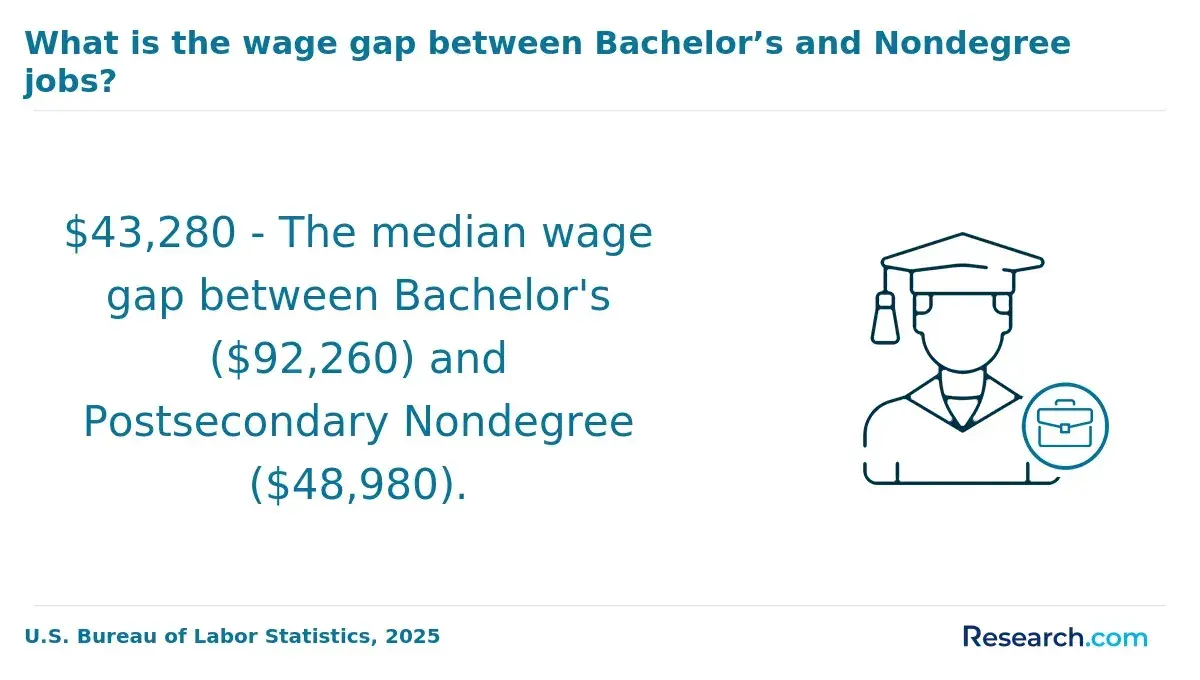
- Completing a bachelor's degree remains financially valuable; U.S. Bureau of Labor Statistics data confirm bachelor's degree holders in finance earn approximately 23% more annually than those with some college or associate degrees.
Prospective students should strategically complement their chosen delivery mode with internships or professional certifications to enhance employability in finance roles requiring treasury expertise.
What accreditation and quality standards should online finance programs in treasury meet?
Treasury and cash management programs without recognized regional accreditation lack the credibility required by employers, especially in sectors like manufacturing and financial services where liquidity precision is non-negotiable. Accreditation from bodies approved by the U.S. Department of Education, such as the Higher Learning Commission, ensures academic rigor.
Meanwhile, alignment with standards from the Association for Financial Professionals (AFP) or competencies from the Global Association of Risk Professionals (GARP) addresses practical skill relevance. Practical mastery of cash flow optimization and risk forecasting increasingly depends on familiarity with current treasury technology.
For instance, over 70% of treasury professionals plan to boost technology spending on liquidity forecasting by 2026, emphasizing the need for hands-on experience with analytical tools. Graduates from programs lacking this focus often face challenges meeting employers' expectations for applied skills, limiting employability.
Verification of a program's inclusion of updated case studies or experiential internships with Treasury departments is crucial for understanding post-pandemic liquidity complexities. Additionally, successful completion of recognized credentials like the Certified Treasury Professional (CTP) is often a prerequisite for competitive roles, reinforcing the importance of program quality beyond mere completion.
Ignoring these factors risks investing in education that fails to translate into actionable expertise or market advantage in the evolving treasury function landscape.
What are the typical admission requirements for online treasury and cash management programs?
Admission to online treasury and cash management programs demands more than a bachelor's degree; practical experience often influences acceptability, especially where minimum GPAs range between 2.5 and 3.0. Professionals with 2 to 5 years in treasury functions may bypass some academic requirements if their skills include familiarity with relevant financial software and banking operations. GRE or GMAT scores are increasingly optional but can be requested by selective, research-focused institutions.
Programs today reflect employer expectations by prioritizing technical competence in treasury systems, ERP software, and digital connectivity tools. For example, a majority of organizations now rely on or plan to adopt API integrations for real-time cash management data, signaling that hands-on technology skills directly affect employability and performance.
Applicants must provide a statement of purpose and professional references to demonstrate clear motivation and suitability for this niche. Non-finance backgrounds typically require bridge courses in accounting or corporate finance, which adds to program duration and cost. International candidates also confront additional hurdles such as language proficiency proof.
- Completed bachelor's degree (finance/business/accounting preferred)
- Minimum GPA 2.5-3.0 or relevant professional experience (2-5 years)
- Technical proficiency with financial and treasury software
- Professional references and a statement of purpose
- English proficiency for international applicants
- Reliable technology for online access and software use
How long do these online finance degrees take, and what do they cost?
Pursuing an online finance degree with a treasury and cash management focus demands balancing time, cost, and specialization depth against market value. These programs typically span 18 to 36 months depending on enrollment pace and offer accelerated tracks requiring 15 to 20 hours weekly. A working professional prioritizing swift credentialing must weigh the increased workload against thorough mastery of treasury functions essential for employer expectations.
Cost varies broadly-$15,000 to over $45,000 total-with public universities charging $400-$700 per credit hour for in-state students, while private institutions may exceed $1,000 per credit. Beyond tuition, candidates should factor in material and technology fees. Choosing accelerated, often pricier formats might speed entry to wage premiums but risks compromising comprehensive treasury training necessary for credentials like the Certified Treasury Professional (CTP).
Employers in banking, manufacturing, and corporate finance sectors heavily favor candidates with treasury-linked degrees aligned with recognized credential frameworks. The CTP credential offers roughly a 24% median salary advantage compared to non-credentialed peers, emphasizing the importance of curriculum emphasis on cash flow analysis, treasury technology, and risk management tools.
Enrollment decisions must reflect realistic workload capacity and whether part-time programs afford manageable balance without diluting specialization. Auditing course offerings for treasury-specific simulations and tech proficiency is critical to ensure degrees translate into tangible career leverage.
What treasury and cash management careers, salaries, and job outlook can graduates expect?
Treasury and cash management roles demand specialized skills that directly influence salary trajectory and job stability, with positions requiring expertise in cross-border liquidity often commanding salaries surpassing $125,000. A treasury analyst at a global manufacturing firm, for example, must navigate currency risks and optimize cash flows to support supply chains, contrasting with domestic non-profit roles where regulatory compliance may be more critical than liquidity management.
Market expansion from $27 billion to over $40 billion by 2030 continues to push demand for professionals adept in foreign exchange risk management, global payment platforms, and treasury technology. Candidates entering this field without proficiency in enterprise resource planning (ERP) systems or automated cash forecasting face significant barriers beyond entry-level opportunities.
Key workforce realities include:
- Employers prioritizing practical experience with international cash operations and compliance adaptation.
- Certification or advanced data analytics training serving as accelerants for those transitioning from broader finance backgrounds.
- Internships and education emphasizing hands-on treasury applications dramatically increasing employability.
New graduates should weigh programs offering applied treasury modules and real-world scenarios, ensuring alignment with operational challenges rather than theoretical models. Ongoing education addressing regulatory changes and technology integration is essential for sustaining career momentum within evolving treasury environments.
Which certifications strengthen a treasury or cash management career after an online degree?
The Certified Treasury Professional (CTP) and Certified Cash Manager (CCM) credentials offer focused expertise crucial for candidates targeting treasury or cash management roles that demand applied financial skills beyond theoretical knowledge. Employers frequently prioritize these certifications because they demonstrate proficiency in liquidity management, risk controls, and cash forecasting, areas where direct hands-on experience with platforms like SAP Treasury, Kyriba, or TreasuryXpress significantly enhances employability.
For instance, manufacturing and retail finance teams require professionals who can leverage real-time cash visibility tools to optimize working capital efficiently. Employers often place strong emphasis on integrated skill sets combining certification with experience in digital treasury technology. The National Association of Colleges and Employers survey found that about 79% of U.S. employers consider practical familiarity with financial software vital for entry-level finance professionals.
Without this applied software competence, graduates risk slower progression and limited leadership potential, especially in sectors like healthcare or public utilities where cash flow disruptions have regulatory and operational consequences. The Certified Corporate Financial Planning & Analysis Professional (FP&A) credential complements treasury-specific certifications by deepening budgeting and forecasting ability in complex cash flow environments.
Moreover, success requires immersive practice in scenario modeling, dashboard analytics, and advanced Excel functionalities designed specifically for treasury operations. This nuanced blend of certification, software fluency, and real-world application defines readiness for treasury roles, guiding candidates to prioritize online programs blending these elements effectively.
Other Things You Should Know About Finance
Specialized treasury courses in online finance degrees offer targeted skills in cash management, risk analysis, and financial strategy. These skills are critical for roles in treasury departments, enhancing your ability to make strategic financial decisions, manage liquidity, and optimize financial resources for organizations.
Look for institutional accreditation from a U.S. Department of Education-recognized accreditor, such as AACSB or ACBSP for business schools. For treasury-focused roles, employers also value coursework in corporate finance, cash forecasting, working capital management, and risk management, usually covered in 120-credit bachelor’s programs.
Specialized treasury courses in online programs provide direct training in liquidity forecasting, risk mitigation, and corporate cash flow optimization that general finance degrees often overlook. This practical focus enhances employability in treasury departments by equipping students with process-driven skills used daily in treasury functions. Prospective students should prioritize programs with hands-on software simulations and real-world cash management projects to bridge theory and practice effectively.
Part-time online finance programs typically align better with working professionals aiming to maintain career momentum while acquiring treasury skills incrementally. These programs allow for applied learning on the job, deepening understanding through immediate practice. Full-time study may accelerate qualification but risks disrupting income flow and professional networking, which are critical for treasury career advancement. Thus, part-time options generally provide a more balanced and effective pathway for mid-career pivots.
References
- Online Bachelor's Degree: Finance https://www.umgc.edu/online-degrees/bachelors/finance
- Treasury and Cash Management Training Course | EuroMaTech https://www.euromatech.com/course/treasury-and-cash-management/
- THE A-Z OF CORPORATE TREASURY https://learning.treasurers.org/training/corporate-treasury
- Cash managers: Salary, career path, job outlook, education and more - RaiseMe https://www.raise.me/careers/management/financial-managers/cash-managers/
- Finance Certifications https://www.fma.org/finance-certifications
- What Is a Treasury Management System? 8 Useful FAQs. https://www.kyriba.com/resources/faqs/what-is-treasury-management-system
- International Treasury Management and Corporate Finance - Fundamentals | House of Training https://www.houseoftraining.lu/en_GB/training/international-treasury-management-and-corporate-finance-fundamentals-15763
- International Treasury & Cash Management - Advanced - EuroFinance | The global treasury community https://www.eurofinance.com/training/treasury-cash-management-advanced-am/
- What Major is Best for Finance? Top 10 Picks https://zoetalentsolutions.com/what-major-is-best-for-finance/
- Treasury: Cash Management | Finance Xplained https://financexplained.com/CoursePage.aspx