2027 Online Finance Degrees With Strong Investment Research Training

Co-Founder and Chief Data Scientist
Facing rapid shifts in investment strategies, finance professionals must demonstrate rigorous research skills to navigate volatile markets and justify portfolio decisions under intense scrutiny. However, balancing work, family, and education remains a persistent barrier. Notably, a recent National Center for Education Statistics report reveals a 15% rise in adult learners enrolling in online finance programs over two years, signaling growing demand for flexible options that align with professional schedules without sacrificing quality.
This article examines online finance degrees emphasizing investment research training, evaluating program formats, curriculum depth, and market relevance to help prospective students assess options that maximize career advancement while managing real-world constraints.
Key Things You Should Know
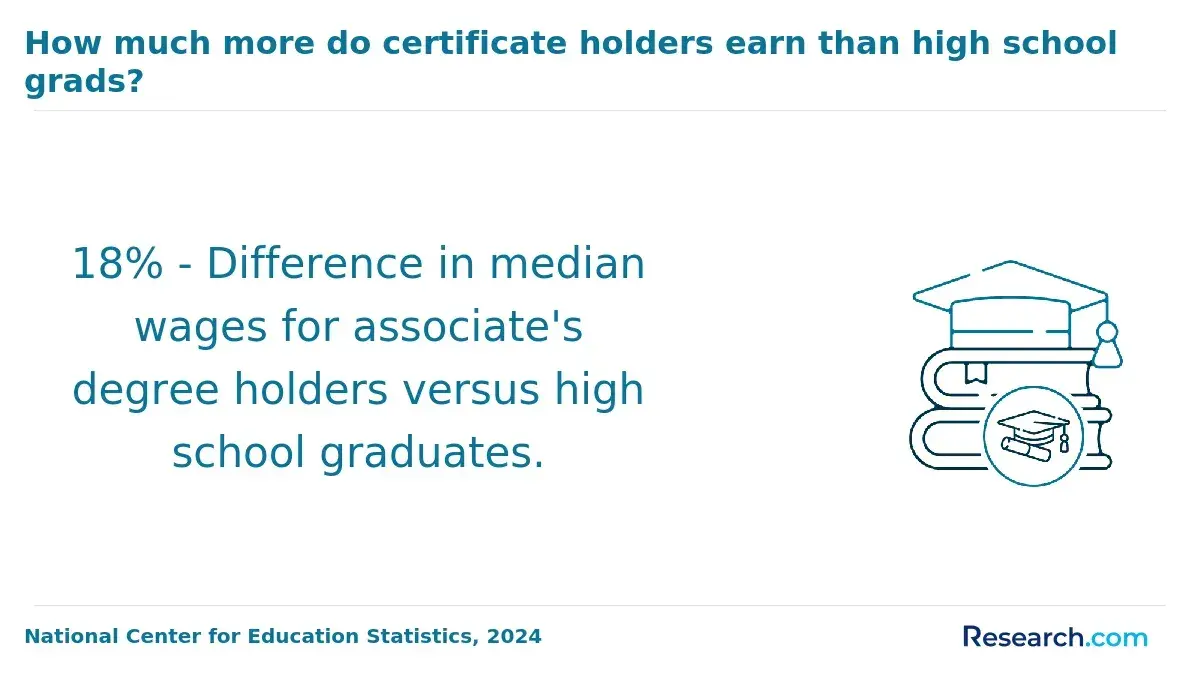
- Programs with integrated investment research modules show 18% higher mid-career salary gains but incur 20-30% longer completion times, posing a tradeoff between skill depth and faster workforce entry.
- Employers in asset management prioritize graduates with hands-on equity analysis training; 67% report these candidates outperforming peers lacking practical research experience, emphasizing real-job readiness over theoretical knowledge.
- Rising tuition fees for specialized online finance degrees, averaging $28,500 in 2024 per National Center for Education Statistics data, restrict access predominantly to mid-career professionals with employer tuition benefits, limiting demographic diversity.
What is an online finance degree with a focus on investment research, and who is it best for?
Programs that specialize in investment research within online finance degree programs address a specific demand for analytical rigor and practical financial modeling skills essential for roles like equity analysts or portfolio managers. These degrees are distinct from general finance credentials because they prioritize quantitative analysis and direct application of proprietary research tools, which are non-negotiable in interpreting market volatility and sector risk.
Cost disparities between public and private institutions significantly influence program choice: public four-year universities average around $9,800 annually, while private nonprofits may exceed $40,700. This gap invites consideration of targeted online programs that balance affordability with access to faculty expertise and research databases critical for skill development relevant to investment research careers.
Professionals currently employed in finance or related fields gain the most from online formats, as flexibility allows them to integrate learning with real workplace challenges. For example, a financial analyst shifting toward investment research must acquire valuation techniques and risk assessment specific to sectors, typically embedded in specialized modules. Without foundational knowledge in statistics or accounting, a candidate faces longer completion times and higher costs due to prerequisite courses.
Successful candidates tend to demonstrate strong self-discipline and quantitative aptitude to manage complex data sets and software tools, meeting employer expectations for applied research methodologies rather than purely theoretical understanding. Graduates report enhanced employability because employers prioritize validated forecasting abilities over academic credentials alone.
For those assessing the best online finance degrees for investment research careers, this balance of curriculum rigor, practical experience, and cost-effectiveness is critical. More details on these strategic options can be found at finance degree online.
How do online finance programs compare with campus-based options for investment research training?
Online finance programs versus campus-based investment research training present distinct tradeoffs in experiential learning and employability pathways. While online degrees offer comparable rigor and develop critical investment research skills, their effectiveness hinges on active engagement with live market data and virtual networking. Employers increasingly recognize these credentials when candidates exhibit proficiency in financial modeling, equity valuation, and quantitative analysis.
Cost differences are significant; online finance programs typically charge between $42 and $448 per credit, yielding total tuition well below the approximate $70,000 average for four-year campus curricula. This cost advantage, combined with flexible scheduling, supports mid-career professionals balancing work and study-a practical necessity for analysts pivoting into investment research roles with maintained income streams.
However, campus-based training remains advantageous for stronger internship access and embedded mentorship, crucial for recent graduates targeting bulge bracket banks with structured recruitment. Boutique research firms often emphasize demonstrated technical skills over institutional pedigree, favoring well-rounded online graduates. The challenge lies in proactively securing real-time market access and substitutes for in-person collaboration common in campus environments.
Students evaluating this pathway should weigh sector norms and employer expectations carefully. For those seeking the structured pipeline of traditional entry, campus programs may offer an edge, while online formats suit professionals prioritizing flexibility and cost-efficiency. For insight into alternatives supporting such career shifts, see top online MBA schools.
What types of online finance degrees offer strong investment research preparation (certificate, bachelor's, master's)?
Online finance degrees with investment research training offer more than theoretical knowledge; they embed practical skills essential for immediate job performance and long-term career mobility. A bachelor's degree typically suffices for entry-level analyst roles at asset management firms, where employers expect applied competencies in financial statement analysis and valuation techniques. In contrast, master's degrees in finance or financial engineering emphasize quantitative rigor-think advanced econometrics and machine learning applications-that align with demands in hedge funds, proprietary trading, and institutional investing.
Certificate programs in investment research serve a narrower purpose, best suited as augmentative credentials rather than standalone qualifications. Professionals transitioning from adjacent industries or supplementing finance knowledge find them useful, but these certificates rarely meet employer standards for full analyst responsibilities.
Given the U.S. Bureau of Labor Statistics projects an 8% growth in financial and investment analyst employment through 2032 with 27,400 annual openings, the choice between degree depth and time or cost investment carries tangible workforce consequences. Employers prioritize candidates demonstrating comprehensive analytical training over isolated certifications, making the extended commitment of a degree program a strategic advantage. For individuals seeking accelerated academic options, exploring the shortest online MBA can complement these finance pathways effectively.
Investment research preparation in online finance programs marries technical expertise with applied market analysis, creating a pipeline of graduates who better meet evolving employer criteria in a data-driven investment environment.
Which accreditation and quality standards should online finance programs with investment training meet?
Accreditation standards for online finance degrees with investment training are a critical filter employers apply when screening candidates, as recognized endorsements from bodies like AACSB or EQUIS confirm adherence to rigorous academic and ethical criteria. Without such recognition, graduates often face employer skepticism due to questions about curriculum depth and quality assurance criteria for finance programs specializing in investment research.
Programs that integrate experiential learning elements-such as virtual trading platforms or live case studies-directly align with what hiring managers seek: graduates prepared for the analytical and decision-making demands of asset management or equity research roles. Advisory boards with employer input further ensure that curriculum stays relevant amidst shifting regulations and market needs.
U.S.-based students must evaluate regional accreditation (e.g., Middle States or WASC) for access to financial aid and credit transfer, which significantly affects the feasibility of completing a given program. For example, Indian online MBAs in Investment Banking & Equity Research typically cost between INR 70,000 and INR 200,000, offering substantial tuition savings but with tradeoffs in international recognition and investment research rigor.
An essential factor is whether certification preparation for the CFA or FRM is integrated, as these enhance employability in competitive finance sectors. Transparency in graduate employment data and internship facilitation is another key quality indicator. Those seeking efficient pathways can also consider specialized non-degree options like the 4-week medical assistant program online, which exemplifies targeted training models, though unrelated to finance directly.
What coursework and core skills build strong investment research capabilities in online finance degrees?
Strong investment research proficiency in online finance degrees hinges on integrating quantitative analysis, valuation, and portfolio management into a rigorous financial theory foundation. This blend equips students with critical skills such as interpreting financial statements, applying risk assessment models, and mastering market microstructure-tools essential for practical asset valuation. Graduates lacking this depth may struggle to translate theory into actionable market insights, limiting employability in analytical roles.
Programs that successfully align theory with application often implement case studies and simulation tools. For instance, a technology sector equity analyst benefits directly from coursework in data analytics and sector-specific valuation, while bond market specialists require deep experience in fixed income and derivatives to navigate structured products effectively.
Proficiency in financial software like Excel, Bloomberg terminals, or Python is increasingly a baseline expectation. This technical fluency is often developed through dedicated labs or projects and distinguishes candidates by enabling them to synthesize complex data into clear, actionable research reports demanded by employers. Transparent tuition rates-such as the University of Arkansas online BSBA in Finance charging $365.15 per credit hour for fall 2025-support students' ability to evaluate return on investment rigorously. This clarity is vital given the financial risk of specialized investment curricula relative to broader finance degrees.
How do admissions requirements and prerequisites work for online finance programs focused on investments?
Admission into online finance programs focusing on investments often hinges on more than just a bachelor's degree; meeting rigorous prerequisites in quantitative subjects such as statistics, accounting, and corporate finance is essential. Programs demanding these foundations filter candidates to ensure readiness for complex investment concepts and practical applications like portfolio management or risk assessment. For example, a financial analyst transitioning from a generalist role must demonstrate prior exposure to probability and econometrics to avoid gaps in applying investment research methods crucial for asset management roles.
Employers increasingly value depth in investment-specific training over generic credentials. Consequently, candidates bypassing these prerequisites risk weak practical competence despite holding advanced degrees. International students face additional financial burdens, with programs like the University of Queensland's Master of Finance and Investment Management charging approximately AUD $58,056 annually, making U.S.-based online options that rigorously maintain prerequisites a cost-effective alternative.
Admission processes typically require detailed transcripts and professional references, emphasizing alignment of prior academics and work experience with program demands. This often means balancing prerequisite completion with full-time employment, demanding strategic time management and course sequencing. Failing to meet these criteria can delay graduation and increase total educational costs, affecting the overall return on investment for mid-career professionals who prioritize both rigor and flexibility in their educational choices.
How long do online finance degrees take, and what tuition, fees, and hidden costs should you expect?
Online finance degrees require careful balancing of time, cost, and workforce relevance, especially for working professionals. While the traditional full-time track takes approximately four years, many students extend their studies through part-time enrollment or accelerated formats, which impacts both total expenses and opportunity costs. For example, Western Carolina University charges an in-state tuition rate of $42 per credit, offering a significant cost advantage that can save over $16,000 compared to other schools ranked by Forbes Advisor in 2024.
Beyond tuition, students face essential fees and material costs-technology, student services, textbooks (ranging from $1,200 to $1,500), and software subscriptions for investment research-that can accumulate substantially over the degree timeline. Professionals weighing employer tuition assistance must consider the tradeoff between cost savings and potential delays from extended part-time study, which might affect career trajectory.
Successful navigation demands understanding credit transfer policies and budgeting not only for tuition but also ancillary costs, which if overlooked, can restrict course access and hinder timely graduation. Employers increasingly seek candidates with practical skills and familiarity with investment tools, making programs with transparent, applied curricula more valuable despite higher sticker prices. Students should implement proactive financial planning aligned with their employment status and realistic timelines, ensuring that their education investments directly support measurable workplace gains.
What careers can an online finance degree with investment research training lead to?
An online finance degree emphasizing investment research equips students with practical skills essential for roles such as securities analysis, portfolio management, and risk assessment. These professions rely heavily on interpreting quantitative data and applying valuation techniques to real market conditions. For instance, portfolio managers utilize market trend analysis to optimize client asset allocations, while securities analysts must conduct detailed fundamental and technical stock evaluations to support institutional investors.
In banking and insurance sectors, risk managers employ research-driven models to quantify financial exposures, illustrating the direct application of academic competencies in professional settings. Corporate finance analysts, in turn, depend on robust research to inform mergers and acquisitions, requiring nuanced understanding of market dynamics. An accelerated, competency-based model, like Western Governors University's bachelor's degree costing $3,830 per six-month term, can reduce both time and financial barriers, making it appealing for those seeking quicker workforce entry or strategic pivoting.
Employers demand candidates who demonstrate hands-on experience with quantitative analysis software, economic indicators, and financial modeling techniques. Graduates targeting specialized positions should anticipate supplementing degrees with certifications such as CFA or FRM. Entry-level analyst roles typically offer salaries between $60,000 and $80,000, with growth tied to experience and credentialing. Despite increasing automation, expertise in interpreting complex financial data remains critical, making ongoing skill development essential for sustaining career progression.
What are salary expectations and job outlook for graduates with advanced investment research skills?
Quantitative modeling and market interpretation skills sharply distinguish candidates in financial analyst roles, where median starting salaries range from $85,000 to $120,000 within five years post-graduation. Geographic location heavily influences salary potential; for instance, positions in financial centers like New York and San Francisco often reach the upper spectrum due to intense demand for expertise in equity valuation and portfolio management. Employers reward those who can convert complex datasets into actionable insights.
Projected employment growth of 8% through 2032 signals steady expansion, yet this growth coexists with intensified competition for advanced roles involving machine learning and alternative data analysis. This dynamic necessitates continual skill development to maintain market relevancy.
Salary outcomes also depend on employer type: boutique firms offer earlier client engagement but lower initial pay, while multinational banks provide higher entry salaries coupled with deeper specialization requirements. The cost of degree programs, such as one charging $354 per credit hour for 120 credits (totaling $42,480 before transfer credits), demands a rigorous cost-benefit evaluation. With up to 90 transfer credits potentially reducing tuition by $31,860, prospective students must weigh academic investment against realistic placement and progression opportunities.
Success in finance hinges not only on technical prowess but the ability to communicate complex research effectively, making applied training in online finance degrees an essential consideration for those seeking strategic pivots in their careers.
How can you evaluate and choose a reputable online finance program for investment research training?
Online finance programs must be evaluated beyond curriculum content, focusing on faculty actively engaged in research or industry, ensuring training aligns with current investment research demands. For U.S. professionals aiming at Wall Street or leading asset management firms, employer recognition and tangible outcomes such as graduate placement in relevant roles carry more weight than tuition savings alone.
Cost comparisons highlight that programs like the University of Bristol's MSc Finance and Investment, with fees of £19,500 for UK and £39,000 for overseas students in 2026/27, underscore potential savings from online study. Yet, these savings risk being hollow without access to experiential learning or networking essential for recruitment in highly competitive markets.
Real-world returns hinge on measurable metrics: employment rates in investment roles, average starting salaries, and success in CFA-related internships. Programs incorporating hybrid models with in-person residencies offer practical financial modeling experience often missing from purely online curricula.
Flexible scheduling paired with robust technology allowing synchronous engagement and access to live financial databases makes applying theory to market realities feasible for working professionals. Part-time options mitigate career disruption during skill upgrades, critical for those pivoting within finance.
Other Things You Should Know About Finance
The decision depends on your career goals. Programs emphasizing quantitative skills such as econometrics, statistical software, and advanced financial modeling better prepare students for roles that require deep data analysis, like equity research or quantitative portfolio management. In contrast, programs with broader finance content may equip graduates for diversified roles that blend investment research with strategic finance, corporate analysis, or client advisory. Choosing a program aligned to the type of employer and role targeted improves job readiness and long-term career growth.
Employers in investment research value practical skills demonstrable through case studies, real-time data analysis, and familiarity with industry tools over theoretical knowledge alone. Programs offering internships, capstone projects, or partnerships with financial firms increase employment prospects by providing hands-on experience. Candidates from purely academic programs without applied components face steeper challenges entering competitive research roles, as employers prioritize proven ability to deliver actionable investment insights.
A 2027 online finance degree should emphasize specialties like financial modeling, data analytics, portfolio management, and economic analysis. These specialties enhance core investment research skills, making you ready for both buy-side and sell-side finance roles. Look for programs that integrate technology tools like Bloomberg and Python.
A strong 2027 online finance degree should include regression analysis, financial statement modeling, valuation, and portfolio risk measurement. Many programs also require Excel or Python-based data analysis, plus coursework in econometrics or investment analysis so students can evaluate companies, sectors, and market trends using evidence.
References
- Finance Remains the Top Career Choice as Graduates Prepare for an Increasingly Competitive, AI-Shaped Job Market https://www.cfainstitute.org/about/press-room/2026/global-graduate-outlook-survey-2026
- Finance, Investment and Banking (Online) BSc (Hons) https://www.tees.ac.uk/undergraduate_courses/accounting_&_economics/bsc_(hons)_finance_investment_and_banking_(online).cfm
- Best Finance Degrees Online | Accounting.com https://www.accounting.com/degrees/finance/bachelors/best-online-programs/
- Hidden Costs in Online Degrees: What You Should Know Before Enrolling https://www.onlinecu.in/blog/cu/hidden-costs-to-consider-in-online-degrees
- Best Degrees, Majors & Courses for Banking & Finance Careers (2025) - Bankers By Day https://www.bankersbyday.com/best-degrees-for-a-career-in-banking/
- What are the costs of distance learning? https://www.pfh.de/en/blog/what-are-the-costs-of-distance-learning
- Finance https://www.ualberta.ca/en/undergraduate-programs/bachelor-of-commerce-finance.html
- Online bachelor's in finance degrees | edX https://www.edx.org/bachelors/online-bachelors-degree-finance
- Accredited Finance Courses https://www.accreditedfinancecourses.co.uk/blog-details/unlock-your-professional-potential-with-cpd-accredited-finance-courses-in-the-uk
- Online Finance and Investment Courses https://www.getsmarter.com/subject-matter/finance-and-investment