2027 Best Online Finance Programs for Analytical and Data-Oriented Professionals

Co-Founder and Chief Data Scientist
Balancing a demanding work schedule with the need to master advanced quantitative skills presents a critical hurdle for many aspiring finance professionals. The Bureau of Labor Statistics reports that financial analyst roles are projected to grow 11% over the next decade, fueled by increasing reliance on data-driven decision-making. Yet, access to flexible, rigorous education remains a bottleneck, especially for mid-career individuals seeking analytical expertise without sacrificing income.
This tension reshapes how candidates time their education and weigh online program quality against employer recognition and immediate career impact. This article evaluates the best online finance programs designed specifically for analytical and data-oriented students, focusing on flexibility, curriculum depth, and career outcomes to support informed enrollment strategies.
Key Things You Should Know
- Programs emphasizing advanced analytics often extend time-to-completion by 25%, increasing tuition costs significantly; this tradeoff limits accessibility for mid-career professionals balancing income and accelerated career shifts, as reported in NCES 2024 data.
- Employers in financial services prioritize candidates with demonstrated machine learning application skills over broad finance theory, with 62% of hiring managers valuing applied data projects per a 2024 CFA Institute workforce survey.
- The rapid evolution of financial regulations demands continuous curriculum updates, yet only 47% of top-ranked online programs include real-time regulatory scenario training, creating a mismatch between graduate readiness and compliance-driven hiring needs.
What are the best online finance degree programs for analytical and data-oriented professionals?
Programs best suited for analytical professionals emphasize quantitative rigor, financial modeling, econometrics, and tools like Python, R, and SQL. The top accredited online finance degrees for analytical careers typically connect curriculum with industry demands, prioritizing practical data analysis skills over purely theoretical approaches. This alignment is essential since employers seek candidates capable of interpreting complex datasets to guide investment decisions and risk management.
A professional aiming to transition into portfolio management at a fintech firm, for instance, will gain more from programs featuring hands-on projects using real-world data than from traditional courses focused only on corporate finance theory. This practical emphasis supports the projected 17% employment growth for personal financial advisors between 2023 and 2033, creating approximately 30,700 openings annually.
Tradeoffs include balancing asynchronous delivery, which increases flexibility for working professionals across time zones, against reduced faculty interaction and fewer networking opportunities-critical for roles involving collaborative problem solving. Regional accreditation and program prestige also influence recruitment outcomes, so verification is necessary. Choosing one of the cheapest online master's in finance options may be cost-effective but demands scrutiny of curriculum depth and career support.
Ultimately, selecting the best online finance degree programs for data analytics professionals involves assessing curriculum relevance, delivery format, and direct links to growing sectors like fintech analytics, wealth management, and corporate strategy to maximize career impact.
How do online finance programs compare with on-campus options for rigor and flexibility?
The rigor comparison between online finance programs and traditional on-campus courses reveals near-equivalent academic standards, particularly in quantitative subjects like financial modeling and portfolio management. Accredited online programs maintain rigorous exam schedules and synchronous sessions, offering the same syllabi and assessments to ensure skill mastery demanded by employers. However, on-campus formats provide greater opportunities for frequent face-to-face networking that accelerates mentorship and dynamic collaboration-advantages critical in sectors such as investment banking where interpersonal relationships impact outcomes.
Flexibility of online versus on-campus finance courses significantly affects working professionals. For example, financial managers earning a median annual wage of $156,100, per the U.S. Bureau of Labor Statistics, can avoid income disruption by enrolling in flexible online programs. This mitigates the opportunity cost of full-time study but requires substantial self-discipline to navigate complex quantitative curricula without daily in-person support. Students must realistically assess their ability to manage this balance.
Employers broadly accept online finance degrees if the institution is reputable and aligns with certifications like CFA or FRM. Still, traditional sectors, including private equity, often prefer graduates with campus experience, valuing direct peer interaction and network development. Technology firms and analytical roles tend to treat online and campus degrees more equally.
Prospective students weighing these tradeoffs should consider career targets: whether to preserve income and utilize the most affordable online MBA study models or invest in immersive campus environments that foster broader professional connections through rigorous academic and networking experience.
What types of online finance degrees are available for data-focused students?
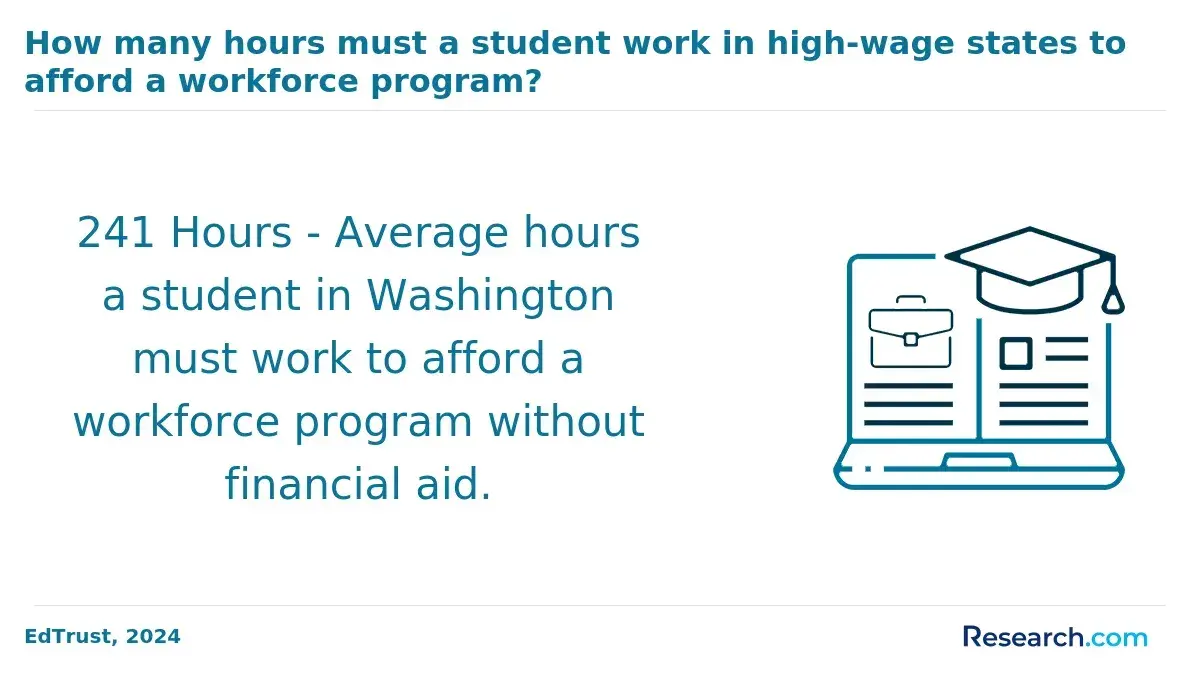
Data-oriented candidates selecting online finance degree programs for data analysis must weigh the practical tradeoffs between program design and workforce applicability. Bachelor's degrees typically combine core finance fundamentals with quantitative coursework - statistics, econometrics, and database skills - enabling roles such as financial analysts who routinely handle extensive datasets and scenario forecasting. Monroe University's online BBA in finance exemplifies accelerated timelines, achievable in under three years full-time, offering time-conscious students a clear completion advantage.
Master's programs introduce more specialized quantitative tools including Python or R programming, machine learning, and advanced risk analytics. These are geared toward investment banking, fintech, and risk management sectors but require balancing mathematical rigor against longer durations and increased tuition costs. Unlike conventional curricula, successful data-centric finance programs integrate realistic case studies sourced from public datasets and market aggregators, fostering applied expertise.
Students must critically assess delivery models since access to software labs, GPU resources, and live data environments directly affects skill acquisition and job readiness. Workforce data reveals professionals with combined finance and data analytics proficiencies command starting salaries 15%-20% higher, with faster progression. For those evaluating cost efficiency alongside career impact, comparing specialized offerings with options like an accounting degree online can clarify value within financial education pathways. Best online finance degrees for analytical professionals require a strategic fit between learning formats and long-term roles, ensuring applied skills align with employer demand and workplace realities.
What curriculum and courses do online finance programs offer in analytics and data skills?
Proficiency in analytics and data skills is pivotal in advanced finance roles, where quantitative rigor, statistical modeling, and database management directly influence decision-making. Online finance programs with analytics curriculum focus on practical skills like Python for financial analysis, SQL querying, and advanced Excel tailored for financial datasets. Graduates equipped with these competences can engage in tasks such as investment risk assessment and portfolio optimization, with commercial banking professionals, for example, leveraging these tools to identify credit risk patterns and streamline loan approvals.
Courses often incorporate financial econometrics, machine learning, and data visualization platforms like Tableau or Power BI, aligning with employer expectations for actionable insights from complex datasets. Additionally, regulatory compliance data education, covering frameworks such as Basel III or Dodd-Frank, addresses the growing demand for analytical professionals versed in legal and transparency requirements. This integration of compliance knowledge with analytics skills is critical in navigating industry standards.
Finance courses focused on data skills and analysis present logistical tradeoffs, especially when balancing program cost against instructional depth. Lower tuition programs-such as the $4,630 in-state option at Western Carolina University-offer accessible paths but may limit hands-on learning opportunities like live faculty workshops or real-time data simulations, which are crucial for mastering market-responsive financial analysis.
Choosing programs emphasizing diverse, industry-recognized tools and applied projects improves employability and reduces dependence on costly upskilling later. For learners prioritizing flexible online options with cost considerations, exploring affordable pathways such as the eMBA online can offer a viable balance between quality analytics training and financial investment.
How can students verify accreditation and program quality for online finance degrees?
Choosing an accredited online finance program matters beyond a seal of approval-it directly affects employability, credit transfer, and financial aid access. Regional or national accreditation recognized by the U.S. Department of Education or the Council for Higher Education Accreditation (CHEA) signals academic rigor. Prospective financial analysts pivoting careers should be cautious of programs accredited solely by proprietary bodies, which often lack employer credibility and complicate graduate study options.
Evaluating program outcomes such as graduation rates, job placement figures, and alumni salary data-preferably verified by third-party sources-provides insights often overlooked in marketing materials. Programs tied to industry groups like the CFA Institute commonly ensure alignment with certification standards, enhancing both skills relevance and networking potential.
A program's faculty qualifications, curriculum depth, and opportunities for experiential learning factor heavily into job readiness. For example, a personal financial advisor candidate gains a competitive edge from coursework emphasizing portfolio management and client advisory projects, a necessity given the median wage of $102,140 reported by the Bureau of Labor Statistics in May 2024.
Transparency about course delivery and technical support is essential to minimize disruptions that delay completion. Assessing career services availability beforehand can prevent enrolling in programs that fail to support students in their transition to the workforce. Finally, scrutinizing employer feedback and industry partnerships clarifies how well a program prepares graduates for evolving finance sector demands, grounding decisions in evidence rather than institutional promises.
What are the typical admission requirements for online bachelor's and master's finance programs?
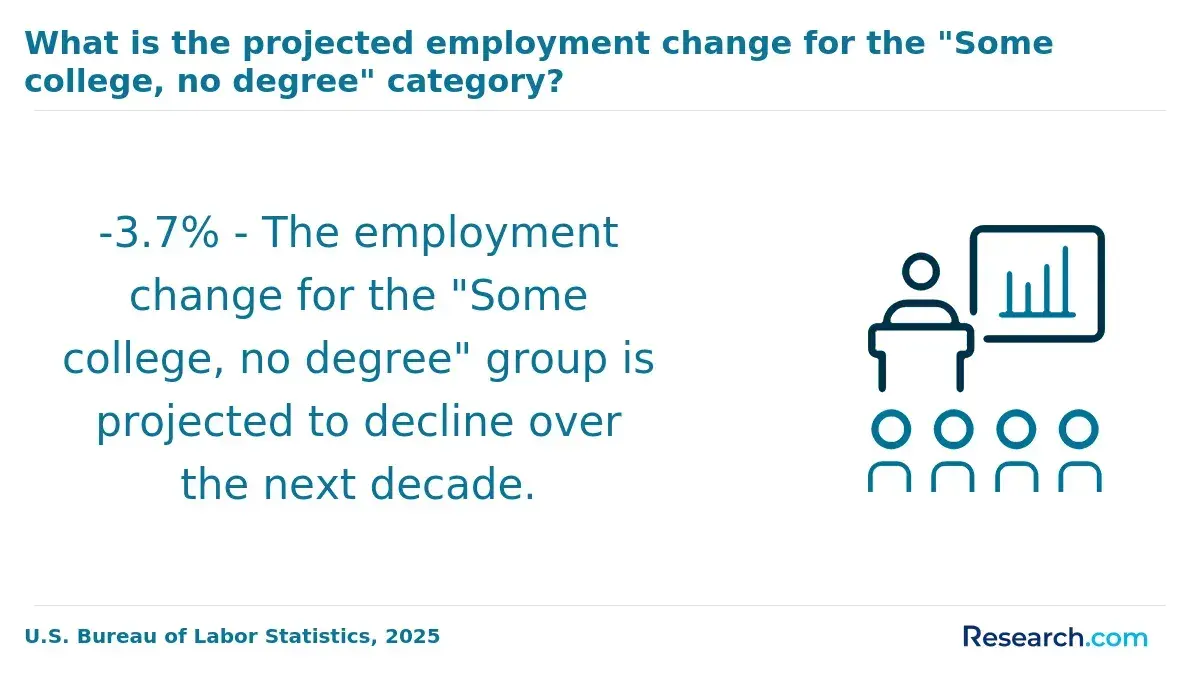
Admission requirements for online bachelor's finance programs hinge on demonstrating core academic skills, but the evolving test-optional trend post-2023 complicates direct comparisons. Most applicants still need a high school diploma and relevant transcripts proving competency in mathematics and economics. Letters of recommendation and personal statements grow more critical for competitive or STEM-focused tracks, where programs weigh applicants' quantitative preparedness alongside career intent.
At the master's level, prerequisites tighten considerably. A bachelor's degree relevant to finance or a quantitative field is essential, alongside a minimum GPA-commonly around 3.0. GRE or GMAT scores often remain requirements unless compensated by significant professional experience, particularly in executive or part-time pathways. This reflects the advanced analytical demands graduate finance programs impose.
Applicants who switch careers must verify fundamental prerequisites like calculus and statistics to avoid remedial coursework that delays graduation. For example, actuaries-expected to grow 22% in job demand by 2033 according to the U.S. Bureau of Labor Statistics-require both quantitative rigor and relevant credentials, underscoring the direct link between admission readiness and employability.
Practical barriers like gathering official transcripts and test verifications can extend application timelines by weeks, especially when hard-copy documents are required. Conditional admissions, offering provisional entry upon completing prerequisite courses during the first semester, can reduce upfront hurdles but require disciplined management to prevent extended time to degree completion.
How long do online finance degrees take and what do they typically cost?
Program length and cost significantly shape the strategic value of online finance degrees for professionals weighing career shifts or advancement. Bachelor's programs range from 3 to 4 years full-time, with part-time options extending beyond 5 years, which may dilute momentum and delay salary improvements. Master's degrees span 12 to 24 months, with accelerated tracks compressing this to a single year for working adults.
Costs vary widely, from about $10,000 at public universities for in-state students up to $50,000+ at private institutions. Tuition is usually charged per credit, typically between $300 and $1,200. Evaluating whether employer tuition reimbursement or hybrid schedules offset direct and opportunity costs is essential.
Consider a financial analyst earning the median wage of $99,010. They must decide if balancing work with slower program completion outweighs pursuing a faster, costlier full-time path that could shorten time to credential but demands income interruption or reduced hours. Professionals should prioritize program designs that align with their industry's expectations and personal financial constraints to optimize post-degree employability and earnings potential.
What careers can graduates of analytical online finance programs pursue?
Analytical online finance programs channel graduates into distinct roles-financial analyst, risk analyst, portfolio manager, or business intelligence analyst-each with unique employer expectations and skill demands. Projections from the Bureau of Labor Statistics anticipate about 30,700 annual openings for financial analysts through 2033, signaling steady demand particularly from investment firms, insurance companies, and corporate finance departments. Employers seek candidates who can turn complex data into strategic decisions and optimize asset management.
Financial analysts require fluency in statistical and real-time analytics tools to evaluate market and company data, while risk analysts use predictive models to navigate financial vulnerabilities in banking and regulatory environments. Business intelligence analysts blend finance data with IT frameworks, relying heavily on SQL and visualization platforms, areas often covered by specialized online curricula.
Choosing between quantitative finance theory or applied data analytics tracks shapes career trajectories. The former builds rigorous mathematical foundations suited for sophisticated securities analysis, while the latter focuses on machine learning applications in financial forecasting. Graduates targeting portfolio management must weigh these distinctions carefully.
Employability hinges on demonstrated technical proficiency-Excel, Python, Tableau-as well as access to networking and internships. Fully asynchronous formats may limit in-person interactions, requiring proactive virtual engagement to maintain competitive placement rates. These practical tradeoffs affect how graduates transition into roles demanding immediate contribution to data-driven projects.
What salary ranges and advancement opportunities exist for data-oriented finance professionals?
Data-driven finance professionals find real wage differentiation tied to the intersection of domain expertise and analytical sophistication. Starting salaries for entry-level roles typically approximate $85,000 annually, but those advancing with specialized data skills-particularly in investment banking, risk management, or fintech-can push beyond $160,000. This premium is not arbitrary; the U.S. Bureau of Labor Statistics data show wage growth for financial analysts with advanced data competencies outpaces peers by roughly 10%, reflecting market demand for these hybrid skills.
Career trajectories pivot on demonstrable impact: professionals leveraging predictive analytics or optimizing credit risk models frequently transition within 5-7 years from junior positions to leadership roles such as finance managers or quantitative analysts. This progression can yield salary increases exceeding 30% during promotions. For example, a graduate concentrating in financial modeling might evolve from associate analyst to director of a modeling team, illustrating how technical aptitude combined with domain insight facilitates upward mobility.
Educational pathways featuring online master of finance programs with flexible admission-often waiving GMAT or GRE for qualified candidates-offer pragmatic options for working professionals aiming to pivot or accelerate careers. However, entry credentials alone rarely suffice; continuous skill updates and cross-disciplinary collaboration capabilities critically influence advancement prospects and longer-term employability in data-intensive finance roles.
How is employer demand and job outlook evolving for finance roles requiring strong data skills?
Demand for finance professionals skilled in data analytics far exceeds supply, reshaping employer expectations. Roles requiring proficiency in data visualization, predictive modeling, and advanced Excel or SQL are expanding most rapidly in sectors like investment management, fintech, and corporate finance. The U.S. Bureau of Labor Statistics projects a 14% growth rate for financial analysts with data expertise through 2032, emphasizing the premium placed on these hybrid skill sets.
Success in this landscape hinges on combining domain-specific understanding with technical competence. For instance, a finance analyst applying machine learning to cash flow analysis can materially improve capital allocation and investor communication-a value proposition that goes beyond traditional financial reporting.
Graduates from AACSB-accredited programs enjoy a competitive edge, as these curricula integrate rigorous analytical coursework with finance theory, validating expertise to discerning recruiters. However, mid-career professionals lacking updated technical skills face a steep learning curve, highlighting the importance of certificate or master's programs designed for skill pivoting without restarting academic trajectories.
Practical program design necessitates current software training and applied projects, reflecting how continuous evolution in data tools drives ongoing reskilling demands. Candidates should weigh whether program offerings align with the technical proficiency levels employers explicitly seek, balancing career goals with real-world employability challenges.
Other Things You Should Know About Finance
Choosing a data analytics specialization offers targeted skills directly relevant to quantitative, modeling, and technology-driven finance roles, which aligns with growing employer demand for data proficiency. However, broader finance curricula provide foundational knowledge across multiple finance areas, beneficial if you want flexibility to pivot across sectors. Prioritize a program with strong analytics training only if you aim for roles deeply embedded in data-intensive decision making; otherwise, a well-rounded finance education can enhance adaptability in changing job markets.
Applicants should know Excel, SQL, and one statistical tool such as R, Python, or Stata before enrolling. Many 2027 online finance programs also expect basic familiarity with data visualization software like Tableau and require a college-level statistics prerequisite.
Employers prioritize demonstrated data skills and relevant project experience over the mode of education, but reputation and accreditation of the online program remain important filters. Graduates from online programs specializing in data analytics must compensate for lacking in-person networking by building digital portfolios and professional connections. Select programs that integrate practical tools and offer opportunities for real-world projects to maximize employer perception.
References
- Stockholm School of Economics https://www.hhs.se/en/education/msc/mfin/mfin-admission/
- Emerging Jobs and Skills in Finance, Tech, Marketing, HR, and Supply Chain | Top Stack https://topstackgroup.com/future-of-work-emerging-jobs-skills/
- AI & Data Analytics for Finance Professionals - Informa Connect Academy https://informaconnect.com/ai-data-analytics-for-finance-professionals/
- Accreditation Explained: Guidelines for Global Verification https://www.motaword.com/blog/understanding-accreditation-how-to-verify-institutions-globally
- What is the best career to pursue with a finance degree? https://kaplan.co.uk/blog/careers/what-is-the-best-career-to-pursue-with-a-finance-degree
- Studying Online vs On-Campus: Which Is Better for You? | UNF https://www.unfc.ca/blog/studying-online-vs-on-campus-which-is-better-for-you
- Data Science for Finance Course, CPDSF Program, Data Analytics in Finance | IIQF® https://www.iiqf.org/courses/data-science-for-finance.html
- Best 5 Data Science Courses & Certifications (2026 Updated) https://corporatefinance.discount/data-science-courses-for-finance-professionals/
- Data Science, Data Analytics and Coding Courses for Finance Executives NetSuite https://www.netsuite.com/portal/resource/articles/business-strategy/data-science-courses.shtml
- Are Online Degrees Accredited? How to Identify Quality Distance Learning Programs https://www.umassglobal.edu/blog-news/online-degrees-accredited-identify-quality-distance-learning-programs