2027 Easiest MBA Programs to Get Into

Co-Founder and Chief Data Scientist
Choosing an MBA is rarely just about finding the most prestigious business school. Many applicants are working adults, career changers, recent graduates without extensive management experience, or professionals who want a practical graduate business degree without a highly selective admissions process. In 2023, approximately 10.5 million individuals worked in management occupations in the United States, and 343,412 business administration and management degrees were awarded across degree levels in 2022. That combination explains why accessible MBA options remain attractive: the credential can support career mobility, but the application process can feel difficult to compare across schools.
This guide explains what “easiest MBA programs to get into” actually means, how to judge program quality, what costs and timelines to expect, and how to compare online, campus, accelerated, and specialized MBA options. It also outlines the career paths, salary ranges, job outlook, accreditation issues, and common mistakes applicants should consider before enrolling.
Quick Answer: What Are the Easiest MBA Programs to Get Into?
The easiest MBA programs to get into are typically accredited programs with accessible admissions requirements, flexible online or hybrid formats, multiple start dates, test-optional or test-waiver policies, and pathways for applicants from varied academic or professional backgrounds. “Easy to get into” should not mean low quality. The best accessible MBA programs still offer credible accreditation, relevant coursework, career support, and clear tuition information.
For most applicants, the strongest choice is not simply the school with the lowest barrier to entry. It is the program that fits your career goal, budget, schedule, experience level, and preferred specialization while maintaining employer-recognized academic standards.
What are the benefits of getting an MBA degree?
- An MBA can prepare graduates for management, strategy, finance, marketing, operations, consulting, human resources, entrepreneurship, and sector-specific leadership roles.
- Management occupations are projected to have an estimated 1.2 million average annual job openings from 2023 to 2033, which makes business leadership training relevant for a wide range of career paths.
- The median salary for management occupations in 2023 is $116,880, with reported earnings ranging from $54,550 to $231,620 depending on role, industry, experience, and location.
- Online MBA programs can be useful for working professionals because they allow students to continue earning income while completing graduate coursework.
- Many MBA programs offer concentrations that let students align the degree with specific goals, such as business analytics, finance, healthcare management, supply chain management, strategic leadership, or marketing.
What can I expect from an MBA degree program?
An MBA is a graduate business degree focused on managerial decision-making. Students usually study finance, accounting, marketing, strategy, operations, organizational behavior, leadership, analytics, and business ethics. The goal is to help students understand how organizations make decisions, allocate resources, compete in markets, manage people, and respond to change.
Most programs combine lectures, case studies, group assignments, presentations, simulations, applied projects, and sometimes internships or consulting-style projects. Online MBA students may complete asynchronous modules, live virtual sessions, discussion boards, team projects, and capstone assignments. Campus-based students typically have more in-person networking, while online students may have greater schedule flexibility.
Applicants should expect an MBA to require consistent writing, quantitative analysis, teamwork, and applied problem-solving. Even programs with more accessible admissions still require graduate-level effort.
Where can I work with an MBA degree?
MBA graduates work across business, government, nonprofit, technology, healthcare, finance, consulting, manufacturing, retail, logistics, education, and entrepreneurship. The degree is broad by design, so the best job fit often depends on the student’s prior experience, specialization, location, and professional network.
Common roles include management consultant, financial analyst, marketing manager, operations manager, project manager, business development manager, human resources manager, product manager, healthcare administrator, and executive-track leadership positions. An MBA may also support career changers who want to move from technical, clinical, military, nonprofit, or administrative roles into management.
How much can I make with an MBA degree?
MBA earning potential varies widely. In 2023, the median salary for management occupations is $116,880, but pay differs by industry, employer, geography, work experience, and job function. Some MBA graduates earn less than the median early in their careers, while experienced professionals in high-paying industries may earn substantially more.
In high-paying industries, such as financial investing and online information services, salaries can reach $236,740 and $230,780, respectively. Program reputation, internship access, alumni networks, previous work experience, and the student’s ability to translate MBA coursework into measurable business outcomes can all influence compensation.
Before enrolling, compare total program cost with realistic salary outcomes for your target role—not just the highest salary figures reported for the field.
- Easiest MBA Programs to Get Into for 2027
- How long does it take to complete an MBA program?
- How does an online MBA compare to an on-campus program?
- What is the average cost of an MBA program?
- What are the financial aid options for students enrolling in the easiest MBA programs?
- What are the prerequisites for enrolling in an MBA program?
- What courses are typically in an MBA program?
- What types of specializations are available in MBA programs?
- Why is accreditation important for MBA programs?
- How to choose the best among the easiest MBA programs?
- What career paths are available for graduates of MBA programs?
- Is the ROI of an easier MBA program truly worthwhile?
- What is the job market for graduates of the easiest MBA programs?
- Do accelerated MBA programs offer a competitive advantage?
- Do easier MBA programs offer robust networking and mentorship opportunities?
- Do easier MBA programs compromise on educational quality?
- Can an easier MBA help advance healthcare leadership roles?
- Could an easier MBA program pave the way to a DBA online program?
- Should I consider a PhD pathway after an easier MBA?
- Is an easier MBA a cost-effective investment?
- What are the potential disadvantages of easier MBA programs?
- What are the long-term career advancement opportunities offered by an easier MBA?
- Are easier MBA degrees respected by employers?
- Key Insights
Easiest MBA Programs to Get Into for 2027
The following list highlights accessible MBA options based on our ranking methodology and information drawn from reputable education datasets, including the IPEDS database, Peterson's database with its Distance Learning Licensed Data Set, the College Scorecard database, and the National Center for Education Statistics. The list of the ten easiest MBA programs to get into in 2024 should be used as a starting point—not as a substitute for checking admissions requirements, accreditation, tuition, and career services directly with each school.
Applicants should read “easiest” as accessible, flexible, or less restrictive—not as automatic admission. Schools may still require a bachelor’s degree, transcripts, essays, professional references, minimum GPAs, prerequisite coursework, or proof of readiness for graduate business study.
| Program | Length | Credits | Cost information | Accreditation listed |
| University of Wisconsin-River Falls Master of Business Administration | 2 years | 30 | $756 per credit | Association to Advance Collegiate Schools of Business |
| Clark Atlanta University Master of Business Administration | 1.5 to 2 years | 36 or 45 | $951 per credit | Southern Association of Colleges and Schools Commission on Colleges |
| Auburn University at Montgomery Master of Business Administration | 1 to 2 years | 30 | $465 in-state; $1,044 out-of-state per credit | Southern Association of Colleges and Schools Commission on Colleges |
| Southeastern Louisiana University Master of Business Administration | 1 year minimum | 30 | $858.10 per 3 credits | Association to Advance Collegiate Schools of Business |
| Metropolitan State University of Denver Master of Business Administration | 2 to 3 years | 30 | $510 per credit | Association to Advance Collegiate Schools of Business |
| University of New Haven Master of Business Administration | 1 to 3 years | 36 | $1,092 per credit | Association to Advance Collegiate Schools of Business |
| South College Master of Business Administration | 2 to 3 years | 45 | $2,100 per credit | International Accreditation Council for Business Education |
| National University College Master of Business Administration | 2 to 5 years | 36 | $456 classed-base; $312 1-on-1 per credit | Accreditation Council for Business Schools and Programs; International Accreditation Council for Business Education |
| University of Phoenix Master of Business Administration | 1.5 to 2 years | 33 | $698 per credit | Accreditation Council for Business Schools and Programs |
| East Coast Polytechnic Institute Master of Business Administration | 1.5 to 2 years | 36 | $6,480 per semester | Southern Association of Colleges and Schools Commission on Colleges |
1. University of Wisconsin-River Falls Master of Business Administration
The University of Wisconsin-River Falls MBA is an online program built for students who want graduate business training with a focused, manageable structure. The program emphasizes small classes, faculty access, peer interaction, and practical managerial development. Students can follow a traditional MBA route or choose a track that matches a specific career direction.
- Program Length: 2 years
- Concentrations/Specializations:
- Innovation & Entrepreneurship
- Strategic Leadership
- Business Analytics
- Credits Required to Graduate: 30
- Cost per Credit: $756
- Accreditation: Association to Advance Collegiate Schools of Business
2. Clark Atlanta University Master of Business Administration
Clark Atlanta University offers an MBA designed for students seeking applied business learning, career preparation, and flexible graduate study options. The program includes several specialization areas, making it a fit for students who want to connect business fundamentals with entrepreneurship, finance, marketing, sports and entertainment, or supply chain work.
- Program Length: 1.5 to 2 years
- Concentrations/Specializations:
- Entrepreneurship Management
- Finance
- Marketing, Sports & Entertainment Management
- Supply Chain Management
- Credits Required to Graduate: 36 (Working Professional MBA Program); 45 (Full-Time MBA Program)
- Cost per Credit: $951
- Accreditation: Southern Association of Colleges and Schools Commission on Colleges
3. Auburn University at Montgomery Master of Business Administration
Auburn University at Montgomery offers an MBA through its College of Business in online and hybrid formats. Its 10-course structure may appeal to working professionals who want a clear path through the degree while balancing employment, family, and other responsibilities. The curriculum is shaped with employer input, which can help keep coursework connected to workplace needs.
- Program Length: 1 to 2 years
- Credits Required to Graduate: 30
- Cost per Credit: $465 (in-state); $1,044 (out-of-state)
- Accreditation: Southern Association of Colleges and Schools Commission on Colleges
4. Southeastern Louisiana University Master of Business Administration
Southeastern Louisiana University provides an MBA with an interdisciplinary business curriculum. The program is designed for students from different academic backgrounds who want to strengthen analytical, interpersonal, and critical thinking skills for management and leadership roles. Its AACSB accreditation is an important quality signal for applicants comparing accessible MBA options.
- Program Length: 1 year minimum
- Credits Required to Graduate: 30
- Cost: $858.10 (per 3 credits)
- Accreditation: Association to Advance Collegiate Schools of Business
5. Metropolitan State University of Denver Master of Business Administration
Metropolitan State University of Denver offers an MBA aimed at working professionals who need scheduling flexibility. Students may choose evening, in-person, and online options depending on their needs. The program reports average total costs under $25,000 and includes networking opportunities with faculty, alumni, and peers.
- Program Length: 2 to 3 years
- Concentrations/Specializations:
- Accounting
- Business Analytics
- Strategic Management
- Human Resource Management
- Credits Required to Graduate: 30
- Cost per Credit: $510
- Accreditation: Association to Advance Collegiate Schools of Business
6. University of New Haven Master of Business Administration
The University of New Haven offers a full-time MBA with STEM-certified concentrations. Students who qualify for a waiver of three business foundation courses may complete the program in as few as 12 months, while other students may finish in less than two years. The program can be a strong match for applicants who want a business degree connected to analytics, cyber risk, supply chain, finance, or strategic leadership.
- Program Length: 1 to 3 years
- Concentrations/Specializations:
- Business Analytics
- Cyber Risk Management (Online)
- Data Analytics
- Financial Analysis
- Global Supply Chain Management
- Marketing and Digital Marketing
- Strategic Leadership
- Credits Required to Graduate: 36
- Cost per Credit: $1,092
- Accreditation: Association to Advance Collegiate Schools of Business
7. South College Master of Business Administration
South College offers an MBA intended to develop management, leadership, and strategic problem-solving skills. Students can select from several career-oriented concentrations, including healthcare management, leadership, marketing, and project management. Applicants should pay close attention to the total credit requirement and cost per credit when estimating return on investment.
- Program Length: 2 to 3 years
- Concentrations/Specializations:
- Executive MBA
- Healthcare Management
- Leadership
- Marketing
- Project Management
- Credits Required to Graduate: 45
- Cost per Credit: $2,100
- Accreditation: International Accreditation Council for Business Education
8. National University College Master of Business Administration
National University College offers an MBA focused on organizational management, decision-making, team development, and creative problem-solving in domestic and international business settings. The program includes a wide range of specialization choices, which may help students customize the degree around entrepreneurship, finance, global business, leadership, project management, marketing, supply chain, or emerging areas such as financial technology and behavioral economics.
- Program Length: 2 to 5 years
- Concentrations/Specializations:
- Entrepreneurship
- Financial Management
- General Business
- Global Business Management
- Human Resources Management
- Leadership Studies
- Project Management
- Strategic Marketing
- Supply Chain Management
- Financial Technology
- Behavioral Economics
- Credits Required to Graduate: 36
- Cost per Credit: $456 (classed-base); $312 (1-on-1)
- Accreditation: Accreditation Council for Business Schools and Programs (1-on-1 personalized education), International Accreditation Council for Business Education (class-based education)
9. University of Phoenix Master of Business Administration
The University of Phoenix MBA is structured for adult learners who want an online format and a one-course-at-a-time model. The program is designed to be completed in as little as 16 months and focuses on business decision-making skills that can be applied in organizational settings.
- Program Length: 1.5 to 2 years
- Credits Required to Graduate: 33
- Cost per Credit: $698
- Accreditation: Accreditation Council for Business Schools and Programs
10. East Coast Polytechnic Institute Master of Business Administration
East Coast Polytechnic Institute offers an MBA with a multidisciplinary business management concentration. Coursework emphasizes quantitative and qualitative analysis, practical decision-making, digital tools, adaptive learning, and project-based activities. The program may fit students who want structured business training with applied assignments.
- Program Length: 1.5 to 2 years
- Concentration: Business Management
- Credits Required to Graduate: 36
- Tuition (per semester): $6,480
- Accreditation: Southern Association of Colleges and Schools Commission on Colleges
How long does it take to complete an MBA program?
MBA timelines depend on enrollment pace, course format, credit load, prerequisites, and whether the student chooses a traditional, accelerated, executive, online, or part-time model. A full-time MBA commonly takes two years. Part-time and online formats may take three years or more when students take fewer courses at once.
Accelerated MBA programs can sometimes be completed in as little as one year, but the workload is compressed. That format can be valuable for students who want to return quickly to full-time career advancement, but it may be difficult for students with demanding jobs or family responsibilities.
| MBA format | Typical fit | Main advantage | Possible drawback |
| Full-time MBA | Students who can pause or reduce work | More immersive academic and networking experience | Higher opportunity cost if you stop working |
| Part-time MBA | Working professionals | Allows continued employment | Longer time to completion |
| Online MBA | Students who need location and schedule flexibility | Can fit around work and personal responsibilities | Requires self-direction and proactive networking |
| Accelerated MBA | Students ready for intensive study | Shorter path to completion | Less time for internships, exploration, or pacing |
Students looking for a broader and potentially more accessible business pathway may also compare MBA options with the easiest management degree programs, especially if they are still deciding whether graduate school is necessary for their goals.
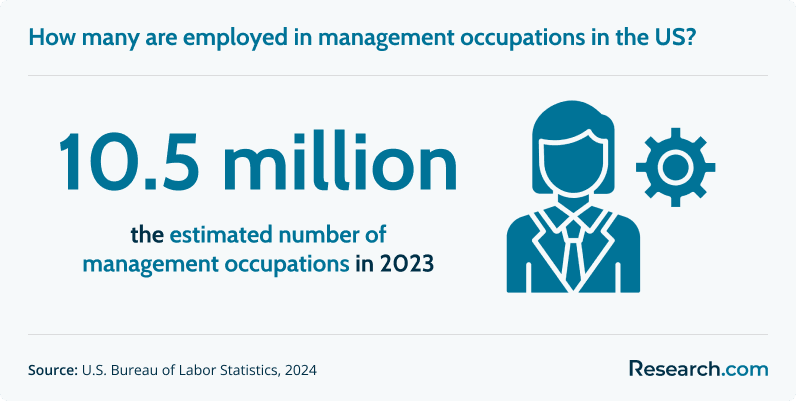
In 2023, there were around 10.5 million management professionals working in the United States.
How does an online MBA compare to an on-campus program?
An online MBA is usually best for students who need flexibility, live far from campus, travel for work, or cannot attend daytime classes. Online programs may include asynchronous lectures, scheduled virtual meetings, group projects, discussion boards, and remote career services. The strongest online programs also make networking intentional through alumni events, cohort models, mentorship, and employer connections.
An on-campus MBA can be better for students who want face-to-face interaction, local employer access, in-person recruiting, campus clubs, intensive group work, and a traditional graduate school environment. The trade-off is usually less schedule flexibility and potentially higher relocation or commuting costs.
| Factor | Online MBA | On-campus MBA |
| Flexibility | Usually stronger for working adults | Often tied to scheduled class times and campus access |
| Networking | Requires more deliberate participation | More spontaneous in-person interaction |
| Career services | May be virtual or hybrid | May include campus recruiting and live employer events |
| Learning style | Best for independent, organized learners | Best for students who prefer classroom structure |
| Location | Can be completed from anywhere if program rules allow | Usually requires proximity to campus |
Students interested in healthcare leadership may compare an MBA with healthcare-focused alternatives, such as the easiest MHA online programs, because an MHA may provide a more direct pathway into health administration than a general MBA.
What is the average cost of an MBA program?
MBA costs vary by school type, program reputation, residency status, delivery format, credit requirements, and fees. In general, students can expect to pay between $20,000 and $60,000 for their degree, while some affordable executive MBA options can cost less than $15,000.
At top business schools, total tuition and fees in 2023 range from around $30,000 to $108,000. Students should also budget for application fees, technology fees, textbooks, travel, residency requirements, graduation fees, exam fees, and lost income if they reduce work hours.
An MBA may be one of the quick degrees that pay well, but only if the total investment aligns with realistic career outcomes. Applicants comparing adjacent fields may also review the easiest Master of Public Health online programs if their career goal is public health leadership rather than broad business management.
What are the financial aid options for students enrolling in the easiest MBA programs?
Financial aid can make an MBA more affordable, but students should compare the net price after aid—not just advertised tuition. Accessible MBA programs may still carry significant costs, especially if they charge high per-credit rates or require more credits than competing programs.
- Scholarships: Schools may offer merit-based, need-based, diversity, leadership, professional, or program-specific scholarships. These do not require repayment and may be available even at schools offering affordable online degrees.
- Grants: Grants are typically based on financial need or institutional priorities and generally do not need to be repaid.
- Federal Student Loans: Eligible graduate students may use federal loans, which can offer borrower protections and repayment options that differ from private loans.
- Work-Study Programs: Some institutions provide work-study opportunities that help students earn income while gaining professional experience.
- Employer Tuition Assistance: Many employers offer tuition reimbursement or education benefits for employees pursuing graduate credentials related to their role.
Before borrowing, ask each school for the total program cost, average debt among graduates if available, refund policies, scholarship renewal rules, and whether employer reimbursement can be applied before or after each term.
What are the prerequisites for enrolling in an MBA program?
MBA admissions requirements differ by school. Easier MBA programs may waive standardized tests, accept broader academic backgrounds, or provide prerequisite courses for students without a business degree. Still, most programs require evidence that the applicant can handle graduate-level business work.
- Bachelor’s Degree: Applicants generally need a bachelor’s degree from an accredited institution.
- Work Experience: Many MBA programs prefer professional experience, often requiring two to five years, because workplace examples enrich class discussions and team projects.
- GMAT or GRE Scores: Some schools require GMAT or GRE scores, while many easy MBA programs to get into do not have this requirement or allow waivers.
- Letters of Recommendation: Programs may ask for two or three recommendations from supervisors, professors, or professional contacts.
- Personal Statement or Essay: Applicants are often asked to explain their goals, leadership experience, motivation, and fit with the program.
- Foundation Courses: Students without undergraduate coursework in accounting, economics, statistics, or finance may need to complete prerequisites.
If your career goal is outside business, compare the MBA with alternatives before applying. For example, students considering classroom or school-based careers may find that an easy teaching degree is more aligned with their intended profession.
What courses are typically in an MBA program?
MBA coursework is designed to build a cross-functional understanding of business. Students learn how finance, marketing, operations, people management, ethics, analytics, and strategy connect inside organizations. Course names vary, but the core themes are similar across many programs.
- Financial Accounting: Students learn how to read financial statements, interpret balance sheets, analyze income statements, review cash flows, and evaluate organizational financial health.
- Marketing Management: This course covers market research, segmentation, branding, customer behavior, positioning, and campaign strategy.
- Organizational Behavior: Students examine leadership styles, workplace motivation, team dynamics, organizational culture, and employee performance.
- Operations Management: Coursework focuses on process improvement, supply chains, quality control, capacity planning, and efficiency.
- Strategic Management: Students study competitive advantage, SWOT analysis, industry positioning, corporate strategy, and long-term planning.
- Business Ethics: This course examines ethical decision-making, corporate responsibility, stakeholder impacts, governance, and accountability.
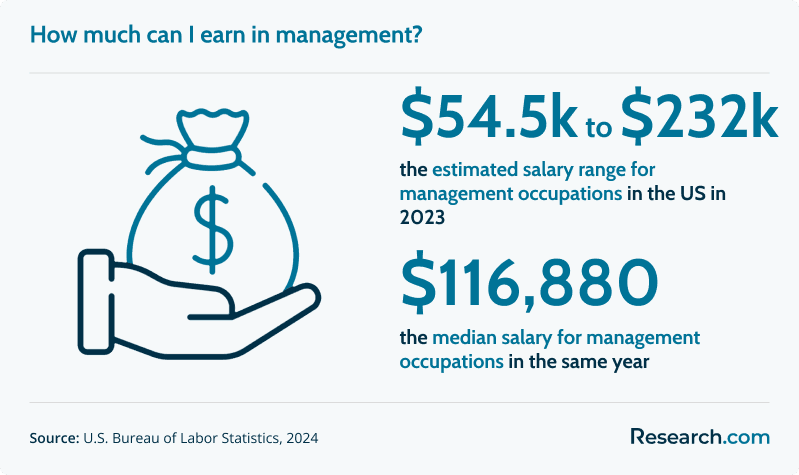
These courses can help graduates prepare for management roles across industries. In 2023, management occupations in the U.S. have an estimated salary range of $54,550 to $231,620, with a median salary of $116,880.
What types of specializations are available in MBA programs?
MBA specializations allow students to focus part of the degree on a specific business function or industry. The right concentration should connect directly to your target role. A finance concentration, for example, may not help as much if your goal is human resources leadership, while a healthcare management concentration may be more relevant for hospital or healthcare operations roles.
- Finance: Covers investment strategy, financial analysis, corporate finance, and risk management. Graduates may pursue work as financial analysts, investment bankers, or financial managers.
- Marketing: Focuses on market research, consumer behavior, branding, digital strategy, and campaign planning. Students focused on messaging, media, and organizational communication may also compare MBA marketing options with online communication master’s programs.
- Information Technology Management: Connects technology strategy with business goals, preparing students for IT management, systems analysis, or technology leadership roles.
- Healthcare Management: Prepares students to address healthcare operations, finance, policy, compliance, and service delivery challenges.
- Human Resources Management: Covers recruiting, employee relations, workforce planning, training, benefits, and organizational development. Students who want deeper HR preparation may compare MBA tracks with an affordable online master’s degree in human resources.
- Supply Chain Management: Focuses on logistics, procurement, transportation, operations, and vendor management.
- Leadership or Organizational Leadership: Emphasizes decision-making, team development, change management, and executive communication. Students can also compare specialized online MBA leadership programs.
Specialization choice can influence career direction and earning potential, but it does not guarantee a specific salary. Financial investing and online information services are among the top-paying industries, offering average annual salaries of $236,740 and $230,780, respectively, with employment levels of 162,710 and 27,530.
Why is accreditation important for MBA programs?
Accreditation is one of the most important quality checks for any MBA program, especially one marketed as accessible or easy to enter. Institutional accreditation can affect federal financial aid eligibility, transferability, employer recognition, and admission into future graduate programs. Business-specific accreditation can also signal that a program’s curriculum, faculty qualifications, assessment practices, and student outcomes meet standards used in business education.
Common business accreditors include AACSB, ACBSP, and IACBE. These accreditations are not identical, so applicants should understand what each one evaluates. Students comparing accredited and budget-conscious options can review affordable online MBA programs to see how cost and accreditation can be evaluated together.
| Accreditation question | Why it matters |
| Is the university institutionally accredited? | This can affect financial aid, credit recognition, and employer confidence. |
| Does the business school or MBA hold programmatic accreditation? | This may indicate that the business curriculum has undergone additional review. |
| Is the accreditor recognized and reputable? | Not all accreditation claims carry the same weight. |
| Does accreditation apply to the exact MBA format you plan to attend? | Students should confirm whether online, hybrid, or branch-campus versions are included. |
How to choose the best among the easiest MBA programs?
The best accessible MBA is the one that removes unnecessary admissions barriers without weakening the value of the degree. Do not choose based only on speed, convenience, or a simple application. Compare the program against your career goals and ask whether it provides the skills, support, credibility, and network you need.
- Accreditation: Confirm institutional accreditation and, when relevant, business-specific accreditation such as AACSB, ACBSP, or IACBE.
- Curriculum and Specializations: Review whether the program develops the skills required for your target role. O*NET’s career families can help you identify management-related knowledge and skill areas.
- Format and Flexibility: Decide whether online, hybrid, evening, full-time, part-time, or accelerated delivery fits your schedule.
- Total Cost: Compare tuition, fees, credit requirements, books, residencies, travel, and lost income.
- Career Services: Ask whether the program offers résumé support, interview coaching, employer events, internships, alumni networking, and job search assistance.
- Faculty Background: Look for instructors with academic expertise, industry experience, or both.
- Student Outcomes: Ask about graduation rates, job outcomes, alumni industries, and salary reporting methods if the school publishes them.
- Admissions Support: Accessible programs should still be transparent about requirements, deadlines, prerequisites, and transfer credit policies.
| Common mistake | Better approach |
| Choosing the fastest program without checking workload | Ask how many hours per week students typically spend per course. |
| Comparing only per-credit tuition | Calculate full program cost using total credits and mandatory fees. |
| Assuming online means easier academically | Review course expectations, assessment methods, and faculty support. |
| Ignoring accreditation | Verify institutional and programmatic accreditation before applying. |
| Relying only on rankings | Use rankings as one input, then compare fit, cost, outcomes, and support. |
What career paths are available for graduates of MBA programs?
MBA graduates can pursue many roles because the degree covers multiple business functions. However, career outcomes depend heavily on prior experience. A student with five years in finance may use the MBA differently than a nurse moving into healthcare administration or an engineer moving into product management.
- Management Consultant: Advises organizations on performance, efficiency, operations, strategy, or organizational change.
- Marketing Manager: Leads marketing strategy, market research, branding, advertising, and customer acquisition efforts.
- Financial Analyst: Uses financial data, forecasts, budgets, and market trends to support investment and business decisions.
- Operations Manager: Oversees day-to-day processes, supply chains, production systems, quality control, and efficiency initiatives.
- Human Resources Manager: Manages recruiting, training, benefits, employee relations, workforce planning, and compliance.
- Project Manager: Coordinates timelines, budgets, teams, deliverables, and stakeholder communication.
- Healthcare Administrator: Applies business skills to healthcare staffing, operations, finance, compliance, and patient service delivery.
California has the highest level of employment in management occupations, totaling 1,308,800 jobs and an average annual salary of $160,360. Applicants should still evaluate local labor markets, target industries, and role-specific requirements before assuming an MBA will lead directly to a particular position.
Is the ROI of an easier MBA program truly worthwhile?
An easier MBA can be worth it when the program is accredited, affordable relative to your goals, connected to your target role, and flexible enough that you can complete it without taking on unsustainable debt. It may not be worth it if the cost is high, career support is weak, the curriculum does not match your goals, or you already have the skills and network needed for advancement.
To evaluate ROI, compare total cost, time away from work, expected salary change, employer tuition support, networking value, promotion potential, and risk. Students considering online programs can compare options through this guide to the easiest online MBA programs.
| ROI factor | What to ask before enrolling |
| Total price | What is the full cost after tuition, fees, books, residencies, and financing? |
| Career fit | Does the curriculum align with the jobs I actually want? |
| Opportunity cost | Will I need to reduce work hours or pause employment? |
| Employer value | Does my employer recognize or reward this MBA? |
| Network | Will I gain access to alumni, mentors, recruiters, or industry contacts? |
What is the job market for graduates of the easiest MBA programs?
The job market for MBA graduates is generally supportive, but it is not uniform across all industries, schools, locations, or experience levels. According to recent data, 91% of companies worldwide hired MBA graduates in 2022, following a peak of 97% in 2021. That was the highest level since 2008.
For management occupations in the U.S., an estimated average of 1.2 million job openings is projected annually from 2023 to 2033. This growth rate is expected to exceed the average increase across all occupations, which stands at approximately 4%. These figures suggest strong demand for management skills, but applicants should still treat salary and employment outcomes as possibilities rather than guarantees.
Do accelerated MBA programs offer a competitive advantage?
Accelerated MBA programs can be useful for students who want to complete the degree quickly and return to career advancement with minimal delay. They often compress coursework into shorter terms or more intensive modules. This can be an advantage for experienced professionals who already understand business basics and can handle a fast pace.
The trade-off is intensity. Accelerated programs may leave less time for internships, networking, reflection, or career exploration. Before choosing this format, review workload, course sequencing, faculty availability, and whether the shortened timeline affects access to career services. Students comparing faster formats can review accelerated MBA programs for additional context.
Here's What Graduates Have to Say About Their MBA Degree Programs
- I chose an online MBA because my schedule was packed, and the format helped me keep working while studying. The best part was how often we applied business concepts to real workplace problems. That practical focus helped me move into a role where I now manage an innovation-focused team. Nolan
- My MBA covered strategy, finance, leadership, and operations in a way that connected directly to management work. Several professors brought industry experience into the classroom, which made the lessons easier to apply. I now feel more prepared for the complexity of my leadership role. Sandra
- The program’s emphasis on ethics and social responsibility changed how I think about management decisions. Case discussions pushed me to consider the human and environmental effects of business strategy. I now work at a company where sustainability is central to our mission. Kurt
Do easier MBA programs offer robust networking and mentorship opportunities?
Some accessible MBA programs provide strong networking, while others require students to be more proactive. Online and flexible programs may use virtual events, alumni panels, cohort projects, mentorship platforms, employer webinars, and industry partnerships to help students build relationships.
Applicants should ask specific questions: Are students assigned mentors? How active is the alumni network? Are there employer events for online students? Do faculty have industry connections? Are group projects designed to build peer relationships? For examples of business programs where accreditation and online delivery are important comparison points, review AACSB MBA online programs.
Do easier MBA programs compromise on educational quality?
Not necessarily. Easier admissions do not automatically mean weaker academics. Some programs are accessible because they are designed for working adults, offer test waivers, provide multiple start dates, or evaluate applicants holistically. Quality depends on accreditation, faculty, curriculum design, student support, assessment standards, and employer relevance.
Still, applicants should be cautious. If a program has unclear accreditation, vague outcome data, limited faculty information, or aggressive admissions marketing, investigate further. Students who want speed and flexibility should compare program rigor carefully when reviewing options such as an accelerated online MBA.
Can an easier MBA help advance healthcare leadership roles?
An MBA can support healthcare leadership when the curriculum includes operations, finance, compliance, data-informed decision-making, and organizational leadership. It may help nurses, clinicians, administrators, or health services professionals move toward roles in healthcare management, hospital operations, practice administration, or healthcare consulting.
However, healthcare careers may require specialized credentials, licenses, or clinical backgrounds depending on the role. Students interested in combining business leadership with pharmacy or clinical expertise may also compare advanced pathways such as a doctor of pharmacy degree online.
Could an easier MBA program pave the way to a DBA online program?
Yes, an MBA can serve as preparation for a Doctor of Business Administration if the student wants advanced applied business research, executive-level problem-solving, consulting expertise, or teaching opportunities in practice-oriented settings. A DBA is usually more applied than a PhD and may fit professionals who want to research business problems while remaining connected to industry practice.
Before continuing into doctoral study, clarify whether you need a doctorate for your career goal. Doctoral programs require time, research commitment, and additional cost. Applicants can compare DBA online programs to understand whether the pathway fits their professional plans.
Should I consider a PhD pathway after an easier MBA?
A PhD after an MBA may make sense for students who want academic research, university faculty roles, theory development, or research-intensive careers. It is different from a DBA because the PhD is generally more research-focused and less practice-focused.
Students should consider a PhD only if they are prepared for advanced research methods, scholarly writing, long-term study, and a narrower academic focus. Those interested in leadership research can explore top organizational leadership PhD programs to compare doctoral options.
Is an easier MBA a cost-effective investment?
An easier MBA can be cost-effective if it improves your career options without creating debt that outweighs the likely benefit. A lower admissions barrier is not enough. The program also needs reasonable tuition, credible accreditation, relevant coursework, and career support.
Build a simple cost-benefit estimate before applying. Include tuition, fees, books, travel, interest, time commitment, lost income, employer reimbursement, and expected career gains. Students comparing costs across institutions can use an online MBA cost comparison to better understand pricing differences.
What are the potential disadvantages of easier MBA programs?
Accessible MBA programs can be valuable, but they may have drawbacks. Some may offer fewer in-person networking opportunities, less selective cohorts, limited employer recruiting, uneven career services, or weaker brand recognition in highly competitive fields. Others may have high costs despite easy admissions.
- Employer perception may vary: Some employers care strongly about school reputation, especially in consulting, finance, or executive-track recruiting.
- Networking may require extra effort: Online and flexible programs may not provide the same informal connections as full-time campus programs.
- Admissions ease can hide cost issues: A simple application does not mean the program is affordable.
- Specialization depth may vary: Some concentrations include only a few electives, while others offer a more complete career pathway.
- Experiential learning may be limited: Ask about internships, consulting projects, simulations, and employer partnerships.
Students aiming for healthcare leadership should compare general MBA programs with specialized options such as affordable online MBA programs with healthcare concentration.
What are the long-term career advancement opportunities offered by an easier MBA?
An easier MBA can support long-term growth when students use it strategically. The degree may help professionals move into management, change industries, qualify for promotions, start a business, strengthen financial decision-making, or prepare for advanced credentials. Long-term value usually comes from combining the MBA with experience, measurable results, networking, and ongoing skill development.
Career changers should think about how the MBA connects to their existing background. For example, professionals with healthcare experience may combine business training with knowledge of high-demand medical career paths, including insights from best paying medical bachelor degrees, to identify interdisciplinary leadership opportunities.
Are easier MBA degrees respected by employers?
Employers generally evaluate MBA degrees based on accreditation, school reputation, program rigor, candidate experience, demonstrated skills, and job relevance. An MBA from an accessible program can be respected if the institution is credible and the graduate can show strong business judgment, leadership ability, communication skills, and measurable workplace impact.
In competitive markets, students may strengthen the MBA with certifications, industry experience, analytics skills, leadership projects, or advanced credentials. Professionals in specialized healthcare or pharmacy-related pathways may compare options such as low cost doctor of pharmacy online programs if clinical or pharmacy leadership is part of their long-term plan.
Key Insights
- “Easy to get into” should mean accessible and flexible, not academically weak. Accreditation, curriculum quality, faculty support, and outcomes still matter.
- In 2022, 91% of companies worldwide reported hiring MBA graduates, following a peak of 97% in 2021.
- Management occupations are projected to generate approximately 1.2 million annual job openings from 2023 to 2033, compared with an average growth rate of approximately 4% across all occupations.
- In 2023, there are an estimated 10.5 million individuals employed in various management roles across the United States.
- The salary range for management positions in 2023 spans from $54,550 to $231,620, with a median salary of $116,880.
- Management professionals in the financial investing industry can expect the highest average annual salary of $236,740, followed by $230,780 in online information services.
- California has the highest level of employment in management occupations, with 1,308,800 jobs and an average salary of $160,360.
- The best MBA choice depends on fit: choose a program that matches your schedule, budget, specialization, career target, and need for networking or career support.
- Before enrolling, verify accreditation, calculate total cost, ask about career outcomes, compare online and campus trade-offs, and confirm that the degree supports your actual career plan.
References:
- Bureau of Labor Statistics. (2024). Management occupations. Retrieved October 28, 2024, from BLS.
- Bureau of Labor Statistics. (2024). Occupational employment and wages, May 2023 - 1-0000 management occupations (major group). Retrieved October 28, 2024, from BLS.
- Data USA. (2024). General business administration & management. Retrieved October 28, 2024, from Data USA.
- Data USA. (2024). Management occupations. Retrieved October 28, 2024, from Data USA.
- Statista. (2023). Percentage of companies that hired MBA graduates from 2008 to 2022. Retrieved October 28, 2024, from Statista.
Other Things You Should Know About MBA Programs
Many easier-to-enter MBA programs ask for a 2.75 to 3.0 undergraduate GPA, with some schools admitting candidates below that range if work experience, essays, and recommendations are strong. A few programs use holistic review and do not set a fixed GPA cutoff.
Some MBA programs in 2027 may waive interview requirements entirely, focusing instead on academic records and GMAT scores. For instance, online programs often have less restrictive interview policies compared to top-tier schools, making them attractive for applicants seeking easier entry.