2027 What Are the Different Types of MBA Programs? Costs & Job Opportunities

Co-Founder and Chief Data Scientist
Choosing an MBA is not just a question of whether business school is “worth it.” The harder decision is which MBA format, specialization, cost structure, and career path actually match your goals. A full-time MBA may help a career switcher build a new network, while an online, part-time, or executive MBA may make more sense for a working professional who cannot pause employment.
The Master of Business Administration remains one of the most recognized master’s degree options because it combines business fundamentals with leadership, strategy, analytics, finance, marketing, and organizational decision-making. It can lead to roles in consulting, technology, healthcare, finance, operations, entrepreneurship, and senior management. A Graduate Management Admission Council survey found that more than a quarter of employers plan to expand their hiring of MBA graduates.
This guide explains the main types of MBA programs, how much they can cost, what jobs they may lead to, how admissions work, and how to compare programs before committing. It is designed for professionals deciding whether an MBA fits their career plan, students comparing MBA formats, and applicants trying to avoid an expensive mismatch.
MBA Degree Types Table of Contents
- What an MBA Degree Is and Who It Is For
- MBA Cost and Financial Planning
- MBA Career Paths and Salaries
- Main Types of MBA Programs
- MBA Admission and Skill Requirements
- How to Evaluate an MBA Program
- Common MBA Specializations
- Best MBA Programs for 2027
- MBA Internships and Experiential Learning
- MBA ROI: Career and Financial Impact
- How to Complete an MBA Successfully
- Choosing the Right MBA Program for Your Goals
- When an Accelerated MBA Makes Sense
- How MBA Dual Degrees Broaden Expertise
- Combining an MBA With Professional Credentials
- MBA Programs and Digital Transformation
- Diversity and Inclusive Leadership in MBA Programs
- MBA Programs and Entrepreneurial Innovation
- How to Control the Cost of an MBA
- MBA Preparation for Global Economic Uncertainty
- Cross-Disciplinary MBA Skills for Industry Success
Quick Answer: What Type of MBA Should You Choose?
The best MBA type depends on your career stage, schedule, budget, and reason for earning the degree. A full-time MBA is usually best for career changers who want internships and campus recruiting. A part-time or online MBA is better for working professionals who want to keep earning while studying. An executive MBA is designed for experienced managers preparing for higher leadership roles. A global or international MBA fits professionals targeting multinational business, cross-border strategy, or international management.
| Your Situation | Most Suitable MBA Format | Why It May Fit |
| You want to switch industries or functions | Full-Time MBA | More access to internships, recruiting events, and immersive networking |
| You want to keep working while studying | Part-Time MBA or Online MBA | Flexible pacing and evening, weekend, or remote coursework |
| You are already in management | Executive MBA | Leadership-focused coursework designed around experienced professionals |
| You want international business exposure | Global/International MBA | Curriculum emphasizes global markets, international strategy, and cross-cultural management |
| You want the fastest possible completion path | One-Year or Accelerated MBA | Condensed study timeline, often best for applicants with clear goals and prior experience |
What is an MBA degree?
An MBA is a graduate-level business degree built around management, leadership, and strategic decision-making. Unlike a narrow technical master’s program, an MBA usually covers multiple business functions so graduates can understand how finance, marketing, operations, people management, analytics, and strategy work together inside an organization.
Programs offered by M7 business schools are often discussed separately because of their brand recognition, selectivity, alumni networks, and recruiting pipelines. However, the right MBA is not automatically the most famous one. The stronger choice is the program that fits your target role, preferred industry, budget, learning format, and geographic market.
Most MBA curricula include core courses in accounting, economics, statistics, finance, marketing, operations, organizational behavior, and strategy. After the core, students may select electives or concentrations such as finance, analytics, healthcare administration, real estate, entrepreneurship, technology management, or marketing.
What can you do with an MBA degree?
An MBA can support advancement into management, consulting, finance, operations, product leadership, healthcare administration, marketing, business development, and entrepreneurship. It can also help specialists move into broader leadership roles by adding financial literacy, strategic thinking, communication, and team leadership to their existing technical or professional expertise.
Graduates from campus-based and MBA online accredited schools may develop skills employers often value, including problem-solving, critical thinking, communication, interpersonal judgment, emotional intelligence, and analytical reasoning. A study found that 99% of corporate recruiters are confident that MBA graduates are well-prepared by their schools with the desired skills.
The degree is not a guaranteed shortcut to an executive title. It works best when paired with relevant work experience, a clear career target, strong networking, and evidence that you can apply business concepts to measurable organizational problems.
Cost of MBA Degree
MBA costs vary widely by school, format, location, length, and whether the institution is public or private. According to Poets & Quants, the average cost of tuition from the top schools is over $230,901, and Georgia Tech’s two-year program is the cheapest at around $133,150.
Cost should be measured beyond tuition alone. A full MBA budget may include mandatory fees, books, technology costs, travel, relocation, housing, health insurance, lost wages for full-time students, and loan interest. The financial value of an MBA depends on whether the degree helps you reach a role, employer, salary range, or career pivot that would be difficult without it. Top executives earn around $139,860 to plan strategies and policies for their organization’s goals.
How much does it cost to get an MBA degree?
Some MBA programs carry a very high price tag. Columbia Business School has the most expensive MBA program at an estimated $269,829. A two-year full-time MBA will usually cost more than a one-year MBA because students pay for a longer period and may also lose more income while studying. However, the longer format can offer more time for electives, internships, recruiting, and career exploration.
Program pricing also differs by institution type and residency status, so applicants should compare the full published cost rather than relying on rankings alone. Schools have different prices depending on length and format. Binghamton, a public university, offers an MBA program that costs $15,230 for New York residents and around $26,700 for out-of-state and international students. A private school like the University of Chicago offers its MBA program at an estimated $129,403.
| Cost Factor | Why It Matters | Question to Ask |
| Tuition and fees | The published price may not include all required charges | What is the total program cost from enrollment to graduation? |
| Program length | Longer programs may increase tuition, living costs, and opportunity cost | Can I complete faster without losing access to internships or recruiting? |
| Work interruption | Full-time study can reduce or eliminate income during enrollment | How much income would I give up while studying? |
| Financial aid | Scholarships, employer sponsorship, and assistantships can change net cost | What aid is available, and is it renewable? |
| Delivery format | Online and part-time formats may reduce relocation and lost income | Will flexibility lower my total cost without weakening career outcomes? |
Is a degree in MBA worth it?
An MBA can be worth it when the expected career benefits justify the time, debt, and opportunity cost. Business is broadly associated with strong earning potential among the highest paying college majors, and MBA holders may qualify for roles with higher responsibility and compensation. Harvard Business school calculates the median starting salary of their graduates to be $175,000.
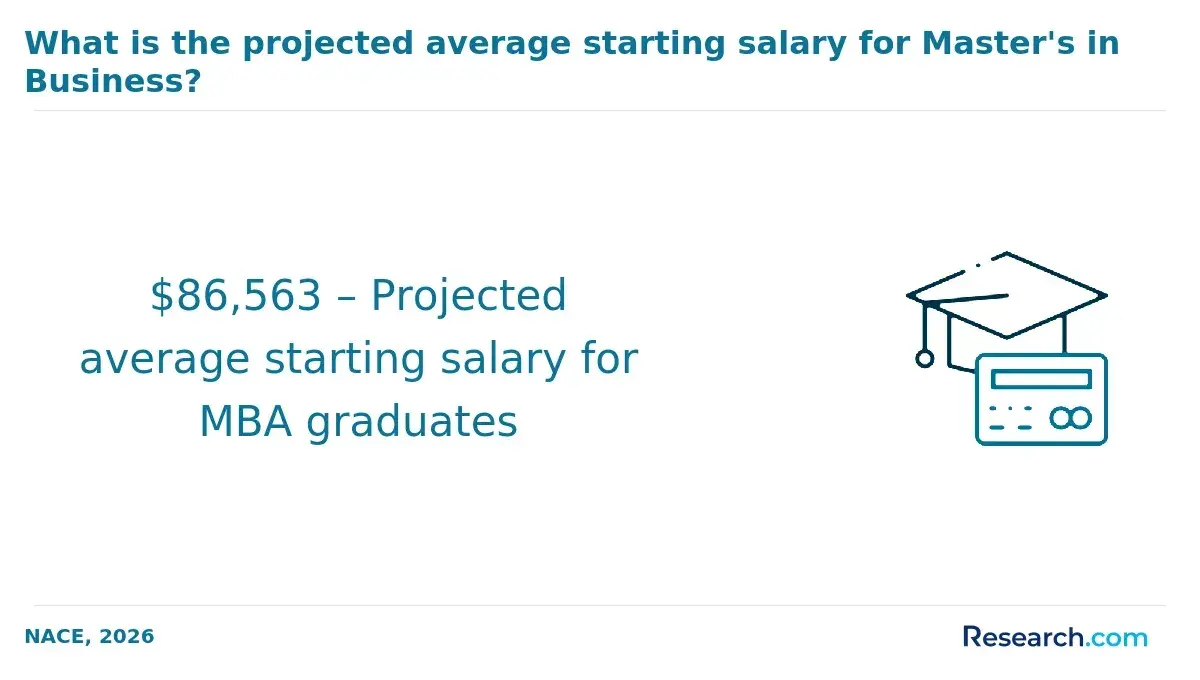
The degree is not equally valuable for every applicant. It is most useful when you have a defined career goal, can access a program with relevant employer connections, and understand the financial trade-off. The median starting salary for MBA graduates in 2025 is projected at $85,000 to $120,000, significantly exceeding typical bachelor's degree earnings of $68,680.
MBA Degree Jobs
An MBA can improve credibility in business settings and may strengthen a candidate’s case for promotion, career change, or leadership responsibility. However, employers still evaluate work history, industry knowledge, measurable achievements, communication ability, and fit for the role. The degree can open doors, but it does not replace performance.
Is MBA in high demand?
MBA demand remains positive in many employer surveys, especially for roles requiring analytical thinking, leadership, financial judgment, and cross-functional problem-solving. Graduates of business master’s programs are especially sought-after, as over 25% of U.S. employers expect an increase in demand for their talents in the next five years.
Demand also varies by specialization and industry. Finance, consulting, healthcare, technology, operations, and analytics may value different combinations of MBA coursework and prior experience. Online MBAs have also gained broader acceptance as employers focus more on accreditation, school quality, skills, and work outcomes than on delivery format alone.
What jobs can you get with an MBA degree?
- Chief Executive. Senior executives set organizational direction, approve major policies, align resources with goals, and carry responsibility for overall performance. Related titles may include executive director, managing director, and chief human resources officer.
- Marketing Manager. Marketing managers plan and oversee campaigns that build awareness, generate demand, and support revenue goals for products or services. Their work may include market research, brand strategy, campaign design, budgeting, and performance evaluation.
- Management Consultant. Consultants help organizations diagnose problems, improve performance, reduce inefficiencies, enter new markets, or redesign operations. They often combine analytical work with stakeholder interviews, presentations, and implementation planning.
- Financial Analyst. Financial analysts evaluate investments, budgets, markets, and business performance to guide financial decisions. Their work may involve equities, bonds, forecasts, valuation, and risk analysis.
- Pharmaceutical Project Manager. These professionals coordinate drug development, clinical trial work, market research, promotional planning, and cross-functional teams in pharmaceutical or healthcare organizations.
| Career Path | How an MBA Can Help | Useful Background |
| Consulting | Builds structured problem-solving, presentation, strategy, and client management skills | Analytics, operations, finance, or industry expertise |
| Finance | Strengthens valuation, corporate finance, investment analysis, and risk management knowledge | Quantitative skills, accounting, economics, or financial services experience |
| Marketing and product leadership | Develops customer insight, market strategy, pricing, brand, and go-to-market planning | Marketing, sales, technology, or product experience |
| Healthcare management | Adds operational, financial, and leadership skills to healthcare knowledge | Clinical, administrative, pharmaceutical, or public health background |
| Executive leadership | Supports broader decision-making across functions and teams | Management experience and measurable leadership results |
What kind of salary can I earn with an MBA degree?
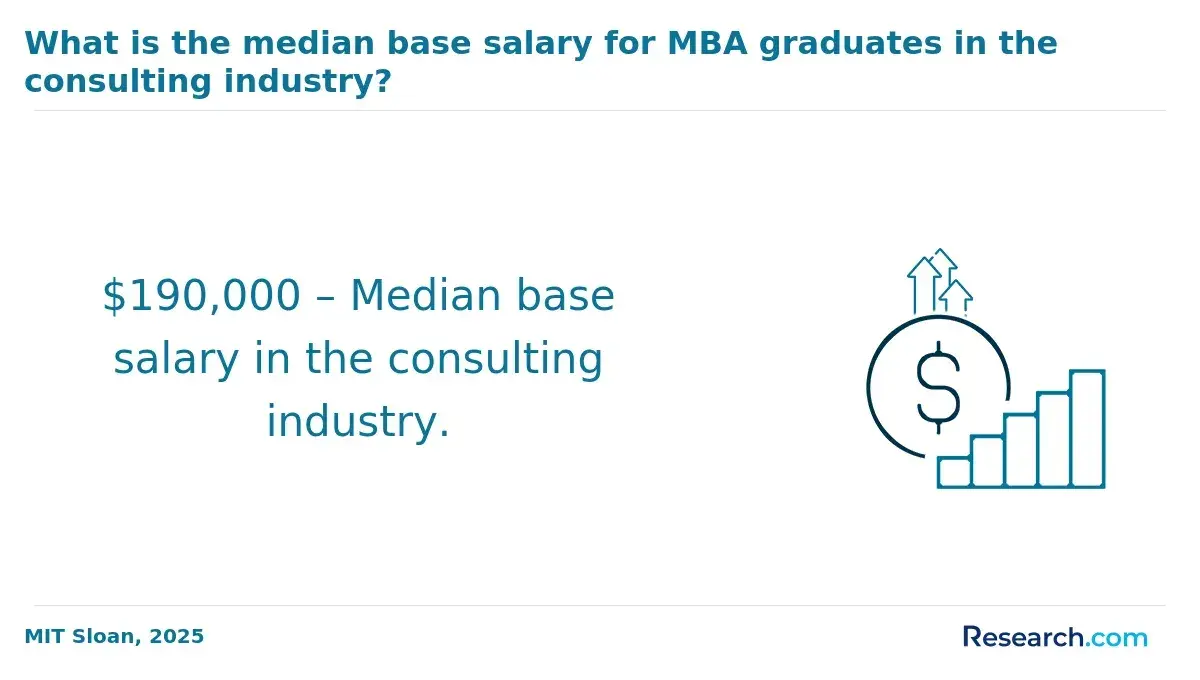
MBA salary outcomes differ by school, industry, geography, prior experience, and job function. US News & World Report calculated that the average starting salary for MBA graduates is over $120,000. Wharton MBA graduates have a median annual salary of $185,000, with industries like legal & professional services and consulting earning 235,000 and 190,000, respectively.
Applicants should treat salary reports as benchmarks, not promises. A graduate entering consulting from a highly recruited full-time program may see a different outcome from a student using an online MBA to advance within a regional employer. Before enrolling, compare salary data for your target school, target role, and target location.
Types of MBA Programs
There is no single MBA format that works for everyone. Full-time, executive, part-time, online, and global MBA programs can teach similar business fundamentals, but they differ in pace, networking style, opportunity cost, admissions profile, and recruiting access. Students comparing formats should also review a broader guide to online schools if remote learning is part of the plan.
What are the different types of MBA programs?
The most common MBA options are full-time MBA, executive MBA, part-time MBA, online MBA, and global or international MBA. Some schools also offer one-year, accelerated, hybrid, dual-degree, and specialized MBA pathways. If timing is your first concern, review how each format affects workload, career services, and completion pace alongside a detailed answer to “How long does it take to get an MBA?"
1. Full-Time MBA
Average time to complete: 1-2 years
A full-time MBA is the most immersive format. Students typically step away from full-time employment and devote their schedule to coursework, networking, career development, student organizations, and recruiting. The format is often strongest for people who want to change industry, function, or geography.
Two-year programs usually offer more room for exploration, summer internships, electives, and recruiting cycles. One-year programs compress the same general business foundation into a faster schedule, which can reduce time away from work but may leave less room for internships or a major career pivot.
Common early roles: Marketing manager, financial analyst, human resources manager
2. Executive MBA
Average time to complete: Two years
An executive MBA, or EMBA, is built for experienced professionals who already hold meaningful responsibility and want to move into broader leadership. Classes are usually scheduled outside the traditional workweek, often on evenings, weekends, or concentrated residencies.
Compared with traditional MBA cohorts, EMBA classrooms often include students with more years of professional experience. That can make peer learning especially valuable because discussions draw from real management problems. Some employers sponsor EMBAs because students can apply lessons immediately at work, although sponsorship may come with service commitments or other conditions.
Common early or transitional roles: HR officer, internal auditor, data analyst
3. Part-Time MBA
Average time to complete: 2-5 years
The best part time MBA programs are designed for students who want graduate business training without leaving their jobs. Courses are often held in the evening, on weekends, or through hybrid schedules. Students may take one or two courses per term and finish over several years.
Part-time students generally study the same foundations as full-time students, including finance, accounting, operations, strategy, entrepreneurship, organizational behavior, and marketing. The trade-off is pace: flexibility improves, but completion can take longer and some full-time recruiting opportunities may be less accessible.
Common early roles: Business analyst, accounting manager, compliance officer
4. Online MBA
Average time to complete: 2 or more years
An online MBA can be a practical option for professionals who need location flexibility, cannot relocate, or want to continue working. Even the cheapest online MBA programs may cover the same core business topics as campus programs, though quality depends heavily on accreditation, faculty, curriculum design, support services, and employer recognition.
Online MBA courses may be asynchronous, synchronous, or a mix of both. Asynchronous courses let students watch lectures, read materials, post discussions, and complete assignments on a flexible schedule. Synchronous courses require real-time attendance, which can improve interaction with classmates and instructors but reduces scheduling freedom.
Some online MBA programs also include optional or required residencies. These short in-person experiences can support networking, leadership exercises, consulting projects, and stronger connection to the school community.
Common early roles: Healthcare manager, database analyst, business development representative
5. Global/International MBA
Average time to complete: 1-2 years
A global or international MBA covers core business disciplines while placing more emphasis on international markets, cross-border operations, global strategy, trade, cultural differences, and multinational leadership.
This format can be useful for professionals targeting multinational firms, international consulting, global supply chains, cross-border finance, or roles requiring frequent work across countries and regions. Students may benefit from international cohorts, global immersion experiences, and alumni networks outside their home country.
Common early roles: Multinational marketing manager, global management consultant, international trade policy advisor
| Type of Program | Average Completion Time | Best Fit |
| Full-Time MBA | 1-2 years | Students seeking an immersive MBA experience, often with a concentration or career change goal |
| Executive MBA | 2 years | Mid-career professionals preparing for expanded leadership responsibility |
| Part-Time MBA | 2-5 years | Working professionals who can attend scheduled classes while continuing employment |
| Online MBA | 2 or more years | Professionals who need flexible study and cannot regularly attend campus-based classes |
| Global/International MBA | 1-2 years | Professionals aiming to build business expertise for international or multinational roles |
MBA Degree Requirements
MBA requirements vary by school and program type, but applicants almost always need a bachelor’s degree. Even the best associate degrees are not enough by themselves for admission to a graduate MBA program.
Admissions committees evaluate more than grades. They may consider academic readiness, work experience, leadership potential, test scores, communication skills, essays, recommendations, and fit with the program’s career outcomes.
Admission Requirements
Schools set their own business degree admission requirements, but many MBA applications include the following components:
- Bachelor’s degree. Applicants usually need an undergraduate degree from an approved institution. Confirm whether the business school recognizes the accreditation status of your previous college or university.
- College transcripts. MBA programs review prior coursework and grades to assess academic preparation. The majority of MBA programs require applicants to have a cumulative GPA of at least 3.0, and programs at elite business schools typically have even higher requirements.
- Standardized tests. Many programs accept or require GMAT, GRE, English proficiency tests, or the Executive Assessment. Top MBA programs look for EA scores of around 155 or a GRE of at least 330. International students may need TOEFL, IELTS, or PTE scores of 109, 7.5, or 75 or higher, respectively. Some schools offer an MBA that don’t require GMAT.
- Relevant work experience. Some MBA programs accept applicants with limited professional experience, while others expect a stronger employment record. Typically, applicants must have two to five years of work experience.
- Letters of recommendation. Recommendations should come from people who can describe your work quality, leadership potential, judgment, and growth. Supervisors, mentors, faculty members, and professional collaborators are common choices.
Skill Requirements
MBA programs teach many business skills, but applicants still need enough preparation to handle graduate-level reading, quantitative work, writing, teamwork, and presentations.
- Language proficiency. International applicants whose first language is not English may need to show English proficiency. If scores fall short, a school may require additional English preparation before enrollment.
- Clear written essays. Essays or statements of purpose help admissions teams evaluate motivation, writing ability, self-awareness, and career goals. Some programs ask for one or two short essays of 500 words or fewer.
- Entrance exam results. Many MBA programs require GRE or GMAT scores earned within the previous five years. Prepare to spend $205 for the GRE and $275 for the GMAT.
| Requirement | What Schools Are Evaluating | How to Strengthen Your Application |
| Academic record | Readiness for graduate-level business coursework | Explain upward grade trends, quantitative preparation, or relevant coursework |
| Work experience | Leadership potential, progression, and professional maturity | Use measurable achievements instead of job descriptions only |
| Test scores | Quantitative, verbal, and analytical readiness | Check whether your target programs require, waive, or make tests optional |
| Essays | Career clarity and fit with the program | Connect the MBA directly to specific goals and skills gaps |
| Recommendations | Credibility from people who know your work | Choose recommenders who can provide specific examples |
What to Look for in an MBA Program
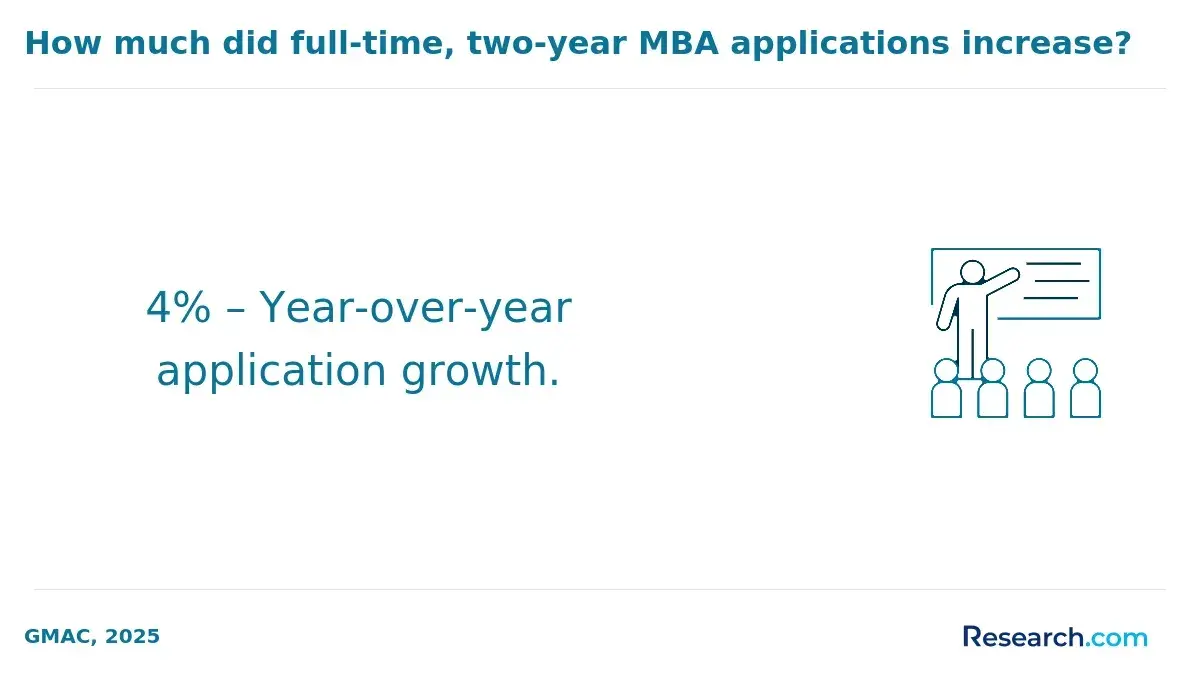
In 2025, the number of MBA applications at leading business schools climbed by 7%, which makes careful program selection even more important. Applicants should avoid choosing only by brand name. The better approach is to compare how each program supports your target career, schedule, learning needs, and financial limits.
- Available specializations. A general MBA can build broad management ability, but a concentration may be useful if you want a specific path such as finance, marketing, general management, entrepreneurship, healthcare, analytics, or technology management.
- Accreditation. Accreditation helps confirm that a program meets recognized academic standards. Reputation can matter, but accreditation, curriculum quality, employer relationships, and outcomes should be reviewed together.
- Location and resources. Campus location can affect networking, internships, and employer access. Online students should review virtual career services, alumni access, advising, technical support, and residency expectations.
- Financial aid options. Ask about scholarships, fellowships, payment plans, employer partnerships, military benefits, and loan counseling. Net cost is more important than sticker price.
MBA education is also changing as employers expect graduates to work across technology, data, global uncertainty, ethics, and interdisciplinary teams. In HE Pedagogies, Walsh & Powell argue in “Re-imagining the MBA: an Arts-Based Approach" that MBA programs have not transformed much despite changes in roles and practice in business. They propose constructive alignment in program design, including design thinking and a wider knowledge base.
Their work suggests that applicants should look for programs that go beyond lectures and exams. Strong MBA programs often include applied projects, case analysis, simulations, consulting assignments, leadership coaching, design thinking, and practical problem reframing. The researchers found that “the re-imagined MBA pedagogy, which is student-centred drawing on an arts tradition, which is practice-and experience-based, supports students in re-framing existing problems and provides effective modelling for a new, more creative and responsive professional practice."
Common mistakes when choosing an MBA program
| Mistake | Why It Can Hurt You | Better Approach |
| Choosing only by ranking | A highly ranked program may not match your industry, budget, or location needs | Compare outcomes for your target role and region |
| Ignoring accreditation | Some employers and doctoral programs may question unaccredited credentials | Verify institutional and business school accreditation before applying |
| Looking only at tuition | Fees, travel, housing, lost wages, and loan interest can change affordability | Calculate total cost of attendance and opportunity cost |
| Assuming online means easier | Online MBA programs still require discipline, teamwork, and deadlines | Review workload, live session expectations, and support services |
| Choosing a specialization too early | A narrow focus may limit flexibility if your goals change | Use electives strategically after confirming career direction |
| Assuming salary outcomes are guaranteed | Compensation depends on industry, experience, school network, and performance | Use school employment reports and role-specific salary benchmarks |
Specializations in an MBA Program
MBA specializations let students build deeper expertise in a business function or industry. They are most valuable when they connect directly to your career goal rather than simply sounding impressive.
- Management
- Marketing
- Finance
- Human Resource
- Accounting
- Healthcare Administration
| Specialization | Best For | Possible Career Direction |
| Management | Professionals preparing for general leadership or operations roles | General manager, operations leader, department director |
| Marketing | Students interested in customers, brand, market research, and growth strategy | Marketing manager, brand manager, product marketing manager |
| Finance | Applicants targeting investment, corporate finance, analysis, or financial leadership | Financial analyst, finance manager, investment-focused roles |
| Human Resource | Professionals interested in talent strategy, workforce planning, and organizational culture | HR manager, talent development leader, compensation manager |
| Accounting | Students who want stronger financial reporting, controls, and managerial accounting knowledge | Accounting manager, controller-track roles, compliance roles |
| Healthcare Administration | Clinical or administrative professionals moving into healthcare leadership | Healthcare manager, practice administrator, pharmaceutical project manager |
Best MBA Programs for 2027
For the 2027 rankings, the Research.com review team used current public datasets from credible sources. Programs were evaluated using academic ratings, enrollment rate, affordability, online reliability, and other key metrics. Rankings can be useful as a starting point, but applicants should still compare fit, cost, admissions requirements, outcomes, and career services.
Harvard Business School
Harvard Business School offers a full-time, two-year MBA centered on general management and practical application. The school also provides financial aid options and support resources for students with families.
- Program Length: 2 years
- Tracks/concentrations: Marketing, finance, technology & operations management, and more
- Cost: $112,764 per year
- Required Credits to Graduate: 60
- Accreditation: New England Commission of Higher Education
Stanford Graduate School of Business
The Stanford Graduate School of Business is known for strengths in entrepreneurship, private equity and venture capital, and social impact. It also offers financial aid and scholarship support for eligible students.
- Program Length: 2 years
- Tracks/concentrations: Accounting, finance, political economics
- Cost: $76,950 per year
- Required Credits to Graduate: 60
- Accreditation: Accrediting Commission of Senior Colleges and Universities of the Western
- Association of Schools and Colleges
The University of Pennsylvania The Wharton School
The Wharton MBA combines a rigorous cross-functional core with room to customize through majors and electives. Students build business fundamentals along with leadership, communication, and analytical skills.
- Program Length: 2 years
- Tracks/concentrations: Accounting, business analytics, healthcare management, and more
- Cost: $118,568 (1st year); $116,568 (2nd year)
- Required Credits to Graduate: 19
- Accreditation: AACSB the International Association for Management Education
London Business School
The London Business School MBA gives students access to a major global business hub, a broad professional network, and opportunities to engage with international leaders and organizations.
- Program Length: 2 years
- Tracks/concentrations: Accounting, economics, organizational behavior, and more
- Cost: £109,700 per year
- Required Credits to Graduate: 60
- Accreditation: The Association to Advance Collegiate Schools of Business (AACSB), the Association of MBAs (AMBA), and EFMD Quality Improvement System (EQUIS)
University of Cambridge Judge Business School
The University of Cambridge MBA is an intensive one-year program that emphasizes applied learning, leadership, discussion, and debate in the university’s academic tradition.
- Program Length: 1 year
- Tracks/concentrations: Culture, arts, and media management; marketing, digital transformation, and more
- Cost: £64,000 per year
- Required Credits to Graduate: 36-48
- Accreditation: EFMD Quality Improvement System (EQUIS)
What are the internship and experiential learning opportunities in MBA programs?
Experiential learning is one of the main reasons many students choose an MBA over a purely theoretical business master’s degree. Internships, consulting projects, capstones, labs, incubators, and global immersions help students test classroom concepts in real business settings and build evidence of applied skill.
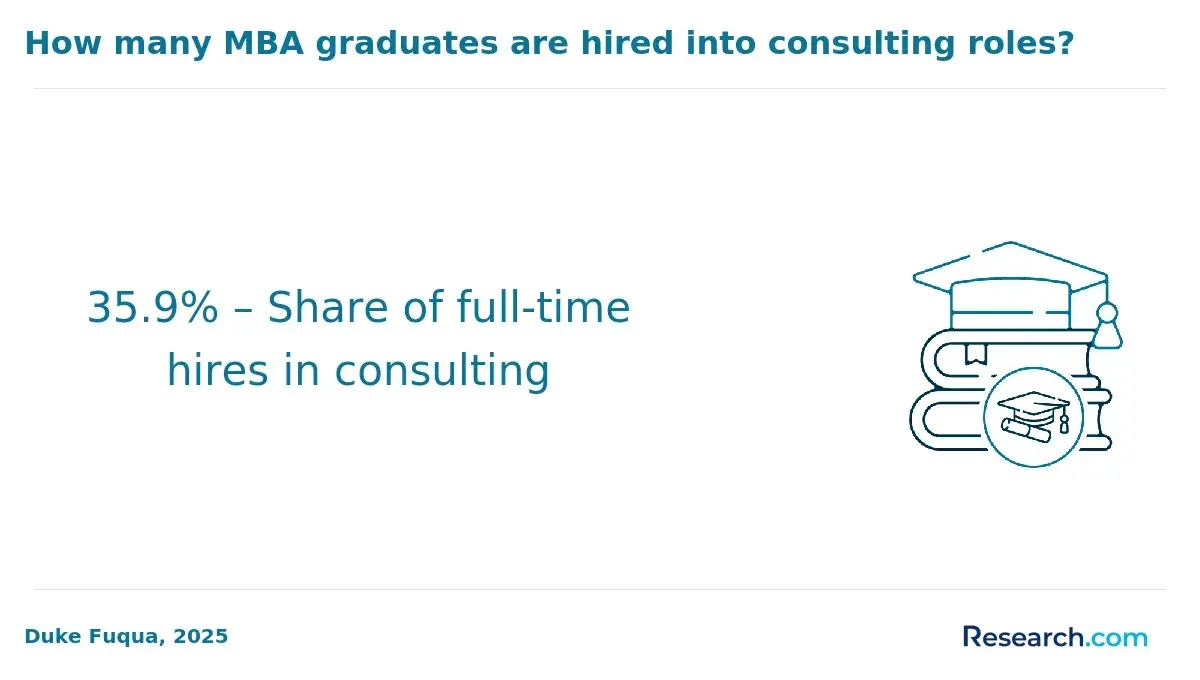
- Corporate internships. Many full-time and some part-time MBA programs connect students with internships in finance, consulting, marketing, technology, healthcare, and operations. These experiences are especially important for career switchers who need relevant industry exposure.
- Consulting projects and capstones. Student teams may work with companies or nonprofit organizations to solve real problems, analyze markets, improve processes, or recommend strategy. These projects can also produce portfolio examples for interviews.
- Global immersion programs. International study trips, field projects, and short-term overseas experiences expose students to business practices, regulation, culture, and market dynamics outside their home country.
- Industry-specific labs and practicums. Some schools offer applied learning environments in entrepreneurship, healthcare, finance, sustainability, analytics, or technology, where students work on live problems with external partners.
- Entrepreneurial incubators. Startup-focused students may access mentorship, pitch competitions, investor connections, funding resources, and alumni founders who can help them refine and launch ventures.
The ROI of an MBA: Measuring Career and Financial Impact
The return on investment for an MBA depends on the total cost of the program and the value it creates for your specific career path. Do not measure ROI only by the average salary of a graduating class. A better analysis includes net tuition, aid, debt, lost income, career acceleration, job mobility, network strength, and whether the program places graduates into your target roles.
1. Salary growth and advancement potential
MBA holders may see higher earnings than professionals with only a bachelor’s degree, depending on industry and experience. According to recent studies, MBA holders earn, on average, 22% to 40% more than their peers with bachelor’s degrees. Students pursuing finance through options such as the cheapest online MBA finance programs may target financial manager, analyst, or investment-related roles.
- Decision point: Compare salary reports for your target job, not just the school’s overall average.
2. Career flexibility over time
An MBA can make it easier to move across functions because it develops transferable skills in leadership, analysis, communication, finance, and strategy. This flexibility can be valuable for professionals changing industries, moving from technical work into management, or preparing for entrepreneurship.
- Decision point: Choose electives and projects that support the career you want after graduation.
3. Network value
MBA networks can include classmates, alumni, faculty, recruiters, entrepreneurs, executives, and mentors. The strength of that network depends on engagement, geography, industry concentration, and alumni responsiveness.
- Decision point: Ask schools how students access alumni, employers, coaching, and recruiting events.
4. Cost versus value
Top-tier MBA programs can cost upwards of $150,000, while online, part-time, and public university options may reduce total expenses. Scholarships, employer sponsorships, and flexible formats can also lower the financial burden.
- Decision point: Compare tuition, living expenses, fees, interest, and lost wages against realistic career outcomes.
5. Nonfinancial benefits
Some MBA benefits are harder to quantify: confidence, leadership maturity, business vocabulary, global perspective, and broader professional identity. These can matter, especially for professionals moving into roles that require influence across departments.
- Decision point: Identify the personal and leadership gaps you want the MBA to address before applying.
How can you successfully complete an MBA program?
Completing an MBA requires more than passing exams. Students must manage workload, group projects, networking, recruiting, internships, and personal responsibilities at the same time. The most successful students enter with a clear plan but remain flexible as they learn more about career options.
Time management is essential, especially in full-time, accelerated, online, and executive formats. Build a weekly schedule for reading, assignments, live sessions, team meetings, career development, and rest. MBA workloads can intensify quickly, so waiting until deadlines approach can weaken both grades and networking.
Participation also matters. MBA classrooms often rely on case discussion, teamwork, presentations, peer feedback, and debate. Engaging with classmates and faculty helps develop judgment and communication skills while also expanding your professional network.
Students should use applied learning opportunities whenever possible. Internships, consulting projects, case competitions, labs, and capstones allow you to turn coursework into practical examples for interviews and promotions. If you are considering a compressed format such as a best 1 year online MBA program in USA, expect the shorter timeline to require strong discipline from the first week.
Choosing the Right MBA Program for Your Goals
The right MBA is the one that helps you move from your current position to your intended next step at a cost and pace you can manage. Before applying, define your target role, preferred industry, geographic goals, acceptable debt level, and whether you can stop working.
Accreditation and reputation
Accreditation indicates that a program has gone through external quality review. AACSB, AMBA, and similar accrediting bodies are often used to evaluate business education standards. Reputation can help, especially in competitive recruiting markets, but it should not outweigh fit, affordability, and outcomes.
Cost and financial aid options
Estimate the real cost of attendance and subtract grants, scholarships, employer support, and other aid. If affordability is central to your decision, a cheap MBA online may let you build business credentials while limiting relocation costs and lost income.
Program format and flexibility
Full-time programs offer immersion. Part-time and online programs offer flexibility. Executive programs serve experienced professionals. Hybrid programs combine remote learning with in-person interaction. The best format is the one you can complete successfully while still gaining access to the career support you need.
Questions to ask before enrolling
- What percentage of graduates enter my target industry or function?
- Does the program publish employment outcomes by role, industry, and salary?
- Are internships available or realistic for my format?
- How active is the alumni network in my target location?
- What is the total cost after aid, fees, travel, and lost income?
- Will I need GMAT, GRE, EA, TOEFL, IELTS, or PTE scores?
- Can I switch formats if my work or family situation changes?
- Does the school offer career coaching for online, part-time, and executive students?
Understanding Accelerated MBA Programs as a Strategic Choice
Accelerated MBA programs compress the degree into a shorter schedule, typically 12 to 18 months. They can be effective for professionals who already understand their career direction and want to minimize time away from work.
The main advantage is efficiency. Students may pay for a shorter enrollment period and return to the workforce sooner, which can reduce opportunity cost. The trade-off is intensity. Accelerated students usually have less time for exploration, internships, and gradual networking.
This format is not ideal for everyone. Career changers who need a summer internship or extensive recruiting support may benefit more from a two-year MBA. Professionals seeking advancement in their current field, however, may find accelerated study more practical. Compare options such as the best accelerated MBA programs if speed is a priority.
How Do MBA Programs Integrate Dual Degree Options to Broaden Expertise?
Dual degree MBA pathways combine management education with a second professional or academic field. This can be useful for students who want leadership roles in specialized sectors such as healthcare, technology, public policy, law, engineering, or nursing administration.
The benefit is broader credibility. Students learn business strategy while also deepening field-specific knowledge. The drawback is added complexity: dual degrees may require more credits, longer timelines, higher costs, and careful planning. Healthcare professionals comparing integrated options can review MSN MBA dual degree programs for examples of how clinical and business preparation may be combined.
What Unique Advantages Does an MBA Offer When Combined With Other Professional Credentials?
An MBA can complement another credential by adding strategic, financial, operational, and leadership skills to specialized expertise. Engineers, nurses, physicians, accountants, data professionals, and educators may use the degree to move from practitioner roles into management or executive decision-making.
The value comes from integration. A clinical professional, for example, may understand patient care but need stronger budgeting, staffing, negotiation, and strategy skills to lead a department. Students exploring healthcare pathways may also compare prerequisite and professional options such as easy nursing schools to get into before deciding how an MBA fits into a longer credential plan.
How Do MBA Programs Prepare Professionals for Digital Transformation?
Modern MBA programs increasingly include analytics, digital strategy, technology management, cybersecurity awareness, business intelligence, and platform-based business models. These topics matter because leaders are expected to make decisions using data, manage technology-enabled teams, and understand how digital disruption changes competition.
Students interested in this area should look for coursework in data analytics, information systems, AI strategy, digital operations, product management, and cybersecurity risk. Flexible technology-focused options may be found through resources such as online MBA management information systems.
How Do MBA Programs Foster Diversity and Inclusive Leadership?
MBA programs can support inclusive leadership through coursework and experiences focused on cultural intelligence, ethics, bias awareness, team dynamics, negotiation, and global collaboration. These skills are important because managers increasingly lead teams across different backgrounds, geographies, identities, and work arrangements.
Applicants should look for evidence of inclusion in the curriculum, student organizations, leadership development, faculty expertise, and cohort composition. Working managers who want a flexible leadership-focused path may compare executive MBA online options.
How Do MBA Programs Foster Entrepreneurial Innovation?
MBA programs support entrepreneurship through business plan development, startup labs, incubators, venture competitions, founder mentorship, investor exposure, and courses in innovation, finance, marketing, and strategy. These resources can help students test whether an idea can become a viable business.
Entrepreneurship-focused students should ask whether a program offers access to mentors, startup funding resources, legal or accounting clinics, alumni founders, and pitch practice. Students who need a flexible route can compare options such as the easiest MBA program, while still checking accreditation and academic quality.
How Can I Optimize the Cost of My MBA Investment?
To control MBA cost, compare net price instead of headline tuition. Ask about scholarships, fellowships, employer sponsorship, military benefits, assistantships, payment plans, and tuition reimbursement. Online and hybrid formats may also reduce relocation and income loss, although they still require time and discipline.
A cost-benefit analysis should include tuition, fees, materials, travel, interest, lost wages, and realistic salary improvement. Professionals seeking leadership-focused programs at a lower price can compare cheap executive MBA programs as part of the search.
How Do MBA Programs Equip Graduates to Navigate Global Economic Uncertainty?
MBA programs prepare students for uncertainty through coursework in risk management, crisis leadership, strategy, finance, operations, and decision-making under ambiguity. Simulations, case studies, and consulting projects can help students practice responding to market volatility, supply chain disruption, changing customer demand, and financial pressure.
Strong programs also emphasize ethical leadership and communication because uncertain environments require leaders to make decisions with incomplete information while maintaining trust. Applicants weighing cost and flexibility may also review the value online MBA discussion when comparing formats.
How Do MBA Programs Integrate Cross-Disciplinary Skills for Industry-Specific Success?
Many MBA programs now encourage students to combine business training with technical, clinical, analytical, or sector-specific expertise. This interdisciplinary approach can be valuable in industries where leaders must understand both operations and specialized professional practice.
Healthcare management is a clear example. A nurse, clinician, or administrator who adds business training may be better prepared to evaluate budgets, staffing models, quality improvement, patient access, and organizational strategy. Professionals mapping a healthcare education path may also compare resources such as the easiest RN to BSN online pathway before deciding whether an MBA should come next.
Move Further Up the Career Ladder with an MBA
The main MBA types are full-time, part-time, online, executive, accelerated, and global or international programs. Each serves a different applicant profile. A full-time MBA may be best for a career switch. An executive MBA may fit experienced managers. An online or part-time MBA can work for professionals who want to keep working while studying. Students still building their foundation may first consider a business degree online.
An MBA can strengthen leadership, strategy, financial, analytical, and communication skills, but its value depends on fit. Compare accreditation, total cost, format, employer connections, career outcomes, and specialization options before enrolling. With more than a third of global employers planning to expand MBA hiring, graduates may find opportunities, but outcomes still depend on experience, school choice, market conditions, and career execution.
References
- Binghamton University (n.d.). Cost of Attendance. Binghamton University
- BLS. (2025, August 28). Business and Financial Occupations: Occupational Outlook Handbook: U.S. Bureau of Labor Statistics.
- BLS (2024, May). Occupational Employment and Wage Statistics. Industry: Cross-industry, Private, Federal, State, and Local Government. U.S. Bureau of Labor Statistics.
- Chicago Booth. (n.d.). Full-Time MBA Cost. The University of Chicago Booth School of Business.
- Ethier, M. (2025, August 27). The MBA Price Tag: 21 Of The Top 25 U.S. B-Schools Now Charge $100K A Year Or More. Poets & Quants.
- Find MBA (2026, March 10). As Salary Growth Slows, MBA Graduates Rethink the Job Market. Find MBA
- GMAC. (2025). Application Trends Survey – 2025 Report. Graduate Management Admission Council.
- GMAC. (2024). Corporate Recruiters Survey – 2024 Report. Graduate Management Admission Council.
- GMAC. (2025). Corporate Recruiters Survey – 2025 Report. Graduate Management Admission Council.
- Harland, N. (2025, September 1). What are the MBA tuition fees for the world’s best business schools? GMAC
- Human Resources Director (2025, July 1). Demand for MBA graduates remains strong. HRD
- O’Brien, Pam (2025, December 14). Does an MBA Degree Increase Your Salary? SoFi
- University of Chicago. Full-Time MBA Cost. University of Chicago
- Wharton University of Pennsylvania (2025). MBA Careers 2025. Wharton University of Pennsylvania
Key Insights
- The best MBA type depends on your goal. Full-time MBAs often fit career changers, part-time and online MBAs fit working professionals, executive MBAs fit experienced managers, and global MBAs fit international career goals.
- Cost must be calculated beyond tuition. Include fees, living expenses, travel, interest, and lost wages before deciding whether the degree is financially realistic.
- Accreditation and outcomes matter more than marketing claims. Check accreditation, employment reports, employer relationships, alumni access, and career services before applying.
- An MBA can improve opportunity, but it does not guarantee salary or promotion. Salary outcomes vary by school, industry, geography, prior experience, and job function.
- Specializations should support a specific career path. Finance, marketing, management, human resources, accounting, and healthcare administration are useful when they align with target roles.
- Experiential learning can determine practical value. Internships, consulting projects, capstones, incubators, and global immersions help students turn coursework into evidence employers can evaluate.
- Online and accelerated MBAs can be strong choices when selected carefully. They are best for disciplined students who need flexibility or speed, but applicants should confirm support services, accreditation, workload, and recruiting access.
Other Things You Should Know About the Different Types of MBA Programs
In 2027, costs for MBA programs vary depending on the type. Full-time programs range from $40,000 to $150,000 per year, while part-time and online MBAs may be more affordable at $20,000 to $80,000. Executive MBAs typically cost more due to added benefits and intensive schedules.
In 2027, various types of MBA programs include full-time, part-time, executive, and online MBAs. Each caters to different needs; full-time MBAs are immersive, part-time allows work balance, executive MBAs suit experienced leaders, and online MBAs offer flexibility to pursue learning remotely.
Common admission requirements for MBA programs include a bachelor’s degree from an accredited institution, college transcripts, standardized test scores (such as GMAT or GRE), relevant work experience, letters of recommendation, and sometimes a personal statement or essay.
Online MBA programs offer flexibility, allowing students to complete their coursework at their own pace and balance their studies with other commitments, such as work. They often cover the same material as on-campus programs and are taught by the same faculty.
When choosing an MBA program, consider factors such as accreditation, available specializations, program costs, financial aid options, location, and resources provided by the institution. Researching these factors will help you find a program that aligns with your career goals and personal circumstances.
Yes, MBAs are in high demand. Many corporate recruiters seek MBA graduates for their advanced skills and knowledge. The demand for business professionals is expected to grow, with many organizations predicting an increase in job opportunities for MBA graduates.
While some MBA programs do not require work experience, many top programs prefer or require applicants to have two to five years of professional experience. Work experience can enhance your learning and provide practical insights that are valuable in an MBA program.