
2027 Easiest Management Degree Programs

Co-Founder and Chief Data Scientist
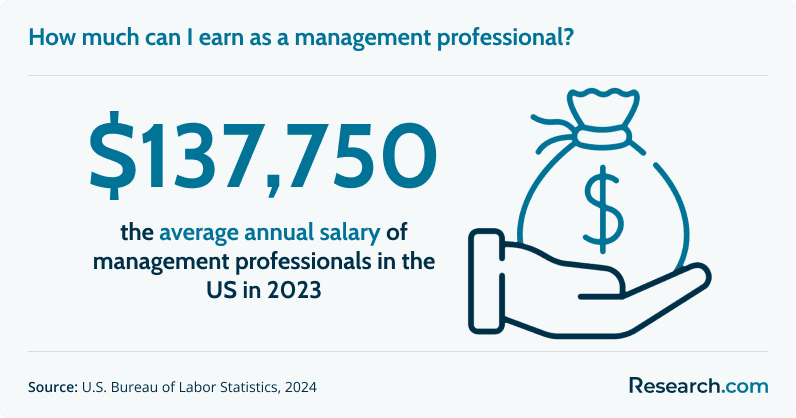
Choosing an “easy” management degree should not mean choosing a weak degree. For most students, it means finding a program with practical coursework, flexible scheduling, clear graduation requirements, and a realistic path into business, nonprofit, government, healthcare, hospitality, or operations roles. That decision matters because management occupations are broad, competitive, and financially meaningful: the average annual salary for management professionals was $137,750 in 2023, and management occupations are projected to average 1.2 million job openings each year from 2023 to 2033.
This guide explains which management-related degrees are often more accessible, what you can expect to study, how online programs are viewed by employers, what salaries and industries look like, and how to choose a program that fits your goals without overpaying or sacrificing accreditation. It is written for students who want a practical business degree, working adults who need flexibility, and career changers who want leadership training without an overly technical or research-heavy curriculum.
Quick Answer: What Is the Easiest Management Degree to Earn?
The easiest management degree for you is usually the one that matches your strengths, career target, and schedule. Hospitality management, human resources, organizational leadership, business administration, communication, and project management are commonly viewed as more accessible because they emphasize applied business skills, workplace communication, people management, and real-world problem solving rather than advanced mathematics, laboratory work, or highly technical theory.
However, “easy” is personal. A student who enjoys people-focused work may find human resources easier than finance, while a detail-oriented student may prefer project management. The best choice is an accredited program with flexible delivery, strong advising, transferable credits, relevant internships or projects, and career support tied to your intended industry.
What You Should Know Before Choosing an Easy Management Degree
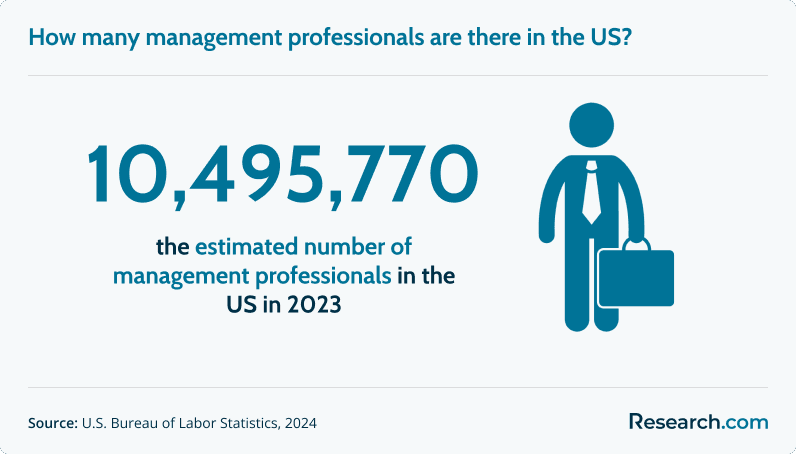
- More than 10.4 million management professionals were employed in the United States in 2023, showing that leadership and supervisory skills are needed across many sectors.
- The average annual salary for management professionals was $137,750 in 2023, although entry-level graduates typically earn less than experienced managers.
- The top-paying management occupations include computer and information systems managers at $169,510 and architectural and engineering managers at $165,370, which shows how technical specialization can raise earning potential.
- The securities and financial investments industry reported an average annual salary of $236,740 and employed more than 162,000 management professionals.
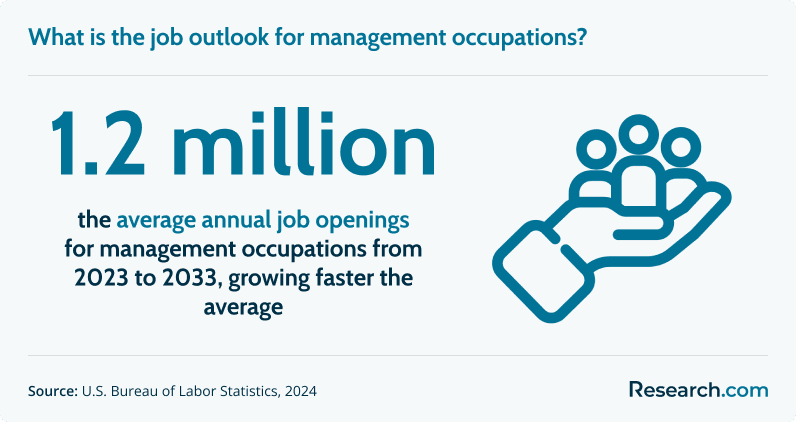
- Management occupations are expected to average 1.2 million job openings annually from 2023 to 2033, with growth faster than the national average for all occupations.
- Scientific research, web services, and central banking also report salaries above $200,000 annually, though some of these industries employ fewer management professionals.
- Easiest management degree programs for 2027
- Core courses in an accessible management degree
- Popular management degree specializations
- How long management degrees usually take
- Common admission requirements and program length factors
- Online management degree options
- Employer acceptance of online management degrees
- Management salary expectations
- Highest-paying industries for management graduates
- Ways to pay for a management degree
- Certifications and practical experience
- Whether an affordable online MBA makes sense later
- Current trends in management education
- Easy management degrees versus traditional management degrees
- Affordable advanced degrees after a management degree
- Job outlook for management degree graduates
- Challenges to consider before enrolling
- Career networks and alumni support
- Advanced academic pathways
- Technology skills to add to a management degree
- How to make your management career more durable
- How to choose the right program
- How to evaluate long-term return on investment and compare programs before enrolling
10 Easiest Management Degree Programs for 2027
The management degrees below are often considered more approachable because they focus on applied business knowledge, communication, leadership, operations, and workplace decision-making. They are not automatically simple, and the workload still depends on the school, instructor expectations, transfer policies, and whether you study full time or part time. Still, these programs tend to offer clearer career connections and more flexible online or hybrid options than highly technical business tracks.
| Degree area | Why students often find it accessible | Best fit for students who want to |
| Hospitality Management | Coursework is practical and tied to service operations, events, and customer experience. | Work in hotels, restaurants, tourism, event planning, or service leadership. |
| Human Resources | The focus is on people, policies, hiring, training, and employee relations. | Build a career in recruiting, employee support, compliance, or workplace development. |
| Business Administration | It offers broad business coverage without forcing students into one narrow specialty early. | Keep career options open in management, sales, operations, consulting, or entrepreneurship. |
| Communication | It emphasizes writing, speaking, media, and organizational messaging rather than quantitative-heavy work. | Move into public relations, corporate communication, marketing, or team leadership. |
| Organizational Leadership | Courses often center on teams, motivation, change, and practical leadership scenarios. | Lead teams, manage workplace change, or prepare for supervisory roles. |
1. Hospitality Management
Hospitality management is a strong option for students who prefer hands-on business learning and customer-facing environments. Programs commonly cover event coordination, food and beverage operations, guest services, lodging management, and service quality. Graduates often pursue roles in hotels, restaurants, tourism organizations, resorts, convention services, and event planning companies.
- Southern New Hampshire University
- Florida International University
- University of Massachusetts Amherst
2. Human Resources
Human resources degrees prepare students to support an organization’s workforce. Coursework usually addresses recruiting, employee relations, workplace policy, compensation basics, training, performance evaluation, and labor regulations. This path fits students who want a people-centered business career and are interested in helping organizations hire, retain, and develop employees.
- Purdue University Global
- University of Phoenix
- Georgia State University
3. Business Administration
Business administration is one of the most flexible management-related majors because it introduces students to finance, marketing, operations, management, strategy, and entrepreneurship. It works well for students who are not yet ready to specialize or who want a general business credential that can apply to many industries.
- University of Florida
- Liberty University
- Ashford University
4. Communication
A communication degree can support management careers by strengthening writing, public speaking, persuasion, media literacy, and organizational communication. Students who are strong readers, speakers, writers, or relationship builders may find this path more manageable than quantitative-heavy business programs. Career options may include public relations, marketing communication, internal communication, media relations, and team coordination.
- Emerson College
- Arizona State University
- Southern Utah University
5. Organizational Leadership
Organizational leadership programs focus on how people work together, how leaders guide teams, and how organizations respond to change. Students commonly study leadership models, conflict resolution, ethics, organizational culture, decision-making, and change management. This degree is useful for working adults who already have job experience and want to move into supervisory or management roles.
- Northeastern University
- Colorado State University Global
- Grand Canyon University
6. Public Administration
Public administration is designed for students interested in government, public service, and nonprofit leadership. Courses often examine public policy, budgeting, government operations, ethics, program evaluation, and administrative decision-making. It can lead to roles in local, state, and federal agencies as well as nonprofit organizations.
- Indiana University Bloomington
- California State University, Long Beach
- University of North Texas
7. Management
A general management degree gives students a direct introduction to planning, organizing, leading, staffing, decision-making, and measuring performance. It is practical for students who want a broad leadership foundation without choosing a highly specialized business track. Graduates may move into operations, project coordination, team supervision, retail management, office management, or general business roles.
- Walden University
- University of Illinois at Chicago
- Texas A&M University
8. Entrepreneurship
Entrepreneurship programs teach students how to develop, launch, finance, and manage new ventures. Students often study business planning, innovation, market research, customer discovery, small business finance, and growth strategy. This path can be useful not only for future founders but also for students who want to work in startups, product teams, family businesses, or innovation-focused roles.
- Babson College
- University of Maryland Global Campus
- Florida State University
9. Marketing
Marketing degrees combine creativity with business analysis. Students typically learn about consumer behavior, branding, market research, digital marketing, campaign planning, and sales strategy. This degree can be accessible for students who enjoy communication, audience research, creative problem solving, and measurable business outcomes.
- University of Southern California
- Ashland University
- DePaul University
10. Project Management
Project management is a practical field for students who like structure, deadlines, teamwork, and measurable goals. Programs usually cover project planning, scheduling, budgeting, risk management, stakeholder communication, and project execution. Graduates can apply these skills in construction, information technology, healthcare, operations, business services, and other project-based environments.
- Purdue University
- Southern New Hampshire University
- Colorado Technical University
What Are the Core Courses in an Easy Management Degree?
Most accessible management programs share a common business foundation. These courses are designed to help students understand how organizations operate, how teams function, how money is tracked, and how leaders make decisions. The exact course titles vary by school, but the learning goals are usually similar.
| Common course | What you learn | Why it matters in management |
| Introduction to Management | Basic management functions, including planning, organizing, leading, and controlling resources. | Gives students a framework for understanding what managers actually do. |
| Principles of Marketing | Customer behavior, market segmentation, product positioning, promotion, and market research. | Helps future managers understand customers, revenue, branding, and business growth. |
| Financial Accounting | Financial statements, assets, liabilities, equity, revenue, expenses, and reporting basics. | Teaches managers how to read financial information and make better business decisions. |
| Organizational Behavior | Motivation, leadership, teams, conflict, workplace culture, and group dynamics. | Builds people-management skills needed in nearly every supervisory role. |
| Business Ethics | Ethical decision-making, corporate responsibility, workplace dilemmas, and trust. | Prepares students to make responsible decisions that affect employees, customers, and organizations. |
| Human Resource Management | Recruiting, training, employee engagement, performance management, and workforce planning. | Shows how organizations hire, support, evaluate, and retain employees. |
| Strategic Management | Competitive analysis, goal setting, resource allocation, and long-term planning. | Connects everyday management decisions to larger organizational goals. |
These courses help students build practical management judgment, not just memorize business vocabulary. For example, students interested in executive leadership can use management, strategy, ethics, and organizational behavior coursework as early preparation for responsibilities associated with chief executive roles.
If you are comparing easier degree options outside business, you may also want to review the easiest library science degree programs or the easiest liberal studies degrees. Those paths may appeal to students who want flexible coursework and broad career preparation, although they are less directly tied to business management roles.
What Are the Most Popular Specializations in Management Degrees?
A specialization helps you turn a broad management degree into a clearer career signal. It can also make your studies feel easier if it matches your interests. Some management-related tracks also connect to fields listed among the highest paying bachelor degrees, especially when business skills are paired with technical, financial, healthcare, or operations expertise.
- Human Resource Management: This concentration focuses on hiring, training, employee relations, workplace policy, and performance systems. It is a good fit for students who want to work with people and improve workplace culture.
- Project Management: Students learn how to plan, schedule, monitor, and complete projects while managing risks and stakeholders. Working adults who need flexibility can compare online project management degree options.
- Marketing Management: This track covers consumer behavior, branding, market research, campaign planning, and digital promotion. It suits students who enjoy communication, strategy, and creative business problem solving.
- Healthcare Management: This specialization prepares students for administrative roles in healthcare settings by covering healthcare operations, policy, finance, and service delivery.
- Supply Chain Management: Students study logistics, procurement, inventory, supplier relationships, and distribution. This area can connect to careers in logistics, where the average annual salary for management careers in logistics hover around $99,200.
- Entrepreneurship: This option teaches business planning, market analysis, funding strategy, innovation, and venture development. It is useful for founders, small business managers, and innovation-focused employees.
Specialization matters because management is not one job. A future HR coordinator, marketing manager, project lead, healthcare administrator, and operations supervisor all need different applied skills. Students who enjoy numbers and analytical thinking may also consider the easiest mathematics degrees as a way to strengthen data-driven decision-making for finance, operations, or analytics-heavy roles. Students considering education leadership can compare management options with guidance on what jobs can you get with a master’s in elementary education.
Higher-paying management work is often tied to specialization, experience, and industry. Computer information systems managers reported median annual earnings of $169,510, while architectural and engineering managers reported $165,370. The chart below shows the highest-paid management professionals in the United States for 2023.
How Long Does It Take to Complete an Easy Management Degree?
An associate degree in management usually takes about two years, while a bachelor’s degree usually takes four years. Students who already have college credit, military credit, professional training, or transfer coursework may finish faster depending on the school’s policies. Working adults can also compare accelerated online degree programs for working adults if they want a shorter path and can handle a heavier course load.
| Degree level | Typical completion time | What to expect | Best for |
| Associate degree | About two years | General education, introductory business courses, basic management topics, and sometimes an internship. | Students seeking a faster credential or a transfer pathway into a bachelor’s program. |
| Bachelor’s degree | About four years | Broader business coursework, advanced management classes, electives, and possibly a capstone or internship. | Students who want stronger career mobility and eligibility for more management-track roles. |
| Accelerated online bachelor’s path | Varies by transfer credits and course load | Condensed terms, year-round enrollment, and faster pacing. | Motivated working adults who can manage intensive scheduling. |
Time to completion depends on more than the catalog. Ask whether the program accepts transfer credits, how often required courses are offered, whether courses are asynchronous, and whether the capstone or internship can be completed near where you live. In 2023, there were more than 10 million management professionals in the United States, but graduates still benefit from finishing with relevant experience and a clear employment plan.
What Are the Prerequisites for Enrolling in the Easiest Management Programs?
Admission requirements vary by institution, degree level, and student status. Associate programs are often more open-access, while bachelor’s programs may review academic history, test scores, essays, and transfer credits. Always confirm requirements directly with the school before applying.
- High school diploma or GED: Most associate and bachelor’s programs require proof of secondary education or an equivalent credential.
- Transcripts: Schools usually ask for official records from high school and any colleges previously attended.
- Minimum GPA: Some programs set a GPA threshold, although requirements differ widely.
- Standardized test scores: Some bachelor’s programs may request SAT or ACT scores, while many schools have test-optional policies. Some institutions do not require the GMAT or similar tests for certain business pathways.
- Application form and fee: Applicants typically submit an online application and any required payment or waiver request.
- Letters of recommendation: Some schools ask teachers, supervisors, or professional contacts to comment on your readiness.
- Personal statement or essay: A short statement may be required to explain your goals and interest in management.
Can I Earn an Easy Management Degree Online?
Yes. Many accredited colleges offer online associate and bachelor’s degrees in management, business administration, human resources, organizational leadership, hospitality, marketing, and project management. For many students, a management major can be among the easiest degree to get online because the coursework often translates well to discussion boards, case studies, team projects, recorded lectures, and applied assignments.
| Online management degree advantage | Why it helps | What to verify before enrolling |
| Flexible scheduling | Students can study around work, caregiving, military service, or other responsibilities. | Check whether courses are asynchronous, synchronous, or a mix of both. |
| Location independence | You can attend a school without relocating or commuting. | Confirm whether any campus visits, internships, or proctored exams are required. |
| Potential cost savings | Online students may avoid commuting, housing, and relocation costs. | Compare tuition, technology fees, textbook costs, and transfer-credit rules. |
| Self-paced habits | Online formats reward students who can manage deadlines independently. | Be honest about your time management and need for instructor interaction. |
Pros of Online Management Degrees
- More control over your schedule: Online programs can make it easier to combine school with employment or family obligations.
- Broader school access: Students are not limited to programs within commuting distance.
- Lower indirect costs: Some students save money by avoiding campus housing, transportation, parking, and relocation expenses.
Cons of Online Management Degrees
- Less spontaneous networking: Online students may need to be more intentional about connecting with classmates, professors, alumni, and employers.
- Greater need for self-discipline: Flexible courses can become difficult if you fall behind.
- Possible isolation: Students who learn best through face-to-face discussion may prefer hybrid or campus-based programs.
Will Employers Take My Easy Online Management Degree Seriously?
Employers are more likely to respect an online management degree when it comes from an accredited institution and the graduate can show relevant skills, experience, and professionalism. The word “online” is usually less important than the school’s reputation, accreditation status, curriculum quality, and whether you completed meaningful projects, internships, or work-based learning.
For business and management programs, recognized accrediting organizations include the Accreditation Council for Business Schools and Programs (ACBSP), the Association to Advance Collegiate Schools of Business (AACSB), and the International Assembly for Collegiate Business Education (IACBE). Institutional accreditation also matters because it can affect transfer credits, graduate school eligibility, and employer confidence.
Online business education is now common at advanced levels as well. Many experienced professionals use affordable executive MBA programs to continue working while developing leadership credentials. That said, students should avoid assuming every online program has equal value. Accreditation, career services, employer connections, and student outcomes should be reviewed carefully.
How Much Can I Earn as a Management Professional?
Management salaries vary by role, industry, location, experience, education, and responsibility level. Recent data show annual salaries ranging from approximately $54,550 to over $231,620. The average annual salary across management occupations was about $137,750 in 2023 across all industries, but new graduates should not expect to start at the average. In 2022, the average age of workers in management positions was 45.4, which reflects the fact that many management salaries include experienced professionals.
Education costs also matter when you evaluate salary potential. Total tuition and fees at top business schools in 2023 range from $31,104 to $107,222. A management degree can support strong long-term earnings, but ROI depends on how much you pay, whether you graduate, whether the program is accredited, and whether you gain marketable experience while enrolled.
What Are the Highest-Paying Industries for Management Degree Holders?
Management salaries are highest in industries where leaders oversee complex finances, technology, specialized operations, or high-value services. In 2023, the securities, commodity contracts, and other financial investments and related activities sector reported an average annual salary of $236,740 for management professionals. That industry employed approximately 162,710 management professionals across the United States.
The chart below compares top-paying sectors for management professionals by average annual salary and employment level. Use it as context, not a guarantee. The highest-paying industries may also require advanced credentials, specialized experience, strong networks, or technical knowledge beyond a general management degree.
How Can I Finance My Easy Management Degree?
Financing a management degree should start with the lowest-cost funding sources before turning to loans. Students commonly use federal financial aid, grants, scholarships, institutional aid, employer tuition assistance, military or veteran education benefits, payment plans, and federal or private loans. The right mix depends on your dependency status, income, school type, enrollment level, and employer benefits.
| Funding option | Best use | What to watch for |
| Grants and scholarships | Reducing tuition without repayment. | Eligibility rules, renewal requirements, deadlines, and minimum GPA standards. |
| Employer tuition assistance | Working adults whose employers support job-related education. | Reimbursement caps, grade requirements, and required service commitments. |
| Federal student loans | Covering remaining costs after gift aid. | Total borrowing, interest, repayment plans, and graduation timeline. |
| Private student loans | Filling gaps when other aid is not enough. | Credit requirements, interest rates, cosigner rules, and fewer borrower protections. |
| Lower-cost online programs | Students who need affordability and flexibility. | Accreditation, fees, transfer policies, and course availability. |
Compare total cost, not only advertised tuition. Fees, books, technology requirements, repeated courses, and delayed graduation can change the final price. Students seeking lower-cost business pathways can review the easiest online business degree options as part of their cost comparison.
How Can Certifications and Practical Experience Strengthen a Management Career?
A management degree gives you a foundation, but employers often want proof that you can apply what you learned. Internships, part-time supervisory work, volunteer leadership, student organization roles, case competitions, capstone projects, and employer-sponsored projects can help you build evidence of leadership ability before graduation.
Certifications can also help when they match your target role. Project management, human resources, data analysis, operations, customer experience, and software-related credentials may make your resume more specific. Students who want practical technical training alongside management coursework can also explore online trade school programs, especially if their career goals involve operations, skilled trades management, logistics, or technical service businesses.
Should I Consider an Affordable Online MBA After My Easy Management Degree?
An MBA may be useful after a management degree if you need deeper training in strategy, finance, analytics, operations, or executive decision-making. It is not always necessary immediately after graduation. Many students get more value from an MBA after gaining work experience because they can connect coursework to real management problems.
Consider an MBA if your desired roles require graduate education, your employer values the credential, or you want to move into higher-level leadership. Be cautious if you are still unsure about your career direction or would need to borrow heavily without a clear salary path. To compare cost-conscious options, review cheapest online MBA programs and look closely at accreditation, format, employer recognition, and total cost.
What Are the Emerging Trends in Management Education?
Management education is becoming more applied, digital, and skills-based. Programs increasingly include data-informed decision-making, virtual collaboration, agile project methods, risk planning, ethical leadership, cross-cultural communication, and technology-supported operations. Employers also expect graduates to be comfortable working across digital tools, remote teams, and changing organizational structures.
Micro-credentials and short courses are also becoming common supplements to traditional degrees. These can help students add focused skills without committing immediately to another full degree. Professionals who want broader graduate-level preparation can compare MBA degrees online to see how programs are adapting to modern business practice.
How Does an Easy Management Degree Compare to a Traditional Management Degree?
An easy management degree is usually easier because of program design, not because it lacks expectations. Accessible programs often use flexible formats, practical assignments, applied case studies, clear course sequences, generous transfer policies, and student support services. Traditional programs may be more theory-heavy, research-focused, selective, or quantitatively demanding.
| Comparison point | Accessible management degree | Traditional management degree |
| Course emphasis | Applied leadership, workplace scenarios, business fundamentals, and practical projects. | Broader theory, research, analytics, and deeper academic requirements. |
| Student fit | Working adults, transfer students, career changers, and students seeking flexibility. | Students who want a more academically intensive business foundation. |
| Format | Often online, hybrid, accelerated, or part time. | May be campus-based or structured around a traditional academic calendar. |
| Career preparation | Strong when paired with internships, certifications, and work experience. | Strong when the program has rigorous curriculum, employer ties, and experiential learning. |
Both paths can lead to useful careers. The better choice depends on your goals, budget, schedule, academic strengths, and whether you plan to continue into graduate study. Graduates who later want a faster advanced credential can compare the fastest online MBA programs.
Are Affordable Online Advanced Degrees a Smart Step After an Easy Management Degree?
Advanced degrees can make sense when they clearly support your next career move. An MBA, specialized master’s degree, or Doctor of Business Administration can deepen leadership, strategy, analytics, finance, operations, or industry-specific expertise. But an advanced degree should not be used as a substitute for work experience if your target roles mainly require proven performance.
If you are considering doctoral-level business education, compare admission requirements, dissertation or applied research expectations, faculty expertise, and employer value. Cost-conscious professionals can review the cheapest online DBA programs as one option for moving from foundational management training to advanced leadership preparation.
What Is the Job Outlook for Graduates With Easy Management Degrees?
The outlook for management occupations is favorable, but job access depends on experience and specialization. Management occupations are projected to average approximately 1.2 million annual job openings from 2023 to 2033, with growth faster than the overall average of four percent. These openings come from organizational growth, retirements, turnover, new business needs, and changing workplace structures.
Graduates may find opportunities in healthcare, hospitality, business services, nonprofit administration, government, retail, logistics, marketing, and operations. The strongest candidates usually combine a degree with internships, measurable achievements, leadership experience, technical tools, and industry knowledge.
Are There Potential Challenges in Pursuing an Easy Management Degree?
Yes. A more accessible program can be a smart choice, but students should understand the trade-offs. Some programs may offer less quantitative depth, fewer advanced electives, weaker employer relationships, or limited networking compared with more selective business schools. Others may be flexible but require strong self-motivation because online coursework can be easy to postpone.
| Common mistake | Why it can hurt you | Better approach |
| Choosing a program only because it sounds easy | You may graduate with a degree that does not match your career goal. | Start with the role or industry you want, then choose the degree that supports it. |
| Ignoring accreditation | Credits may not transfer, employers may question the degree, and graduate school options may be limited. | Verify institutional accreditation and, when relevant, business program accreditation. |
| Looking only at tuition | Fees, books, lost time, repeated courses, and delayed graduation can raise total cost. | Compare total program cost and time to completion. |
| Assuming online means easier | Online courses require planning, discipline, and consistent participation. | Choose a format that matches your learning habits and schedule. |
| Graduating without experience | A degree alone may not be enough for competitive management-track roles. | Add internships, projects, certifications, part-time leadership, or volunteer management experience. |
Students who plan to continue into graduate business education should also consider whether the undergraduate program prepares them for AACSB-accredited options. If affordability is a concern, compare cheap online MBA AACSB programs and review admission requirements early.
What Role Do Career Networks and Alumni Relationships Play in an Easy Management Degree?
Career support can make a practical management degree much more valuable. Strong programs help students find internships, connect with alumni, attend employer events, prepare resumes, practice interviews, and understand career paths. This is especially important for online students, who may need structured opportunities to build relationships.
Before enrolling, ask whether the school offers career coaching for online students, alumni mentoring, employer partnerships, internship support, job boards, virtual networking events, and industry-specific advising. Students interested in healthcare leadership can also combine management preparation with graduate study such as an affordable online MBA in healthcare management.
What Advanced Academic Paths Are Available After Completing an Easy Management Degree?
After a management-related bachelor’s degree, graduates can pursue several academic directions. Common options include an MBA, a master’s in management, a master’s in human resources, a master’s in healthcare administration, a master’s in public administration, a master’s in project management, or a specialized technology or analytics program. The right choice depends on the industry you want to enter and whether the credential is valued for that role.
Some students pursue interdisciplinary healthcare or science-related pathways if their career goals combine technical expertise with leadership. For example, a doctor of pharmacy degree may appeal to students aiming for roles that connect healthcare knowledge with organizational or corporate management responsibilities.
What Additional Technological Skills Should I Acquire With an Easy Management Degree?
Modern managers are expected to understand more than people and processes. You do not need to become a software engineer, but you should be comfortable using technology to analyze information, coordinate teams, track work, and communicate decisions.
- Spreadsheet and data analysis skills: Learn how to organize data, use formulas, create charts, and interpret business metrics.
- Project management software: Become familiar with tools used for task tracking, timelines, collaboration, and reporting.
- Digital communication platforms: Practice managing communication across email, chat, video meetings, shared documents, and remote teams.
- Business intelligence basics: Understand dashboards, key performance indicators, and data-supported decision-making.
- Cybersecurity awareness: Managers should understand basic data privacy, access control, and safe digital practices.
Technology skills can be especially valuable in healthcare, logistics, finance, marketing, and operations. Students comparing management careers in healthcare can also review best paying healthcare jobs with bachelor's degree to understand how business and healthcare skills may overlap.
How Can I Future-Proof My Career With an Easy Management Degree?
A management degree is more durable when you keep building skills after graduation. Employers change tools, structures, and expectations over time, so long-term career growth depends on continuous learning. Focus on digital fluency, data literacy, communication, ethical decision-making, inclusive leadership, and the ability to manage change.
Build a yearly professional development plan. Choose one technical skill, one leadership skill, and one industry-specific skill to improve each year. If your goals shift toward specialized healthcare leadership, a low cost doctor of pharmacy degree online may be relevant for certain interdisciplinary paths, but only if it aligns with licensing, career, and financial requirements.
How Do I Choose the Best Easy Management Degree Program?
The best program is not the one with the lightest workload. It is the one you are most likely to complete, afford, and use. A degree that feels manageable because it matches your interests, offers strong support, and connects to your career plan is more valuable than a program chosen only for speed or convenience.
| Question to ask | Why it matters |
| Is the college institutionally accredited? | Accreditation affects degree recognition, financial aid, transfer credit, and graduate school options. |
| Does the program match my career goal? | A broad business degree may work for general roles, while HR, project management, healthcare, or hospitality may require a clearer concentration. |
| How flexible is the format? | Online, hybrid, evening, part-time, and accelerated options can affect your ability to finish. |
| How many credits will transfer? | Transfer credit can reduce both cost and time to completion. |
| What support services are available? | Tutoring, advising, writing help, career coaching, and faculty access can make the degree more manageable. |
| Does the program include applied experience? | Internships, capstones, simulations, and employer projects help turn coursework into resume evidence. |
| What is the full cost? | Tuition alone does not show the total investment. Include fees, books, technology, and possible lost income. |
- Start with your strengths: If you like people-centered work, HR or organizational leadership may feel more natural. If you like structure, project management may fit better.
- Match the format to your life: Choose online or part-time study if work and family obligations are your biggest constraints.
- Check accreditation first: Do not rely only on advertising, rankings, or claims of flexibility.
- Prioritize career services: A practical management degree should help you build experience and employer connections.
- Compare graduation requirements: Look at math requirements, capstones, internships, course sequencing, and whether required classes are offered often enough.
- Think beyond the first job: Choose a program that can support advancement, graduate study, or specialization later.
How Do I Evaluate the Long-Term Return on Investment of an Easy Management Degree?
ROI is not just salary minus tuition. A useful analysis includes total cost, time to graduation, debt, salary potential, promotion opportunities, employer recognition, transferability, and the value of the network you gain. The cheapest program is not always the best value if it has weak support or poor completion outcomes, and the most expensive program is not always worth it unless it clearly improves career mobility.
In 2022, a total of 343,412 degrees in business administration and management were awarded across various levels. In 2022, the median in-state public tuition for general business administration degrees is $6,890, while the median out-of-state private tuition is $31,235. Those figures show why comparing public, private, online, and transfer-friendly options can significantly affect your investment.
If graduate school is part of your plan, include future costs in your ROI estimate. For example, reviewing MBA courses online cost can help you understand how undergraduate borrowing may affect your ability to afford a later business credential.
Key Insights
- An “easy” management degree should be judged by fit, flexibility, support, and completion likelihood—not by the assumption that the coursework has little value.
- Hospitality management, human resources, business administration, communication, organizational leadership, public administration, entrepreneurship, marketing, management, and project management are often accessible choices because they emphasize applied workplace skills.
- Accreditation is nonnegotiable. It affects employer trust, transfer credits, financial aid, and graduate school options.
- Management careers can offer strong earnings, with an average annual salary of $137,750 in 2023, but new graduates usually start below averages that include experienced professionals.
- Management occupations are projected to average 1.2 million annual openings from 2023 to 2033, but the strongest candidates combine degrees with internships, certifications, leadership experience, and technical skills.
- Online management degrees can be respected when they come from accredited institutions and include rigorous coursework, career support, and practical evidence of skill.
- Before enrolling, compare total cost, transfer credits, course format, career services, specialization options, and how the degree connects to your target role.
References
- Data USA. (2024). General business administration & management. Retrieved October 27, 2024, from Data USA.
- Data USA. (2024). Management occupations. Retrieved October 27, 2024, from Data USA.
- U.S. Bureau of Labor Statistics. (2024). Management occupations. Retrieved October 27, 2024, from BLS.
- U.S. Bureau of Labor Statistics. (2024). Occupational employment and wages, May 2023 - 1-0000 management occupations (major group). Retrieved October 27, 2024, from BLS.
Other Things You Need to Know About Management Degrees
Yes. Many accredited bachelor’s management programs accept up to 90 transfer credits, while associate programs often accept up to 45. That can shorten completion time by one to three years, but the school usually requires at least 25% of credits earned in residence.
Most of the easiest management degree programs in 2027 require a high school diploma or equivalent. Some may also require a minimum GPA and SAT or ACT scores, though lower thresholds apply. Specific program requisites vary by institution.


