2027 Best Business Schools in New York – Accredited Colleges & Programs

Co-Founder and Chief Data Scientist
Choosing a business school in New York is a high-stakes decision because the state combines expensive tuition, a high cost of living, and unusually strong access to employers in finance, consulting, technology, healthcare, real estate, and operations. New York ranks third among all states for employment in business and financial operations, with 710,720 jobs in this occupational group, based on employer data across metropolitan and nonmetropolitan areas in the state.
This guide is for students comparing MBA and business programs in New York for 2027, working professionals deciding whether graduate business education is worth the cost, and career changers who want to understand what a business degree can realistically do in the New York labor market. You will learn how long programs take, what tuition can look like, which schools offer MBA options, how to evaluate accreditation and career outcomes, and how to think about return on investment after earning a business management degree.
Best Business Schools in New York Table of Contents
- Quick answer: Are business schools in New York worth it?
- How long does a business program in New York take?
- What do business schools in New York cost?
- How can students reduce the cost of business education in New York?
- New York schools offering business programs for 2027
- How to choose a business program in New York
- Which industries hire business graduates in New York?
- Can an affordable online finance degree strengthen business skills in New York?
- How can psychology improve business strategy in New York?
- What is the average cost of an online MBA program in New York?
- Can business training support social services and substance abuse counseling careers?
- How is digital transformation changing business leadership in New York?
- How can forensic science support business risk management?
- Which certifications can strengthen a business career in New York?
- Can business skills support social impact leadership?
- What other career paths are open to business graduates in New York?
- How can business expertise apply to health and nutrition?
- Can legal expertise improve business leadership?
- Can business skills support pharmaceutical leadership?
Quick Answer: Are Business Schools in New York Worth It?
Business schools in New York can be worth the investment for students who want direct access to one of the country’s largest business labor markets and who choose a program that fits their career goal, budget, and schedule. The state’s business and financial operations occupational group is projected to grow by 2.5% in New York between 2026 and 2027, and projected employment within this group for 2025 is 710,720.
The strongest value usually comes from programs that combine recognized accreditation, strong employer relationships, applied learning, career services, and concentrations aligned with New York’s major industries. However, the return is not automatic. Tuition, fees, housing, opportunity cost, debt, and New York’s cost of living index of 125.10 should all be weighed against realistic salary expectations and your target role.
| Decision factor | Why it matters in New York | What to verify before enrolling |
| Career access | New York has large finance, consulting, technology, healthcare, and real estate markets. | Review internship pipelines, employer partners, alumni outcomes, and career services. |
| Total cost | MBA tuition can be high, and living expenses may add significant pressure. | Compare tuition, fees, housing, books, transportation, lost income, and aid offers. |
| Program format | Full-time, part-time, online, and executive formats serve different students. | Choose a format that matches your work status, learning style, and career timeline. |
| Accreditation | Accreditation helps signal academic quality and employer credibility. | Confirm institutional accreditation and business-school accreditation when relevant. |
| Specialization | New York employers often value focused skills in analytics, finance, operations, leadership, and strategy. | Check concentrations, electives, experiential courses, and faculty expertise. |
Is Business Management a Good Career Path in New York?
Business management can be a strong career direction in New York for professionals who are prepared for a competitive labor market and can show measurable value in operations, finance, people leadership, strategy, analytics, or client-facing work. The business and financial operations occupational group, which includes business management and supply chain management jobs, is projected to grow by 2.5% in New York between 2026 and 2027.
Business managers in New York earn an average yearly salary of $111,744, which is 33% above the national average. Based on 113 reported salaries, pay can reach as high as $180,931. These figures should be interpreted carefully because salaries vary by industry, employer size, location, experience, credentials, and performance-based compensation.
The table below summarizes the employment outlook data included in this guide for New York’s business and financial operations occupational group.
| Projected 2030 Employment | Growth Rate | Growth Annual Openings | Replacement Annual Openings | Total Annual Openings |
| 791,350 | 19.4% | 12,875 | 62,260 | 75,127 |
Business Program Length in New York
A traditional full-time MBA at business schools in New York usually requires two years of study and engagement. That timeline typically gives students enough room to complete core business courses, pursue electives, participate in internships, build a professional network, and recruit for post-graduation roles.
Students who cannot step away from work may prefer part-time, online, or executive formats. These options can reduce career disruption, but they may change the pace of networking, internship access, and campus involvement. Before choosing a format, ask whether the program’s career support is designed for full-time students only or also supports working professionals.
| Program format | Best fit | Trade-off to consider |
| Full-time MBA | Career switchers, students targeting internships, and candidates who want an immersive campus experience. | Higher opportunity cost if you leave full-time work. |
| Part-time MBA | Working professionals who want to keep earning while studying. | Longer completion timeline and less daytime campus availability. |
| Online business program | Students who need flexibility because of work, family, or location. | Networking and recruiting may require more self-direction. |
| Executive MBA | Experienced managers seeking senior leadership development. | Often designed for established professionals rather than entry-level career changers. |
Tuition and Costs of Business Schools in New York
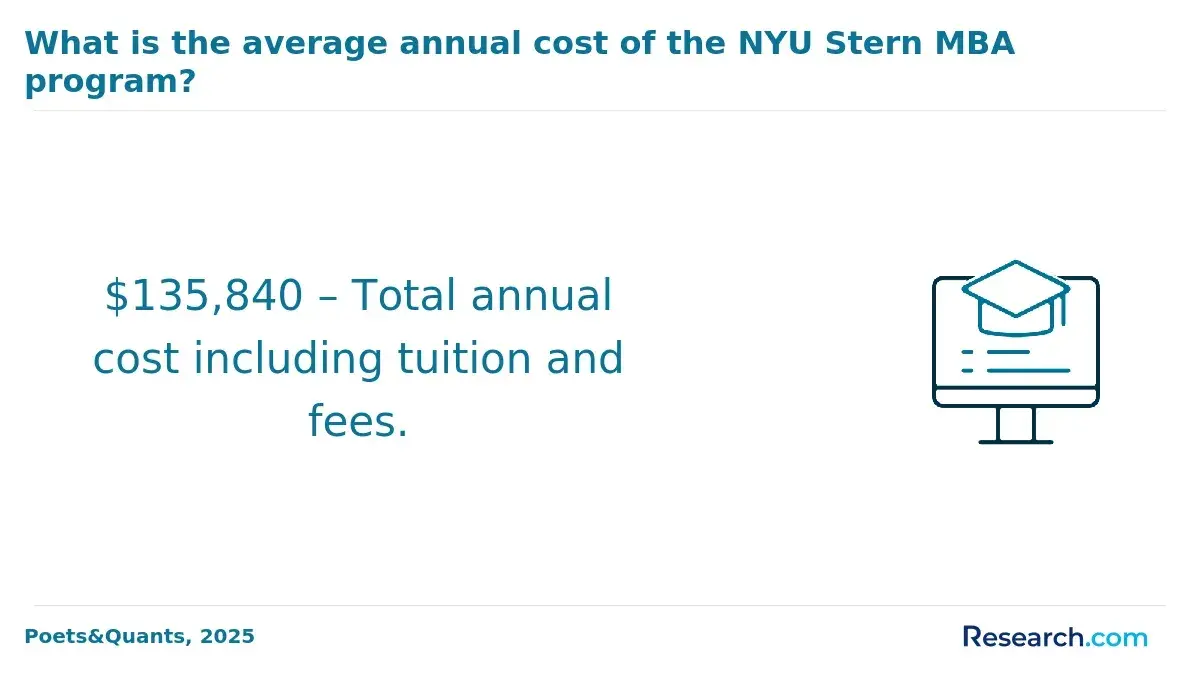
A full-time MBA at prominent business schools in New York requires a major financial commitment. Tuition alone ranges from $62,500 to $79,910 per year, and that does not include miscellaneous fees or indirect costs such as housing, books, transportation, technology, health insurance, and income you may give up while enrolled full time.
The right way to evaluate the cost is not to ask only whether the degree is expensive. Ask whether the program improves your access to the specific business administration jobs list you want, whether graduates from that program are hired into your target industry, and whether your likely earnings can support any debt you take on.
An MBA can be a strategic investment for students moving into leadership, consulting, finance, analytics, operations, entrepreneurship, or general management. It can also be a poor fit if the student enrolls without a clear career objective, borrows heavily without understanding repayment, or chooses a program with weak placement in the industry they hope to enter.
| Cost category | Why students overlook it | Question to ask the school |
| Tuition | Published tuition may not reflect the total amount paid across the program. | What is the full tuition cost for the entire degree at my expected pace? |
| Fees | Program, technology, activity, and student service fees can add up. | Which fees are mandatory, and are they charged each term? |
| Living expenses | New York housing and transportation costs can significantly affect the budget. | What cost-of-attendance estimate does the financial aid office use? |
| Lost income | Full-time study may require leaving or reducing work. | Can I complete the program part time or online while employed? |
| Career transition costs | Recruiting, travel, wardrobe, certifications, and exam fees may not appear in tuition. | What career-related costs should I expect during the program? |
Affordability Options for Business Education in New York
Students do not have to choose the most expensive full-time MBA to gain business training in New York. A more affordable route may be the better decision if your goal is advancement within your current field, a skill upgrade, or a credential that does not require leaving the workforce.
- Compare resident and nonresident tuition: New York residents may qualify for lower tuition at public universities, so residency rules can materially affect cost.
- Look at accelerated options: Some institutions offer one-year MBA formats that reduce time away from work and may lower overall expenses.
- Consider accredited online programs: Online business degrees can offer more scheduling flexibility and may reduce relocation or commuting costs. Students comparing lower-cost options can review the cheapest online business management degree programs as part of their research.
- Search for scholarships and grants: Review school-based awards, professional association scholarships, employer-sponsored scholarships, and outside grants for business students.
- Use federal and state financial aid when eligible: Complete the required aid applications early so you can compare net cost rather than sticker price.
- Ask about employer tuition reimbursement: If you are employed, confirm whether your company supports business coursework, graduate study, or job-related credentials.
The most affordable option is not always the cheapest published tuition. The better comparison is net cost, completion time, employer access, course relevance, and whether the degree helps you reach your next role.
New York Schools Offering Business Programs for 2027
The following New York universities offer MBA programs included in this guide. Use the school descriptions as a starting point, then verify current tuition, admissions requirements, class profile, employment reports, and financial aid directly with each institution.
Cornell University
Cornell University offers the Johnson School’s two-year residential MBA, a program built around a business core, applied learning, internship preparation, and customizable academic pathways. Students study areas such as leadership, marketing management, financial accounting, and data analytics while preparing for roles across finance, consulting, strategy, analytics, and emerging markets.
The summer internship is a central feature of the two-year MBA experience. Students can also shape their studies through immersion areas, electives, co-curricular activities, intensive weekend classes, student organizations, leadership activities, and global treks.
- Program length: Two years
- Tracks/concentrations: Asset Management or Investment Research, Brand Management, Consulting and Strategy, Corporate Finance, Data Modeling and Analytics, Emerging Markets
- Cost per credit: $2,663.67
- Required credits to graduate: 60
- Accreditation: Association to Advance Collegiate Schools of Business (AACSB)
Columbia University
The MBA at Columbia University is designed for students who want rigorous business training connected to New York’s corporate, financial, retail, and entrepreneurial environments. The curriculum blends classroom instruction with exposure to real business settings, including boardrooms, trading floors, and retail contexts.
Students can use internships and externships to apply classroom learning in investment, marketing, data analytics, product development, and other business functions. The program is especially relevant for candidates who want a New York City-based MBA experience with close proximity to major employers.
- Program length: Two years
- Tracks/concentrations: Accounting, Private Equity, Value Investing, Social Enterprise
- Cost per credit: $2,816.53
- Required credits to graduate: 60
- Accreditation: AACSB
New York University
New York University Stern offers a two-year MBA with substantial room for academic customization. During the first year, students complete a core sequence of seven classes. Financial accounting and reporting, along with statistics and data analysis, are required, while the remaining core coursework is selected from available options.
In the second year, students move deeper into electives. NYU Stern offers more than 200 elective courses, with topics such as digital strategy, healthcare markets, investor relations strategy, and programming in Python. This structure can work well for students who know they want flexibility after building a business foundation.
- Program length: Two years
- Tracks/concentrations: Financial Accounting and Reporting, Statistics and Data Analysis
- Cost per credit: $2,654
- Required credits to graduate: 60
- Accreditation: AACSB
University of Rochester
The Simon Business School at the University of Rochester offers an MBA curriculum that emphasizes analytics, applied coursework, and practical business problem-solving. The program is designed to help students understand, explain, and anticipate business conditions in competitive markets.
Students complete project-based coursework with experiential components and may participate in international academic opportunities. These experiences can include instructional modules, discussions with local government and business leaders, and visits to major corporations and organizations.
- Program length: Two years
- Tracks/concentrations: Finance, Consulting, Marketing
- Cost per credit: $1,838.24
- Required credits to graduate: 68
- Accreditation: AACSB
Syracuse University
Syracuse University’s Whitman School builds its MBA around analytical thinking, decision-making, and applied business learning. Students work with cases, assignments, and experiential projects that connect classroom concepts to workplace challenges.
Full-time MBA students complete a six-credit experiential learning requirement across at least two experiences. Options can include internships for independent study credit or concentration electives that incorporate experiential learning. These opportunities can be especially useful for students seeking applied exposure to American business practices.
- Program length: Two years
- Tracks/concentrations: Professional Accounting, Business Analytics, Finance, Entrepreneurship, Marketing, Real Estate, Supply Chain
- Cost per credit: $1,872
- Required credits to graduate: 54
- Accreditation: AACSB
| School | Program length | Required credits | Cost per credit | Accreditation |
| Cornell University | Two years | 60 | $2,663.67 | AACSB |
| Columbia University | Two years | 60 | $2,816.53 | AACSB |
| New York University | Two years | 60 | $2,654 | AACSB |
| University of Rochester | Two years | 68 | $1,838.24 | AACSB |
| Syracuse University | Two years | 54 | $1,872 | AACSB |
What to Look for in a Business Program in New York
The best business school for one student may be the wrong choice for another. A finance-focused student seeking Wall Street recruiting, a healthcare administrator seeking promotion, and a working parent needing online flexibility should use different criteria. The sections below show what to evaluate before committing.
Accreditation
Start with accreditation because it helps confirm that the institution and program meet recognized academic standards. For business schools, accreditation from reputable bodies like AACSB can signal that the school has undergone external review of curriculum quality, faculty qualifications, resources, and continuous improvement.
Accreditation is not the only measure of quality, but ignoring it is risky. It can affect credit transfer, employer perception, financial aid eligibility, and whether the credential carries the value you expect.
Curriculum and Faculty
Review the curriculum before you look at brand name. A strong MBA or business program should cover core business areas such as accounting, finance, marketing, management, analytics, operations, strategy, and supply chain technologies. Then it should let you specialize in the skills your target job requires.
Faculty quality matters as much as course titles. Look for instructors with strong academic preparation, industry experience, research expertise, consulting work, executive background, or direct knowledge of the sectors you want to enter. The strongest programs connect theory to real decisions, not just textbook definitions.
Workforce Readiness
New York employers often expect business graduates to be comfortable with data, communication, teamwork, client service, financial reasoning, project execution, and technology-enabled decision-making. Programs that include case competitions, consulting projects, internships, simulations, capstones, and employer-sponsored projects may give students a better bridge from school to work.
Ask whether students graduate with a portfolio of applied work, not just a transcript. Evidence of hands-on learning can help in interviews, especially for career changers who need to prove they can apply business concepts in a new field.
Job Placement and Career Support
Employment outcomes should be reviewed carefully. Look for graduation rates, internship rates, job placement timelines, employer lists, median compensation reports when available, and alumni career paths. Do not rely only on broad claims about networking or prestige.
Career services also vary by format. If you enroll online or part time, confirm that you can access coaching, employer events, alumni networking, resume support, interview preparation, and recruiting resources at times that work for you.
| Question to ask | Why it matters |
| Is the business school accredited by AACSB or another recognized body? | Accreditation helps verify academic quality and external review. |
| Which employers recruit from the program? | Employer relationships can influence internship and job access. |
| What roles do graduates actually accept? | Program outcomes should match your career goal, not just your preferred industry. |
| How much debt do students typically take on? | Debt affects the real return on the degree. |
| Are online and part-time students eligible for the same career services? | Support can differ by program format. |
| Can I customize electives or concentrations? | Specialization can help you target finance, analytics, consulting, healthcare, real estate, or operations roles. |
Common Mistakes When Choosing a Business School in New York
- Choosing only by reputation: A famous school is not automatically the best fit if it does not place graduates into your target role.
- Comparing tuition instead of total cost: Fees, living expenses, and lost income can change the affordability picture.
- Ignoring accreditation: Accreditation can affect credibility, transfer options, and employer confidence.
- Assuming online programs offer the same networking: Some do, but students should verify access to alumni, recruiters, events, and career coaching.
- Overestimating salary guarantees: Salary outcomes depend on experience, industry, geography, job performance, and market conditions.
- Skipping the employment report: Placement data is one of the clearest ways to test whether the program aligns with your goals.
Top Industries Hiring Business Graduates in New York
New York’s economy gives business graduates access to several major industries. The best industry for you depends on your strengths, risk tolerance, preferred work environment, and whether you want a specialized or general management path.
- Finance: Banks, investment firms, hedge funds, asset managers, and financial services companies hire business graduates for analysis, management, operations, risk, and strategy roles.
- Technology: Startups and established technology companies need business professionals who can manage projects, interpret data, coordinate teams, support growth, and translate technical work into commercial outcomes.
- Healthcare: Hospitals, clinics, insurers, and healthcare organizations rely on business graduates for administration, policy, operations, finance, and management.
- Consulting: Consulting firms in New York hire business graduates for strategy, management, operations, analytics, transformation, and industry-specific advisory work.
- Real estate: New York’s real estate market creates opportunities in property management, investment, development, finance, and operations.
| Industry | Useful business skills | Good fit for students who like |
| Finance | Financial analysis, valuation, risk management, accounting, data interpretation. | Markets, numbers, investment decisions, and structured problem-solving. |
| Technology | Product strategy, analytics, project management, operations, growth planning. | Fast-changing environments, innovation, and cross-functional teamwork. |
| Healthcare | Operations, budgeting, compliance awareness, administration, process improvement. | Mission-driven work with complex systems and regulated environments. |
| Consulting | Client communication, research, presentations, strategy, change management. | Problem-solving across multiple industries and frequent project changes. |
| Real estate | Finance, negotiation, market analysis, asset management, project coordination. | Property markets, development, investment, and urban growth. |
Can an Affordable Online Finance Degree Strengthen My Business Skill Set in New York?
Yes. An online finance program can be useful for business professionals who want stronger analytical, financial, and data-driven decision-making skills without pausing full-time work. In New York, where finance influences many industries beyond banking, targeted study in financial technology, corporate finance, risk, and investment analysis can complement broader management training.
Students comparing flexible options may want to review an affordable online finance degree if their goal is to build finance-specific capabilities rather than complete a full MBA. This path can make sense for professionals in operations, management, entrepreneurship, real estate, healthcare administration, or consulting who need better financial fluency.
How Can a Psychology Perspective Enhance Business Strategy in New York?
Psychology can strengthen business strategy by helping leaders understand consumer behavior, motivation, decision-making, team performance, conflict, and organizational culture. In New York’s competitive market, these insights can improve marketing strategy, employee engagement, sales effectiveness, leadership communication, and customer experience.
Business professionals who want deeper training in behavioral science can explore programs at the best colleges for psychology in New York. This can be especially relevant for managers in marketing, human resources, organizational development, user experience, consulting, and leadership roles.
What Is the Average Cost of an Online MBA Program in New York?
Online MBA costs vary by institution, residency status, program length, fees, and technology requirements. Students should compare total program cost rather than only per-credit tuition. The published cost may not include books, software, residencies, travel, graduation fees, or lost time from work.
Before applying, review the average cost of online MBA programs and then request a full cost breakdown from each school. This helps you compare the online MBA against alternatives such as a part-time MBA, graduate certificate, finance degree, employer-sponsored training, or self-paced professional credential.
Can a Business Background Support Roles in Social Services and Substance Abuse Counseling in New York?
A business background can be valuable in social services when the role involves budgeting, program design, operations, grant management, compliance support, staffing, or organizational leadership. Nonprofits and community organizations need leaders who can manage limited resources while maintaining strong service quality.
However, business training alone does not replace counseling education or licensure requirements. Professionals interested in direct counseling work should review how to become a licensed substance abuse counselor in New York to understand the credentialing pathway before making a career change.
How Is Digital Transformation Shaping Business Leadership in New York?
Digital transformation is changing what employers expect from business leaders. Managers increasingly need to understand analytics, cloud-based systems, automation, artificial intelligence tools, cybersecurity awareness, and technology-enabled customer service. The goal is not for every business leader to become a software engineer, but leaders do need enough technical fluency to ask better questions and guide decisions responsibly.
Finance and accounting functions are also becoming more technology-driven. Professionals who want to combine business leadership with accounting expertise can review how to become a CPA in New York as one possible path toward stronger financial and compliance knowledge.
What Career Advancement Opportunities Are Available for Business Managers in New York?
Business managers in New York can move into higher-responsibility roles as they build experience, measurable results, industry knowledge, and leadership credibility. Common advancement paths include operations leadership, finance management, strategy, consulting, product operations, general management, entrepreneurship, and executive leadership.
Examples of senior roles include Director of Operations, Chief Executive Officer (CEO), and Chief Financial Officer (CFO). These positions usually require a record of managing teams, budgets, revenue, risk, stakeholders, and organizational change. An MBA can help some professionals accelerate this path, but experience and results remain critical.
Professionals who want to develop senior leadership capabilities may consider an MBA in organizational leadership. This type of program can be useful for managers who want stronger training in strategy, organizational behavior, change management, communication, and executive decision-making.
What Role Does Forensic Science Play in Enhancing Business Risk Management in New York?
Forensic science connects to business through fraud detection, compliance, investigation, evidence handling, internal controls, and risk management. Companies in finance, insurance, healthcare, real estate, and regulated industries may need professionals who understand both business processes and investigative methods.
Business students interested in fraud prevention, forensic accounting, corporate investigations, or risk advisory work can benefit from understanding the education and training behind investigative fields. For related background, review forensic scientist education requirements in New York.
Certifications and Additional Credentials to Elevate Your Business Career in New York
Certifications can help business professionals signal specialized competence, especially in fields where employers value standardized credentials. They are most useful when they align with a target role rather than being collected randomly.
For accounting-focused professionals, becoming a Certified Public Accountant can be a major credential in New York’s finance and corporate sectors. Students researching that pathway can review how to become a CPA in New York to understand education, exam, and licensing considerations.
Other credentials may support different business goals. The Project Management Professional (PMP) can help operations and project leaders. The Certified Management Consultant (CMC) can be relevant for advisory work. Finance-focused professionals may consider the Chartered Financial Analyst (CFA) or Financial Risk Manager (FRM), depending on the role they want.
| Credential | Best aligned with | When it may be useful |
| CPA | Accounting, audit, tax, financial reporting, corporate finance. | When the target role requires or strongly values accounting licensure. |
| PMP | Project management, operations, implementation, transformation. | When you manage cross-functional projects, timelines, budgets, and stakeholders. |
| CMC | Management consulting and business advisory work. | When you want to demonstrate consulting standards and client advisory expertise. |
| CFA | Investment analysis, asset management, finance. | When your career goal is deeply tied to investment decision-making. |
| FRM | Financial risk, banking, market risk, credit risk, risk analytics. | When you want to specialize in risk-focused finance roles. |
Can Business Skills Drive Social Impact Leadership in New York?
Business skills can help social impact organizations improve budgeting, program operations, grant management, staffing, reporting, and long-term sustainability. In New York, nonprofit and community organizations often need leaders who can balance mission, financial discipline, and accountability.
Professionals who want to move from business into direct community service should distinguish between management roles and licensed practice roles. If your goal includes clinical or direct social work responsibilities, review how to become a social worker in New York before choosing a degree or credential.
What Other Career Paths Can I Pursue with a Business Background in New York?
A business background can lead beyond traditional corporate management. Graduates may work in government, nonprofit administration, entrepreneurship, real estate development, healthcare administration, operations, public policy, consulting, or urban development.
For example, students interested in city growth, land use, public-private development, and sustainable communities can explore urban planning schools in New York. Business skills in budgeting, stakeholder management, finance, and project coordination can be useful in planning-related roles, though additional education may be required depending on the position.
How Can Business Expertise Drive Success in the Health and Nutrition Sector in New York?
Business training can support health and nutrition organizations through strategy, budgeting, marketing, operations, staffing, service design, and growth planning. This can apply to wellness centers, nutrition startups, healthcare organizations, community programs, and private practices.
Professionals who want to combine business strategy with specialized nutrition knowledge should understand the education and credential expectations for the field. A useful next step is reviewing how to become a nutritionist in New York before deciding whether to pursue a business degree, health credential, or both.
Can Legal Expertise Enhance Business Leadership in New York?
Legal knowledge can strengthen business leadership in areas such as contracts, compliance, employment practices, governance, negotiations, risk management, and regulatory decision-making. This is especially relevant in New York, where many industries operate in complex legal and financial environments.
Business professionals do not necessarily need to become attorneys to benefit from legal literacy. Some may build complementary knowledge through compliance training, contract management, or legal support education. For a related pathway, review how to become a paralegal in New York.
Can Business Skills Enhance Pharmaceutical Leadership in New York?
Business skills can support pharmaceutical leadership by improving financial planning, supply chain coordination, market analysis, compliance awareness, partnerships, and operational efficiency. The pharmaceutical sector is highly regulated, so leaders need both commercial judgment and an understanding of the professional standards that shape the industry.
Professionals interested in pharmacy-related leadership should not assume that business training substitutes for licensure. Review pharmacist licensure requirements in New York if your goal involves licensed pharmacy practice or leadership in a pharmacy setting.
How to Decide Whether a New York Business School Is the Right Investment
A business degree from a New York school can be valuable, but only when the program matches your career plan and financial reality. Before enrolling in an MBA or one of the online business degree programs, define your target role, target industry, preferred program format, expected budget, and acceptable debt level.
Use this decision process before applying:
- Identify your goal: Decide whether you want promotion, a career change, technical business skills, entrepreneurship training, or access to a specific employer network.
- Choose the right credential: Compare a bachelor’s degree, MBA, online MBA, graduate certificate, finance degree, or professional certification.
- Check accreditation: Confirm institutional accreditation and business-school accreditation when relevant.
- Compare total cost: Include tuition, fees, housing, transportation, materials, interest, and lost income.
- Review career outcomes: Look for evidence that graduates enter the roles and industries you want.
- Test the network: Attend admissions events, speak with current students, contact alumni, and ask about recruiting access.
- Calculate risk: Estimate debt payments against realistic salary outcomes, not best-case earnings.
Key Insights
- New York offers strong business career access: The state has 710,720 jobs in business and financial operations and ranks third among all states for employment in that occupational group.
- Growth exists, but competition is real: The business and financial operations category is projected to grow by 2.5% in New York between 2026 and 2027, so students should pair education with practical experience and marketable skills.
- Salary potential must be weighed against cost: Business managers in New York earn an average yearly salary of $111,744, but the state’s cost of living index of 125.10 makes budgeting essential.
- MBA tuition requires careful ROI analysis: Full-time MBA tuition at leading New York business schools ranges from $62,500 to $79,910 per year before additional fees and living costs.
- Most full-time MBA programs take two years: Students who cannot pause their careers should compare part-time, online, accelerated, and executive formats.
- Accreditation should be nonnegotiable: AACSB accreditation and institutional accreditation help verify academic quality and may affect employer confidence.
- Program fit matters more than prestige alone: The right school should match your target industry, preferred format, specialization, career services needs, and budget.
- New York’s top hiring sectors are broad: Finance, technology, healthcare, consulting, and real estate all offer pathways for business graduates with relevant skills.
- Credentials can sharpen your career direction: CPA, PMP, CMC, CFA, and FRM credentials may add value when they align with a specific role or industry.
Related Articles for Nearby States
- 2027 Best Business Schools in New Jersey – Accredited Colleges & Programs
- 2027 Best Business Schools in Pennsylvania – Accredited Colleges & Programs
- 2027 Best Business Schools in Connecticut – Accredited Colleges & Programs
- 2027 Best Business Schools in Massachusetts – Accredited Colleges & Programs
- 2027 Best Business Schools in Vermont – Accredited Colleges & Programs
- 2027 Best Business Schools in Rhode Island – Accredited Colleges & Programs
- 2027 Best Business Schools in Delaware – Accredited Colleges & Programs
- 2027 Best Business Schools in Maryland – Accredited Colleges & Programs
- 2027 Best Business Schools in New Hampshire – Accredited Colleges & Programs
- 2027 Best Business Schools in Ohio – Accredited Colleges & Programs
References:
- BLS. (2025, August 28). Business and Financial Occupations. https://www.bls.gov/ooh/business-and-financial/
- BLS. (2024, May). Occupational Employment and Wage Statistics. Area: New York. https://data.bls.gov/oes/#/area/3600000
- Department of Labor. (n.d.). Long-Term occupational projections. https://dol.ny.gov/long-term-occupational-projections
- Indeed. (2026, March 22). Business manager salary in New York, NY. https://www.indeed.com/career/business-manager/salaries/New-York--NY
- New York City Comptroller Mark Levine (2024, October). New York by the Numbers Monthly Economic and Fiscal Outlook. https://comptroller.nyc.gov/newsroom/newsletter/new-york-by-the-numbers-monthly-economic-and-fiscal-outlook-no-94-october-16-2024/
- New York City Council Finance Division (2026, Mar). Economic and Tax Revenue Forecast. https://council.nyc.gov/press/wp-content/uploads/sites/56/2026/03/econ-tax-forecast-mar-2026_030926.pdf
- Office of the State of New York Comptroller (2026). Review of the Financial Plan of the City of New York. https://www.osc.ny.gov/files/reports/osdc/pdf/report-23-2026.pdf
- World Population Review. (2026). Cost of Living Index by State 2026. https://worldpopulationreview.com/state-rankings/cost-of-living-index-by-state
- ZipRecruiter (2026, March 26). Business Manager Salary in New York, NY. https://www.ziprecruiter.com/Salaries/Business-Manager-Salary-in-New-York,NY
Other Things You Should Know About The Best Business Schools in New York
Several top business schools in New York offer reputable MBA programs in 2027. These include Columbia Business School, NYU Stern School of Business, and Cornell Johnson College of Business. Each school provides accredited programs with diverse specializations, preparing students for leadership roles in various industries.
The cost of pursuing an MBA in New York ranges from $62,500 to $79,910 per year, excluding additional miscellaneous fees.
Full-time MBA programs in New York typically take two years to complete. Part-time and online options may vary in length.
When choosing a business program in New York, look for accreditation by reputable bodies such as AACSB, a comprehensive curriculum, experienced faculty, strong job placement services, and networking opportunities.
Enrolling in a top business school in New York offers unparalleled networking opportunities, access to leading industry professionals, and exposure to a diverse business environment. Graduates typically experience improved career prospects and enhanced earning potential, benefiting from the city’s dynamic job market and reputation as a global financial hub.
Yes, many business schools in New York offer financial aid options, including scholarships, grants, and loans, to help students manage the cost of their education.