2027 Best Business Schools in Indiana – Accredited Colleges & Programs

Co-Founder and Chief Data Scientist
Choosing a business school in Indiana is not just a question of rankings. Students need to know whether a program matches their career goal, budget, preferred learning format, and the industries hiring in the state. Indiana remains a strong option for business students because of its manufacturing base, finance and healthcare employers, technology growth, and comparatively business-friendly environment. In 2025, Chief Executive ranked Indiana first among Midwest states for business and sixth-best in the United States.
This guide is for students comparing undergraduate business programs, working professionals thinking about an MBA, and future entrepreneurs who want to understand whether Indiana is a practical place to study and build a business career. You will learn how long business degrees take, what they cost, which Indiana programs stand out, how to evaluate accreditation and career services, and what questions to ask before enrolling. If you are still exploring broader business career paths, use this guide to connect degree choices with real job outcomes.
The best business school for you is not automatically the most famous one. It is the school that offers the right major, credible accreditation, strong employer connections, transparent costs, and enough flexibility to help you finish the degree without taking on unnecessary financial risk.
Best Business Schools in Indiana Table of Contents
- Quick answer: Are Indiana business schools worth considering?
- Business degree length in Indiana
- Tuition and costs of business programs in Indiana
- Best business schools in Indiana for 2027
- How to choose the best business school in Indiana
- Online business programs in Indiana
- Skills Indiana employers look for in business graduates
- Business and adjacent fields such as urban planning
- Current trends in Indiana business education
- Fast-track executive MBA options
- MBA acceptance rates and career value
- Business innovation in substance abuse prevention
- Using accounting skills to succeed in Indiana business
- Psychology and business strategy
- Industry partnerships and business education
- Forensic science and fraud prevention
- Legal knowledge in business practice
- Pharmacy expertise and business operations
- Social work insights and community-centered business
Is business a good career in Indiana?
Yes, business can be a practical career choice in Indiana, especially for students who connect their degree to a specific function such as accounting, finance, business analytics, supply chain, marketing, human resources, or operations. Indiana’s economy includes major activity in manufacturing, energy, finance, technology, and healthcare, which creates demand for business graduates across corporate, nonprofit, government, and entrepreneurial settings.
The state’s labor market also supports the case for studying business. Indiana’s unemployment rate is 3.5%, below the national average of 4.4%. Indiana employs 153,680 workers in business and financial operations occupations, including 25,280 accountants and auditors, 17,320 human resource specialists, 14,780 marketing specialists, 10,880 management analysts, and 10,700 project management specialists.
Compensation depends heavily on role, employer, experience, industry, and education level. Data from the United States Bureau of Labor Statistics show that business and financial occupations in Indiana have an average annual salary of $81,750. Management occupations in Indiana report an average annual salary of $125,210. These figures should be treated as broad occupational averages rather than guaranteed outcomes for new graduates.
| Indiana business career factor | What it means for students |
| Industry diversity | Business graduates can target manufacturing, healthcare, finance, technology, logistics, government, and small business roles. |
| Lower unemployment rate | A 3.5% unemployment rate suggests a comparatively active labor market, though hiring still varies by occupation and location. |
| Business and financial jobs | Indiana employs 153,680 workers in business and financial operations occupations, giving graduates multiple career directions. |
| Salary potential | Average salaries are stronger in management roles, but advancement usually requires experience, results, and sometimes graduate education. |
| Entrepreneurial environment | Students interested in starting a company can benefit from Indiana’s business climate, but they still need planning, capital, market research, and operational skills. |
Attaining Success in Business in Indiana
A business degree is most valuable when students choose the level and concentration that fit their goal. Someone seeking a quick entry into the workforce may not need the same degree as a future consultant, CPA candidate, startup founder, or executive. Indiana students commonly choose from the following undergraduate business pathways:
| Degree option | Typical length | Best fit | What students usually study |
| Associate Degree in Business | 2 years | Students seeking an entry-level credential, a lower-cost starting point, or a transfer path to a bachelor’s degree | Introductory accounting, management, economics, marketing, business communication, and general education |
| Bachelor of Business Administration (BBA) | 4 years | Students who want broad preparation for corporate roles, management training programs, or graduate study | Finance, accounting, marketing, operations, management, business law, leadership, and strategy |
| Bachelor of Science in Business Administration (BSBA) | 4 years | Students interested in analytical, quantitative, or data-informed business roles | Business core courses plus statistics, analytics, quantitative methods, technology, and problem-solving |
| Bachelor of Arts in Business Administration or BA in Business | 4 years | Students who want business training combined with communication, humanities, social science, or interdisciplinary study | Business fundamentals with more emphasis on writing, critical thinking, culture, communication, and liberal arts coursework |
Internships matter in business education because they give employers evidence that a student can apply classroom learning in a professional setting. Students should treat internships, consulting projects, student-run ventures, case competitions, and co-ops as part of the degree’s career value. Strong performance can lead to references, return offers, and early access to roles that may not be widely advertised.
After graduation, some students move directly into entry-level roles, while others continue into graduate study. If you are comparing long-term options and asking, “What can I do with a business administration degree?,” the answer depends on your specialization, work experience, internship record, and whether you pursue advanced credentials.
| Graduate business credential | Who it is usually for | Career value |
| Master of Business Administration (MBA) | Professionals who want broader leadership, management, finance, marketing, strategy, and organizational decision-making skills | Can support movement into managerial, executive, consulting, or cross-functional business roles |
| Executive Master of Business Administration (EMBA) | Experienced professionals and executives who need a schedule designed around full-time work | Useful for leadership development, strategic thinking, executive networking, and senior-level advancement |
| Master of Science in Business Administration (MSBA) | Students or early-career professionals seeking stronger technical, analytical, data, or technology-oriented business training | Can be useful for analytics, operations, technology, strategy, and data-driven business roles |
| Doctor of Business Administration (DBA) | Experienced professionals interested in applied research, consulting, senior leadership, or teaching | Most relevant when a professional wants advanced research skills or a stronger academic and consulting profile |
Graduate education can improve advancement potential, but it is not a shortcut by itself. Employers still evaluate results, leadership experience, communication skills, industry knowledge, and measurable business impact. Management occupations in the United States have a median annual salary of $122,090 and an average annual salary of $141,760, but these national figures reflect a wide range of roles and experience levels.
For aspiring entrepreneurs, business education can provide practical tools for budgeting, pricing, market research, hiring, sales strategy, operations, and financial forecasting. A degree cannot guarantee a successful company, but it can reduce avoidable mistakes by helping founders understand customers, cash flow, competitive positioning, and risk.
Business Program Length in Indiana
Business program length in Indiana depends on degree level, transfer credits, enrollment status, prerequisites, and whether the program is online, campus-based, hybrid, accelerated, or executive-format. Most students should estimate time to completion before comparing tuition, because a lower per-credit price may not save money if the program requires more credits or delays graduation.
| Program type | Typical completion time | Important planning note |
| Associate degree in business | 2 years | Often used for entry-level preparation or transfer into a bachelor’s program. |
| Bachelor’s degree in business | 4 to 5 years | Commonly includes around 120 credit hours, though some programs require more. |
| MBA | 1 to 5 years | Timing varies by full-time, part-time, accelerated, executive, online, or specialized format. |
| Master of Science or Master of Arts in Business | 1 to 2 years | Often designed for students with no more than two years of work experience, depending on the program. |
| DBA or research-based doctorate | Varies by institution | Most useful for applied research, consulting, academia, or advanced executive expertise. |
Students comparing different variations of master’s degrees in business should look beyond the title. An MBA is typically broader and leadership-oriented, while specialized master’s programs may focus more deeply on analytics, finance, accounting, management, or another business discipline.
Educational attainment among business professionals varies. According to Zippia, 65% of business managers in the United States have a bachelor’s degree; 14% have associate degrees; 12% have master’s degrees; 4% have high school diplomas; and 5% have other degrees. MBA holders represent a smaller share of all business managers, but 22.3% of the world’s top CEOs have earned one, which indicates that the degree can be valuable in certain executive pathways.
Tuition and Costs of Business Programs in Indiana
Business school costs in Indiana vary widely by institution type, residency status, delivery format, credit requirements, fees, housing, books, technology costs, and how long a student takes to finish. Students should compare total program cost rather than tuition alone.
According to the National Center for Education Statistics, an associate degree costs $10,200 on average. A public institution often charges $15,200, while an associate degree from a private, for-profit school costs around $24,400.
Data from Bankrate show that a bachelor’s degree in business from a private school costs nearly $63,000 each year, or $252,000 for four years. That is higher than the average for business degrees from public schools, which cost, on average, $29,910 annually.
The average cost of an MBA is approximately $62,600 for a full two-year program, with tuition and fees ranging from $17,100 to $92,820 annually, depending on the institution. Top-tier programs such as MIT Sloan cost $89,000 per year, while more affordable options like the University of Texas at Austin (McCombs) cost $55,196 per year for in-state students.
| Cost category | What to check before enrolling |
| Tuition per credit | Multiply the per-credit price by the required credits to estimate tuition before fees. |
| Required credits | A program with a lower per-credit rate may still cost more if it requires more credits. |
| Residency pricing | Public universities may charge different in-state and out-of-state rates. |
| Program fees | Ask about technology fees, business school fees, online learning fees, graduation fees, and course materials. |
| Living and commuting costs | Campus programs may add housing, parking, transportation, and meal costs. |
| Time away from work | Full-time study may speed completion but reduce income during enrollment. |
| Financial aid and employer support | Review scholarships, grants, assistantships, tuition reimbursement, military benefits, and transfer credit options. |
Students with tight budgets should compare public institutions, transfer pathways, employer tuition assistance, scholarships, and affordable online business degree options. The least expensive program is not always the best choice, but paying more only makes sense when the program offers measurable value through accreditation, completion support, career outcomes, alumni access, and employer recognition.
Best Business Schools in Indiana for 2027
Indiana offers many business programs, so students should use rankings as a starting point rather than a final decision. Our researchers evaluated business programs across the state using factors such as academic quality, graduation outcomes, affordability, and other key indicators. The following programs stood out among the best business schools in Indiana.
| School | Program | Program length | Required credits | Accreditation |
| University of Notre Dame | Bachelor of Business Administration | 4 years | 128 | Association to Advance Collegiate Schools of Business |
| Purdue University | Bachelor of Science in Business Analytics & Information Management | 4 years | 120 | Association to Advance Collegiate Schools of Business |
| Indiana University Bloomington | Bachelor of Science in Business | 4 years | 120 | Association to Advance Collegiate Schools of Business |
| Butler University | Entrepreneurship and Innovation Degree | 4 years | 122 | Association to Advance Collegiate Schools of Business |
| Indiana University South Bend | Bachelor of Science in Business | 4 years | 120 | Association to Advance Collegiate Schools of Business |
1. University of Notre Dame Bachelor of Business Administration
The University of Notre Dame offers a Bachelor of Business Administration through the Mendoza School of Business. Students can choose from five majors: accountancy, business analytics, finance, marketing, and strategic management. The program is a strong fit for students who want a selective, nationally recognized business education with a broad core and the option to add a second major after completing the first program. Core coursework includes Principles of Microeconomics, Foundations of Marketing, Calculus, and Foundations of Statistics.
- Program Length: 4 years
- Majors: Accountancy, Business Analytics, Finance, Marketing, Strategic Management
- Cost per Credit: $1,959.16
- Required Credits to Graduate: 128
- Accreditation: Association to Advance Collegiate Schools of Business
2. Purdue University Bachelor of Science in Business Analytics & Information Management
Purdue University offers a Bachelor of Science in Business Analytics & Information Management for students who want to use data to improve business decisions. The curriculum connects business operations with STEM-oriented coursework, making it especially relevant for students interested in analytics, information systems, consulting, operations, or technology-enabled management. Core courses include Microeconomics, Macroeconomics, Financial Management, and Business Statistics.
- Program Length: 4 years
- Majors: None
- Cost per Credit: $829.4 (in-state); $1,463.13 (out-of-state)
- Required Credits to Graduate: 120
- Accreditation: Association to Advance Collegiate Schools of Business
3. Indiana University Bloomington Bachelor of Science in Business
Indiana University Bloomington offers a Bachelor of Science in Business through the Kelley School of Business. Students can choose from 12 majors and 8 co-majors, including management, marketing, finance, operations management, and information systems. This breadth makes the program useful for students who want to compare several business fields before committing to one direction. The Indiana University business school acceptance rate is 78%, and the school also reports a high graduation rate. Students considering graduate study may also note that the Indiana University MBA ranking is high.
- Program Length: 4 years
- Majors: Accounting, Economic Consulting, Entrepreneurship and Corporate Innovation, Finance, Information Systems, Management, Marketing, Marketing and Professional Sales, Operations Management, Public Policy Analysis, Real Estate, Supply Chain Management
- Cost per Credit: $963.33 (in-state); $1,919.67 (out-of-state)
- Required Credits to Graduate: 120
- Accreditation: Association to Advance Collegiate Schools of Business
4. Butler University Entrepreneurship and Innovation Degree
Butler University offers an Entrepreneurship and Innovation Degree for students who want to develop, test, and present business ideas while studying core business disciplines. By the second year, students are expected to have gained skills relevant to launching a venture. The program also connects students with organizations and trade show opportunities where business ideas may reach buyers or potential investors. Core courses include Business Statistics, Business Ethics, Information Technology, and Corporate Finance.
- Program Length: 4 years
- Tracks/concentrations: None
- Cost per Credit: $749.83
- Required Credits to Graduate: 122
- Accreditation: Association to Advance Collegiate Schools of Business
5. Indiana University South Bend Bachelor of Science in Business
Indiana University South Bend offers a Bachelor of Science in Business with 10 majors, including management, economics, accounting, and finance. The program combines general education with business administration coursework, making it a practical option for students who want an Indiana University business credential with multiple specialization choices. Core coursework covers finance, management, accounting, economics, and computer literacy. The school also offers online programs for undergraduate and graduate students. The Indiana University MBA online cost for both in-state and out-of-state students is $1521.45.
- Program Length: 4 years
- Tracks/concentrations: Accounting, Advertising, Economics, Finance, General Business, Health Care Management, Human Resource Management, Management, Management Information Systems, Marketing
- Cost per Credit: $793 (in-state); $1,255.13 (out-of-state)
- Required Credits to Graduate: 120
- Accreditation: Association to Advance Collegiate Schools of Business
What to Look for in the Best Business Schools in Indiana
The best business school in Indiana for one student may be a poor fit for another. Before applying, compare each program against your target role, preferred industry, budget, learning format, and need for career support. Rankings can help you build a shortlist, but they should not replace a close review of outcomes and requirements.
Available Programs and Specializations
Business is a broad field. A student interested in corporate finance needs a different curriculum from someone pursuing marketing analytics, supply chain, human resources, entrepreneurship, or accounting. Start by identifying the work you want to do after graduation, then choose schools that offer relevant majors, concentrations, electives, internships, and student organizations.
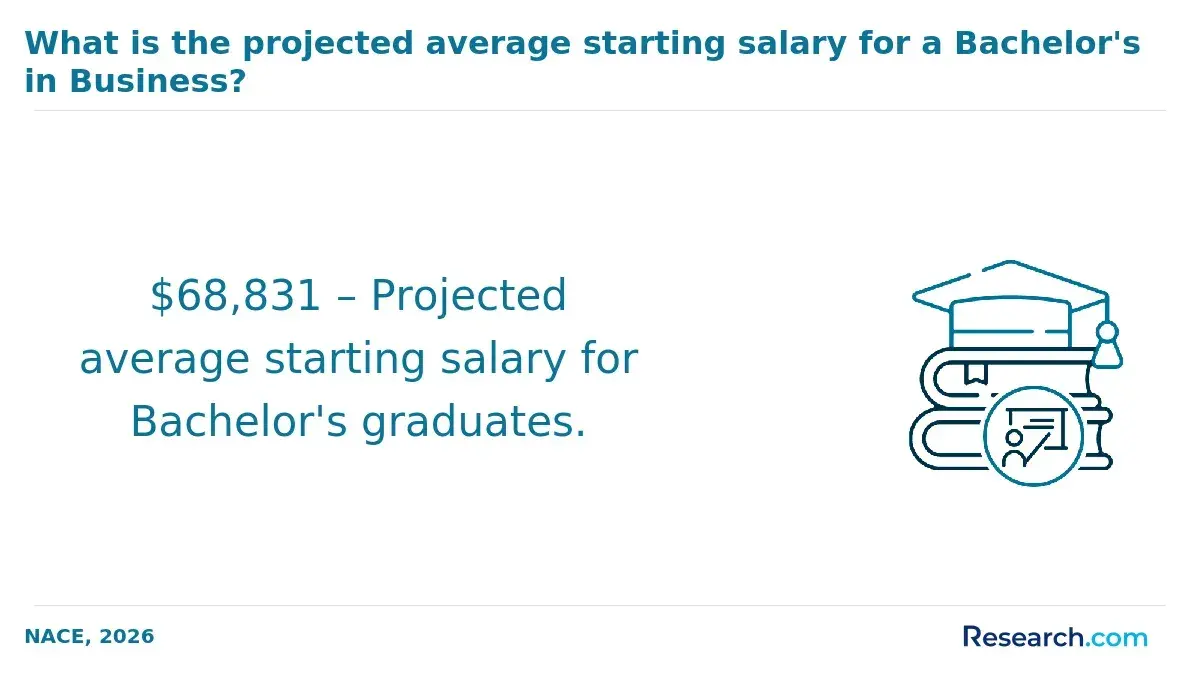
According to NACE's Winter 2026 Salary Survey, 61.3% of employers plan to hire finance majors, 58.7% intend to recruit accounting majors, and 58.7% are interested in business administration and management graduates. Logistics/supply chain follows at 44.7%, marketing at 44%, while management information systems data was not specified in the latest breakdown.
These employer preferences show why specialization matters. Finance, accounting, management, logistics, supply chain, marketing, and information systems may be separate majors at some schools and concentrations within broader business programs at others.
Accreditation
Business careers generally do not require one universal license, but accreditation still matters. Accreditation signals that a school or program has been reviewed against academic and professional standards. It can affect credit transfer, graduate school eligibility, employer confidence, and access to certain forms of financial aid.
Before enrolling, confirm both institutional accreditation and business-specific accreditation when available. Relevant organizations include:
- Association to Advance Collegiate Schools of Business (AACSB)
- Accreditation Council for Business Schools and Programs (ACBSP)
- Higher Learning Commission (HLC)
- North Central Association of Colleges and Schools Higher Learning Commission (NCA-HLC)
Job Placement Opportunities
Career support is one of the most important differences between business programs. Ask each school how it helps students secure internships, interview with employers, attend career fairs, prepare resumes, access alumni, and connect with companies in Indiana. A program with strong employer partnerships can be especially valuable for first-generation students, career changers, and students without an existing professional network.
Curriculum
Review the curriculum course by course. A strong business curriculum should combine fundamentals such as accounting, finance, economics, marketing, management, business law, and operations with current skills in analytics, communication, digital tools, ethics, and project work. Students should also look for applied learning, including case studies, consulting projects, simulations, internships, and capstone experiences.
| Question to ask | Why it matters |
| Is the program accredited? | Accreditation supports credibility, transferability, and employer confidence. |
| Does the school offer my intended major? | A strong school may still be the wrong fit if it lacks your target specialization. |
| What is the total cost to graduate? | Tuition alone does not show fees, living costs, books, or additional credit requirements. |
| What internships are available? | Internships often drive job offers and help students test career paths before graduation. |
| Where do graduates work? | Employer lists and placement data can show whether the program aligns with your goals. |
| Can credits transfer in or out? | Transfer policies affect cost, time to completion, and flexibility if your plans change. |
| Does the program teach analytics and digital tools? | Employers increasingly expect business graduates to work with data, platforms, and software. |
Common Mistakes When Choosing a Business School
- Choosing only by brand name: Prestige helps in some markets, but fit, cost, specialization, and employer access matter just as much.
- Ignoring accreditation: Students should confirm institutional and business accreditation before committing.
- Comparing tuition but not total cost: Fees, housing, transportation, books, and extra credits can change the real price.
- Assuming online programs are easier: Online business degrees can be flexible, but they still require discipline, deadlines, teamwork, and applied projects.
- Waiting too long to use career services: Students should begin internship and resume preparation early, not in the final semester.
- Selecting a major without checking job alignment: Choose a concentration based on target roles, employer demand, and your strengths.
Online Business Programs and Their Advantages in Indiana
Online business programs in Indiana can be a strong option for working adults, parents, military-affiliated students, rural learners, transfer students, and professionals who cannot relocate. The main advantage is flexibility, but students should still verify accreditation, faculty access, internship options, technology requirements, and career support.
Online programs may offer the same core business subjects as campus programs, including accounting, finance, marketing, management, analytics, operations, and strategy. Students interested in graduate study with fewer admissions barriers may compare affordable online MBA no GMAT options, while still checking whether the program’s curriculum and outcomes justify the cost.
| Online business program advantage | What to verify |
| Flexible scheduling | Check whether courses are asynchronous, synchronous, or require live attendance. |
| Lower commuting costs | Confirm whether the program still requires campus visits, residencies, exams, or in-person events. |
| Access for working adults | Ask whether the program supports part-time pacing and year-round enrollment. |
| Digital collaboration | Look for group projects, presentation practice, analytics tools, and business simulations. |
| Potential affordability | Compare total cost, not only advertised tuition, and ask about online course fees. |
| Broader networking | Find out how online students connect with faculty, alumni, employers, and classmates. |
Online learning is not ideal for every student. If you need frequent in-person support, campus recruiting, face-to-face networking, or structured daily routines, a campus or hybrid program may be better. If you are self-directed and need scheduling flexibility, an accredited online business program can be a practical route.
What are the top skills employers look for in business graduates from Indiana?
Indiana employers look for business graduates who can solve problems, communicate clearly, understand financial consequences, and use digital tools. A degree helps, but employers often make hiring decisions based on evidence: internships, projects, software experience, leadership roles, and the ability to explain business decisions with data.
- Analytical thinking: Graduates should be able to interpret data, recognize patterns, evaluate alternatives, and support recommendations with evidence.
- Communication: Business professionals must write clearly, present ideas, explain numbers, negotiate, and communicate with people outside their specialty.
- Adaptability: Indiana employers need graduates who can adjust to changing markets, technologies, customers, and internal priorities.
- Leadership and teamwork: Many business roles require collaboration across departments, project coordination, and the ability to influence without formal authority.
- Digital literacy: Students should become comfortable with spreadsheets, presentation tools, data analysis software, customer relationship management platforms, and project management systems.
- Financial acumen: Even non-finance roles benefit from understanding budgets, margins, revenue, costs, and financial statements.
What Opportunities Exist for Business Students to Explore Other Fields Like Urban Planning in Indiana?
Business students who are interested in economic development, real estate, infrastructure, public-private partnerships, or community investment may benefit from learning about urban planning. Urban planning connects business decisions with housing, transportation, land use, public policy, and regional development. Students who want this interdisciplinary perspective can explore urban planning schools in Indiana and compare how planning skills may complement business training in project management, finance, policy analysis, and stakeholder engagement.
What are the current trends in business education in Indiana?
Business education in Indiana is changing because employers expect graduates to combine traditional business knowledge with data skills, ethical judgment, technology fluency, and adaptability. Students comparing programs should look for evidence that the curriculum reflects current business practice rather than relying only on legacy course titles.
- More online and hybrid learning: Indiana institutions are expanding flexible formats for students who work or need remote access. Students who want a shorter completion path can compare the fastest online business degree options while confirming accreditation and workload expectations.
- Stronger entrepreneurship training: Business schools are offering more venture development, innovation labs, pitch events, and applied startup experiences.
- Data-driven decision-making: Business analytics, information management, and business intelligence are becoming central to many undergraduate and graduate programs.
- Sustainability and corporate responsibility: More programs are adding ethics, sustainability, stakeholder management, and responsible leadership into business coursework.
- Employer-connected learning: Internships, consulting projects, mentorship, and industry-sponsored projects are increasingly important for career readiness.
Can a Fast-Track Executive MBA Accelerate Your Career?
A fast-track Executive MBA can help experienced professionals build leadership and strategy skills in a shorter format, but it is most useful for students who already have substantial work experience and clear advancement goals. These programs typically focus on executive decision-making, operations, finance, innovation, and organizational leadership. Professionals comparing accelerated options can review a 1 year executive MBA online pathway, but they should also ask about cohort quality, employer recognition, workload, networking, and whether the schedule is realistic alongside full-time work.
Is it necessary to earn a doctorate degree in business?
Most business professionals do not need a DBA or Ph.D. in Business. For many career paths, undergraduate business degrees and graduate options such as MBAs or EMBAs provide enough preparation for management, consulting, entrepreneurship, analytics, finance, marketing, and operations roles. Students comparing high-value business school options should first determine whether they need a professional degree, a specialized master’s, or simply stronger experience and certifications.
A doctorate in business is most relevant for professionals who want to teach, conduct advanced research, publish, consult at a high level, or develop deep expertise in a specialized management problem. It may also strengthen a candidate’s profile for certain senior roles, but it is not a universal requirement for executive success.
How Do MBA Acceptance Rates Affect Your Career Prospects?
MBA acceptance rates can help students understand how selective a program is, but they should not be used as the only measure of career value. A lower acceptance rate may indicate stronger competition, a more selective cohort, or greater brand recognition, but outcomes also depend on curriculum quality, employer relationships, alumni networks, student experience, and career services. Prospective students can review MBA acceptance rates as one data point while also comparing placement results, concentrations, cost, and fit.
How Can Business Innovations Enhance Substance Abuse Prevention and Support Services in Indiana?
Business skills can support substance abuse prevention and community health services through better resource allocation, data analysis, operations planning, budgeting, marketing, and partnership development. In Indiana, professionals who understand both business systems and public health needs can help organizations measure program impact, manage funding, reach target populations, and build sustainable service models. Students interested in the clinical or counseling side can review how to become a licensed substance abuse counselor in Indiana while considering how business training can strengthen nonprofit and healthcare operations.
How Business Students Can Leverage Accounting to Succeed in Indiana
Accounting is one of the most practical foundations for business students in Indiana. It helps professionals understand profitability, cash flow, budgets, taxes, compliance, internal controls, and financial risk. Whether a student wants to work in finance, management, entrepreneurship, consulting, or operations, accounting knowledge improves decision-making.
For entrepreneurs, accounting skills help with pricing, expense tracking, revenue forecasting, tax planning, and investor communication. For managers, accounting supports budget control, performance measurement, and resource allocation. For students interested in formal accounting careers, Research.com provides guidance on how to become a CPA in Indiana.
Business programs are also adding more technology to accounting and finance coursework, including data visualization, predictive analytics, and cost management software. Students who can combine accounting fundamentals with digital tools can stand out in corporate, public accounting, nonprofit, healthcare, manufacturing, and entrepreneurial settings.
How Can Business Expertise Bridge to the Health and Nutrition Sectors?
Business graduates can apply management, finance, operations, marketing, and analytics skills in healthcare, nutrition, wellness, and community health organizations. These sectors need professionals who can manage budgets, improve workflows, reach customers or patients, evaluate demand, and support sustainable growth. Students considering a health-focused specialization can explore how to become a nutritionist in Indiana and evaluate whether combining business and nutrition expertise supports their long-term goals.
How Can Psychological Insights Enhance Business Strategy in Indiana?
Psychology can strengthen business strategy by helping professionals understand motivation, decision-making, leadership, consumer behavior, conflict, and team dynamics. Business students interested in marketing, human resources, organizational leadership, sales, or customer experience may benefit from behavioral science coursework. Those who want a deeper academic foundation can review the best colleges for psychology in Indiana and consider how psychology courses may complement a business degree.
How Do Industry Partnerships Impact Business Education in Indiana?
Industry partnerships can make business education more practical by connecting students with internships, employer projects, guest speakers, mentorship, and hiring pipelines. These partnerships help students understand how business concepts apply in real organizations and give employers a chance to evaluate talent before graduation. Partnerships with accounting firms, for example, can help students understand professional expectations and pathways such as how to become a CPA in Indiana.
How Can Forensic Science Enhance Fraud Prevention in Indiana?
Forensic science and forensic accounting methods can help businesses detect fraud, identify irregular financial activity, strengthen internal controls, and improve compliance. Business students interested in audit, risk management, compliance, insurance, finance, or corporate investigations may benefit from learning how evidence is collected, verified, and analyzed. Students who want a science-focused route can review forensic scientist education requirements in Indiana and consider how investigative skills can support fraud prevention in business settings.
How Can Legal Expertise Enhance Business Practices in Indiana?
Legal knowledge helps business professionals manage contracts, employment issues, regulatory compliance, intellectual property, corporate governance, and risk. Students do not need to become lawyers to benefit from legal literacy. Understanding how legal frameworks affect business decisions can improve negotiation, vendor management, HR practices, and strategic planning. Students interested in practical legal training can explore how to become a paralegal in Indiana as one way to connect legal skills with business operations.
How Can Pharmacy Expertise Benefit Business Operations in Indiana?
Pharmacy expertise can be valuable in healthcare businesses, pharmaceutical distribution, compliance, supply chain management, insurance, retail health, and clinical operations. Business professionals who understand healthcare regulations and pharmaceutical standards can make stronger decisions about operations, safety, logistics, and market strategy. Those exploring this intersection can review pharmacist licensure requirements in Indiana to understand the regulated professional pathway behind pharmacy practice.
How Can Social Worker Insights Boost Community-Centric Business Practices in Indiana?
Social work perspectives can help businesses design more ethical, inclusive, and community-aware strategies. Companies that work with vulnerable populations, healthcare systems, nonprofits, public agencies, or community development initiatives benefit from understanding human needs, social barriers, stakeholder trust, and local impact. Professionals who want to combine community service with organizational leadership can explore how to become a social worker in Indiana and consider how social work insights may support corporate responsibility and community-centered business planning.
Key Insights
- Indiana is a credible state for business study and work: The state ranked first in the Midwest and sixth in the United States for business in 2025, and its unemployment rate is 3.5% compared with the national average of 4.4%.
- Business graduates have several Indiana career paths: Indiana employs 153,680 workers in business and financial operations occupations, including accountants and auditors, human resource specialists, marketing specialists, management analysts, and project management specialists.
- Degree level should match the goal: Associate degrees can support entry-level work or transfer, bachelor’s degrees are the standard starting point for many business careers, MBAs support leadership transitions, and doctorates are mainly for research, consulting, teaching, or specialized executive expertise.
- Costs vary widely: Students should compare total program cost, not just tuition. Required credits, residency rates, fees, housing, transfer credit, and time to completion can significantly change affordability.
- Accreditation and career services are non-negotiable: Strong business schools should provide recognized accreditation, internship access, employer partnerships, resume support, and clear evidence of student outcomes.
- Specialization matters: Employer interest in finance, accounting, business administration and management, logistics/supply chain, and marketing shows why students should choose a major that connects directly to target roles.
- Online programs can be worthwhile when verified carefully: Flexible business degrees are useful for working adults, but students should confirm accreditation, course format, fees, networking access, and career support before enrolling.
Related Articles for Nearby States
- 2027 Best Business Schools in Ohio – Accredited Colleges & Programs
- 2027 Best Business Schools in Illinois – Accredited Colleges & Programs
- 2027 Best Business Schools in Kentucky – Accredited Colleges & Programs
- 2027 Best Business Schools in Michigan – Accredited Colleges & Programs
- 2027 Best Business Schools in Wisconsin – Accredited Colleges & Programs
- 2027 Best Business Schools in Missouri – Accredited Colleges & Programs
- 2027 Best Business Schools in Tennessee – Accredited Colleges & Programs
- 2027 Best Business Schools in Iowa – Accredited Colleges & Programs
- 2027 Best Business Schools in West Virginia – Accredited Colleges & Programs
- 2027 Best Business Schools in Minnesota – Accredited Colleges & Programs
References:
- Bryant, J. (2025, October 2). How Much Does an MBA Cost? Full Statistics. BestColleges
- Bureau of Labor Statistics (2025, August 28). Business and Financial Occupations. BLS
- Bureau of Labor Statistics (2025, August 28). Management Occupations. BLS
- Bureau of Labor Statistics (2024, May). Occupational Employment and Wage Statistics. Area: Indiana. BLS
- Bureau of Labor Statistics (2024, May). Occupational Employment and Wage Statistics. Industry: Cross-industry, Private, Federal, State, and Local Government. BLSIndiana area data
- Bureau of Labor Statistics (2026, March 6). THE EMPLOYMENT SITUATION — FEBRUARY 2026. BLS
- Coursera (2025, December 6). Types of Business Degrees: 2026 Guide. Coursera
- Federal Reserve Bank of St. Louis (2026, January 28). Unemployment Rate in Indiana (INUR). FREDbusiness degree background
- Filson, N. (2024, July 3). What to Study to Become a CEO & Where to Go to College. Preply
- Hanson, M. (2024, November 23). Average Cost of a Master’s Degree. Education Data InitiativeIndiana employment reports.NACE salary survey summary
- National Center for Education Statistics (2024). Price of Attending an Undergraduate Institution. NCES
- Nga, M. (2026, March 4). Top degrees US employers expected to seek most in 2026. VnExpressNCES undergraduate price data
- Prince C. & Mourgelas, I. (2025, April 28). Best & Worst States For Business: The New World Re-Order. Chief Executive
- Zinn, D. & Nam, J. (2025, July 28). Average cost of college 2024-2025. Bankratestate business rankingsNCES Digest table
- Zippia (2025, January 8). BEST COLLEGES FOR BUSINESS MANAGERS. Zippia
Other Things You Should Know About the Best Business Schools in Indiana
In 2027, highly recommended business schools in Indiana include Indiana University's Kelley School of Business, University of Notre Dame's Mendoza College of Business, and Purdue University's Krannert School of Management. These schools have strong academic reputations and offer diverse specializations and networking opportunities with local industry leaders.
Associate degrees typically take two years, bachelor's degrees take four to five years, and master's programs like MBA and MSBA can take between one and five years, depending on the program format.
Tuition costs vary widely. Associate degrees average $11,976, bachelor's degrees range from $15,100 to $32,900 annually, and MBAs average $61,800.
Business programs in Indiana offer various specializations such as accounting, finance, marketing, management, business analytics, entrepreneurship, and more, allowing students to tailor their education to their career goals.
Yes, many institutions in Indiana offer online business programs, providing flexibility for working professionals or those with other commitments.
Top business schools in Indiana offer unique opportunities to connect with the local business community through internships, industry collaboration, and networking events. Programs like those at Indiana University often host seminars and workshops with local industry leaders, facilitating practical experience and networking opportunities for students.