
2027 Easiest Liberal Studies Degree Programs

Co-Founder and Chief Data Scientist
Choosing a liberal studies degree is usually a flexibility decision: you want a bachelor’s program that lets you study several subjects, keep career options open, and avoid locking yourself into a narrow major too early. The challenge is that “easy” can mean different things. For some students, it means fewer technical prerequisites. For others, it means online access, generous transfer credit, lower cost, or a curriculum built around reading, writing, communication, and social analysis rather than advanced math or lab-heavy science.
This guide explains how to identify the easiest liberal studies degree programs without choosing a weak program. You will learn what these degrees cover, how online and campus options compare, how long they take, what they cost, which schools are listed, what careers graduates pursue, and how to evaluate return on investment before enrolling.
Quick answer: What is the easiest liberal studies degree program?
The easiest liberal studies degree program is typically a flexible, accredited bachelor’s degree with broad general education requirements, multiple elective options, limited prerequisites, online or hybrid delivery, and transfer-friendly policies. These programs are often easier to fit around work or family responsibilities because they allow students to combine humanities, social sciences, communication, education, business, and cultural studies into one interdisciplinary path.
That does not mean the degree has no academic expectations. Strong liberal studies programs still require college-level writing, research, reading, public speaking, critical thinking, and often a capstone or field experience. The best option is the program that matches your schedule, career goal, budget, and preferred learning format.
Key things to know before choosing an easy liberal studies degree
- Employment remains broad. According to the most recent data, 766,280 individuals with liberal arts degrees were employed in 2022, showing that the field continues to support a wide range of career paths.
- Student interest has shifted. Liberal studies bachelor’s degree completions declined from 47,318 in 2010 to 38,192 in 2022, which may reflect changing student preferences, competition from career-specific majors, or concerns about job outcomes.
- Costs can be lower than some specialized majors. Liberal studies degrees often rely on existing general education and interdisciplinary courses, and students may reduce costs through transfer credits, online formats, grants, scholarships, federal loans, and employer tuition assistance.
- Career outcomes vary widely. Reported annual salaries for liberal studies graduates range from $50,000 to $165,000, with a median salary of approximately $105,000, depending on role, industry, experience, location, and additional credentials.
- Online options can improve access. Online liberal studies programs usually cover similar academic material as campus programs but may be easier for working adults, transfer students, parents, and students who need schedule flexibility.
What are the benefits of enrolling in an easy liberal studies degree program?
An easy liberal studies degree can be useful for students who want a broad bachelor’s education with room to customize their coursework. These programs usually emphasize transferable skills rather than one narrow technical pathway. Students often study communication, writing, social sciences, humanities, ethics, cultural analysis, and research methods, then use electives or concentrations to shape the degree around career interests.
| Benefit | Why it matters | Best fit for |
| Flexible curriculum | Students can combine courses across several disciplines instead of following one highly specialized track. | Undecided students, transfer students, and adults returning to college |
| Fewer technical prerequisites | Many programs do not require advanced math, engineering sequences, or extensive lab science beyond general education. | Students who are stronger in reading, writing, communication, and analysis |
| Career adaptability | The degree can support roles in education, administration, communication, public service, business, and nonprofit work. | Students who want multiple career options rather than one fixed occupational route |
| Online availability | Remote coursework can make degree completion more manageable for students balancing work, family, or location limits. | Working professionals and students who cannot relocate |
| Transfer-credit potential | Because the degree is broad, prior college credits may apply more easily than they would in tightly sequenced majors. | Students with previous coursework or an associate degree |
What should I expect from an easy liberal studies degree program?
Expect an interdisciplinary bachelor’s curriculum built around broad intellectual skills. Most liberal studies programs include writing, communication, humanities, social science, cultural studies, and analytical reasoning. Many also allow students to choose a concentration in areas such as education, psychology, business, history, literature, social sciences, or humanities.
Students should also expect significant reading and writing. Even when a program is considered easier than a highly technical major, it still requires the ability to evaluate sources, write clearly, participate in discussions, complete projects, and connect ideas across disciplines.
Where can I work after earning an easy liberal studies degree?
Liberal studies graduates often work in fields that value communication, organization, research, cultural awareness, and problem-solving. Common areas include education, public relations, administration, human resources, nonprofit services, government, business operations, and community programs. The degree is especially useful when paired with internships, certifications, teaching credentials, work experience, or graduate education.
How much can I make with a liberal studies degree?
Reported salaries for liberal studies graduates range from $50,000 to $165,000 annually, with an average of $105,000. Actual earnings depend on the job title, industry, region, employer, experience level, graduate education, certifications, and whether the role requires specialized licensure. A liberal studies degree can open entry-level doors, but higher salaries usually require experience, leadership responsibility, technical add-ons, or advanced credentials.
- Easiest Liberal Studies Degree Programs for 2027
- How long does an easy liberal studies degree take?
- Online vs. on-campus liberal studies programs
- Financial aid options for liberal studies students
- Admission requirements and prerequisites
- Common liberal studies courses
- Available liberal studies specializations
- How interdisciplinary coursework supports career mobility
- How to choose the right easy liberal studies program
- Ways to fast-track a liberal studies degree
- Whether accelerated options improve outcomes
- Career paths for liberal studies graduates
- Challenges to consider before enrolling
- Advanced education options after liberal studies
- Certifications and vocational training that can add value
- Job market outlook for liberal studies graduates
- How liberal studies curricula are changing
- Return on investment for a liberal studies degree
- Why accreditation matters
- Student support and experiential learning
- Whether to add certifications to a liberal studies degree
How this guide evaluates easy liberal studies programs
How Do We Rank Schools?
Research.com evaluates liberal studies programs using institutional data, program structure, accessibility, and student-centered factors. For more detail on how rankings are developed, see our methodology page.
The analysis draws from the IPEDS database maintained by the National Center for Education Statistics, which reports institutional data for U.S. colleges and universities. Program and distance learning information also incorporates Peterson’s database, including its Distance Learning Licensed Data Set. Cost and outcomes information is reviewed through the College Scorecard, while the National Center for Education Statistics provides current institutional context.
Easiest Liberal Studies Degree Programs for 2027
The programs below are examples of liberal studies bachelor’s degrees that may appeal to students seeking flexibility, interdisciplinary coursework, education-related pathways, or broad preparation for several professional fields. Always confirm current tuition, admission policies, credential requirements, and program availability directly with the school before applying.
| School | Degree | Credits or units | Notable focus | Accreditation |
| San Francisco State University | Bachelor of Arts in Liberal Studies | 120-123 semester units | Elementary Subject Matter | WASC Senior College and University Commission (WSCUC) |
| San Diego State University | Bachelor of Arts in Liberal Studies | 120 semester units | General Education, Elementary Education, Integrated Teacher Education Program, Mathematics, Science | WASC Senior College and University Commission (WSCUC) |
| California State University, Northridge | Bachelor of Arts in Liberal Studies | 120 semester units | The Pre-Credential Program, ITEP-Junior Option, The ITEP-Freshman Option | WASC Senior College and University Commission (WSCUC) |
| California State University, Chico | Bachelor of Arts in Liberal Studies | 120 semester units | General Studies, Bilingual/Cross-Cultural, Multiple Subects, Liberal Arts | WASC Senior College and University Commission (WSCUC) |
| Arizona State University | Bachelor of Arts in Liberal Studies | 120 credit hours | Humanities, Social Sciences | Higher Learning Commission |
1. San Francisco State University Bachelor of Arts in Liberal Studies
San Francisco State University offers a Bachelor of Arts in Liberal Studies for students who want an interdisciplinary education across the arts and sciences. The program is especially relevant for students preparing for elementary education because it includes coursework connected to teaching in diverse classroom settings.
Program Length: 4 years
Credits: 120-123 semester units
Cost per Credit: $1,665.00 per 6 units or fewer
Tracks/Concentrations: Elementary Subject Matter
Accreditation: WASC Senior College and University Commission (WSCUC)
2. San Diego State University Bachelor of Arts in Liberal Studies
San Diego State University provides a Bachelor of Arts in Liberal Studies built primarily for students interested in elementary or middle school teaching. The curriculum helps students develop subject-area knowledge, understand child development, and gain exposure to classroom practices through observation, tutoring, and student interaction.
Program Length: 4 years
Credits: 120 semester units
Cost per Credit: $2,939.00 per 6 units or fewer
Tracks/Concentrations: General Education, Elementary Education, Integrated Teacher Education Program, Mathematics, Science
Accreditation: WASC Senior College and University Commission (WSCUC)
3. California State University, Northridge Bachelor of Arts in Liberal Studies
California State University, Northridge offers a Bachelor of Arts in Liberal Studies designed for future K-8 educators. Students complete broad coursework across eight subject areas, including language arts, natural sciences, social sciences, and humanities, giving them a foundation for teaching and other interdisciplinary careers.
Program Length: 4 years
Credits: 120 semester units
Cost per Credit: $3,729.00 per 6 units or fewer
Tracks/Concentrations: The Pre-Credential Program, ITEP-Junior Option, The ITEP-Freshman Option
Accreditation: WASC Senior College and University Commission (WSCUC)
4. California State University, Chico Bachelor of Arts in Liberal Studies
California State University, Chico delivers a Bachelor of Arts in Liberal Studies that combines broad academic preparation with pathways connected to education. Students can build knowledge across core subjects, work with K-8 learners, and explore options such as special education-related study.
Program Length: 4 years
Credits: 120 semester units
Cost per Credit: $5,920.00 per 6 units or fewer
Tracks/Concentrations: General Studies, Bilingual/Cross-Cultural, Multiple Subects, Liberal Arts
Accreditation: WASC Senior College and University Commission (WSCUC)
5. Arizona State University Bachelor of Arts in Liberal Studies
Arizona State University offers a Bachelor of Arts in Liberal Studies for students whose interests span more than one academic field. With emphasis areas in the humanities and social sciences, the program can work well for students seeking intellectual breadth, career flexibility, personal development, or a foundation for future graduate study.
Program Length: 4 years
Credits: 120 credit hours
Cost per Credit: $1,006.00 (in-state); $1,536.00 (out-of-state)
Tracks/Concentrations: Humanities, Social Sciences
Accreditation: Higher Learning Commission
How long does it take to complete an easy liberal studies degree program?
A traditional liberal studies bachelor’s degree usually takes about four years of full-time study. The actual timeline depends on course load, transfer credits, program format, academic calendar, and whether the student studies full time or part time.
| Path | Typical timeline impact | Who should consider it |
| Traditional full-time bachelor’s program | Often completed in about four years | Students entering college directly after high school or studying full time |
| Accelerated programs | May allow completion in three years through heavier course loads or summer and winter sessions | Students with strong time-management skills and clear academic plans |
| Online programs | Can offer more scheduling flexibility and year-round course options | Working adults, parents, military students, and students who cannot commute |
| Transfer-credit pathways | Can reduce the number of remaining credits needed for graduation | Students with prior college coursework, an associate degree, or credit-by-exam results |
| Part-time study | Can take five or more years depending on course load | Students balancing college with work, caregiving, or other responsibilities |
Students who want a faster academic route should compare liberal studies options with other flexible undergraduate pathways, including easy online college major options. Students thinking beyond the bachelor’s level may also explore the easiest law degree pathways if law school is part of their long-term plan.
How does an online liberal studies program compare to an on-campus program?
Online and campus-based liberal studies programs can lead to the same type of degree, but the learning experience differs. The better choice depends on how much structure, flexibility, face-to-face interaction, and campus access you need.
| Factor | Online liberal studies program | On-campus liberal studies program |
| Schedule | Often more flexible, especially for students with jobs or family responsibilities | Usually follows scheduled class times and campus-based academic calendars |
| Location | Allows students to study without relocating or commuting | Requires regular campus attendance unless hybrid options are available |
| Interaction | Uses discussion boards, video meetings, email, and virtual advising | Provides in-person discussion, office hours, student organizations, and campus events |
| Cost considerations | May reduce housing, commuting, and relocation expenses | May include additional living, transportation, and campus-related costs |
| Career preparation | Can work well if the program includes virtual internships, career coaching, and applied projects | May offer easier access to local internships, faculty networking, and campus-based activities |
Students who prioritize flexibility may compare liberal studies with the easiest bachelor degrees. Current or future educators may also look at an easy master's degree for teachers after completing undergraduate requirements.
How much does an easy liberal studies degree cost?
The average cost of a liberal studies degree depends on the institution, residency status, delivery format, and student course load. According to tuition fees for a liberal studies bachelor’s degree, public in-state university tuition commonly ranges from $10,000 to $15,000 per year. Private university tuition can be higher, ranging from $30,000 to $50,000 per year.
Online liberal studies programs may lower total costs because students can avoid commuting, relocation, and on-campus housing. Many online programs charge between $6,000 and $12,000 per year. However, students should still review technology fees, online course fees, textbooks, residency rules, and whether financial aid applies to their preferred format.
Cost also varies by program design. Accelerated programs, dual-degree options, specialized concentrations, and programs with intensive advising or experiential learning may charge more. Students comparing undergraduate and graduate pathways can also review the easiest master's degrees to understand how later education may affect total cost and career options.
Students considering faster workforce entry should compare liberal studies with career-specific alternatives, including what are the easiest LPN programs and the trade school vocational difference. A liberal studies degree is broader, while vocational or clinical programs may be more direct for specific occupations.
What are the financial aid options for students enrolling in an easy liberal studies degree program?
Financial aid can make a liberal studies degree more affordable, but students should compare net price rather than tuition alone. Net price includes tuition, fees, books, housing, transportation, grants, scholarships, and loans. Most students should start by checking federal aid eligibility, then review state, institutional, private, employer, and military education benefits if applicable.
- Federal student loans: Direct Subsidized and Unsubsidized Loans from the U.S. Department of Education can help pay tuition and education-related expenses. These loans may offer repayment plans and deferment options.
- Pell Grants: Undergraduate students with financial need may qualify for Pell Grants, which do not have to be repaid when eligibility rules are met.
- State scholarships and grants: Many states provide grants, scholarships, or loan forgiveness programs for students attending public institutions or entering priority fields.
- Institutional scholarships: Colleges may award merit-based, need-based, transfer, adult learner, or program-specific scholarships.
- Private scholarships: Foundations, community organizations, professional associations, and employers may offer awards based on academic performance, background, service, career interest, or financial need.
- Work-study and employer tuition assistance: These options can help students pay for school while gaining employment experience or using workplace education benefits.
What are the prerequisites for enrolling in an easy liberal studies degree program?
Most liberal studies bachelor’s programs use standard undergraduate admission requirements. Applicants generally need a high school diploma or GED. Many programs do not require a specialized high school track, but students benefit from prior coursework in English, math, history, social sciences, and communication.
- Standardized tests: Some institutions may request SAT or ACT scores, although many colleges use test-optional policies.
- Transfer GPA: Transfer applicants may need to meet a minimum GPA based on previous college coursework.
- Foundational college courses: Some programs require or recommend introductory writing, research, communication, or social science courses before advanced liberal studies coursework.
- Concentration requirements: Students choosing education, history, philosophy, psychology, or another concentration may need to complete specific lower-division courses first.
What courses are typically included in an easy liberal studies degree program?
Liberal studies programs usually combine general education with interdisciplinary major requirements. Students often take courses that develop writing, communication, research, ethical reasoning, cultural understanding, and critical analysis.
| Course area | Examples of topics | Skills developed |
| Communication and writing | English composition, public speaking, professional writing, research writing | Clear writing, presentation, argument development, audience awareness |
| Humanities | Literature, philosophy, ethics, art history, religious studies | Interpretation, moral reasoning, cultural analysis, textual analysis |
| Social sciences | Sociology, psychology, anthropology, political science, history | Understanding human behavior, institutions, communities, and social change |
| Natural sciences | General science, environmental science, life science, physical science | Scientific literacy, evidence evaluation, systems thinking |
| Applied learning | Capstone projects, internships, service learning, classroom observation | Problem-solving, reflection, project management, workplace readiness |
Students planning to teach should pay close attention to whether the curriculum aligns with teacher preparation or credential requirements in their state. Liberal studies alone may not be enough for licensure.
What types of specializations are available in easy liberal studies degree programs?
Specializations help make a broad liberal studies degree more career-focused. The right concentration depends on whether you want to teach, work in communications, pursue graduate school, enter public service, or move into business or nonprofit roles.
- History: A history-focused path may support careers in education, museums, archives, research, public history, or graduate study.
- Social sciences: Coursework in sociology, anthropology, psychology, or related fields can support work in community programs, policy, social services, counseling-related pathways, or research support roles.
- Literature and writing: Students interested in editing, publishing, journalism, content work, communications, or creative writing may benefit from a writing-centered concentration.
- Humanities: A humanities specialization can include philosophy, cultural studies, religious studies, and ethics, which may support nonprofit, academic, cultural, or public-facing roles.
- Education: Many liberal studies programs are built for future elementary or middle school teachers, but students must verify state credential requirements.
- Interdisciplinary custom tracks: Some schools allow students to combine fields. A student interested in technology and communication, for example, might compare liberal studies with the easiest engineering degrees to decide whether a technical or interdisciplinary route is more appropriate.
How does interdisciplinary coursework in liberal studies support career success?
Interdisciplinary study teaches students to approach problems from more than one angle. A liberal studies student might analyze a workplace issue using communication theory, psychology, ethics, history, and organizational behavior rather than relying on one framework. This can be valuable in roles that require judgment, collaboration, writing, and adaptation.
For example, understanding the difference between social systems and individual behavior is easier when students compare fields such as sociology vs psychology. That kind of cross-disciplinary thinking can help graduates communicate with diverse teams, evaluate human behavior, and make better decisions in education, business, nonprofit, and public service settings.
How to choose the best easy liberal studies degree program
The best easy liberal studies program is not simply the one with the lightest workload. It is the one that helps you finish efficiently, control costs, build relevant skills, and move toward a realistic career goal. Before applying, compare programs using the factors below.
| What to evaluate | Questions to ask | Why it matters |
| Accreditation | Is the institution accredited by a recognized accreditor? | Accreditation affects credit transfer, graduate admission, financial aid, and employer recognition. |
| Program format | Is the program online, on campus, hybrid, full time, part time, or accelerated? | The format must fit your schedule and learning style. |
| Transfer credit | How many prior credits can apply, and which credits count toward the major? | Transfer policies can change both cost and time to graduation. |
| Concentrations | Does the program offer education, humanities, social sciences, writing, business-related, or custom tracks? | A concentration can make the degree more aligned with a career path. |
| Cost and aid | What is the total annual cost after grants, scholarships, fees, and living expenses? | Tuition alone does not show the real price of attendance. |
| Career support | Are internships, advising, alumni networks, résumé help, and career coaching available? | Broad degrees often produce better outcomes when paired with applied experience. |
| Licensure alignment | If you want to teach, does the program meet credential or preparation requirements? | Education pathways vary by state, and a degree alone may not qualify you for teaching licensure. |
How can I fast-track my liberal studies education?
Students can shorten a liberal studies timeline by planning credits carefully. The most practical strategies are transferring previous college credit, choosing year-round enrollment, taking summer or winter courses, using credit-by-exam where accepted, and selecting an online or accelerated format with predictable course availability.
Some students begin with a short associate-level option before moving into a bachelor’s completion program. For example, students exploring compact lower-division pathways can review options to get degree in 6 months, then ask whether those credits will transfer into a liberal studies bachelor’s program.
Can accelerated options improve your liberal studies outcomes?
Accelerated liberal studies programs can be valuable when they reduce total time and cost without sacrificing accreditation, course quality, or student support. They work best for students who can handle intensive reading and writing loads, stay organized, and commit to frequent deadlines.
Acceleration is not always the best choice. Students who need internships, teaching observation hours, strong faculty mentorship, or time to explore career options may benefit from a standard timeline. If speed is a priority, compare programs through resources on fast-track schools and ask each institution how accelerated scheduling affects advising, financial aid, and course availability.
What career paths are available for graduates of easy liberal studies degree programs?
Liberal studies graduates can pursue many roles, but the degree works best when students intentionally connect coursework to experience. Internships, teaching-related fieldwork, student employment, volunteer work, certifications, and portfolio projects can help translate a broad major into a specific job target.
| Career area | Common roles or functions | Helpful add-ons |
| Education | Teaching preparation, classroom support, education administration, tutoring, program coordination | Teacher credential, classroom observation, child development coursework |
| Business | Human resources, marketing support, operations, customer success, management support | Business electives, project management training, data or software skills |
| Nonprofit organizations | Advocacy, outreach, fundraising, program management, community engagement | Grant writing, public communication, volunteer or service-learning experience |
| Government and public service | Administrative support, communications, policy support, community programs | Public administration coursework, internship experience, writing samples |
| Communications and media | Content creation, editing, public relations, internal communications | Writing portfolio, digital marketing certification, media production skills |
Students comparing broad majors with other flexible options may find it useful to review easiest college majors career paths before committing.
What challenges might students encounter with easy liberal studies degree programs?
The main risk of a liberal studies degree is lack of focus. Because the curriculum is broad, students who do not choose a concentration, build experience, or develop marketable skills may graduate with fewer clear job signals than students in career-specific majors. Employers may ask what you can do, not just what you studied.
| Common mistake | Why it can hurt outcomes | Better approach |
| Choosing a program only because it sounds easy | A low-effort degree plan may not build enough career-relevant evidence. | Choose a program with a concentration, capstone, internship, or portfolio requirement. |
| Ignoring accreditation | Unaccredited programs may create problems with financial aid, transfer credit, employer recognition, or graduate school. | Verify institutional accreditation before applying. |
| Looking only at tuition | Fees, books, housing, commuting, and lost work time can change the real cost. | Compare net price and total cost of attendance. |
| Assuming online always means cheaper | Some online programs include added technology or distance learning fees. | Ask for a full cost breakdown before enrolling. |
| Skipping career planning until senior year | Broad degrees need early career direction to compete well. | Start internships, certifications, volunteering, or portfolio projects early. |
| Assuming a liberal studies degree guarantees teaching eligibility | Licensure and credential rules vary by state and program. | Confirm teacher preparation and state requirements before enrolling. |
Cost is another important challenge. Students seeking low-cost online pathways can compare liberal studies programs with options such as the cheapest online college, but affordability should be weighed alongside accreditation, advising, completion rates, and career support.
What advanced education opportunities can elevate a liberal studies career?
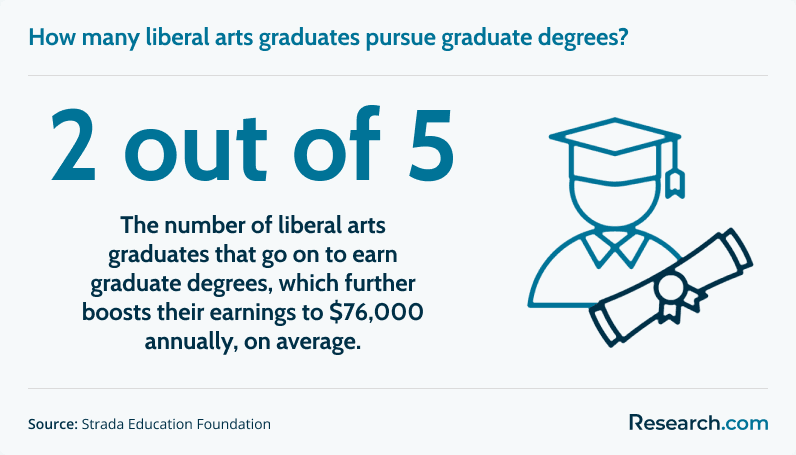
Graduate education can help liberal studies graduates specialize after completing a broad undergraduate degree. Common next steps include master’s programs in education, public administration, communication, counseling-related fields, business, social sciences, humanities, library science, or interdisciplinary studies.
Advanced degrees make the most sense when they are tied to a specific career goal, credential requirement, or salary pathway. Before enrolling, compare tuition, admission requirements, field placements, licensing implications, and employer demand. Students exploring long-term earning potential can review options such as the highest paying masters to see where graduate education may have stronger financial returns.
How can supplemental certifications and vocational training improve career options?
A liberal studies degree provides breadth, but certifications can add job-specific proof of skill. Depending on your goals, useful add-ons may include digital marketing, project management, human resources, technical writing, data tools, instructional technology, nonprofit management, or software-related credentials.
Vocational training can also complement liberal studies for students who want practical, hands-on employment skills. Exploring trade school careers can help students compare broad academic preparation with targeted technical training.
What is the job market for graduates with an easy liberal studies degree?
The job market for liberal studies graduates is broad rather than occupation-specific. Graduates compete in fields where communication, analysis, writing, collaboration, adaptability, and cultural understanding matter. According to California State University Bakersfield, the overall job growth for occupations commonly pursued by liberal studies graduates is expected to grow by 5.9% between 2022 and 2032.
Because liberal studies is not tied to one licensed occupation, students should avoid assuming automatic job placement. Stronger outcomes usually come from combining the degree with applied experience, a concentration, technology skills, professional writing samples, internships, teaching preparation, or certifications. Students looking for flexible pathways with labor-market relevance may also compare quick online degrees job outlook information before choosing a program.
How is the liberal studies curriculum adapting to modern workforce demands?
Liberal studies programs are increasingly expected to connect broad education with practical workplace skills. Many curricula now place more emphasis on digital literacy, information evaluation, writing for professional audiences, applied projects, data interpretation, communication technologies, and ethical decision-making. These updates matter because employers often want graduates who can learn quickly, communicate clearly, and adapt to new tools.
Students who want deeper specialization after a liberal studies bachelor’s degree can consider graduate options, including one year online masters programs, when a faster advanced credential fits their career plan.
What is the return on investment for an easy liberal studies degree?
The ROI of a liberal studies degree depends on more than the posted salary range. Students should compare total cost, time to completion, transfer credits, debt, career services, internship access, and whether the degree leads to a realistic job target. A low-cost program with strong transfer credit and career support may offer better value than a more expensive program with limited guidance.
Because liberal studies graduates may enter many fields, ROI can vary widely. Some students use the degree to qualify for administrative or communication roles. Others pursue teaching credentials, graduate school, nonprofit leadership, public service, or business roles. Professionals who later seek advanced credentials may explore options such as online doctoral programs, but doctoral study should be evaluated carefully against career requirements, cost, and expected professional benefit.
How important is accreditation for accelerated liberal studies degrees?
Accreditation is essential. It signals that an institution has been reviewed for academic quality and institutional standards. For students, accreditation can affect federal financial aid eligibility, transfer credit, graduate school admission, employer confidence, and licensure-related pathways.
This is especially important for accelerated and online formats. A fast program is only valuable if the credential is recognized. Students comparing accelerated formats should verify accreditation and review options such as an accelerated bachelor's degree online accredited program before making a decision.
How do student support services and experiential learning opportunities enhance career readiness?
Student support can make a broad liberal studies degree more career-focused. Strong advising helps students choose the right concentration, plan transfer credits, avoid unnecessary courses, and connect assignments to career goals. Career services can help with résumés, interviews, internships, networking, and graduate school planning.
Experiential learning is equally important. Internships, service learning, classroom observation, research projects, and capstones give students practical examples to discuss with employers. Students looking for affordable pathways should compare cost with support quality, including options such as the cheapest online bachelor's degree.
Should I pursue additional certifications alongside a liberal studies degree?
Yes, if the certification is connected to a specific career outcome. A liberal studies degree builds broad academic skills, while a certification can show competence in a particular tool, method, or industry. This combination can be especially useful for roles in digital marketing, project coordination, human resources, communication, education technology, nonprofit management, and administrative leadership.
Do not collect credentials randomly. Choose certifications that employers in your target field recognize. Students comparing certificate value can review what certificate makes the most money and then verify whether the credential fits their own career direction.
Questions to ask before enrolling in an easy liberal studies degree program
- Is the institution accredited by a recognized accrediting body?
- How many of my previous credits will transfer into the degree?
- Does the program offer a concentration that matches my career goal?
- If I want to become a teacher, does the program align with credential or licensure requirements?
- What is the full annual cost after fees, books, housing, transportation, and financial aid?
- Are online courses asynchronous, synchronous, or a mix of both?
- Does the program include internships, capstones, fieldwork, or portfolio projects?
- What career services are available to online and transfer students?
- Can I complete required courses year-round, or are some courses offered only once a year?
- What do graduates typically do after completing this program?
Key Insights
- “Easy” should mean manageable, not low quality. The best easy liberal studies programs are flexible, accredited, transfer-friendly, and aligned with your goals.
- The degree is broad by design. Liberal studies can support education, business, nonprofit, government, communications, and administrative roles, but students should add experience or specialization.
- Employment data shows continued relevance. 766,280 individuals with liberal arts degrees were employed in 2022, even as completions declined from 47,318 in 2010 to 38,192 in 2022.
- Cost varies significantly. Online programs often cost between $6,000 and $12,000 per year, while traditional programs can range from $10,000 to $50,000 per year depending on institution type and residency.
- Career outcomes are not automatic. Salaries can range from $50,000 to $165,000 annually, with a median salary of about $105,000, but earnings depend heavily on job role, experience, industry, credentials, and location.
- Online study can be a strong option. It can reduce commuting and housing costs while giving working students more scheduling control, but students should still verify accreditation, fees, advising, and internship support.
- Accreditation and transfer policies matter. These two factors can determine whether your credits count, whether financial aid applies, and whether employers or graduate schools recognize your degree.
- Plan your career early. A liberal studies degree becomes more valuable when paired with a concentration, internship, teaching pathway, certification, portfolio, or graduate education plan.
References:
- American Academy of Arts & Sciences. (2025). Bachelor's degrees in the humanities. amacad.org
- Data USA. (2025). Liberal arts & humanities. datausa.io
- Startz, D. (2023). Don’t knock the economic value of majoring in the liberal arts. brookings.edu
- University of Mary Washington. (2025). BLS degree requirements. umw.edu
- Wilson College. (23 Feb 2023). Benefits of a liberal studies degree. wilson.edu
Other Things You Should Know About the Easiest Liberal Studies Degree Programs
In 2027, liberal studies degree programs considered easiest often include subjects like psychology, sociology, art history, and communication studies. These subjects generally involve theoretical understanding rather than technical skills, making them accessible to a wide range of students seeking a flexible and broad-based education.
Admission requirements for 2026 easy liberal studies degree programs typically include a high school diploma or equivalent, transcripts, and sometimes a personal statement. Some programs may also request a minimum GPA or standardized test scores, though these are often flexible in programs deemed "easiest."


