
2027 Trade School or Vocational Program? Here’s What To Expect

Co-Founder and Chief Data Scientist
Choosing between a trade school and a vocational program is really a choice about time, cost, career focus, and how quickly you want to qualify for work. Some students need a short, hands-on route into a licensed trade. Others want a broader career-focused program that may include classroom theory, online coursework, or credits that can later support an associate or bachelor’s degree.
This guide explains how trade schools and vocational programs differ, what they cost, which industries each option fits best, what admissions and certification requirements to expect, and how to compare schools before enrolling. It is designed for students, working adults, career changers, and families who want a practical path into skilled employment without committing immediately to a traditional four-year degree.
The vocational and technical education market has continued to adapt as schools use online platforms, employer partnerships, and shorter credential formats to expand access. Industry revenue increased to $16.8 billion over five years, even with a slight decline in 2024. That growth makes careful program selection more important: more options can mean more flexibility, but also more variation in quality, cost, accreditation, and job outcomes.
Quick Answer: Trade School vs. Vocational Program
A trade school is usually the better fit if you want direct, hands-on preparation for a specific skilled trade such as welding, plumbing, HVAC, automotive repair, or cosmetology. A vocational program is often better if you want career training in a broader field such as healthcare, business, information technology, legal support, or public service, especially when you need part-time, online, or degree-connected options.
| Factor | Trade School | Vocational Program |
| Main purpose | Train students for a specific skilled trade | Prepare students for a wider range of career-focused occupations |
| Learning style | Heavy emphasis on labs, shops, simulations, and practical tasks | Combination of applied training, classroom instruction, and sometimes online coursework |
| Typical length | Often under two years | A few months to two years, depending on the credential and field |
| Best for | Students who want a direct route into a hands-on trade | Students who want flexibility, broader career options, or a pathway toward additional education |
| Key risk | Credits may not transfer easily to degree programs | Program quality and employer recognition can vary significantly |
Key Things to Know Before You Choose
- Training focus matters: Trade schools usually concentrate on one occupational skill set, while vocational programs may combine hands-on learning with broader technical or academic coursework.
- Program length affects opportunity cost: Many trade school programs can be completed in less than two years, which may help students enter the workforce sooner. Vocational programs vary more widely and may offer part-time or online formats for working adults.
- Cost is not just tuition: Trade school tuition commonly ranges from $5,000 to $30,000, but students should also compare tools, uniforms, books, testing fees, licensing costs, transportation, and lost work hours.
- Accreditation and licensure are critical: A program may be inexpensive or fast, but it is not a good investment if it does not meet employer, state licensing, certification, or federal financial aid requirements.
- Online training has limits: Many theory-based courses work well online, but fields such as healthcare, automotive technology, electrical work, welding, and cosmetology usually require labs, clinicals, apprenticeships, or supervised practice.
- Top Trade School and Vocational Program Options for 2027
- Trade School vs. Vocational Program: What Is the Difference?
- Which Industries Are Better Suited to Trade Schools or Vocational Programs?
- Average Cost of Trade Schools and Vocational Programs
- Common Entry Requirements for Trade School Programs
- Financial Aid for Trade Schools and Vocational Programs
- Using Vocational Training as a Pathway to More Education
- Long-Term Career Growth After Vocational Training
- Job Placement and Career Support Services
- Part-Time and Online Vocational Program Options
- Whether an Online Degree Can Speed Up Entry Into a High-Paying Field
- Common Challenges in Trade and Vocational Education
- Vocational Training Return on Investment
- Certifications and Licenses After Vocational Training
- Career Support and Networking After Graduation
- Earning Potential After a Vocational Program
- How New Technologies Are Changing Vocational Training
- Accreditation for Trade Schools and Vocational Programs
- Preparing for a Changing Job Market
- Combining Vocational Training With an Accelerated Associate Degree
- Using Fast Master’s Programs After Vocational Training
- How Vocational Education Has Changed in Recent Years
Top Trade School and Vocational Program Options for 2027
How Research.com Evaluates Schools
Because career training can require a meaningful financial commitment, students need clear information about cost, accreditation, completion expectations, and program focus. Research.com reviews trade school and vocational program options using current and broad U.S. education data sources, including:
- The Integrated Postsecondary Education Data System (IPEDS) database
- Peterson’s database, including its Distance Learning Licensed Data Set
- College Scorecard database
- National Center for Education Statistics
The ranking process also weighs factors such as graduation rate, student-faculty ratio, and program emphasis. Additional details are available on Research.com’s methodology page.
1. Johnson College
Johnson College is a private technical institution in Pennsylvania offering certificates and associate degrees for students seeking career-oriented education. Its catalog includes 18 associate degree programs and four certificate courses in areas such as welding technology, veterinary nursing, architectural design, HVAC technology, and computer information technology.
- Program Length: N/A
- Tracks/concentrations: N/A
- Cost per Credit: $9,450 (per semester)
- Required Credits to Graduate: 30 credits
- Accreditation: Middle States Commission on Higher Education (MSCHE)
2. Rosedale Technical College
Rosedale Technical College, also known as Rosedale Tech, is a private trade school in Kennedy Township, Pennsylvania, near Pittsburgh. Founded in 1949, the school centers its training model on applied instruction for students preparing for skilled trade careers.
- Program Length: 18 months
- Tracks/concentrations: N/A
- Cost per Credit: $350
- Required Credits to Graduate: 60 credits for an Associate in Specialized Technology degree or a diploma
- Accreditation: National Automotive Technicians Education Foundation (NATEF)
3. West Kentucky Community and Technical College (WKCTC)
West Kentucky Community and Technical College offers online trade and vocational credentials, including associate degrees, diplomas, and certificates. Students may study fields such as computer and information technology, logistics and operations management, and medical information technology. WKCTC also offers a marine technology option, along with certificate routes that can be completed in just a few months in select fields.
- Program Length: One year
- Tracks/concentrations: N/A
- Cost per Credit: $189/credit hour (online-only courses)
- Required Credits to Graduate: 39-43 credits (diploma programs)
- Accreditation: Southern Association of Colleges and Schools Commission on Colleges (SACSCOC)
4. Clovis Community College (CCC)
Clovis Community College in Clovis, New Mexico, provides online vocational degrees and certificates without residency requirements. Available options include business administration, paralegal studies, behavioral science, and computer information systems.
- Program Length: Two semesters
- Tracks/concentrations: N/A
- Cost per Credit: N/A
- Required Credits to Graduate: 33/credit hour (Certificate of Completion in Paralegal)
- Accreditation: Higher Learning Commission
5. Central Community College
Central Community College provides online certificates, diplomas, and associate degrees. Out-of-state learners may enroll if they reside in an authorization reciprocity state. Areas of study include business administration, health information technology, early childhood education, Cisco networking, logistics, and entrepreneurship.
- Program Length: One year
- Tracks/concentrations: N/A
- Cost per Credit: $112/credit hour (Nebraska residents)
- Required Credits to Graduate: 12 credits (Cisco Networking Certificate)
- Accreditation: Higher Learning Commission
6. Wake Technical Community College
Wake Technical Community College is a public community college in North Carolina. In addition to associate degrees and transfer pathways, Wake Tech offers workforce training, trade programs, apprenticeships, and work-based learning credits.
- Program Length: 16-week semester
- Tracks/concentrations: N/A
- Cost per Credit: $3,914 / year
- Required Credits to Graduate: N/A
- Accreditation: SACSCOC
7. The North Dakota State College of Science
The North Dakota State College of Science is a public college in the North Dakota University System. Its trade education offerings include degrees, diplomas, and certificates in education, hospitality, construction, health science, information technology, transportation, manufacturing, law, and human services.
- Program Length: Under a year for certificate programs
- Tracks/concentrations: N/A
- Cost per Credit: $213.81 (ND residents; online classes)
- Required Credits to Graduate: N/A
- Accreditation: Higher Learning Commission
8. The Carolinas College of Health Sciences
The Carolinas College of Health Sciences is a public two-year college in North Carolina that offers online and campus-based coursework for students preparing for healthcare roles.
CCHS provides certificate and associate degree programs for fields such as nursing, phlebotomy, and laboratory science. Students may also take non-credit courses to build skills in MRI technology or project management.
- Program Length: two years or less
- Tracks/concentrations: N/A
- Cost per Credit: $16,179 (annual tuition)
- Required Credits to Graduate: 60-75 credits
- Accreditation: SACSCOC
9. Dakota County Technical College
Dakota County Technical College is a public two-year technical college in Dakota County, Minnesota. Students can pursue credentials in administrative support, marketing and sales, business, construction, manufacturing, transportation, health, and education. Some programs are fully online, and many allow eligible students to earn credit for prior learning.
- Program Length: Within two years
- Tracks/concentrations: N/A
- Cost per Credit: $211
- Required Credits to Graduate: 60-75 credits
- Accreditation: Higher Learning Commission
10. Atlantic Technical College (ATC)
Atlantic Technical College is a public secondary and postsecondary institution in Florida. It offers up to 35 high-demand trade programs for adults and high school students, including practical nursing, automotive service technology, culinary arts, and additional diploma and certificate options.
- Program Length: Depends on the program
- Tracks/concentrations: N/A
- Cost per Credit: approximately $100
- Required Credits to Graduate: 30-60
- Accreditation: Council on Occupational Education (COE)
How to Use This List Before Applying
A school ranking can help you build a shortlist, but it should not be the only reason you enroll. Compare each program against your target occupation, local licensing rules, commute or online requirements, total cost, employer reputation, and graduate support services.
| Question to Ask | Why It Matters |
| Is the school institutionally accredited or programmatically accredited? | Accreditation can affect financial aid eligibility, credit transfer, licensure, and employer acceptance. |
| Does the curriculum match the job I want? | A short program is only useful if it teaches the exact competencies employers or licensing boards require. |
| What is included in the advertised cost? | Tools, uniforms, books, supplies, background checks, exams, and licensing fees can change the true cost. |
| Are labs, clinicals, or apprenticeships required? | Online coursework may still require in-person attendance for hands-on fields. |
| What career support is available after completion? | Employer connections, apprenticeships, resume help, and job placement assistance can improve your transition into work. |
Key Findings
- Trade schools are usually more specialized, with training tied closely to occupations such as welding, plumbing, HVAC, and automotive repair.
- Vocational programs can cover a wider set of careers, including healthcare, business, technology, legal support, and administrative fields.
- Trade school tuition commonly ranges from $5,000 to $30,000, with public institutions generally costing less than private schools.
- Many vocational programs offer evening, weekend, part-time, or online coursework, although hands-on programs may still require labs, clinicals, or supervised practice.
- Some graduates need state licenses, national certifications, apprenticeships, or continuing education before they can work independently.
- Reported vocational education professional salary examples include fields with annual ranges from $45,500 to $123,500, depending on occupation, location, and experience.
Demand for skilled workers can vary by region and occupation. The chart below provides additional context on trade job demand and can help students think about where practical training may lead to stable employment.
Trade School vs. Vocational Program: What Is the Difference?
Trade schools and vocational programs both prepare students for employment, but they are not identical. The main difference is scope: trade schools tend to focus narrowly on a skilled trade, while vocational programs may include a broader mix of occupational training, technical coursework, and academic foundations.
Trade Schools
Primary focus: Trade schools teach job-specific skills for occupations such as plumbing, welding, HVAC, automotive repair, electrical work, and cosmetology.
Curriculum style: Students spend substantial time in labs, workshops, simulations, and practice environments that mirror the workplace. Theory is included when needed, but the program is usually built around applied performance.
Typical duration: Many trade school programs take less than two years, which can make them appealing to students who want to qualify for work quickly.
Vocational Programs
Primary focus: Vocational programs prepare students for many career-oriented fields, including trades, healthcare, technology, business, and legal support. Students interested in short healthcare pathways can compare healthcare degree programs that can be completed in 2 years or less, including areas such as radiologic technology, dental hygiene, and respiratory therapy.
Curriculum style: These programs often combine hands-on skill development with classroom-based concepts. For example, a healthcare program may require anatomy coursework, clinical practice, and preparation for certification exams.
Typical duration: Program length may range from a few months to two years, depending on the occupation, credential level, and state requirements.
The chart below highlights growth in the transportation technician workforce, illustrating why both trade schools and vocational programs can appeal to students seeking faster preparation for applied occupations.
Which Industries Are Better Suited to Trade Schools or Vocational Programs?
Trade schools are often the stronger option when the job requires intensive physical practice, tool use, shop-based learning, or a trade license. Examples include plumbing, electrical work, welding, automotive repair, diesel technology, HVAC, construction trades, and cosmetology.
Vocational programs may be the better match when the career requires a balance of technical skills, academic knowledge, documentation, compliance, or digital tools. Common examples include healthcare support, paralegal studies, business administration, computer information systems, cybersecurity, medical billing, logistics, and early childhood education.
| Career Goal | Often Better Fit | Reason |
| Welding, HVAC, plumbing, electrical work, or auto repair | Trade school | Students need repeated hands-on practice with equipment, tools, safety procedures, and job-site tasks. |
| Healthcare support or allied health | Vocational program | Programs often blend classroom science, clinical skills, certification preparation, and supervised practice. |
| Cybersecurity or IT support | Vocational program or associate degree | Students need technical foundations, labs, and industry certification preparation; an online associate degree in cyber security may fit those seeking a structured academic route. |
| Construction leadership | Vocational training plus degree pathway | Hands-on field knowledge helps, but management roles may also require scheduling, budgeting, safety, and project administration skills found in an online construction management degree. |
| Business management advancement | Vocational experience plus business education | Students planning future leadership roles may later compare MBA concentrations and research high-paying MBA concentration options. |
| Library or information services | Degree-focused pathway | Students should compare program requirements carefully, including options discussed in guides to accessible library science degree programs. |
The best choice depends less on the label and more on whether the program aligns with the exact credential employers expect in your local labor market.
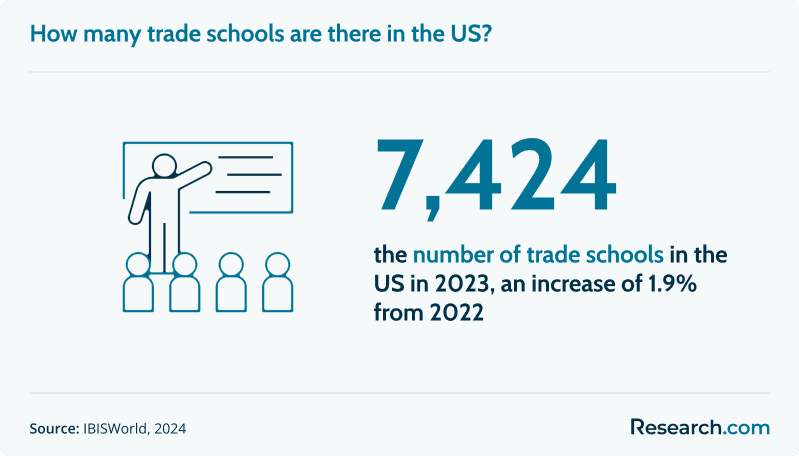
Average Cost of Trade Schools and Vocational Programs
Trade school and vocational program costs vary by institution type, program length, location, credential level, and field. Trade school tuition commonly ranges from $5,000 to $30,000, and many programs fall between $15,000 and $17,600. Public trade schools are generally less expensive than private institutions.
For a two-year program, a public trade school costs about $3,863, while private not-for-profit schools charge around $15,549 and private for-profit schools average $15,033 for comparable programs.
Costs can also differ sharply by occupation. Electrician training averages $14,640, while automotive technology programs can cost up to $25,870. Motorcycle maintenance and veterinary technician training are often lower-cost options, typically ranging from $5,100 to $10,500.
| Cost Category | Reported Amount | What Students Should Check |
| General trade school tuition range | $5,000 to $30,000 | Whether tools, exam fees, books, uniforms, and supplies are included |
| Common program cost range | $15,000 to $17,600 | Whether the credential qualifies for the job or license you want |
| Public two-year trade school | about $3,863 | Residency rules, fees, and availability of local programs |
| Private not-for-profit two-year school | around $15,549 | Accreditation, placement services, and total repayment obligation |
| Private for-profit two-year school | average $15,033 | Graduate outcomes, refund policies, and employer recognition |
| Electrician training | averages $14,640 | Apprenticeship and state licensing requirements |
| Automotive technology | up to $25,870 | Shop time, tools, certification preparation, and employer partnerships |
| Motorcycle maintenance or veterinary technician training | $5,100 to $10,500 | Certification, licensing, and clinical or lab requirements |
Compared with four-year colleges, where tuition and fees often range from $30,000 to $40,000 over four years, trade and vocational programs can be a lower-cost route. Students who want a bachelor’s degree but need flexible pricing can also review affordable online bachelor’s degree options.
Common Entry Requirements for Trade School Programs
Admission standards differ by school and occupation, but many trade schools use a straightforward application process. Selective healthcare, commercial driving, and technical programs may add extra screening steps.
Typical Admissions Requirements
- Education: Many schools ask for a high school diploma or GED. Some may allow students without these credentials through approved alternative career pathway programs.
- Application: Applicants usually submit a school application and may need to pay a non-refundable fee.
- Basic skills testing: Some programs use entrance assessments to review reading, writing, and math readiness. Common examples include COMPASS and Wonderlic assessments.
- Minimum age: Applicants are often expected to be at least 17 years old, though some programs may consider 16.5-year-old applicants with parental permission or a high school release letter.
- Documents: Schools may request high school transcripts, recommendation letters from teachers or employers, and a short essay explaining career goals.
- Admissions interview: An interview with an admissions representative may be used to confirm interest, readiness, and program fit.
Program-Specific Requirements
- Healthcare programs: Some require prior high school coursework in biology or chemistry.
- Commercial driving programs: CDL applicants often need a clean driving record and no DUI convictions.
Financial Aid for Trade Schools and Vocational Programs
Students may be able to reduce out-of-pocket costs through federal aid, state aid, scholarships, payment plans, employer tuition assistance, veterans benefits, or workforce development funding. Eligibility depends on the school, program length, accreditation status, and student circumstances.
Before enrolling, confirm whether the program participates in federal student aid, whether it accepts grants or loans, and whether aid applies to supplies, certification exams, and licensing costs. Working adults who need shorter formats may also compare accelerated online degree programs for working adults when a degree-based option better fits their goals.
Using Vocational Training as a Pathway to More Education
Vocational training does not have to be the final step. In some fields, students can apply practical experience toward an associate degree, bachelor’s degree, or graduate education. The key is credit transfer: not every certificate converts into college credit, and not every school accepts prior technical coursework.
Students who expect to continue their education should ask about articulation agreements, prior learning credit, and transfer policies before enrolling. Career changers who already have an undergraduate credential may later explore online master’s degree options with more accessible formats if advanced study supports their professional plans.
Long-Term Career Growth After Vocational Training
Vocational graduates can often grow by adding certifications, completing apprenticeships, gaining field experience, moving into supervision, or continuing into a degree program. The right next step depends on the industry. A technician may advance by earning manufacturer certifications, while a healthcare worker may need additional credentials or clinical education.
Students who want to turn practical training into a broader academic credential can compare accelerated online bachelor’s degree programs, especially if they want to move toward management, training, compliance, or administrative roles.
Job Placement and Career Support Services
Many trade and vocational schools offer career services, but the quality varies. Useful support may include resume help, mock interviews, employer events, apprenticeship referrals, job boards, alumni networks, and relationships with local companies.
Ask schools for specifics. “Job placement assistance” can mean anything from a list of openings to active employer introductions. If a school offers continuing pathways into accelerated online bachelor’s degree programs, confirm whether credits transfer and whether graduates receive advising after completion.
Part-Time and Online Vocational Program Options
Many vocational programs now offer flexible schedules. This is especially useful for students who work, care for family members, or cannot relocate. For example, students interested in legal support roles may compare online paralegal programs if they need remote coursework.
Part-Time Study
- Part-time enrollment can help students continue working while completing training.
- Evening and weekend schedules are common in some programs, especially those designed for adult learners.
- The trade-off is time: part-time study may delay completion and entry into the workforce.
Online Learning
- Online vocational coursework is common in fields such as business, technology, legal studies, and some healthcare administration areas.
- Hands-on programs may still require labs, clinicals, practicums, campus intensives, or apprenticeships.
- Students should verify whether online courses satisfy certification, licensing, and employer requirements in their state.
The chart below shows popular reasons students in the U.S. chose online education in 2023.
Whether an Online Degree Can Speed Up Entry Into a High-Paying Field
An online degree can be a faster route for some careers, but it is not a shortcut for every occupation. It works best when the target job values academic credentials, digital skills, and recognized accreditation. It is less suitable when the occupation requires extensive in-person practice, state licensing hours, or supervised clinical work.
Students comparing fast online options should review accreditation, employer acceptance, program length, transfer credit, total cost, and whether the curriculum prepares them for required certifications. Guides to the fastest online degrees that can lead to well-paying careers can help identify options, but outcomes still depend on field, location, experience, and hiring demand.
Common Challenges in Trade and Vocational Education
Trade and vocational education can be practical and cost-efficient, but students should understand the risks before committing. The most common concerns include limited credit transfer, uneven program quality, variable employer recognition, changing technology standards, and additional costs after graduation.
Students should be especially cautious with programs that pressure them to enroll quickly, make vague salary promises, lack clear accreditation information, or provide little detail about completion and placement outcomes. If federal aid access is important, compare institutions carefully and review options such as an online school that accepts FAFSA.
| Common Mistake | Better Approach |
| Choosing the fastest program without checking licensure rules | Verify state and industry requirements before applying. |
| Comparing tuition only | Calculate total cost, including tools, exams, books, supplies, transportation, and fees. |
| Assuming online training is fully remote | Ask about labs, clinical placements, practicums, and required campus visits. |
| Relying only on rankings | Use rankings as a starting point, then check local employer reputation and outcomes. |
| Ignoring credit transfer policies | Request written information about articulation agreements and prior learning credit. |
| Believing salary claims are guaranteed | Review occupation, location, experience level, certification, and labor market demand. |
Vocational Training Return on Investment
The return on investment for vocational training depends on four main factors: total program cost, time to completion, local job demand, and required post-graduation credentials. A lower-cost program with strong employer connections and a short completion timeline may produce a stronger ROI than a longer or more expensive program with weak placement support.
Students should calculate ROI using realistic assumptions. Include tuition, supplies, transportation, exam fees, lost wages, loan interest, and the time needed to obtain licenses or certifications. If future advancement requires a degree, compare whether a certificate-first route or an academic route such as an online bachelor’s degree with a manageable format makes more sense.
Certifications and Licenses After Vocational Training
Completing a vocational program may not be enough to start working independently. Many fields require certification, licensure, apprenticeships, exams, or continuing education. Requirements vary by state and occupation, so students should confirm them before enrolling.
Common Certification Examples
- Certified Nursing Assistant (CNA) for certain healthcare support roles
- CompTIA A+ for some IT support positions
- OSHA Safety Certification for construction and manufacturing environments
State licenses: Cosmetology, plumbing, electrical work, and similar professions often require a state license. This may involve completing education hours, passing an exam, and meeting apprenticeship or supervised experience rules.
National credentials: Some fields use national certifications to signal competency. Automotive technicians, for example, may pursue certifications through the National Institute for Automotive Service Excellence (ASE).
Teaching Vocational Skills
People who want to teach vocational subjects in high school career and technical education settings may need teaching credentials. States such as Pennsylvania and Massachusetts require specialized certifications for instructors in these areas.
Ongoing Requirements
- Continuing education: Some credentials must be renewed through periodic training or coursework.
- Internships or apprenticeships: Supervised experience may be required for certification, licensing, or stronger employability.
Career Support and Networking After Graduation
Good vocational programs do more than teach technical skills. They help students connect with employers, mentors, alumni, and professional organizations. Strong post-training support may include interview coaching, job fairs, apprenticeship introductions, portfolio reviews, continuing education workshops, and career counseling.
Students who want to keep building credentials after a certificate may consider an accelerated associate’s degree, especially when the next role requires broader academic preparation or a formal degree.
Earning Potential After a Vocational Program
Pay after vocational training depends on occupation, location, experience, licensing, employer type, and whether the role is entry-level or instructional. The following examples show reported annual salary ranges for selected vocational education professional roles:
- Occupational therapy instructor: $88,000-$123,500 per year
- Massage therapy instructor: $45,500-$94,000 per year
- Respiratory therapy instructor: $81,500-$88,500 per year
- Paralegal instructor: $48,500-$83,000 per year
- Fire technology instructor: $51,500-$82,000 per year
- Plumbing instructor: $57,500-$80,000 per year
Students comparing career options should review local labor market demand and licensing rules, not just national salary examples. For additional career ideas, see Research.com’s guide to the highest-paying trade school jobs.
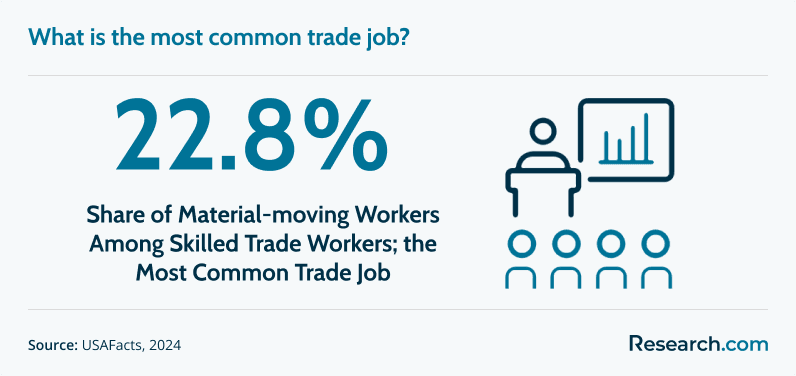
How New Technologies Are Changing Vocational Training
Technology is reshaping how students practice job skills. Some programs now use virtual simulations, adaptive learning systems, online labs, digital portfolios, and remote instruction to reinforce technical concepts before students enter physical labs or job sites.
These tools can improve access and practice time, but they do not replace all hands-on requirements. A welding simulation, for example, may support early learning, but students still need supervised practice with equipment. Professionals aiming for advanced research, teaching, or leadership roles may eventually explore doctoral pathways, including options discussed in guides to the shortest online doctoral programs.
Accreditation for Trade Schools and Vocational Programs
Accreditation helps students identify schools that meet recognized quality standards. It can also affect federal financial aid eligibility, credit transfer, licensure, and employer confidence. Students should verify accreditation directly through the accreditor or the U.S. Department of Education before enrolling.
National Accrediting Agencies
The following organizations are recognized by the U.S. Department of Education and commonly accredit career, technical, trade, and vocational institutions:
- Accrediting Bureau of Health Education Schools (ABHES): Focuses on allied health education.
- Accrediting Commission of Career Schools and Colleges (ACCSC): Accredits a range of career, trade, and technical schools.
- Accrediting Council for Continuing Education and Training (ACCET): Covers private career colleges and training providers.
- Council on Occupational Education (COE): Accredits institutions offering trade and vocational credentials.
- National Accrediting Commission of Career Arts and Sciences (NACCAS): Specializes in cosmetology and related career arts programs.
Regional Accrediting Agencies
Regional accreditors generally review degree-granting institutions, including community colleges and some technical schools:
- Accrediting Commission for Community and Junior Colleges (ACCJC): Accredits community and junior colleges in the western United States.
- Higher Learning Commission (HLC): Accredits degree-granting colleges and universities in the central United States.
- Middle States Commission on Higher Education (MSCHE): Reviews postsecondary institutions in the Mid-Atlantic region.
- New England Commission of Higher Education (NECHE): Accredits colleges and universities in New England.
- Northwest Commission on Colleges and Universities (NWCCU): Accredits institutions in the Northwest United States.
- Southern Association of Colleges and Schools Commission on Colleges (SACSCOC): Accredits degree-granting institutions in the South.
- WASC Senior College and University Commission (WSCUC): Accredits higher education institutions in California and Hawaii.
Preparing for a Changing Job Market
Modern vocational training increasingly emphasizes adaptability. Employers often need workers who can operate current tools, follow safety and compliance rules, communicate clearly, solve problems, and learn new technologies as jobs change.
Students can strengthen long-term mobility by choosing programs with employer partnerships, updated equipment, industry-recognized certifications, and opportunities for continuing education. Experienced workers who later need specialized graduate-level knowledge may compare online 1 year master’s programs.
Combining Vocational Training With an Accelerated Associate Degree
Pairing hands-on training with an associate degree can be useful for students who want both job-ready skills and a broader academic credential. This combination may support advancement into technician, supervisory, compliance, training, or administrative roles, depending on the field.
Students considering this route should ask whether certificate credits apply toward a degree and whether the schedule allows continued work. An accelerated associate degree may be worth comparing if speed and flexibility are priorities.
Using Fast Master’s Programs After Vocational Training
Graduate education is not necessary for most entry-level trade roles, but it can complement vocational experience for professionals moving into leadership, teaching, operations, safety management, healthcare administration, or technical management. The value depends on whether the advanced credential matches a real career requirement.
Professionals who already hold a bachelor’s degree and want a shorter graduate route may review fast master’s programs, especially when management or strategic roles require stronger analytical and organizational skills.
How Vocational Education Has Changed in Recent Years
Vocational education has evolved from a narrow training model into a broader career preparation system. Many schools now use the term Career and Technical Education (CTE) to describe programs that combine occupational skills, academic foundations, and workforce readiness.
More Technology in the Curriculum
Programs increasingly include digital literacy, coding basics, diagnostic tools, simulation software, online coursework, and industry-specific technology so students can practice with tools similar to those used in the workplace.
Stronger Employer Partnerships
Many schools work with local businesses to provide internships, apprenticeships, clinical placements, equipment input, and hiring pipelines. These relationships can make training more relevant and help students understand employer expectations.
Expanded Online and Hybrid Options
Online vocational education has made career training more accessible for students who cannot attend full-time campus programs. Hybrid formats are especially common when theory can be taught online but skills must be practiced in person.
Greater Emphasis on Soft Skills
Employers often expect more than technical ability. Communication, teamwork, punctuality, customer service, documentation, and problem-solving are now central parts of many career-focused programs.
Broader Career Pathways
CTE now reaches fields such as healthcare, renewable energy, information technology, transportation, construction, advanced manufacturing, business, and public service. This gives students more ways to match training with their interests and local job opportunities.
Key Insights
- Choose a trade school when your goal is a specific hands-on occupation. Fields such as welding, HVAC, plumbing, electrical work, automotive repair, and cosmetology usually require repeated practical training and may also require state licensure.
- Choose a vocational program when you want broader career preparation or more flexibility. Healthcare, business, technology, legal support, and administrative programs often combine applied training with classroom or online coursework.
- Do not judge a program by speed alone. A short program only saves time if it leads to the certification, license, or employer-recognized credential you need.
- Compare total cost, not just tuition. Tools, supplies, books, uniforms, exam fees, licensure costs, transportation, and lost work hours can change the real price of attendance.
- Accreditation should be verified before enrollment. It can affect financial aid, credit transfer, licensure, and employer trust.
- Online vocational training can be valuable, but hands-on fields still need in-person practice. Always ask about labs, clinicals, apprenticeships, practicums, and state-specific requirements.
- The strongest ROI comes from alignment. Match the program to a real occupation, local demand, required credentials, realistic salary expectations, and a clear plan for advancement.
References:
- Bester, N. (2024, December 16). How much does trade school cost? (And how to pay for it). Retrieved from https://www.indeed.com/career-advice/career-development/trade-school-cost
- IBISWorld. (2024, December). Trade & technical schools in the US - Market research report. Retrieved from https://www.ibisworld.com/united-states/industry/trade-technical-schools/1535
- ZipRecruiter. (2025). 25 of the highest paying vocational education professional jobs in 2025. Retrieved from https://www.ziprecruiter.com/g/Highest-Paying-Vocational-Education-Professional-Jobs
Other Things You Should Know About Trade School and Vocational Program
In 2027, vocational program durations typically range from a few months to two years, depending on the field of study and the depth of training. Programs are designed to provide hands-on skills and industry-relevant knowledge, ensuring students gain practical experience quickly.
Yes. Many trade programs require a set number of supervised lab or shop hours before graduation, such as 600 to 1,500 hours for short certificate tracks and 1,800 hours or more for licensed fields like plumbing, cosmetology, or welding. State licensing boards often set the minimum.
After completing a trade school program in 2027, you may earn certifications like HVAC Technician Certification, Automotive Service Excellence Certification, or Licensed Practical Nurse (LPN) credentials. These certifications are governed by respective industry bodies and validate your skills for professional standards.


