2027 Best Online Landscaping Technology Trade School Programs

Co-Founder and Chief Data Scientist
It’s common to feel stuck when you know you want a hands-on career outdoors but can’t see a clear path to a stable, professional job. Although the minimum requirement to entire the field is a high school diploma, which 36% of the current landscaping workforce possess, completing an online landscaping program sets you apart from the competition. This equips graduates with the right skills and knowledge to enter this field.
That’s why our team of career planning experts, with over 10 years of experience, created this guide. It’s more than just a list of schools; it’s a complete roadmap to the best online landscaping technology programs that can launch your high-demand, technology-driven career.
What are the benefits of enrolling in an online landscaping technology trade school program?
- Learn the essential science, design, and business skills you need on your own schedule, fitting your education directly into your life.
- Unlock a clear path to higher earning potential, with trained professionals earning an average national wage of around $40,880.
- Build the foundational knowledge needed to launch your own successful business, a proven career path taken by 20% of all professionals in this industry.
What can I expect from an online landscaping technology trade school program?
You can expect a program designed for real-world application. The curriculum is structured to teach you the critical science, design, and business principles through flexible online lessons, videos, and assignments.
The hands-on skills are taught using detailed video demonstrations, project kits, and sometimes even simulations or occasional in-person sessions. This blended model allows you to master the core concepts and develop practical abilities needed in the field.
It’s also important to have a realistic view of the work itself. This is a physically demanding career. You should be prepared to work outdoors in all types of weather, often with significant noise from equipment. Resilience is just as important as the technical knowledge you’ll gain.
Where can I work after completing an online landscaping technology trade school program?
With this credential, you can look far beyond just small local companies. Graduates find opportunities across a wide range of stable and professional environments.
You could work for a large-scale landscape design and maintenance firm that handles major commercial properties like corporate campuses or shopping centers. Many graduates also find work at resorts, golf courses, and botanic gardens.
Another excellent and often overlooked path is public sector employment. City, state, and even federal government agencies hire landscaping professionals to manage parks, public spaces, and official grounds. These jobs are known for their stability and strong benefits. And of course, many graduates go on to start their own successful businesses.
How much can I make with an online landscaping technology trade school program?
The national average wage for a landscaping professional is about $40,880 a year. However, it’s critical to understand that this figure is just a baseline, not a limit on your potential.
Your actual earnings are directly influenced by a few key factors. The most significant drivers are your geographic location, your level of experience, and the specialized skills you choose to develop after graduation.
For example, a trained professional working in a high-demand state like Massachusetts or Washington, D.C. will typically earn much more than the national average. Your certificate is what qualifies you to compete for these higher-paying positions.
- List of the Best Online Landscaping Technology Trade School Programs for 2027 List of Programs
- How long does it take to complete an online landscaping technology trade school program? Completion Time
- How does an online landscaping technology trade school program compare to an on-campus program? How does an online landscaping technology trade school program compare to an on-campus program?
- What is the average cost of an online landscaping technology trade school program? Program Cost
- What are the financial aid options for students enrolling in an online landscaping technology trade school program? Financial Aid
- What are the prerequisites for enrolling in an online landscaping technology trade school program? What are the prerequisites for enrolling in an online landscaping technology trade school program?
- What courses are typically in an online landscaping technology trade school program? What courses are typically in an online landscaping technology trade school program?
- What types of specializations are available in an online landscaping technology trade school program? What types of specializations are available in an online landscaping technology trade school program?
- How to Choose the Best Online Landscaping Technology Trade School Program How to Choose the Best Online Landscaping Technology Trade School Program
- What career paths are available for graduates of an online landscaping technology trade school program? Career Paths
- What is the job market for graduates of an online landscaping technology trade school program? Job Outlook
- Are the Program Accreditations Recognized by Employers? Are the Program Accreditations Recognized by Employers?
- Do these programs offer ongoing career support and placement assistance? Do these programs offer ongoing career support and placement assistance?
- Should I Pursue Additional Industry Certifications and Licenses? Should I Pursue Additional Industry Certifications and Licenses?
Best Online Landscaping Technology Trade School Programs for 2027
Choosing an online landscaping technology program is not just about finding the lowest tuition or the shortest timeline. The right program should match your career goal: getting hired for an entry-level grounds role, moving into landscape design, preparing for business ownership, building irrigation or plant health expertise, or meeting education requirements for a more regulated pathway such as landscape architecture.
This guide explains how online landscaping technology trade school programs work, what they cost, how long they take, what you can study, and how to compare your options. It also covers accreditation, financial aid, career outcomes, job-market realities, and the questions you should ask before enrolling.
Quick answer: What is the best online landscaping technology program?
The best online landscaping technology program depends on your goal. A short, self-paced diploma may work well if you want a fast route into landscaping work or small-business preparation. A university extension certificate may be more appropriate if you need deeper design training or a pathway tied to licensure requirements. Apprenticeships can be a strong fit if you want paid, employer-based training rather than a fully online classroom experience.
Before choosing, verify the program’s accreditation or recognition, review the curriculum, ask how hands-on skills are assessed, compare total costs, and confirm whether the credential is valued by employers in your local landscaping market.
How we rank schools
Because career training can affect your finances, job options, and long-term earning potential, our ranking process is built around transparent, verifiable information. Research.com reviews data from established education sources, including the IPEDS database, Peterson’s database, the College Scorecard database, and the National Center for Education Statistics.
These sources help us evaluate online landscaping technology trade school programs using available information on institutional quality, cost, student outcomes, and program structure. You can learn more about our ranking process on Research.com’s methodology page.
1. Penn Foster Career School
Penn Foster Career School offers a flexible landscaping technology career diploma for students who want a practical introduction to the field. The curriculum includes site-plan reading, estimating, customer-facing business skills, and marketing concepts that may help graduates seek entry-level work or prepare to start a small landscaping service.
- Program Length: 6 to 12 months
- Required Credits to Graduate: 44.4 Continuing Education Units (CEUs)
- Total Tuition: $1,039 (monthly payment options available)
- Accreditation: Distance Education Accrediting Commission (DEAC)
2. Oregon State University
Oregon State University provides on-demand courses for learners who want focused training in sustainable landscape design and horticultural concepts. This option is best suited for people who want to strengthen specific skills, such as plant selection and resource-conscious design, rather than earn a formal certificate.
- Program Length: Approximately 78 hours for the full series
- Program Structure: 13 courses
- Total Tuition: $45/course
- Accreditation: Northwest Commission on Colleges and Universities (NWCCU)
3. New York Institute of Art and Design
The New York Institute of Art and Design offers a landscape design course that combines design fundamentals with business planning. Students study topics such as plant identification, materials, layout, visual presentation, and client-centered design, making this program a possible fit for learners who want to enter the design side of the landscaping field.
- Program Length: 18 months
- Program Structure: 6 modules
- Total Tuition: $1,299 (monthly payment options available)
- Accreditation: Better Business Bureau (BBB) Recognition
4. University of California, Los Angeles (UCLA) Extension
The UCLA Extension offers a more intensive certificate option for students seeking advanced design and technical preparation. Its coursework includes studio-based design training, technical classes, and a capstone project. The program is designed to fulfill the educational requirements for state licensure and to help prepare graduates for the California Landscape Architect Registration Examination.
- Program Length: 3 years
- Required Quarter Credits to Graduate: 111
- Estimated Total Tuition: $35,360
- Accreditation: Western Association of Schools and Colleges (WASC)
5. National Association of Landscape Professionals
The National Association of Landscape Professionals supports an apprenticeship pathway for learners who prefer paid workplace training. Apprentices complete 2,000 hours of employer-based learning while building skills in landscape maintenance, installation, irrigation, and related jobsite practices.
- Program Length: 2,000 hours (24 months)
- Program Type: On-the-Job Apprenticeship
- Cost: Employer-sponsored
- Accreditation: U.S. Department of Labor Registered Apprenticeship Program
Program comparison at a glance
| Program | Best for | Time commitment | Cost structure | Credential or recognition |
| Penn Foster Career School | Learners who want a self-paced diploma with business and technical basics | 6 to 12 months | $1,039 (monthly payment options available) | Distance Education Accrediting Commission (DEAC) |
| Oregon State University | Students seeking targeted horticulture and sustainable design courses | Approximately 78 hours for the full series | $45/course | Northwest Commission on Colleges and Universities (NWCCU) |
| New York Institute of Art and Design | Design-focused learners who want structured modules and business content | 18 months | $1,299 (monthly payment options available) | Better Business Bureau (BBB) Recognition |
| UCLA Extension | Students seeking a deeper certificate tied to California licensure preparation | 3 years | $35,360 estimated total tuition | Western Association of Schools and Colleges (WASC) |
| National Association of Landscape Professionals | Learners who want paid apprenticeship training | 2,000 hours (24 months) | Employer-sponsored | U.S. Department of Labor Registered Apprenticeship Program |
How Long Does an Online Landscaping Technology Trade School Program Take?
Many online landscaping technology certificates and diplomas are built for quick workforce entry. Shorter programs commonly take 6 to 12 months, while more comprehensive certificate programs may require a longer commitment. Apprenticeships can take 2,000 hours (24 months), and advanced university extension certificates may take 3 years.
Self-paced programs give you more control over your schedule, which can be helpful if you are working while studying. Structured programs may offer more accountability, instructor pacing, and scheduled assignments. The better choice depends on how much support you need and how quickly you want to finish.
Typical timelines by training path
| Training option | Typical completion time | When it makes sense |
| Short online diploma or certificate | 6 to 12 months | You want foundational landscaping, design, estimating, and business skills quickly. |
| Focused course series | Approximately 78 hours for the full series | You already have experience and want to improve specific horticulture or sustainability skills. |
| Design-focused online course | 18 months | You want a deeper introduction to landscape design and client project planning. |
| Registered apprenticeship | 2,000 hours (24 months) | You prefer paid jobsite learning and employer-guided skill development. |
| University extension certificate | 3 years | You need a rigorous curriculum, studio work, and licensure-oriented preparation. |
Why short programs exist in landscaping
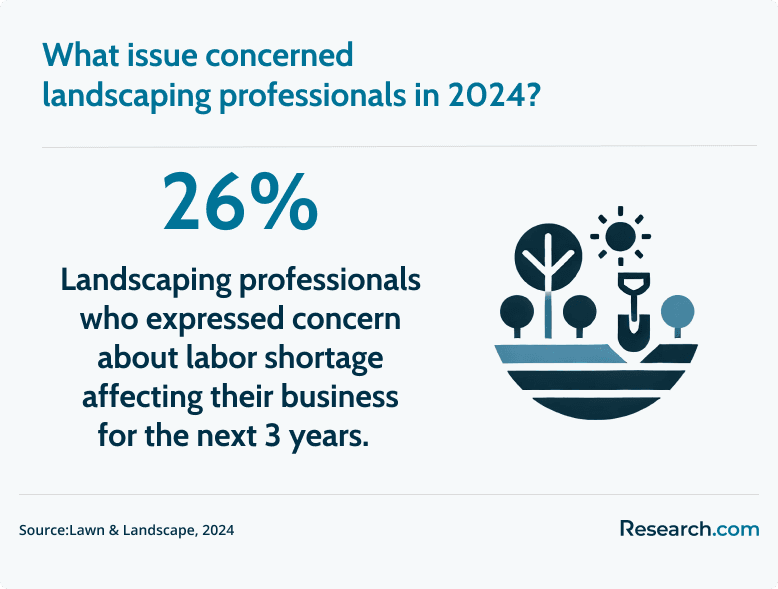
Landscaping employers continue to need workers who understand plants, soil, safety, equipment, irrigation, and customer service. About 26% of landscaping businesses report that the shortage of quality labor is a top concern for their companies. Shorter training programs are often designed to help motivated learners gain practical knowledge without spending years in school before entering the field.
Online vs. On-Campus Landscaping Technology Programs: Which Format Is Better?
An online landscaping technology program is usually better for students who need flexibility, lower commuting costs, and the ability to study around work or family responsibilities. An on-campus program may be better if you want in-person labs, direct access to equipment, scheduled studio time, and more face-to-face interaction with instructors and classmates.
The most important factor is not the delivery format by itself. It is whether the program teaches the right mix of plant science, design, irrigation, installation, maintenance, business operations, safety, and job-ready problem-solving. A well-designed online program can teach the theory, planning, estimating, and business side effectively, but you should ask how it helps students practice hands-on skills.
| Factor | Online program | On-campus program |
| Flexibility | Often better for working adults and students with changing schedules | Usually follows a set class schedule |
| Hands-on practice | May require self-directed projects, local practice, or jobsite experience | May provide labs, campus landscapes, tools, and instructor observation |
| Cost | Often avoids commuting, parking, and relocation expenses | May include campus-based fees and transportation costs |
| Networking | Depends on online forums, instructor access, alumni groups, or employer partnerships | Can offer more frequent in-person networking |
| Best fit | Independent learners who need convenience | Students who learn best through in-person demonstrations and structured routines |
Online skilled-trade education is also expanding beyond landscaping. Students comparing practical career programs may find similar flexibility in the cheapest maintenance technician training online, where remote coursework can help learners build technical knowledge before applying it in the field.
How Much Does an Online Landscaping Technology Trade School Program Cost?
Online landscaping technology programs can vary widely in price. Certificate-style programs often range from $500 to $10,000, depending on the provider, curriculum depth, student services, and credential type. More extensive programs offered through four-year universities can reach around $20,000 to $30,000 because they may include broader coursework, additional academic support, and higher institutional costs.
For the programs listed above, costs range from $45/course to an estimated total tuition of $35,360. When comparing schools, look beyond the advertised tuition. Ask whether books, software, design materials, exam fees, technology fees, payment-plan charges, or equipment costs are separate.
| Cost item | Why it matters | Question to ask |
| Tuition | This is the largest direct cost and varies by provider. | Is the listed tuition the full program price or only one course? |
| Books and materials | Plant guides, design materials, and technical references may add expense. | Are learning materials included in tuition? |
| Software or technology | Some design or business courses may involve digital tools. | Will I need to buy or subscribe to software? |
| Tools and equipment | Hands-on practice may require basic tools or local project supplies. | What equipment is required for assignments? |
| Licensure or exam preparation | Licensure-oriented pathways may involve additional testing or application costs. | Does the program include exam preparation, or is it separate? |
Landscaping training can be compared with other skilled-trade pathways, such as an affordable home remodeling and repair online diploma, where students also need to weigh tuition against tools, project materials, and career outcomes.
The earnings question: How should you think about ROI?
A landscaping credential does not guarantee a specific salary, but it can help you build skills that support better job performance, stronger client trust, and advancement into specialized or supervisory work. Workers who add experience, business skills, and technical specializations may improve their earning potential over time.
Those who add specializations can reach the 90th percentile, where salaries often exceed $54,000. The chart below shows how earnings can rise as workers gain experience and more advanced capabilities.
What Financial Aid Options Are Available for Online Landscaping Technology Students?
Financial aid depends on the school, credential type, accreditation status, and your personal eligibility. Some programs are low enough in cost that students use payment plans or employer support rather than federal aid. Others may qualify for loans, grants, veteran benefits, or workforce funding.
- School payment plans: Many trade schools let students split tuition into monthly payments, which can make a short program easier to budget for.
- Trade-specific scholarships: Landscaping associations, local employers, and private organizations may offer scholarships for students entering skilled trades.
- Federal student loans: Accredited institutions may provide access to federal loan options, which generally have different terms than private loans.
- State vocational grants: Some states fund training for residents preparing for in-demand occupations.
- Veteran education benefits: Veterans and eligible dependents may be able to apply benefits such as the GI Bill toward tuition and fees.
Always ask the school’s financial aid office which options apply to the specific program you are considering. A school may be accredited, but not every individual course or certificate is necessarily eligible for the same type of aid.
Students comparing online credential pathways can use the same funding checklist seen in other allied career guides, including dental assistant to dental hygienist online programs, where eligibility often depends on institution type, program approval, and student status.
Employer reimbursement can reduce out-of-pocket cost
If you already work for a landscaping company, nursery, grounds department, municipality, school district, golf course, or property management firm, ask whether your employer helps pay for training. Recent data shows that 57% of companies offer reimbursement for certifications, and 50% have budgets for continuing education.
When requesting reimbursement, explain how the program will help the employer: better estimating, safer pesticide handling, stronger irrigation knowledge, improved customer service, or the ability to take on higher-value projects.
What Are the Admission Requirements for an Online Landscaping Technology Trade School Program?
Most online landscaping technology trade school programs are designed for broad access. You typically do not need previous landscaping experience, a specific GPA, or standardized test scores. Programs usually look for students who have completed secondary education and are ready for career-focused training.
- High school diploma or GED: This is commonly required to show that you have completed basic academic preparation.
- Minimum age requirement: Many programs expect applicants to be at least 18 years old.
- Official transcripts: Schools may request records confirming high school graduation or equivalent completion.
- Online application: Applicants usually submit a standard form with personal and educational information.
The low barrier to entry is common in many online trade programs. For example, students researching free freight broker training online will also find options designed for career changers who do not have extensive prior experience.
Non-academic qualities that matter
Landscaping is practical, physical, and client-focused. Even if admission requirements are simple, success requires self-discipline, attention to detail, comfort with outdoor work, and willingness to keep learning. If you choose an online program, you also need enough independence to complete lessons, practice skills locally, and ask questions when you need help.
What Courses Are Included in an Online Landscaping Technology Trade School Program?
Online landscaping technology programs usually combine plant science, design, installation, maintenance, irrigation, pest management, and business operations. The strongest programs help students understand not only what to do in the field, but why specific decisions affect plant health, water use, customer satisfaction, and project profitability.
- Basic botany: Students learn plant structure, growth, reproduction, and the biological foundations of landscape performance.
- Irrigation technology: Coursework introduces the planning, installation, maintenance, and troubleshooting of watering systems.
- Garden ecology: Students examine how plants, soil, insects, climate, and surrounding environments interact.
- Landscape and garden design: Lessons cover layout, function, aesthetics, plant placement, and the creation of usable outdoor spaces.
- Landscape construction, installation, and maintenance: Students study hardscape basics, planting methods, site preparation, and ongoing care.
- Plant pathology: Coursework helps learners recognize and respond to common plant diseases.
- Pesticide safety and pest management: Students learn safe handling practices and integrated pest management concepts.
Many programs also include estimating, project management, and business operations. This matters because modern landscape businesses use software for design, bids, scheduling, crew management, client records, and job costing. Students who understand both fieldwork and operations may be better prepared for supervisory or entrepreneurial roles.
Hands-on trades often follow a similar pattern: online coursework teaches concepts, while students build applied skill through projects, practice, or supervised work. Learners who want another example can compare the structure of home remodeling and repair classes online, which also connect technical instruction to practical jobsite tasks.
| Course area | What you learn | Why employers value it |
| Plant science | Plant growth, health, soil relationships, and disease basics | Reduces costly plant failure and improves landscape quality |
| Irrigation | Water delivery systems, maintenance, and efficiency | Supports water management and long-term site performance |
| Design | Planning, layout, materials, and visual communication | Helps translate client needs into workable outdoor spaces |
| Construction and maintenance | Installation methods, hardscapes, planting, and upkeep | Builds readiness for field roles and crew responsibilities |
| Business operations | Estimating, bidding, marketing, and project coordination | Prepares students for client-facing work, supervision, or self-employment |
The chart below shows where many landscaping jobs are concentrated.
What Specializations Can You Pursue in Landscaping Technology?
A general landscaping technology program can prepare you for entry-level work, but specialization is often what helps you compete for better roles, higher-value projects, or business niches. Your best specialization should match your local market, interests, and physical work preferences.
- Landscape design: Best for students who enjoy planning, visual problem-solving, client conversations, and outdoor aesthetics.
- Irrigation technology: A strong fit for learners interested in water systems, troubleshooting, efficiency, and technical installation.
- Turfgrass management: Useful for careers involving sports fields, golf courses, school grounds, parks, or large lawns.
- Plant health and pest management: Appropriate for students who want to focus on disease prevention, pests, pesticide safety, and plant care.
- Sustainable landscaping: Relevant for work involving native plants, low-water landscapes, stormwater awareness, and environmentally conscious design.
- Landscape business operations: Valuable for students who want to estimate jobs, manage crews, market services, or run their own company.
The idea of using specialization to move beyond a general credential appears in many fields. For example, online graduate certificate programs in nurse midwifery show how focused credentials can help professionals define a clearer career niche, even though the industry and licensure context are very different.
Which specializations may be most profitable?
Not every landscaping service produces the same business return. If your goal is higher revenue or self-employment, compare specializations with services that customers are willing to pay more for. Design and build projects, lawn care, and chemical application are often discussed as higher-return service areas. The chart below breaks down profitability by service type.
Academic advancement: moving from technician to environmental specialist
Some students use landscaping technology as a first step toward broader environmental, horticultural, or sustainability work. If you are drawn to plant science, land stewardship, water use, and environmental planning, a certificate can help you test the field before pursuing more advanced study. Over time, related graduate pathways such as an accelerated master’s in environmental management online may be relevant for professionals moving into leadership, policy, or resource-management roles.
How to Choose the Best Online Landscaping Technology Trade School Program
The right program should fit your career goal, budget, schedule, and learning style. Do not choose based only on a school’s marketing language. Compare what you will actually learn, how your skills will be evaluated, what the credential means, and whether employers in your area recognize it.
Checklist for comparing programs
- Accreditation or recognition: Confirm whether the institution is accredited and whether the specific program has any relevant approval, registration, or industry recognition.
- Career alignment: Choose a curriculum that matches your target role, such as maintenance, installation, design, irrigation, turfgrass, or business ownership.
- Hands-on learning: Ask how the online program verifies practical skills, field observations, design work, or local projects.
- Schedule format: Decide whether you need a self-paced program or a structured course calendar.
- Total cost: Request a full cost breakdown, including tuition, books, materials, technology, tools, and fees.
- Instructor and advising support: Find out how quickly instructors respond and whether academic or technical help is available.
- Career services: Ask whether the program provides resume help, employer connections, apprenticeship referrals, or portfolio support.
- Graduate outcomes: Look for transparent information about what graduates do after completing the program.
- Licensure relevance: If you plan to pursue a regulated role, confirm requirements with your state before enrolling.
| If your goal is... | Look for a program with... | Avoid programs that... |
| Entry-level landscaping work | Plant basics, maintenance, safety, equipment awareness, and practical assignments | Focus only on theory with no applied skill development |
| Landscape design | Design principles, drawing or digital presentation, plant selection, materials, and portfolio projects | Offer only maintenance content with little design practice |
| Irrigation or technical specialization | Water management, system components, troubleshooting, and installation concepts | Do not cover irrigation beyond a brief overview |
| Business ownership | Estimating, bidding, marketing, customer communication, scheduling, and project management | Ignore pricing, sales, and client management |
| Licensure-oriented study | Clearly stated alignment with state education requirements | Make vague licensure claims without documentation |
Questions to ask before enrolling
- Is the institution accredited, and by whom?
- Does this specific program lead to a diploma, certificate, course completion record, or apprenticeship credential?
- How are hands-on skills taught and assessed in an online format?
- Are textbooks, software, tools, and materials included in tuition?
- Can I speak with an advisor about my state’s licensing or certification requirements?
- Does the school offer career support after completion?
- Can credits or coursework transfer into another program later?
- What happens if I need to pause or extend my studies?
Common mistakes to avoid
- Choosing only by price: Low tuition is helpful, but weak instruction or poor support can cost you time later.
- Assuming all credentials are equal: A course, certificate, diploma, apprenticeship, and licensure-oriented program can have very different value.
- Ignoring hands-on requirements: Landscaping is practical work. Online study should still lead to applied skill development.
- Overlooking local regulations: Pesticide application, contracting, and landscape architecture requirements can vary by location.
- Assuming salary outcomes are guaranteed: Earnings depend on region, experience, employer, specialization, seasonality, and business performance.
- Relying only on rankings: Rankings can narrow your search, but the best program is the one that fits your exact career plan.
What Careers Can You Pursue After an Online Landscaping Technology Program?
Graduates may pursue several types of roles, depending on their training, experience, local job market, and whether they add certifications or licenses. Some work directly in landscape maintenance or installation. Others move toward design, irrigation, pest management, crew leadership, public grounds work, or entrepreneurship.
| Career path | Typical focus | Who it fits best |
| Landscape or grounds maintenance worker | Plant care, mowing, pruning, mulching, cleanup, and site upkeep | Students who want quick entry into outdoor work |
| Landscape installation technician | Plant installation, soil preparation, hardscape support, and project execution | Learners who enjoy physical work and building outdoor spaces |
| Irrigation technician | Water systems, troubleshooting, maintenance, and efficiency | Students who prefer technical problem-solving |
| Landscape designer assistant | Site planning, plant selection, materials, drawings, and client project support | Design-oriented learners building a portfolio |
| Crew leader or supervisor | Team coordination, quality control, scheduling, and jobsite communication | Experienced workers adding formal training |
| Small landscaping business owner | Client acquisition, estimating, operations, hiring, and service delivery | Entrepreneurial students comfortable with both fieldwork and business management |
Self-employment is a realistic path, but it requires business skill
Starting a landscaping business is common, but it is not simply a matter of knowing plants. Owners must price jobs accurately, manage seasonal cash flow, maintain equipment, hire or subcontract labor, communicate with clients, and comply with local rules. About 20.8% of all landscaping professionals are self-employed, so business training can be valuable for students who want independence.
Related outdoor and public-sector careers
Landscaping technology can also support interest in parks, conservation, grounds management, and natural resource work. If your long-term goal is to work in forests, parks, or protected lands, compare landscaping training with the steps to becoming a forest ranger to understand how education, field experience, and public-sector requirements differ.
What Is the Job Market Like for Landscaping Technology Graduates?
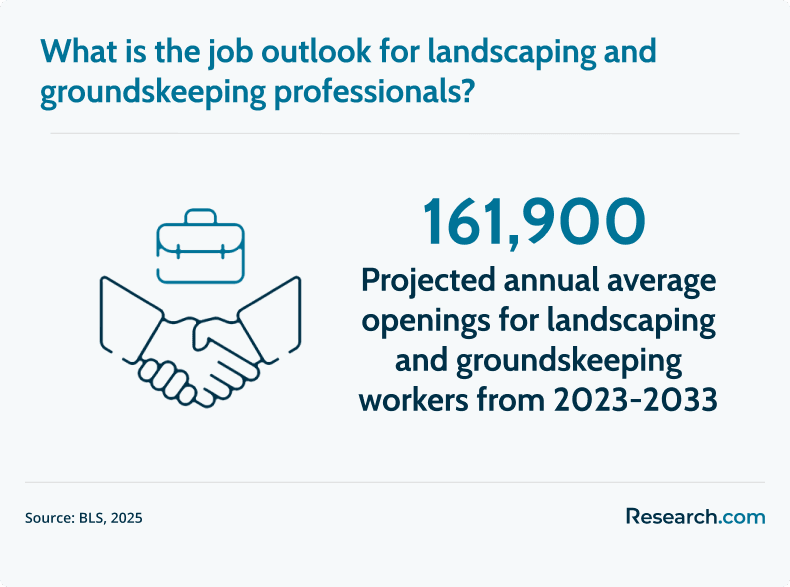
The job market for landscaping and grounds work is supported by steady demand for property maintenance, outdoor construction, commercial grounds care, residential services, and public spaces. There are an estimated 161,900 job openings for landscaping professionals every single year, reflecting both new demand and replacement needs as workers leave roles or retire.
Formal training can help you compete more effectively, especially if you can show practical knowledge in safety, plant care, irrigation, equipment use, customer service, and jobsite communication. However, job quality can vary by employer, region, season, and specialization.
Be realistic about turnover, physical demands, and safety
Landscaping is active outdoor work. The field has a high turnover rate of 30%, often connected to physical demands, seasonality, heat, equipment use, and exposure to common landscaping hazards. A good program should teach safety practices, but students should still evaluate whether the work environment fits their health, stamina, and long-term goals.
Green skills are becoming more important
Water management, native plants, sustainable design, soil health, and climate-conscious landscape planning are increasingly relevant for property owners, municipalities, and environmentally focused clients. Students interested in sustainability may later build on their landscaping foundation through additional education, including fast track sustainability master’s programs online for broader leadership or environmental planning goals.
Are Landscaping Technology Program Accreditations Recognized by Employers?
Employers may view accreditation, institutional reputation, apprenticeships, and industry-recognized credentials as signals that a student completed structured training. Accreditation can also matter for financial aid, transfer options, and credibility. However, not all forms of recognition mean the same thing. For example, institutional accreditation, programmatic approval, a registered apprenticeship, and Better Business Bureau recognition are different categories.
Before enrolling, ask employers in your area what credentials they respect. If you are comparing landscaping training with broader credential options, Research.com’s guide to certificate programs that pay well can help you think through how short-term credentials are evaluated across different careers.
What Graduates Say About Online Landscaping Technology Training
- Jason: "I had always enjoyed outdoor work, but I did not understand the science behind healthy landscapes. The online program helped me connect soil, plants, water, and maintenance decisions. I could keep working while studying, and I came away with more confidence in my technical knowledge."
- Oscar: "I wanted to run my own landscaping company, but estimating and pricing jobs made me nervous. The business lessons on bids and project costs were the most useful part for me. They helped me move from doing side jobs to operating a real business."
- Matteo: "I cared about sustainability before enrolling, but I did not know how to apply it professionally. The training in native plants and low-water design gave me practical ways to help clients create landscapes that look good and support the local environment."
Do Online Landscaping Technology Programs Offer Career Support?
Some online landscaping technology programs provide career support, but services vary widely. You may find resume reviews, interview guidance, job boards, instructor feedback, portfolio support, apprenticeship referrals, or employer networking. Other programs may focus mainly on coursework and offer limited placement help.
Ask for specifics before enrolling. “Career support” should mean more than a generic job-search article. Stronger programs can explain how they help students prepare for real roles, whether they maintain employer relationships, and whether graduates receive support after completion.
If affordability is a major concern, compare the program’s cost and support services with broader low-cost education options such as cheap online colleges, especially if you may later want a degree or FAFSA-eligible pathway.
Should You Pursue Additional Landscaping Certifications or Licenses?
Additional certifications and licenses can be useful if they match your job goals and local regulations. Possible areas include irrigation, pesticide safety, sustainable landscaping, equipment safety, and advanced landscape design. These credentials may help you qualify for specialized responsibilities, but you should not pay for extra certifications without confirming that employers or regulators actually value them.
Licensing rules can vary by state and by activity. Pesticide application, contracting, and landscape architecture may have separate requirements. Before choosing add-on training, check your state agency websites, ask local employers, and speak with program advisors. Students who want lower-cost ways to build credentials can also compare continuing education options through cheap online colleges.
Key Insights
- The best program depends on your end goal. A short diploma may be enough for entry-level landscaping work, while design, irrigation, business ownership, or licensure-oriented goals may require deeper or more specialized training.
- Program length varies significantly. Options in this guide range from approximately 78 hours for a course series to 3 years for a more intensive certificate pathway.
- Cost should be evaluated in full. Tuition is only one part of the expense. Ask about materials, software, tools, fees, and licensure-related costs before enrolling.
- Online programs can be practical, but hands-on learning matters. Since landscaping is field-based work, confirm how an online program helps you practice, demonstrate, or document applied skills.
- Accreditation and recognition are not interchangeable. Institutional accreditation, registered apprenticeships, and other forms of recognition carry different meanings. Verify what employers and regulators in your area require.
- Specialization can improve career direction. Irrigation, design, turfgrass, plant health, sustainability, and business operations can help you move beyond general labor into more focused roles.
- The job market has opportunity and challenges. There are an estimated 161,900 job openings for landscaping professionals every single year, but the field also has a high turnover rate of 30% and physically demanding working conditions.
- Do not rely on rankings alone. Use rankings as a starting point, then compare curriculum, accreditation, support, cost, hands-on requirements, and local employer expectations.
References:
- CareerOneStop. (2025). Landscaping and Groundskeeping Workers. Retrieved August 13, 2025, from https://www.careeronestop.org/Toolkit/Careers/Occupations/occupation-profile.aspx
- Lawn & Landscape. (2024, October 4). 2024 State of the Industry report. Retrieved August 13, 2025, from https://www.lawnandlandscape.com/news/state-of-industry-report
- National Association of Landscape Professionals. (2024). Stay Competitive: Key Trends from the 2024 Compensation & Benefits Report. Retrieved August 13, 2025, from https://blog.landscapeprofessionals.org/stay-competitive-key-trends-from-2024-compensation-benefits-report
- O*NET OnLine. (2025). Landscaping and Groundskeeping Workers. Retrieved August 13, 2025, from https://www.onetonline.org/link/summary/37-3011.00
- U.S. Bureau of Labor Statistics. (2024). May 2024 OEWS Profiles. Retrieved August 13, 2025, from https://data.bls.gov/oesprofile
- U.S. Bureau of Labor Statistics. (2025). Grounds Maintenance Workers. Retrieved August 13, 2025, from https://www.bls.gov/ooh/building-and-grounds-cleaning/grounds-maintenance-workers.htm
- U.S. Bureau of Labor Statistics. (2025). Occupational projections, 2023–2033, and worker characteristics, 2023 (Numbers in thousands). Retrieved August 13, 2025, from https://www.bls.gov/emp/tables/occupational-projections-and-characteristics.htm
Other Things You Should Know About Online Landscaping Technology Trade School Programs
In 2027, after completing an online landscaping technology trade school program, graduates can pursue various career paths such as landscape designer, grounds manager, horticulturist, or lawn care specialist. These roles often involve creating or maintaining outdoor spaces, and the skills gained from the programs are applicable to both residential and commercial projects.
In 2027, online landscaping technology trade schools offer flexibility, allowing students to learn at their own pace. Programs are often more affordable than traditional options and provide up-to-date knowledge on sustainable practices, advanced design software, and modern landscaping techniques, making graduates well-prepared for the evolving industry.
In 2027, online landscaping technology trade school programs typically offer courses in landscape design, plant identification, sustainable practices, computer-aided design (CAD), and horticulture. These courses aim to provide students with a comprehensive understanding of both the technical and creative aspects of landscaping.