2027 What Degree IS 4 Years of College: Test Prep Guide, Dates, Scores, and Tips

Co-Founder and Chief Data Scientist
If someone says they completed four years of college, they usually mean they earned a bachelor's degree, but the details matter for admissions, cost, transfer credits, and career outcomes. BLS data published in 2025 shows workers age 25 and older with a bachelor's degree had median weekly earnings of $1,543 in 2024, which makes this credential a major financial decision. This guide is for students, parents, transfers, and career changers who want to understand degree types, test expectations, costs, online options, and how to choose wisely.
Key Things You Should Know
- Four years of college in the United States most commonly lead to a bachelor's degree, usually requiring about 120 semester credits across general education, major courses, electives, and often a capstone, internship, lab, or clinical experience.
- Admissions may involve GPA, transcripts, essays, recommendations, and optional or required SAT or ACT scores; the SAT ranges from 400 to 1600, while the ACT composite ranges from 1 to 36.
- College Board's 2024 pricing report lists average 2024-2025 published tuition and fees at $11,610 for in-state public four-year institutions and $43,350 for private nonprofit four-year institutions, so total cost and aid can change the value calculation significantly.
What degree is typically earned after four years of college in the United States?
A four-year college degree in the United States is typically a bachelor's degree. It is an undergraduate credential awarded by colleges and universities after students complete a structured program of general education, major-specific courses, electives, and institutional graduation requirements.
The most common bachelor's degrees include the Bachelor of Arts, Bachelor of Science, Bachelor of Business Administration, Bachelor of Fine Arts, Bachelor of Science in Nursing, and Bachelor of Social Work. The name matters because it often signals the academic focus: a Bachelor of Arts may include broader liberal arts study, while a Bachelor of Science usually requires more technical, quantitative, laboratory, or professional coursework.
Although "four-year degree" is the common phrase, the actual timeline depends on credit load, transfer credits, course availability, placement requirements, work schedule, and whether the student attends full time. A student taking 15 credits per semester can often finish in four academic years, while part-time students may take longer. Accelerated programs, summer courses, dual enrollment, Advanced Placement credit, and transfer-friendly policies can shorten the timeline.
A bachelor's degree usually fits students who want access to careers that require a four-year credential, plan to enter a licensed profession, want to pursue graduate school later, or need broader academic preparation before choosing a specialized career. It may not be the fastest or most affordable option for someone seeking immediate entry into a skilled trade, a short-term technical role, or a career where a certificate and portfolio are more important than a degree.
How does a four-year bachelor's degree compare to associate and graduate degrees?
A bachelor's degree sits between an associate degree and a graduate degree. Understanding that hierarchy helps students avoid overpaying for a credential they do not need-or underpreparing for careers that require advanced study.
The table below compares the major degree levels by typical purpose, time commitment, and best-fit student profile. It is not a ranking; the "right" credential depends on the career goal, budget, timeline, and transfer plan.
| Credential | Typical length | Common purpose | Best fit |
| Certificate | Several months to about one year | Builds job-specific skills in a narrow field | Students seeking a fast career pivot, technical upskilling, or an add-on credential |
| Associate degree | About two years full time | Prepares students for entry-level roles or transfer into a bachelor's program | Cost-conscious students, undecided students, and those who want a lower-risk starting point |
| Bachelor's degree | About four years full time | Provides broad undergraduate preparation and major-specific training | Students targeting careers, graduate programs, or licenses that require a four-year degree |
| Master's degree | Often one to three years after a bachelor's | Provides advanced professional or academic specialization | Students seeking leadership, licensure, specialization, or career advancement |
| Doctorate or professional degree | Often three or more years after a bachelor's or master's | Prepares students for advanced practice, research, academia, or professional licensure | Students pursuing fields such as medicine, law, research, psychology, or university teaching |
An associate degree can be a smart first step if the credits transfer cleanly into a bachelor's program. Students comparing lower-cost starting routes, including a Barbados community college pathway or similar two-year option, should confirm transfer agreements before enrolling because not all credits apply to every major.
The bachelor's degree is often the main "four-year college" credential, but graduate education may be required for some careers. For example, physical therapists need a doctoral degree, lawyers need a law degree, many counselors need a master's degree, and some senior business or data roles prefer graduate training. The practical question is not "Which degree is highest?" but "Which credential is required for the job I actually want?"
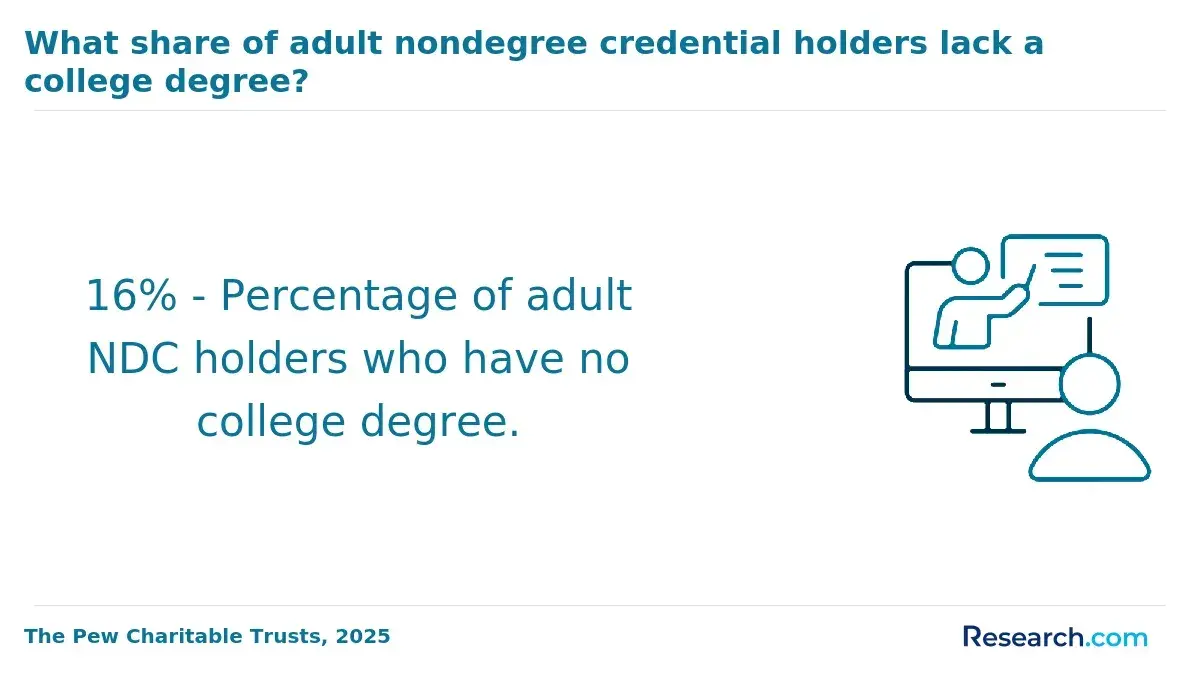
What majors and academic pathways are most common in four-year college programs?
Four-year programs usually combine a major, general education, electives, and sometimes a minor or concentration. A major is the student's primary field of study, while a pathway is the broader route from coursework to a career, license, graduate program, or professional portfolio.
Common bachelor's majors can be grouped by the type of preparation they provide. This table helps students compare how majors differ in structure and career direction.
| Academic pathway | Common majors | Typical learning focus | Career direction |
| Business and management | Accounting, finance, marketing, management, supply chain | Organizations, data, markets, operations, communication | Business analyst, accountant, marketer, financial analyst, operations coordinator |
| STEM and computing | Computer science, engineering, biology, chemistry, mathematics, data science | Quantitative reasoning, systems, labs, coding, scientific methods | Software developer, engineer, lab technician, data analyst, research assistant |
| Health and human services | Nursing, public health, social work, exercise science, health administration | Patient care, community health, ethics, clinical or field practice | Registered nurse, case manager, health coordinator, graduate health program applicant |
| Education | Elementary education, secondary education, special education | Teaching methods, classroom management, child development, field placement | Teacher, education coordinator, instructional support professional |
| Arts, humanities, and communication | English, history, communication, design, fine arts, philosophy | Writing, analysis, creativity, culture, media, research | Writer, editor, designer, communications specialist, graduate school applicant |
| Social sciences | Psychology, sociology, political science, economics, criminal justice | Human behavior, institutions, research methods, policy, statistics | Research assistant, policy aide, probation support, HR assistant, graduate school applicant |
Current trends are changing how students choose majors. Employers in many fields increasingly look for evidence of applied skills, such as data literacy, AI tool use, writing ability, teamwork, and problem solving. That does not make the bachelor's degree irrelevant; it means students should choose programs that include projects, internships, labs, practicums, simulations, or portfolio work rather than relying on classroom credits alone.
Students who need flexibility can also compare online degree programs, especially in fields such as business, psychology, criminal justice, communications, and information technology. However, majors with labs, clinical placements, student teaching, or licensure requirements may still require in-person components.
What admission requirements, tests, and scores are needed for four-year degree programs?
Admission requirements for four-year degree programs vary by school selectivity, major, residency status, and applicant type. A less selective public university may focus heavily on GPA and completed high school coursework, while a highly selective college may review essays, recommendations, extracurriculars, advanced coursework, and demonstrated academic fit.
The table below summarizes the most common admissions components. Use it as a planning tool, not as a universal checklist, because individual colleges and competitive majors may set stricter expectations.
| Requirement | What it shows | What students should check |
| High school transcript or prior college transcript | Academic preparation and course history | Required coursework, GPA calculation, transfer credit rules |
| GPA | Consistency and readiness for college-level work | Minimum GPA, average admitted GPA, major-specific GPA requirements |
| SAT or ACT | College readiness measure when required or submitted | Whether the school is test-required, test-optional, test-flexible, or test-blind |
| Essays or personal statement | Writing ability, goals, context, and fit | Prompt deadlines, word limits, scholarship essay overlap |
| Recommendations | Academic habits and character from teachers or counselors | Number required, who may submit, submission deadline |
| Portfolio, audition, or prerequisite review | Field-specific readiness | Major deadlines for art, music, nursing, engineering, or education programs |
Testing policies have become more varied, so students should not assume every school wants the same score report. The main tests and score ranges are straightforward, but the decision to submit scores should be based on each college's policy and the student's strength compared with the admitted-student profile.
| Test or assessment | Score scale | Typical use | Common timing |
| SAT | 400 to 1600 | Undergraduate admission and some scholarships | Often taken in spring of junior year and again in late summer or fall of senior year |
| ACT | 1 to 36 composite | Undergraduate admission and some scholarships | Often taken in junior year or early senior year |
| AP exams | 1 to 5 | Possible college credit or placement | Administered after AP coursework, usually in May |
| English proficiency tests | Varies by exam | Required for many international or multilingual applicants depending on school policy | Before application deadlines, with time allowed for score delivery |
| Placement tests | Varies by institution | Math, writing, or language course placement after admission | Usually after acceptance and before registration |
Students should build an application calendar early because dates can affect admission and aid. Early decision and early action deadlines commonly fall around November, regular decision deadlines often cluster between January and February, and priority scholarship or honors deadlines may be earlier than the general admission deadline. The FAFSA timeline can change by aid year, so applicants should confirm the opening date and priority deadline with each college's financial aid office.
A practical test-prep plan should start with a diagnostic exam, focus on weak content areas, and schedule the official test early enough to allow one retake. Students applying test-optional should still prepare if scores could strengthen scholarship eligibility or offset a weaker GPA, but they should not submit scores that fall well below a college's published admitted-student range unless the school recommends otherwise.
How do online four-year degree programs differ from traditional campus-based options?
Online and campus-based bachelor's programs can lead to the same type of degree when they are properly accredited and offered by a legitimate institution. The biggest differences are not the credential name, but the learning format, schedule, support services, networking opportunities, and hands-on requirements.
The comparison below helps students decide which format better matches their life, budget, learning style, and career goal.
| Factor | Online four-year program | Campus-based four-year program |
| Schedule | Often more flexible, with asynchronous or evening coursework | More structured, with scheduled classes and campus activities |
| Cost profile | May reduce housing, commuting, and relocation costs | May include room, board, transportation, and campus fees |
| Interaction | Relies on discussion boards, video meetings, messaging, and virtual advising | Offers face-to-face faculty access, clubs, labs, and peer networks |
| Hands-on learning | May require local placements, intensives, labs, or approved sites | Often easier for labs, studios, clinicals, and student teaching |
| Best fit | Working adults, parents, military learners, transfers, and self-directed students | Recent high school graduates, residential learners, and students needing in-person structure |
Online learning works best for students who are organized, comfortable with technology, and able to manage deadlines without daily in-person reminders. It may be less suitable for students who need frequent face-to-face accountability, want a traditional residential experience, or are entering fields where in-person facilities and supervised practice are central to training.
One common mistake is assuming "online" automatically means easier. A legitimate online bachelor's degree should still require reading, writing, exams, projects, participation, and major-level work. Another mistake is enrolling before confirming whether the online program meets state licensure requirements for teaching, nursing, counseling, social work, or other regulated careers.
What accreditation should a four-year college or university have for a valid degree?
For a four-year degree to be broadly recognized, the institution should hold accreditation from an accreditor recognized by the U.S. Department of Education or the Council for Higher Education Accreditation. Institutional accreditation is the baseline signal that the college or university has undergone external quality review.
Students should also check whether their specific program needs specialized accreditation. This matters most in fields where employers, graduate schools, licensing boards, or certification bodies expect program-level approval.
| Field | Accreditation issue to check | Why it matters |
| Nursing | Programmatic nursing accreditation and state board approval | Can affect licensure eligibility and employer recognition |
| Education | State approval and educator preparation accreditation where applicable | Can affect teacher certification eligibility |
| Engineering | ABET accreditation for many engineering programs | Can affect licensure pathways and employer expectations |
| Business | Specialized business accreditation may be a quality signal | Can matter for competitive employers or graduate admissions, though it is not always required |
| Social work | CSWE accreditation for social work programs | Often important for advanced standing master's programs and licensure pathways |
To verify accreditation, students should check the college's official accreditation page, confirm the accreditor in a recognized database, and review program-specific requirements for the intended career. Accreditation should be current, not merely "pending," "in process," or described in vague marketing language.
Red flags include schools that promise unusually fast completion without prior credits, avoid naming their accreditor, pressure students to enroll immediately, advertise guaranteed jobs or salaries, or refuse to explain transfer credit and refund policies. A valid bachelor's degree should stand up to review by employers, graduate schools, licensing boards, and financial aid agencies.
What does the typical curriculum and coursework look like in a four-year bachelor's program?
A typical bachelor's program requires about 120 semester credits, though some engineering, education, architecture, nursing, and professional programs may require more. The curriculum is designed to build broad academic foundations first, then move into major-specific depth and applied work.
The table below shows how credits are commonly distributed. Exact requirements vary by institution, but this structure explains why a bachelor's degree takes longer than a certificate or associate program.
| Curriculum component | Typical role in the degree | Examples |
| General education | Builds broad skills across disciplines | Writing, math, science, humanities, social science, communication |
| Major core | Provides required foundation in the chosen field | Introductory and intermediate courses required of all majors |
| Major electives or concentration | Allows specialization within the major | Cybersecurity within IT, digital marketing within business, child development within education |
| Free electives | Lets students explore interests or complete credits | Language courses, arts courses, additional technical classes |
| Experiential learning | Connects classroom learning to practice | Internship, practicum, clinical, lab, fieldwork, research, portfolio, capstone |
Coursework often becomes more specialized by year. First-year students usually complete writing, math, introductory major courses, and general education. Sophomores move into prerequisites and intermediate courses. Juniors take upper-division major work, research methods, labs, or professional courses. Seniors often complete advanced electives, internships, student teaching, clinical rotations, senior projects, or capstones.
Students should pay close attention to prerequisite chains. Missing one required math, science, language, or methods course can delay graduation by a full semester if the next course is only offered once per year. This is especially important in engineering, nursing, education, computer science, and laboratory sciences.
A smart curriculum plan also leaves room for career preparation. Students should use electives strategically for coding, statistics, writing, public speaking, project management, AI literacy, or industry tools. Those considering graduate school later can compare undergraduate prerequisites with future options, including most lucrative masters degrees, so they do not discover missing requirements after graduation.
How much does a four-year degree cost, and what financial aid can students access?
The cost of a four-year degree depends on tuition, fees, books, housing, food, transportation, technology, health insurance, lost work time, and how long the student takes to finish. The most useful number is not sticker price alone, but net price: the amount remaining after grants and scholarships are applied.
College Board's 2024 Trends in College Pricing report gives a useful benchmark for published tuition and fees. These figures do not include housing, food, or personal expenses, but they help students compare broad institution types.
- Average published tuition and fees for in-state students at public four-year institutions in 2024-2025: $11,610.
- Average published tuition and fees for out-of-state students at public four-year institutions in 2024-2025: $30,780.
- Average published tuition and fees at private nonprofit four-year institutions in 2024-2025: $43,350.
Financial aid can substantially change what students actually pay. Students should file the FAFSA when eligible, compare institutional aid packages, and ask each school whether scholarships are renewable for all four years or only for the first year.
The most common aid options include the following. Students should compare whether aid reduces direct costs, creates future repayment obligations, or requires ongoing academic progress.
- Federal, state, and institutional grants that usually do not need to be repaid if eligibility rules are met.
- Merit scholarships based on academics, talent, leadership, service, or other criteria set by the school or sponsor.
- Need-based scholarships that use family income, assets, household size, and school-specific formulas.
- Federal work-study or campus employment that can help with indirect expenses but may not cover large tuition gaps.
- Federal student loans, which must be repaid and should be compared by interest rate, borrowing limit, and repayment options.
- Employer tuition assistance, military education benefits, community college transfer pathways, and prior learning credit where available.
To control cost, students should calculate the four-year total, not just the first-year bill. They should also ask how many students in the major graduate on time, whether required courses are available every semester, and how transfer or AP credits apply. A program with a lower annual tuition can become more expensive if limited course availability adds an extra year.
Long-term academic planning matters as well. Students who expect to continue into graduate or doctoral education should avoid exhausting their borrowing capacity too early, and those comparing later options can review a cheap online doctorate degree only after confirming that the credential aligns with their profession and accreditation needs.
What careers, salaries, and job outlook are associated with four-year degrees?
A bachelor's degree can open doors in business, healthcare, technology, education, government, social services, communications, and scientific fields. However, outcomes vary widely by major, location, internships, work experience, licensing requirements, and the strength of the student's professional network.
BLS education data published in 2025 shows that people age 25 and older with a bachelor's degree had lower unemployment in 2024 than those with only a high school diploma. For readers, the takeaway is not that a bachelor's degree guarantees job security, but that the credential is often associated with broader access to professional roles and career mobility.
The table below highlights examples of occupations where a bachelor's degree is commonly required or useful. Salary and outlook figures should be treated as labor-market benchmarks, not promises for individual graduates.
| Career area | Example roles | Common degree connection | BLS 2024 median pay example |
| Technology | Software developer, systems analyst, data analyst | Computer science, information systems, data science, math | Software developers: $133,080 |
| Business and finance | Accountant, financial analyst, marketing analyst | Accounting, finance, economics, business analytics, marketing | Accountants and auditors: $81,680 |
| Healthcare | Registered nurse, health services coordinator, public health analyst | Nursing, public health, health administration, biology | Registered nurses: $93,600 |
| Education | Elementary teacher, secondary teacher, special education teacher | Education major plus state-approved teacher preparation | Kindergarten and elementary school teachers: $62,340 |
| Research and communication | Market research analyst, communications specialist, policy assistant | Marketing, statistics, communication, political science, sociology | Market research analysts: $76,950 |
AI and automation are reshaping bachelor's-level work. Routine tasks in marketing, coding, accounting, writing, and administration are increasingly supported by software, but employers still need people who can interpret data, communicate clearly, manage projects, apply ethics, and solve ambiguous problems. Students should therefore treat AI literacy as a career skill rather than a separate tech topic.
A bachelor's degree is most likely to be worth the investment when the student chooses a program tied to a realistic career path, completes internships or applied projects, keeps debt manageable, and builds marketable skills before graduation. It is less likely to pay off quickly when the student enrolls without a plan, changes majors repeatedly, borrows heavily for a low-paying field without a repayment strategy, or ignores licensure requirements.
How can students choose a reputable four-year college aligned with their career goals?
Choosing a four-year college should start with the career goal, not the campus brochure. A reputable program should be accredited, financially transparent, academically aligned with the student's goals, and able to show meaningful support for advising, transfer credit, career preparation, and graduation planning.
Students can use the following process to compare schools in a practical way. The goal is to move from "Which college sounds good?" to "Which option gives me the best chance to complete the right credential at a manageable cost?"
- Define the target outcome, such as a specific job, graduate program, license, portfolio, or career field.
- Confirm that a bachelor's degree is the right credential and that a shorter certificate, associate degree, apprenticeship, or employer training route would not be more efficient.
- Verify institutional accreditation and any programmatic accreditation required for the field.
- Compare total estimated cost after grants and scholarships, including housing, transportation, books, technology, and fees.
- Ask how transfer, AP, dual enrollment, military, or prior learning credits apply to the specific major.
- Review graduation rates, retention, advising access, internship support, career services, and required field placements.
- Check whether the curriculum includes current tools, industry projects, research opportunities, labs, clinicals, or portfolio development.
- Speak with admissions, financial aid, academic advising, and the program department before committing.
Students should also watch for common mistakes. These errors can add cost, delay graduation, or leave a student with a credential that does not match the intended career.
- Choosing a school based only on rankings, athletics, location, or brand name without checking program fit.
- Assuming private, public, nonprofit, and for-profit labels alone determine quality or return on investment.
- Ignoring whether required courses are offered often enough to graduate on time.
- Submitting enrollment deposits before comparing financial aid packages and renewal conditions.
- Choosing an online program for a licensed field without checking state approval and placement rules.
- Borrowing for four years without estimating monthly loan payments after graduation.
- Waiting until senior year to seek internships, career advising, references, or portfolio feedback.
For some students, a bachelor's degree is the best route; for others, a shorter credential may be the smarter first move. Career changers who need faster employment may want to compare quick certifications that pay well before committing to four years, especially if the desired role values technical proof of skill more than a traditional degree.
Other Things You Should Know About
Yes, if you bring in transferable credits, take summer courses, enroll in an accelerated program, or carry a heavier course load. The key is confirming that every credit applies to your degree requirements, not just to general elective totals.
Usually, yes. Most U.S. master's, doctoral, and professional programs require an accredited bachelor's degree before admission, though prerequisite courses, GPA, exams, work experience, or portfolios may also be required.
Yes, many students change majors, but the timing matters. Switching early may have little impact, while switching after several semesters can add prerequisites, delay graduation, and increase cost.
Many employers focus on accreditation, institution reputation, skills, experience, and job fit. If the online program is properly accredited and does not label the diploma differently, the format may matter less than your ability to demonstrate competence.
References
- 4-Year Programs Explained https://gradplan.org/career/four-year-programs/
- Bachelor of Education Degree (Here's What To Expect) https://www.alleducationschools.com/teaching-degrees/bachelors-in-education/
- Online Degree vs. Traditional: Choosing the Right Path https://beal.edu/online-degree-vs-traditional/
- Types of College Degrees https://www.act.org/content/act/en/students-and-parents/high-school-success/what-to-do-after-high-school/college-degrees.html
- Future of Higher Education: Choosing Major | Wally Boston https://wallyboston.com/choosing-major/
- Admission requirements - Esade Bachelors https://www.esade.edu/bachelor/en/degrees/admissions/admission-requirements
- Admissions Criteria https://ed.wum.edu.pl/pl/admissions-criteria
- Types of Pathways - The Education Trust-New York https://newyork.edtrust.org/types-of-pathways/
- 12 Promising Non-traditional College Pathways to Attainment - Education Design Lab https://eddesignlab.org/news-events/12-promising-non-traditional-college-pathways-to-attainment/
- Average Cost Of College 2024-2025 | Bankrate https://www.bankrate.com/loans/student-loans/average-cost-of-college/