2027 IS a 3 4 GPA Good: Test Prep Guide, Dates, Scores, and Tips

Co-Founder and Chief Data Scientist
A 3.4 GPA can feel hard to interpret: it is clearly above average, but not automatically "safe" for every college or major. It matters because admissions remains crowded; Common App reported more than 7.5 million first-year applications in a recent application cycle, meaning students need a clear strategy, not just a GPA number.
This guide is for high school students, transfer applicants, parents, and adult learners who want to understand where a 3.4 fits, what test scores can strengthen it, and how to choose realistic college, scholarship, and career options.
Key Things You Should Know
- A 3.4 unweighted GPA usually equals a B+ average and is good for many public, regional, test-optional, and moderately selective colleges, but it is below the typical profile for the most selective programs.
- Strong SAT or ACT scores, rigorous courses, an upward grade trend, and credible recommendations can make a 3.4 applicant more competitive than the GPA alone suggests.
- Financial fit matters: the maximum Federal Pell Grant for 2025-26 is $7,395, so students with a 3.4 should compare merit aid, need-based aid, transfer pathways, and total cost before choosing a school.
Is a 3.4 GPA considered good for college admissions and competitive programs?
Yes, a 3.4 GPA is generally considered good, especially if it is an unweighted GPA on a 4.0 scale. It usually reflects mostly A and B grades, consistent academic performance, and readiness for college-level work. The important caveat is that "good" depends on the school, major, course rigor, and whether the GPA is weighted or unweighted.
An unweighted 3.4 means your grades are measured without extra points for honors, Advanced Placement, International Baccalaureate, or dual-enrollment courses. A weighted 3.4 may mean a different thing: if your school adds extra GPA points for advanced classes, a weighted 3.4 could reflect a lower unweighted average. Colleges often recalculate GPAs using their own methods, so applicants should focus on the full transcript rather than the headline number.
The table below shows how admissions readers may interpret a 3.4 GPA in common contexts. Use it as a decision guide, not a universal rule, because individual colleges weigh rigor, essays, test scores, and institutional priorities differently.
| Applicant context | How a 3.4 GPA is usually viewed | Best next move |
| Mostly standard-level courses | Solid, but may need stronger test scores or activities for selective colleges | Add rigor where realistic and show an upward trend |
| Honors, AP, IB, or dual-enrollment courses | More competitive because rigor gives the GPA stronger context | Highlight challenging courses and strong grades in core subjects |
| Upward grade trend | Often viewed positively because it suggests improving readiness | Use essays or counselor context to explain growth |
| Downward grade trend | May raise concerns, especially for competitive majors | Address causes carefully and show recent academic stability |
| Highly competitive major | May be below the strongest applicant range | Apply broadly and include alternate majors or pathway programs |
A 3.4 is strongest when it comes with evidence that you can handle college work. For example, a student with a 3.4 in calculus, lab science, and college-level English may be read differently from a student with the same GPA in less demanding courses. Admissions teams are usually asking a practical question: will this student persist, complete credits, and contribute to the campus?
What test scores and academic profile typically match a 3.4 GPA applicant?
A 3.4 GPA applicant often fits best with a balanced academic profile: solid grades, some course rigor, steady involvement outside class, and test scores that either confirm or exceed classroom performance. Because many colleges remain test-optional, the decision to submit scores should be strategic rather than automatic.
The digital SAT became the standard SAT format in the U.S. in 2024, making test familiarity more important than it was for students who prepared with older paper-based materials. For a 3.4 student, a score that is above a college's published middle range can help offset a transcript that is good but not top-tier.
The table below summarizes practical score positioning. These are planning ranges, not admissions guarantees, and applicants should always compare them with the middle 50% score ranges published by each college.
| Application goal | Useful SAT/ACT positioning | What it signals with a 3.4 GPA |
| Open-admission or broad-access college | Scores may be optional or used for placement | The GPA is often enough for admission, but scores may affect math or English placement |
| Moderately selective college | At or above the school's middle 50% range | Confirms that the GPA reflects college readiness |
| Selective college | Near the upper part of the school's middle 50% range | Helps reduce concern that the GPA is below the applicant pool average |
| Competitive STEM, business, nursing, or honors pathway | Strong math or composite score aligned with the major | Supports readiness for quantitative or high-demand coursework |
Beyond testing, the best-matched academic profile for a 3.4 applicant usually includes a few specific strengths. Before applying, review whether your file shows the following evidence clearly:
- Core-course strength in English, math, science, social science, and world language, because colleges often care more about academic subjects than electives.
- At least some rigor, such as honors, AP, IB, dual enrollment, or advanced courses available at your school.
- A clear upward trend, especially in junior year or the most recent full academic year.
- Activities that show depth, responsibility, work experience, caregiving, leadership, service, or sustained interest rather than a long but shallow list.
- A senior-year schedule that does not look like you stopped challenging yourself after applications were submitted.
One common mistake is submitting a test score just because you have one. If your score is below a college's typical admitted-student range and the school is test-optional, it may be better to apply without it and let your transcript, essays, and recommendations carry more weight.
How does a 3.4 GPA affect chances at selective, mid-tier, and open-admission colleges?
A 3.4 GPA gives you different levels of opportunity depending on the admission model. It is usually competitive at many regional public universities, private colleges with holistic admissions, and open-access institutions. It is less predictable at selective colleges where many applicants have GPAs closer to the top of the scale.
The most useful strategy is to build a balanced college list rather than label the GPA as simply "good" or "bad." The table below shows how to think about reach, target, and likely options with a 3.4.
| College type | How a 3.4 GPA may affect admission | Smart application strategy |
| Highly selective colleges | Often a reach unless rigor, testing, essays, or special achievements are very strong | Apply selectively and avoid building the whole list around reach schools |
| Selective public flagships | Depends heavily on residency, major, class rigor, and grade trend | Consider less selective majors, regional campuses, or transfer pathways |
| Mid-tier public or private colleges | Often a realistic target if the rest of the profile is consistent | Compare admission ranges, merit aid, and major-specific requirements |
| Regional universities | Frequently a strong fit for a 3.4 student | Look for direct admission to the intended major and internship access |
| Community colleges and open-admission colleges | Usually not a barrier to admission | Use the pathway to raise GPA, save money, and transfer strategically |
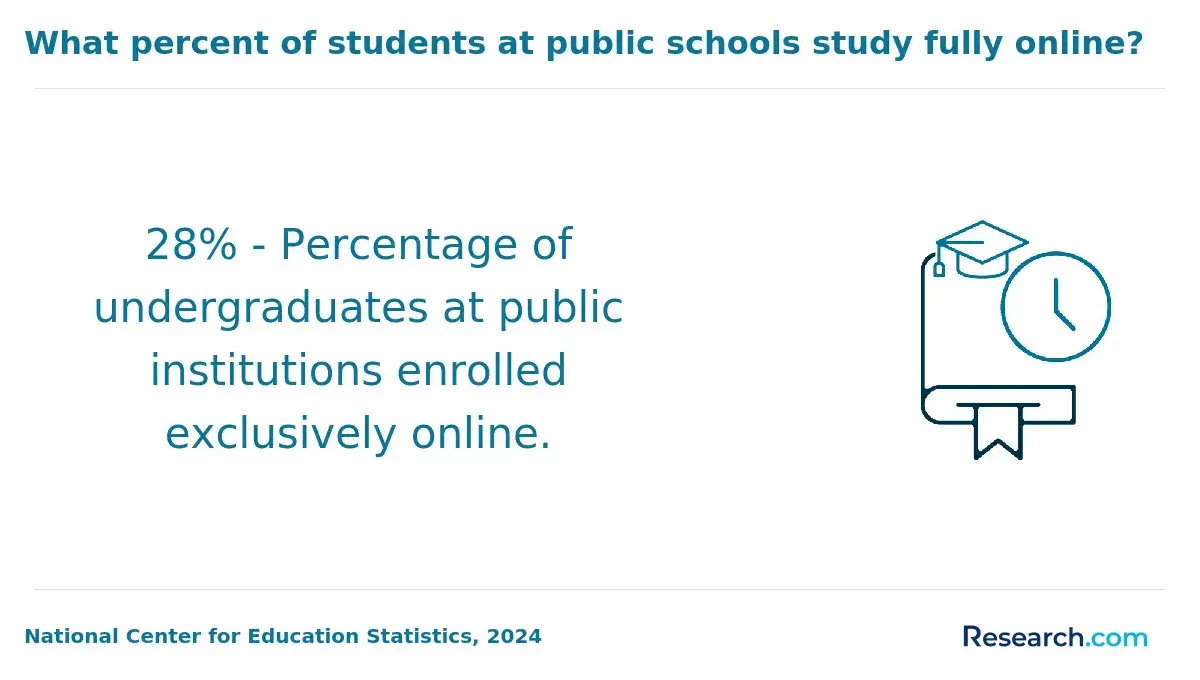
For students who want a lower-cost or more flexible starting point, 2-year online degrees can provide a practical route into college-level work before transferring into a bachelor's program. This can make sense if you want to improve your academic record, reduce first-year costs, or explore majors before committing to a four-year institution.
The biggest red flag is applying only to brand-name colleges without checking admitted-student profiles by major. A 3.4 may be competitive for one program at a university but less competitive for nursing, engineering, computer science, architecture, or business if those programs have separate admission standards.
What standardized tests, prep timelines, and target scores best strengthen a 3.4 GPA?
Standardized tests can still matter for a 3.4 GPA applicant, even in a test-optional environment. They can support admission, improve placement, qualify students for some scholarships, and show readiness in math or reading when grades are uneven.
The best test plan depends on your application timeline. SAT administrations commonly occur in late summer, fall, winter, and spring testing windows, while ACT dates are usually spread across fall, winter, spring, and summer. Students should confirm official dates early because registration deadlines, fee waiver rules, and score-release timing can affect application choices.
A practical prep timeline keeps you from over-testing or cramming. Use the following sequence if you have several months before applications are due:
- Take one timed diagnostic SAT or ACT to determine which test better fits your strengths.
- Choose one primary test instead of splitting prep time equally between both.
- Study for 8 to 12 weeks using official-style practice, focusing first on the sections that most affect your target major.
- Register for a first official test early enough to allow one retake before application deadlines.
- Compare your score with each college's middle 50% range before deciding whether to submit it.
The table below explains score goals by applicant situation. It is meant to help you decide whether testing is worth your time, not to promise admission outcomes.
| Applicant situation | Best score goal | Why it helps |
| 3.4 GPA with strong course rigor | Score that matches the college's typical admitted range | Confirms that your challenging schedule did not inflate or obscure readiness |
| 3.4 GPA with limited rigor | Score above the college's middle range | Adds academic evidence beyond the transcript |
| 3.4 GPA applying to STEM or business | Strong math score | Supports readiness for quantitative coursework |
| 3.4 GPA applying test-optional | Submit only if the score strengthens the file | Avoids adding weak evidence to an otherwise solid application |
Students comparing flexible bachelor's options should also look at accelerated degree programs, especially if they already have dual-enrollment credits or want a faster path after high school. Just make sure speed does not come at the cost of accreditation, support, or major fit.
How do online degree programs evaluate a 3.4 GPA compared with campus-based programs?
Online degree programs usually evaluate a 3.4 GPA similarly to campus-based programs when the online program is part of a regionally accredited college or university. The difference is often not the GPA standard itself but the admissions model, student profile, and level of flexibility.
Many online bachelor's programs are designed for transfer students, adult learners, military-affiliated students, and working students. That means admissions teams may pay close attention to transferable credits, prior college work, employment history, and readiness for self-directed learning. A high school 3.4 can be a strong starting point, but online programs may also ask whether you can manage deadlines without the structure of a residential campus.
The table below compares how GPA may function across learning formats. This can help you decide whether the online route is a better fit or simply a different delivery method.
| Program format | How a 3.4 GPA is typically viewed | Best fit for |
| Traditional campus program | Evaluated alongside class rank, rigor, activities, and campus fit | Students who want residential life, in-person labs, athletics, or campus networks |
| Online bachelor's program | Often viewed with transfer credits, work history, and readiness for independent study | Students who need flexibility or plan to work while studying |
| Hybrid program | Evaluated similarly to campus programs, with attention to location-based requirements | Students who want some in-person support but need schedule flexibility |
| Competency-based program | May focus more on demonstrated mastery and prior learning | Motivated students with strong organization and relevant experience |
If your long-term goal includes graduate school, it can also help to understand later pathways such as the easiest master's degree to get online, though "easy" should never be the only criterion. Accreditation, faculty support, licensure alignment, and employer recognition matter more than convenience alone.
A common mistake is assuming online admissions are automatically easier or lower quality. Some online programs have open or broad access, while others are selective, cohort-based, or tied to competitive majors. Always confirm regional accreditation, programmatic accreditation when relevant, transfer-credit rules, and whether online students receive the same diploma notation and career services as campus students.
What admission requirements, essays, and recommendation strategies can offset a 3.4 GPA?
A 3.4 GPA does not need to be "explained away" unless there is a specific issue, such as a semester drop, personal disruption, or mismatch between grades and intended major. The stronger strategy is to build a coherent application that shows readiness, direction, and evidence of growth.
Admissions requirements vary by institution, but most four-year applications include some combination of transcripts, senior-year courses, essays, recommendations, activities, test scores if submitted, and major-specific materials. For competitive programs, prerequisites can matter as much as GPA; for example, nursing and engineering pathways may expect strong math and science preparation.
Use the following application moves to make a 3.4 work harder for you:
- Choose recommenders who can describe your academic habits, not just your personality.
- Use the essay to show judgment, resilience, intellectual curiosity, or direction rather than repeating your resume.
- Explain grade disruptions briefly and factually if there is a real context the transcript does not show.
- Highlight sustained commitments, such as a job, family responsibilities, research, service, athletics, arts, or technical projects.
- Apply to the right major strategy, including alternate majors or exploratory pathways when direct admission is highly competitive.
The most effective essays are specific. Instead of saying you are hardworking, show a moment when you changed how you studied, solved a problem, helped a team, or took responsibility. Colleges do not need a perfect story; they need evidence that you are likely to succeed in their academic environment.
Watch for these common mistakes: over-apologizing for a 3.4, using a generic essay for every college, asking for recommendations too late, ignoring supplemental essays, or applying to a major without the prerequisite coursework. A 3.4 becomes more persuasive when every part of the application points in the same direction.
How does a 3.4 GPA impact eligibility for merit aid, scholarships, and honors programs?
A 3.4 GPA can qualify students for some merit scholarships, especially at colleges where the applicant is above the school's average academic profile. However, it may be below the threshold for the most competitive full-tuition scholarships or honors colleges that emphasize top GPA, high test scores, and advanced coursework.
Need-based aid should be part of the decision as well. The maximum Federal Pell Grant for 2025-26 is $7,395, but actual eligibility depends on the FAFSA formula, family finances, enrollment intensity, and school cost. This means a student with a 3.4 should compare net price, not just scholarship headlines.
The table below shows where a 3.4 GPA is most likely to matter in financial aid and academic opportunity decisions.
| Opportunity type | How a 3.4 GPA may affect eligibility | What to check |
| Automatic merit scholarship | May qualify if the college publishes GPA-based awards | Minimum GPA, test-score requirements, renewal GPA, and deadlines |
| Competitive merit scholarship | May need strong essays, leadership, service, or test scores | Separate application requirements and interview rules |
| Honors program | Possible at some colleges, less likely at the most selective programs | Whether admission is automatic, invited, or application-based |
| Need-based aid | GPA may not be the main factor | FAFSA results, institutional aid forms, and satisfactory academic progress rules |
| Departmental scholarship | Depends on major and talent evidence | Portfolio, audition, prerequisite grades, or faculty review |
If cost is your biggest concern, comparing the cheapest online university options can be useful, but do not choose on tuition alone. Graduation rates, transfer-credit acceptance, student support, accreditation, and total fees can change the real value of an affordable program.
A major red flag is accepting a merit scholarship without checking renewal terms. Some awards require a college GPA higher than students expect, full-time enrollment every term, or continuous progress in a specific major. Losing an award after the first year can make a school unaffordable even if the initial offer looked generous.
What majors and career paths are realistic with a 3.4 GPA in college?
A 3.4 high school GPA does not lock you into or out of most careers. It mainly affects your starting options: direct admission to competitive majors may be harder at some colleges, while broad-access majors and internal transfer pathways may remain very realistic. Once in college, your college GPA, prerequisites, internships, portfolio, licensure exams, and work experience become more important than your high school GPA.
The table below shows how a 3.4 applicant might think about major selection. The key is to match ambition with preparation, not to avoid challenging fields altogether.
| Major or pathway | Realistic with a 3.4? | What matters most after enrollment |
| Business | Yes at many colleges, though selective business schools may be harder | Accounting, analytics, internships, communication, and networking |
| Computer science | Possible, but direct admission can be competitive | Math readiness, programming projects, internships, and portfolio evidence |
| Nursing | Possible, but often prerequisite- and capacity-driven | Science grades, clinical requirements, entrance exams, and licensure preparation |
| Engineering | Possible with strong math and science preparation, but selective programs may be reaches | Calculus, physics, persistence, labs, and co-op experience |
| Education, psychology, communications, public service, humanities | Often realistic at a wide range of colleges | Writing, field experience, research, certifications, and graduate-school planning when needed |
| Skilled health, legal support, IT, or applied associate pathways | Often realistic through community college or online routes | Credential alignment, licensing rules, externships, and employer-recognized skills |
Students with additional admissions concerns should look for pathways that evaluate the whole applicant, not just grades or background. For example, resources on the best associate degrees for felons can help some learners compare accessible programs, career restrictions, and credential options before investing time and money.
The smartest major choice is one where your interests, academic preparation, and career requirements overlap. If your intended field has licensure rules, such as nursing, teaching, social work, counseling, or accounting, check state requirements before enrolling. A college may admit you, but that does not automatically mean the program meets every licensing or certification requirement in your state.
How does a 3.4 GPA relate to future salary potential and long-term job outlook?
A 3.4 high school GPA has little direct effect on long-term salary. It can influence which colleges or majors are easiest to enter, but salary potential is shaped more by field, degree level, location, internships, technical skills, licensure, employer demand, and career progression.
Recent BLS wage data shows why major and occupation matter more than GPA alone. The table below uses May 2024 U.S. median annual wage figures for selected roles that commonly connect to bachelor's-level pathways; these medians describe occupations, not guaranteed outcomes for individual graduates.
| Career area | Example role | May 2024 median annual wage | What a 3.4 student should focus on |
| Technology | Software developer | $133,080 | Programming projects, internships, algorithms, and portfolio quality |
| Healthcare | Registered nurse | $93,600 | Prerequisite science grades, clinical placement, and licensure preparation |
| Business | Accountant or auditor | $81,680 | Accounting coursework, internship experience, Excel, analytics, and CPA planning if relevant |
| Management and analysis | Management analyst | $101,190 | Data analysis, communication, industry knowledge, and client-facing experience |
AI and automation are also changing what employers value. A GPA may help you get a first interview, but employers increasingly look for evidence that you can use tools, analyze information, communicate clearly, and adapt. For many fields, a student with a 3.4 who builds strong projects, internships, certifications, or clinical experience can compete well after college.
Do not assume that a higher-ranked college automatically produces a better return on investment. Compare total cost, debt, completion rates, internship access, career services, alumni networks, and whether the school has a strong pathway into your intended field. GPA opens doors, but career outcomes usually depend on what you build after admission.
What study habits and GPA-raising tips can move a 3.4 closer to a 3.8?
Raising a 3.4 toward a 3.8 is possible, but it is easier earlier in high school or college because each new grade has more influence when fewer credits have been completed. The strategy is not to "try harder" in a vague way; it is to identify which courses, habits, and grading categories are pulling the average down.
Start with a GPA audit. List each class, current grade, credit value, missing assignments, upcoming assessments, and teacher feedback. This helps you find the fastest legitimate improvements, such as recovering zeros, improving test preparation, or raising lab and writing scores.
Use this step-by-step plan to raise your GPA without burning out:
- Calculate what grades you need in remaining courses to reach your target GPA, using unweighted and weighted scales separately.
- Prioritize core academic classes because colleges usually care most about English, math, science, social science, and world language.
- Meet teachers during office hours with specific questions, drafts, problem sets, or test corrections instead of asking generally how to improve.
- Replace rereading with active recall, practice problems, timed writing, spaced repetition, and self-testing.
- Use a weekly planning block to map due dates, exams, work shifts, practices, and study sessions before the week begins.
- Fix one recurring weakness at a time, such as late assignments, weak note-taking, careless math errors, or poor essay structure.
- Protect sleep and attendance, because missed class time often turns into lower quiz, lab, and participation grades.
The table below shows common GPA mistakes and better alternatives. It is meant to help you change behavior quickly, not just understand the problem.
| Common mistake | Why it hurts a 3.4 GPA | Better alternative |
| Taking too many advanced classes at once | Rigor helps only if performance stays strong | Choose advanced courses in subjects where you have preparation and support |
| Ignoring small assignments | Zeros and missing work can erase strong test performance | Use a deadline tracker and submit partial work when allowed |
| Studying only the night before | Cramming is weak for cumulative tests and quantitative courses | Study in shorter sessions across several days |
| Avoiding feedback | You repeat the same errors across essays, labs, or exams | Ask teachers to identify the top two changes that would raise your grade |
| Choosing courses only for GPA points | Colleges may notice low rigor or poor fit with your intended major | Balance grade protection with meaningful academic challenge |
If you are already late in senior year, focus less on dramatic GPA jumps and more on showing continued effort, strong midyear grades, and readiness for college. A 3.4 with a strong final-year trend can still send a positive signal to admissions readers.
Other Things You Should Know About
In many U.S. grading systems, a 3.4 GPA is around a B+ average. Exact conversions vary by school, especially when plus/minus grades, weighted courses, or district-specific scales are used.
Many colleges review both, then recalculate grades using their own method. They usually care most about performance in core academic courses and whether you challenged yourself within the options available at your school.
Usually no, especially if the rest of the transcript is stable or improving. If the bad semester had a serious cause, explain it briefly and focus on evidence that the issue has been resolved.
Retaking a class can help if your school replaces the old grade or if the course is important for your intended major. Before retaking, ask your counselor how the new grade will appear on the transcript and how colleges may count it.
References
- Scholarships for Students With 3.4 GPAs https://thecollegesolution.com/scholarships-for-students-with-a-3-4-gpa/
- Preparing for Standardized Tests: Your Path to Success https://resourceroomnc.com/2023/12/15/preparing-for-standardized-tests-your-path-to-success/
- GPA & Global Grading Scales Explained | IEE Knowledge Base https://myiee.org/blog/gpa-and-global-grading-scales-explained/
- How High School GPA Influences Future Income: Exploring the Connection Between Education and Earnings https://www.labmanager.com/new-research-shows-how-students-high-school-gpa-could-affect-your-income-13484
- What GPA Do You Need For College? Real Admission Thresholds https://gradecalculatortools.com/blog/gpa-requirements-college-admissions/
- How To Improve Your GPA - https://prepexpert.com/how-to-improve-your-gpa/
- Impact of a 3.4 College GPA? https://empowerly.com/faq/impact-of-a-3-4-college-gpa/
- What is a 3.4 GPA? What colleges accept a 3.4 GPA? https://www.prepscholar.com/sat/s/gpa/3.4-GPA-is-this-good-for-colleges
- How important are college GPA / grades in getting a job? - MBA Crystal Ball https://www.mbacrystalball.com/blog/2019/08/28/how-important-college-gpa-grades-for-job/
- Is a 3.4 a Good GPA Score? Colleges That Accept a 3.4 GPA https://testbook.com/en-us/college/is-three-point-four-a-good-gpa