
2027 What Is an M.Ed. Degree? Definition & Job Outlook Explained

Co-Founder and Chief Data Scientist
A Master of Education, or M.Ed., is a graduate degree for educators and education-adjacent professionals who want to move beyond entry-level teaching into instructional leadership, curriculum design, administration, counseling, learning technology, higher education, policy, or workforce training. The challenge is that M.Ed. programs vary widely: some are designed for licensed teachers, some lead to certification, some are fully online, and others focus on non-classroom careers.
This guide is for teachers planning their next credential, career changers considering education leadership, recent graduates comparing graduate education options, and working professionals who want to know whether an M.Ed. is worth the cost. You will learn what the degree includes, how online and campus programs differ, what specializations lead to which careers, how much programs may cost, how to evaluate ROI, and how to choose a program without relying only on rankings or tuition.
Quick Answer: Is an M.Ed. Degree Worth It?
An M.Ed. can be worth it if it directly supports a licensure requirement, salary-lane movement, leadership promotion, specialization, or transition into roles such as instructional coordinator, school administrator, postsecondary administrator, counselor, training manager, or education consultant. It is less likely to pay off quickly if you choose a program without checking accreditation, state licensure alignment, district salary policies, practicum requirements, or total cost after fees.
The strongest candidates for an M.Ed. are professionals who already know how the degree will change their role, pay scale, certification status, or long-term career options. Before enrolling, compare program outcomes, licensure eligibility, delivery format, credit requirements, employer support, and the salary range for your intended career path.
What are the benefits of getting an M.Ed. degree?
- Broader career mobility. M.Ed. graduates can pursue roles in K–12 schools, higher education, educational administration, corporate training, nonprofit learning programs, and education policy. Fields connected to higher education administration can see up to 118,900 openings per year, reflecting steady demand created by growth, retirements, and job changes.
- Access to higher-paying education-related roles. Earnings depend heavily on specialization, location, experience, and employer type. For example, training and development managers have a median annual wage of $127,090, which is higher than many other M.Ed.-aligned career paths.
- Leadership preparation beyond a basic credential. Strong M.Ed. programs help educators learn how to evaluate curriculum, interpret student data, coach colleagues, design inclusive learning environments, and lead change in schools or organizations.
- Professional networks that can matter after graduation. Cohorts, faculty mentors, practicum supervisors, and district partnerships can help graduates identify job openings, leadership opportunities, and practical models they can apply in their own workplaces.
What can I expect from an M.Ed. Degree?
An M.Ed. usually requires about 30–36 credit hours and often takes 1–2 years of full-time study. Part-time, hybrid, and online formats can extend the timeline, especially for working teachers or students completing practicum, internship, portfolio, thesis, or capstone requirements.
Most programs combine shared core coursework with a focused specialization. Core courses often cover learning theory, curriculum planning, assessment, educational equity, leadership, research methods, and data-informed decision-making. Specializations may focus on areas such as special education, instructional technology, educational leadership, literacy, counseling, higher education, or adult learning.
| What to expect | Why it matters |
| Advanced coursework in pedagogy, research, assessment, and leadership | Builds the foundation for curriculum design, school improvement, instructional coaching, policy work, or administration |
| A specialization or concentration | Helps align the degree with a specific career outcome rather than a general graduate credential |
| Capstone, thesis, practicum, internship, or applied project | Shows how well you can apply graduate-level learning to real education problems |
| Interaction with faculty, peers, and field supervisors | Creates professional connections that may support mentoring, job searches, and leadership growth |
Graduates should leave the program with stronger instructional judgment, better research and evaluation skills, and clearer preparation for education roles that require advanced expertise. However, the value of the degree depends on whether the curriculum matches your intended role and whether the program meets any certification or licensure rules in your state.
Where can I work with an M.Ed. Degree?
An M.Ed. is not limited to traditional classroom teaching. Depending on your specialization and prior experience, the degree can support work in schools, districts, colleges, agencies, nonprofits, and private-sector learning departments.
- K–12 schools and districts. Graduates may work as instructional coordinators, curriculum specialists, lead teachers, reading specialists, special education specialists, department chairs, principals, or district-level program leaders.
- Higher education. The degree can support roles in student affairs, admissions, academic advising, program administration, institutional support, and, in some settings, postsecondary teaching.
- District and state education offices. M.Ed. training can apply to professional development, compliance, assessment, equity initiatives, policy implementation, and school improvement planning.
- Corporate and nonprofit training. Professionals with an education background may move into learning design, employee training, leadership development, instructional design, or workforce education.
- Research, advocacy, and policy organizations. Graduates with strong research and evaluation skills may support assessment, program evaluation, education reform, grant-funded initiatives, or policy analysis.
The best workplace fit depends on your concentration. For example, an educational leadership track may support school administration, while an instructional design or adult learning track may fit corporate training better than K–12 teaching.
How much can I make with an M.Ed. Degree?
M.Ed. earnings vary by job title, region, collective bargaining agreements, employer type, certification status, and years of experience. A master’s degree does not guarantee a salary increase, but it may qualify educators for salary-lane movement, leadership roles, or specialized positions. Salaries for M.Ed.-aligned roles reported by the Bureau of Labor Statistics include:
- Instructional Coordinators: $74,720 as of May 2024
- Elementary School Teachers: $62,340; High School Teachers: $64,580 as of May 2024
- School Principals: $104,070 as of May 2024
- Postsecondary Teachers: $83,980 as of May 2024
- Postsecondary Education Administrators: $103,960 as of May 2024
- Training & Development Managers: $127,090 as of May 2024
When estimating your own return, do not use national medians alone. Check your district salary schedule, state licensure rules, local administrator pay, and the hiring requirements for the exact role you want.
- M.Ed. degree programs for 2027
- How long does it take to complete an M.Ed. degree program?
- Online vs. on-campus M.Ed. programs
- Average cost of an M.Ed. degree program
- Financial aid options for M.Ed. students
- Prerequisites for admission to an M.Ed. program
- Common M.Ed. courses
- M.Ed. specializations
- M.Ed. vs. other advanced education degrees
- Finding a quality affordable M.Ed. program
- Return on investment of an M.Ed. degree
- How to choose the best M.Ed. program
- Challenges M.Ed. graduates may face
- Career paths for M.Ed. graduates
- Job market for M.Ed. graduates
- How interdisciplinary study can strengthen an M.Ed.
List of M.Ed. Degree Programs for 2027
How do we rank schools?
A useful M.Ed. ranking should help readers compare quality, affordability, access, and career relevance rather than simply name well-known institutions. Research.com’s ranking methodology considers factors such as tuition, graduation and retention rates, student-to-faculty ratios, academic strength, and program accessibility so prospective graduate students can compare programs with a practical decision framework.
The ranking process uses data from recognized education sources, including the Integrated Postsecondary Education Data System, also known as the IPEDS database, Peterson’s Distance Learning Licensed Data Set, the U.S. Department of Education’s College Scorecard, and the National Center for Education Statistics.
1. Franklin University
Franklin University offers an online Master of Education designed for adults balancing graduate study with work. Its one-class-at-a-time format, six-week courses, rolling starts, tuition-guarantee structure, transfer-credit options, and Smart Start Scholarship can make the program especially appealing to students who need a predictable schedule and budget. Small cohorts are intended to give students regular access to faculty with experience in instructional design, training, and educational leadership.
- Program Length: 12–24 months full-time; many tracks complete in as few as 12 months
- Tracks/concentrations: Educational Leadership, Instructional Design and Technology, Training and Development
- Cost per Credit: $670 standard tuition per credit hour
- Required Credits to Graduate: 32 credit hours
- Accreditation: Regional accreditation by the Higher Learning Commission (HLC)
2. University of Florida
The M.Ed. program at the University of Florida gives students access to a Carnegie R1 research environment while emphasizing applied preparation for education practice. Students in campus-based options can complete field experiences in local schools, pursue the option to earn Florida Level 1 Educational Leadership certification, and use UF’s research centers and professional networks. The program does not require the GRE and combines theory, fieldwork, and leadership preparation for K–12 and related education settings.
- Program Length: 36 credit hours, typically completed in 6 semesters or two years, full-time
- Tracks/Concentrations: Educational Technology, ESOL/Bilingual Education, Reading Education, Teachers, Schools, and Society, Teacher Leadership for School Improvement
- Cost per Credit: $462.05 total, including graduate rate $448.73 + fees
- Required Credits to Graduate: 36 credit hours
- Accreditation: Southern Association of Colleges and Schools Commission on Colleges (SACSCOC)
3. University of Texas at Austin
The University of Texas at Austin offers an M.Ed. that combines research, policy, equity, and practical field learning. The program uses small cohorts to support faculty mentorship and offers rolling admissions and part-time options for educators who need to keep working while completing graduate study. Specialization tracks connect students with Texas school districts through embedded field experiences.
- Program Length: 36 credit hours, or approximately 1.5–2 years full-time
- Tracks/concentrations: Curriculum and Instruction, Educational Leadership and Policy, Special Education, Learning Technologies, Language and Literacy Studies, STEM Education
- Cost per Credit: $576 per credit hour for TX residents; $1,067 per credit hour for non-residents
- Required Credits to Graduate: 36 credit hours
- Accreditation: SACSCOC and the Texas Higher Education Coordinating Board
4. Michigan State University
The M.Ed. at Michigan State University is shaped by the institution’s Carnegie R1 research profile and its long-standing teacher preparation model, including a year-long teaching internship approach. Students can pursue cohort-based Urban and Global Educator pathways and choose between Plan A, which includes a thesis, and Plan B, which uses a non-thesis capstone. These options let students match the program to careers in schools, higher education, or community-based education work.
- Program Length: 1–2 years full-time, 30 credit minimum, with a five-year window for completion
- Tracks/concentrations: Counseling, Educational Psychology and Special Education, Educational Administration, Teacher Education, Kinesiology
- Cost per Credit: $926 for in-state; $1,050 for out-of-state
- Required Credits to Graduate: 30 credit hours
- Accreditation: HLC and the Michigan Department of Education
5. University of North Carolina at Chapel Hill
The University of North Carolina at Chapel Hill offers the Master of Education for Experienced Teachers, or MEdX, in Early Childhood Intervention and Family Support. The program uses a part-time, two-year HyFlex model so working educators can attend live sessions in Chapel Hill or participate remotely. Its cohort format, action research projects, National Board Certification-aligned assignments, and field-based experiences are designed for licensed and non-licensed teachers working in early childhood contexts.
- Program Length: Two calendar years
- Tracks/concentrations: Early Childhood Intervention and Family Support, with options for licensed and non-licensed teachers
- Cost per Credit: Rates vary by residency and are set by the University Cashier
- Required Credits to Graduate: 33–36 credit hours
- Accreditation: Approved by the North Carolina Department of Public Instruction, the State Board of Education, and accredited by the Council for Accreditation of Educator Preparation (CAEP)
6. Arizona State University
Arizona State University provides M.Ed. options with accelerated seven-and-a-half-week courses, rolling starts, and no GRE requirement. ASU Online’s diploma does not separate online and in-person delivery, and students work through the Mary Lou Fulton Teachers College in pathways that may include field experiences. The “one university in many places” model gives students access to resources across four metro-area campuses while learning from research-active and practitioner-focused faculty.
- Program Length: 30 credit hours delivered over ten 7.5-week courses, approximately 15 months
- Tracks/concentrations: Higher and Postsecondary Education, Educational Leadership – Principalship, Learning Design and Technologies, Secondary Education with or without certification, Elementary Education with or without certification, Special Education
- Cost per Credit: Approximately $530 for Arizona residents and $825 for non-residents per credit hour
- Required Credits to Graduate: 30 credit hours
- Accreditation: HLC
7. University of Washington - Seattle Campus
The University of Washington offers a hybrid Master of Education for Experienced Teachers in Early Childhood Intervention and Family Support. The program is designed for working educators who need part-time study, live or remote participation, and recorded sessions available 24/7. Students complete action research and field-based practica through a two-year cohort model, with licensed and non-licensed tracks aligned to National Board Certification standards.
- Program Length: Two calendar years, part-time
- Tracks/concentrations: Early Childhood Intervention and Family Support, licensed and non-licensed options
- Cost per Credit: $842 per credit hour, as of academic year 2024–25
- Required Credits to Graduate: 33–36 credit hours
- Accreditation: Accredited by the Council for Accreditation of Educator Preparation and approved by the Washington State Board of Education
8. University of Illinois Urbana-Champaign
The University of Illinois Urbana-Champaign offers an M.Ed. program ranked No. 3 nationally for online education, with a fully online option that can be finished in as little as 18 months through eight-week, four-credit courses. Campus cohorts generally take two years and include sustained field experiences across the College of Education. Students can choose online flexibility or a campus cohort while studying with faculty who combine research expertise and education practice. Scholarship opportunities and a 100% course-transfer policy may also help students use prior graduate credits toward completion.
- Program Length: As little as 18 months online; two years in-person cohort
- Tracks/concentrations: Curriculum and Instruction, Diversity and Equity in Education, Education Policy, Organization and Leadership, Global Studies in Education, Instructional Design, Technology and Organization, Learning Design and Leadership, Educational Psychology, Special Education
- Cost per Credit: Approximately $520 per credit hour for online courses
- Required Credits to Graduate: 32 credit hours
- Accreditation: HLC
9. Vanderbilt University
Vanderbilt University offers its Master of Education through Peabody College. The program is a two-year, 31- to 34-credit, practice-focused graduate degree grounded in education research. Students work in small cohorts and complete field placements that allow theory to be tested in real learning environments. Peabody’s IRIS Center and U.S. Department of Education partnerships provide resources connected to special education and inclusive practice.
- Program Length: Two academic years
- Tracks/concentrations: Child Studies, Independent School Leadership, Special Education, Human Development Counseling with a School Counseling track, Reading Education
- Cost per Credit: $2,324 per credit hour
- Required Credits to Graduate: 31–34 credit hours
- Accreditation: SACSCOC
10. University of Georgia
The University of Georgia offers M.Ed. programs through the Mary Frances Early College of Education, with online and campus-based formats for working professionals and full-time students. Concentrations vary by department and may include educational psychology, learning design and technology, reading education, and leadership-related areas. The curriculum emphasizes evidence-based instruction, equity, access, and community impact across K–12 and higher education settings.
- Program Length: 1.5 to 2 years for full-time students
- Tracks/concentrations: Varies by department; includes Educational Psychology, Learning, Leadership and Organization Development, Reading Education, and others
- Cost per Credit: Approximately $629 per credit hour for online graduate education programs, in-state tuition
- Required Credits to Graduate: Generally 33–36 credit hours, depending on the concentration
- Accreditation: SACSCOC
How long does it take to complete an M.Ed. degree program?
Most M.Ed. degrees require 30–36 graduate credit hours, which is similar to many one-year master’s degree programs online. A full-time student taking 9–12 credits per semester can often finish in about 1–2 academic years. A part-time student taking 6 credit hours or fewer per term may need approximately 2–3 years, especially when balancing coursework with teaching, family responsibilities, or field placements.
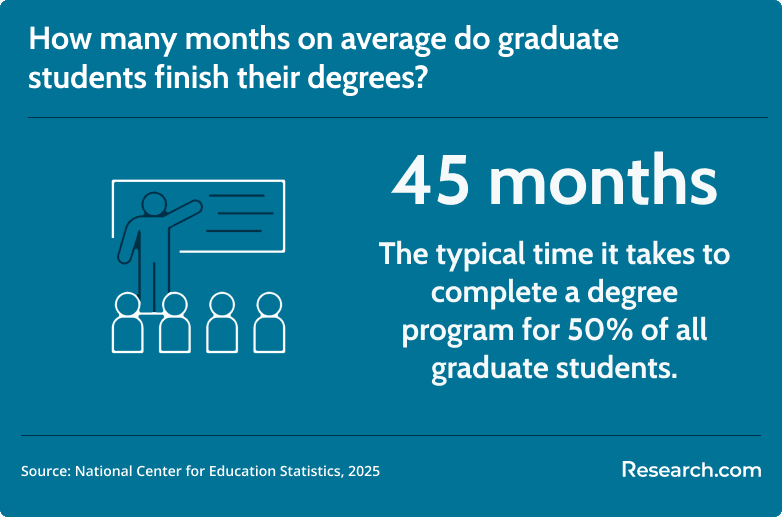
Program structure matters as much as credit count. Accelerated online terms, cohort calendars, practicum requirements, thesis options, and capstone timelines can all affect completion. NCES Fast Facts reports that half of graduate students across fields complete their programs in 45 months or less, but that figure includes many types of graduate degrees and student populations. For M.Ed. planning, use the program’s published course sequence rather than a national average alone.
| Enrollment plan | Typical timeline | Best fit |
| Full-time | 1–2 academic years | Students who can prioritize graduate study and complete field or capstone requirements on schedule |
| Part-time | Approximately 2–3 years | Working teachers, parents, and professionals who need a lighter course load |
| Accelerated or intensive format | May be shorter, depending on the school calendar | Students with strong time management and predictable weekly availability |
| Licensure-focused track | May take longer if internship, practicum, or certification steps are required | Students pursuing principal, counselor, special education, or other regulated education roles |
How does an online M.Ed. degree program compare to an on-campus program?
Online and on-campus M.Ed. programs may lead to the same degree, but the experience can differ substantially. The right choice depends on your schedule, learning style, need for local field placements, access to campus resources, and whether the program meets state licensure requirements where you plan to work.
| Factor | Online M.Ed. | On-campus M.Ed. |
| Schedule | Often combines live sessions with asynchronous coursework, making it easier for working students to study around job and family responsibilities | Usually follows scheduled in-person courses, seminars, and campus-based activities |
| Student experience | Requires more intentional networking through virtual office hours, discussion boards, and online group work | Offers face-to-face access to classmates, faculty, libraries, events, and campus services |
| Field experience | May allow placements near the student’s location, though students may need to help identify approved sites | Often uses established local school or district partnerships |
| Cost considerations | May reduce commuting, relocation, or housing costs, though technology and distance learning fees can still apply | May involve commuting, parking, housing, or campus fees, depending on location and attendance pattern |
| Best for | Working educators, rural students, caregivers, and professionals who need geographic flexibility | Students who want structured in-person learning, local networking, and campus-based support |
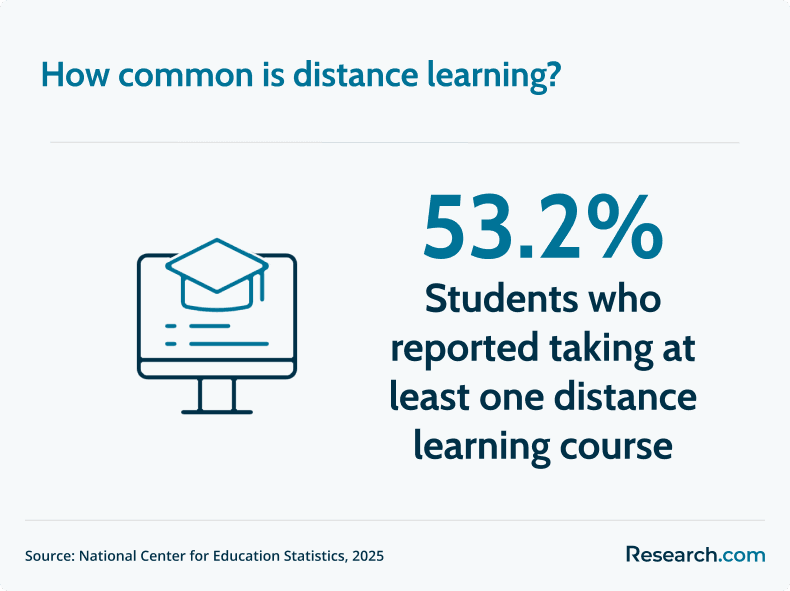
Distance education is now a mainstream graduate option. In the Fall term of 2023, 53.2% of postsecondary students took at least one distance education course, and graduate-only online enrollment rose 1.9% over the prior year, according to NCES, 2025. Still, online convenience should not be your only criterion. If your M.Ed. is tied to licensure, confirm that the online program is accepted by your state education agency before enrolling.
What is the average cost of an M.Ed. degree program?
The cost of an M.Ed. depends on institution type, residency status, online or campus delivery, required credits, fees, and whether you receive grants, employer assistance, assistantships, or scholarships. Students comparing programs such as an affordable online teaching degree should focus on total cost, not tuition alone.
Graduate-level tuition and required fees averaged $20,513 per year in the 2021–22 academic year, including about $12,596 at public institutions and $29,931 at private nonprofit schools. Since many M.Ed. programs require 30–36 credit hours, total tuition can vary significantly by school and residency classification.
IPEDS data for academic year 2022–23 reports the following average full-time graduate tuition and required fees in the United States:
- Public institutions, in-state: $11,554 per year
- Public institutions, out-of-state: $21,000 per year
- Private nonprofit institutions: $20,408 per year
- For-profit institutions: $17,186 per year
Students should also budget for non-tuition costs:
- Books and supplies: $1,220 annually at public four-year institutions, with graduate students often planning for $1,000–$1,500 per year for materials
- Technology fees: Fully online students paid an average of $139 per semester in 2023, while on-campus students averaged $535 per semester
- Other mandatory fees: Health, student-activities, laboratory, practicum, and graduation fees typically range $5–$20 per fee, totaling approximately $500–$1,000 per year
Non-tuition expenses can add $2,000–$4,000 annually. In-state public total annual cost often falls between $13,500 and $16,000, while private nonprofit programs may approach $22,000–$25,000 per year. Always review the program’s current fee schedule, because part-time enrollment, online delivery, residency rules, and practicum requirements can change the final amount.
What are the financial aid options for students enrolling in an M.Ed. degree program?
Financial aid should be part of your program comparison from the start, especially if the degree is connected to certification, career advancement, or research into how to earn a teaching credential. M.Ed. students may be eligible for several funding sources.
- Federal Grants. The TEACH Grant provides up to $4,000 per year to eligible graduate students who commit to teaching in high-need fields at low-income schools for four years.
- Federal Loans. Graduate students can use Direct Unsubsidized Loans and Graduate PLUS Loans through the William D. Ford Federal Direct Loan Program. These loans have fixed interest rates set annually by Congress, and Graduate PLUS borrowing is credit-based.
- Federal Work-Study. Eligible graduate students may earn wages through part-time need-based work on or off campus to help cover education and living costs.
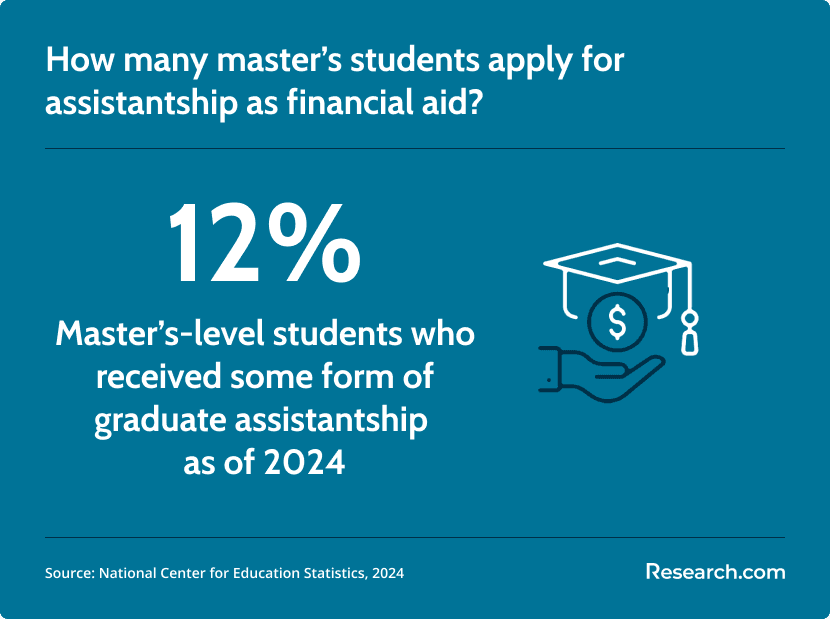
- Graduate Assistantships. Roughly 12% of master’s-level students receive assistantships, according to NCES, 2024. These teaching or research appointments may include stipends and tuition waivers.
- Scholarships and institutional awards. Many colleges, states, and education departments offer scholarships, fellowships, tuition discounts, or service-based awards for graduate education students.
- Employer or district tuition assistance. Some districts, schools, and organizations help fund graduate study when the degree supports a hard-to-fill role, leadership pipeline, or certification need.
Students comparing M.Ed. costs can also review related affordability resources, including low-cost online TESOL master’s programs, to understand how tuition, aid, and credential goals differ across education specializations.
What are the prerequisites for enrolling in an M.Ed. degree program?
Admission requirements vary, but most M.Ed. programs look for evidence that applicants can handle graduate coursework and understand the education setting they want to enter or advance within.
- Bachelor’s degree: Applicants generally need a bachelor’s degree from a regionally accredited institution.
- Minimum undergraduate GPA: Many programs prefer at least a 3.0 GPA. Applicants seeking the federal TEACH Grant must have a minimum 3.25 cumulative GPA or numeric equivalent, according to NCES, 2024.
- Official transcripts: Schools typically require sealed transcripts from every postsecondary institution attended.
- Professional licensure or experience: Tracks tied to licensure, including principal and administrator certification requirements, may require a valid teaching certificate or documented classroom experience.
- Application materials: Common requirements include a resume, 2–3 recommendation letters, and a personal statement explaining your goals. Some programs still request GRE or MAT scores, but many have adopted score-optional policies in the past two years.
Prior teaching experience is not always required, especially for tracks in higher education, instructional design, or adult learning. However, experience in schools or child development can strengthen an application. Applicants exploring early education careers may find it useful to review how to become a preschool teacher to understand the foundational skills and workplace realities that often shape graduate-level education study.
The following visual shows the decline in education-specific master’s degrees alongside overall growth in master’s awards during academic year 2021-22.
What courses are typically in an M.Ed. degree program?
M.Ed. programs usually combine broad education foundations with specialized coursework. Course titles differ by school, but many curricula align with established Classification of Instructional Programs, or CIP, categories used to describe education fields.
- Foundations of Education and Learning Theories, CIP 13.0101: Explores historical, philosophical, social, and psychological perspectives on schooling and learning.
- Curriculum Design and Instructional Strategies, CIP 13.0301: Covers curriculum planning, instructional models, lesson design, and selection of learning materials.
- Educational Leadership and Administration, CIP 13.0401: Examines school organization, supervision, personnel leadership, improvement planning, and administrative decision-making.
- Educational Research and Statistics, CIP 13.0603: Introduces qualitative and quantitative research methods, data analysis, and program evaluation.
- Assessment, Testing and Measurement, CIP 13.0604: Focuses on assessment design, measurement principles, learning evidence, and data-informed decisions.
- Educational Technology, CIP 13.0501: Teaches students how to use digital tools, multimedia design, and online learning strategies in instructional settings.
Most programs also require a culminating experience, such as a capstone, thesis, practicum, internship, portfolio, or applied research project. Students should review whether this requirement fits their schedule and career objective, especially if they work full-time.
What types of specializations are available in M.Ed. degree programs?
An M.Ed. specialization determines the kinds of roles the degree may support. Choosing a concentration should begin with your target job, not with the most interesting course title.
| Specialization | Common focus | Potential fit |
| Curriculum and Instruction, CIP 13.0301 | Curriculum theory, instructional planning, and teaching improvement | Teachers, curriculum specialists, instructional coaches |
| Educational Leadership and Administration, CIP 13.0401 | School management, district leadership, policy implementation, and organizational change | Aspiring principals, administrators, district leaders |
| Special Education, CIP 13.1001 | Instruction, law, assessment, and services for learners with disabilities | Special education teachers, coordinators, inclusion specialists |
| Educational Technology, CIP 13.0501 | Digital learning, multimedia design, instructional systems, and online teaching | Instructional designers, learning technology specialists, online program staff |
| Higher Education and Student Affairs, CIP 13.0407 | College administration, student services, academic affairs, and enrollment work | Student affairs professionals, advisors, program coordinators |
| Counseling and Guidance, CIP 13.1101 | School counseling, student support, crisis response, and mental health foundations | Prospective school counselors, depending on state requirements |
| Reading and Literacy, CIP 13.1322 | Literacy assessment, reading intervention, and instructional strategies | Reading specialists, literacy coaches, classroom teachers |
| Early Childhood Education, CIP 13.1210 | Developmentally appropriate practice for children from birth through age 8 | Early childhood educators, intervention specialists, program leaders |
| TESOL/Bilingual Education, CIP 13.1401 | Teaching English learners and supporting multilingual classrooms | ESL teachers, bilingual educators, language program specialists |
| Adult Education and Training, CIP 13.1202 | Instructional design and program development for adult learners | Corporate trainers, workforce educators, nonprofit learning professionals |
Students interested in English learner instruction should verify whether a TESOL or bilingual education track leads to endorsement, licensure, or preparation for requirements connected to online ESL teaching certification programs. Requirements differ by state and employer.
Some students also combine education with adjacent fields. For example, those comparing sport administration and sport management degrees may see how educational leadership, youth development, athletics administration, and community programming can overlap.
How do alternative advanced education degrees compare to an M.Ed.?
An M.Ed. is usually practice-oriented and is often chosen by educators who want to improve instruction, qualify for leadership, specialize, or meet an employer or licensure expectation. Other graduate education degrees may serve different goals.
| Degree | Main purpose | Best for |
| M.Ed. | Applied education practice, leadership, specialization, and school or organizational improvement | Teachers, administrators, instructional designers, counselors, higher education staff, and training professionals |
| MAT or teaching-focused master’s | Classroom teaching preparation and instructional practice | Career changers or teachers focused primarily on classroom instruction |
| EdS | Advanced specialist preparation beyond the master’s level | Educators seeking higher-level credentials without a full doctorate |
| EdD | Practice-based doctoral leadership, applied research, and systems change | Senior administrators, district leaders, policy professionals, and organizational leaders |
| PhD in Education | Research, theory development, and academic scholarship | Future researchers, university faculty, and policy scholars |
If your long-term goal is senior leadership, policy influence, or doctoral-level applied research, you may eventually compare M.Ed. options with fast-track online EdD programs. The M.Ed. can be a strong step toward that pathway, but it is not the same as a doctorate.
Is it possible to find a quality yet affordable M.Ed. program?
Yes, but affordability should never be judged by tuition alone. A lower-priced program may become expensive if it does not meet licensure requirements, offers weak field placement support, has limited transfer credit acceptance, or lacks strong completion outcomes. A more expensive program may be reasonable if it provides strong aid, employer reimbursement, certification alignment, and a faster route to advancement.
When comparing affordable options, look for institutional accreditation, transparent fees, clear credit requirements, program outcomes, licensure disclosures, faculty access, and practicum support. Students specifically looking for lower-cost online options can use resources on affordable online master’s degrees in teaching as a starting point, then verify each program’s fit for their specialization and state requirements.
What is the return on investment of an M.Ed. degree?
The ROI of an M.Ed. depends on how directly the degree changes your professional options. The degree may produce stronger returns when it leads to a required credential, a higher salary lane, an administrative role, a specialty position, or a move into higher-paying organizational learning work. ROI is weaker when students borrow heavily for a program that does not change their job eligibility, pay scale, or promotion prospects.
| ROI question | Why it matters |
| Will this program qualify me for a role I cannot get now? | Licensure, endorsement, or administrative eligibility can be more valuable than a general credential |
| Will my employer increase my pay for a master’s degree? | District salary schedules and employer policies determine whether the degree increases earnings |
| How much will I pay after scholarships, grants, assistantships, and employer aid? | Net cost is more useful than sticker price when calculating payback |
| Can I work while enrolled? | Lost income can be a major hidden cost for full-time study |
| Does the program have strong completion and placement support? | Delays, weak advising, or poor field placement coordination can reduce ROI |
Some educators eventually compare a master’s-level investment with doctoral options such as affordable online EdD programs. That comparison makes sense if your goal is system-level leadership, but an EdD usually requires a larger time commitment and should be evaluated separately.
How to choose the best M.Ed. degree program?
The best M.Ed. program is the one that matches your career goal, state requirements, schedule, budget, and learning needs. A highly ranked program is not automatically the best choice if it does not support your intended role.
- Verify accreditation and state approval. Look for institutional accreditation from a recognized regional accreditor and, where relevant, program approval from CAEP or the appropriate state education agency. Accreditation can affect financial aid eligibility, licensure acceptance, and employer recognition.
- Check licensure alignment before applying. If you are pursuing principal, counselor, special education, ESL, reading specialist, or administrative credentials, confirm that the program meets requirements in the state where you plan to work.
- Compare outcomes, not just reputation. Use NCES College Navigator to review completion data, institutional context, and other public information. Ask programs for licensure pass rates, placement support, and time-to-degree expectations when available.
- Review curriculum fit. Make sure required courses and electives match your intended specialization, such as CIP 13.0401 for leadership or CIP 13.1001 for special education.
- Evaluate the delivery format honestly. Decide whether you can succeed in asynchronous online work, live online seminars, hybrid residencies, or a fixed campus schedule.
- Calculate full cost. Include tuition, fees, books, technology charges, travel, practicum costs, lost income, and the cost of extending the program if you enroll part-time.
- Ask about field placement support. Online programs may require students to help secure local placements. Ask exactly who approves, supervises, and documents the experience.
- Look at faculty and cohort access. Smaller cohorts and accessible faculty can matter if you need mentoring, research guidance, recommendation letters, or career support.
- Consider professional networks. District partnerships, alumni networks, and practicum relationships can affect job opportunities after graduation.
Questions to ask before enrolling
- Does this program meet certification or licensure requirements in my state?
- What is the total cost after fees, books, and required field experiences?
- Can I transfer graduate credits, and how many?
- How are online students supported during practicum or internship placements?
- What percentage of students complete the program on time?
- Will my district or employer recognize this degree for pay advancement?
- Are courses taught by full-time faculty, practitioners, or adjunct instructors?
- What jobs do graduates typically obtain after completing this specialization?
Common mistakes to avoid when choosing an M.Ed. program
| Mistake | Better approach |
| Choosing the cheapest program without checking accreditation | Confirm recognized institutional accreditation and any required state or professional approval |
| Assuming every M.Ed. leads to teacher, counselor, or principal licensure | Read the program’s licensure disclosure and contact the state education agency if needed |
| Comparing tuition but ignoring fees and living costs | Build a full budget that includes books, technology, practicum expenses, travel, and lost income |
| Relying only on rankings | Use rankings as one input, then compare curriculum, outcomes, faculty access, and field support |
| Picking a specialization before defining a target job | Start with the role you want, then choose the concentration that prepares you for it |
| Assuming salary gains are automatic | Check district salary schedules, employer policies, and local hiring requirements |
| Ignoring transfer credit rules | Ask how many credits can transfer, whether credits expire, and whether transfer credits reduce cost or time |
What challenges might M.Ed. graduates face in the evolving educational landscape?
M.Ed. graduates enter a field shaped by changing technology, public accountability, staffing shortages in some areas, budget limits, evolving student needs, and growing expectations around data use and inclusive practice. The degree can help, but it does not remove the need for ongoing professional development.
- Credential competition. In some districts and higher education settings, a master’s degree is common, so specialization, experience, and leadership evidence matter.
- Technology and AI expectations. Educators are increasingly expected to use digital tools, learning platforms, data dashboards, and AI-supported workflows responsibly while protecting academic integrity and student privacy.
- Licensure complexity. State rules can differ, especially for administration, counseling, special education, and ESL-related roles.
- Pressure to show measurable impact. Leaders and specialists may be expected to connect their work to learning outcomes, retention, access, student support, or program improvement.
- Need for cross-disciplinary skills. Education professionals often benefit from knowledge of policy, mental health, data analysis, organizational leadership, accessibility, and communication.
Some professionals differentiate themselves through adjacent specializations. For example, students researching related clinical or support fields may compare education-focused paths with affordable online master’s in speech pathology programs, depending on their career goals and licensure plans.
What career paths are available for graduates of M.Ed. degree programs?
An M.Ed. can support several career directions, but the right path depends on specialization, prior teaching experience, licensure, and employer requirements. The following roles align with common M.Ed. pathways and include BLS median salary data as of May 2024.
- Instructional Coordinator, $74,720: Designs, reviews, and evaluates curricula, instructional materials, and professional development.
- Postsecondary Education Administrator, $103,960: Manages student services, admissions, academic programs, or institutional operations in colleges and universities.
- School and Career Counselor, $65,140: Supports students with academic, career, social, and personal planning in school settings.
- Postsecondary Teacher, $91,310 for private colleges; $85,650 for state schools: Teaches higher education courses and may conduct research, with pay varying by institution type and discipline.
- Training and Development Specialist, $65,850: Builds and delivers employee learning programs in corporate, nonprofit, healthcare, or public-sector environments.
- Training and Development Manager, $127,090: Leads organizational learning strategy, training teams, budgets, and staff development initiatives.
- Management Analyst or Education Consultant, $101,190: Advises schools, agencies, institutions, or organizations on policy, efficiency, curriculum, and program improvement.
Career advancement through graduate study is not unique to education. For example, healthcare professionals comparing online MSN to FNP programs follow a similar decision logic: the credential is most valuable when it clearly changes scope of practice, role eligibility, and earning potential.
What is the job market for graduates with an M.Ed. degree?
The labor market for M.Ed. graduates is mixed but generally stable across education, administration, counseling, and training. Some roles show faster growth, while others rely more on replacement openings from retirements and transfers. According to the BLS, the education sector is projected to add approximately 868,000 new jobs between 2023 and 2033.
- Instructional Coordinators: Projected growth of 2% from 2023 to 2033, with about 20,100 openings per year.
- School and Career Counselors: Growth of 4%, with roughly 29,100 openings per year.
- Postsecondary Teachers: Growth of 8%, with about 118,900 openings per year.
- Postsecondary Education Administrators: Growth of 3%, with 15,200 annual openings.
- K–12 Teachers and Principals: Both occupations are projected to decline slightly at –1%, yet still generate replacement openings of 106,500 for teachers and 20,800 for principals each year.
Students who want stronger employment positioning should match their specialization to areas with clear school, district, or institutional need. For example, educators focused on literacy support may investigate reading specialist certification requirements to see whether the credential aligns with local hiring demand.
The table below shows 2024 median salaries for selected education, instruction, and library occupations.
2024 Median Salary for Educational Instruction and Library Occupations
Source: BLS, 2025
| Occupation | 2024 Median Pay |
| Postsecondary Teachers | $83,980 |
| Instructional Coordinators | $74,720 |
| High School Teachers | $64,580 |
| Special Education Teachers | $64,270 |
| Middle School Teachers | $62,970 |
| Career and Technical Education Teachers | $62,910 |
| Kindergarten and Elementary School Teachers | $62,310 |
| Adult Basic and Secondary Education and ESL Teachers | $59,950 |
| Preschool Teachers | $37,120 |
| Teacher Assistants | $35,240 |
How can interdisciplinary studies complement an M.Ed. degree?
Education problems rarely fit neatly inside one discipline. M.Ed. students can strengthen their leadership profile by building knowledge in policy, data analysis, psychology, technology, communication, public administration, accessibility, or organizational development.
Interdisciplinary preparation can be especially useful for professionals who want to work in education policy, advocacy, district administration, nonprofit leadership, or community programming. For example, someone interested in school governance or education legislation may benefit from understanding political systems and public policy; exploring options such as an affordable online political science degree can show how civic and policy knowledge may complement education leadership.
What graduates say about their M.Ed. experience
- “I was raising a family and working full time, so flexibility mattered. The online M.Ed. gave me organized weekly modules, faculty who responded quickly, and assignments I could apply immediately in my classroom.” –Amanda
- “Before graduate school, I felt limited in my role. The M.Ed. helped me move into educational consulting, where I have more independence and stronger earning potential.” –Beth
- “After finishing my M.Ed., I became a lead teacher and received a 15 percent salary increase. The program helped me build both the confidence and the credential I needed for district leadership.” –Carlos
Key Insights
- An M.Ed. is most valuable when it connects directly to a defined outcome: licensure, salary advancement, specialization, leadership eligibility, or a career move outside traditional classroom teaching.
- Most programs require 30–36 credit hours and can often be completed in 1–2 years full-time, while part-time study commonly takes approximately 2–3 years.
- Cost varies widely. According to 2022–23 IPEDS data, average annual graduate tuition and required fees are $11,554 at in-state public institutions and $20,408 at private nonprofit institutions.
- Non-tuition expenses matter. Books, technology charges, practicum costs, and other fees can add $2,000–$4,000 to the annual budget.
- Online M.Ed. programs can be legitimate and flexible, but students pursuing licensure must confirm state approval before enrolling.
- Specialization choice drives ROI. Educational leadership, instructional coordination, counseling, literacy, TESOL, special education, higher education, and training pathways lead to different requirements and job markets.
- Graduate assistantships can reduce cost, but they are not universal. Roughly 12% of master’s-level students receive assistantships that may include stipends and tuition waivers.
- Training and development managers have the highest listed median wage among the M.Ed.-aligned tracks in this guide at $127,090.
- Postsecondary teaching roles show the strongest listed projected growth among the occupations discussed, at 8% from 2023 to 2033, with roughly 118,900 openings annually.
- The safest way to choose an M.Ed. is to verify accreditation, licensure alignment, total cost, field placement support, completion data, employer recognition, and career outcomes before applying.
References:
- Average and median academic year institutional tuition and required fees and number of institutions reporting academic year tuition and required fees for full-time students at Title IV institutions operating on an academic year calendar, by control of institution, residency, student level, and level of institution: United States, academic year 2022–23. IPEDS. https://nces.ed.gov/ipeds/search/viewtable?returnUrl=%2F&tableId=36452
- CIP user site. (2025). https://nces.ed.gov/ipeds/cipcode/Default.aspx?y=56
- DOAA. Higher Education Cost Drivers. Increased State and Federal Funding Has Reduced Student Costs. (December 2024). https://open.ga.gov/
- Educational instruction and library occupations. (2025, April 18). Bureau of Labor Statistics. https://www.bls.gov/ooh/education-training-and-library/home.htm
- Hanson, M. (2025, March 9). Average Cost of College [2025]: Yearly tuition + expenses. Education Data Initiative. https://educationdata.org/average-cost-of-college
- Ma, J., et.al. (2023). Trends in College Pricing and Student Aid 2023. College Board. https://research.collegeboard.org/media/pdf/Trends%20Report%202023%20Updated.pdf
- NCES. (7 January 2025). Press Release - Postsecondary enrollment rises in fall 2023, marking first increase in over a decade. https://nces.ed.gov/whatsnew/press_releases/1_7_2025.asp
- Work-Study Jobs | Federal Student Aid. (2024). https://studentaid.gov/understand-aid/types/work-study
Other Things You Should Know About M.Ed. Degree Programs
No, many M.Ed. programs admit candidates without a teaching license, especially in leadership or curriculum tracks. Some programs require a valid state teaching certificate or at least one to three years of classroom experience, particularly for advanced educator-preparation pathways.
In 2027, M.Ed. programs typically offer specializations such as Curriculum and Instruction, Educational Leadership, Special Education, and Technology in Education. These specializations allow educators to focus on areas that match their career goals while fulfilling specific educational needs.


