
2027 Best Accelerated Online Master of Health Administration (MHA) Programs

Co-Founder and Chief Data Scientist
Choosing an accelerated online master of health administration program is usually a career decision, not just an academic one. You may already work in healthcare and want to move into management faster, or you may be comparing MHA programs against MBA, MPH, informatics, or health information management pathways. The right program can help you build leadership, finance, policy, operations, and quality improvement skills for a healthcare system where patients still face access barriers, including 28% citing costs and 17% pointing to appointment scheduling and related difficulties.
This guide explains how accelerated online MHA programs work, who they are best suited for, what they cost, how long they take, which careers they support, and how to compare programs before enrolling. It also reviews leading accelerated online MHA options for 2027 and highlights salary, job outlook, accreditation, coursework, financial aid, and common mistakes to avoid.
Quick answer: Is an accelerated online MHA worth considering?
An accelerated online master of health administration can be worth it for professionals who want to qualify for healthcare leadership roles without spending several years in graduate school. The strongest candidates are organized, comfortable with online learning, and ready for condensed courses that may require steady weekly study while they continue working.
What are the main benefits of an accelerated online master's in health administration?
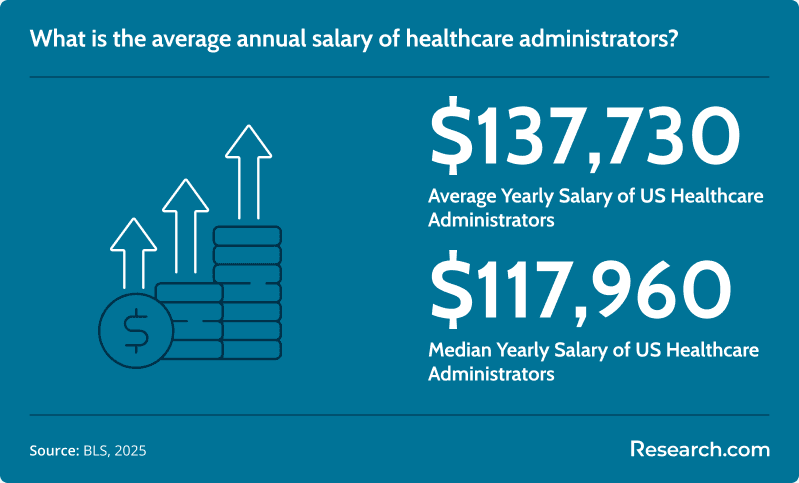
- Medical and health services managers earn an average yearly salary of $137,730 and a median yearly salary of $117,960, according to BLS data cited in this guide.
- Graduates may pursue roles such as healthcare administrator, hospital manager, clinical manager, operations leader, health information manager, policy analyst, or healthcare consultant.
- Compared with many campus-based formats, accelerated online MHA programs can offer greater scheduling flexibility, a shorter completion timeline, and fewer relocation or commuting costs.
- The degree is especially relevant for professionals who want to improve patient access, manage budgets, supervise teams, interpret healthcare regulations, and lead operational improvements.
What can I expect from an accelerated online master of health administration program?
An accelerated online Master of Health Administration is a graduate program built to cover healthcare management content in a compressed format. Instead of moving through long traditional semesters with extended breaks, students often take shorter courses back-to-back and complete credits throughout the year.
Most accelerated online MHA programs use fully online coursework, although some may include optional or required residencies, live sessions, internships, practicums, or capstone projects. Courses are commonly delivered in six- to eight-week terms, which allows motivated students to finish faster but also increases the weekly workload.
The curriculum usually combines healthcare finance, health policy, organizational leadership, quality improvement, healthcare law, data analytics, informatics, and strategic planning. Students learn how healthcare organizations make decisions about staffing, reimbursement, compliance, patient safety, resource allocation, and service delivery.
Online learning environments may include recorded lectures, live webinars, discussion boards, group projects, case studies, simulations, and applied assignments. Strong programs connect coursework to real administrative problems, such as reducing patient wait times, improving scheduling systems, managing reimbursement changes, or preparing for regulatory reviews.
Students should expect a demanding pace. Accelerated does not mean easier. It means the same graduate-level competencies are delivered in a shorter window, so time management, writing ability, comfort with digital tools, and consistent weekly engagement matter.
| Program feature | What it means for students | Why it matters |
| Condensed course terms | Classes may move faster than traditional semester courses. | Students can finish sooner but must keep up with frequent deadlines. |
| Online delivery | Coursework can usually be completed away from campus. | This helps working adults, caregivers, and students who cannot relocate. |
| Applied projects | Assignments often use healthcare cases, data, budgets, or operational problems. | Employers value evidence that graduates can solve real workplace issues. |
| Leadership focus | Programs emphasize supervision, strategy, communication, ethics, and decision-making. | MHA graduates are often preparing for management, not entry-level clinical care. |
| Capstone or practicum | Many programs require a final project or field-based experience. | This can help students demonstrate readiness for administrative roles. |
Where can I work with an accelerated online master of health administration program?
An accelerated online MHA can prepare graduates for administrative and leadership positions across many parts of the healthcare sector. The best fit depends on the student’s previous experience, specialization, location, and whether the target role requires industry-specific knowledge such as long-term care regulations, health informatics, finance, or public policy.
- Hospitals and health systems: Graduates may manage departments, coordinate operations, oversee budgets, support compliance work, or help improve patient flow across clinical and non-clinical units.
- Outpatient clinics and physician practices: Roles may involve scheduling systems, billing operations, patient access, staffing, vendor coordination, and front-office management.
- Long-term care facilities: MHA graduates can pursue leadership positions involving resident services, staffing plans, budgeting, compliance, and quality standards.
- Health insurance organizations: Opportunities may exist in claims operations, provider relations, policy analysis, utilization management, or cost-efficiency initiatives.
- Government and public health agencies: Graduates may support health programs, public policy implementation, community health initiatives, or large-scale service administration.
- Healthcare consulting firms: Consultants help organizations improve workflows, prepare for regulatory changes, select technologies, analyze costs, or redesign operations.
- Pharmaceutical and biotech companies: Administrative roles may focus on market access, health policy, provider engagement, compliance, or product strategy.
- Nonprofit health organizations: Graduates may lead programs, manage grants, direct outreach efforts, or oversee operations for mission-driven services.
- Academic and research institutions: Some roles involve managing healthcare research projects, grant-funded programs, faculty operations, or health-related academic units.
How much can I make with an accelerated online master of health administration program?
Many accelerated online MHA graduates pursue roles classified as medical and health services managers or healthcare administrators. Compensation varies by employer, state, facility size, experience level, specialization, and scope of responsibility.
According to the United States Bureau of Labor Statistics (BLS), healthcare administrators earn an average yearly salary of $137,730 and a median yearly salary of $117,960. The median figure is more than twice the collective median annual pay for all US professions.
Reported annual earnings for these professionals typically range from $69,680 to $219,080. Early-career managers and administrators may start closer to the lower end, while experienced leaders in large hospitals, health systems, or specialized organizations may earn well above the median.
| Salary measure | Amount | How to interpret it |
| Average yearly salary | $137,730 | A useful benchmark, but it can be influenced by high earners in senior roles. |
| Median yearly salary | $117,960 | The midpoint salary; half of workers earn more and half earn less. |
| Typical yearly range | $69,680 to $219,080 | Actual pay depends heavily on role level, geography, employer type, and experience. |
- Best accelerated online MHA programs for 2027
- How long accelerated online MHA programs take
- Online accelerated MHA vs. on-campus MHA
- Average cost of an accelerated online MHA
- Financial aid options for online MHA students
- Admission requirements and prerequisites
- Common MHA courses
- Available MHA specializations
- Is an accelerated online MHA a good investment?
- Challenges of accelerated online MHA programs
- How to choose the right accelerated online MHA
- Career paths after an accelerated online MHA
- Job market for MHA graduates
- How employers view accelerated online MHA degrees
- Future trends in accelerated online MHA programs
Best Accelerated Online Master of Health Administration Programs for 2027
How do we rank schools?
An accelerated online MHA can save time, but it still requires a serious commitment of tuition, study hours, and career planning. For that reason, program comparisons should rely on verifiable information rather than marketing claims.
Research.com used data from established education sources, including the IPEDS database, College Scorecard, Peterson's database, and the National Center for Education Statistics. Additional details about ranking criteria are available on the Research.com methodology page.
| Rank | School and program | Program length | Credits or courses | Tuition detail | Accreditation listed |
| 1 | Boston College Online Master of Healthcare Administration | 1 year | 42 to 46 | $1,510 per credit | New England Commission of Higher Education |
| 2 | University of North Carolina Wilmington Master of Healthcare Administration | 1 year | 48 | $345.52 in-state; $1,292.80 out-of-state per credit | Southern Association of Colleges and Schools |
| 3 | Western Governors University Master of Healthcare Administration | 1 year | 12 courses | $10,390 total cost | Northwest Commission on Colleges and Universities |
| 4 | University of Cincinnati Executive Master of Health Administration | 7 to 14 weeks | 40 | $754 in-state; $769 out-of-state per credit | Commission of Accreditation of Healthcare Management Education |
| 5 | Regis University M.S. in Health Services Administration | 1 to 2 years | 36 | $849 per credit | Higher Learning Commission |
| 6 | Louisiana State University Shreveport Online Master of Health Administration | 1 year | N/A | $415.80 per credit | Association to Advance Collegiate Schools of Business |
| 7 | Louisiana State University Online Master of Health Administration | 1 year | 30 | $421 per credit | Association to Advance Collegiate Schools of Business |
| 8 | University of St. Francis Health Administration (M.S.) | 15 months | 36 | $704 per credit | Higher Learning Commission |
| 9 | Southern New Hampshire University Master’s in Healthcare Administration Online | 10 weeks | 36 | $659 per credit | New England Commission of Higher Education |
| 10 | Rasmussen University Master of Healthcare Administration | 18 months | 12 courses | $218 per credit | Higher Learning Commission |
1. Boston College Online Master of Healthcare Administration
The Boston College Online Master of Healthcare Administration is built for professionals who want a faster route into healthcare leadership while continuing to study online. Its 42–46 credit curriculum uses seven-week asynchronous courses and covers areas such as healthcare systems, policy, quality management, and leadership.
- Program Length: 1 year
- Required Credits to Graduate: 42 to 46
- Cost per Credit: $1,510
- Accreditation: New England Commission of Higher Education
2. University of North Carolina Wilmington Master of Healthcare Administration
The University of North Carolina Wilmington provides a fully online accelerated MHA for early- and mid-career healthcare professionals. The program emphasizes applied knowledge in healthcare systems, informatics, management, and policy for students preparing to move into administrative roles.
- Program Length: 1 year
- Required Credits to Graduate: 48
- Cost per Credit: $345.52 (in-state); $1,292.80 (out-of-state)
- Accreditation: Southern Association of Colleges and Schools
3. Western Governors University Master of Healthcare Administration
The Western Governors University Master of Healthcare Administration is a fully online, competency-based option for experienced professionals who want to strengthen leadership skills. Students complete 12 courses that address healthcare systems, finance, risk management, and quality improvement.
- Program Length: 1 year
- Required Credits to Graduate: 12 courses
- Total Cost: $10,390
- Accreditation: Northwest Commission on Colleges and Universities
4. University of Cincinnati Executive Master of Health Administration
The University of Cincinnati Executive Master of Health Administration is a CAHME-accredited online program intended for mid-career healthcare professionals. The 40-credit curriculum offers fast-track or extended pacing, asynchronous coursework, no GRE/GMAT requirement, and instruction in healthcare operations, finance, policy, and strategic leadership.
- Program Length: 7 to 14 weeks
- Required Credits to Graduate: 40
- Cost per Credit: $754 (in-state); $769 (out-of-state)
- Accreditation: Commission of Accreditation of Healthcare Management Education
5. Regis University M.S. in Health Services Administration
The Regis University Master of Science in Health Services Administration serves students from varied academic and professional backgrounds who want to enter or advance in healthcare leadership. The fully online program can be finished in 12 to 24 months and includes finance, ethics, leadership, technology management, internships, and capstone work.
- Program Length: 1 to 2 years
- Required Credits to Graduate: 36
- Cost per Credit: $849
- Accreditation: Higher Learning Commission
6. Louisiana State University Shreveport Online Master of Health Administration
The online MHA at Louisiana State University Shreveport is an AACSB-accredited option for working professionals who want administrative preparation in budgeting, analytics, resource management, and strategic planning.
- Program Length: 1 year
- Required Credits to Graduate: N/A
- Cost per Credit: $415.80
- Accreditation: Association to Advance Collegiate Schools of Business
7. Louisiana State University Online Master of Health Administration
The fully online Louisiana State University Master of Health Administration is an AACSB-accredited 30-credit program that can be completed in as few as 12 months. Coursework includes healthcare systems, finance, law and ethics, strategic management, and organizational behavior.
- Program Length: 1 year
- Required Credits to Graduate: 30
- Cost per Credit: $421
- Accreditation: Association to Advance Collegiate Schools of Business
8. University of St. Francis Health Administration (M.S.)
The University of St. Francis offers a fully online 36-credit M.S. in Health Administration for experienced healthcare professionals who want broader management preparation. Students can complete the program in as little as 15 months and choose concentrations such as Data Science in Health Care and Leadership.
- Program Length: 15 months
- Concentrations:
- Data Science in Health Care
- Leadership in Health Care
- Population Health
- Quality Improvement in Health Care
- Required Credits to Graduate: 36
- Cost per Credit: $704
- Accreditation: Higher Learning Commission
9. Southern New Hampshire University Master’s in Healthcare Administration Online
The Southern New Hampshire University online Master’s in Healthcare Administration focuses on practical leadership skills for healthcare settings. The curriculum was developed with industry input and is aligned with AUPHA and HLA standards, with experienced faculty guiding students through applied healthcare administration content.
- Program Length: 10 weeks
- Required Credits to Graduate: 36
- Cost per Credit: $659
- Accreditation: New England Commission of Higher Education
10. Rasmussen University Master of Healthcare Administration
The Rasmussen University online Master of Healthcare Administration is designed around quality management, process improvement, and current healthcare industry issues. The program includes 12 courses, each 11 weeks long, and may be completed in as few as 18 months.
- Program Length: 18 months
- Required Credits to Graduate: 12 courses
- Cost per Credit: $218
- Accreditation: Higher Learning Commission
How long does it take to complete an accelerated online master of health administration program?
An accelerated online MHA commonly takes 12 to 15 months, although some part-time formats may take closer to 18 to 24 months. The timeline depends on how many courses students take at once, whether the program runs year-round, and whether any graduate credits transfer.
The shortest formats are best for students who can protect regular study time each week. Learners comparing adjacent online pathways, such as the shortest online data analytics programs, should pay close attention to course pacing, because analytics-heavy healthcare administration roles may require both management and data interpretation skills.
Accelerated MHA programs often replace traditional semester calendars with shorter six- to eight-week terms. This structure can help students move quickly through healthcare finance, policy, organizational leadership, informatics, and quality improvement, but assignments arrive more frequently and breaks may be limited.
Students with full-time jobs should ask whether the program permits part-time enrollment, course pauses, or a slower plan if work responsibilities increase. Finishing quickly is valuable only if the pace still allows students to learn, network, complete projects well, and avoid burnout.
| Timeline option | Who it may fit | Main trade-off |
| About 1 year | Students with strong time management and predictable schedules | Fast completion, but heavy weekly workload |
| 12 to 15 months | Working professionals who can handle steady coursework | Balanced accelerated pace, but little room for falling behind |
| 18 to 24 months | Students with demanding jobs, caregiving duties, or other commitments | More manageable pace, but slower return to the job market |
The chart below shows why patients get delayed medical care.
How does an accelerated online master of health administration program compare to an on-campus program?
Online and on-campus accelerated MHA programs usually target the same core competencies: healthcare leadership, finance, policy, ethics, operations, informatics, and quality improvement. The major differences are how students interact, how much schedule control they have, and how easily they can access local networking opportunities.
Students also exploring technology-focused degrees, including the shortest online artificial intelligence programs, should consider whether an online MHA includes enough analytics, informatics, and digital health content for their goals.
| Factor | Accelerated online MHA | On-campus MHA | Best fit |
| Schedule | Often asynchronous or partly synchronous, with more control over study times | Usually fixed class meeting times and required campus attendance | Online is better for working adults; campus may suit students who want structure. |
| Learning environment | Uses recorded lectures, virtual discussions, digital cases, and online group work | Uses in-person lectures, live discussions, workshops, and classroom activities | Online rewards independence; campus supports face-to-face engagement. |
| Networking | Built through online cohorts, virtual events, group projects, and alumni platforms | Built through campus events, local internships, faculty access, and peer interaction | Campus may have stronger regional networking; online may offer broader geographic reach. |
| Cost considerations | May reduce commuting, relocation, and housing costs | May include additional campus, travel, or living expenses | Online can be more accessible for students outside major metro areas. |
| Support services | Delivered through online advising, digital libraries, virtual career coaching, and remote tutoring | Available through in-person offices, faculty meetings, libraries, and campus career centers | Choose the format where you will actually use the support offered. |
When an online accelerated MHA makes more sense
- You need to keep working full time while studying.
- You cannot relocate or commute to campus regularly.
- You are comfortable managing deadlines without frequent in-person reminders.
- You want to apply assignments directly to your current healthcare workplace.
When an on-campus MHA may be the better choice
- You learn best through in-person discussion and immediate classroom feedback.
- You want access to a specific local hospital network, internship market, or faculty group.
- You prefer a structured weekly schedule over self-paced online coursework.
- You are transitioning careers and need stronger face-to-face mentoring.
What is the average cost of an accelerated online master of health administration program?
The average total tuition for an accelerated online Master of Health Administration program generally ranges from $15,000 to $40,000. Costs differ by school type, credit requirements, residency status, tuition model, technology fees, textbooks, and whether the program charges a flat rate or per-credit tuition.
Students comparing healthcare management with technical fields, such as the shortest online bachelor's programs in computer science, should compare total cost rather than only listed tuition. Healthcare technology management roles can benefit from technical knowledge, but degree costs and career outcomes vary by path.
Per-credit tuition in accelerated online MHA programs often falls between $400 and $1,000 per credit. However, a lower per-credit price does not always mean a lower total bill if the program requires more credits or has substantial fees. Students should request a full cost estimate before enrolling.
| Cost item | What to ask the school | Why it matters |
| Tuition | Is tuition charged per credit, per term, or as a flat program rate? | The billing model affects how much acceleration actually saves. |
| Fees | Are technology, distance learning, graduation, or student service fees required? | Fees can increase the true price beyond advertised tuition. |
| Books and materials | Are textbooks, software, cases, or subscriptions included? | Some online programs bundle materials, while others charge separately. |
| Residencies or travel | Are campus visits, intensives, internships, or practicums required? | Travel can add costs even in mostly online programs. |
| Lost work time | Will the accelerated workload reduce your ability to work overtime or full time? | Opportunity cost can affect the real return on investment. |
One way graduates may recover education costs is by moving into higher-paying administrative roles. According to the BLS and the chart below, the US states with the highest average annual salaries for healthcare administrators are New York ($179,160), the District of Columbia ($170,710), and Delaware ($164,190).
As with the highest paying criminology jobs, location can strongly influence earnings, but students should not assume that enrolling in a program guarantees a specific salary.
What are the financial aid options for students enrolling in an accelerated online master of health administration program?
Accelerated online MHA students may use several funding sources, but eligibility depends on the school, enrollment status, program accreditation, citizenship status, employer policies, and individual financial circumstances. Before enrolling, students should confirm whether the program is eligible for federal aid and whether part-time or accelerated enrollment affects aid disbursement.
- Federal Student Aid: Students can submit the Free Application for Federal Student Aid (FAFSA) to be considered for federal graduate aid, including Direct Unsubsidized Loans or Graduate PLUS Loans. These funds may help cover tuition, fees, books, and eligible living expenses.
- Institutional scholarships and grants: Some universities offer graduate scholarships, need-based grants, merit aid, alumni discounts, or healthcare employee discounts. Ask whether awards apply to accelerated online students.
- Employer tuition assistance: Hospitals, health systems, insurers, and healthcare companies may reimburse part of graduate tuition. Review service commitments carefully, because some employers require recipients to remain employed for a set period after receiving assistance.
- Military and veteran education benefits: Active-duty service members, veterans, and eligible dependents may qualify for GI Bill®, Yellow Ribbon Program, or Tuition Assistance benefits. Students should confirm program eligibility with both the school and the relevant benefits office.
- External scholarships and private loans: Professional associations, nonprofits, community groups, and private lenders may provide additional funding. Private loans should be compared carefully because interest rates, repayment terms, and borrower protections can differ from federal loans.
How to reduce the cost before you enroll
- Ask whether graduate transfer credits are accepted.
- Compare total program cost, not only cost per credit.
- Check whether the school offers payment plans.
- Use employer tuition assistance before borrowing when possible.
- Confirm whether taking fewer courses per term changes tuition or aid eligibility.
What are the prerequisites for enrolling in an accelerated online master of health administration program?
Admission requirements vary by school, but accelerated online MHA programs generally look for applicants who can handle graduate-level work and connect coursework to healthcare or management goals. Some programs admit students from any undergraduate major, while others prefer healthcare, business, public health, nursing, or related experience.
- Bachelor's degree: Applicants typically need a bachelor’s degree from an accredited college or university. The major may be flexible, although healthcare or business preparation can be helpful. A bachelor’s degree is also commonly discussed among medical records manager requirements.
- Minimum GPA: Many programs set a minimum undergraduate GPA, often around 2.75 to 3.0 on a 4.0 scale. More selective programs may expect a stronger academic record.
- Professional experience: Some accelerated or executive MHA programs prefer or require healthcare or management experience, sometimes one to three years. Experience can help students contribute to case discussions and apply concepts faster.
- Letters of recommendation: Applicants may need two or three recommendations from supervisors, faculty members, or professional contacts who can comment on leadership potential and graduate readiness.
- Statement of purpose: A personal essay usually explains the applicant’s career goals, interest in healthcare administration, and reasons for selecting the program.
- Resume or CV: Programs often request a current resume showing work history, education, certifications, leadership experience, and relevant skills.
- GRE or GMAT scores: Many programs are test-optional, but some may accept or require standardized scores, especially for applicants with lower GPAs.
| Applicant background | Potential strength | Possible gap to address |
| Clinician or allied health professional | Understands patient care, workflows, and clinical teams | May need stronger finance, strategy, or policy preparation |
| Business graduate | May bring accounting, management, or analytics skills | May need more healthcare systems and compliance knowledge |
| Public health professional | Understands population health, prevention, and policy | May need more operational and facility management experience |
| Career changer | May bring transferable leadership or project management skills | May need healthcare exposure before applying for advanced roles |
According to College Board and the visual below, 46.43% of healthcare administrators in the United States hold a bachelor's degree, 25% earned a master's degree, 10.71% have an associate degree, and 7.14% finished a certificate program.
What courses are typically in an accelerated online master of health administration program?
An accelerated online MHA curriculum is designed to develop management judgment in healthcare settings. Students study how healthcare organizations are financed, regulated, staffed, evaluated, and improved.
- Health Care Systems and Policy: Students examine how the US healthcare system is organized, financed, and regulated. Learners comparing health administration with counseling-related graduate routes, including the shortest online marriage and family counseling master's degree, may notice overlapping interest in policy, systems, and service delivery.
- Health Care Finance: This course covers budgeting, reimbursement, financial statements, cost control, and fiscal decision-making in healthcare organizations.
- Health Care Law and Ethics: Students review legal and ethical responsibilities involving confidentiality, informed consent, compliance, patient rights, and organizational risk.
- Strategic Management in Health Care: Coursework focuses on planning, market analysis, competition, organizational goals, and long-term positioning.
- Health Information Systems: Students learn how electronic health records, analytics tools, clinical decision support, and digital platforms affect operations and decision-making.
- Quality Improvement in Health Care: This course emphasizes patient safety, performance measurement, process improvement, regulatory standards, and quality frameworks.
- Organizational Behavior and Leadership: Students study communication, team dynamics, conflict resolution, change management, and leadership approaches in healthcare environments.
- Human Resource Management in Health Care: This area covers staffing, training, performance evaluation, labor compliance, workforce planning, and employee relations.
- Capstone Project or Practicum: Students complete an applied project or supervised experience that demonstrates their ability to address a practical healthcare administration challenge.
What types of specializations are available in accelerated online master's of health administration programs?
Specializations help students align an MHA with specific career goals. As with the best MSW specializations for career growth, the right concentration depends on the population, organization type, and leadership function the student wants to serve.
| Specialization | What it emphasizes | Potential fit |
| Healthcare Informatics | Health data systems, analytics, electronic records, and technology-enabled decision-making | Students interested in data-driven operations or digital health |
| Hospital Administration | Facility operations, staffing, budgeting, compliance, and patient services | Students targeting leadership in hospitals or large health systems |
| Health Policy and Management | Policy analysis, implementation, regulation, and administrative leadership | Students interested in government, advocacy, or policy roles |
| Long-Term Care Administration | Nursing homes, assisted living, aging services, staffing, and regulatory compliance | Students pursuing senior services or long-term care leadership |
| Health Finance and Economics | Reimbursement, cost analysis, budgeting, financial strategy, and economic decision-making | Students aiming for finance-heavy administrative roles |
| Public Health Administration | Population health, health education, program planning, and community services | Students who want to manage public health programs |
| Quality and Patient Safety | Risk management, quality improvement, safety protocols, and outcomes measurement | Students focused on patient outcomes and process improvement |
| Medical Group Management | Outpatient practice management, billing systems, provider operations, and compliance | Students interested in physician groups or ambulatory care networks |
Is an accelerated online MHA program a sound financial investment?
An accelerated online MHA can be a strong investment when the program is accredited, affordable relative to the student’s goals, and connected to realistic career advancement opportunities. The return depends on more than salary averages. Students should compare total tuition, time to completion, borrowing needs, current income, potential promotion paths, and whether the degree is valued by their target employers.
The investment may make more sense for professionals already working in healthcare who need a graduate credential to move into management. It may be riskier for students with no healthcare exposure, no clear target role, or a need to borrow heavily without understanding local job prospects. Students who are earlier in their education may also compare graduate study with lower-cost entry routes, such as the cheapest bachelor's degree in healthcare administration.
| An accelerated online MHA may be worth it if... | Consider another option if... |
| You already work in healthcare and want to qualify for management roles faster. | You are unsure whether you want to work in healthcare administration. |
| Your employer offers tuition assistance or promotion opportunities. | The program requires debt that is hard to justify with your target role. |
| The curriculum matches your desired area, such as finance, informatics, or operations. | You need a clinical license or credential that an MHA does not provide. |
| The school has recognized accreditation and strong student support. | You cannot commit to the pace of accelerated graduate coursework. |
What are the potential challenges of accelerated online MHA programs?
The biggest challenge is pace. Condensed courses can require frequent reading, writing, discussions, exams, and projects, often while students are working full time. Learners who fall behind in a six- or eight-week term may have little time to recover.
Online students may also need to be proactive about networking. Without regular in-person classes, mentorship and peer relationships often depend on how much the student participates in virtual events, group projects, faculty office hours, and professional associations.
Technical comfort also matters. Students must navigate learning platforms, video tools, databases, online libraries, and collaborative software. Those newer to online learning can benefit from practicing digital tools in advance or reviewing shorter online healthcare training options, such as low cost medical billing and coding classes, before committing to a full graduate program.
Common mistakes to avoid
- Choosing only by speed: The fastest program is not always the best if it lacks the right coursework, support, or employer recognition.
- Ignoring accreditation: Always verify institutional accreditation and, when relevant, healthcare management accreditation such as CAHME.
- Comparing only tuition: Fees, materials, residencies, and lost work hours can change the real cost.
- Assuming online means self-paced: Many online programs still have fixed weekly deadlines.
- Overlooking networking: Career outcomes often improve when students build relationships during the program, not after graduation.
- Expecting salary guarantees: BLS figures are useful benchmarks, but pay depends on location, role, employer, and experience.
How to choose the best accelerated online master of health administration program?
The best accelerated online MHA is the one that matches your career goal, budget, schedule, and learning style. A highly ranked program may not be the right choice if it lacks your preferred specialization, requires an unmanageable pace, or costs more than your likely return can support.
- Verify accreditation: Confirm that the institution is accredited by a recognized accreditor and check whether the program has healthcare management accreditation such as CAHME. Accreditation review is also important in other fields, such as when comparing the best PsyD programs.
- Match the curriculum to your target job: Students interested in hospitals, finance, informatics, long-term care, public health, or consulting should confirm that the program offers relevant courses or concentrations.
- Understand the workload: Ask how many hours students typically spend each week, whether courses are synchronous or asynchronous, and how many classes students usually take per term.
- Calculate total cost: Include tuition, fees, books, technology, travel, and potential lost income. Cost comparisons matter across graduate options, including the cheapest online masters in mental health counseling.
- Review career support: Look for resume help, interview coaching, alumni networking, practicum placement support, employer partnerships, and healthcare-specific career advising.
- Ask about faculty experience: Programs with instructors who understand healthcare operations, compliance, finance, and leadership may provide more practical insight.
- Check transfer and pacing policies: Find out whether graduate credits transfer, whether you can slow down, and what happens if you need to pause enrollment.
Questions to ask before enrolling
- Is the program fully online, or are there required campus visits?
- What is the total program cost after fees?
- How many students complete the program on the accelerated timeline?
- Does the curriculum include a capstone, practicum, internship, or applied project?
- What healthcare employers have hired recent graduates?
- Are faculty members experienced in healthcare administration?
- Can working students realistically take the recommended course load?
- Does the program prepare students for the specific sector I want to enter?
What career paths are available for graduates of accelerated online master of health administration programs?
Accelerated online MHA graduates can pursue management roles in hospitals, clinics, insurers, long-term care organizations, government agencies, consulting firms, pharmaceutical companies, nonprofits, and health technology environments. The most realistic role depends on prior experience; an MHA may help a nurse, analyst, office manager, or public health professional move upward, but it does not replace clinical licensure when a job requires one.
| Career path | Typical responsibilities | Helpful preparation |
| Healthcare Administrator | Oversees operations, staffing, budgets, compliance, and patient service delivery | Leadership, finance, operations, policy, and communication |
| Clinical Director or Manager | Coordinates clinical departments, resources, staff workflows, and performance goals | Healthcare experience, team leadership, quality improvement |
| Operations Manager | Improves workflows, logistics, scheduling, service lines, and organizational efficiency | Process improvement, analytics, project management |
| Healthcare Consultant | Advises organizations on efficiency, regulation, technology, cost control, or strategy | Problem-solving, data analysis, communication, sector expertise |
| Finance Manager | Manages budgets, forecasts, financial reports, reimbursement, and resource allocation | Healthcare finance, accounting, analytics; those pursuing broader executive finance routes may compare options such as the cheapest online DBA |
| Project Manager | Leads healthcare initiatives such as technology rollouts, quality programs, or facility projects | Project planning, stakeholder communication, risk management |
| Clinical Trials Manager | Coordinates study operations, regulatory compliance, data collection, and research timelines | Research administration, compliance, documentation, leadership |
| Biopharmaceutical Manager | Supports operations, product strategy, compliance, provider engagement, or market access | Health policy, strategy, regulatory awareness, business skills |
| Policy Analyst | Studies healthcare laws, regulations, and program effects to guide decisions | Policy analysis, writing, research, public health knowledge |
| Health Information Manager | Manages patient data, information systems, privacy compliance, and data quality | Health informatics, HIPAA knowledge, records management, analytics |
What is the job market for graduates with an accelerated online master of health administration program?
The job market for healthcare administrators is strong because hospitals, clinics, physician groups, insurers, public agencies, and other healthcare organizations need managers who can handle operations, staffing, finance, compliance, and technology change. According to the BLS, employment of healthcare administrators is projected to grow by 29% from 2023 to 2033, much faster than the national average of 4%. Employment is expected to rise from 562,700 in 2023 to 723,300 by 2033.
During that period, the BLS expects about 61,400 openings for healthcare administrators each year. At the time reflected in this guide, there are over 17,000 openings listed for healthcare administration roles.
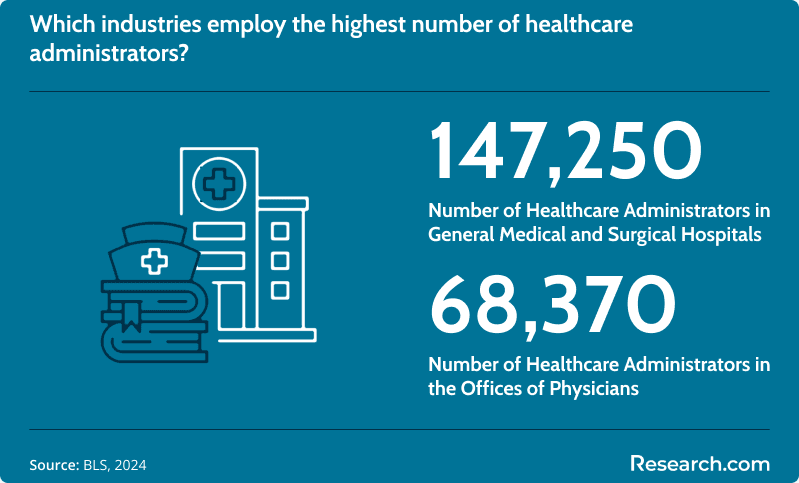
The largest employing sectors for healthcare administrators are general medical and surgical hospitals (147,250), doctors' offices (68,370), and outpatient care centers (38,150).
The states with the highest employment levels for these professionals are California (57,310), Texas (51,030), and Florida (35,950).
| Labor market measure | Figure | What it suggests |
| Projected employment growth | 29% from 2023 to 2033 | Demand is expected to grow much faster than the national average of 4%. |
| Employment level | 562,700 in 2023 to 723,300 by 2033 | The occupation is projected to add a substantial number of roles. |
| Annual openings | About 61,400 each year | Openings may come from growth, retirements, and job changes. |
| Top employing sector | General medical and surgical hospitals (147,250) | Hospitals remain a major employer for healthcare administrators. |
Do employers value accelerated online MHA programs?
Employers generally focus on whether the degree comes from an accredited institution, whether the curriculum is relevant, and whether the candidate can demonstrate leadership, analytical ability, communication skills, and healthcare knowledge. The online format itself is less likely to be a barrier when the program is reputable and the graduate can show applied experience.
Accelerated online programs can be attractive to employers when students complete case studies, capstones, practicums, or projects tied to real healthcare problems. Candidates should be ready to explain what they learned, how they applied it, and how it improved their ability to manage people, budgets, systems, or quality outcomes.
Students who want to strengthen their administrative technology profile may also compare MHA programs with related options, including affordable health information management programs online.
What Does the Future Hold for Accelerated Online MHA Programs?
Accelerated online MHA programs are likely to keep adapting as healthcare organizations rely more on analytics, digital health tools, telehealth workflows, value-based care models, and technology-supported patient access systems. Programs that update coursework around data use, quality improvement, cybersecurity awareness, patient experience, reimbursement, and operational resilience may better prepare graduates for modern healthcare leadership.
Students should look for programs that treat technology as part of healthcare management rather than a separate topic. Useful features may include analytics assignments, virtual simulations, telehealth operations content, health information systems coursework, and projects connected to current administrative problems.
Professionals who want complementary operational skills may also explore accredited medical billing and coding schools online, especially if they are interested in revenue cycle management, documentation, coding compliance, or health information roles.
What graduates say about accelerated online MHA programs
-
: "
The accelerated schedule required discipline, but the online format allowed me to keep working while learning from classmates in different healthcare settings. Case studies and discussions made the coursework feel connected to real administrative problems. – Alex
"
-
: "
The program was intense, yet the shorter timeline helped me build leadership skills without stepping away from my career. The compressed format pushed me to think more critically about operations, finance, and decision-making. – Carlos
"
-
: "
Online study gave me access to strong instruction and peers from across the country. The pace was demanding, but by the end I felt more prepared to pursue management responsibilities. – Emma
"
Key Insights
- An accelerated online MHA is best for disciplined students who want faster graduate preparation for healthcare leadership and can manage condensed coursework.
- Typical completion time is 12 to 15 months, although some programs may be completed in about 1 year and others take 18 to 24 months for part-time students.
- Total tuition often ranges from $15,000 to $40,000, but students should compare full program cost, including fees, materials, travel, and work-time trade-offs.
- Healthcare administrators earn an average yearly salary of $137,730 and a median yearly salary of $117,960, with typical earnings ranging from $69,680 to $219,080.
- The highest average annual salaries cited in this guide are in New York ($179,160), the District of Columbia ($170,710), and Delaware ($164,190).
- BLS projects healthcare administrator employment to grow by 29% from 2023 to 2033, with about 61,400 openings expected each year.
- The largest employing sectors are general medical and surgical hospitals (147,250), doctors' offices (68,370), and outpatient care centers (38,150).
- Accreditation, curriculum fit, total cost, career services, faculty experience, and workload are more important than choosing the fastest program available.
- According to College Board data cited here, 46.43% of healthcare administrators in the United States hold a bachelor's degree, 25% earned a master's degree, 10.71% have an associate degree, and 7.14% finished a certificate program.
References:
- BLS (2024, April 3). Occupational employment and wage data for medical and health services managers. BLS
- BLS (2025, June 22). Cross-industry occupational employment statistics for private, federal, state, and local government sectors. BLS
- BLS (2025, April 18). Occupational outlook information for medical and health services managers. BLS
- College Board. Education profile for medical and health services managers. College Board
- Heath, S. (2025, May 20). Patient access barriers and healthcare challenges. TechTarget
- Telesford, I., Winger, A., & Rae, M. (2024, August 22). Consumer barriers to care beyond cost. Peterson-KFF Health System Tracker
Other Things You Should Know About Accelerated Online Master of Health Administration Programs
Yes. Most accelerated online MHA programs require a practicum, internship, or capstone in the final term. These experiences commonly total 150 to 300 hours and are completed with an approved health care organization under faculty supervision, often as part of a 30- to 45-credit curriculum.
To enroll in a 2027 accelerated online MHA program, applicants typically need a bachelor's degree, a minimum undergraduate GPA (often around 3.0), and relevant healthcare experience. Some programs may require standardized test scores or prerequisite courses in healthcare management or economics.


