2027 Easiest Healthcare Degree Programs

Co-Founder and Chief Data Scientist
Choosing a healthcare degree is often a trade-off between speed, cost, licensing requirements, and long-term career mobility. Some students want the fastest credible route into patient care. Others prefer administrative, billing, coding, public health, or rehabilitation roles that can lead to stable healthcare employment without committing immediately to a long professional degree.
Healthcare remains one of the most popular fields of study in the United States. Since 2013, healthcare degrees have been the second most common college major among U.S. students, and the National Center for Education Statistics (NCES, 2023a) reported 263,765 bachelor’s degrees in health professions and related programs in 2021–2022. The appeal is clear: healthcare offers many entry points, from short certificate programs to associate degrees, bachelor’s degrees, and graduate-level clinical or administrative pathways.
This guide explains the easiest healthcare degrees for students who want practical training, clear job options, and a shorter path into the workforce. You will learn which programs are typically faster to complete, what roles they can lead to, how to compare accreditation and licensing requirements, what costs to evaluate, and when an “easy” healthcare degree is a smart first step rather than a final career destination.
Quick answer: What are the easiest healthcare degrees to complete?
The easiest healthcare degrees are usually career-focused certificate, diploma, associate, or applied associate programs with structured coursework, hands-on training, and direct links to entry-level jobs. Common options include medical billing and coding, health information management, medical assisting, phlebotomy, practical nursing, dental hygiene, physical therapy assistant, occupational therapy assistant, radiologic technology, and public health or health science associate programs.
“Easiest” does not mean low quality or effortless. In healthcare, even shorter programs require accuracy, professionalism, patient privacy awareness, and often clinical practice or certification. The best choice is the program that matches your timeline, budget, learning style, state licensing rules, and preferred level of patient contact.
What are the benefits of pursuing the easiest healthcare degrees?
- Faster entry into healthcare: Many of the easiest healthcare degrees take less than four years, and some can be completed in 18 to 24 months.
- Early career testing: A shorter program lets you determine whether healthcare fits your strengths before investing in a longer degree.
- Career flexibility: Graduates can move into clinical support, administrative, diagnostic, community health, or rehabilitation roles.
- Competitive earning potential: Healthcare careers can offer starting salaries ranging from $40,000 to $90,000 yearly, depending on the occupation, location, credentials, and employer.
- Stackable education: Many students use an entry-level healthcare credential as a foundation for nursing, healthcare administration, informatics, public health, pharmacy, or other advanced fields.
- Easiest Healthcare Degrees for 2027
- Healthcare Career Landscape: What Students Should Know
- Administrative and Health Information Programs
- Direct Patient Care Programs
- Therapy and Rehabilitation Programs
- Diagnostic and Community Health Programs
- Pros and Cons of Easy Healthcare Degree Programs
- Job Market for Graduates of Easier Healthcare Programs
- Financial Aid and Cost Planning for Healthcare Degrees
- How to Choose the Right Easy Healthcare Program
- How to Advance After an Entry-Level Healthcare Degree
- Fast-Track Healthcare Administration Options
- Career Placement Services and Employment Support
- Employer Perceptions of Easy Healthcare Degrees
- Are Easier Healthcare Programs Comparable to Standard Programs?
- Accreditation and Licensing Standards
- Advanced Degree Options After an Easy Healthcare Degree
- Starting Salary and Degree Value
- Is an Easy Healthcare Degree Worth the Cost?
- Emerging Trends in Healthcare Education and Careers
Easiest Healthcare Degrees for 2027
How do we rank schools?
Healthcare programs should be compared using more than convenience or speed. A shorter program still needs credible instruction, appropriate accreditation, transparent costs, relevant clinical or practical training, and a curriculum that prepares students for the job or credential they are pursuing.
Research.com’s ranking of the easiest healthcare degrees was developed by our team using a structured ranking methodology. To support a data-informed review, we also considered information from the Integrated Postsecondary Education Data System (IPEDS), Peterson’s database and its Distance Learning Licensed Data Set, College Scorecard, and the National Center for Education Statistics (NCES). These sources help students review programs with more context around institutional quality, affordability, and student outcomes.
| Program area | Typical credential | Best fit for students who want |
| Medical billing and coding | Certificate or associate degree | Healthcare office work, insurance claims, coding systems, and remote-friendly administrative roles |
| Health information management | Associate or bachelor’s degree | Patient data, privacy, compliance, records systems, and healthcare technology |
| Medical assisting | Certificate, diploma, or associate degree | A mix of front-office duties and basic clinical support |
| Phlebotomy | Short course, certificate, or diploma | Fast clinical entry focused on blood collection and laboratory support |
| Practical nursing | Diploma or certificate | Direct patient care and a possible future bridge to registered nursing |
| Dental hygiene | Associate or bachelor’s degree | Preventive oral healthcare, patient education, and dental clinical practice |
| Physical therapy assistant | Associate degree | Rehabilitation work under a licensed physical therapist |
| Occupational therapy assistant | Associate degree | Helping patients build daily living and functional skills |
| Radiologic technology | Associate degree | Diagnostic imaging, patient positioning, and equipment-based clinical work |
| Public health or health science | Associate degree | Community health, prevention, education, and transfer preparation |
1. Central Maine Community College
The AAS in Medical Coding and Electronic Health Records at Central Maine Community College is designed for students who want to work with healthcare documentation, insurance systems, reimbursement, and electronic records. The curriculum emphasizes ethical practice, HIPAA compliance, coding standards, medical record review, and the differences between government and commercial insurance plans. Students may complete the associate degree on campus or fully online, or they may choose the shorter certificate route.
- Program Length: One year (certificate), two years (AAS)
- Cost per Credit: $96 (in-state); $144 (New England regional rate); $192 (out-of-state)
- Required Credits to Graduate: 28–30 (certificate), 60–62 (AAS)
- Accreditation: New England Commission of Higher Education (NECHE)
2. American National University
The online Associate Degree in Health Information Management at American National University prepares students to organize, protect, analyze, and make patient health information available to care teams. The program includes technical training in health data management as well as an externship for applied experience. Students also build problem-solving, critical thinking, and management skills that support patient care quality and compliant records practices.
- Program Length: 20 months
- Cost per Credit: $366
- Required Credits to Graduate: 96
- Accreditation: Commission on Accreditation for Health Informatics and Information Management Education (CAHIIM)
3. Keiser University
The AS in Medical Assisting at Keiser University trains students for both clinical and administrative support work in medical offices and healthcare facilities. Students learn to prepare exam rooms, record vital signs, support minor procedures, administer injections, assist with basic patient care tasks, and handle office responsibilities. The program also prepares graduates for medical assisting credentialing exams and is offered at most Keiser University Florida campuses.
- Program Length: 16 months
- Cost per Semester: $2,867 (0 to 5.99 credits)
- Required Credits to Graduate: 60.5
- Accreditation: Southern Association of Colleges and Schools Commission on Colleges (SACSCOC)
4. Chicago School of Phlebotomy
The accelerated phlebotomy course at Chicago School of Phlebotomy is intended for students who already have related medical training, healthcare education, or clinical exposure. The course builds on prior experience through classroom discussion, practical instruction, and supervised skill development. Topics include blood collection techniques, safety practices, and foundational anatomy and physiology.
- Program Length: Four weeks
- Estimated Cost: $750
- Required Credits to Graduate: N/A
- Accreditation: National Commission for Certifying Agencies (NCCA)
5. South Georgia Technical College
The Practical Nursing diploma at South Georgia Technical College prepares students for the NCLEX-PN and entry into practical nursing roles. The program combines academic coursework, occupational training, and supervised clinical experiences so students can apply nursing concepts in patient care settings. Applicants must provide a high school diploma or equivalent and SAT/ACT scores.
- Program Length: One to 1.5 years
- Cost per Credit: $100
- Required Credits to Graduate: 57
- Accreditation: Professional Licensing Board Georgia Board of Examiners of Licensed Practical Nursing
6. University of Michigan-Ann Arbor
The BS in Dental Hygiene at the University of Michigan-Ann Arbor gives students a broad clinical and academic foundation in oral healthcare. In addition to preparing graduates for dental hygiene practice, the program can support career interests in public health, education, advocacy, and research. Students have access to the university’s library resources and may complete rotations in hospitals and specialty clinics to observe and practice in varied dental settings.
- Program Length: Two years
- Estimated Yearly Cost: $17,544.38–$19,720.38 (resident); $58,412.38–$62,492.38 (nonresident)
- Required Credits to Graduate: 120
- Accreditation: Commission on Dental Accreditation (CODA)
7. Sinclair Community College
The AAS in Physical Therapy Assistant at Sinclair Community College prepares students to provide physical therapy services under the supervision of a physical therapist. The curriculum combines general education, technical coursework, labs, classroom learning, and clinical practice. Full-time students can complete the sequence in five semesters, with admission options that include general admissions and the Accelerated Admission for Academic Achievement (AAAA) pathway.
- Program Length: 20 months
- Cost per Credit: $146.03 (Montgomery County); $193.28 (Ohio resident); $349.40 (nonresident)
- Required Credits to Graduate: 65
- Accreditation: Commission on Accreditation in Physical Therapy Education (CAPTE)
8. Fox College
The Occupational Therapy Assistant program at Fox College is an accelerated option for students who want practical rehabilitation-focused training. Coursework covers anatomy, physiology, physical rehabilitation, mental health, assistive technologies, and occupational therapy interventions. Students complete hands-on learning in simulated clinical labs, and the small class format supports more direct faculty interaction. The curriculum is designed to prepare graduates for the national certification examination.
- Program Length: 18 months
- Cost per Semester: $2,600–$7,920
- Required Credits to Graduate: 77
- Accreditation: Accreditation Council for Occupational Therapy Education (ACOTE)
9. Santa Fe College
The AS in Radiography at Santa Fe College is a five-semester program that uses on-campus, online, virtual, and clinical learning formats. Students usually enroll full-time and complete internships with clinical affiliates in Gainesville and Lake City. Technical courses follow a cohort sequence, while prerequisites may be completed as available. The program focuses on producing competent radiographers who understand imaging procedures, patient-centered care, professional development, and leadership expectations.
- Program Length: 20 months
- Estimated Total Cost: $11,981.04 (residents); $33,243.05 (nonresidents)
- Required Credits to Graduate: 77
- Accreditation: Joint Review Committee on Education in Radiologic Technology (JRCERT)
10. College of Western Idaho
The AS in Health Science and Public Health at the College of Western Idaho gives students a flexible foundation for healthcare, health science, and public health pathways. Offered online or in person, the program introduces health promotion, public health history and philosophy, environmental health, and core health science concepts. It may be especially useful for students who want a lower-cost entry point before transferring or choosing a more specialized healthcare direction.
- Program Length: Two years
- Estimated Cost: $139–$189 (resident); $306 (nonresidents)
- Required Credits to Graduate: 60
- Accreditation: Northwest Commission on Colleges and Universities (NWCCU)
What Graduates Say About Easier Healthcare Degree Pathways
- “My healthcare program gave me a practical way to graduate and begin working without feeling lost in the process. The coursework was manageable, the faculty support mattered, and the program helped me understand where I fit in healthcare.” - Cassandra
- “I completed my program in two years while working. The structure was clear, but the hands-on requirements still pushed me to build real job skills. Online access made it possible to keep up with school and work at the same time.” - Gian
- “Starting with a shorter healthcare degree helped me get employed faster and learn from the field directly. It also showed me that I wanted to continue my education instead of stopping with my first credential.” - Zuri
Key Findings
- The world needs roughly 10 million health professionals by 2030.
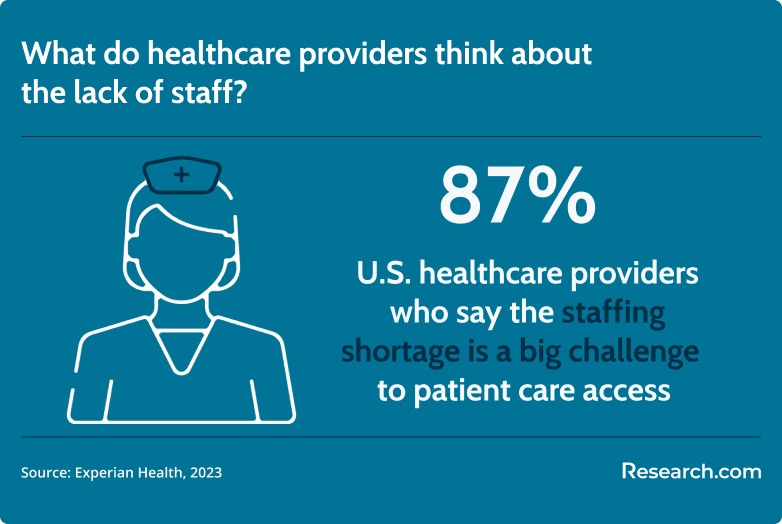
- 87% of U.S. healthcare providers find staffing shortages a challenge to care access.
- In 2021-22, a total of 177,413 learners earned associate degrees in health professions.
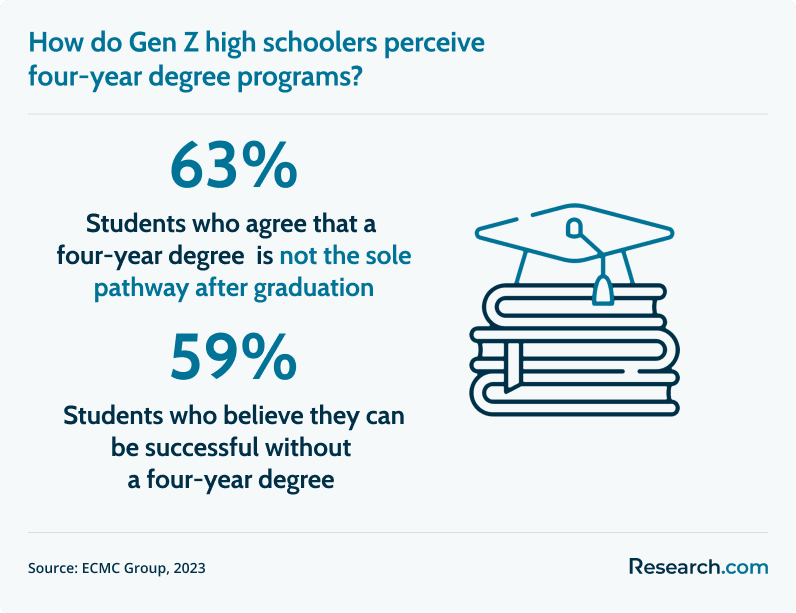
- 63% of Gen Z students agree that a four-year degree is not the sole pathway after high school.
- 28% of associate degree holders and 23% of individuals with some college education earn more than half of those with a bachelor’s degree.
Healthcare Career Landscape: What Students Should Know
Before choosing a fast or “easy” healthcare degree, students should understand the pressures shaping the industry. Healthcare employers need workers who can support patients, handle sensitive information, adapt to digital systems, and work effectively in regulated settings. Shorter programs can open doors, but the most valuable ones prepare students for real employer expectations.
- Workforce shortages remain a major concern: The world needs roughly 10 million health professionals by 2030, and 87% of U.S. healthcare providers find staffing shortages a challenge to care access (World Health Organization, n.d.; Experian Health, 2023). This creates opportunities, but it also means students should prepare for demanding work environments where retention, burnout, pay, scheduling, and mental health support matter.
- Technology is changing healthcare work: AI and digital tools are being used for predictive staffing, patient information management, clinical support, administrative automation, and patient experience improvements. At the same time, many hospitals report that their employees have a digital skills gap (BDO Global, 2024), making technology readiness a practical advantage for graduates.
- Access, cost, and prevention are central priorities: Healthcare organizations are increasingly focused on improving access, controlling costs, promoting preventive care, and supporting long-term wellness. Students interested in public health, health education, care coordination, and community-based services should pay close attention to these shifts.
| Student goal | Programs to consider | Key caution |
| Enter healthcare quickly with limited patient contact | Medical billing and coding, health information management | Check certification preparation and electronic health records training. |
| Work directly with patients as soon as possible | Medical assisting, phlebotomy, practical nursing | Review clinical hour requirements, state rules, and exam eligibility. |
| Build a rehabilitation career | Physical therapy assistant, occupational therapy assistant | Confirm programmatic accreditation and licensure pathways. |
| Use technology and equipment in clinical settings | Radiologic technology | Make sure the program meets credentialing and clinical placement expectations. |
| Explore population health or transfer later | Public health or health science associate degree | Ask how credits transfer into bachelor’s or graduate programs. |
Administrative and Health Information Programs
Administrative and health information programs are often among the easiest healthcare degrees for students who prefer organization, technology, compliance, and documentation over bedside care. These roles are not “back office” in the sense of being unimportant. Accurate records, correct coding, secure data, and timely claims processing affect patient access, reimbursement, privacy, and the daily operation of healthcare organizations.
Certifications matter in this area. According to the National Healthcareer Association (2024), 65% of organizations seek certified billing and coding specialists, while 43% require certified medical administrative assistants. When comparing programs, students should ask whether the curriculum prepares them for the certifications commonly requested by employers.
Medical Billing and Coding
Medical billing and coding programs teach students to convert diagnoses, procedures, services, and medical documentation into standardized codes used for billing, records, and insurance claims. Many students complete this training through community colleges, vocational schools, or affordable online medical billing and coding courses. Associate degree programs commonly take one to two years.
Students study coding guidelines, healthcare regulations, insurance processes, medical terminology, electronic health records, and claim review. Daily work may include checking patient charts, assigning diagnostic and procedure codes, preparing claims, reviewing denials, and identifying documentation errors.
Common job titles: Medical coder, billing specialist, medical records technician, medical records coordinator, coding auditor
Health Information Management
Health information management programs focus on the collection, organization, security, analysis, and use of patient health data. These programs may be offered at the associate or bachelor’s level and typically include coursework in patient privacy, data quality, healthcare law, health records systems, and information governance.
Compared with billing and coding, health information management is broader. Graduates may support compliance, quality reporting, health data workflows, records systems, and department operations. Students who later pursue one of the cheapest MHA programs online may move toward higher-level healthcare administration, policy, or departmental leadership roles.
Common job titles: Health information technician, medical records manager, healthcare IT specialist, patient care coordinator, HR specialist
The chart below shows healthcare roles for which organizations commonly require certifications.
Direct Patient Care Programs
Direct patient care programs are a good fit for students who want to interact with patients, support clinical teams, and see the immediate impact of their work. These programs can be accessible and relatively fast, but they require professionalism, emotional maturity, communication skills, and comfort with clinical procedures.
Medical Assisting
Medical assisting programs prepare students for hybrid roles that combine administrative tasks with basic clinical support. Depending on the school, students may earn a certificate, diploma, or associate degree, usually within one to two years.
Students learn to take patient histories, measure vital signs, prepare rooms, assist during exams or minor procedures, perform basic laboratory tasks, update medical records, and communicate with patients. Coursework usually includes medical terminology, anatomy, physiology, healthcare law, and ethics.
Common job titles: Medical assistant, medical office manager, surgical technician, health unit clerk, medical claims specialist
Phlebotomy
Phlebotomy is one of the shortest healthcare training options for students seeking direct clinical exposure. Programs may last a few weeks, several months, or up to a year depending on the institution and credential type.
Students learn venipuncture, specimen collection, patient identification, labeling, infection control, specimen processing, and safety procedures. Because phlebotomists work with anxious, ill, or uncomfortable patients, interpersonal skill is not optional. Calm communication is part of the job.
Common job titles: Phlebotomist, phlebotomy technician, laboratory assistant, medical assistant, veterinary technician
Licensed Practical/Vocational Nursing
Licensed practical nursing and licensed vocational nursing programs prepare students to deliver basic nursing care under the supervision of registered nurses and physicians. These programs usually take one to two years and lead to a diploma or certificate.
LPNs and LVNs monitor patient conditions, assist with hygiene, dress wounds, document care, provide comfort, and communicate with families and care teams. They may work in hospitals, clinics, nursing homes, long-term care facilities, and private homes. Students who later become registered nurses may use low-cost RN to BSN online programs to continue advancing their education.
Common job titles: LPN/LVN, telehealth nurse, case manager, nurse health coach, EMT
Dental Hygiene
Dental hygiene programs train students in preventive oral healthcare, patient education, radiography, oral anatomy, periodontology, dental materials, pain management, and clinical procedures. Programs commonly take two to four years and include classroom, laboratory, and supervised clinical learning.
Graduates must pass licensure requirements to practice. Dental hygienists often work in dental offices, hospitals, public health clinics, and educational settings. Typical duties include cleaning teeth, assessing oral health, taking dental X-rays, teaching oral hygiene, and assisting dentists with patient care.
Common job titles: Dental hygienist, dental assistant, dental office manager, medical assistant
Therapy and Rehabilitation Programs
Therapy and rehabilitation programs are strong options for students who want patient-facing work focused on recovery, mobility, independence, and quality of life. These roles are physically active and collaborative. They also require patience, careful documentation, and the ability to follow treatment plans created by licensed therapists.
Physical Therapy Assistant
Physical therapy assistant programs prepare students to support physical therapists in delivering rehabilitation care. Students commonly earn an associate degree within two or three years while studying therapeutic exercise, rehabilitation techniques, patient assessment, physiology, and kinesiology.
After graduation, physical therapist assistants must pass the National Physical Therapy Examination for PTAs and meet state licensure or certification requirements. PTAs may work in hospitals, outpatient clinics, rehabilitation centers, nursing homes, schools, and other healthcare settings.
Common job titles: Physical therapist assistant, physical therapist aide, physician assistant, personal trainer, athlete trainer
Occupational Therapy Assistant
Occupational therapy assistant programs teach students how to help patients improve the skills needed for daily life, work, school, and independent functioning. Programs are commonly offered through community colleges and vocational schools and often take two to three years.
Students learn to implement treatment activities, assist patients with adaptive equipment, support therapeutic exercises, modify environments, and document progress under the supervision of occupational therapists. Licensure generally requires passing the National Board for Certification in Occupational Therapy exam and completing supervised clinical experiences.
Common job titles: Occupational therapy assistant, occupational therapy aide, occupational therapy consultant, assistive technology specialist, case manager
Diagnostic and Community Health Programs
Diagnostic and community health programs serve different purposes but share an important goal: helping healthcare teams identify, monitor, prevent, or respond to health needs. Diagnostic programs tend to be more technical and equipment-based, while community health programs focus on population wellness, education, prevention, and health systems.
Radiologic Technology
Radiologic technology programs train students to produce medical images used by physicians and radiologists. Coursework usually includes patient positioning, radiation safety, imaging equipment operation, anatomy and physiology, and patient care. Programs are commonly completed within two years and include clinical experience.
Graduates must meet licensure requirements before practicing in hospitals, imaging centers, outpatient clinics, or physicians’ offices. Day-to-day responsibilities include preparing patients, operating imaging equipment, following safety protocols, producing quality images, and coordinating with radiologists.
Common job titles: Radiologic technologist, MRI technician, ultrasound technician, radiology specialist, diagnostic specialist
Public Health
An associate degree in public health introduces students to disease prevention, health promotion, epidemiology, environmental health, health policy, biostatistics, and social and behavioral health. It can lead to entry-level roles or serve as a transfer foundation for bachelor’s and graduate study.
Graduates may work with public health agencies, community organizations, healthcare facilities, or nonprofit organizations. Those who want advanced public health positions may later consider the cheapest 1 year MPH programs online or compare affordable online MPH degrees.
Common job titles: Public health specialist, policy analyst, epidemiologist, health education specialist, public health administrator
The chart below summarizes average annual salaries for the healthcare jobs discussed in this guide.
Pros and Cons of Easy Healthcare Degree Programs
An easier healthcare degree can be a practical starting point, but it is not automatically the best option for every student. The right choice depends on whether you want quick employment, long-term clinical authority, a flexible schedule, a lower-cost credential, or a stepping stone toward advanced education.
| Potential advantage | Why it matters |
| Lower barrier to entry | Many programs have more accessible admissions requirements than selective clinical or graduate healthcare programs. |
| Shorter timeline | Students can often finish sooner and begin gaining paid healthcare experience earlier. |
| Lower total education cost | Shorter certificate, diploma, and associate programs may reduce tuition expenses and borrowing. |
| Practical career preparation | Many programs are designed around specific job duties, certifications, or entry-level employer needs. |
| Multiple healthcare pathways | Graduates can enter administrative, patient care, diagnostic, rehabilitation, or community health roles. |
| Possible drawback | What to watch for |
| Limited advancement without more education | Supervisory, specialized, or licensed clinical roles may require additional degrees, exams, or credentials. |
| Lower starting pay in some roles | Entry-level healthcare support positions may not pay as much as advanced clinical or management careers. |
| Less theoretical depth | Shorter programs may focus on job tasks rather than broad medical, scientific, or leadership preparation. |
| Licensure varies by state | A program that works in one state may not satisfy requirements in another. |
| Quality differs across schools | Students must verify accreditation, clinical placement, certification exam preparation, and employer reputation. |
Job Market for Graduates of Easier Healthcare Programs
The healthcare sector is projected to offer approximately 1.8 million job openings from 2022 to 2032 (U.S. Bureau of Labor Statistics, 2024). However, the outlook is not the same for every occupation. During that same period, physical therapist assistants and occupational therapy assistants show the highest employment growth among the roles discussed here, at 26% and 24%, respectively. The chart below shows job outlook information for the easiest healthcare degree jobs featured in this article.
Administrative and information management workers remain important even as software and automation handle some repetitive tasks. Healthcare employers still need trained staff who understand patient privacy, documentation accuracy, reimbursement rules, data quality, compliance, and office workflows.
Patient care, diagnostic, therapy, and rehabilitation roles continue to support the everyday functioning of healthcare facilities. These workers help clinicians serve more patients, assist aging populations, support people with disabilities, and improve recovery and quality of life.
Public health roles also remain relevant after the pandemic because prevention, health education, community preparedness, and outbreak awareness are ongoing needs. Students should still compare local demand before enrolling because hiring conditions can vary by region, credential, and employer type.
Financial Aid and Cost Planning for Healthcare Degrees
Cost should be evaluated beyond the advertised tuition rate. A healthcare program may also require uniforms, background checks, immunizations, textbooks, lab supplies, certification exams, licensing fees, technology fees, transportation to clinical sites, and lost work hours during clinical rotations. These expenses can change the real price of a “cheap” or “easy” degree.
Students should start with federal financial aid, scholarships, grants, work-study options, employer tuition reimbursement, and payment plans. Some healthcare employers partner with schools or reimburse workers who commit to continued employment. If you are comparing administrative pathways, you may also want to review the cheapest online healthcare management degree options as part of a broader cost strategy.
| Cost question | Why it affects ROI |
| What is the total program cost, not just tuition? | Fees, supplies, exams, and clinical expenses can make one program more expensive than another. |
| Can I keep working while enrolled? | Flexible scheduling can reduce income loss during school. |
| Does the program prepare me for certification or licensure? | A lower-cost program has less value if graduates cannot qualify for required credentials. |
| Are clinical placements included? | Programs that leave students to find their own placements can delay graduation or credentialing. |
| Will credits transfer later? | Transfer-friendly credits can lower future bachelor’s or graduate degree costs. |
How to Choose the Right Easy Healthcare Program
The easiest healthcare degree for one student may be the wrong choice for another. A strong program should fit your career goal, time frame, budget, preferred work environment, and state requirements. Use the following factors before applying.
- Program length: Decide whether you need a short certificate, a one-year option, a two-year associate degree, or a bachelor’s program with stronger advancement potential.
- Career outcome: Check whether the program leads to specific jobs, certification eligibility, licensure, transfer options, or only general preparation.
- Admissions requirements: Review prerequisites, GPA standards, entrance exams, background checks, immunization rules, and clinical eligibility requirements.
- Accreditation: Confirm both institutional accreditation and any required programmatic accreditation for your field.
- Total cost: Compare tuition, fees, equipment, books, exam costs, clinical travel, and financial aid.
- Format and location: Determine whether online, hybrid, evening, weekend, or campus-based learning fits your schedule.
- Hands-on training: Look for labs, externships, practicums, simulations, clinical rotations, and employer partnerships.
- Credential preparation: Ask whether graduates are eligible for relevant certification, licensing, or registry exams.
- Student support: Compare advising, tutoring, exam preparation, clinical coordination, and career placement services.
Healthcare is popular not only among bachelor’s students but also among associate degree students. In the academic year 2021-22, 177,413 learners earned associate degrees in health professions (NCES, 2023b). This shows that shorter credentials remain a meaningful part of healthcare education.
Student attitudes also reflect a shift toward multiple postsecondary pathways. According to ECMC Group (2023), 63% of Gen Z students agree that a four-year degree is not the sole pathway after high school, a view that increased by 7% since before the pandemic. In addition, 59% of high schoolers believe they can succeed without pursuing a four-year degree.
Employers are also paying more attention to demonstrated ability. Skills-based hiring can help organizations identify candidates with job-ready competencies and credentials, not only traditional degrees. This shift is discussed in research on the importance of skills-based hiring (Goldberg, 2023).
Education still matters, but earnings do not follow a single path for everyone. Carnevale et al. (2021) found that 28% of associate degree holders and 23% of individuals with some college education earn more than half of those with a bachelor’s degree. For students choosing healthcare, the lesson is practical: compare the actual role, credential, local labor market, and advancement path rather than assuming a longer degree is always the better financial choice.
Common mistakes to avoid when choosing an easy healthcare degree
- Choosing only by speed: A short program is useful only if it leads to the credential or job you actually want.
- Ignoring accreditation: Some healthcare careers require programmatic accreditation for exam or licensure eligibility.
- Assuming online means fully online: Many healthcare programs include labs, clinical rotations, internships, or in-person exams.
- Looking only at tuition: Certification exams, uniforms, supplies, travel, and clinical fees can add significant cost.
- Skipping state licensing research: Licensure and certification requirements can differ by state and occupation.
- Overestimating salary certainty: Pay depends on location, employer, schedule, experience, credentials, and role.
- Not asking about clinical placement: A delayed clinical assignment can delay graduation and employment.
- Assuming every credit will transfer: Career-focused credits may not always apply to a future bachelor’s degree.
How to Advance After an Entry-Level Healthcare Degree
An easy healthcare degree can be the first step in a larger career plan. Once you have work experience, you can make more informed decisions about whether to specialize, supervise, teach, transfer, or pursue a licensed clinical profession.
- Continue into a bridge or advanced degree: Nurses, allied health workers, and healthcare staff may use bridge pathways or graduate programs, such as the cheapest BSN to FNP online programs, to move into more advanced roles.
- Earn professional certifications: Certifications can strengthen your credibility, especially in billing, coding, medical assisting, phlebotomy, health information, imaging, and rehabilitation support fields.
- Complete continuing education: Continuing education units, workshops, conferences, and employer training can help maintain licensure and keep your skills current.
- Build technical skills: Learn electronic health records, data privacy practices, healthcare software, scheduling systems, coding tools, or clinical equipment relevant to your role.
- Seek leadership experience: Volunteer for training, workflow improvement, scheduling, quality assurance, or team coordination tasks.
- Move into education: Experienced healthcare workers who want to teach or train future professionals may explore affordable graduate degrees for teachers.
If you decide healthcare is not the right long-term fit, your planning is not wasted. The discipline, communication, technology, and service skills developed in healthcare programs can support a pivot into other fields. Students comparing alternatives may want to review fast online business administration degree programs, accelerated EdD degree options, or online technology degree programs .
Fast-Track Healthcare Administration Options
Students who like healthcare but prefer management, operations, budgeting, policy, or systems improvement may be better suited to healthcare administration than clinical care. Fast-track administration programs are designed for learners who want to build leadership skills efficiently, especially if they already have healthcare or business experience.
Accelerated options, including 1 year MHA programs online, can help students prepare for roles involving operations, staff coordination, compliance, finance, and healthcare strategy. These programs commonly emphasize leadership, healthcare policy, financial management, ethics, and decision-making in complex healthcare environments.
This route makes the most sense for students who want to manage systems rather than provide bedside or hands-on clinical care. It may be less appropriate for students whose goal is direct patient diagnosis or treatment, since administration programs do not replace clinical licensure pathways.
Career Placement Services and Employment Support
Career services can improve a program’s value, but they do not guarantee employment. Strong healthcare programs often support students through resume help, interview coaching, internship or externship coordination, employer networking, certification exam guidance, and job search preparation.
Prospective students should ask for placement rates, employer partnership information, graduate job titles, certification pass information, and details about clinical or externship assignments. For students considering very short workforce pathways, resources such as a 6 week MA program guide can help clarify what fast practical training may involve and what limitations to investigate before enrolling.
Employer Perceptions of Easy Healthcare Degrees
Employers generally care less about whether a program is labeled “easy” and more about whether graduates can do the job safely, accurately, and professionally. In healthcare, skills, certification eligibility, clinical experience, reliability, patient communication, and compliance awareness are often more persuasive than program length alone.
Graduates of shorter programs can strengthen their hiring prospects by earning recognized certifications, completing internships or clinical hours, building digital health skills, and documenting hands-on experience. Students interested in combining healthcare knowledge with management preparation may also compare the best accelerated online degrees in healthcare administration.
Are Easier Healthcare Programs Comparable to Standard Healthcare Programs?
Easier healthcare programs can be just as appropriate as standard programs when they are designed for the same career outcome, meet accreditation expectations, include required practical training, and prepare students for relevant certification or licensure. The key issue is not difficulty. It is alignment.
A short medical assisting program should be judged against medical assisting job expectations, not against medical school. A physical therapy assistant program should be judged by whether it meets PTA education and licensure standards, not by whether it offers the same scope as a physical therapy doctoral program. A billing and coding program should be judged by coding, claims, compliance, and records preparation.
That said, shorter programs usually provide less depth, fewer electives, and less theoretical preparation than longer degrees. Students who want leadership, specialization, research, teaching, or advanced clinical responsibility may need additional education. For example, a graduate who becomes interested in healthcare data can later pursue a health informatics certificate online to build more specialized digital health and data management skills.
Accreditation and Licensing Standards
Accreditation is one of the most important checks before enrolling in any healthcare program. Students should verify institutional accreditation and, when required, programmatic accreditation from the relevant professional accreditor. This is especially important in fields such as dental hygiene, radiologic technology, physical therapy assisting, occupational therapy assisting, nursing, and health information management.
Students should also confirm whether the program satisfies licensing, certification, clinical hour, or exam eligibility requirements in the state where they plan to work. Online and accelerated formats can be legitimate, but they must still meet professional standards. Students exploring graduate administrative options may also compare admissions-friendly pathways such as the easiest MHA online programs to get into.
Advanced Degree Options After an Easy Healthcare Degree
Many students start with an easier healthcare degree and later move into a more specialized or advanced program. This can be a smart strategy if the first credential helps you gain experience, clarify your interests, and reduce the risk of committing to the wrong long-term path.
Possible next steps include bachelor’s completion programs, nursing bridge programs, healthcare administration degrees, public health degrees, health informatics certificates, pharmacy pathways, education programs, or specialized clinical training. Students interested in pharmaceutical care and advanced clinical preparation may research an online PharmD program, while carefully reviewing admissions requirements and prior coursework expectations.
Starting Salary and Degree Value
Starting salary is an important part of judging whether an easy healthcare degree is worthwhile, but it should not be the only measure. A lower-cost program that leads to employment quickly may offer a practical return, especially if it creates a path to higher credentials later. However, students should compare early earnings with long-term advancement, certification costs, regional pay differences, and the physical or emotional demands of the job.
Salary research should be role-specific. For example, students comparing healthcare pathways may review compensation information tied to specialized careers, such as pharmacy bachelor degree salary discussions, to understand how education level, licensure, and specialization can affect earnings over time.
Is an Easy Healthcare Degree Worth the Cost?
An easy healthcare degree can be a sound financial investment when the program is accredited, affordable, aligned with local job demand, and connected to a clear credential or role. It is less likely to be worthwhile if it has weak employer recognition, unclear licensing outcomes, poor clinical placement support, low completion transparency, or credits that do not transfer.
Students should compare total cost, time to completion, likely entry-level wages, exam requirements, continuing education needs, and advancement options. Some professionals may later use accelerated pathways, such as online accelerated PharmD programs, to pursue more advanced credentials, but those decisions should be based on admissions fit, licensing requirements, and long-term career goals.
Emerging Trends in Healthcare Education and Careers
Healthcare education is changing because employers need workers who can adapt to technology, staffing pressure, patient access challenges, and new care delivery models. Students choosing an easy healthcare degree should look for programs that teach current tools and transferable skills, not only narrow task training.
- Accelerated and stackable pathways: Shorter programs and 2-year medical degrees that pay well remain attractive because they can help students enter the workforce sooner while preserving room for future education.
- Digital health and AI exposure: Employers increasingly value comfort with electronic health records, scheduling systems, patient data tools, coding software, imaging technology, and AI-supported workflows.
- Simulation and hybrid learning: Virtual labs, simulations, online coursework, and hybrid delivery can make programs more flexible, though healthcare students should still expect in-person clinical or lab requirements in many fields.
- Interdisciplinary preparation: Programs that combine healthcare basics with communication, data literacy, public health, compliance, and patient education may give graduates more mobility.
- Preventive and community-based care: Public health, health education, lifestyle support, and patient advocacy are increasingly relevant as healthcare organizations focus on reducing avoidable illness and improving access.
- Certification-focused hiring: In many entry-level healthcare roles, recognized certifications can strengthen an application and help employers verify job-ready skills.
Key Insights
- The easiest healthcare degree is the one that fits your target role. Medical billing and coding, phlebotomy, medical assisting, practical nursing, radiologic technology, dental hygiene, PTA, OTA, health information management, and public health each lead to different work environments.
- Shorter does not mean unregulated. Many healthcare careers require accreditation, certification, clinical experience, licensure, or state approval.
- Administrative programs can be strong options for students who prefer data and compliance. These pathways are especially relevant for students who want healthcare careers without heavy bedside care responsibilities.
- Patient-facing programs require more than technical skill. Communication, professionalism, accuracy, and emotional steadiness matter in medical assisting, phlebotomy, nursing, dental hygiene, rehabilitation, and imaging roles.
- Cost comparisons should include hidden expenses. Exams, fees, supplies, uniforms, background checks, travel, and clinical scheduling can change the real price of a program.
- Career advancement often requires stacking credentials. An easy healthcare degree can open the first door, but higher pay, specialization, or leadership may require additional certification or education.
- Employer value depends on outcomes. Choose programs with credible accreditation, practical training, certification preparation, and evidence that graduates can move into relevant jobs.
References:
- Carnevale, A. P., Cheah, B., & Wenzinge, E. (2021). The college payoff: More education doesn’t always mean more earnings. Georgetown University Center on Education and the Workforce. https://cew.georgetown.edu/cew-reports/collegepayoff2021
- ECMC Group. (2023, June). Gen Z teens have changed their priorities for education and work. Question the Quo. https://www.questionthequo.org/buzz/reports/report-gen-z-teens-have-changed-their-priorities-for-education-and-work
- Experian Health. (2023, November 6). Impact of healthcare staffing shortages on revenue cycle management. https://www.experian.com/blogs/healthcare/impact-of-healthcare-staffing-shortages-on-revenue-cycle-management
- National Center for Education Statistics. (2023a, September). Bachelor's degrees conferred by postsecondary institutions, by field of study: Selected academic years, 1970-71 through 2021-22. Digest of Education Statistics. https://nces.ed.gov/programs/digest/d23/tables/dt23_322.10.asp
- National Center for Education Statistics. (2023b, September). Associate's degrees conferred by postsecondary institutions, by sex of student and field of study: Academic years 2011-12 through 2021-22. Digest of Education Statistics. https://nces.ed.gov/programs/digest/d23/tables/dt23_321.10.asp
- National Healthcareer Association. (2024, July). 2024 industry outlook report. https://info.nhanow.com/learning-leading-blog/healthcare-2024-industry-outlook-insights
- U.S. Bureau of Labor Statistics. (2024, April 17). Healthcare occupations. Occupational Outlook Handbook. https://www.bls.gov/ooh/healthcare/home.htm
- World Health Organization. (n.d.). Health workforce. Retrieved July 11, 2024, from https://www.who.int/health-topics/health-workforce
Other Things You Should Know About the Easiest Healthcare Degree Programs
Most healthcare degree programs require a criminal background check, immunization records, and a drug screening before clinical placement. Programs tied to patient care often also require TB testing, CPR certification, and a valid photo ID. These requirements are set by the school and clinical site before the first practicum.
Easy healthcare degree programs in 2027 typically require a high school diploma or GED for entry. Some may have specific prerequisites, like introductory biology. Always check if a program needs any standardized tests, such as the SAT or ACT, as this varies by institution.
In October 2027, some of the easiest healthcare degrees to pursue include Health Information Management and Medical Billing and Coding. These programs typically require less intensive coursework compared to clinical degrees, making them more accessible for many students.