2027 Civil Engineer: Complete Student Guide

Co-Founder and Chief Data Scientist
Choosing civil engineering means deciding whether you want a career tied to roads, bridges, water systems, buildings, and climate-resilient infrastructure. The U. S. Bureau of Labor Statistics reports a May 2024 median pay of $99,590 for civil engineers and projects 6% employment growth from 2024 to 2034. This guide is for students comparing degrees, online options, costs, accreditation, licensing, and career paths. You will learn what the role involves, what education is usually required, and how to choose a program that supports your long-term goals.
Key Things You Should Know
- Civil engineers typically need an ABET-accredited bachelor's degree for the smoothest path to Fundamentals of Engineering, Engineer-in-Training, and Professional Engineer licensure.
- The BLS lists $99,590 as the May 2024 median annual wage for civil engineers, but pay varies by specialization, PE licensure, employer, region, and project responsibility.
- Demand is supported by infrastructure renewal, climate adaptation, transportation projects, water systems, and construction activity, with BLS projecting 6% growth from 2024 to 2034.
What does a civil engineer do and how is this role defined in the U.S.?
A civil engineer plans, designs, evaluates, and helps oversee infrastructure that people use every day. In the U.S., the role usually covers public and private projects such as highways, bridges, airports, dams, water distribution systems, stormwater networks, buildings, rail systems, ports, and site development.
Civil engineering is broader than "building things." The engineer's job is to apply math, physics, design standards, safety rules, environmental constraints, and budget limits to create systems that can be built, maintained, and used safely. Many civil engineers also prepare technical reports, review drawings, coordinate with architects and contractors, model site conditions, analyze data, and communicate with government agencies or clients.
The table below clarifies how civil engineers differ from related roles students often confuse with the profession. This matters because the degree, licensing expectations, and daily work can be very different.
| Role | Main focus | Typical education path | Licensure relevance |
| Civil engineer | Design, analysis, planning, technical decision-making, and project oversight | Bachelor's degree in civil engineering or closely related engineering field | PE licensure is often important for responsible charge, public projects, and advancement |
| Civil engineering technician | Drafting, testing, surveying support, data collection, and field assistance | Associate degree, certificate, or technical training | Usually not the primary PE-track role |
| Construction manager | Schedules, budgets, contractors, job-site coordination, and delivery | Construction management, engineering, architecture, or experience-based route | PE may help in some settings but is not the core credential |
| Architect | Building form, function, aesthetics, code coordination, and client design intent | Architecture degree and architecture licensure pathway | Separate licensing system from engineering |
Current civil engineering work is also becoming more data-driven. Building information modeling, digital twins, drones, LiDAR scanning, GIS, AI-assisted design checks, and sensor-based infrastructure monitoring are changing how teams collect information and evaluate alternatives. These tools do not remove the need for engineering judgment, but they do raise expectations for software fluency and ethical decision-making.
What education and degree do you need to become a civil engineer?
The standard U.S. route to becoming a civil engineer is a bachelor's degree in civil engineering from an ABET-accredited program. Students who already know they want to sign and seal engineering work later should pay close attention to accreditation because state licensing boards commonly use it when evaluating education for the FE and PE pathway.
Civil engineering can be a strong fit for students who enjoy applied math, physics, design, public problem-solving, and long project timelines. If you are still comparing STEM and professional fields, civil engineering is often discussed among the best college majors for the future because infrastructure, environmental resilience, and transportation systems remain long-term workforce needs.
The table below compares common education paths and what each one can realistically support. Use it to avoid overpaying for a credential that does not match the role you actually want.
| Education option | Best for | Typical outcome | Important limitation |
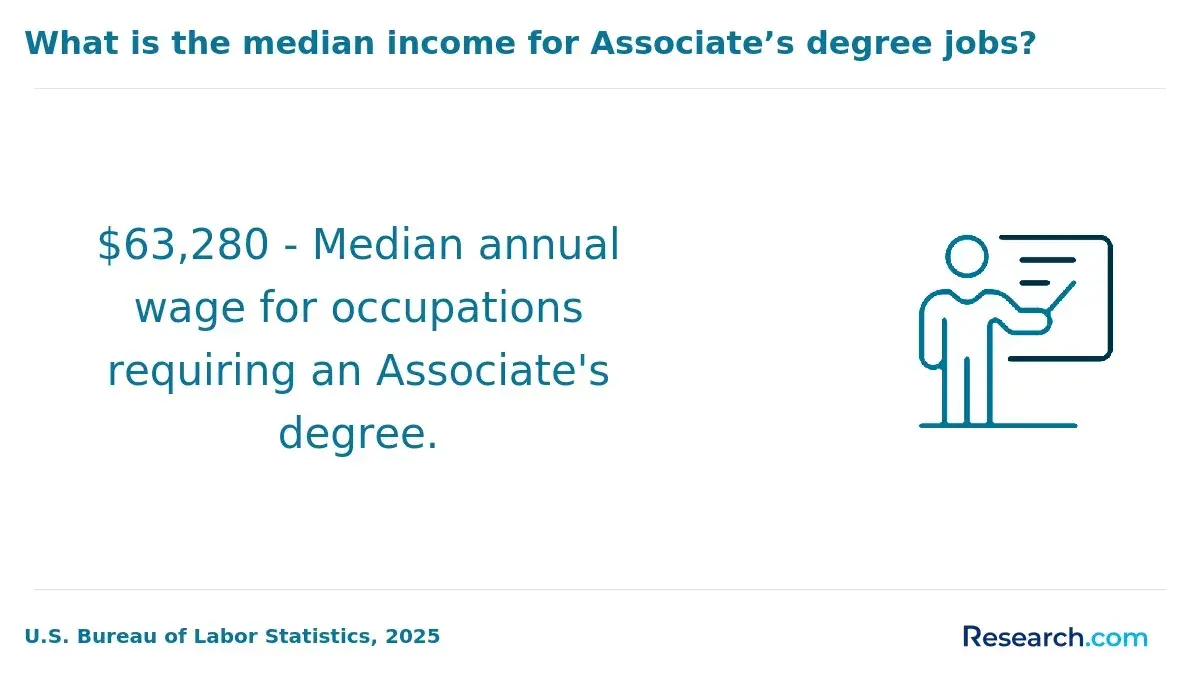
| Associate degree in civil engineering technology | Students seeking drafting, surveying, inspection, or technician roles | Entry into support positions or transfer preparation | Usually not enough for a civil engineer PE-track role |
| Bachelor's in civil engineering | Students who want entry-level civil engineer roles | Design engineer, project engineer, transportation engineer, water resources analyst, structural EIT | ABET accreditation is important for licensure planning |
| Master's in civil engineering | Students targeting structural, geotechnical, transportation, environmental, or research-heavy roles | Specialized technical roles, higher responsibility, doctoral preparation | Not always required for entry-level work, so ROI depends on specialization |
| Graduate certificate | Working engineers who need focused skill upgrades | Added knowledge in areas such as transportation, water, construction, or sustainability | Usually does not replace a degree for licensing or entry-level engineering roles |
A practical civil engineering path often looks like this: complete a bachelor's degree, take the Fundamentals of Engineering exam near graduation or soon after, work under licensed engineers, build project experience, and later pursue the Professional Engineer exam if your state requirements are met. PE licensure is not required for every job, but it can be a major advantage for public-facing design responsibility, consulting, management, and independent practice.
How do you choose an accredited civil engineering program in the United States?
Accreditation is one of the most important filters when choosing a civil engineering program. For U.S. students, ABET accreditation signals that a program has been reviewed against engineering education standards, including curriculum, faculty, assessment, facilities, and student outcomes.
Do not rely only on a school's marketing language. A program may be regionally accredited as an institution but not ABET-accredited for civil engineering specifically. That distinction matters because licensing boards, employers, and graduate programs may evaluate the engineering program itself, not just the college name.
Use the following steps before applying or enrolling. They help you confirm that the program supports the career path you have in mind rather than just offering a similar-sounding degree title.
- Search the official ABET program database for the exact school, campus, degree level, and civil engineering program name.
- Check whether the program is accredited as "Civil Engineering" rather than only "Engineering Technology" or a broader non-specific engineering program.
- Ask the department how graduates perform on the FE exam and whether students commonly pursue EIT or EI status.
- Review senior design projects, lab access, fieldwork, software training, and internship relationships with local engineering firms or agencies.
- Confirm transfer-credit rules early, especially for calculus, physics, chemistry, statics, and engineering science courses.
- Ask whether online, hybrid, branch-campus, or transfer pathways carry the same ABET status as the main campus program.
Common red flags include unclear accreditation wording, heavy reliance on asynchronous coursework without lab plans, limited advising for licensure, no visible senior design sequence, and vague career outcome claims. Rankings can be useful, but they should never replace accreditation, cost, curriculum fit, and licensing alignment.
What is the typical civil engineering curriculum and core coursework like?
A civil engineering curriculum is intentionally demanding because students must learn how loads, fluids, soils, materials, transportation systems, and environmental constraints interact in real projects. The first two years usually emphasize math and science foundations, while later years move into engineering analysis, design, labs, and specialization electives.
Civil engineering is less flexible than many general bachelor's programs because courses build in sequence. Unlike many 2-year accelerated bachelor degrees, ABET-track civil engineering programs often require carefully sequenced labs, prerequisites, and design experiences that are hard to compress without prior transfer credit.
The table below summarizes the subjects most students encounter and why each area matters. This can help you judge whether the coursework matches your strengths before you commit.
| Course area | What students study | Why it matters in practice |
| Calculus, differential equations, and statistics | Mathematical modeling, probability, optimization, and uncertainty | Supports structural analysis, hydrology, traffic modeling, and risk assessment |
| Physics and chemistry | Mechanics, energy, materials behavior, and environmental chemistry basics | Builds the science foundation for loads, materials, and water or soil interactions |
| Statics, dynamics, and mechanics of materials | Forces, equilibrium, motion, stress, strain, and deformation | Essential for structural, geotechnical, and construction design decisions |
| Fluid mechanics and hydrology | Flow, pressure, open channels, rainfall, watersheds, and drainage | Used in stormwater, flood control, water resources, and environmental systems |
| Geotechnical engineering | Soil properties, foundations, slope stability, and subsurface exploration | Helps engineers design safe foundations, retaining structures, and earthworks |
| Transportation engineering | Traffic flow, roadway design, safety, pavement, and mobility systems | Prepares students for highway, transit, airport, and urban mobility projects |
| Structural engineering | Steel, concrete, timber, load paths, codes, and structural systems | Supports bridge, building, and infrastructure design |
| Senior design | Team-based project planning, design, documentation, and presentation | Shows whether students can integrate technical, budget, safety, and client constraints |
Students should expect substantial group work, technical writing, lab reports, CAD or BIM assignments, field data, and design codes. If you prefer abstract theory only, civil engineering may feel too applied; if you enjoy seeing calculations become real infrastructure, the curriculum can be highly rewarding.
How do online civil engineering degrees compare to traditional campus programs?
Online civil engineering degrees can work well for some students, but the format requires careful scrutiny. Because civil engineering depends on labs, design studios, field measurements, and sometimes surveying or materials testing, fully online ABET-accredited bachelor's options are less common than online programs in business, IT, or general studies.
If remote flexibility is your top priority, compare civil engineering with other work from home degrees that pay good money. Civil engineering can include office-based design, modeling, and hybrid roles, but many early-career jobs still require site visits, inspections, public meetings, or field coordination.
The table below compares online, hybrid, and campus formats from a decision-making perspective. The best option depends on your schedule, location, lab access, internship needs, and licensing goals.
| Program format | Strengths | Trade-offs | Best fit |
| Traditional campus | Direct lab access, faculty interaction, student teams, career fairs, and local internships | Less schedule flexibility and possible relocation costs | First-time students who can attend full time and want the most structured engineering environment |
| Hybrid civil engineering | Some online coursework with required campus labs, intensives, or field sessions | Travel may still be required and scheduling can be complex | Working students or transfer students near the campus or willing to travel occasionally |
| Online engineering technology or related program | Greater flexibility and often more practical technician-oriented coursework | May not meet PE-track expectations in every state | Students seeking technician, construction, drafting, or applied technology roles |
| Online master's in civil engineering | Good option for working engineers seeking specialization | May require an engineering background and does not replace missing bachelor's prerequisites | Professionals with a civil engineering or related engineering degree |
Before choosing an online option, ask the school how labs are completed, whether the exact program is ABET-accredited, how exams are proctored, whether internships are supported in your state, and whether graduates have used the degree for FE or PE eligibility. State boards vary, so verify requirements directly before enrolling.
What are the admission requirements for civil engineering bachelor's and master's programs?
Admission requirements vary by school and degree level, but civil engineering programs usually expect stronger math and science preparation than many other majors. Selective programs may review grades in calculus readiness, physics, chemistry, and advanced high school math more closely than overall GPA alone.
Students comparing speed-focused options should be cautious. The best accelerated programs can save time in some fields, but civil engineering acceleration usually depends on prior AP, dual enrollment, transfer credit, or summer coursework rather than skipping core engineering prerequisites.
For a bachelor's program, typical requirements may include the items below. Exact policies differ, so use this as a planning checklist rather than a universal rule.
- High school diploma or equivalent with strong preparation in algebra, trigonometry, precalculus, calculus if available, physics, and chemistry.
- Competitive GPA, especially in math and science courses.
- SAT or ACT scores where required or optional, depending on the school's testing policy.
- Placement testing or readiness review for calculus and college-level writing.
- Personal statement, activities, recommendation letters, or engineering-interest essays for selective programs.
- Transfer evaluations for students bringing community college or prior university credits.
For a master's program, admissions committees usually look for an accredited engineering bachelor's degree or a closely related technical background. Applicants from non-civil engineering fields may need prerequisite coursework in mechanics, fluids, structures, soils, transportation, or math before taking advanced classes.
Graduate requirements often include the following components. They help the department judge whether you can handle advanced technical work and whether your goals match available faculty or concentrations.
- Bachelor's degree in civil engineering, environmental engineering, construction engineering, or a related engineering discipline.
- Minimum GPA set by the program, often with stronger expectations for technical coursework.
- Statement of purpose explaining specialization interests and career goals.
- Resume showing internships, design experience, research, or professional engineering work.
- Letters of recommendation from faculty or supervisors familiar with technical ability.
- GRE scores only if required, since many engineering programs have made them optional or program-specific.
A common mistake is applying only to "reach" engineering programs without a transfer-friendly or lower-cost backup. Another is ignoring math placement; starting below calculus can add time and cost even if you are officially admitted to the university.
How long do civil engineering programs take and what do they cost?
A full-time bachelor's degree in civil engineering usually takes four years, while transfer students may finish faster or slower depending on how many prerequisites apply. A master's degree commonly takes one to two years full time, or longer for working professionals enrolled part time.
Cost varies widely by residency, institution type, housing, lab fees, textbooks, transportation, and time to graduation. College Board's 2024 pricing data lists average published tuition and fees for 2024-25 at $11,610 for in-state public four-year students, $30,780 for out-of-state public four-year students, and $43,350 for private nonprofit four-year students. For civil engineering students, the key lesson is to compare total cost through graduation, not just first-year tuition.
The table below summarizes common time and cost patterns. It is a planning tool, not a price quote, because each school's aid package, transfer policy, and residency rules can change the final cost.
| Program type | Typical time to complete | Major cost drivers | ROI consideration |
| Community college to bachelor's transfer | About two years at community college plus two to three years after transfer | Transfer alignment, repeated prerequisites, commuting, and advising quality | Can reduce cost if engineering prerequisites transfer cleanly |
| Public in-state bachelor's | About four years full time | Tuition, housing, lab fees, transportation, and summer courses | Often a strong value if ABET-accredited and connected to local employers |
| Public out-of-state bachelor's | About four years full time | Higher tuition, relocation, housing, and travel | May make sense for a unique specialization, scholarship, or strong placement network |
| Private nonprofit bachelor's | About four years full time | Published tuition, institutional aid, housing, and fees | Net price after aid matters more than sticker price |
| Master's in civil engineering | One to two years full time or longer part time | Graduate tuition, assistantships, employer support, and opportunity cost | Most valuable when tied to a specialization or advancement goal |
If affordability is your main constraint, start by comparing accredited public options, transfer pathways, scholarships from engineering societies, paid internships, co-op programs, and employer tuition support. Students comparing online affordability can also review the cheapest bachelor degree online options, but they should verify whether any program they consider fits civil engineering accreditation and licensure needs.
To control cost without weakening your career path, prioritize these practical steps.
- Use net price calculators instead of relying on published tuition alone.
- Map every transfer course against the civil engineering degree plan before enrolling.
- Ask whether co-op terms delay graduation or replace semesters with paid experience.
- Compare four-year graduation rates for engineering students, not only the university overall.
- Budget for software, lab supplies, field gear, exam fees, transportation, and summer housing if internships are away from campus.
What civil engineering specializations exist and what careers can they lead to?
Civil engineering specializations shape the types of problems you solve, the software you use, the employers you target, and whether graduate study is especially valuable. Many students enter as general civil engineering majors and specialize through electives, internships, senior design, or a master's program.
The table below connects common specializations with typical work settings. Use it to match your interests with the projects and employers you are most likely to encounter.
| Specialization | What it focuses on | Possible career directions | Good fit for students who like |
| Structural engineering | Buildings, bridges, towers, load paths, materials, and design codes | Structural designer, bridge engineer, forensic engineering assistant, structural PE track | Mechanics, design codes, safety, and detailed calculations |
| Transportation engineering | Roadways, traffic, transit, airports, rail, safety, and mobility systems | Traffic engineer, roadway designer, transportation planner, intelligent transportation systems analyst | Urban systems, data, public mobility, and safety improvements |
| Water resources engineering | Hydrology, hydraulics, stormwater, flood control, and water distribution | Stormwater engineer, floodplain analyst, water systems engineer, drainage designer | Fluid flow, climate resilience, and public infrastructure |
| Environmental engineering | Water quality, wastewater, remediation, pollution control, and sustainability | Environmental engineer, wastewater design engineer, compliance support, remediation consultant | Chemistry, ecology, public health, and regulation |
| Geotechnical engineering | Soils, rock, foundations, retaining walls, slopes, and subsurface risk | Geotechnical engineer, foundation designer, field investigation engineer | Fieldwork, uncertainty, materials behavior, and site-specific problem solving |
| Construction engineering | Means and methods, scheduling, estimating, constructability, and job-site coordination | Project engineer, field engineer, construction manager, cost engineer | Fast-paced projects, coordination, budgets, and practical execution |
Specialization choice should be based on more than one favorite class. Look at internship availability, local industry demand, faculty strengths, graduate requirements, and whether the specialization commonly benefits from PE licensure or a master's degree.
Students should also think about work environment. Structural and transportation engineers may spend substantial time in design offices but still visit sites. Geotechnical and construction roles can involve more fieldwork. Water and environmental roles may combine modeling, permitting, agency coordination, and public infrastructure planning.
What is the salary range and earning potential for civil engineers in the U.S.?
The salary range for civil engineers depends heavily on experience, specialization, licensure, employer type, and geography. The most useful national anchor is the BLS May 2024 median annual wage of $99,590 for civil engineers. This means half of workers in the occupation were reported above that point and half below; it does not mean a new graduate should expect that exact salary.
Early-career civil engineers often enter as design engineers, project engineers, transportation analysts, water resources analysts, field engineers, or engineer-in-training staff. Pay can rise as engineers gain design responsibility, pass the FE exam, earn PE licensure, manage projects, supervise staff, or move into high-demand specialties.
The table below explains the main factors that influence earning potential. It helps you evaluate salary claims more realistically than relying on a single national number.
| Salary factor | How it affects earning potential | What students should check |
| PE licensure | Can support advancement into responsible design, project management, consulting leadership, and public-sector authority roles | Whether the program supports FE and PE eligibility in the state where you plan to work |
| Specialization | Structural, geotechnical, transportation, water, environmental, and construction paths have different labor markets | Local employer demand and internship openings in your preferred specialty |
| Region | High-cost and infrastructure-heavy metro areas may offer higher pay but also higher living costs | State and metro wage data, not just national medians |
| Employer type | Consulting firms, public agencies, utilities, construction companies, and federal contractors value different skills | Benefits, overtime expectations, promotion paths, and work-life balance |
| Technology skills | BIM, CAD, GIS, hydraulic modeling, structural analysis, scheduling, and data tools can improve competitiveness | Whether the curriculum uses current industry software and project workflows |
Be cautious with schools or bootcamp-style programs that imply a specific salary outcome. A civil engineering degree can open the door to well-paid work, but outcomes depend on market conditions, location, licensure progress, internships, communication skills, and the kind of projects you pursue.
What is the job outlook for civil engineers and where is demand strongest?
The U.S. job outlook for civil engineers is positive but not uniform across every region or specialty. The BLS projects 6% employment growth for civil engineers from 2024 to 2034 and about 22,900 openings each year on average. For students, this suggests steady opportunity, especially for those who pair an accredited degree with internships, software skills, and licensure progress.
Demand is strongest where infrastructure investment, population growth, environmental risk, and aging systems create sustained project needs. Civil engineers are also affected by public funding cycles, interest rates, construction activity, and state or local capital improvement plans.
The table below summarizes where demand often appears and why. It can help students target internships, electives, and early-career job searches.
| Demand area | Why civil engineers are needed | Relevant specializations |
| Transportation agencies and consultants | Roadway safety, bridge repair, transit upgrades, traffic operations, and mobility planning | Transportation, structural, construction |
| Water utilities and municipal infrastructure | Aging pipes, stormwater management, flood control, wastewater upgrades, and water quality compliance | Water resources, environmental, geotechnical |
| Climate resilience and hazard mitigation | Flooding, coastal risk, wildfire-related infrastructure issues, heat impacts, and resilient design standards | Water resources, environmental, structural, geotechnical |
| Private land development | Site grading, drainage, utilities, permitting, roads, and subdivision or commercial development | Site civil, transportation, water resources |
| Construction and design-build firms | Project coordination, constructability, estimating, scheduling, and field engineering | Construction, structural, geotechnical |
| Energy and industrial infrastructure | Facilities, foundations, access roads, drainage, environmental controls, and site development | Structural, geotechnical, environmental, construction |
Students can strengthen their job prospects by pursuing internships early, joining engineering student organizations, learning industry software, documenting design projects, and building communication skills. Employers often value graduates who can explain technical decisions clearly to clients, contractors, agencies, and non-engineers.
Civil engineering is a strong path for students who want tangible public impact, applied problem-solving, and a professional licensure route. It may be less ideal for students who want a fully remote career, dislike long technical sequences, or prefer short training programs over a multi-year engineering degree.
Other Things You Should Know About
Yes, civil engineering is academically demanding because it requires calculus, physics, mechanics, design codes, labs, and team projects. It is manageable for students who build strong study habits early and seek help before prerequisite gaps become serious.
Not always, but PE licensure is important for many consulting, public infrastructure, supervisory, and independent practice roles. Requirements vary by state, so students should check their target licensing board before choosing a program.
Possibly, but you must verify that the exact program meets accreditation and state licensure expectations. Civil engineering often requires labs, design work, and field experiences, so many online options are hybrid or more common at the master's level.
A master's can be worth it if you want a specialized field such as structural, geotechnical, transportation, water resources, or research-oriented work. It is not always necessary for entry-level roles, so compare the cost against your specialization goals and employer expectations.
References
- Core Curriculum for Civil Engineering Undergraduate Programs - Structville https://structville.com/global-core-curriculum-for-civil-engineering-undergraduate-programs
- Curriculum https://www.ccsu.edu/programs/civil-engineering-bs/curriculum
- Distance Civil Engineer Course vs Traditional Classes https://www.nietnibs.com/blog/distance-civil-engineer-course-vs-traditional-classes/
- STUDIES / APPLICATION https://archbau.uni-wuppertal.de/en/studies/civil-engineering/master-of-science/studies/application/
- How Long Does It Take to Become a Civil Engineer? | Miami Herald https://www.miamiherald.com/careers-education/how-long-does-it-take-to-become-a-civil-engineer/
- Top Civil Engineering Careers for Future Professionals https://info.online.bradley.edu/college-of-engineering/blog/top-civil-engineering-careers/
- Faculty of Graduate and Postdoctoral Studies | University of Manitoba - Civil Engineering (MSc, MEng) https://umanitoba.ca/graduate-studies/admissions/programs-of-study/civil-engineering-msc-meng
- What is Civil Engineering? (Definition, Types and Job Salary) https://www.twi-global.com/technical-knowledge/faqs/what-is-civil-engineering
- Civil Engineering Careers & Degrees | How To Become A Civil Engineer https://www.learnhowtobecome.org/engineering-careers/civil/
- Top 50 Civil Engineering Universities in USA for 2025 https://www.universityliving.com/blog/admission-guide/civil-engineering-universities-in-usa/