2027 STEM Majors: Complete Student Guide

Co-Founder and Chief Data Scientist
Choosing a STEM major is really a decision about time, cost, learning style, and career direction. The stakes are high: the U. . Bureau of Labor Statistics projects STEM occupations to grow 10.4% from 2023 to 2033, faster than the labor market overall.
This guide is for high school students, transfer students, career changers, military families, and graduate applicants who want a practical way to compare STEM fields. You will learn what STEM majors include, how degrees differ, what programs cost, and how to connect your choice to realistic career outcomes.
Key Things You Should Know
- STEM includes science, technology, engineering, and mathematics fields, but the best major depends on whether you prefer building systems, analyzing data, solving physical-world problems, conducting research, or preparing for licensed professional work.
- Recent BLS projections show STEM occupations growing 10.4% from 2023 to 2033, while median pay for STEM occupations was reported above the median for all occupations; use this as a market signal, not a guarantee of individual earnings.
- Total cost varies widely by institution and format: College Board's 2024-25 published tuition and fees averaged $11,610 for in-state public four-year colleges, $30,780 for out-of-state public colleges, and $43,350 for private nonprofit four-year colleges before grants, housing, books, and other expenses.
What are STEM majors, and which fields and disciplines do they include?
STEM majors are academic programs built around scientific reasoning, quantitative analysis, technical problem-solving, experimentation, design, and evidence-based decision-making. The term covers far more than computer science and engineering. It includes laboratory sciences, mathematics, statistics, health-related science pathways, environmental fields, and many applied technology programs.
The most useful way to understand STEM is to group majors by the kinds of problems students learn to solve. Some fields are more theory-heavy, some are more design-oriented, and others are more applied or clinical. The table below compares common STEM areas so you can quickly see how they differ before looking at specific majors.
| STEM area | Examples of majors | Best fit for students who like | Common career direction |
| Science | Biology, chemistry, physics, environmental science, neuroscience, geology | Research, lab work, natural systems, experimentation | Research assistant, laboratory scientist, environmental analyst, medical or graduate school pathway |
| Technology | Computer science, information technology, cybersecurity, data science, software engineering | Coding, systems, data, networks, digital products | Software development, IT, cybersecurity, data analytics, cloud computing |
| Engineering | Mechanical, electrical, civil, chemical, biomedical, aerospace, computer engineering | Designing, building, testing, optimizing systems | Engineering design, infrastructure, manufacturing, energy, robotics, product development |
| Mathematics | Mathematics, applied math, statistics, actuarial science, operations research | Models, proofs, prediction, optimization, quantitative decisions | Data science, actuarial work, finance analytics, research, operations planning |
| Health and applied science | Pre-medical studies, nursing science prerequisites, public health science, biomedical sciences | Human biology, health systems, patient-related science, population health | Healthcare preparation, clinical graduate programs, medical research, public health analytics |
A common mistake is choosing a STEM major only because it sounds high-paying. A better approach is to compare the daily work behind the major. For example, computer science may involve long periods of debugging and abstract problem-solving, while civil engineering may involve design documents, field constraints, safety standards, and public infrastructure. Biology can be excellent preparation for health or research careers, but many advanced roles require graduate or professional education.
STEM is also changing because of AI, automation, and data-rich workplaces. Employers increasingly value students who can combine domain knowledge with data literacy, communication, ethical judgment, and the ability to learn new tools. This means a chemistry major with programming skills, a civil engineering major with geospatial analysis experience, or a biology major with statistics training may have broader options than a student who completes only the minimum coursework.
What types of STEM degrees can you earn, from associate to graduate level?
You can study STEM at every academic level, from short certificates and associate degrees to doctorates. The right level depends on the job you want, how quickly you need to enter the workforce, whether the field requires licensure, and whether you plan to continue into graduate or professional school.
The table below compares common STEM degree levels. Use it to decide whether you need a shorter workforce credential, a bachelor's degree, or advanced preparation for research, leadership, or licensed practice.
| Credential or degree | Typical length | Common STEM uses | When it makes sense |
| Certificate | A few months to 1 year | Coding, cybersecurity, CAD, data analytics, lab skills, cloud platforms | You already have a degree or need a targeted skill for entry-level or advancement opportunities |
| Associate degree | About 2 years full time | IT support, engineering technology, laboratory technology, health science prerequisites | You want a lower-cost start, a technical job, or a transfer pathway to a bachelor's program |
| Bachelor's degree | About 4 years full time | Engineering, computer science, data science, biology, chemistry, math, environmental science | You want broad entry-level access to professional STEM roles or graduate school eligibility |
| Master's degree | 1 to 3 years | Data science, engineering management, biotechnology, statistics, cybersecurity, applied computer science | You want specialization, career change, advancement, or preparation for higher-level technical roles |
| Doctoral or professional degree | Often 4+ years after the bachelor's | Scientific research, university teaching, advanced engineering research, medicine, pharmacy, dentistry | Your target career requires independent research training, clinical licensure, or advanced professional preparation |
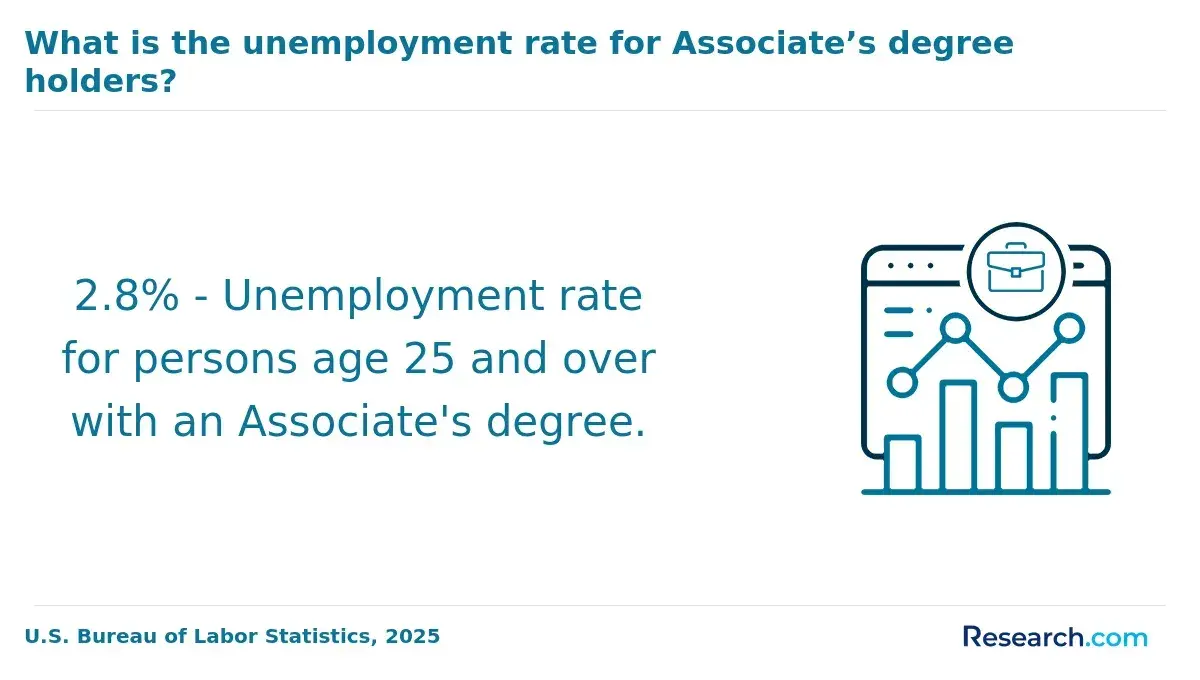
An associate degree can be a smart first step if you want to reduce risk before committing to a four-year major. Students who want a flexible, lower-cost start can compare an online associates degree with local community college transfer pathways, especially if they need to keep working while studying.
Certificates are useful when they teach a specific tool or skill employers recognize, but they are not always substitutes for degrees. For example, a cybersecurity certificate may help an IT worker move into security operations, while a bachelor's degree may still be preferred for many analyst or engineering roles. In engineering, licensure-oriented pathways usually require an accredited bachelor's degree rather than a short credential.
Graduate school is worth considering when the next role clearly requires advanced training or when the credential changes your career options. It may be less useful if you are using it only to delay job searching or if your target role values work experience and portfolios more than another degree.
How do you choose the right STEM major based on your interests and skills?
The best STEM major is the one that connects your interests, strengths, work style, and career goals. A high-demand field can still be a poor fit if you dislike the core tasks. Likewise, a challenging major can be worth it when the coursework matches how you think and the career path fits your life.
Start by matching your interests to the type of work you want to do most days. The following steps can help you narrow options without relying only on rankings or salary lists.
- Identify the problems you enjoy solving: building software, designing physical systems, understanding living organisms, protecting networks, modeling uncertainty, improving health, or analyzing environmental issues.
- Review the required first- and second-year courses for each major, because these classes reveal the real academic fit better than a program brochure.
- Compare the major's career paths with actual job postings in your region or preferred industry, paying attention to required skills, tools, certifications, and degree levels.
- Test the field through a starter course, project, internship, research assistant role, coding challenge, lab experience, makerspace project, or job shadowing opportunity.
- Ask whether you are willing to complete the math, lab, programming, or design workload required to reach the career outcome you want.
Some students look for the most manageable path because they are balancing work, family, or military mobility. If that is your situation, reviewing easiest online degrees can help you understand workload and flexibility, but do not confuse "easier" with "better for STEM." Many STEM fields require sequenced math, labs, or projects that cannot be skipped without limiting your career options.
Use fit as a decision filter. Choose computer science or data science if you enjoy abstraction, logic, and constant tool changes. Choose engineering if you like applied math, design constraints, and building things that must work safely in the real world. Choose biology, chemistry, or environmental science if you are motivated by scientific questions and are open to lab, field, or graduate study. Choose statistics or applied math if you enjoy modeling, uncertainty, and quantitative decision-making across industries.
Common red flags include choosing a major because a friend chose it, ignoring prerequisite chains, underestimating calculus or programming requirements, and assuming every STEM major leads directly to the same salary range. A better alternative is to create a short list of three majors, map each one to three realistic jobs, and compare the courses, internship opportunities, and graduate school requirements behind those jobs.
What are typical admission requirements for undergraduate and graduate STEM programs?
STEM admissions requirements vary by school, selectivity, degree level, and major. Programs with limited lab space, clinical placements, or engineering accreditation requirements may have stricter prerequisites than general admission to the college. Graduate programs often evaluate preparation more closely because students are expected to enter advanced technical coursework quickly.
For undergraduate applicants, admissions teams usually look for evidence that you can handle quantitative and science-heavy coursework. Competitive STEM pathways may review more than GPA alone.
- High school or transfer coursework in algebra, precalculus or calculus, biology, chemistry, physics, computer science, or statistics, depending on the major.
- Strong grades in math and science courses, especially for engineering, computer science, nursing prerequisites, and pre-professional science tracks.
- Placement test results or prior college credit that determine whether you can start in college-level calculus, chemistry, or programming.
- Application essays, activities, projects, research experiences, robotics, science fair work, coding portfolios, or technical internships when the institution uses holistic review.
- Transfer credit evaluations, because losing credits can add semesters and increase total cost.
Graduate STEM programs usually focus on academic readiness, technical background, and research or professional goals. Requirements differ widely, but applicants commonly need a bachelor's degree, prerequisite coursework, transcripts, recommendations, a resume, a statement of purpose, and sometimes GRE scores, portfolios, interviews, or writing samples.
Military-connected students and families should also consider mobility, transfer policies, deployment interruptions, and online access before applying. If those issues affect you, compare programs designed for flexible enrollment and student support, including lists of colleges for military spouses, before committing to a STEM sequence that may be hard to restart elsewhere.
Ask admissions advisors direct questions before enrolling:
- Will my credits apply to the major, not just to electives?
- Can online students access labs or simulations required for graduation?
- Are internships available to transfer students?
- Does the program meet prerequisites for licensure or graduate school?
- What happens if I place below calculus or general chemistry?
These questions help you avoid the costly mistake of being admitted to the university but delayed from the major.
How do online STEM programs compare with campus-based options in quality and outcomes?
Online STEM programs can be high quality when they are properly accredited, transparent about lab or proctored requirements, and supported by strong advising, tutoring, and career services. They are not automatically easier than campus programs. In many STEM fields, online students complete the same math, programming, design, and analysis work as campus students, but with more responsibility for time management.
The key question is not whether online or campus is universally better. The better question is which format fits the subject, your schedule, and the experiences you need for your target career. The table below compares the trade-offs that matter most.
| Factor | Online STEM programs | Campus-based STEM programs | Decision point |
| Flexibility | Often better for working adults, parents, rural students, and military-connected learners | More fixed schedules but easier access to in-person resources | Choose online if schedule control is essential and you can stay self-directed |
| Labs and hands-on work | May use home lab kits, simulations, local placements, short residencies, or hybrid labs | Direct access to labs, equipment, makerspaces, field sites, and research facilities | Choose campus or hybrid formats when your field requires extensive physical lab or design work |
| Peer and faculty interaction | Can be strong in well-designed courses but requires intentional participation | Often easier for spontaneous collaboration, research groups, and mentoring | Choose the format that supports your networking style |
| Career preparation | Depends heavily on virtual career services, employer partnerships, and project-based coursework | May offer easier access to campus recruiting, labs, and student organizations | Compare internship outcomes and employer connections, not just delivery format |
| Quality signal | Strong when regionally accredited and, where relevant, programmatically accredited | Strong when accredited and supported by facilities and faculty in the discipline | Accreditation and outcomes matter more than online versus campus labels |
Online learning has become a mainstream part of higher education, but STEM students should scrutinize delivery details carefully. When comparing top online universities, look beyond convenience and confirm whether the program provides tutoring in math-heavy courses, access to software, faculty office hours, lab alternatives, and career support for remote students.
Online STEM is often a strong fit for computer science, information technology, cybersecurity, data analytics, mathematics, statistics, and some engineering management programs. It can be more complicated for chemistry, biology, physics, and undergraduate engineering programs that require extensive in-person labs, design studios, or equipment. Hybrid formats can offer a useful middle ground.
A major red flag is an online STEM program that is vague about labs, accreditation, transferability, or licensure. Another is a program that promises fast completion without explaining prerequisites. STEM sequences are often cumulative; skipping foundations may make later courses harder and reduce your readiness for internships or graduate study.
What does the STEM curriculum usually cover, and how intensive is the coursework?
STEM curricula are usually intensive because courses build on each other. A student who struggles in calculus, programming fundamentals, general chemistry, or physics may find that later courses become harder until the foundation is strengthened. This does not mean STEM is only for "naturally gifted" students, but it does mean planning and academic support matter.
Most STEM bachelor's programs combine general education, prerequisite sequences, major cores, electives, labs, and applied projects. The exact mix depends on the major, but students should expect several categories of coursework.
- Quantitative foundations such as calculus, statistics, discrete math, linear algebra, or mathematical modeling.
- Science foundations such as biology, chemistry, physics, earth science, or environmental systems, depending on the discipline.
- Technical methods such as programming, data analysis, lab techniques, engineering design, simulation, or instrumentation.
- Writing and communication courses that prepare students to explain technical findings to non-specialists, clients, patients, regulators, or business teams.
- Capstone projects, research experiences, internships, clinical prerequisites, fieldwork, or team design projects that connect coursework to practical problems.
Course intensity shows up in time, not just difficulty. A three-credit lecture course may require several additional hours each week for problem sets, reading, coding, or lab preparation. Laboratory courses may add scheduled lab time, safety training, reports, and group coordination. Engineering and computer science projects can also require long debugging, testing, or design cycles outside class.
AI tools are changing how students learn and work, but they do not replace foundational understanding. In many STEM courses, AI can help explain concepts, generate practice problems, or speed up coding drafts. The risk is overreliance. If you cannot independently solve problems, interpret outputs, or detect errors, AI assistance can weaken your exam performance and job readiness. Treat AI as a tutor or productivity tool, not as a substitute for learning.
To manage the workload, build a weekly schedule around the hardest course first, use tutoring early, join study groups with students who solve problems actively, and visit office hours before grades slip. Students who wait until midterm to seek help often have fewer options because STEM courses are cumulative.
How long do STEM degrees take to complete, and what do they cost to finish?
Time to completion depends on degree level, transfer credits, course sequencing, enrollment intensity, and whether the program requires labs, internships, clinical prerequisites, co-ops, or a thesis. Cost depends not only on tuition but also on fees, books, software, equipment, commuting, housing, lost work hours, and repeated courses.
College Board's 2024-25 pricing data reported average published tuition and fees of $11,610 for in-state students at public four-year institutions, $30,780 for out-of-state students at public four-year institutions, and $43,350 at private nonprofit four-year institutions. These are sticker prices before grants and scholarships, so your net cost may be lower, but the figures show why school type, residency, and completion speed matter.
The table below summarizes typical timelines and cost drivers. Use it to estimate the full investment rather than comparing tuition alone.
| Path | Typical completion time | Main cost drivers | Best cost-control strategy |
| STEM certificate | Months to 1 year | Program fees, certification exam fees, software, equipment | Choose employer-recognized skills and avoid noncredit programs that do not align with job postings |
| Associate degree | About 2 years full time | Tuition, lab fees, books, transfer credit policies | Use a transfer agreement that applies credits directly to the bachelor's major |
| Bachelor's degree | About 4 years full time | Tuition, housing, labs, technology, delayed major admission, repeated courses | Plan prerequisites early and compare net price after aid |
| Master's degree | 1 to 3 years | Graduate tuition, employer tuition assistance, thesis or project requirements, work schedule | Choose a program tied to a specific role or promotion pathway |
| Doctoral or professional degree | Often 4+ years after the bachelor's | Funding model, assistantships, clinical costs, exam fees, opportunity cost | Clarify funding, licensure steps, and career outcomes before enrolling |
Accelerated graduate options can reduce time away from the workforce, but speed is valuable only when the program still fits your preparation and goals. If you already have the prerequisites and want a focused credential, a 1-year masters degree may be worth comparing with part-time programs, employer-funded programs, and certificates.
To reduce total cost, start with a degree plan rather than a course catalog. Confirm which credits transfer, whether summer courses shorten the timeline, whether co-ops delay graduation but improve experience, and whether employer reimbursement requires a minimum grade. Also compare net price, not just tuition, because a school with higher tuition may offer stronger aid while a cheaper program may cost more if credits do not transfer.
A common mistake is ignoring opportunity cost. A full-time STEM program may help you finish faster but reduce income while enrolled. A part-time program may preserve income but extend fees and delay career transitions. The best option is the one that minimizes total cost while still giving you the prerequisites, projects, accreditation, and support needed for your target role.
What STEM careers can you pursue with these degrees, and what roles are in demand?
STEM degrees can lead to roles in technology, engineering, healthcare preparation, energy, manufacturing, finance, government, education, environmental services, defense, biotechnology, and research. The right career depends on the major, degree level, portfolio, internships, location, and whether the role requires licensure or graduate education.
The table below connects common STEM majors with career directions and responsibilities. It is not a promise of job placement; it is a planning tool to help you see which majors align with which work environments.
| Major or field | Common entry-level or early-career roles | Typical responsibilities | Demand factors |
| Computer science and software engineering | Software developer, QA analyst, systems analyst, junior developer | Build, test, maintain, and improve applications, systems, and digital products | Cloud systems, AI integration, cybersecurity needs, business automation |
| Data science, statistics, and applied math | Data analyst, statistician assistant, business intelligence analyst, operations analyst | Clean data, build models, interpret results, support decisions with quantitative evidence | Data-driven decision-making, AI governance, analytics adoption across industries |
| Engineering | Civil, mechanical, electrical, chemical, biomedical, or industrial engineering roles | Design, test, improve, and document systems, structures, processes, devices, or products | Infrastructure, energy transition, manufacturing modernization, medical devices |
| Biology, chemistry, and laboratory sciences | Lab technician, research assistant, quality control analyst, environmental technician | Collect samples, run tests, analyze results, maintain lab procedures, support research | Biotech, healthcare research, environmental regulation, pharmaceuticals |
| Cybersecurity and IT | Security analyst, network technician, systems administrator, cloud support associate | Protect systems, monitor threats, manage networks, support secure infrastructure | Ransomware risk, regulatory compliance, remote work systems, cloud migration |
| Environmental and earth sciences | Environmental scientist assistant, GIS technician, field technician, sustainability analyst | Study natural systems, monitor compliance, analyze environmental data, support remediation | Climate adaptation, water quality, infrastructure planning, land use decisions |
In-demand STEM roles often share a few traits: they solve expensive problems, require technical judgment, and are difficult to automate completely. AI may change task mix in software, data, and engineering roles, but it also increases demand for people who can validate outputs, secure systems, interpret results, and connect technical tools to real business or scientific needs.
Students can improve career readiness by building evidence of skill before graduation. Strong signals include internships, undergraduate research, GitHub or portfolio projects, lab experience, design competitions, industry certifications, co-ops, capstones with real clients, and clear technical communication samples. For many entry-level roles, these experiences help employers understand what you can actually do with the degree.
Students aiming for healthcare, architecture, professional engineering, teaching, or certain laboratory leadership roles should check whether additional licensing, supervised experience, exams, or graduate education is required. A STEM bachelor's degree may be only one step in a longer pathway.
What are typical STEM salaries and job outlooks across major fields and industries?
STEM salary and job outlook vary by occupation, industry, location, degree level, experience, and credentials. The broad market signal is positive: BLS data published in 2024 reported a median annual wage of $101,650 for STEM occupations, compared with $48,060 for all occupations, using 2023 wage data. This gap suggests strong earning potential in many STEM fields, but it should not be read as a guaranteed outcome for every major or graduate.
The table below gives a practical salary-and-outlook snapshot by field using broad U.S. labor-market patterns. Use it to compare fields, then verify details for your target occupation and state before choosing a program.
| STEM field | Salary context | Outlook context | What affects individual results |
| Computer and information technology | Often above the all-occupation median, especially in software, cybersecurity, cloud, and data roles | Supported by AI adoption, cybersecurity needs, cloud infrastructure, and digital transformation | Portfolio quality, internships, coding ability, location, specialization, and interview performance |
| Engineering | Often strong for ABET-aligned engineering roles, with variation by discipline and industry | Supported by infrastructure, manufacturing, energy, defense, automation, and medical technology | Accreditation, licensure pathway, co-op experience, discipline, region, and industry cycles |
| Life and physical sciences | Can vary widely; technician roles may pay less than advanced research or industry scientist roles | Supported by biotech, pharmaceuticals, environmental monitoring, materials, and healthcare research | Graduate education, lab specialization, research experience, regulated-industry experience |
| Mathematics, statistics, and data analytics | Can be strong when paired with programming, domain knowledge, and communication skills | Supported by analytics, AI validation, risk modeling, finance, healthcare, and operations | Programming tools, statistical depth, industry knowledge, project portfolio, graduate training |
| Environmental and sustainability fields | Moderate to strong depending on technical specialization, regulation, and employer type | Supported by climate adaptation, water systems, compliance, energy, and land-use planning | GIS skills, field experience, certifications, public-sector budgets, consulting demand |
When evaluating ROI, compare the likely entry point, not just the long-term ceiling. A computer science student with internships and a strong portfolio may enter a different market than a student with only classroom projects. A biology major planning medical school faces a different financial equation than one seeking immediate lab technician work. An engineering student in an accredited program may have a clearer pathway to professional licensure than a student in a nontraditional engineering-adjacent major.
Geography also matters. Tech salaries may be higher in expensive metro areas, while engineering and environmental roles may be tied to regional infrastructure, energy, manufacturing, or government employers. Remote work expands options in some technology fields, but many lab, field, clinical, and engineering roles still require physical presence.
A smart salary comparison uses three layers: national occupation data, regional job postings, and program-specific outcomes when available. Be cautious with schools that advertise exceptional salaries without explaining sample size, job titles, location, or whether the data includes only employed respondents.
How do you verify STEM program accreditation, licensing pathways, and certifications?
Accreditation, licensing pathways, and certifications are essential checks before enrolling in a STEM program. Accreditation tells you whether an institution or program meets recognized quality standards. Licensure determines whether you can legally practice in certain roles. Certifications can help demonstrate specialized skills, but they do not replace required degrees or licenses when those are mandated.
Use the following process before applying or accepting admission. It can help you avoid programs that are flexible or inexpensive but do not support your target career.
- Confirm institutional accreditation through an accreditor recognized by the U.S. Department of Education or the Council for Higher Education Accreditation.
- Check programmatic accreditation when it matters, especially for engineering, computing, health-related fields, architecture, and other regulated or standards-based professions.
- Review state licensing board requirements if your goal involves professional engineering, teaching, healthcare, architecture, counseling-adjacent science roles, or clinical pathways.
- Ask the school whether the program meets licensure or certification requirements in your state, particularly if you are studying online from another state.
- Verify certification alignment by comparing the curriculum with exams or credentials commonly requested in job postings, such as cybersecurity, cloud, data, GIS, quality, or project management certifications.
- Request written documentation on transfer credit, lab requirements, internship eligibility, exam pass rates when relevant, and graduate school placement claims.
For engineering, ABET accreditation is often important because it can affect eligibility for the Fundamentals of Engineering exam and later Professional Engineer licensure, depending on state rules. For computer science and information technology, programmatic accreditation can be useful, but employers may also weigh portfolios, internships, technical assessments, and certifications. For health-related science pathways, requirements can be stricter and more state-specific, so students should verify prerequisites for the exact professional program they plan to enter.
Certifications are most valuable when they match a specific job function. Examples include cloud credentials for cloud support or engineering roles, security certifications for cybersecurity roles, GIS credentials for geospatial work, and quality or laboratory certifications for regulated environments. A certification with no connection to job postings is less useful, even if it sounds impressive.
Red flags include schools that avoid accreditation questions, promise licensure without naming state requirements, refuse to explain online lab arrangements, or market certificates as equivalent to licensed professional degrees. If a program cannot clearly show how it connects to your target credential, keep comparing options.
Other Things You Should Know About
The best STEM major depends on your strengths and career goal. Computer science, engineering, data science, statistics, biology, chemistry, and environmental science can all be strong choices, but they lead to different types of work. Compare required courses, internships, accreditation, and job postings before deciding.
STEM majors are often demanding because math, science, programming, and lab courses build in sequence. They are manageable for students who plan study time, use tutoring early, practice problem-solving consistently, and choose a field that genuinely fits their interests.
Yes, many STEM degrees can be completed online, especially in computer science, IT, cybersecurity, data analytics, mathematics, and some graduate engineering or technology fields. Lab-heavy majors may require hybrid labs, local placements, campus residencies, or in-person courses.
A STEM degree can be worth it when the program is accredited, affordable for your situation, aligned with your target job, and supported by internships or projects. It may be a poor investment if you choose a major without checking prerequisites, career outcomes, licensure rules, or total cost.
References
- Cognia | STEM Certification for Schools https://www.cognia.org/stem-certification/
- Navigating the STEM graduate school application process: a step-by-step guide https://orise.orau.gov/internships-fellowships/blog/how-to-apply-to-stem-graduate-school.html
- A Complete Guide to STEM Courses in the USA for International Students https://www.applash.ai/stem-courses-usa-international-students-guide
- How to Choose the Right STEM Degree https://www.pointloma.edu/resources/undergraduate-studies/how-choose-right-stem-degree
- STEM programme Curriculum: What Students Learn at Each Stage https://renaissance.edu.vn/stem-programme-curriculum/
- How to choose a graduate program in STEM https://sueishaqlab.org/2021/01/12/how-to-choose-a-graduate-program-in-stem/
- Certified - STEM.org https://stem.org/certified/
- STEM Teacher Certification: Cost, Process & STEM.org Credentials | AAES https://asiastem.org/en/certification
- How to Graduate in 4 Years as a STEM Major https://www.honorsociety.org/articles/how-graduate-4-years-stem-major
- STEM Careers: Average Salary & How to Find the Best Field for You (2026) | Cake https://www.cake.me/resources/industry-job-overview/stem-careers