2027 What IS a Marine Biologist: Complete Student Guide

Co-Founder and Chief Data Scientist
Choosing marine biology means weighing a love of ocean life against years of science training, competitive entry-level jobs, and fieldwork realities. NOAA reported in 2024 that the U. S. marine economy supported 2.4 million jobs, showing why ocean science skills matter across research, conservation, government, and industry. This guide is for students, parents, career changers, and military or adult learners comparing marine biology degrees. You will learn what marine biologists do, which education paths make sense, how salaries and job outlook look, and how to choose a program without overpaying or picking the wrong fit.
Key Things You Should Know
- Marine biologists usually need at least a bachelor's degree for technician or assistant roles, while independent research, university teaching, and many senior government positions commonly require a master's degree or Ph.D.
- The closest federal salary category, zoologists and wildlife biologists, had a May 2024 median annual wage of $75,020, but marine-focused pay varies by employer, region, degree level, grant funding, and field specialization.
- The career is science-heavy and competitive: students should build field, lab, statistics, GIS, diving, coding, or data-analysis experience before graduation rather than relying on the degree title alone.
What does a marine biologist do and where can they work?
A marine biologist is a scientist who studies organisms that live in saltwater environments, including oceans, estuaries, coral reefs, deep-sea ecosystems, coastal wetlands, and sometimes marine mammals or fisheries. The work can involve biology, chemistry, ecology, geology, environmental policy, and data science, depending on the role.
Day-to-day work is often less glamorous than documentaries suggest. Some marine biologists spend weeks collecting samples from boats or shorelines, but many spend more time analyzing data, writing reports, maintaining equipment, applying for grants, reviewing environmental impacts, or communicating findings to agencies and the public.
The table below summarizes common marine biology work settings. Use it to compare whether you are more drawn to research, conservation, applied environmental work, or public-facing education.
| Work setting | Typical responsibilities | Best fit for students who like |
| Universities and research labs | Design studies, collect samples, publish findings, supervise students, manage grants | Research design, graduate school, academic writing |
| Federal and state agencies | Monitor fish stocks, protect habitats, review permits, support conservation policy | Public service, regulation, applied science |
| Aquariums and museums | Animal care, public education, conservation programs, exhibit support | Animal husbandry, outreach, informal science education |
| Environmental consulting firms | Conduct surveys, assess project impacts, prepare technical reports for clients | Applied fieldwork, deadlines, client-based problem solving |
| Nonprofits and conservation organizations | Run restoration projects, analyze threats, coordinate volunteers, advocate for ecosystems | Mission-driven work, communication, community engagement |
| Private industry and aquaculture | Support sustainable seafood, water quality monitoring, hatchery operations, marine technology | Operations, business applications, production systems |
Technology is changing the field. Marine teams increasingly use satellite imagery, autonomous underwater vehicles, acoustic sensors, environmental DNA, GIS mapping, and AI-assisted image or sound analysis. Students who combine biology with quantitative skills can be more competitive than students who only complete general life-science coursework.
What education and degrees are required to become a marine biologist?
There is no single required degree called "marine biologist," but most employers expect formal training in biology, marine science, ecology, oceanography, fisheries science, zoology, environmental science, or a closely related field. The right degree level depends on whether you want to assist with projects, manage applied work, or lead original research.
The table below compares common education paths. It is useful because marine biology is not one job; the credential you need depends on the kind of responsibility you want.
| Education path | Common roles it may support | Main limitation |
| Associate degree | Lab aide, aquarium aide, field assistant with additional experience | Usually not enough for independent scientific roles |
| Bachelor's degree | Research assistant, biological science technician, environmental technician, aquaculture technician | Competitive for marine-specific jobs unless paired with internships and technical skills |
| Master's degree | Project scientist, fisheries analyst, conservation program manager, consulting specialist | Can be expensive if not funded and may still require experience |
| Ph.D. | Principal investigator, professor, senior research scientist, high-level agency scientist | Long training timeline and strongest fit for students committed to research |
| Certificate or professional training | GIS support, scientific diving support, data analysis, environmental monitoring | Usually supplements a degree rather than replacing one |
A bachelor's degree is the usual starting point. Strong programs include general biology foundations such as genetics, ecology, evolution, chemistry, physics, and statistics before moving into marine-specific topics. Students who cannot attend a coastal campus should not automatically rule out the field, but they should look for research partnerships, summer field stations, transfer pathways, or study-abroad-style field courses in U.S. coastal settings.
Graduate school is worth considering if you want to design research, publish, specialize in a narrow ecosystem, or qualify for senior scientific roles. Before enrolling, ask whether master's students receive assistantships, tuition waivers, paid research roles, or access to field projects. A funded or partially funded graduate program can change the return on investment dramatically.
Certificates can also help, especially when they build a practical skill that employers can use immediately. For example, students comparing online certificates may look for options in GIS, data analytics, environmental compliance, remote sensing, scientific programming, or project management rather than broad certificates with unclear job relevance.
What is the typical career path and entry-level jobs in marine biology?
The typical marine biology career path starts with broad science training, then narrows through internships, fieldwork, lab experience, and graduate study if needed. Because marine-specific roles are limited, students should build experience early and be open to related jobs in ecology, fisheries, environmental science, water quality, or conservation.
The following timeline shows a realistic path from student to advanced professional. It helps you see why experience, not just the degree name, matters.
| Stage | Typical focus | Examples of roles or milestones |
| High school or early college | Build science foundation and exposure | Biology, chemistry, statistics, volunteering, aquarium programs |
| Bachelor's years | Gain field, lab, and data skills | Research assistant, summer field course, lab technician, NOAA or state agency internship |
| First job after bachelor's | Apply skills in supervised roles | Biological science technician, fisheries observer, water quality technician, aquaculture technician |
| Graduate study or specialization | Develop independent expertise | Master's thesis, GIS specialization, marine mammal research, coral reef ecology, fisheries modeling |
| Mid-career advancement | Lead projects and advise decisions | Project manager, research scientist, conservation director, agency biologist |
Entry-level roles often include routine but important work. You may identify species, maintain tanks, prepare samples, enter data, deploy sensors, count organisms, assist with necropsies, or write sections of technical reports. These tasks build credibility and help you qualify for more specialized work later.
Students should avoid one common mistake: waiting until senior year to look for experience. A stronger approach is to start with small roles and build upward. Useful early steps include the following:
- Ask biology faculty about lab openings, even if the project is not marine-specific.
- Apply for summer field programs, state agency internships, aquarium volunteer roles, or conservation crew positions.
- Learn at least one technical tool such as R, Python, GIS, remote sensing, or statistical modeling.
- Keep a portfolio of field methods, lab protocols, data projects, posters, and reports.
- Talk to working professionals before choosing a narrow specialization such as marine mammals or coral reefs.
Career changers should be realistic but not discouraged. If you already have experience in data analysis, engineering, education, environmental compliance, communications, boating, or public policy, those skills can transfer into ocean-related organizations when paired with targeted science coursework.
What courses and specializations are common in marine biology degree programs?
Marine biology programs usually begin with the same core sciences required of many biology majors. That foundation matters because marine organisms are studied through genetics, physiology, ecology, chemistry, physics, and quantitative analysis, not just observation.
The table below shows common courses and what they help you do professionally. Use it to identify programs that teach both marine content and job-ready scientific methods.
| Course or specialization | Why it matters | Career relevance |
| General biology and ecology | Explains how organisms interact with environments | Conservation, habitat assessment, research support |
| Chemistry and ocean chemistry | Connects water quality, nutrients, pollution, and biological processes | Water monitoring, environmental consulting, aquaculture |
| Statistics and research methods | Helps students design studies and interpret evidence | Research, agency analysis, graduate school |
| Marine ecology | Focuses on marine populations, communities, and ecosystems | Coastal management, reef work, restoration |
| Ichthyology or fisheries science | Covers fish biology, stock assessment, and management | Fisheries agencies, seafood sustainability, consulting |
| Marine mammalogy | Studies whales, dolphins, seals, and related conservation issues | Specialized research, stranding response, education |
| GIS and remote sensing | Maps habitats, species distributions, and environmental change | High-value technical roles in agencies and consulting |
| Scientific diving or boating safety | Prepares students for field collection where appropriate | Field technician roles, restoration, monitoring |
Specialization should follow career goals. A student interested in aquariums may benefit from animal care, physiology, and public communication. A student interested in climate impacts may need oceanography, modeling, and GIS. A student interested in fisheries should prioritize statistics, population dynamics, and policy.
AI and automation are also becoming part of the skill set. Marine scientists use machine learning to classify underwater imagery, detect marine mammal calls, process large sensor datasets, and identify patterns in satellite observations. You do not need to become a software engineer, but basic coding and data literacy can make your biology training more useful.
How do online marine biology programs compare to on-campus options?
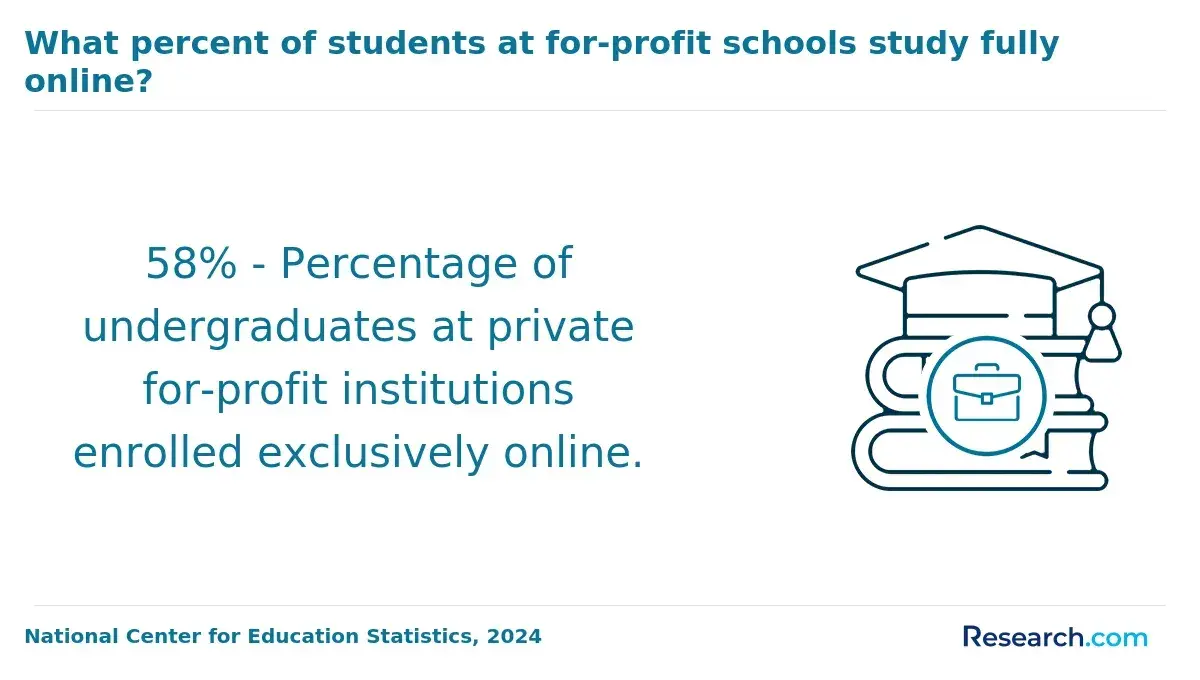
Online marine biology programs can work for some students, but they are not identical to on-campus coastal programs. The biggest issue is not whether online learning is legitimate; it is whether the program provides access to labs, field methods, research mentoring, and employer-relevant experience.
The table below compares online and on-campus formats. It can help you decide which format fits your schedule, budget, and career target.
| Format | Strengths | Trade-offs | Best fit |
| Fully online | Flexible schedule, accessible to students far from coastal campuses | May have limited wet labs, field sampling, and in-person networking | Working adults, students seeking foundational science or related environmental roles |
| Hybrid | Combines online coursework with short labs, field intensives, or campus visits | Requires travel planning and may add fees | Students who need flexibility but still want hands-on experience |
| On-campus coastal program | More direct access to field sites, labs, vessels, faculty, and peer networks | May cost more if relocation or housing is required | Traditional students targeting research-heavy or field-intensive roles |
| General biology online plus summer fieldwork | Can be practical when marine-specific online options are limited | Requires careful planning to add marine experience | Students near inland colleges or adults changing careers |
Online programs make the most sense when they are accredited, transparent about lab requirements, and honest about career outcomes. They are weaker choices if they market "marine biology" heavily but offer little marine coursework, no faculty research, no field partnerships, and no clear path to internships.
Students with caregiving responsibilities may need flexible formats, but flexibility should not replace hands-on preparation. If you are comparing online courses for moms or other flexible programs, ask whether biology labs are virtual, in person, or completed through local partners, and whether the school helps students arrange field experience.
Before choosing an online option, request a degree plan and verify these details:
- Whether the institution is regionally accredited by an agency recognized by the U.S. Department of Education.
- Whether required labs are online simulations, mailed lab kits, local lab placements, or campus intensives.
- Whether marine-focused electives are offered regularly or only occasionally.
- Whether students can work with faculty on research, data projects, or internships.
- Whether credits transfer into graduate programs in biology, marine science, ecology, or environmental science.
How long does it take to complete a marine biology degree and what does it cost?
A bachelor's degree in marine biology or a related field usually takes about four years of full-time study. A master's degree commonly takes two years, while a Ph.D. can take five or more years after the bachelor's degree, depending on research design, funding, field seasons, and dissertation progress.
Cost varies widely by institution, residency, housing, and whether the student receives grants, scholarships, assistantships, or transfer credit. College Board's 2024 data for the 2024-25 academic year lists average published tuition and fees at $11,610 for in-state students at public four-year institutions, which is a useful baseline before adding housing, books, lab fees, travel, and field course costs.
The table below summarizes major cost drivers. Use it to compare the total price of a degree, not just tuition on the school's website.
| Cost factor | Why it matters for marine biology students | How to evaluate it |
| Tuition and mandatory fees | Largest published cost and varies by residency and institution type | Compare net price after aid, not sticker price alone |
| Housing and relocation | Coastal campuses may require expensive housing markets | Check local rent, meal plans, transportation, and summer housing |
| Field courses | Marine programs may include boat time, field station fees, or travel | Ask which costs are included and which are billed separately |
| Lab and equipment fees | Courses may require lab supplies, software, safety gear, or diving-related expenses | Request a fee schedule for upper-division courses |
| Time to completion | Extra semesters increase tuition and living costs | Ask about course sequencing and whether required courses fill quickly |
| Graduate funding | Assistantships can reduce or offset graduate study costs | Ask how many master's or doctoral students are funded and for how long |
Students can reduce costs by starting at a community college for general education, transferring into a strong biology program, choosing an in-state public university, applying for paid summer research programs, and avoiding unfunded graduate programs that do not clearly improve career options.
If your goal requires a master's degree, compare speed with quality. A resource on the quickest cheapest masters degree options can help you think about affordability, but marine biology students should still confirm research mentoring, lab access, and thesis or capstone expectations before enrolling.
What is the salary range and earning potential for marine biologists?
Marine biologist salary data is difficult to isolate because the job title appears across universities, agencies, aquariums, consulting firms, nonprofits, and private companies. The most relevant federal benchmark is often the broader occupational group for zoologists and wildlife biologists.
According to the U.S. Bureau of Labor Statistics' May 2024 wage data, zoologists and wildlife biologists had a median annual wage of $75,020. This is not a promise for marine biology graduates; it is a benchmark for a broader occupation that includes marine and non-marine roles.
The table below explains how earning potential tends to differ by role type. It is more useful than a single salary figure because job duties and funding sources vary widely.
| Role type | Typical pay influences | What can improve earning potential |
| Field or lab technician | Seasonal funding, grant budgets, region, overtime, employer type | Strong field methods, lab protocols, data entry accuracy, safety training |
| Aquarium or education role | Nonprofit budgets, animal care experience, public programming responsibilities | Animal husbandry, interpretation skills, volunteer coordination, specialized species knowledge |
| Government biologist | Federal or state pay scales, degree level, years of experience, location | Graduate degree, statistical skills, policy knowledge, species or habitat expertise |
| Environmental consultant | Client demand, billable skills, permitting knowledge, travel requirements | GIS, technical writing, wetland or coastal permitting, project management |
| Research scientist or professor | Ph.D. training, grants, publications, institution type, tenure-track availability | Publication record, grant writing, advanced methods, strong professional network |
Students should evaluate salary against debt. A lower-cost bachelor's degree plus strong internships may be a better investment than an expensive program with limited hands-on opportunities. For graduate study, funded assistantships and employer tuition support can make a major difference.
Location also matters. Coastal metro areas may offer more marine-focused roles but higher living costs. Inland agencies, labs, and universities may hire marine-trained scientists for freshwater, ecology, wildlife, data, or environmental positions, which can broaden the job search.
What is the job outlook for marine biologists and related ocean science careers?
The job outlook for marine biologists is best understood through related science occupations rather than a single title. The U.S. Bureau of Labor Statistics projects employment for zoologists and wildlife biologists to grow 4% from 2023 to 2033, about as fast as the average for all occupations. For students, this means opportunities exist, but the market is not so large that a degree alone is enough.
Demand is shaped by coastal development, climate adaptation, fisheries management, offshore energy, habitat restoration, water quality, biodiversity monitoring, and environmental regulation. At the same time, many research jobs depend on grants, public budgets, and project cycles, which can create short-term contracts before permanent roles.
The table below shows related career directions that may fit students interested in marine biology. It can help you widen your search without abandoning ocean science.
| Related career direction | Connection to marine biology | Why it may be practical |
| Environmental science | Water quality, pollution, habitat assessment, compliance | Broader employer base than marine-only roles |
| Fisheries science | Fish populations, seafood sustainability, stock assessment | Strong links to agencies, management, and applied statistics |
| Conservation biology | Species protection, restoration, biodiversity monitoring | Applies across marine, coastal, and terrestrial systems |
| GIS and remote sensing | Habitat mapping, coastal change, spatial modeling | Technical skill set useful across public and private sectors |
| Science communication and education | Aquariums, museums, nonprofits, public outreach | Good fit for students who like explaining science to communities |
| Aquaculture and marine technology | Sustainable seafood, hatcheries, monitoring systems | Connects biology with operations and industry needs |
Students should prepare for competition by building a flexible profile. A strong candidate can explain their science background, show evidence of field or lab competence, analyze data, write clearly, and adapt to related roles if a dream job in marine mammals or coral reefs is not immediately available.
A practical strategy is to search job boards before choosing electives. Look at qualifications for roles such as fisheries technician, environmental scientist, marine educator, GIS analyst, biological science technician, and coastal restoration assistant. Then choose courses and internships that match repeated requirements.
Are there licenses, certifications, or professional standards for marine biologists?
Marine biologists generally do not need a single national license to use the job title. However, specific tasks may require certifications, permits, safety training, or employer-approved standards. These requirements vary by role, state, institution, vessel operator, and research activity.
The table below lists common credentials and standards that may appear in marine biology settings. They are not universal requirements, but they can be important for specific jobs.
| Credential or standard | When it may matter | Important limitation |
| Scientific diving authorization | Underwater research, sampling, restoration, or monitoring | Recreational scuba certification alone may not meet institutional research standards |
| Boating safety training | Fieldwork from small vessels, coastal surveys, sample collection | Requirements vary by employer and vessel type |
| Animal care or handling training | Aquariums, stranding response, lab animal work, protected species work | May require institutional approval and species-specific protocols |
| GIS or data-analysis certificates | Mapping, environmental consulting, habitat modeling, agency analysis | Most valuable when paired with a portfolio of projects |
| Hazardous materials or lab safety training | Chemical handling, water quality testing, contaminated sites | Often employer-provided but useful to have experience with safety culture |
| Permits for protected species work | Research involving marine mammals, endangered species, or collection activities | Usually held by the institution or principal investigator, not a beginner individually |
Students should not pay for every credential they see online. Choose certifications based on actual job postings, faculty advice, and internship requirements. For example, a GIS certificate may be more useful for consulting or agency work than an expensive diving credential if your target jobs are data-heavy.
Nontraditional learners, including retirees or older adults exploring ocean science for a second career or serious personal interest, may want flexible formats. Resources on degrees for seniors can help compare accessibility, but marine biology students should still verify lab, field, and safety requirements before choosing a program.
Common red flags include programs that imply certification guarantees employment, diving packages sold without research context, vague "marine animal" credentials with no recognized employer value, and schools that cannot explain how students gain approved field experience.
How can students choose an accredited, reputable marine biology program in the U.S.?
Choosing a marine biology program should start with accreditation, but it should not end there. A reputable program should combine recognized institutional quality with strong science coursework, research access, transparent costs, and realistic career support.
The table below highlights what to compare before applying. It helps separate attractive marketing from evidence that a program can actually support your goals.
| Program factor | What to look for | Red flag |
| Accreditation | Institutional accreditation recognized by the U.S. Department of Education | Unclear accreditation claims or pressure to enroll quickly |
| Curriculum depth | Core biology, chemistry, statistics, ecology, marine electives, research methods | Many ocean-themed courses but weak foundational science |
| Faculty expertise | Faculty publishing or working in marine, coastal, fisheries, oceanography, or conservation fields | No clear faculty research connected to marine science |
| Hands-on access | Labs, field stations, vessels, internships, aquariums, agencies, or research partnerships | Program cannot explain how students gain field or lab experience |
| Career outcomes | Examples of internships, graduate placements, alumni roles, employer partnerships | Salary claims with no context or evidence |
| Transfer and graduate pathways | Clear credit transfer policies and preparation for graduate admissions | Credits that may not transfer or prerequisites missing for graduate study |
| Net cost | Transparent aid, fees, housing, field course costs, and time-to-degree expectations | Only sticker tuition is discussed |
Before enrolling, speak with admissions, a faculty member, and ideally a current student or recent graduate. Ask direct questions so you can compare programs on evidence rather than brochures.
- Is the institution accredited by a recognized institutional accreditor?
- How many upper-division marine biology courses are offered each year?
- What fieldwork, lab work, or research experiences are required, not just optional?
- Which agencies, aquariums, labs, or nonprofits host student interns?
- What technical skills do students graduate with, such as GIS, R, Python, statistics, or remote sensing?
- How many students go to graduate school, and in which fields?
- What is the total estimated cost including housing, travel, lab fees, and field courses?
- Can transfer students finish on time, or do course sequences delay graduation?
Students comparing flexible or distance-learning pathways can review broader guidance on best online degrees, but marine biology requires extra scrutiny because labs, field methods, and research mentoring are central to employability.
The smartest choice is usually the program that fits your target role at the lowest realistic net cost while giving you evidence-based experience. Prestige can help, but it does not replace field competence, data skills, faculty mentorship, and a clear plan for internships or graduate study.
Other Things You Should Know About
Marine biology can be a good career for students who enjoy science, fieldwork, data analysis, and long-term specialization. It is less ideal for students who mainly want frequent animal interaction or quick entry into high-paying roles, because many jobs are competitive and require advanced skills or graduate study.
Yes. Many marine biologists start with a biology, ecology, zoology, fisheries, environmental science, or oceanography degree. The key is adding marine-related coursework, internships, lab or field experience, and technical skills such as statistics, GIS, or coding.
Some do, but marine mammal work is a small and competitive part of the field. Students interested in dolphins or whales should still build broad biology, statistics, field methods, permitting awareness, and research experience so they can qualify for related roles.
Not always. A bachelor's degree can lead to technician, assistant, education, or entry-level environmental roles, while a master's degree can support more advanced applied positions. A Ph.D. is usually needed for independent research leadership, university faculty roles, and some senior scientist positions.
References
- So you want to become a Marine Biologist? | National Marine Aquarium https://www.national-aquarium.co.uk/learning-at-the-aquarium/marine-biologist/
- 10 Jobs You Can Get With a Marine Biology Degree https://www.seamester.com/blog/10-jobs-you-can-get-with-a-marine-biology-degree/
- How to become a marine biologist? | Conservation Careers https://www.conservation-careers.com/how-to-become-a-marine-biologist/
- Marine Biologist - AgExplorer | National FFA Organization https://agexplorer.ffa.org/career/marine-biologist/
- Career Outlook https://www.marinecareers.net/resources/career-outlook
- Marine Biology Degree Programs in the U.S. | MarineBio Conservation Society https://www.marinebio.org/careers/us-schools/
- How Much Does a Marine Biologist Make a Year on Average | SoFi https://www.sofi.com/learn/content/how-much-does-a-marine-biologist-make/
- Marine Biology degrees https://www.whatuni.com/degree-courses/search
- Marine Animals https://www.thecareersguide.com/page-career-marine_biologist-131
- Career Profile: Marine Biology https://www.clinlabsolutionsgroup.com/career-profile-marine-biology