2027 Trade Schools in Virginia: Complete Student Guide

Co-Founder and Chief Data Scientist
Choosing a Virginia trade school means balancing speed, cost, licensing rules, and real job demand. Many skilled roles remain resilient because they require hands-on work: the BLS May 2024 wage data shows several trade occupations, including electricians, HVAC technicians, and LPNs, had national median pay above $59,000. This guide is for students, career changers, military-connected learners, and working adults comparing practical training options. You will learn how programs differ, what they cost, which credentials matter, and how to avoid schools that do not fit your career goal.
Key Things You Should Know
- Virginia trade school options include public community college certificates, registered apprenticeships, private career schools, adult education centers, and employer-sponsored training; the right choice depends on whether your target occupation requires state licensing, national certification, or supervised work hours.
- Cost and time vary widely: short workforce certificates may take weeks or months, while associate-level technical programs commonly take about two years; 2024-25 national public two-year tuition and fees averaged about $4,050, but private career programs can cost more and should be compared by total program price.
- Salary potential depends heavily on occupation and region; BLS May 2024 national median wages were $62,350 for electricians, $59,810 for HVAC mechanics and installers, $62,340 for LPNs, and $44,200 for medical assistants, with Northern Virginia, shipbuilding, healthcare, and federal-contractor markets often shaping local demand.
What are trade schools in Virginia and which career fields do they typically cover?
Trade schools in Virginia are career-focused training providers that prepare students for a specific occupation, license, apprenticeship, or industry credential. Unlike broad academic degree programs, trade programs usually emphasize applied skills, supervised labs, clinical practice, shop work, safety procedures, and employer-recognized competencies.
The term "trade school" can refer to several types of providers: public community colleges, private career schools, technical institutes, adult education programs, union or nonunion apprenticeship sponsors, employer academies, and high school career and technical education centers that also serve adults in some regions. In Virginia, many providers must be authorized or certified by the appropriate state agency, and some programs also need specialized approval from a licensing board.
Most Virginia trade school programs fall into a few broad career clusters. The table below summarizes common fields and what students usually learn, so you can connect a program name with the kind of work it may lead to.
| Career field | Common Virginia program examples | Typical training focus | Best fit for students who want |
| Skilled construction trades | Electrical, HVAC, plumbing, welding, carpentry | Blueprints, tools, codes, safety, installation, repair | Hands-on work, apprenticeships, contractor licensing paths |
| Healthcare support | Practical nursing, medical assisting, dental assisting, phlebotomy, nurse aide | Patient care, clinical procedures, anatomy, documentation, infection control | Direct patient contact and a quicker route into healthcare |
| Transportation and mechanical trades | Automotive technology, diesel technology, aviation maintenance, CDL training | Diagnostics, engines, electrical systems, inspection, safety compliance | Technical repair work or logistics-related employment |
| Manufacturing and industrial technology | Mechatronics, machining, industrial maintenance, robotics basics | Production systems, controls, maintenance, troubleshooting | Work in plants, shipyards, warehouses, and advanced manufacturing |
| Information technology | Cybersecurity, networking, help desk, cloud support | Operating systems, networking, security fundamentals, certifications | A technology career without starting with a four-year degree |
| Personal services and public safety | Cosmetology, barbering, emergency medical technician, fire science | State rules, safety, client service, field procedures, practical exams | Licensed service work or community safety roles |
Technology is changing many of these fields rather than replacing them. Electricians increasingly work with smart building systems and EV charging infrastructure, automotive technicians use computer-based diagnostics, and healthcare support workers use electronic health records. A strong program should teach both traditional hands-on skills and the digital tools now common in the workplace.
How do Virginia trade schools compare with community colleges and four-year universities?
Trade schools, community colleges, and universities can all be good choices, but they solve different problems. The best option depends on your career target, budget, timeline, need for transfer credit, and whether your occupation requires a license, degree, apprenticeship, or certification.
The table below compares the major pathways students in Virginia often consider. Use it to decide whether you need fast occupational training, a stackable college credential, or a broader degree path.
| Pathway | Typical credential | Common timeline | Strengths | Limitations |
| Private trade or career school | Diploma, certificate, industry exam preparation | Months to about two years | Focused training, frequent start dates, career-specific labs | Transfer credit may be limited; total cost can be higher |
| Virginia community college | Career studies certificate, certificate, associate degree | One semester to about two years | Lower public tuition for in-state students, transfer options, regional employer ties | Some high-demand programs have waitlists or limited seats |
| Registered apprenticeship | Paid work experience plus related instruction | Often several years | Earn while training, strong fit for licensed construction trades | Admission depends on sponsor openings and employer demand |
| Four-year university | Bachelor's degree or higher | About four years full time | Best for engineering, management, teaching, health administration, and graduate pathways | More time and cost than many entry-level trade paths require |
A trade school makes the most sense when your goal is a defined occupation such as HVAC technician, practical nurse, welder, dental assistant, aircraft mechanic, or automotive technician. A community college may be better if you want a lower-cost credential that can later build into an online associate's degree or transfer pathway. A university is usually the better fit if your target job requires a bachelor's degree, engineering licensure, teacher certification, or graduate education.
One common mistake is choosing the fastest program without checking whether it actually satisfies the next requirement. For example, a short healthcare certificate may help with entry-level employment, but it may not qualify you for nursing licensure. Similarly, an electrical course may improve skills but not replace the supervised experience required for a Virginia tradesman license.
Which accredited trade schools and vocational programs are available in Virginia?
Virginia has a mix of public and private vocational training options. "Accredited" can mean institutional accreditation, programmatic accreditation, state authorization, or approval by a licensing board, so students should verify the exact credential status for the program they plan to enter, not just the school's name.
The following examples show the kinds of reputable options students commonly evaluate in Virginia. Availability, campus locations, start dates, and approvals can change, so confirm details directly with the institution and the relevant state or licensing agency before enrolling.
| Provider type | Examples of Virginia options | Program areas commonly associated with this type | Credential checks to make |
| Public community colleges | Virginia Community College System institutions, including Northern Virginia Community College, Tidewater Community College, Reynolds Community College, Virginia Western Community College, and others | Welding, HVAC, automotive, healthcare support, IT, mechatronics, CDL, cybersecurity, electrical-related training | Regional accreditation, program approval, transferability, workforce credential eligibility |
| Private career colleges and technical schools | ECPI University, Centura College, Fortis College campuses, Tidewater Tech, Aviation Institute of Maintenance locations | Healthcare, IT, HVAC, electrical, automotive, aviation maintenance, welding, medical assisting | Institutional accreditation, state certification, programmatic accreditation, exam eligibility |
| Adult education and regional workforce centers | Local adult education programs, technical centers, workforce development programs, regional career centers | Nurse aide, cosmetology, trades basics, ESL-supported workforce training, industry credentials | Instructor qualifications, state approval, articulation into college credit, employer partnerships |
| Registered apprenticeship sponsors | Union programs, contractor associations, public employers, shipyard and industrial employers, workforce partners | Electrical, plumbing, HVAC, carpentry, industrial maintenance, machining, welding | Registration status, wage progression, related instruction provider, journeyworker requirements |
| Employer-sponsored academies | Healthcare systems, logistics employers, shipbuilding and defense contractors, utility companies | Clinical support, manufacturing, maintenance, transportation, safety credentials | Employment obligations, portability of credential, repayment agreements, schedule expectations |
For institutional oversight, students should look for recognized accreditation and state authorization. Public colleges are typically regionally accredited, while many private career schools use national accreditors recognized for occupational education. Healthcare programs may also need approval from bodies tied to nursing, allied health, emergency medical services, or dental practice.
A practical rule: accreditation helps, but it is not enough by itself. If your target job requires a license or exam, ask whether the specific program qualifies graduates to sit for that exam in Virginia. This is especially important for practical nursing, nurse aide training, cosmetology, barbering, dental radiography, aircraft maintenance, and contractor trades.
What admission requirements and prerequisites do Virginia trade schools usually have?
Virginia trade school admissions are usually more direct than university admissions, but requirements still vary by program. Short workforce courses may have open enrollment, while practical nursing, dental assisting, aviation maintenance, and some technical associate programs may require placement testing, background checks, prerequisites, or competitive admission.
Before applying, review the requirements that can affect eligibility, timing, and total cost. These are the most common prerequisites students encounter:
- Proof of high school completion, GED, homeschool completion, or approved ability-to-benefit pathway when permitted by the provider and financial aid rules.
- Minimum age requirements, especially for CDL, apprenticeships, clinical placements, and occupations involving hazardous equipment.
- Placement testing or prior coursework in reading, math, science, or English, particularly for healthcare, IT, and associate-level technical programs.
- Immunizations, drug screening, CPR certification, physical exams, and background checks for programs with clinical or public safety placements.
- Driver's license, clean driving record, or Department of Transportation medical certification for transportation-related programs.
- Tools, uniforms, device requirements, safety gear, or exam fees that may not be included in advertised tuition.
Healthcare programs tend to have the most restrictive requirements because students work with patients and must meet clinical site standards. Construction and mechanical programs may be more accessible at entry level, but students still need physical stamina, safety awareness, and the ability to work with measurements, diagrams, and tools.
Students with past criminal convictions should ask early about licensing and placement rules. A school may admit a student even when a licensing board, hospital, employer, or clinical site later imposes restrictions. Getting written guidance before paying deposits can prevent expensive surprises.
How long do Virginia trade school programs take, and what do they cost?
Virginia trade school timelines range from short workforce bootcamps to multi-year apprenticeships. The right timeline depends on whether you need quick entry-level employment, a license-eligible program, an associate degree, or paid supervised experience.
The table below summarizes common program lengths. It is useful because a shorter program is not always better if it does not meet the credential standard for your occupation.
| Program type | Typical length | Common outcome | Best use case |
| Short workforce course | Several weeks to a few months | Skills certificate or exam preparation | Upskilling, entry-level support roles, employer-required credential |
| Career certificate or diploma | Several months to about one year | Occupational certificate, diploma, or eligibility for an industry exam | Fast entry into medical assisting, HVAC, welding, cosmetology, or similar fields |
| Associate-level technical program | About two years full time | Associate of applied science or equivalent technical credential | Students who want deeper training, transfer options, or advancement potential |
| Registered apprenticeship | Often several years | Paid experience plus related instruction | Licensed construction trades and employer-sponsored skilled occupations |
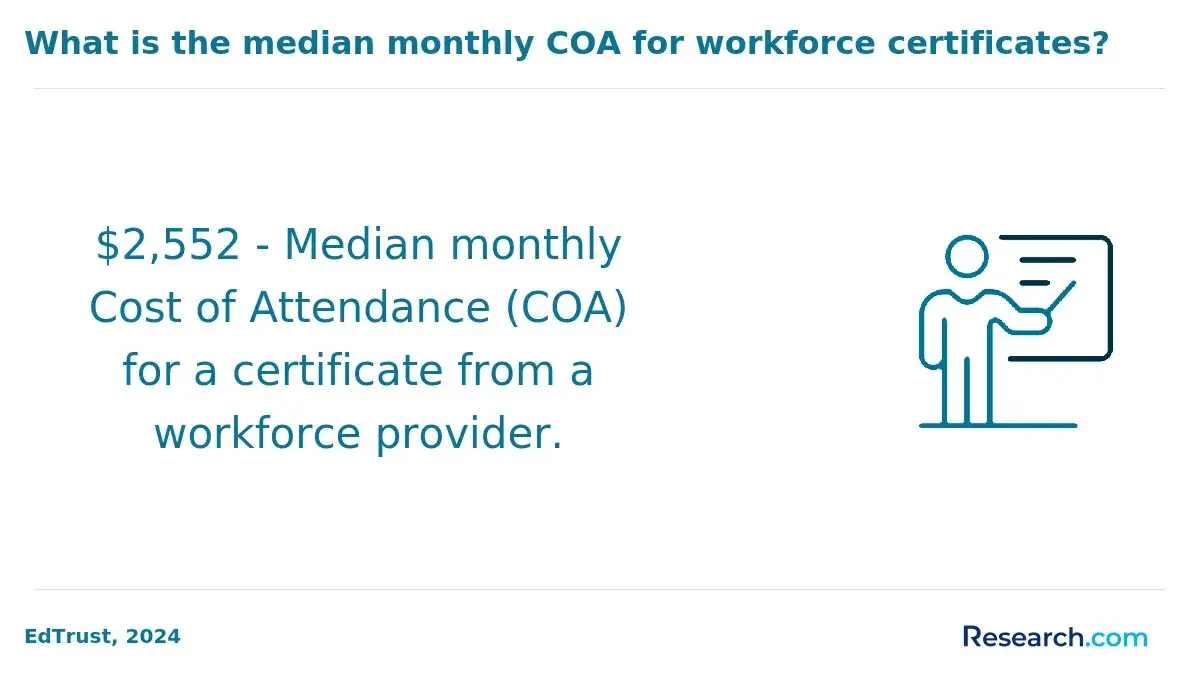
Costs vary by provider, program length, equipment needs, and whether you attend a public or private school. Public community colleges often charge by credit, while private career schools often quote a total program price. Nationally, public two-year colleges had average published tuition and fees of about $4,050 for 2024-25, but this figure does not include tools, transportation, books, certification exams, or lost work time.
When comparing affordability, look beyond tuition and request a full cost-of-attendance estimate. Common cost categories include:
- Tuition and mandatory fees.
- Books, software, online learning platforms, and testing materials.
- Tools, uniforms, safety gear, lab kits, or medical supplies.
- Certification, licensing, background check, drug screening, and exam fees.
- Transportation, parking, childcare, and reduced work hours during clinicals or labs.
Financial aid may include federal aid for eligible programs, state workforce grants, employer tuition support, veterans benefits, WIOA funding, apprenticeships, scholarships, and payment plans. Working adults comparing fast completion formats may also want to understand how accelerated online degree programs differ from hands-on trade training, because online speed is helpful only when the credential matches the job requirement.
What trade school programs in Virginia offer online, hybrid, or evening class options?
Many Virginia trade programs now offer online, hybrid, evening, or weekend formats, but hands-on fields cannot be fully online. A strong hybrid program usually moves lectures, theory, safety modules, and test preparation online while preserving required labs, shops, simulations, clinicals, or field experiences in person.
The table below shows which fields are most likely to support flexible scheduling and which still require substantial in-person attendance.
| Program area | Online potential | What usually must happen in person | Flexible format notes |
| IT support, networking, cybersecurity basics | High | Some proctored exams or optional labs | Often available online or in evening formats |
| Medical assisting, practical nursing, dental assisting | Moderate | Clinical skills labs, simulations, externships, patient-care hours | Hybrid theory is common, but clinical schedules may be daytime |
| HVAC, electrical, welding, automotive | Low to moderate | Shop practice, tools, equipment, safety demonstrations | Evening labs may be available for working adults |
| CDL and transportation training | Low | Behind-the-wheel training, range work, road testing | Classroom theory may be online, but driving is in person |
| Cosmetology and barbering | Low to moderate | Practical hours, client services, sanitation practice | State hour and practical skill requirements limit fully online study |
Online formats are most useful for students balancing work, family, or military schedules. However, students should be cautious with any program that claims a fully online path for an occupation requiring supervised clinical, shop, or licensing hours in Virginia.
If you want career training now but may later need a bachelor's degree for supervision, project management, or business ownership, compare stackable options. Some students start with a certificate or associate credential and later evaluate 2-year accelerated bachelor degrees after gaining work experience.
What careers can you pursue after graduating from a Virginia trade school?
Trade school graduates in Virginia can pursue roles in healthcare, construction, transportation, manufacturing, aviation, IT, personal services, and public safety. The best career fit depends on your tolerance for physical work, interest in licensing, schedule needs, customer interaction, and long-term advancement goals.
The table below connects common trade school programs with entry-level roles and advancement paths. It can help you avoid enrolling in a program that sounds appealing but does not match the daily work you actually want.
| Program area | Entry-level roles | Typical responsibilities | Possible advancement |
| Electrical or HVAC | Helper, apprentice, installer, service technician | Install systems, troubleshoot equipment, follow codes, document repairs | Journeyman, master tradesperson, estimator, contractor, supervisor |
| Welding or industrial maintenance | Welder, fabricator, maintenance technician | Read plans, operate equipment, inspect parts, maintain machinery | Certified welder, quality inspector, lead technician, industrial supervisor |
| Practical nursing or medical assisting | LPN, medical assistant, clinical support worker | Patient intake, medication support within scope, procedures, documentation | RN bridge program, specialty clinic work, care coordination, management |
| Automotive, diesel, or aviation maintenance | Technician, mechanic, service assistant | Diagnose systems, perform repairs, inspect components, use digital tools | Master technician, inspector, fleet supervisor, aviation maintenance specialist |
| Information technology | Help desk technician, network support assistant, cybersecurity support | Troubleshoot devices, support users, monitor systems, document tickets | Network administrator, security analyst, cloud support, IT manager |
Virginia's labor market has several regional patterns. Northern Virginia has strong demand for IT, data center, electrical, security, and building systems work. Hampton Roads supports shipbuilding, defense, maritime, healthcare, and aviation-related roles. Richmond and Central Virginia offer healthcare, logistics, manufacturing, and business services opportunities. Rural regions may have fewer employers but can offer strong local demand for HVAC, electrical, welding, healthcare support, and transportation roles.
Career advancement may require additional credentials. A trade certificate can be the first step, not the final step. For example, an LPN may later pursue an RN pathway, an HVAC technician may pursue a master license, and an IT support worker may stack certifications and a degree. Graduate options such as a 6 month masters degree are usually relevant only much later, after a student has already completed undergraduate education and is moving toward management or specialized professional roles.
What are typical salaries and earning potential for trade school careers in Virginia?
Salary outcomes vary by occupation, experience, region, shift, employer, union status, overtime, and licensing level. Virginia students should use wage data as a planning benchmark, not a promise of what any one graduate will earn.
The table below uses BLS May 2024 national median annual wages for common trade-school-related occupations. These figures are useful for comparing occupations, while Virginia-specific offers should be checked through local employers, state labor tools, and current job postings.
| Occupation | National median annual wage, May 2024 | What can affect Virginia earnings |
| Electrician | $62,350 | Apprenticeship level, journeyman or master status, commercial work, federal contracting, overtime |
| HVAC mechanic or installer | $59,810 | EPA certification, refrigeration skills, service-call experience, building automation knowledge |
| Plumber, pipefitter, or steamfitter | $62,970 | Licensure level, industrial projects, emergency service work, construction cycles |
| Licensed practical or licensed vocational nurse | $62,340 | Healthcare setting, shift differentials, long-term care demand, scope of practice |
| Welder, cutter, solderer, or brazer | $51,000 | Process certifications, shipyard or industrial work, inspection skills, overtime |
| Automotive service technician or mechanic | $49,670 | Manufacturer certifications, diagnostic ability, EV and hybrid systems training, flat-rate structures |
| Dental assistant | $47,300 | Radiography credentials, specialty practice, experience, location |
| Medical assistant | $44,200 | Certification, specialty clinic experience, EHR skills, employer size |
The main salary lesson is that licenses, certifications, and specialization matter. Entry-level pay may start below the median, while experienced workers with scarce skills, overtime opportunities, supervisory duties, or contractor credentials may earn more. Students should compare program cost against realistic first-job wages and the likely time needed to reach higher credential levels.
Do not choose a program based only on a school's advertised salary examples. Ask whether the school reports median earnings, whether data is verified, which graduates are included, and whether the numbers reflect local Virginia employment or national averages.
What licensing, certification, and exam requirements apply to Virginia trade professions?
Many trade careers require more than completing school. Depending on the occupation, you may need a state license, national certification, board-approved training, supervised hours, an exam, a background check, or continuing education. Requirements can change, so verify rules with the Virginia licensing board or agency before enrolling.
The table below summarizes common credential pathways. It is not a substitute for official licensing guidance, but it shows where students should look before committing to a program.
| Field | Common Virginia credential issue | Why it matters before enrollment |
| Electrical, plumbing, HVAC, gas fitting | Virginia tradesman licensing through the appropriate state contractor board process | Students may need documented experience, approved education, and an exam for journeyman or master levels |
| Practical nursing | Board-approved practical nursing program and NCLEX-PN eligibility | A non-approved program may not qualify a student for licensure |
| Nurse aide | State-approved nurse aide training and competency evaluation | Employers often require registry eligibility for long-term care and clinical roles |
| Cosmetology and barbering | Required training hours, practical skills, and state board exam | Program length and curriculum must align with state licensing rules |
| Dental assisting | Radiography and expanded function rules vary by task | Students should confirm which duties the credential permits in Virginia |
| Aircraft maintenance | FAA airframe and powerplant pathways | Program structure must support eligibility for FAA testing or approved experience routes |
| CDL truck driving | Entry-level driver training and Virginia DMV testing requirements | Students need compliant training before skills testing for many commercial driving paths |
Certification is different from licensure. A license is legal permission to practice in a regulated occupation. A certification is usually an employer-recognized credential from an industry or professional organization. Some jobs require both; others require neither but reward applicants who hold respected credentials.
Before enrolling, students should ask for the school's exam pass rates, clinical or apprenticeship placement process, and written confirmation of eligibility for the exact license or certification they want. This is one of the most important consumer-protection steps in career education.
How can prospective students evaluate and choose a reputable Virginia trade school?
A reputable Virginia trade school should be transparent about cost, accreditation, licensing eligibility, completion rates, job placement support, equipment, instructors, and refund policies. The best choice is not always the cheapest or fastest program; it is the program that gets you to the correct credential with manageable cost and realistic employment prospects.
Use the following steps to compare schools before signing an enrollment agreement. This process helps you separate strong programs from high-pressure sales pitches.
- Start with the job title you want, then identify the license, certification, degree, apprenticeship, or exam required for that job in Virginia.
- Verify state authorization, institutional accreditation, and any programmatic approval directly with the relevant agency or accreditor.
- Ask for total program cost in writing, including tuition, fees, books, tools, uniforms, exams, background checks, and supplies.
- Request recent completion, placement, and exam pass-rate information for the specific campus and program you are considering.
- Tour the lab, shop, simulation space, or clinical training environment, and compare equipment with what employers currently use.
- Ask employers, apprenticeship sponsors, or local workforce boards whether they recognize the credential and hire graduates from the program.
- Review schedules carefully, especially clinicals, labs, externships, and attendance policies that may conflict with work or childcare.
- Read the refund policy, loan terms, transfer credit policy, and any arbitration or repayment agreement before paying a deposit.
Common red flags include vague accreditation claims, pressure to enroll immediately, unclear total cost, guaranteed job or salary language, outdated equipment, poor exam pass-rate transparency, and programs that cannot explain how their curriculum maps to Virginia licensing requirements.
Students should also think beyond the first credential. If your long-term goal could involve teaching, research, executive healthcare leadership, or senior technical management, compare how each step stacks toward future education. That does not mean a trade school student needs graduate school now, but understanding pathways early can help you avoid dead ends; for some advanced goals, later options may include affordable online doctoral programs.
Other Things You Should Know About
They can be worth it when the program leads directly to a required license, certification, apprenticeship, or employer-recognized skill. The value is weaker if the school is expensive, lacks approval for your occupation, or cannot show credible outcomes.
Possibly. Eligible students may use federal aid for approved programs, and some programs qualify for state workforce grants, veterans benefits, employer support, WIOA funding, scholarships, or paid apprenticeships. Always confirm aid eligibility for the exact program, not just the institution.
Many offer career services, employer referrals, resume help, externships, or apprenticeship connections. Job placement is not guaranteed, so ask for recent placement data, local employer partners, and whether the school helps students after graduation.
Shorter options may include nurse aide, phlebotomy, CDL training, some IT support credentials, and entry-level workforce certificates. Faster is not always better, so check whether the credential qualifies you for the job, license, or wage level you want.
References
- How Long Do Trade Schools Take? Learn The Details and Timeframes https://www.lincolntech.edu/news/skills-gap/how-long-do-trade-schools-take-learn-details-and-timeframes
- Trade School Requirements: How to Get Into Trade School | UTI https://www.uti.edu/blog/education/trade-school-requirements
- 22 High-Paying Trade and Vocational Jobs | SoFi https://www.sofi.com/learn/content/high-paying-vocational-jobs/
- Online Trade Certification Programs vs. In-Person Trade Schools https://vtacademy.com/online-trade-certification-programs/
- Maximize Your Return on Investment in Skilled Trades https://centuracollege.edu/blogs/trades-industry/skilled-trades-careers-virginia/
- Admission Requirements – Byers Technical Institute https://byerstechnicalinstitute.com/admissions/admission-requirements/
- Contractor Class A/B/C License https://rocketcert.com/construction/virginia/contractor-class-a-b-c-license
- Trade Certifications & Licenses 2026: Cost, Time, Demand https://tradecolleges.org/blog/career-guidance/trade-certifications-and-licenses
- Trade Schools in Virginia: Training Centers Across the State https://www.remitly.com/blog/education/trade-schools-in-virginia/
- Careers You Can Pursue After Trade School | NSHSS | National Society of High School Scholars https://www.nshss.org/resources/blog/blog-posts/careers-you-can-pursue-after-trade-school/