2027 Trade Schools in Florida: Complete Student Guide

Co-Founder and Chief Data Scientist
Choosing a Florida trade school is usually a question of speed, cost, licensure, and job fit. Skilled training matters because BLS 2024-2034 projections place several technical and healthcare roles above the 3.1% projected growth rate for all U.S. employment.
This guide is for students, career changers, parents, veterans, and working adults comparing certificate, diploma, apprenticeship, and degree options. You will learn how to evaluate reputable schools, compare costs, avoid red flags, and choose a program that matches a real Florida career path.
Key Things You Should Know
- Florida trade schools commonly prepare students for licensed or certification-based jobs in healthcare, construction, aviation, automotive technology, welding, cosmetology, information technology, and public safety.
- Many public technical college programs are measured in clock hours and can take about 6 to 24 months, while the 2025-2026 maximum Federal Pell Grant of $7,395 can significantly reduce out-of-pocket costs for eligible students.
- Use BLS May 2024 Florida wage data as a baseline, not a promise: median pay varies widely by trade, location, overtime, union status, employer, and whether the role requires state licensure or national certification.
What are the best trade schools in Florida and which careers do they prepare you for?
The best trade school in Florida is not the same for every student. A strong choice is one that is properly accredited or approved, offers the exact credential required for your target occupation, has modern labs or clinical placements, publishes total costs clearly, and can explain licensure or certification outcomes without making guarantees.
Florida has many reputable public technical colleges, state college workforce programs, union apprenticeships, employer-sponsored academies, and private career schools. The table below summarizes well-known options and the kinds of careers they commonly support; always verify current program availability because offerings can change by campus and term.
| School or training option | Florida area served | Common program strengths | Careers it may prepare students for |
| Orange Technical College | Orlando / Central Florida | Healthcare, construction, IT, culinary, transportation, and adult workforce training | Practical nurse, medical assistant, electrician helper, HVAC technician, network support technician, culinary worker |
| Pinellas Technical College | St. Petersburg and Clearwater area | Automotive, welding, public safety support, healthcare, manufacturing, and digital technology | Automotive service technician, welder, pharmacy technician, patient care technician, web or network support worker |
| Atlantic Technical College | Broward County | Career certificates, apprenticeships, health sciences, IT, and skilled trades | Electrician apprentice, HVAC technician, practical nurse, dental assistant, computer systems technician |
| Sheridan Technical College | Broward County | Healthcare, construction trades, transportation, and technical certificates | Medical assistant, practical nurse, HVAC technician, automotive technician, barber or cosmetology professional |
| Manatee Technical College | Bradenton / Sarasota region | Health sciences, public service, manufacturing, marine service, welding, and construction | Firefighter, EMT, welder, dental assistant, marine service technician, HVAC technician |
| George T. Baker Aviation Technical College | Miami area | Aviation maintenance and aircraft systems training | Aircraft maintenance technician, airframe and powerplant mechanic candidate, avionics support worker |
| Traviss Technical College | Lakeland / Polk County | Healthcare, automotive, welding, HVAC, and public service training | Practical nurse, automotive technician, welder, HVAC technician, firefighter or EMT candidate |
| Florida Panhandle Technical College | Chipley / Northwest Florida | Skilled trades, healthcare, heavy equipment, welding, and public safety | Welding technician, commercial vehicle operator, practical nurse, correctional officer candidate, electrician helper |
| Universal Technical Institute, Orlando | Orlando | Transportation, diesel, automotive, and manufacturer-aligned technical training | Automotive technician, diesel technician, service writer, fleet maintenance technician |
| Tulsa Welding School, Jacksonville | Jacksonville | Welding, pipefitting, and electrical-related technical training | Welder, pipefitter helper, fabrication worker, entry-level electrical technician |
A practical way to compare schools is to start with the job you want, then work backward. For example, a student who wants to become a licensed practical nurse should prioritize Florida Board of Nursing approval and NCLEX-PN preparation, while a future aircraft mechanic should look for FAA-aligned aviation maintenance training. A student who wants to enter construction may find that a registered apprenticeship offers stronger earn-while-you-learn value than a full-time campus certificate.
Before shortlisting programs, ask each school for the same information so you can compare them fairly. These questions are especially useful when two programs look similar on a website but differ in cost, schedule, equipment, or career outcomes.
- What credential will I earn, and is it a certificate, diploma, associate degree, apprenticeship completion credential, or exam-preparation program?
- Which state license, national certification, or employer credential does the program prepare students to pursue?
- Is the program eligible for federal financial aid, veterans benefits, workforce funding, scholarships, or employer tuition assistance?
- How many hours are spent in labs, shops, clinical rotations, externships, or supervised field training?
- What are the total costs, including tools, uniforms, background checks, testing fees, insurance, books, and transportation?
- Does the school publish completion, placement, licensure exam, or certification exam information for the specific program?
The most common mistake is choosing a school because it is close, fast, or heavily advertised without checking whether the credential actually leads to the intended job. A short program can be a smart investment, but only if employers and licensing boards recognize it.
How do Florida trade schools compare with community colleges and four-year universities?
Florida trade schools, community colleges, and four-year universities can all be good choices, but they serve different goals. Trade schools are usually best for students who want hands-on preparation for a specific occupation, while community colleges and universities are better when the career requires broader general education, transfer pathways, or a bachelor's degree.
The table below compares the main options by purpose, speed, credential, and trade-offs. Use it to decide whether you need job-specific training now or a longer academic pathway with more transfer flexibility.
| Option | Best fit | Typical credential | Main advantage | Main trade-off |
| District technical college or career center | Students seeking fast workforce training in a specific trade | Career certificate, applied technology diploma, industry certification preparation | Hands-on labs and shorter timelines | Credits may not transfer widely unless an articulation agreement exists |
| Community or state college | Students who want workforce training with possible academic progression | Certificate, AS degree, AAS degree, AA transfer degree | Stronger transfer options and access to broader student services | May take longer if general education courses are required |
| Registered apprenticeship | Students entering trades such as electrical, plumbing, HVAC, sheet metal, or construction | Apprenticeship completion credential and on-the-job training hours | Earn-while-you-learn model | Admission can be competitive and work schedules can be demanding |
| Private career school | Students seeking specialized, accelerated, or employer-aligned training | Certificate, diploma, associate degree, certification preparation | Focused programs and frequent start dates | Total cost and transfer options vary significantly |
| Four-year university | Students targeting careers that require a bachelor's degree or graduate study | Bachelor's degree or higher | Broader career mobility and academic depth | Higher time commitment and usually higher total cost |
Trade school makes the most sense when the occupation has a clear skills checklist, licensing exam, or industry certification. Examples include practical nursing, dental assisting, welding, aircraft maintenance, automotive technology, HVAC, electrical, cosmetology, barbering, and surgical technology. A four-year path may make more sense for engineering, teaching, management, accounting, computer science, or healthcare roles that require a bachelor's degree.
If you are deciding between trade training and a degree, look beyond the first job. Some students start with a certificate, work, and later return for a degree using transfer credit or employer tuition support. Others compare technical certificates with online colleges when they need a FAFSA-eligible option that can fit around work and family responsibilities.
A good decision rule is simple: choose the shortest reputable path that qualifies you for the job you actually want, but do not choose a nontransferable program if your long-term goal requires a degree. The cheapest option is not always the best if it blocks licensure, transfer, or advancement.
What accreditation and licensing should Florida trade schools have to be considered reputable?
Accreditation and approval are the safeguards that help students avoid low-value programs. Accreditation does not guarantee a job, but it signals that a school has gone through external review. State approval, programmatic approval, and licensure alignment matter just as much in regulated fields.
Florida students should understand the difference between institutional accreditation, program approval, and occupational licensure. The table below shows what to check before enrolling in common trade school programs.
| Area to verify | Why it matters | Examples to look for |
| Institutional accreditation | Can affect federal financial aid eligibility, school credibility, and transfer options | Accreditation by recognized institutional accreditors such as COE, ACCSC, or SACSCOC, depending on school type |
| State authorization | Confirms that the school is allowed to operate in Florida | Florida Department of Education oversight for public institutions or Commission for Independent Education authorization for many private schools |
| Programmatic approval | Required or strongly preferred in many licensed healthcare and technical fields | Florida Board of Nursing approval, CODA for dental programs, JRCERT for radiologic technology, CAAHEP for selected allied health programs |
| Federal or industry alignment | Some occupations require specific federal standards or employer-recognized credentials | FAA Part 147 aviation maintenance programs, EPA Section 608 for HVAC refrigerant work, ASE for automotive credentials, NCCER for construction trades |
| Licensure exam eligibility | A program may be educationally interesting but still fail to qualify you for the exam you need | NCLEX-PN for practical nursing, cosmetology and barbering exams, contractor-related requirements, EMT or paramedic eligibility |
Do not rely only on a school's homepage. Accreditation language can be confusing, and some schools advertise "approved," "licensed," or "recognized" in ways that do not mean the same thing. Verify the school through the accreditor, the relevant Florida licensing board, or the state agency responsible for the occupation.
Use this checklist before signing an enrollment agreement. It can help you catch problems before you commit money, time, or loan eligibility.
- Search the school's accreditation status directly through the accreditor or federal database, not only on the school website.
- Confirm that the specific campus and specific program are covered, because accreditation or approval may not apply to every location or credential.
- Ask whether program completion makes you eligible for the license, certification exam, or apprenticeship level required for entry-level employment.
- Review refund policies, satisfactory academic progress rules, attendance requirements, and whether failing a background check can prevent clinical or externship placement.
- Get total cost and placement claims in writing, and avoid schools that pressure you to enroll before you can compare options.
Red flags include vague job-placement claims, missing program approval in a licensed field, refusal to provide written cost details, unusually aggressive admissions tactics, and credits that "may transfer" without a signed articulation agreement. Reputable schools should be willing to answer detailed questions clearly.
What admission requirements do Florida trade schools typically have for new students?
Florida trade school admission requirements are usually more career-focused than university admissions requirements. Most programs do not require a long essay or competitive academic profile, but selective healthcare, aviation, public safety, and apprenticeship programs may require testing, interviews, background screening, drug testing, or prerequisite coursework.
The table below summarizes common admissions requirements by program type. Requirements vary by school, so use this as a planning guide rather than a universal rule.
| Program type | Common admission requirements | Extra requirements to watch for |
| Skilled trades such as HVAC, welding, electrical, plumbing, and construction | High school diploma or GED, age requirement, basic skills assessment or placement review | Tools, safety gear, physical ability expectations, apprenticeship interview, driver's license for some employers |
| Healthcare programs such as practical nursing, dental assisting, medical assisting, surgical technology, and radiography | High school diploma or GED, prerequisite courses or testing, application packet, immunization records | Background check, drug screen, CPR certification, clinical site approval, limited seats, licensure exam eligibility |
| Cosmetology, barbering, and esthetics | Age requirement, high school diploma or GED for many programs, state board hour tracking | Kit costs, sanitation rules, state exam preparation, salon practical experience |
| Automotive, diesel, marine, and aviation maintenance | High school diploma or GED, mechanical aptitude, placement testing in some programs | Tool costs, safety training, manufacturer credentials, FAA-related standards for aviation maintenance |
| IT and cybersecurity certificates | High school diploma or GED, computer literacy, placement testing in some programs | Certification exam fees, home lab needs, math or networking prerequisites for advanced tracks |
Students should also think about nonacademic barriers. A healthcare program may reject a clinical placement because of a background issue even if the school admits the student. A transportation program may require a clean driving record. A construction apprenticeship may expect reliable transportation to job sites across a region.
To prepare a strong application, gather documents early and ask admissions staff about deadlines before seats fill. This sequence helps reduce delays.
- Request the program packet and confirm whether admission is open-entry, first-come-first-served, selective, or cohort-based.
- Order high school, GED, college, military, or prior training transcripts before the deadline.
- Complete placement testing, basic skills exemptions, prerequisite courses, or entrance exams if required.
- Budget for non-tuition expenses such as tools, uniforms, immunizations, exam fees, and background checks.
- Ask whether prior work experience, military training, industry certifications, or transfer credits can shorten the program.
A common mistake is assuming that "admitted to the school" means "accepted into the program." In many Florida technical programs, especially healthcare and public safety, those are separate steps.
How long do trade school programs in Florida take and what do they cost?
Florida trade school programs can be short, but cost and duration vary widely by occupation. A basic certificate may take one semester, while practical nursing, aviation maintenance, surgical technology, and some apprenticeships may take closer to one to two years or longer when work-based hours are included.
Public technical colleges in Florida often price programs by clock hour, while private career schools may charge by program, term, or credit. Many students compare technical certificates with affordable online bachelor degree programs when they are deciding whether a short credential or a degree has the better long-term payoff.
The table below gives realistic planning ranges rather than exact quotes. Check the school's current catalog because tuition, lab fees, books, tools, testing, and supply costs can change.
| Program area | Common timeline | Common cost drivers | Decision note |
| Welding, HVAC, electrical helper, plumbing helper, or construction trades | About 6 to 18 months for many certificate programs; apprenticeships may run several years while employed | Tools, safety gear, lab fees, certification exams, transportation to job sites | Apprenticeship may lower school cost but usually requires employer placement and a longer commitment |
| Practical nursing and allied health | About 12 to 24 months depending on program intensity and clinical scheduling | Clinical fees, uniforms, immunizations, background checks, testing, licensure exams | Program approval and exam eligibility are more important than speed alone |
| Automotive, diesel, marine, and aviation maintenance | About 9 to 24 months depending on specialty and credential | Tool sets, shop fees, manufacturer credentials, certification testing | Ask whether training aligns with local employers, dealerships, fleets, airports, or marine service companies |
| Cosmetology, barbering, and esthetics | Often under 18 months depending on attendance and required hours | Kits, supplies, state board exam fees, practice materials | Compare graduation timelines, salon clinic hours, and state board pass preparation |
| IT support, networking, and cybersecurity | About 3 to 18 months depending on level | Certification exams, software, hardware, online labs, retake fees | Short certificates work best when paired with projects, internships, or prior experience |
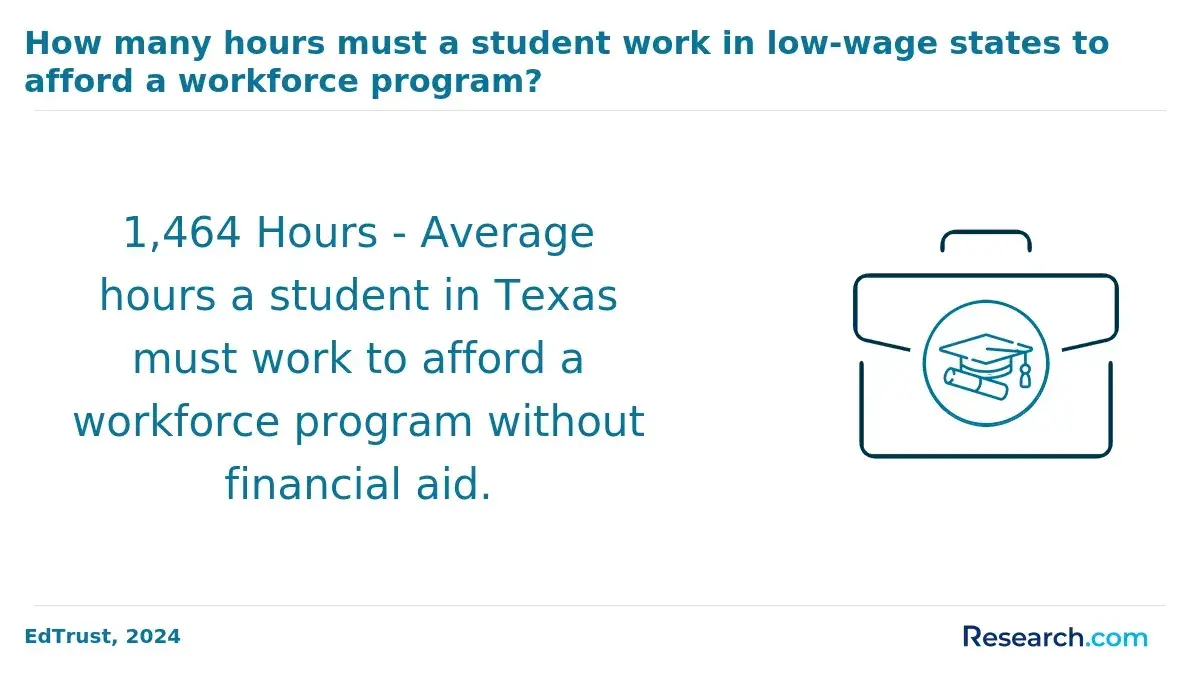
Financial aid can change the real price. For the 2025-2026 award year, the maximum Federal Pell Grant is $7,395 for eligible students. That does not mean every student receives the maximum, and not every program qualifies for federal aid, but it is a major reason to ask whether the program is Title IV eligible before enrolling.
To estimate your true cost, build a full program budget instead of comparing tuition alone. Include the expenses that can affect whether you can finish on time.
- Tuition and mandatory school fees
- Books, online learning platforms, uniforms, kits, tools, and safety equipment
- Licensure, certification, background check, drug screen, immunization, and testing fees
- Transportation, parking, childcare, lost work hours, and clinical or job-site travel
- Loan interest, repayment timing, and whether credits transfer if you continue your education
The fastest program is not always the cheapest in practice. An accelerated schedule may reduce time out of the workforce, but it can also limit your ability to work while studying. A slower evening program may cost more in time but make completion more realistic for adults with jobs or family responsibilities.
Can you complete trade school programs in Florida online, or is on-campus training required?
Some Florida trade school coursework can be completed online, but most skilled trades still require hands-on training. The right format depends on whether the occupation requires labs, clinical rotations, supervised practice hours, equipment training, or direct observation by instructors.
Online learning works best for theory-heavy or computer-based content. Students comparing flexible schedules may also look at accelerated degrees when they want a faster credential but are not tied to a hands-on trade.
The table below explains which program components are usually online-friendly and which typically require campus, lab, clinical, or employer-based training.
| Program area | Online potential | Why hands-on training may still be required |
| IT support, networking, cybersecurity, and software support | High | Many labs can be simulated, but internships, projects, and certification practice still matter |
| Medical billing, coding, and healthcare administration support | High | Clinical care is not usually required, but certification readiness and employer software experience are important |
| HVAC, electrical, welding, plumbing, automotive, diesel, and marine service | Low to moderate | Students need tools, equipment, safety supervision, diagnostic practice, and shop time |
| Practical nursing, surgical technology, dental assisting, radiography, and patient care | Moderate for theory; low for clinical skills | Clinical placements, patient safety rules, lab checkoffs, and licensing requirements require in-person participation |
| Cosmetology, barbering, and esthetics | Low to moderate | State-hour tracking, sanitation practice, and supervised client services usually require in-person work |
Hybrid programs can be excellent when they are designed well. A good hybrid model moves lectures, assignments, and exam preparation online while preserving in-person labs for skills that cannot be learned from a screen.
Before enrolling in an online or hybrid trade program, verify these points. They are especially important if you plan to seek Florida licensure or local employment.
- Ask which parts are online, which are in person, and how often you must travel to campus, labs, clinical sites, or externships.
- Confirm that online hours count toward the license, certification, or program completion requirement for your occupation.
- Check whether the school arranges clinical or externship placements near you or expects you to find them independently.
- Ask what equipment, software, internet speed, camera access, or proctored testing is required at home.
- Review attendance policies carefully because missing a lab day may delay graduation even if online coursework is complete.
A common mistake is assuming that an online program is automatically more convenient. If labs are clustered on weekdays, clinical sites are far away, or testing requires travel, the schedule may be harder than a predictable campus program.
What trades and technical programs are most in demand in Florida right now?
The most in-demand Florida trade programs are shaped by population growth, healthcare demand, construction activity, tourism, transportation, logistics, aviation, marine industries, and technology adoption. Demand can vary sharply between Miami, Orlando, Tampa Bay, Jacksonville, the Panhandle, and rural communities, so students should compare statewide trends with local employer needs.
Florida students should pay special attention to fields where employers need workers who can combine hands-on ability with diagnostics, safety compliance, customer communication, and digital tools. The table below summarizes trade areas that commonly show strong practical demand across the state.
| Trade or technical area | Why demand is relevant in Florida | Useful credentials or preparation |
| Healthcare support and practical nursing | Aging populations and large healthcare systems create steady need for patient-facing support roles | Approved practical nursing programs, medical assisting credentials, CPR, phlebotomy, EKG, clinical experience |
| HVAC and refrigeration | Florida's climate makes cooling, ventilation, and energy efficiency essential for homes, hospitals, hotels, and commercial buildings | EPA Section 608, NATE preparation, electrical troubleshooting, refrigeration safety, customer service skills |
| Electrical and construction trades | Population growth, rebuilding, infrastructure work, and commercial development support demand for skilled construction labor | Registered apprenticeship, NCCER credentials, OSHA safety training, blueprint reading, code knowledge |
| Automotive, diesel, marine, and fleet maintenance | Tourism, logistics, ports, delivery fleets, and boating industries rely on transportation technicians | ASE preparation, manufacturer credentials, diesel diagnostics, marine systems, electric vehicle safety awareness |
| Aviation maintenance | Florida's airports, aviation services, and aerospace employers need technicians who understand aircraft systems and compliance | FAA-aligned airframe and powerplant preparation, avionics fundamentals, inspection documentation |
| Welding and fabrication | Manufacturing, ship repair, construction, utilities, and industrial maintenance all use welding skills | AWS-related preparation, pipe welding, blueprint reading, metallurgy basics, safety training |
| IT support, networking, and cybersecurity | Small businesses, healthcare providers, schools, and government agencies need technical support and security-aware workers | CompTIA A+, Network+, Security+, help desk experience, cloud and ticketing-system familiarity |
Technology is changing trade work rather than eliminating it. HVAC technicians increasingly use digital diagnostics and smart-building controls. Automotive programs now include hybrid and electric vehicle safety. Welders may work with computerized cutting equipment. Medical assistants and coders need electronic health record fluency. Students who choose programs with updated equipment and certification-aligned labs are better positioned than those who train on outdated systems.
To identify demand near you, combine statewide labor data with local evidence. Call employers, review apprenticeship openings, attend school advisory board events if available, and ask admissions staff which companies hire graduates from the specific program. Do not rely only on national "hot jobs" lists if you cannot relocate.
What jobs, certifications, and career pathways can Florida trade school graduates pursue?
Florida trade school graduates can pursue entry-level jobs, licensure pathways, apprenticeships, associate degrees, employer certifications, or eventually bachelor's degrees. The smartest pathway depends on whether your trade rewards experience, licenses, supervisory credentials, or academic advancement.
Some trade careers can lead to strong earnings without a bachelor's degree, but career ceilings vary. Students who are comparing technical careers with broader academic pathways may want to review highest paying jobs and degree-based fields before deciding where to invest their time.
The table below connects common trade school programs with entry-level roles, credentials, and advancement options. It is designed to help you see the path beyond the first job.
| Program area | Entry-level roles | Certifications or licenses to consider | Longer-term pathways |
| Practical nursing and healthcare support | LPN, medical assistant, patient care technician, phlebotomy technician, EKG technician | NCLEX-PN, CPR/BLS, CMA or RMA, phlebotomy credentials, specialty certificates | RN bridge program, healthcare supervision, clinical specialty training, healthcare administration |
| HVAC and refrigeration | HVAC helper, installer, maintenance technician, refrigeration apprentice | EPA Section 608, NATE, OSHA, manufacturer credentials | Lead technician, service manager, controls technician, contractor licensing pathway, business ownership |
| Electrical and construction trades | Electrical helper, apprentice, construction laborer, low-voltage technician | Registered apprenticeship credentials, NCCER, OSHA, journeyman-related requirements depending on locality | Journeyman, foreman, estimator, project supervisor, licensed contractor pathway |
| Automotive, diesel, marine, and aviation | Service technician, lube technician, diesel mechanic helper, marine technician, aircraft maintenance trainee | ASE, manufacturer credentials, EPA Section 609 for vehicle refrigerants, FAA airframe and powerplant eligibility for aviation | Master technician, diagnostic specialist, shop supervisor, fleet manager, aviation inspection roles |
| Welding and fabrication | Welder, fabricator, pipefitter helper, structural welding trainee | AWS-related credentials, OSHA, specialized process certifications | Pipe welder, welding inspector pathway, fabrication supervisor, industrial maintenance roles |
| IT support and cybersecurity | Help desk technician, desktop support specialist, junior network technician, security operations support | CompTIA A+, Network+, Security+, Cisco or cloud credentials depending on role | Systems administrator, network administrator, cybersecurity analyst, cloud support specialist |
Career advancement in trades usually comes from combining school with documented experience. Employers often value attendance, safety habits, troubleshooting skill, and customer communication as much as classroom grades. For licensed trades, keeping records of hours, supervisors, exams, and continuing education can matter later.
Students should also think about stackable credentials. A medical assistant may add phlebotomy or EKG credentials. An HVAC graduate may add building automation. An automotive technician may add EV safety and manufacturer training. A welder may specialize in pipe, structural, or inspection pathways.
The biggest career mistake is treating graduation as the finish line. In many trades, graduation is the entry point; the higher-value roles come after certification, licensure, apprenticeship completion, specialization, or supervisory experience.
What are typical salaries for major trade careers in Florida and how do they vary?
Trade salaries in Florida vary by occupation, region, employer, experience, overtime, union status, and licensing level. BLS May 2024 OEWS data is useful because it provides a standardized labor-market baseline, but it should not be read as a guaranteed starting wage for any graduate.
The table below uses approximate Florida median annual wage ranges from BLS May 2024 occupational wage data for major trade-related roles. Local offers can be higher or lower, especially in high-cost metro areas, rural regions, seasonal industries, and roles with overtime or shift differentials.
| Career area | Approximate Florida median annual pay | What can move pay higher | What can limit early pay |
| Electricians | About $50,000 to $60,000 | Apprenticeship completion, industrial work, overtime, supervisory roles, contractor pathway | Starting as a helper, limited code knowledge, lack of documented hours |
| HVAC mechanics and installers | About $50,000 to $60,000 | Refrigeration specialization, commercial systems, controls, emergency service, EPA certification | Seasonal entry-level installation work, lack of troubleshooting experience |
| Plumbers, pipefitters, and steamfitters | About $50,000 to $60,000 | Apprenticeship completion, commercial work, medical gas, service calls, licensing pathway | Helper status, limited tool ownership, no apprenticeship sponsor |
| Welders, cutters, solderers, and brazers | About $45,000 to $55,000 | Pipe welding, structural certifications, industrial shutdowns, fabrication leadership | Basic shop welding only, limited process range, no test documentation |
| Automotive service technicians and mechanics | About $45,000 to $55,000 | ASE certifications, diagnostic skill, EV or hybrid training, dealership specialization | Entry-level lube work, flat-rate adjustment period, limited tools |
| Aircraft mechanics and service technicians | About $70,000 to $85,000 | Airframe and powerplant credentials, avionics, inspection experience, major airport employers | Relocation limits, trainee status, limited shift availability |
| Licensed practical and licensed vocational nurses | About $55,000 to $65,000 | Long-term care, home health, shift differentials, experience, bridge-to-RN plans | New license status, limited clinical experience, employer type |
| Dental hygienists | About $75,000 to $90,000 | Expanded duties where allowed, experience, high-demand offices, flexible scheduling | Part-time availability, local market saturation, limited clinical experience |
| Radiologic technologists | About $60,000 to $75,000 | CT, MRI, mammography, hospital shifts, registry credentials | Limited modality training, entry-level outpatient roles |
Students comparing salaries should focus on three numbers: total program cost, likely entry-level pay, and the pay range after two to five years of experience. A program with moderate starting wages can still be worthwhile if advancement is clear and debt is low. A higher-wage field may be a poor fit if the schedule, physical demands, licensing barriers, or relocation requirements do not match your life.
Also consider working conditions. Construction and aviation may involve heat, heights, tools, and strict safety rules. Healthcare may require weekends, holidays, infection-control procedures, and emotional resilience. Automotive and HVAC work may require travel, customer interaction, and problem-solving under time pressure. Salary only tells part of the story.
What is the job outlook for skilled trades in Florida over the next decade?
The job outlook for Florida skilled trades is generally strongest where training aligns with healthcare, construction, climate-control systems, transportation maintenance, aviation, and technology support. BLS 2024-2034 projections show total U.S. employment growing 3.1%, so trade students should look for occupations that meet or exceed that benchmark or offer strong replacement demand from retirements and turnover.
National outlook does not always equal local openings. Florida's population growth, rebuilding needs after severe weather, tourism economy, ports, airports, and healthcare networks create region-specific demand. At the same time, students should be realistic: some jobs grow slowly but still hire steadily because workers retire, switch industries, or move into supervisory roles.
The table below summarizes outlook considerations for major trade fields. It combines national projection context with Florida-specific factors students should investigate locally.
| Field | Outlook signal to watch | Florida-specific factor | Student strategy |
| Healthcare support and practical nursing | Demand is supported by aging populations and ongoing care needs | Hospitals, long-term care, home health, and outpatient clinics operate across large metro and retirement-heavy regions | Choose approved programs with strong clinical placement and licensure exam preparation |
| HVAC and refrigeration | Climate-control work is tied to maintenance, replacement, energy efficiency, and commercial systems | Florida's heat and humidity make HVAC reliability essential year-round | Prioritize electrical diagnostics, refrigeration credentials, and commercial service exposure |
| Electrical, plumbing, and construction | Growth can be cyclical, but replacement demand and infrastructure work support hiring | Residential growth, rebuilding, and commercial development vary by county | Consider registered apprenticeships and keep documentation of hours and supervisors |
| Aviation, marine, diesel, and fleet maintenance | Transportation maintenance depends on travel, logistics, delivery fleets, ports, and airport activity | Florida has major airports, cruise ports, boating markets, and logistics corridors | Seek employer-aligned training and be open to shift work or relocation within the state |
| IT support and cybersecurity | Digital operations create demand, but entry-level competition can be high | Healthcare, government, tourism, education, and small businesses all need support workers | Pair certificates with hands-on projects, internships, help desk experience, and security fundamentals |
Working adults should also consider schedule risk. Some high-demand fields require daytime labs, clinical rotations, or rotating shifts that can conflict with full-time work. Flexible degree programs for working adults may be a better match when the target career requires academic progression rather than shop or clinical hours.
To improve your job outlook, do more than complete the minimum coursework. Build a resume with attendance reliability, safety training, documented competencies, instructor references, externship feedback, and certifications employers recognize. In trades, proof of skill often matters more than a generic credential name.
The safest plan is to choose a program with multiple exit options. For example, healthcare students can stack patient care, phlebotomy, practical nursing, and bridge credentials. Construction students can start as helpers, move into apprenticeships, and later pursue foreman or contractor pathways. IT students can move from help desk to networking, cloud, or cybersecurity after gaining experience.
Other Things You Should Know About
They can be worth it when the program is accredited or approved, the credential matches a real job requirement, total cost is reasonable, and you can complete required labs or clinical hours. They are less worthwhile if the school cannot verify licensure eligibility, costs, or employer outcomes.
Some do, but not all programs are eligible for federal financial aid. Ask whether the specific school and program participate in Title IV aid, then confirm your eligibility through the FAFSA process before relying on grants or loans.
Some adult education or workforce programs may help students prepare for a GED or meet basic skills requirements, but many career certificate, healthcare, aviation, and licensure-focused programs require a high school diploma or GED before admission or completion.
Shorter options may include selected IT certificates, medical billing and coding, phlebotomy, patient care technician, commercial driving, esthetics, or entry-level construction training. Faster is not always better; choose a program that meets employer, certification, or licensing requirements for the job you want.
References
- Trade schools and licensing requirements https://www.myfloridalegal.com/ag-opinions/trade-schools-and-licensing-requirements
- How much does Trade School cost in Florida? https://coastaltechnicalinstitute.com/post/trade-school-cost-florida-guide
- Coral Shores High School https://www.keysschools.com/o/cshs/page/trade-school-information
- Trade School vs Community College: Pros and Cons | SoFi https://www.sofi.com/learn/content/trade-school-vs-community-college/
- What Does It Mean to Attend an Accredited Vocational School? | Miller-Motte College https://www.miller-motte.edu/blog/general/are-vocational-schools-accredited/
- Start a Vocational School or College in Florida - Consulting https://www.baysideprojects.com/start-a-vocational-school-or-college-in-florida.html
- Trade School Requirements: How to Get Into Trade School | UTI https://www.uti.edu/blog/education/trade-school-requirements
- Why Choose a Skilled Trades Career? https://www.kalosflorida.com/employment/why-choose-a-skilled-trades-career/
- Vocational School Meaning & Enrollment Requirements in FL https://www.browardtechnicalcolleges.com/blog/what-level-of-education-is-required-to-enroll-in-a-vocational-school/
- Choosing a Vocational School or Certificate Program | Consumer Advice https://consumer.ftc.gov/articles/choosing-vocational-school-or-certificate-program