2027 Where Is UTI Located: Complete Student Guide

Co-Founder and Chief Data Scientist
Choosing a UTI campus is not just about finding the nearest location; it affects program options, housing, commute costs, employer connections, and hands-on training access. U. S. Bureau of Labor Statistics data published in 2024 shows that many transportation and skilled-trade occupations still offer steady demand, especially HVACR and diesel-related roles. This guide is for students comparing Universal Technical Institute locations, programs, costs, and career outcomes so they can decide whether UTI fits their goals, budget, and timeline.
Key Things You Should Know
- UTI is a U.S. career and technical education provider with campuses in multiple states, including Arizona, California, Florida, Illinois, Michigan, New Jersey, North Carolina, Pennsylvania, and Texas.
- Program availability is campus-specific: automotive, diesel, welding, HVACR, robotics, aviation, marine, motorcycle, CNC machining, and manufacturer training are not offered at every location.
- BLS 2024 wage data shows related median annual pay ranging from about $49,670 for automotive service technicians to about $79,140 for aircraft and avionics mechanics and technicians, but outcomes vary by role, region, experience, and credentials.
What is UTI and where is it located?
UTI usually refers to Universal Technical Institute, a private career school system focused on transportation, skilled trades, and technical workforce training. It should not be confused with the medical abbreviation for urinary tract infection. In education searches, "where is UTI located" usually means "where are Universal Technical Institute campuses?"
UTI is not located in only one city. It operates a network of campuses and affiliated training brands, including Universal Technical Institute, Motorcycle Mechanics Institute, Marine Mechanics Institute, NASCAR Technical Institute, and MIAT College of Technology. The practical answer is that UTI is located across several U.S. metro areas, and the right campus depends on the program you want.
The most important decision is not simply distance. A nearby campus may not offer your target program, while a farther campus may provide the exact training area, employer connections, or manufacturer-specific pathway you want. Before applying, confirm three things directly with the school: the program offered at that campus, the credential awarded, and whether the schedule works with your transportation and housing plan.
Which UTI campuses are in the United States?
UTI's campus network changes over time, so students should treat any list as a planning starting point and verify current availability before enrolling. The table below summarizes commonly listed UTI, MIAT, MMI, and NASCAR Tech locations and the general training emphasis students often associate with each market.
| State | Campus area | Common training focus to verify |
| Arizona | Avondale/Phoenix area | Automotive, diesel, welding, and related technical programs may be available depending on catalog year |
| California | Long Beach, Rancho Cucamonga, Sacramento | Automotive, diesel, welding, CNC machining, and transportation technology programs vary by campus |
| Florida | Orlando and Miramar area | Automotive, marine, motorcycle, diesel, and related skilled-trade options vary by location |
| Illinois | Lisle/Chicago area | Automotive, diesel, welding, and manufacturer-related pathways may be available |
| Michigan | Canton | Aviation, energy, robotics, HVACR, and technical programs associated with MIAT may be available |
| New Jersey | Bloomfield | Automotive and skilled-trade training options vary by campus |
| North Carolina | Mooresville | NASCAR Technical Institute and automotive performance-related training are key considerations |
| Pennsylvania | Exton | Automotive, diesel, robotics, and skilled-trade options vary by campus |
| Texas | Austin, Dallas/Fort Worth, Houston | Automotive, diesel, welding, HVACR, aviation, and energy-related options vary by location and brand |
Use the campus list as a filter, not a final answer. If your first-choice location does not offer the program you want, compare the added cost of relocating with the potential value of getting the right hands-on training.
Is UTI accredited and nationally recognized?
UTI campuses and affiliated schools are generally positioned as nationally accredited career institutions, but accreditation should always be checked at the specific campus and program level. National accreditation can support access to federal financial aid when the institution and program are eligible, but it is not the same thing as regional accreditation at a traditional college or university.
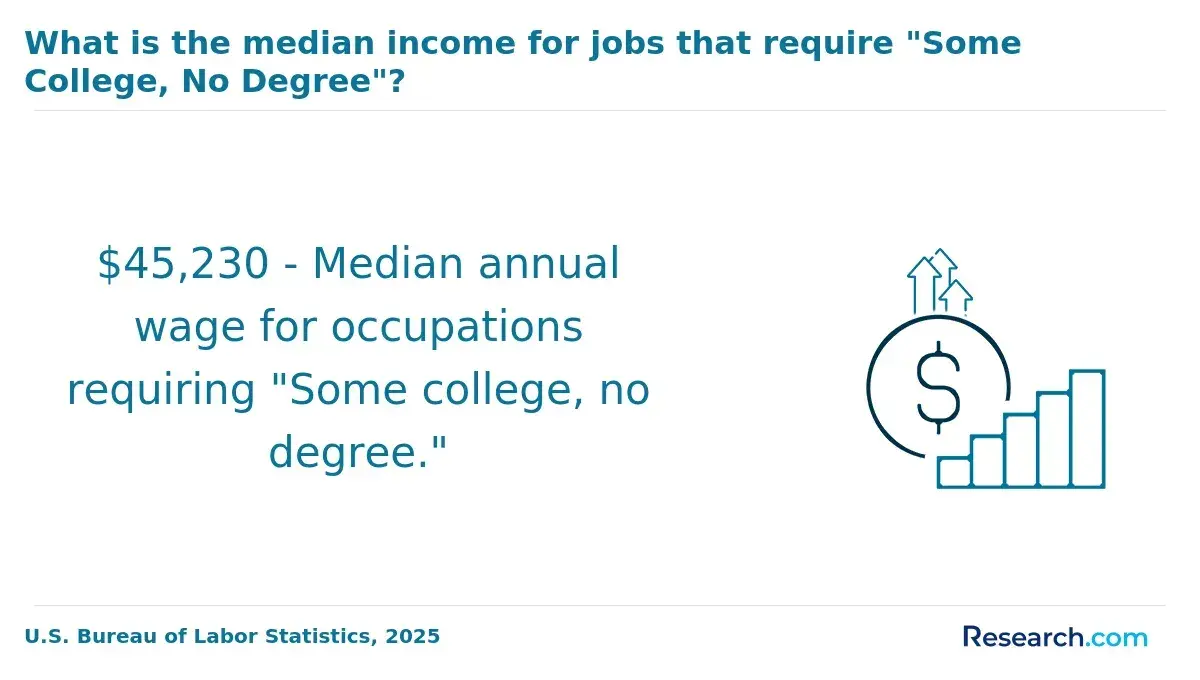
This distinction matters if you may later transfer credits into an associate or bachelor's degree. Career-school credits can be valuable for employment preparation, but transfer acceptance is decided by the receiving institution. Do not assume that every UTI course will transfer into a public college, private university, or employer-sponsored degree pathway.
Before enrolling, use this accreditation checklist to reduce risk and avoid misunderstandings:
- Ask for the exact legal name of the campus and the accrediting agency listed for that location.
- Confirm whether the specific program is eligible for federal financial aid, state grants, or veteran education benefits if you plan to use them.
- Ask whether the credential is a diploma, certificate, occupational associate degree, or another award type.
- If you want future college credit, ask potential transfer schools in writing whether they would consider UTI credits.
- For aviation, HVACR, welding, or state-regulated work, confirm whether additional exams, licenses, or employer certifications may be required after graduation.
What programs does UTI offer?
UTI offers career-focused training rather than broad liberal arts degrees. Its programs are designed for students who want to enter technical fields more quickly than a traditional four-year college route, which is why some students compare these pathways with quick degrees that pay well when weighing time-to-work options.
Program availability depends heavily on the campus, but UTI-affiliated schools commonly focus on the following areas:
- Automotive technology, including diagnostics, maintenance, repair, electrical systems, and engine performance
- Diesel technology, including truck, heavy equipment, powertrain, fuel, and emissions systems
- Collision repair and refinishing, including structural repair, painting, estimating, and refinishing processes
- Welding technology, including safety, blueprint reading, fabrication basics, and common welding processes
- CNC machining and manufacturing technology, including measurement, programming basics, and precision production
- HVACR, including heating, ventilation, air conditioning, refrigeration, electrical systems, and troubleshooting
- Robotics and automation, including industrial controls, sensors, programmable systems, and manufacturing equipment
- Aviation maintenance, including airframe and powerplant-related training where offered through affiliated campuses
- Marine and motorcycle technician training through specialized UTI-affiliated brands
- Manufacturer-specific advanced training, which may involve brand-aligned curricula after or alongside core technical training
The best program is the one that matches the job you actually want. For example, automotive technology may fit students who like diagnostics and customer-facing repair work, while welding may suit students who prefer fabrication, construction, manufacturing, or shop-based roles. Aviation and HVACR can involve additional regulatory or certification expectations, so students should confirm post-program requirements before choosing.
How do UTI online and campus classes differ?
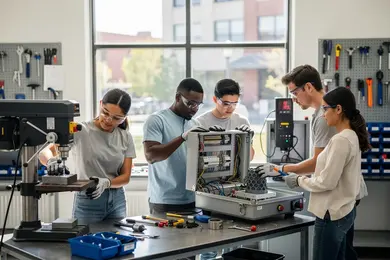
UTI is primarily a hands-on technical training provider. Some academic or theory components may be delivered online or in a blended format, but students should expect substantial in-person lab work because employers in automotive, diesel, welding, HVACR, aviation, and related trades usually value demonstrated equipment-based skills.
The comparison below shows how UTI-style campus training differs from fully online college pathways. This matters if you are deciding between a technical trade program and a broader academic credential such as an online accelerated bachelor's degree.
| Format | Best fit | Main trade-off |
| Campus-based UTI training | Students who need labs, tools, vehicles, engines, machines, or shop instruction | Less location flexibility and possible commuting or housing costs |
| Hybrid technical training | Students who can complete theory online but still attend labs on campus | More flexibility than fully campus-based study, but still requires reliable travel |
| Fully online degree program | Students seeking business, technology, management, or general education credentials that do not require shop labs | May not provide the hands-on trade practice needed for technician roles |
Choose campus training if your target job requires physical diagnostics, repair, welding, or equipment operation. Consider online or hybrid college options if your long-term goal is management, business ownership, supply chain, technical sales, or a bachelor's degree requirement rather than entry-level technician preparation.
What are UTI admission requirements?
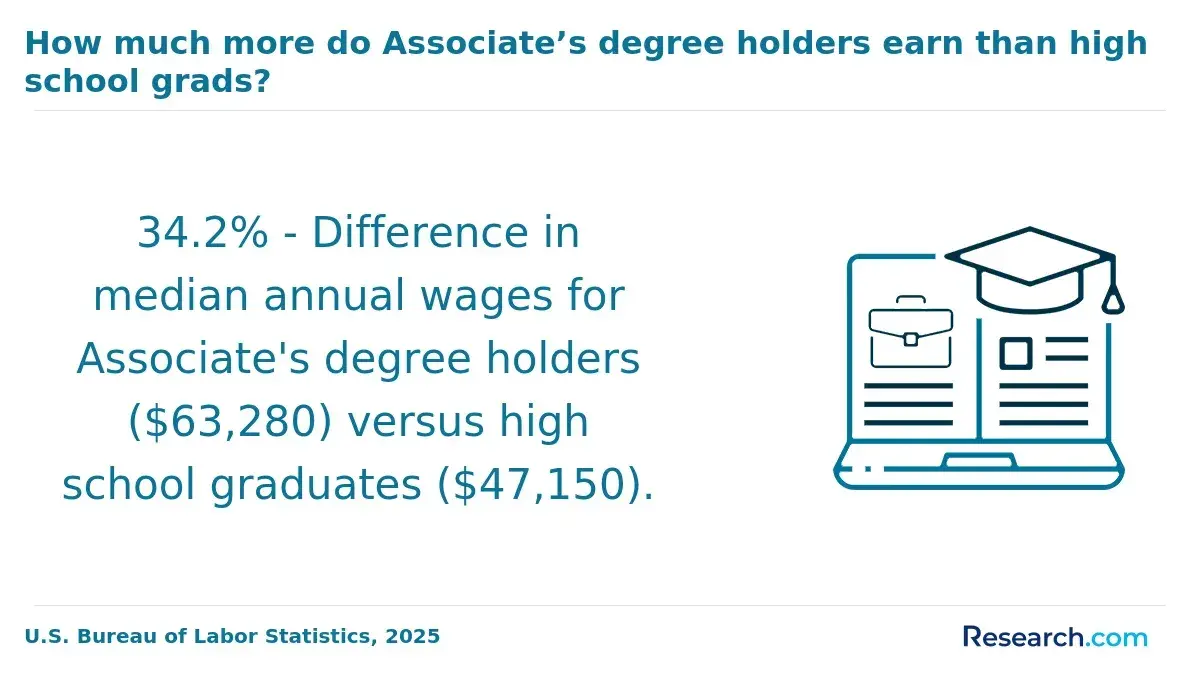
UTI admission requirements vary by campus, program, age, state rules, and applicant background, but career schools typically ask applicants to show that they are academically prepared for postsecondary training. Students who need a fully remote or more academically flexible alternative can also compare nationally accredited online colleges before committing to a campus-based technical school.
Most applicants should be prepared to provide documentation and complete advising steps before enrollment. These are the common items to ask about early so there are no last-minute delays:
- Proof of high school graduation, GED, recognized equivalent, or another school-approved eligibility route
- Government-issued identification and age-related eligibility documentation when required
- Admissions interview or enrollment advising conversation to match the student with the right program
- Financial aid documentation if applying for federal aid, scholarships, grants, loans, military benefits, or employer support
- Program-specific requirements that may relate to physical tasks, safety standards, tools, uniforms, driver expectations, or background checks
A common mistake is assuming that admission means the program is automatically the best fit. Before signing an enrollment agreement, ask what percentage of instruction is lab-based, whether tools are included or separate, what the weekly schedule looks like, and whether the program aligns with local employer expectations in your target region.
How long does UTI take to complete?
UTI programs are usually shorter than traditional four-year degrees, but the timeline depends on the field, campus, credential, and whether the student adds manufacturer-specific or advanced training. Many core technical programs are measured in months rather than years, while specialized add-ons can extend the total time before entering the workforce.
The table below gives a practical planning view of how program length can differ by training area. Exact weeks or months should always be confirmed in the current campus catalog because schedules can change.
| Training path | Typical time expectation | Planning note |
| Automotive or diesel technology | Often under two years | May lead to entry-level technician roles, with advanced employer or manufacturer training possible later |
| Welding, CNC, or HVACR | Often less than a traditional associate degree timeline | May be attractive for students who want a faster skilled-trade pathway |
| Aviation maintenance or advanced technical programs | Can take longer than shorter trade certificates | May involve FAA-related or employer-recognized expectations beyond classroom completion |
| Manufacturer-specific training | Additional weeks or months after core training | Can be useful when a student has a clear brand or employer target |
Speed is valuable, but it should not be the only factor. A shorter program may reduce time out of the workforce, while a longer program may provide broader technical exposure or a pathway into higher-specialization roles. The right timeline is the one that balances employability, cost, schedule, and your ability to complete the program without stopping out.
How much does UTI cost?
UTI cost depends on the campus, program, credential length, required tools, supplies, fees, living expenses, transportation, and whether the student qualifies for aid. Because there is no single universal price for every UTI program, students should request the current tuition and fee sheet for the exact campus and program before comparing options.
Financial aid can change the out-of-pocket cost, but it should not be treated as free money unless it is a grant or scholarship. For context, the maximum Federal Pell Grant for the 2024-25 award year was $7,395, which can help eligible students but may not cover the full cost of attendance at a private career school.
- Maximum Federal Pell Grant for the 2024-25 award year: $7,395
- Federal Direct Loan first-year dependent undergraduate annual limit often used for planning: $5,500
The table below explains the cost categories students should compare because tuition alone does not show the real price of attending a technical school.
| Cost factor | Why it matters | Question to ask |
| Tuition and mandatory fees | This is the base education charge and varies by program and campus | What is the total tuition and fee amount for my exact program? |
| Tools, uniforms, books, and supplies | Technical programs may require equipment that general academic programs do not | Are tools included, rented, financed, or purchased separately? |
| Housing and transportation | Relocating or commuting can change affordability more than small tuition differences | What are realistic monthly housing and commuting costs near this campus? |
| Certification or exam costs | Some fields may involve optional or required exams after training | Which exams are included, and which are paid separately? |
| Lost wages while studying | Full-time schedules can reduce working hours | Can I work while enrolled without hurting attendance or lab performance? |
To avoid overborrowing, ask the school for a full cost of attendance estimate, compare it with expected entry-level wages in your local market, and calculate a monthly loan payment before enrolling. A lower-cost program is not automatically better if it lacks the training you need, but a high-cost program should have a clear connection to your target role.
What careers can UTI graduates pursue?
UTI graduates may pursue entry-level roles in transportation, repair, manufacturing, energy, aviation, motorsports, and skilled trades, depending on the program completed and the local labor market. Students with legal records or background concerns should also research employer screening practices early and may find it useful to compare broader education options such as college degrees for felons when planning a realistic career path.
The strongest career match depends on the kind of work environment you want. These common pathways show how UTI-related training can connect to different roles:
- Automotive service technician: diagnoses vehicle problems, performs maintenance, repairs engines, electrical systems, brakes, drivetrains, and vehicle technology systems
- Diesel technician: works on trucks, buses, heavy equipment, diesel engines, emissions systems, hydraulics, and fleet maintenance needs
- Welding technician or fabricator: reads blueprints, prepares materials, joins metal components, inspects welds, and follows strict safety procedures
- HVACR technician: installs, maintains, and repairs heating, cooling, ventilation, refrigeration, electrical, and control systems
- CNC machinist or manufacturing technician: operates precision equipment, measures parts, follows production specifications, and supports manufacturing quality
- Aviation maintenance technician: inspects, repairs, and maintains aircraft systems when the student completes an aviation-aligned pathway and meets applicable requirements
- Marine or motorcycle technician: repairs engines, electrical systems, drivetrains, and performance systems for specialized vehicles and equipment
Employers often look for more than a credential. Reliability, safety habits, diagnostic thinking, communication, attendance, tool familiarity, and willingness to keep learning can affect early career progress. Students who want advancement should ask whether the program supports certifications, apprenticeships, manufacturer training, or employer partnerships in their region.
What salary and job outlook do UTI graduates have?
Salary and job outlook depend on the occupation, state, employer, overtime, union status, certifications, and experience. The figures below are national BLS data published in 2024 and should be used as labor-market context, not as a promise of what any individual UTI graduate will earn.
The table summarizes related occupations students often consider after technical training. It helps compare fields by median pay and projected demand rather than relying only on program marketing or personal interest.
| Related occupation | May 2024 median annual wage | BLS 2023-2033 outlook context |
| Automotive service technicians and mechanics | $49,670 | About 3% projected growth, indicating modest demand and replacement needs |
| Bus and truck mechanics and diesel engine specialists | $60,640 | About 3% projected growth, with fleet maintenance and logistics supporting demand |
| Welders, cutters, solderers, and brazers | $51,000 | About 2% projected growth, with demand varying by construction, manufacturing, and infrastructure activity |
| Heating, air conditioning, and refrigeration mechanics and installers | $59,810 | About 9% projected growth, stronger than many repair occupations due to building systems and energy-efficiency needs |
| Aircraft and avionics equipment mechanics and technicians | $79,140 | About 5% projected growth, with higher training and compliance expectations in many aviation roles |
These numbers show why program choice matters. HVACR and aviation-related paths may show stronger national demand or higher median wages, but they may also involve different licensing, safety, regulatory, or relocation considerations. Automotive and diesel pathways may be more widely available, but local employer relationships and certifications can heavily influence outcomes.
Students who later want to move into operations leadership, engineering management, business analytics, or executive roles may eventually compare technical experience with advanced academic routes such as the most valuable masters degrees. For most new UTI students, however, the immediate ROI question is whether the program leads to a realistic first technical role at a cost they can manage.
Other Things You Should Know About
No. Universal Technical Institute operates a network of campuses and affiliated schools in several U.S. states. The right location depends on which program you want because not every campus offers every training path.
The best campus is the one that offers your target program, fits your budget, and connects with employers in the region where you want to work. Distance matters, but program availability and total cost matter more.
Usually not for hands-on technical programs. Some theory courses may be online or blended, but automotive, diesel, welding, HVACR, aviation, and similar fields require in-person lab training.
No school should be treated as a job guarantee. UTI may offer career services and employer connections, but hiring depends on your skills, attendance, certifications, location, interview performance, background checks, and labor-market conditions.
References
- How Long Does a UTI Last? Urology FAQs https://oregonurology.com/how-long-does-a-uti-last-urology-faqs/
- How much does UTI trade school cost? https://bestaccreditedcolleges.org/articles/careers-and-education/how-much-does-uti-trade-school-cost.html
- UTI for Career Changers: Training for a Successful New Path https://www.uti.edu/blog/education/career-changer-student-uti
- Online Vs On-Campus - What Are The Pros and Cons? https://notgoingtouni.co.uk/blogs/online-vs-on-campus-what-are-the-pros-and-cons-322
- Accreditation and Licensing https://catalogs.uti.edu/accreditation-and-licensing
- Universal Technical Institute: Career Readiness through Accelerated Programs https://www.hispanicoutlook.com/articles/universal-technical-institute-career-readiness-through-accelerated-programs
- Urinary tract infections (UTIs) https://www.nhs.uk/conditions/urinary-tract-infections-utis/
- Urinary Tract Infection (UTI): Causes, Symptoms & Treatment https://my.clevelandclinic.org/health/diseases/9135-urinary-tract-infections
- About UTI https://ea.uti.edu/About-Us
- Urinary tract infection (UTI) - Symptoms and causes https://www.mayoclinic.org/diseases-conditions/urinary-tract-infection/symptoms-causes/syc-20353447