2027 D2 Schools in Florida: Complete Student Guide

Co-Founder and Chief Data Scientist
Choosing a D2 school in Florida means comparing athletics, academics, cost, location, and career fit at the same time. NCAA Division II includes more than 300 schools and over 120,000 student-athletes, so the division is large enough to offer serious competition without the scale of many D1 programs. This guide is for students, parents, transfer applicants, and athletes who want a practical overview of Florida D2 colleges. You will learn which schools qualify, what they offer, how admissions and scholarships work, and how to judge value before applying.
Key Things You Should Know
- Florida has 14 NCAA Division II institutions, including private nonprofit universities, liberal arts colleges, specialized institutions, and one public university option: the University of West Florida.
- D2 schools can offer athletic scholarships, but many awards are partial; students should compare total net price, academic aid, Florida resident aid, and FAFSA-based grants before assuming athletics will cover the bill.
- College Board's 2024-25 national pricing data shows average published tuition and fees of $11,610 for in-state public four-year colleges and $43,350 for private nonprofit four-year colleges, making net cost comparison essential for Florida D2 applicants.
What are D2 schools in Florida?
D2 schools in Florida are colleges and universities that compete in NCAA Division II athletics while also offering undergraduate and, in many cases, graduate academic programs. "D2-accredited" is a common search phrase, but it is important to separate two ideas: the NCAA classifies athletic competition, while academic accreditation is handled by recognized accrediting agencies.
For students, the appeal of Division II is usually balance. D2 athletes still train, travel, and compete at a high level, but many programs are built around a more integrated student experience than the most resource-intensive D1 model. Non-athletes may also choose these schools because they offer smaller campuses, coastal or metro locations, career-focused majors, and private-college learning environments.
The right Florida D2 school depends on what you need most. A student-athlete should evaluate roster fit, coach communication, scholarship structure, eligibility, and playing time. A non-athlete should focus more on academic program strength, graduation support, internship access, cost, and campus culture.
The table below summarizes what "D2" means in practical terms. Use it to avoid the common mistake of judging a college only by its athletic division.
| Term | What it means | Why it matters |
| NCAA Division II | An athletic classification for colleges that sponsor NCAA sports at the D2 level. | It affects competition level, recruiting rules, athletic scholarships, travel, and eligibility. |
| Academic accreditation | Institutional or programmatic approval by recognized accrediting bodies. | It affects credit transfer, federal financial aid eligibility, graduate school options, and some licenses. |
| Athletic scholarship | Financial aid awarded for athletic participation, often divided among multiple athletes. | It can reduce cost, but students should not assume it will equal a full ride. |
| Net price | The estimated cost after grants and scholarships are applied. | It is more useful than sticker price when comparing public and private colleges. |
Which Florida schools are D2-accredited?
Florida's NCAA Division II colleges are spread across the state, with a heavy concentration in the Sunshine State Conference. The list below reflects schools that are commonly recognized as Florida D2 institutions; students should still verify current membership, sport sponsorship, and roster openings through the NCAA school directory and each college's athletics site before applying or contacting coaches.
| Florida D2 school | Location | Conference or common D2 affiliation | Good fit for students interested in |
| Barry University | Miami Shores | Sunshine State Conference | Health sciences, business, education, social sciences, urban access |
| Eckerd College | St. Petersburg | Sunshine State Conference | Marine science, liberal arts, environmental studies, coastal campus life |
| Embry-Riddle Aeronautical University | Daytona Beach | Sunshine State Conference | Aviation, aerospace, engineering, applied science, technology |
| Edward Waters University | Jacksonville | Southern Intercollegiate Athletic Conference | HBCU experience, business, criminal justice, biology, education |
| Flagler College | St. Augustine | Peach Belt Conference | Business, communication, education, coastal small-college environment |
| Florida Institute of Technology | Melbourne | Sunshine State Conference | Engineering, computing, aviation, psychology, STEM research |
| Florida Southern College | Lakeland | Sunshine State Conference | Business, nursing, education, exercise science, traditional campus life |
| Lynn University | Boca Raton | Sunshine State Conference | Business, aviation management, communication, international environment |
| Nova Southeastern University | Fort Lauderdale | Sunshine State Conference | Health professions, business, psychology, graduate and professional pathways |
| Palm Beach Atlantic University | West Palm Beach | Sunshine State Conference | Christian college setting, pharmacy pathways, business, ministry, health sciences |
| Rollins College | Winter Park | Sunshine State Conference | Liberal arts, business, international studies, small classes |
| Saint Leo University | Saint Leo | Sunshine State Conference | Online and campus programs, criminal justice, business, psychology, education |
| University of Tampa | Tampa | Sunshine State Conference | Business, communication, health sciences, entrepreneurship, city access |
| University of West Florida | Pensacola | Gulf South Conference | Public university pricing, engineering, cybersecurity, nursing, regional workforce pathways |
A common red flag is assuming every D2 school sponsors every D2 sport. Even within the same conference, sport offerings differ, and some teams may have limited roster space or no athletic money available for a given recruiting year.
How do D2 schools compare with D1 and D3?
D2 is best understood by comparing it with D1 and D3. The main differences are not academic quality; they are athletic scale, scholarship rules, time demands, recruiting intensity, and campus culture.
The comparison below helps students decide whether Florida D2 schools match their priorities. It is especially useful for athletes who are choosing between a larger D1 opportunity, a D2 scholarship offer, and a D3 academic fit.
| Category | Division I | Division II | Division III |
| Athletic intensity | Typically the highest NCAA level, often with larger budgets and greater media attention. | Competitive athletics with a stronger emphasis on balancing academics, sports, and campus life. | Competitive athletics without athletic scholarships and usually with a broader student-life focus. |
| Athletic scholarships | Available in many sports, with head-count and equivalency models depending on sport. | Available, but often partial and divided across rosters. | Not awarded for athletics, though academic and need-based aid may be available. |
| Best fit | Students seeking the highest athletic exposure and willing to accept major time demands. | Students who want serious competition but also want academic and personal balance. | Students who prioritize academics, campus life, and continued athletic participation. |
| Recruiting strategy | Earlier and more competitive in many sports. | Still competitive, but often more relationship-driven and fit-based. | Often focused on academic match, coach interest, and institutional aid. |
Choose D2 if you want meaningful athletic competition and a realistic academic life. Consider D1 if your sport is central to your long-term plan and you are comfortable with a more demanding athletic environment. Consider D3 if your priority is a specific academic college and you do not need athletic aid.
What programs do Florida D2 schools offer?
Florida D2 schools offer much more than athletics. Their program mix includes liberal arts, business, health sciences, aviation, engineering, education, psychology, communication, marine science, criminal justice, and graduate professional pathways. The strongest choice is not the school with the longest major list; it is the school where your academic program, internship market, faculty support, and cost line up.
The table below groups common academic strengths across Florida D2 institutions. Use it as a starting point, then check the exact major, concentration, accreditation, clinical requirement, or certification pathway at each college.
| Program area | Common Florida D2 options | What to verify before enrolling |
| Business and management | Accounting, finance, marketing, entrepreneurship, international business, sport management | Internship access, employer partnerships, analytics coursework, CPA-aligned accounting requirements |
| Health and life sciences | Nursing, biology, exercise science, public health, psychology, pre-professional tracks | Clinical placement capacity, licensure alignment, graduate school prerequisites, lab access |
| STEM and aviation | Engineering, computer science, cybersecurity, aviation, aerospace, data-related programs | ABET or field-specific accreditation where relevant, lab facilities, industry certifications, co-op options |
| Education and human services | Elementary education, exceptional student education, counseling-related pathways, social sciences | Florida certification alignment, student-teaching placements, background check rules |
| Liberal arts and communication | Communication, writing, political science, environmental studies, international studies, marine science | Portfolio opportunities, research access, study abroad, graduate school preparation |
Graduate students should compare delivery format and total cost carefully because private D2 universities may offer strong professional programs but vary widely in price. If you are focused on graduate affordability, comparing affordable online masters programs can help you benchmark Florida D2 options against lower-cost alternatives.
A practical mistake is choosing a D2 school because of the team first and the major second. That can work for a recruited athlete only if the academic program still supports a realistic career path if playing time, injury, coaching changes, or transfer plans change.
Are Florida D2 programs available online?
Some Florida D2 institutions offer online or hybrid programs, but online availability varies significantly by school and degree level. Large universities and career-focused institutions tend to have more online options, while residential liberal arts colleges may emphasize on-campus learning.
Online study can be a smart fit for adult learners, military students, working students, and graduate students who do not need daily access to campus facilities. Traditional campus study may be better for first-year students, recruited athletes, lab-heavy majors, clinical programs, aviation training, and students who want a residential college experience.
The table below explains how to compare online and campus formats at Florida D2 schools. The goal is not to rank one format above the other, but to match delivery style to your academic and personal constraints.
| Format | Best for | Possible drawback | Question to ask |
| Fully online | Working adults, graduate students, military learners, students outside commuting range | May not support athletics participation, labs, clinicals, or campus-based networking | Is the exact degree available online, or only some courses? |
| Hybrid | Students who need flexibility but can travel for labs, intensives, or clinical experiences | Campus visits may still create travel and scheduling costs | How often are in-person requirements scheduled? |
| On campus | Student-athletes, first-year students, lab-based majors, residential learners | Less flexible for full-time workers and caregivers | Are courses offered at times that fit practice, work, or commute needs? |
If flexibility is your top priority, compare Florida D2 offerings with broader online colleges so you can see whether a D2 institution is the best match or whether a non-D2 online program offers a better academic and cost fit.
Before enrolling online, check whether the program meets licensing or certification rules in your state. This is especially important for nursing, education, counseling, psychology, social work, and any field requiring supervised placements.
What are the admission requirements for Florida D2 schools?
Admission requirements for Florida D2 schools depend on the institution, the major, and whether the applicant is a first-year, transfer, graduate, international, or recruited athlete. Many schools use holistic review, but selective majors such as nursing, engineering, aviation, education, and health professions may have additional prerequisites or progression standards.
Student-athletes have two layers of requirements: admission to the college and NCAA eligibility. NCAA rules can change, so athletes should confirm current core-course, GPA, amateurism, transfer, and eligibility-center requirements before committing.
The table below shows the most common application requirements. Use it to build a checklist before you apply, especially if you are comparing multiple Florida D2 schools.
| Applicant type | Common requirements | What can change by school or major |
| First-year undergraduate | High school transcript, application, essay or personal statement, recommendation requirements, optional or required test scores depending on policy | Minimum GPA, test-optional rules, portfolio requirements, science prerequisites, scholarship deadlines |
| Transfer student | College transcripts, minimum transferable credits, good academic standing, sometimes high school records | Credit transfer limits, major-specific prerequisites, residency requirements, articulation agreements |
| Graduate student | Bachelor's degree, transcripts, resume, statement of purpose, recommendations, sometimes standardized tests or professional experience | Minimum GPA, prerequisite coursework, licensure requirements, cohort deadlines |
| Student-athlete | College admission plus NCAA Eligibility Center review and coach evaluation | Roster needs, scholarship availability, transfer eligibility, amateurism certification, sport-specific recruiting calendar |
Applicants with work experience, military training, or prior college credit should ask about transfer credit, prior learning assessment, and flexible pacing. Comparing policies at competency-based online colleges can also help you understand what faster, skill-based credit models look like, even if you ultimately choose a Florida D2 institution.
Common mistakes include applying after scholarship deadlines, assuming test-optional means grades do not matter, sending athletic film without academic records, and committing to a school before confirming that your major is available and in good standing.
How much do Florida D2 schools cost?
Florida D2 school costs vary because the state includes both private nonprofit institutions and a public university. Sticker price is only the starting point. The more important figure is net price after grants, scholarships, athletic aid, state aid, institutional discounts, and housing choices.
College Board's 2024-25 national data provides useful context: average published tuition and fees were $11,610 for in-state students at public four-year colleges and $43,350 at private nonprofit four-year colleges. That gap explains why Florida residents should compare public, private, and scholarship-heavy options instead of assuming one category is automatically cheaper.
The table below shows the main cost drivers. Use it to compare award letters line by line before making a deposit.
| Cost factor | How it affects Florida D2 students | What to compare |
| Tuition and fees | Public in-state pricing can be much lower than private sticker prices, but private schools may discount heavily. | Published price, net price, annual tuition increases |
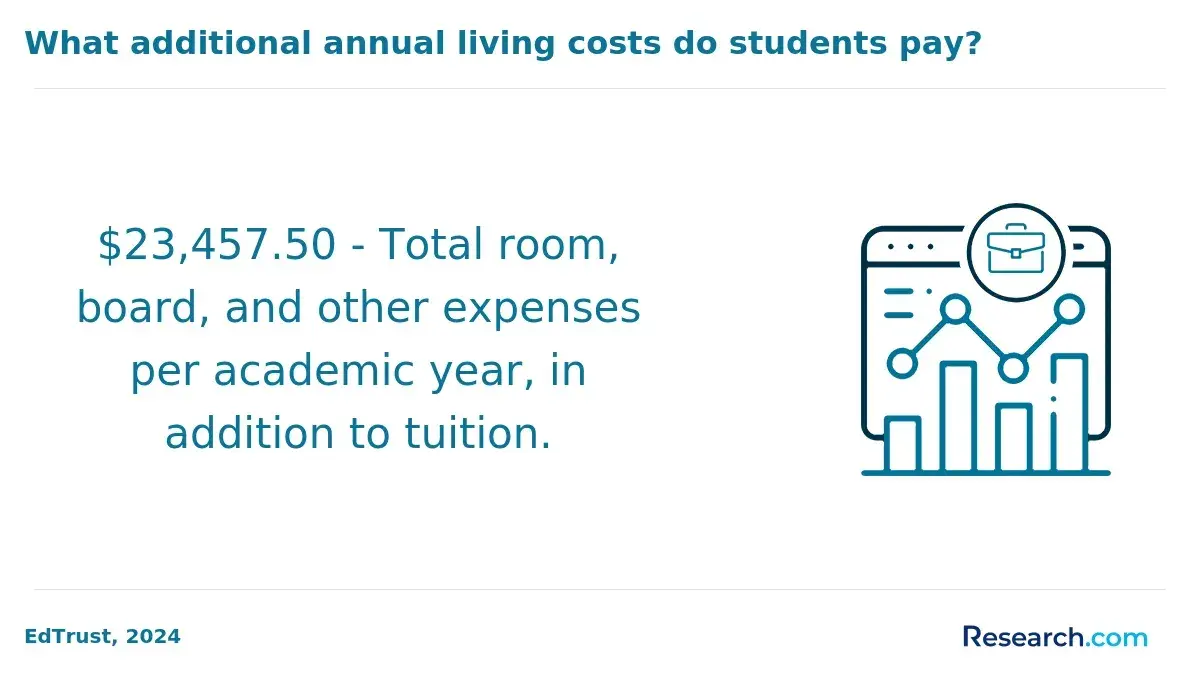
| Housing and meals | Residential campuses can add a major cost, especially in high-cost coastal or metro areas. | Required housing years, meal plan rules, off-campus rent estimates |
| Athletic scholarships | D2 athletic aid may be partial and can vary by sport, coach, roster size, and annual renewal rules. | Renewal conditions, injury policy, stackability with academic aid |
| Academic and need-based aid | Merit scholarships, grants, FAFSA-based aid, and Florida aid can change the real price. | Four-year renewal rules, GPA requirements, unmet need |
| Program-specific expenses | Aviation, nursing, lab sciences, clinical programs, and athletics can add fees, equipment, or travel costs. | Flight fees, clinical fees, uniforms, technology, insurance, transportation |
Students comparing Florida D2 colleges with lower-cost remote options can use lists of the most affordable online colleges as a benchmark for FAFSA-eligible alternatives, especially if athletics or campus life is not central to the decision.
To reduce cost risk, request a four-year cost estimate, ask whether scholarships stack, confirm renewal GPA requirements, compare loan amounts rather than only grants, and check whether summer courses or transfer credits can shorten the degree.
How long do Florida D2 degree programs take?
Most bachelor's degrees at Florida D2 schools are designed to take four years of full-time study. However, the actual timeline depends on transfer credits, major sequencing, course availability, athletic travel, clinical placements, internships, and whether the student changes majors.
The table below gives realistic timeline ranges. Use it to identify where delays commonly happen and whether an accelerated or part-time route makes sense.
| Program type | Typical full-time timeline | Factors that can shorten or extend the timeline |
| Bachelor's degree | About four academic years | AP, IB, dual enrollment, transfer credits, major changes, required course sequences |
| Transfer completion | Often about two years after an associate degree, if credits apply cleanly | Major prerequisites, residency credit rules, lost elective credits |
| Master's degree | Commonly one to two years full time | Part-time enrollment, practicum requirements, cohort scheduling, thesis or capstone format |
| Professional or doctoral pathway | Usually several years beyond the bachelor's degree | Licensure exams, clinical hours, research requirements, supervised practice |
Graduate students who want a shorter timeline should compare Florida D2 options with shortest master's degree programs online, but speed should not override accreditation, licensure alignment, faculty access, or employer recognition.
Athletes should also consider eligibility timing. NCAA participation has limits, and academic delays can affect eligibility, aid renewal, and graduation planning. The safest approach is to meet with both an academic advisor and the athletics compliance office before changing majors, dropping courses, transferring, or reducing credit load.
What careers can Florida D2 graduates pursue?
Florida D2 graduates can pursue careers across business, health care, education, technology, aviation, communication, public service, science, and graduate professional fields. The outcome depends far more on the degree, skills, internships, licensure, and local labor market than on the athletic division itself.
The table below connects common Florida D2 academic areas with career directions. It is not a guarantee of employment; it is a planning tool for choosing a major with a clear next step.
| Academic path | Possible careers | Preparation that matters |
| Business, accounting, finance, marketing | Accountant, financial analyst, marketing specialist, sales manager, operations coordinator | Internships, Excel and analytics skills, CPA prerequisites where relevant, portfolio projects |
| Nursing, health science, biology, exercise science | Registered nurse, clinical coordinator, health educator, athletic trainer, graduate health professional student | Licensure alignment, clinical placements, science GPA, certifications, patient-care experience |
| Computer science, cybersecurity, engineering | Software developer, cybersecurity analyst, systems analyst, engineer, data analyst | Projects, internships, coding portfolio, security certifications, lab experience |
| Education and psychology | Teacher, student support specialist, case manager, graduate counseling or psychology student | Certification requirements, supervised placements, background checks, graduate school planning |
| Aviation and aerospace | Pilot pathway roles, aviation manager, aerospace technician, operations specialist | Flight hours, FAA requirements, safety training, technical coursework, industry networking |
| Communication, liberal arts, marine science | Public relations assistant, content strategist, policy aide, research assistant, environmental program support | Writing samples, research experience, internships, data skills, graduate study where needed |
Current hiring trends favor graduates who can combine a degree with practical evidence of skill. AI tools are changing entry-level work in marketing, business analysis, coding, and administration, so students should build portfolios, complete internships, learn data tools, and practice using AI ethically rather than relying only on classroom grades.
Student-athletes can also translate athletics into career skills, including time management, resilience, leadership, performance under pressure, and teamwork. Those skills become more valuable when paired with internships, faculty references, and measurable technical abilities.
What are the salary and job outlook for Florida D2 graduates?
Salary and job outlook for Florida D2 graduates depend on occupation, degree level, location, licensure, experience, and industry. A D2 degree does not create a single salary outcome; the major and career path matter most.
BLS employment projections published in 2024 show total U.S. employment is projected to grow 4.0% from 2023 to 2033. For students, this means choosing a field with durable demand, licensure clarity, and transferable skills can matter more than choosing a school based only on athletic division.
The table below uses national BLS 2024 wage data for common career directions connected to Florida D2 programs. Local Florida pay may be higher or lower depending on metro area, employer, credentials, and experience.
| Career direction | Example role | National median annual pay from BLS 2024 data | Planning note |
| Technology | Software developer | $133,080 | Strong portfolios, internships, and current programming skills are critical because entry-level competition can be intense. |
| Health care | Registered nurse | $93,600 | Licensure, clinical quality, and specialty area strongly influence opportunities. |
| Business | Accountant or auditor | $81,680 | Students interested in CPA pathways should confirm credit-hour and coursework requirements early. |
| Marketing and analytics | Market research analyst | $76,950 | Data analysis, survey tools, and communication skills can improve competitiveness. |
| Athletics and health support | Athletic trainer | $60,250 | Certification, clinical experience, and state requirements are central to employability. |
When evaluating return on investment, compare expected debt with realistic entry-level pay rather than mid-career salaries. A lower-cost school with a strong program fit can outperform a higher-priced option, but a higher-cost school may still make sense if it offers better aid, clinical access, industry placement, or a specialized program you cannot get elsewhere.
Red flags include relying on average alumni salaries without checking major-specific outcomes, assuming graduate school admission is automatic, ignoring licensure pass rates, and borrowing based on a hoped-for athletic or professional outcome that is not guaranteed.
Other Things You Should Know About
Yes, many Florida D2 schools are academically strong, but quality varies by program. Check institutional accreditation, program-specific accreditation, faculty experience, graduation support, internship access, and outcomes in your intended major.
They can offer athletic scholarships, but many D2 sports use partial scholarship models. Ask coaches whether aid is athletic, academic, need-based, renewable, and stackable with other awards.
Not automatically. D2 is often best for students who want competitive athletics with more balance. D1 may fit athletes seeking the highest exposure, while D3 may fit students who prioritize academics and do not need athletic aid.
Yes, if the school fits your academic goals, cost range, location preference, and campus style. Non-athletes should judge D2 schools the same way they would any college: by program quality, affordability, support, and career outcomes.
References
- Most affordable quality college school for D2 athletes https://www.d2football.com/forum/forum/football/general-discussion-ab/general-discussion-ac/929527-most-affordable-quality-college-school-for-d2-athletes
- Explore Careers - CareerSource Central Florida https://www.careersourcecentralflorida.com/career-seekers/explore-careers/
- Division I Membership and Institutional Resources - NCAA.org https://www.ncaa.org/division-i/governance/membership-and-institutional-resources/
- NCAA D2 Teams in Florida | FieldLevel https://www.fieldlevel.com/app/teams
- State College and University Admission in Florida https://www.floridashines.org/college-admission-requirements
- The Difference Between D1, D2, and D3 College Sports https://www.asmsports.co/post/the-difference-between-d1-d2-and-d3-college-sports
- NCAA Division II Basketball in Florida | Florida Coastal Prep https://floridacoastalprep.com/d2-basketball-programs/florida/
- NCAA D1 vs D2 vs D3 in Track and Field: How to Find Your Level https://blog.streamlineathletes.com/difference-between-ncaa-div1-div2-div3/
- Division 2 Colleges • ProductiveRecruit https://productiverecruit.com/division-2-colleges
- What It Means to Be a D1, D2, D3, or NAIA Athlete https://plus.imgacademy.com/resources/articles/what-it-means-to-be-a-d1-d2-d3-or-naia-athlete