2027 Grad School: Complete Student Guide

Co-Founder and Chief Data Scientist
Grad school can open doors, but it can also add debt, delay earnings, and narrow your options if the program does not match your goal. The Bureau of Labor Statistics reported 2024 median weekly earnings of $1,840 for workers with a master's degree, compared with $1,543 for those with a bachelor's degree, but returns vary widely by field. This guide is for prospective graduate students comparing degrees, formats, costs, admissions, accreditation, and career outcomes so they can choose a program with clearer purpose and lower risk.
Key Things You Should Know
- Grad school is most worth considering when the credential is required for licensure, advancement, research, leadership, or a clearly higher-paying occupation; BLS 2024 data shows a master's-level earnings premium, but not every field delivers the same payoff.
- NCES Digest 2024 data shows average 2022-23 graduate tuition and required fees were $12,596 at public institutions and $29,931 at private nonprofit institutions, so total cost should include fees, living expenses, lost income, and borrowing.
- Accreditation, licensure alignment, faculty expertise, clinical or practicum placement support, and career outcomes are often more important than format; online, hybrid, and campus programs can all be credible when properly accredited.
What is grad school and how does it fit into U.S. higher education pathways?
Grad school is post-bachelor's education that leads to an advanced credential, usually a master's, doctoral, professional, specialist, or graduate certificate. It sits above undergraduate study in the U.S. higher education pathway and is designed for deeper specialization, research preparation, professional practice, leadership development, or licensure.
The main difference from college is the level of independence expected. Undergraduate programs often provide broad general education and foundational major coursework. Graduate programs usually assume you already have academic preparation in a field and are ready to analyze complex problems, produce applied work, conduct research, or train for advanced professional roles.
Graduate school is not one single path. A counseling student may complete supervised clinical hours, an MBA student may work through business cases, a public health student may complete applied projects, and a PhD student may spend years designing original research. That variety is why the right question is not simply "Should I go to grad school?" but "Which graduate credential, if any, directly supports my next career move?"
The table below shows where graduate study fits among common U.S. education options. Use it to understand whether you need a degree, a shorter credential, or direct work experience.
| Credential level | Typical purpose | Best fit | Common limitation |
| Graduate certificate | Targeted skill or specialization after a bachelor's degree | Professionals adding a skill without committing to a full degree | May not qualify for jobs or licenses that require a full graduate degree |
| Master's degree | Advanced professional, technical, academic, or leadership preparation | Students seeking promotion, career change, licensure, or specialization | ROI depends heavily on field, school cost, and employer demand |
| Specialist degree | Advanced practice beyond the master's in select fields | Education, school psychology, and some applied professional areas | Less portable outside fields where it is recognized |
| Doctoral degree | Original research, advanced scholarship, or expert professional practice | Future researchers, faculty, executives, clinicians, or advanced practitioners | Longer timeline and opportunity cost |
| Professional degree | Preparation for regulated professions | Future physicians, lawyers, pharmacists, dentists, veterinarians, and similar roles | High cost and strict licensing requirements |
For many students, grad school is best viewed as a strategic investment rather than a default next step. It should solve a specific problem: meeting a licensing requirement, qualifying for a role, shifting fields, deepening expertise, or strengthening long-term mobility.
What types of graduate degrees and programs can you pursue in the United States?
U.S. graduate programs differ by credential, purpose, academic intensity, and career outcome. The degree type you choose should match the work you want to do, not just the subject you enjoy.
Master's degrees are the most common entry point for many students. They may be professional, such as an MBA, MSW, MPH, MEd, MSN, MPA, or MS in Data Science, or more academic and research-oriented, such as an MA or MS that can lead to doctoral study. Students seeking a faster route sometimes compare an online master with traditional two-year programs, but speed should be weighed against workload, accreditation, and career fit.
The table below compares the major graduate credential types by purpose and decision factors. It can help you avoid choosing a longer or more expensive credential than your goal requires.
| Program type | Typical length | Main outcome | When it makes sense |
| Graduate certificate | Several months to 1 year | Focused skill credential | You need a targeted skill, endorsement, or résumé signal |
| Professional master's | 1 to 3 years | Career advancement or career change | Your field values applied expertise, management ability, or licensure preparation |
| Research master's | 1.5 to 3 years | Research preparation or academic specialization | You may pursue a PhD or research-heavy role |
| Practice doctorate | 3 to 6 years, often post-master's in some fields | Advanced professional practice | Your profession recognizes doctoral-level practice credentials |
| Research doctorate | 4 to 7+ years | Original research and scholarly expertise | You want research, faculty, policy, or high-level technical roles |
| Professional degree | 3 to 4+ years after bachelor's | Entry into a regulated profession | The occupation legally requires the degree and licensing exam |
Common graduate fields include business, education, health professions, social work, psychology, computer science, engineering, public administration, public health, counseling, nursing, law, and the sciences. Some programs are built for working adults, while others expect full-time study, assistantships, labs, clinical rotations, or cohort-based participation.
Do not assume a higher degree is always better. A graduate certificate may be enough for analytics, project management, cybersecurity fundamentals, instructional design, or healthcare administration support roles. A full master's or doctorate makes more sense when employers, licensing boards, or advancement tracks explicitly require it.
How do you decide whether grad school is worth it for your career and goals?
Grad school is worth it when the likely benefits exceed the full cost, including tuition, fees, interest, living expenses, time, stress, and any income you give up while studying. The strongest cases usually involve careers where a graduate credential is required or strongly preferred, such as nurse practitioner, physician assistant, school counselor, licensed clinical social worker, speech-language pathologist, occupational therapist, attorney, professor, researcher, or certain leadership roles.
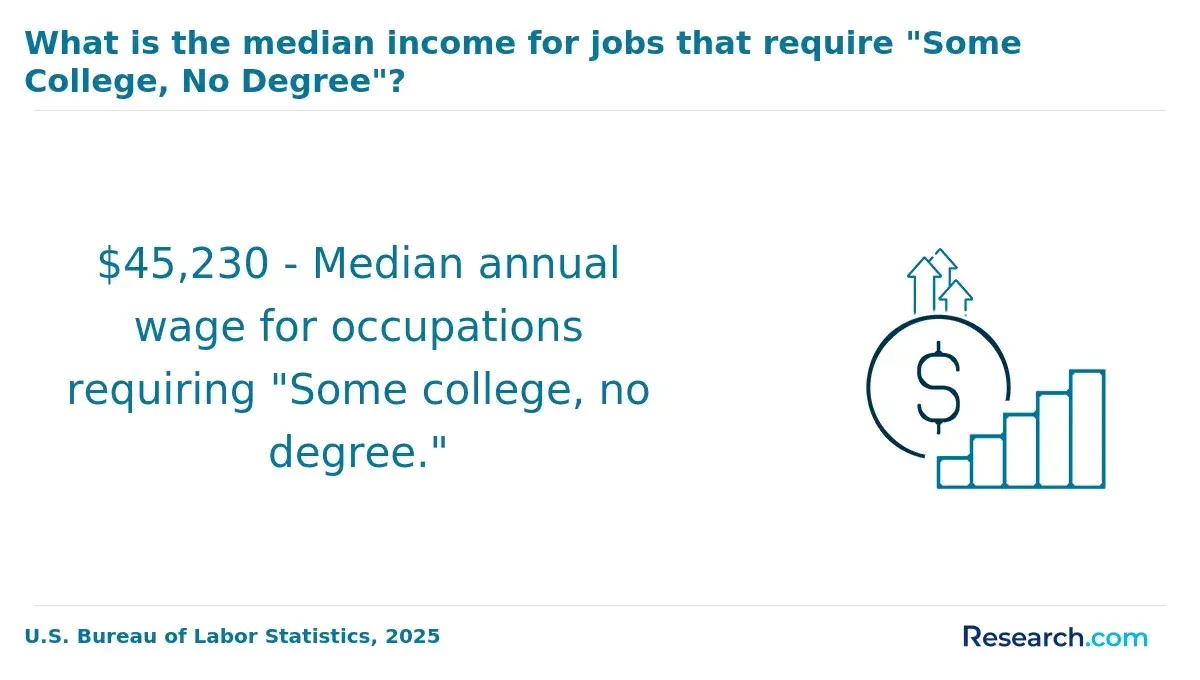
A practical ROI decision starts with the occupation, not the school brochure. BLS 2024 wage data shows that education level correlates with earnings, but salary outcomes still vary by industry, region, experience, specialization, and employer. That means you should compare the graduate program against realistic jobs you can pursue afterward, not against broad averages alone.
Use the following steps before applying. They help you separate a strategic graduate investment from a program that merely sounds impressive.
- Identify the exact job titles you want within 1 to 5 years after graduation.
- Check whether those jobs require, prefer, or only occasionally mention a graduate degree.
- Compare median pay, job postings, and advancement requirements in your target region.
- Estimate total program cost, including tuition, fees, books, travel, technology, exam fees, and lost wages.
- Ask whether a certificate, employer training, portfolio, license, or experience could reach the same goal faster.
- Review completion rates, licensure pass rates, placement support, and alumni outcomes when available.
- Choose the least expensive reputable path that meets the credential requirements for your goal.
Students often overestimate ROI when they focus only on the prestige of the university or the broad salary potential of a field. A better approach is to compare specific programs, net cost after aid, and realistic occupations. If your goal is primarily income, reviewing fields associated with the most lucrative degrees can help you understand which areas tend to have stronger labor-market rewards before you commit to graduate study.
Grad school may not be worth it if you are using it to delay a job search, if the program lacks accreditation needed for your field, if debt would exceed realistic earnings growth, or if employers in your target role prioritize experience and skills over formal credentials. It can still be valuable for personal growth, but the financial decision should be honest.
What are the typical admission requirements for U.S. graduate programs?
Graduate admissions requirements vary by field, selectivity, and degree level, but most programs evaluate academic readiness, professional direction, writing ability, and fit with the curriculum. Highly regulated or competitive fields may also require prerequisite courses, entrance exams, interviews, clinical experience, portfolios, or faculty research alignment.
Many U.S. graduate programs have become more flexible about standardized testing. Some still require the GRE, GMAT, LSAT, MCAT, or field-specific exams, while others are test-optional or waive exams for applicants with strong GPAs, professional experience, or prior graduate work. You should confirm requirements directly with each program because policies can change by department even within the same university.
The table below summarizes common admissions components and what they are meant to show. Use it as a checklist when comparing programs.
| Requirement | What it demonstrates | What to check |
| Bachelor's degree | Baseline academic eligibility | Whether the degree must be in a related field |
| Minimum GPA | Academic readiness | Whether the program reviews last 60 credits or cumulative GPA |
| Prerequisite courses | Preparation for advanced coursework | Whether missing courses can be completed before enrollment |
| Statement of purpose | Goals, fit, and writing ability | Whether the prompt expects career goals, research interests, or both |
| Letters of recommendation | Academic or professional credibility | Whether faculty, supervisors, or licensed professionals are preferred |
| Résumé or CV | Experience and readiness | Whether relevant work, volunteer, research, or leadership experience matters |
| Interview or portfolio | Communication, fit, or evidence of work | Whether it is required for clinical, creative, business, or doctoral programs |
Applicants can improve their chances by matching their materials to the program's purpose. A research-heavy PhD application should explain faculty fit and research questions. A professional master's application should show career direction, applied experience, and readiness for the workload. A licensure-focused application should demonstrate ethical judgment, communication skills, and commitment to the field.
Common mistakes include applying to only highly selective programs, submitting generic essays, ignoring prerequisites, asking weak recommenders, or failing to explain low grades. If your academic record is uneven, address it briefly and focus on evidence of recent readiness, such as strong upper-level coursework, relevant work experience, certifications, or successful graduate-level classes.
How do online, campus, and hybrid grad programs compare in quality and flexibility?
Online, campus, and hybrid graduate programs can all be high quality when they are properly accredited, taught by qualified faculty, and aligned with the same academic or licensing standards as comparable programs. Format alone does not determine credibility. The bigger questions are whether the format fits your schedule, learning style, clinical or research needs, and career goal.
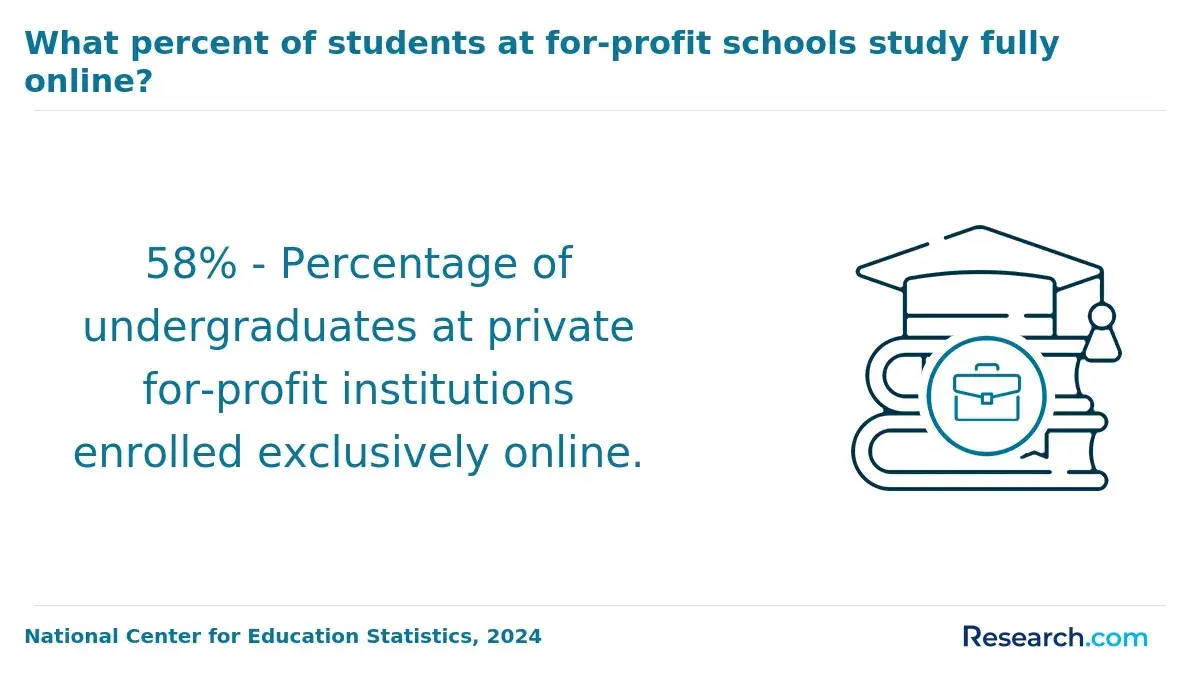
Online graduate education has become mainstream, especially for working adults. Federal postsecondary data released in recent years shows continued large-scale participation in distance education, and many universities now offer online versions of established graduate programs. For students balancing work, caregiving, military service, or relocation limits, online study can make graduate education possible without moving.
The comparison below highlights the practical trade-offs among formats. Use it to decide which format supports your life and your field's expectations.
| Format | Strengths | Best fit | Watch out for |
| Online | Flexible schedule, no relocation, often working-adult friendly | Self-directed students in fields that can be taught remotely or with local placements | Limited in-person networking, possible residency or placement requirements |
| Campus | Face-to-face access to faculty, labs, peers, and campus resources | Students needing labs, studios, intensive research, assistantships, or structured routines | Relocation, commuting, and less schedule flexibility |
| Hybrid | Combines online convenience with periodic in-person engagement | Students who want flexibility but still need campus sessions, labs, or cohort interaction | Travel requirements and scheduling conflicts |
Accelerated formats can be appealing, but they compress workload rather than remove it. Before choosing a fast program, compare weekly time expectations, course sequencing, capstone requirements, and whether the pace leaves room for work and family obligations. Some students researching a 6 month masters degree online should be especially careful to verify accreditation, credit load, transfer policies, and whether the credential is recognized by employers or licensing boards.
A useful rule is to choose online for flexibility, campus for immersion, and hybrid when your field benefits from both. In clinical, counseling, teaching, nursing, and social work programs, ask early who arranges placements and whether your state allows the program to meet local licensure requirements.
How does accreditation work for graduate schools, and why does it matter?
Accreditation is a quality review process used to evaluate institutions and, in some fields, specific programs. In the United States, institutional accreditation affects federal financial aid eligibility, credit transfer, employer recognition, and graduate school legitimacy. Programmatic accreditation can be even more important in fields tied to licensure, certification, or professional standards.
Institutional accreditation applies to the whole college or university. Programmatic accreditation applies to a specific department or degree, such as nursing, counseling, business, public health, social work, education, psychology, law, or engineering. A school can be institutionally accredited while a specific program lacks the specialized accreditation required or preferred in your field.
The table below shows why accreditation matters for different decisions. It is especially important if your graduate degree leads to a regulated profession.
| Accreditation type | What it covers | Why it matters to students |
| Institutional accreditation | The college or university as a whole | Supports federal aid eligibility, transfer credibility, and general recognition |
| Programmatic accreditation | A specific professional or academic program | May be required for licensure exams, certification, placements, or employer preference |
| State authorization | Whether a school can offer education to students in a state | Important for online students and programs with field placements |
| Licensure approval | Whether a program meets state board requirements | Critical for counseling, teaching, nursing, social work, psychology, and similar fields |
To verify accreditation, use the U.S. Department of Education's Database of Accredited Postsecondary Institutions and Programs or the Council for Higher Education Accreditation directory. For licensure fields, also check the relevant state licensing board and national accreditor. Do not rely only on a school's marketing language.
Red flags include vague phrases like "internationally recognized," pressure to enroll quickly, unclear accreditor names, no public licensure pass-rate information in regulated fields, or a program that claims to qualify you for licensure in every state without explaining state-by-state differences. If a school cannot clearly document accreditation and licensure alignment, keep looking.
How long do graduate programs take, and what do they cost to complete?
Graduate program length depends on degree level, enrollment status, credit requirements, prerequisites, clinical hours, dissertation or capstone expectations, and whether you study full time or part time. A graduate certificate may take months, a master's degree often takes 1 to 3 years, and doctoral or professional programs can take several years beyond that.
Cost varies just as widely. NCES Digest 2024 reports that average 2022-23 graduate tuition and required fees were $12,596 at public institutions and $29,931 at private nonprofit institutions. Those figures are useful benchmarks, but your actual cost may differ based on residency, program fees, online fees, assistantships, employer tuition benefits, scholarships, and how long you take to finish.
The table below summarizes common time and cost drivers. Use it to estimate the full price of completion rather than comparing tuition alone.
| Cost or timeline factor | How it affects the decision | What to ask the school |
| Credits required | More credits usually mean more tuition and time | How many total credits are required for graduation? |
| Enrollment pace | Part-time study may reduce semester strain but extend total time | Can students switch between full-time and part-time status? |
| Residency status | Public universities may charge different in-state and out-of-state rates | Are online students charged separate tuition rates? |
| Fees and materials | Program, technology, lab, travel, exam, and placement fees can add up | What is the estimated total cost of attendance? |
| Fieldwork or clinical hours | Required placements may limit work hours or require travel | Who arranges placements, and where can they be completed? |
| Thesis, dissertation, or capstone | Research or final projects can extend completion time | What is the average time to completion for recent students? |
| Financial aid and assistantships | Grants, stipends, tuition waivers, and employer benefits can reduce net cost | What funding is available to students in this program? |
Federal graduate borrowing can be substantial. For eligible students, Direct Unsubsidized Loans for graduate and professional study have an annual limit of $20,500, and some students use Grad PLUS Loans for remaining costs. Borrowing can be appropriate, but you should estimate monthly payments before enrolling rather than after graduation.
Accelerated doctoral marketing deserves special scrutiny. Some students search for 1-year PhD programs online no dissertation, but legitimate doctoral education usually requires rigorous research, applied scholarship, clinical preparation, or a substantial doctoral project. Shorter is not automatically better if the credential is not respected in your field.
What coursework, research, and practical training should you expect in grad school?
Graduate coursework is usually more specialized, discussion-based, and application-oriented than undergraduate coursework. Instead of learning broad foundations, you are expected to synthesize evidence, critique methods, solve advanced problems, and produce work that resembles professional or scholarly practice.
What you do in grad school depends on the program type. Professional programs emphasize applied projects, case studies, simulations, practicums, internships, labs, or clinical work. Research programs emphasize theory, methods, literature reviews, data analysis, conference presentations, publications, thesis work, and dissertation preparation.
The table below compares common academic and practical components. It helps you understand what daily graduate study may involve beyond attending classes.
| Component | What it involves | Why it matters |
| Core courses | Required advanced classes in the discipline | Builds the shared knowledge expected in the field |
| Electives or concentration courses | Specialized classes aligned with career interests | Allows students to tailor the degree toward a role or industry |
| Research methods | Study design, statistics, qualitative methods, or evidence evaluation | Prepares students to interpret or produce credible evidence |
| Capstone or thesis | Final applied project or research paper | Demonstrates synthesis and readiness for professional or academic work |
| Internship, practicum, or clinical placement | Supervised work in a real setting | Supports licensure, career readiness, and practical skill development |
| Comprehensive exams | Assessment of major field knowledge | Common in some master's, specialist, and doctoral programs |
| Dissertation or doctoral project | Original research or advanced applied scholarship | Required in many doctoral pathways |
AI and automation are changing graduate expectations in many fields. Students increasingly need to understand data literacy, ethical technology use, AI-assisted research limits, privacy concerns, and how automation affects professional judgment. Programs that ignore these issues may leave graduates less prepared for modern workplaces.
Before enrolling, ask for sample syllabi, fieldwork expectations, capstone examples, software requirements, and faculty areas of expertise. A strong program should make its academic workload and practical training requirements clear before you commit.
What career paths, salaries, and job outlook can follow from graduate degrees?
Graduate degrees can lead to many outcomes: licensure, promotion, career change, specialized technical roles, management, research, consulting, teaching, or advanced clinical practice. The strongest career value usually appears when the credential connects directly to a defined occupation or advancement path.
Salary and job outlook should be evaluated by occupation, not by degree name alone. For example, the BLS Occupational Outlook Handbook projects strong 2024-34 growth for several graduate-level or graduate-preferred roles, including nurse practitioners and data scientists, but other fields may grow more slowly or depend on local budgets, industry cycles, or grant funding.
The table below connects common graduate fields with possible outcomes. These are examples, not guarantees, and requirements vary by employer and state.
| Graduate field | Possible roles | Typical value of the degree | Key caution |
| Business or management | Manager, analyst, consultant, operations leader | Can support leadership, career switching, or advancement | ROI depends strongly on school cost, network, experience, and industry |
| Education | Teacher leader, curriculum specialist, administrator, counselor | May support salary lanes, licensure, or leadership roles | State rules and district pay structures vary |
| Health professions | Nurse practitioner, physician assistant, therapist, public health specialist | Often tied to licensure, scope of practice, or clinical advancement | Clinical placement and board eligibility are critical |
| Social work or counseling | Clinical social worker, counselor, case manager, therapist | Often required for independent licensure | Supervised hours and state board rules matter after graduation |
| Computer science or data | Data scientist, machine learning specialist, software leader, analyst | Can deepen technical specialization and portfolio strength | Employers may also value experience, projects, and certifications |
| Public administration or policy | Program manager, policy analyst, nonprofit leader, public sector administrator | Can build policy, budgeting, and leadership expertise | Pay varies widely by sector and geography |
| Research doctorate | Researcher, professor, scientist, senior policy or technical expert | Supports original research and expert-level roles | Academic job markets can be competitive |
Graduate school can also change your career trajectory without immediately changing your job title. It may qualify you for internal promotion, specialized teams, supervisory roles, licensure exams, higher pay bands, or more selective employers. However, the degree alone rarely replaces networking, experience, communication skills, and a strong work portfolio.
The best career plan pairs graduate study with action during the program. Build relationships with faculty and peers, complete projects that can be shown to employers, pursue internships or assistantships, attend professional events, and track licensing or certification deadlines early.
How can you choose a reputable grad program that supports licensing or certification?
Choosing a reputable graduate program requires more than comparing rankings. You need to verify accreditation, licensing alignment, total cost, faculty qualifications, student support, field placement quality, outcomes, and whether the curriculum matches the credential you need.
Licensure-focused programs require extra care because requirements vary by state. Counseling, social work, psychology, teaching, nursing, speech-language pathology, occupational therapy, law, and other regulated fields may require specific accreditation, supervised hours, exams, coursework, or board approval. An online program based in one state may not automatically meet requirements in another.
Use the checklist below when speaking with admissions offices, program directors, and licensing boards. These questions help reveal whether the program supports your actual goal.
- Is the institution currently accredited by a recognized institutional accreditor?
- Does the specific program hold the programmatic accreditation required or preferred in my field?
- Does the program meet licensure or certification requirements in the state where I plan to work?
- Who is responsible for arranging internships, practicums, student teaching, or clinical placements?
- What are recent completion rates, licensure exam pass rates, and employment outcomes when available?
- What is the total cost of attendance, including fees, travel, books, exams, and placement expenses?
- Can I speak with current students or alumni in my intended concentration?
- What happens if I move to another state during or after the program?
- Are credits transferable if I need to pause or switch programs?
- What academic, career, disability, technology, and writing support services are available to graduate students?
Some students do not need a full graduate degree to improve job prospects. If your goal is a targeted skill, software competency, supervisory qualification, or industry credential, short certificate programs that pay well may be a more efficient first step than committing to a master's or doctorate.
Common red flags include unclear accreditation, unusually aggressive recruiting, vague career claims, no published curriculum, missing faculty credentials, high-pressure financial aid conversations, and promises about jobs or salaries. A reputable program should be able to explain what it prepares students to do, what it does not prepare them to do, and what requirements remain after graduation.
Other Things You Should Know About
Grad school is usually harder in terms of depth, independence, workload, and expectations. You may take fewer courses at once, but assignments often require advanced reading, research, analysis, writing, group projects, fieldwork, or professional-level performance.
Yes, many students work full time, especially in online or part-time programs. It is more difficult in programs with labs, assistantships, clinical rotations, student teaching, or intensive research expectations, so ask the program how many hours students typically spend each week.
Not always. Some PhD programs admit students directly from a bachelor's degree, while others prefer or require a master's. Requirements depend on the field, department, applicant preparation, and whether the program includes master's-level coursework along the way.
The biggest mistake is choosing a program before confirming that it matches the intended career, licensure rules, accreditation needs, and realistic budget. Start with the job or credential you want, then work backward to the program that meets those requirements at a manageable cost.
References
- Career Options After Graduate School in the U.S. (Guide for International Students) | Ghawas https://ghawas.org/article/career-options-grad-school-us
- How to Check if a Graduate Program is Accredited (and Why This Matters) | ProFellow https://www.profellow.com/tips/how-to-check-if-a-graduate-program-is-accredited-and-why-this-matters/
- Types of Pathways - The Education Trust-New York https://newyork.edtrust.org/types-of-pathways/
- Graduate Program Requirements: Your Roadmap to Grad School https://bemoacademicconsulting.com/blog/graduate-program-requirements
- Difference between Hybrid, Online & In-Class Degree Programmes | BSBI https://www.berlinsbi.com/blog/what-is-the-difference-between-hybrid-online-and-in-class-degree-programmes
- Online and hybrid college programs explained. Flexibility, risk, and the real value equation | CG https://collegegrind.org/posts/online-and-hybrid-college-programs-explained/
- How Long Does It Take to Get a Master's Degree? https://www.ets.org/grad-school-journey/how-long-to-get-masters.html
- How Long Does It Take to Complete a Master’s Degree Program? https://www.calsouthern.edu/articles/how-long-is-a-masters-degree
- Graduate School or No: Weighing Your Choices After Graduation https://woc.aises.org/content/graduate-school-or-no-weighing-your-choices-after-graduation
- Understanding Accreditation https://www.collegesanddegrees.com/accreditation