2027 AP Seminar Lenses: Complete Student Guide

Co-Founder and Chief Data Scientist
Choosing the right AP Seminar lens can determine whether your project feels focused, evidence-based, and persuasive-or scattered. AP Seminar matters because the current College Board assessment places 55% of the score on performance tasks, where research framing and perspective are central. This guide is for students planning an Individual Research Report, team multimedia presentation, or college application story. You will learn what each lens does, how to choose one, how to combine lenses responsibly, and how these skills connect to majors, careers, scholarships, and long-term academic decisions.
Key Things You Should Know
- AP Seminar lenses are research perspectives; for practical student use, the four broad lens families are social/cultural, political/historical, scientific/environmental, and ethical/economic/philosophical.
- The AP Seminar score is heavily research-based: performance tasks account for 55% of the score, so lens choice directly affects your evidence, argument, and presentation strategy.
- Lens skills connect to college and career readiness; for example, BLS 2024 data reports a $112,590 median annual wage for data scientists, a field where evidence evaluation and multi-perspective problem-solving are core skills.
What are the four AP Seminar lenses and how do they shape research and analysis?
AP Seminar lenses are ways of looking at a problem from a particular academic perspective. They help you decide what questions to ask, what evidence counts, which stakeholders matter, and what type of conclusion is reasonable. Although many teachers introduce more than four individual lenses, students often organize them into four broader families so research stays manageable.
The table below shows a practical four-lens model. Use it as a planning tool, not as a rigid rule; your teacher's rubric, stimulus materials, and team design should always guide the final choice.
| Lens family | What it focuses on | Typical evidence | Best fit for topics involving |
| Social and cultural | Human behavior, identity, norms, communities, inequality, and lived experience | Surveys, interviews, demographic research, sociology studies, education research, media analysis | School policies, social media, public health behavior, youth culture, language, representation |
| Political and historical | Power, institutions, law, policy decisions, historical causes, and public consequences | Legislation, court cases, government reports, historical records, policy analysis, civic data | Voting, education reform, criminal justice, immigration, war, civil rights, public funding |
| Scientific and environmental | Natural systems, technology, health, causation, risk, measurement, and empirical testing | Peer-reviewed studies, lab findings, environmental data, medical research, technical reports | Climate, AI, nutrition, pollution, engineering, biotechnology, disease prevention |
| Ethical, economic, and philosophical | Values, costs, fairness, incentives, trade-offs, rights, duties, and long-term consequences | Cost-benefit analysis, ethical frameworks, philosophical texts, market data, stakeholder impact studies | Healthcare rationing, surveillance, automation, college affordability, business practices, resource allocation |
The most important point is that a lens is not a topic. "Artificial intelligence in schools" is a topic; "How does AI affect academic equity for low-income students?" is a social and ethical research angle. A strong lens narrows your topic into an arguable question that can be supported with credible evidence.
How does the AP Seminar course use lenses to develop college-level critical thinking skills?
AP Seminar uses lenses to train students to think like beginning college researchers. Instead of collecting random facts, you learn to frame a problem, test assumptions, compare evidence, and explain why reasonable people may interpret the same issue differently.
This matters because college-level work rarely fits one subject box. A public health topic may require biology, economics, ethics, and policy. A technology topic may require computer science, psychology, law, and equity analysis. Lenses help you move from summary to analysis by asking what each discipline can reveal and what it may miss.
The AP Seminar assessment structure reinforces this habit. Current AP Seminar scoring places 20% of the score on the Team Project and Presentation, 35% on the Individual Written Argument and Presentation, and 45% on the End-of-Course Exam. That distribution means students are evaluated not only on content knowledge but also on research design, argumentation, source use, and communication.
In practice, lenses build four college-ready skills:
- Question design: turning a broad interest into a researchable, debatable question with clear boundaries.
- Source evaluation: deciding whether evidence is credible, relevant, current, and appropriate for the lens.
- Perspective analysis: explaining how stakeholders, disciplines, and contexts shape conclusions.
- Argument synthesis: combining evidence into a defensible claim rather than a list of facts.
A common mistake is choosing a lens after the research is already complete. That usually leads to a report that sounds unfocused. A better approach is to pick a provisional lens early, test whether enough credible evidence exists, and revise the lens before drafting if the evidence points in a stronger direction.
How do you choose the most appropriate AP Seminar lens for your research question or topic?
The best AP Seminar lens is the one that helps you answer a focused question with credible evidence, not the one that sounds the most impressive. Start with the problem you care about, then ask which perspective reveals the most important tension or decision.
Use this sequence before committing to a lens. It helps you avoid the two most common problems: choosing a lens that is too broad or choosing one that does not match the available evidence.
- Write the topic in plain language, such as "teen sleep," "food deserts," or "AI tutoring."
- Identify the central conflict, such as cost versus access, safety versus privacy, tradition versus change, or short-term benefits versus long-term risks.
- List the affected stakeholders, including students, families, teachers, policymakers, employers, communities, or future generations.
- Search for at least five credible sources that match one lens, such as peer-reviewed studies for a scientific lens or policy reports for a political lens.
- Turn the lens into a question that can be debated, not merely described.
- Check whether your answer would require judgment, comparison, or interpretation; if the answer is just factual, revise the question.
The table below can help you decide when each lens is a strong fit and when it may create problems. Use it before your teacher conference or team planning meeting.
| If your topic mainly asks... | Likely strongest lens | Watch out for this red flag |
| How does this issue affect identity, belonging, behavior, or access? | Social and cultural | Relying only on personal opinion or anecdotal evidence |
| How did past decisions, laws, or institutions create the current problem? | Political and historical | Writing a history report without making a current argument |
| What does measurable evidence show about causes, risks, or outcomes? | Scientific and environmental | Using technical studies without explaining limitations or relevance |
| What should be done when values, costs, rights, or incentives conflict? | Ethical, economic, and philosophical | Making moral claims without a clear framework or evidence |
If two lenses seem equally strong, choose the one that gives you the clearest line of reasoning for your individual report. You can still acknowledge the second lens in your limitations, implications, or team discussion.
What are examples of research questions for each AP Seminar lens in student projects?
Strong AP Seminar research questions are narrow, debatable, and connected to a clear lens. They usually include a specific population, context, policy, technology, time frame, or outcome. The goal is not to sound complicated; the goal is to make the research answerable.
The examples below show how the same general topic can become different research questions depending on the lens. You can adapt the structure, but avoid copying a question exactly unless it truly matches your sources and assignment requirements.
| General topic | Lens | Stronger student research question |
| Smartphones in schools | Social and cultural | How do school smartphone restrictions affect student social belonging and classroom participation in public high schools? |
| Smartphones in schools | Political and historical | How have state-level school technology policies changed in response to concerns about distraction and student safety? |
| Smartphones in schools | Scientific and environmental | To what extent does smartphone notification exposure affect adolescent attention during academic tasks? |
| Smartphones in schools | Ethical, economic, and philosophical | Should schools prioritize student privacy or classroom monitoring when using device-management software? |
| Food waste | Social and cultural | How do family income and cultural food practices influence student participation in school food-waste reduction programs? |
| Food waste | Scientific and environmental | Which cafeteria interventions most effectively reduce landfill waste without increasing food insecurity? |
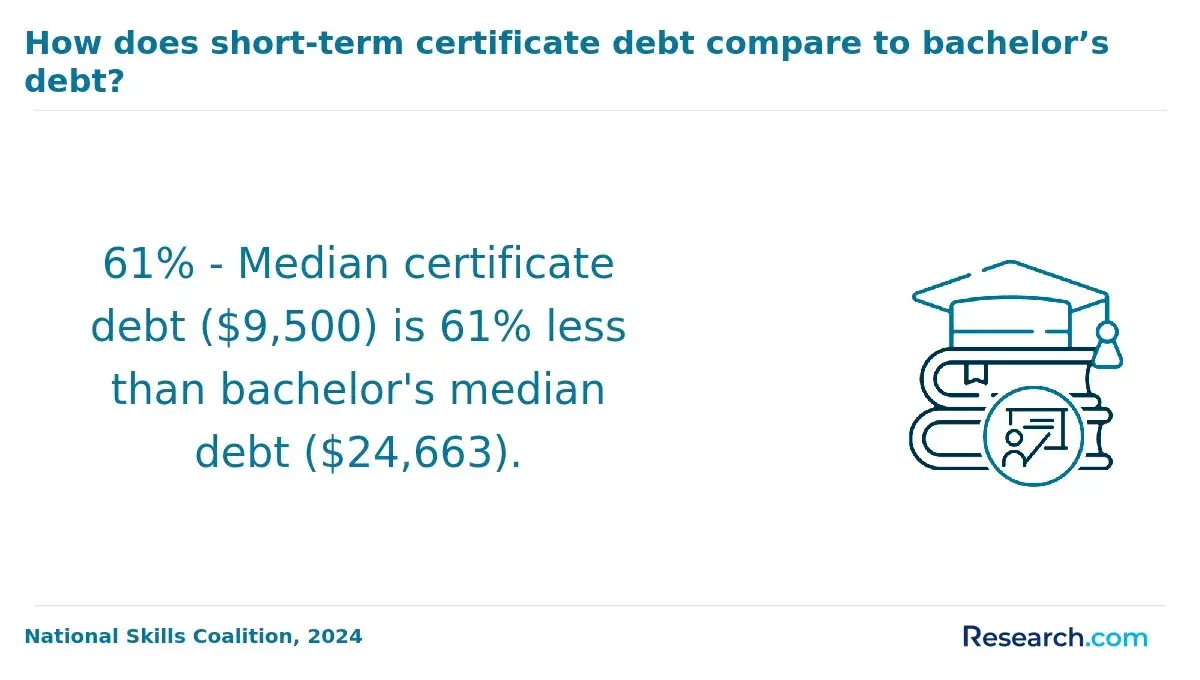
Students considering flexible future study options can use AP Seminar questions to explore how learning formats affect access. For example, a social or economic lens could examine whether a bachelor degree online in 2 years changes opportunity for working adults compared with traditional full-time programs.
A useful test is the "because test." If your question can lead to a claim that uses "because," it is probably arguable. For example, "Should schools ban phones?" is too broad, but "Schools should limit phone access during instructional time because evidence suggests attention recovery is difficult after repeated notifications" gives you a clear claim to test.
How do AP Seminar lenses connect to common college majors and academic pathways?
AP Seminar lenses connect naturally to college majors because each lens mirrors how academic fields ask questions. This is useful when you are trying to choose courses, build a college list, or explain your academic interests in an application.
The table below links each lens family to common majors and the kinds of academic pathways it may support. It is not a rulebook; many majors use more than one lens.
| AP Seminar lens | Related college majors | Academic pathway it may support |
| Social and cultural | Sociology, psychology, education, communications, anthropology, public health | Research on communities, learning, behavior, equity, media, and social change |
| Political and historical | Political science, history, public policy, legal studies, international relations | Policy analysis, civic leadership, legal research, archives, government work |
| Scientific and environmental | Biology, environmental science, engineering, data science, neuroscience, health sciences | Lab research, technical problem-solving, sustainability, healthcare innovation |
| Ethical, economic, and philosophical | Economics, philosophy, business, finance, ethics, pre-law, public administration | Decision analysis, market research, organizational strategy, rights-based reasoning |
If you are already thinking far ahead, lens-based research can also help you understand graduate study. Students drawn to independent research, original questions, and scholarly specialization may eventually compare PhD online programs with campus-based doctoral routes, depending on field expectations and research requirements.
The decision point is fit. If you enjoy asking "What does the evidence show?" a scientific or data-oriented major may feel natural. If you enjoy asking "Who benefits, who is harmed, and what should society do?" policy, law, ethics, or social science pathways may be stronger. AP Seminar gives you a low-risk way to test those interests before college tuition is involved.
In what ways do AP Seminar lenses prepare you for careers and workplace problem-solving?
AP Seminar lenses prepare you for workplace problem-solving because most jobs require more than one type of thinking. Employers need people who can define a problem, gather credible information, explain trade-offs, and communicate a recommendation to different audiences.
Current labor market data reinforces the value of these skills. The U.S. Bureau of Labor Statistics reports a 2024 median annual wage of $112,590 for data scientists, a role built around evidence evaluation, pattern recognition, and decision support. That figure does not mean AP Seminar leads directly to that salary, but it shows why analytical habits developed early can support high-skill pathways later.
Different lenses map to different workplace responsibilities. The table below shows how classroom research habits can become career-ready behaviors.
| Lens skill | Workplace use | Example roles or fields |
| Social and cultural analysis | Understanding customers, patients, students, communities, or employees | Human resources, marketing, education, public health, user experience research |
| Political and historical analysis | Explaining regulations, institutional decisions, risk, and policy context | Government, law, nonprofit advocacy, compliance, public administration |
| Scientific and environmental analysis | Evaluating evidence, testing claims, measuring outcomes, and assessing technical risk | Healthcare, engineering, environmental consulting, data science, laboratory research |
| Ethical and economic analysis | Balancing costs, incentives, fairness, rights, and long-term consequences | Business strategy, finance, healthcare administration, technology policy, consulting |
Some students use AP Seminar to explore faster, skill-focused pathways as well as degrees. A project on credential-based hiring, for instance, could examine whether 6 week certification programs online help adults gain job-relevant skills or whether they fall short for careers requiring licenses, portfolios, or degrees.
AI is also changing how lens skills are used. Generative AI can summarize sources quickly, but it can also miss context, reproduce bias, or cite weak evidence. Students who can identify lens limitations, check source credibility, and explain trade-offs will be better prepared for workplaces where AI supports research but does not replace judgment.
How do AP Seminar lenses guide the structure of the Individual Research Report and team project?
In the Individual Research Report and team project, lenses help divide responsibility, reduce overlap, and make the final argument more coherent. A team should not simply assign everyone a random subtopic. Each member's lens should contribute a distinct piece of the larger problem.
For the Individual Research Report, the lens guides what you include and what you leave out. A scientific lens may prioritize peer-reviewed evidence and measurable outcomes, while a political lens may prioritize policy history, court decisions, or institutional accountability. This helps your report stay focused within the word limit.
For the team project, lenses help build a fuller argument. A strong team usually aligns members around one shared problem, then assigns lenses that answer different but connected questions. Before drafting, teams should make sure their lenses work together in a logical sequence.
- Agree on one shared problem statement so the project does not become several unrelated reports.
- Assign lenses based on evidence needs, not personal preference alone.
- Write one lens-specific research question for each team member.
- Identify where the lenses overlap so repeated background information can be minimized.
- Use team meetings to compare findings and locate contradictions, gaps, and stakeholder tensions.
- Build the final presentation around a shared conclusion, recommendation, or decision point.
Common mistakes include having every teammate use the same sources, presenting four separate mini-presentations, or treating one lens as the "real" answer while the others feel decorative. A better team product shows how the lenses interact: for example, a policy solution may be scientifically promising but ethically difficult or economically unrealistic.
How can you use multiple lenses to strengthen arguments and avoid bias in AP Seminar?
Using multiple lenses can make your AP Seminar argument stronger because it shows complexity. It helps you avoid confirmation bias, which happens when you only look for evidence that supports what you already believe. Multiple lenses also help you anticipate objections, which is essential for a defensible argument.
The key is balance. You do not need to fully develop every possible lens in one paper. Instead, use your main lens to drive the argument and use secondary lenses to test assumptions, add context, or explain limitations.
Use this approach when combining lenses:
- Choose one primary lens that directly answers your research question.
- Add one secondary lens only if it changes the interpretation of the evidence.
- Look for at least one credible source that challenges your likely conclusion.
- Explain why a competing perspective is limited, not simply why it is wrong.
- Include implications or limitations that show what your lens cannot fully answer.
For example, a student researching facial recognition in schools might use a scientific lens to assess accuracy and a political lens to examine surveillance policy. Adding an ethical lens could strengthen the conclusion by asking whether safety benefits justify privacy risks. Without that ethical step, the report might become too technical and miss the main controversy.
A red flag is "lens stacking," where students mention several perspectives but do not actually use them to reason. If a lens does not change your evidence, claim, or conclusion, it probably belongs in a brief limitation rather than the center of the paper.
How do AP Seminar lenses relate to interdisciplinary programs, honors colleges, and research opportunities?
AP Seminar lenses are especially useful for students interested in interdisciplinary programs, honors colleges, undergraduate research, or service-learning. These opportunities often reward students who can connect fields instead of staying inside one subject area.
Interdisciplinary programs may combine public policy and data science, health and ethics, environmental studies and economics, or education and psychology. Honors colleges often emphasize seminars, research presentations, and problem-based learning, which closely resemble the habits AP Seminar develops.
Military-connected students can also use lens-based thinking when evaluating flexible and mission-compatible education options. A project on adult learners, mobility, or transfer policies could connect naturally to research about an online military college and the support structures that help service members or veterans complete degrees.
If you want to turn AP Seminar into a future research opportunity, keep a record of your strongest question, best sources, presentation feedback, and unresolved limitations. Those materials can help you discuss research interests with college faculty, apply for first-year research programs, or join an honors seminar with a clearer sense of what you want to study.
The smartest next step is to look for colleges that support the type of questions you like asking. If your best AP Seminar work is policy-focused, look for undergraduate research in public affairs. If it is science-focused, look for labs, fieldwork, or data projects. If it is ethics-focused, look for seminars, writing-intensive programs, or interdisciplinary institutes.
How can AP Seminar lens skills enhance your college applications and scholarship essays?
AP Seminar lens skills can strengthen college applications and scholarship essays because they help you tell a more specific academic story. Instead of saying you are "interested in research," you can explain how you learned to investigate a problem from multiple perspectives and revise your view based on evidence.
This is valuable because admissions and scholarship readers often look for intellectual maturity, curiosity, persistence, and community awareness. A lens-based story gives you concrete proof of those traits. You can describe a question you investigated, the perspective you initially missed, the evidence that changed your thinking, and the action or major you now want to pursue.
Use this structure when turning AP Seminar work into an application paragraph:
- Name the problem you researched in one clear sentence.
- Identify the lens that shaped your thinking.
- Explain one source, stakeholder, or counterargument that complicated your original view.
- Connect the insight to a college major, campus opportunity, career interest, or community goal.
- End with what you want to keep investigating, not just what you already concluded.
Lens skills can also help students write about barriers, second chances, and nontraditional pathways with nuance. For example, an essay connected to criminal justice, reintegration, or educational access might research the best degrees for felons through social, policy, and economic lenses rather than relying on stereotypes or one-sided claims.
A common mistake is using AP Seminar as a resume label only. "I took AP Seminar" is less persuasive than "I researched how school discipline policies affect student outcomes, learned to evaluate conflicting policy evidence, and now want to study education policy." The second version shows method, growth, and direction.
Other Things You Should Know About
AP Seminar lenses are perspectives used to analyze a topic. They help students frame research questions, choose evidence, compare viewpoints, and build arguments. Common lens families include social/cultural, political/historical, scientific/environmental, and ethical/economic/philosophical.
Usually, your individual work should have one primary lens so the argument stays focused. You may use secondary lenses to explain limitations, stakeholders, trade-offs, or counterarguments, but they should support the main line of reasoning.
There is no universally best lens. The best lens depends on your research question, available evidence, assignment requirements, and what kind of argument you want to make. A strong lens makes the topic narrower, more researchable, and more debatable.
Lenses help team members divide the problem into distinct perspectives without duplicating work. They also make the final presentation stronger by showing how evidence from different fields leads to a more complete recommendation or conclusion.
References
- Students create rigorous and complex high quality work... https://www.cvsr.info/cvsr/HQW/HQW-CLAIM3.htm
- Guide to AP Seminar (Advanced Placement Seminar) | Aralia Education https://www.aralia.com/helpful-information/guide-to-ap-seminar/
- College-ready minds: The Impact of AP Seminar, AP Research in high schools https://woottoncommonsense.com/21450/news/college-ready-minds-the-impact-of-ap-seminar-ap-research-in-high-schools/
- AP Seminar performance task: complete guide https://riseglobaleducation.com/blogs/ap-seminar-performance-task-complete-guide
- AP Seminar Big Idea 3: Evaluate Multiple Perspectives | Fiveable https://fiveable.me/ap-seminar/big-idea-3/review/study-guide/RYgH4YkDTospZwyDtJAa
- Guide to the AP Seminar Exam: Format, Scoring, and Tips https://ingeniusprep.com/blog/guide-to-the-ap-seminar-exam-format-scoring-and-tips/
- LibGuides: AP Seminar: Question & Explore https://hslibguides.leanderisd.org/c.php