2027 How to GO to Nursing School for Free: Complete Student Guide

Co-Founder and Chief Data Scientist
Nursing school can be expensive, but many students can reduce tuition to $0 by combining grants, scholarships, employer benefits, and service-based funding. The need is urgent: the U. S. Bureau of Labor Statistics projects registered nurse employment to grow 6% from 2023 to 2033, faster than the average for all occupations. This guide is for future LPNs, RNs, career changers, and healthcare workers who want a practical funding plan. You will learn which pathways are easiest to fund, what strings may be attached, and how to avoid costly enrollment mistakes.
Key Things You Should Know
- "Free nursing school" usually means tuition and mandatory fees are covered; books, uniforms, testing fees, transportation, childcare, and lost wages may still require planning.
- The Federal Pell Grant maximum award is $7,395 for the 2024-25 award year, which can fully cover tuition at many community college LPN, ADN, and prerequisite programs when combined with state aid.
- The most fundable routes are community college LPN/LVN and ADN programs, hospital-sponsored programs, Nurse Corps or state workforce scholarships, military benefits, and employer tuition reimbursement tied to work commitments.
What are the main ways to go to nursing school without paying tuition?
The main way to go to nursing school without paying tuition is to stack funding sources instead of relying on one "free nursing school" program. In practice, students usually combine need-based grants, school scholarships, employer payments, state workforce programs, and sometimes service commitments.
Before comparing options, define "free" carefully. A program may cover tuition only, tuition plus fees, or the full cost of attendance. Full cost of attendance can include supplies, transportation, exam fees, health screenings, background checks, and living expenses, so the best option is the one that reduces your total out-of-pocket cost, not just the posted tuition.
These are the most common tuition-free routes and when they make sense:
- Federal and state grants: Best for students with financial need, especially those attending public community colleges or public universities.
- Institutional scholarships: Best for academically strong applicants, local residents, first-generation students, career changers, or students entering shortage fields.
- Hospital or employer sponsorship: Best for nursing assistants, medical assistants, patient care technicians, unit clerks, and other healthcare workers who can work while studying.
- Service-commitment scholarships: Best for students willing to work in a rural, underserved, public health, tribal, correctional, or high-need clinical setting after graduation.
- Military, National Guard, and VA education benefits: Best for eligible service members, veterans, spouses, and dependents who can meet military or benefit-specific requirements.
- Loan forgiveness or repayment programs: Best for students who may need to borrow but plan to work in qualifying shortage or public service settings after licensure.
A good funding strategy starts with the lowest-cost eligible program. For example, an accredited community college associate degree in nursing may be easier to make tuition-free than a private accelerated BSN, even if both lead to RN licensure. The trade-off is speed, schedule flexibility, admissions competitiveness, and how quickly you want to reach BSN-preferred jobs.
| Funding route | Best fit | Possible trade-off |
| Pell Grant plus state aid | Low- to moderate-income students in public programs | May not cover living costs or competitive program fees |
| Hospital sponsorship | Current healthcare employees | May require work during school or post-graduation employment |
| Nurse Corps or state workforce awards | Students open to shortage-area service | Service obligations and site approval rules can be strict |
| Military or VA benefits | Eligible service members, veterans, and families | Benefit caps, time limits, or service requirements may apply |
| Loan repayment after graduation | Students entering public service or shortage settings | Debt is not erased upfront and approval is not automatic |
Which nursing degrees and pathways are easiest to complete with full funding?
The easiest nursing pathways to complete with full funding are usually the ones with lower tuition, local clinical placements, and eligibility for federal financial aid. That is why LPN/LVN certificates and associate degree in nursing programs are often more realistic for tuition-free study than high-cost private BSN or accelerated second-degree programs.
Use the table below to compare common nursing education routes by funding potential, timeline, and career outcome. The "easiest to fund" option is not always the fastest, but it often creates the least debt risk.
| Pathway | Typical credential | Common timeline | Funding potential | Best for |
| CNA or patient care technician training | Certificate | Weeks to a few months | High through employers, workforce boards, and nursing homes | Students who need quick healthcare experience before nursing school |
| LPN/LVN program | Practical nursing diploma or certificate | About 12 to 18 months | High at public technical colleges and workforce-funded schools | Students who want to enter nursing faster and bridge later |
| ADN program | Associate degree in nursing | About 2 years after prerequisites | Very high at community colleges when grants and scholarships stack | Students seeking RN licensure with lower tuition |
| Traditional BSN | Bachelor of Science in Nursing | About 4 years | Moderate to high at public universities with strong aid packages | Students who want BSN-preferred hospital roles sooner |
| Accelerated BSN | Second-degree BSN | About 12 to 24 months | Variable and often harder to fully fund | Career changers with a prior bachelor's degree |
| RN-to-BSN | BSN completion degree | About 1 to 2 years | High through employer reimbursement | Licensed RNs whose hospitals help pay for advancement |
If you are still deciding whether to start with an associate route, comparing the structure of an easiest associates degree can help you understand how lower-division coursework, transfer credits, and flexible scheduling affect completion. Nursing is more regulated and clinically demanding than most associate programs, but the cost-saving logic is similar: complete eligible lower-cost credits first, then advance.
For many students, the strongest sequence is CNA or patient care technician work, then an LPN or ADN, then employer-funded RN-to-BSN completion. This staged route may take longer than a direct BSN, but it can reduce borrowing, build clinical experience, and make you eligible for employer aid earlier.
How can federal and state grants, scholarships, and loan programs make nursing school free?
Federal and state aid can make nursing school free when your grant eligibility is high and your school's tuition is modest. The most important first step is filing the FAFSA because many colleges, states, and scholarship programs use it to determine eligibility even when the award is not a federal grant.
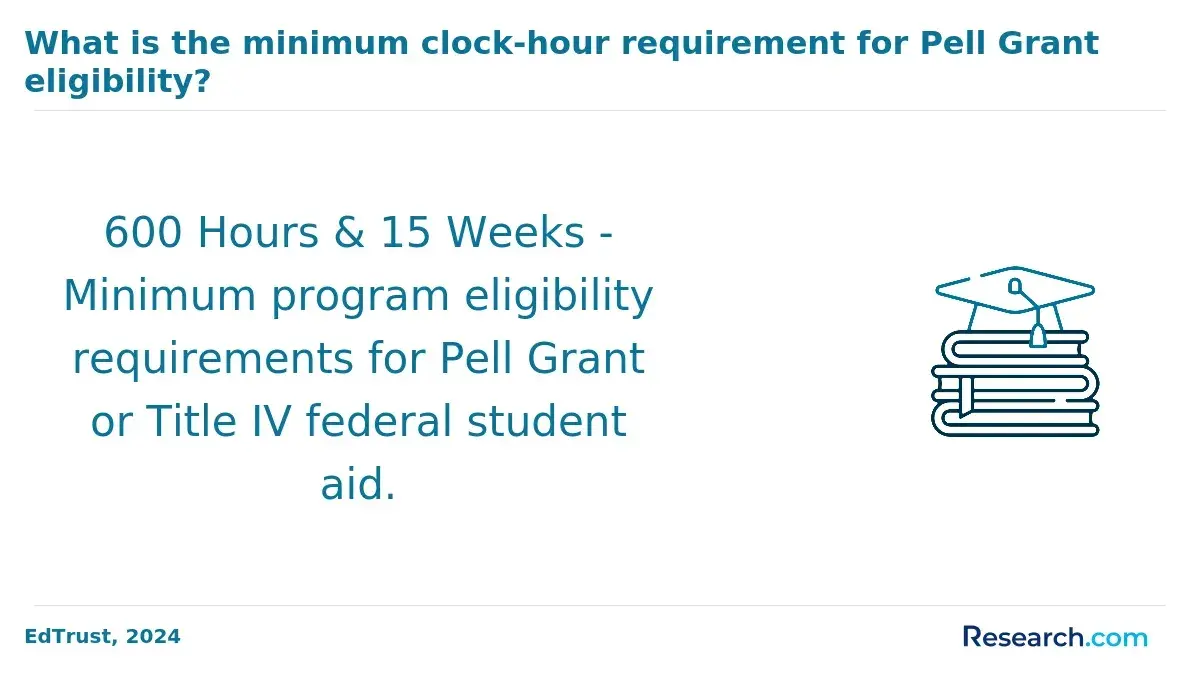
The Pell Grant is the central federal grant for undergraduate students with financial need. The maximum Pell Grant is $7,395 for the 2024-25 award year; at a low-tuition community college, that amount can cover a large share of tuition and fees before state grants, school awards, or foundation scholarships are added.
Students should build a funding stack in this order because grants and scholarships reduce risk before loans enter the picture:
- File the FAFSA as early as possible and list every school you are seriously considering.
- Ask each nursing department whether it has separate scholarship applications beyond the general college aid form.
- Search state workforce grants for nursing, allied health, rural health, adult learners, and high-demand occupations.
- Apply for local hospital foundations, county workforce boards, community foundations, and professional nursing association scholarships.
- Use federal loans only for gaps you cannot cover with gift aid, work benefits, savings, or payment plans.
Some students use open-admission colleges to complete prerequisites affordably before applying to selective nursing cohorts. If you need flexible entry points, comparing online colleges with open enrollment and no application fee can be useful for general education courses, but you still must confirm that science labs, transfer credits, and nursing prerequisites will be accepted by your target nursing program.
Common mistakes include assuming that a scholarship renews automatically, missing priority FAFSA deadlines, ignoring program-specific fees, and enrolling in prerequisites that do not transfer. A better approach is to ask the nursing program for a written cost sheet, a transfer guide, and a list of scholarships specifically awarded to nursing students in the last aid cycle.
What hospitals, employers, and health systems will pay for you to become a nurse?
Hospitals and health systems may pay for nursing school because they need a stable pipeline of licensed nurses. These programs are most common in areas with staffing shortages, high turnover, rural access issues, or large hospital networks that can place graduates into open roles.
Employer-paid nursing education usually falls into a few categories. The details vary widely, so read the policy before assuming the benefit is free money.
- Tuition reimbursement: You pay upfront or after billing, pass your courses, and receive reimbursement up to an annual limit.
- Tuition advancement or direct billing: The employer pays the school directly, which helps students who cannot front the cost.
- Scholarship-for-service programs: The employer covers some or all tuition in exchange for a work commitment after licensure.
- Apprenticeship or earn-and-learn models: You work in a paid healthcare role while completing classroom and clinical requirements.
- Career ladder programs: CNAs, medical assistants, surgical techs, pharmacy techs, or unit secretaries receive support to move into LPN or RN roles.
The employers most likely to offer meaningful support include academic medical centers, children's hospitals, large nonprofit health systems, rural hospitals, long-term care companies, veterans' hospitals, public hospitals, and unionized facilities with negotiated education benefits. Some national and regional systems advertise nursing scholarships or tuition benefits, but availability can vary by location, job category, and budget year.
When evaluating an employer program, ask whether the benefit covers prerequisites, repeated courses, part-time enrollment, online RN-to-BSN programs, NCLEX review, books, uniforms, and licensure fees. Also ask what happens if you fail a course, leave the employer, change units, or cannot complete the service period because of health or family reasons.
| Question to ask HR or workforce development | Why it matters |
| Is payment upfront or reimbursement after grades are posted? | Upfront payment is better if you cannot afford tuition before reimbursement. |
| Does the policy cover nursing prerequisites? | Prerequisites can be a major hidden cost before admission to the nursing cohort. |
| What grades are required for payment? | Many employers require a minimum grade, often higher for science courses. |
| Is there a required work commitment? | A service period can be worthwhile, but repayment clauses can be expensive if you leave early. |
| Are part-time employees eligible? | Many students reduce work hours during clinical semesters, which can affect eligibility. |
How do tuition reimbursement, loan forgiveness, and service-commitment programs work for nursing students?
Tuition reimbursement, loan forgiveness, and service-commitment programs all reduce nursing education costs, but they work at different points in the process. Tuition reimbursement helps while you are in school, loan forgiveness or repayment helps after you borrow, and service scholarships may cover school upfront in exchange for future work.
The key difference is timing. If you need to avoid borrowing altogether, prioritize grants, scholarships, employer direct pay, and service scholarships. If you can manage limited borrowing and plan to work in a qualifying setting, loan repayment may still make financial sense, but it should not be treated as guaranteed.
Here is how to evaluate service-based funding before signing:
- Confirm whether the award is a scholarship, reimbursement, loan repayment, stipend, or forgivable loan.
- Calculate the exact service obligation, including required years, full-time status, approved facilities, and start date after licensure.
- Ask whether you must pass the NCLEX by a deadline to keep the award.
- Review repayment penalties if you do not complete the program or service period.
- Check whether the award is taxable or whether it affects other financial aid.
- Keep copies of every agreement, renewal notice, grade requirement, and employment placement rule.
Federal and state loan repayment programs often target nurses in shortage areas, public service, behavioral health, primary care, long-term care, and rural communities. For example, Nurse Corps Loan Repayment has historically repaid a portion of eligible nursing education debt for nurses who work in approved critical shortage facilities or eligible nursing schools, with additional repayment possible for extended service. Program rules, funding levels, and application cycles can change, so students should verify current terms before relying on it.
The biggest red flag is a program that sounds free but requires repayment if your schedule, grades, clinical placement, immigration status, background check, or licensing result changes. A safer plan is to combine smaller no-strings awards with one carefully reviewed service commitment instead of depending entirely on a single high-stakes contract.
How can military, National Guard, and VA benefits cover the full cost of nursing school?
Military, National Guard, and VA benefits can cover a large share of nursing school costs for eligible students, but the right option depends on your service status, career goals, and willingness to meet military obligations. These benefits can be powerful, but they are not interchangeable.
Common military-related funding routes include education benefits for veterans, tuition assistance for active-duty service members, state National Guard tuition programs, ROTC scholarships, Health Professions Scholarship Program options for advanced practice tracks, and transferred benefits for eligible spouses or dependents. VA-related pathways may also support veterans pursuing nursing education or rehabilitation-based employment goals.
| Benefit type | Who may use it | How it can help nursing students | Important limitation |
| Post-9/11 GI Bill | Eligible veterans, service members, and some dependents | Can cover tuition, fees, housing allowance, and books within program rules | Benefit percentage, months remaining, and school type affect coverage |
| Military Tuition Assistance | Eligible active-duty service members | Can pay for approved coursework while serving | Clinical schedules may be difficult to balance with duty requirements |
| National Guard tuition programs | Eligible Guard members | Can cover public college tuition in many states | Rules differ by state and may require continued service |
| ROTC nursing scholarships | Students pursuing commissioned officer pathways | Can cover substantial undergraduate nursing costs | Requires military service after graduation |
| VA education or rehabilitation benefits | Eligible veterans and certain dependents | May support tuition, training, or career preparation | Eligibility and program approval are case-specific |
Military-connected students should ask nursing schools whether clinical schedules can accommodate drills, deployments, duty stations, or relocation. They should also confirm that the school participates in the benefit program they plan to use, because not every program structure is approved for every type of funding.
If your goal is civilian RN employment, compare military benefits against local community college and hospital-funded routes. If your goal includes military nursing, officer service, federal employment, emergency preparedness, or veteran care, military-connected funding may offer both tuition support and a direct career pathway.
What admission requirements and GPA do you need to qualify for fully funded nursing programs?
Fully funded nursing programs are often more competitive than regular admission because the school, employer, or government agency is investing in your completion. Meeting the minimum requirements may not be enough; you need to show readiness for science-heavy coursework, clinical professionalism, and licensure eligibility.
Most nursing programs and scholarship committees review several factors together:
- Prerequisite GPA, especially anatomy and physiology, microbiology, chemistry, statistics, psychology, and English composition.
- Overall college GPA or high school GPA for first-time students.
- Entrance exams such as TEAS, HESI A2, or school-specific assessments.
- Healthcare experience, volunteer work, CNA employment, military medical experience, or patient care exposure.
- Background check, drug screening, immunization records, CPR certification, and clinical site eligibility.
- Residency, financial need, rural background, language skills, or commitment to underserved communities for some awards.
Many ADN and BSN programs prefer applicants with at least a solid B average in prerequisites, but requirements vary. Instead of aiming for the minimum, ask each school for the average admitted GPA and entrance exam score from the most recent cohort. That number is more useful than the catalog minimum because nursing admissions are often ranked.
Applicants with criminal records must be especially careful because admission, clinical placement, financial aid, and licensure are separate decisions. A school may admit a student who later cannot complete clinicals or obtain licensure in a specific state. Students in this situation may benefit from reviewing broader guidance on the best degree for felons while also contacting the state Board of Nursing before enrolling.
To improve your chances of funded admission, complete prerequisites at an accredited college, retake only the courses that will materially improve your ranking, gain paid or volunteer patient care experience, and prepare seriously for the required entrance exam. Scholarship readers often favor applicants who can explain why they chose nursing, where they plan to serve, and how they will handle the workload.
How do online, hybrid, and campus nursing programs compare when you need maximum financial aid?
Online, hybrid, and campus nursing programs can all be legitimate, but pre-licensure nursing cannot be completed entirely online because students must complete supervised clinical hours. The right format depends on whether you are completing prerequisites, entering initial licensure training, or advancing after becoming an RN.
The table below compares formats from a financial aid and completion perspective. Use it to decide which format gives you the best chance of graduating with minimal debt.
| Format | Best use | Financial aid advantage | Risk to check |
| Campus-based pre-licensure nursing | LPN, ADN, traditional BSN | Often strongest access to local clinical placements and state aid | Less schedule flexibility for working students |
| Hybrid pre-licensure nursing | ADN or BSN programs with online lectures and in-person labs | Can reduce commuting while preserving clinical eligibility | Clinical sites may still require daytime availability |
| Online prerequisites | General education and non-lab courses before nursing admission | Can be cheaper and flexible if credits transfer | Science labs may not be accepted by target programs |
| Online RN-to-BSN | Licensed RNs completing a bachelor's degree | Often employer-funded and designed for working nurses | Must be properly accredited and accepted by employers |
| Online nursing certifications | Skill-building after or alongside healthcare work | May be low-cost or employer-paid | Does not replace required nursing licensure education |
Online coursework can help students save on transportation and scheduling, but it does not remove the need for local clinical placements, lab skills checkoffs, simulation, and state licensure alignment. Before enrolling, ask where clinicals occur, who secures placements, whether weekend or evening clinicals are available, and whether online courses qualify for the same aid as campus courses.
If you are still exploring healthcare credentials before committing to nursing, comparing what certifications can I get online can help you identify lower-cost ways to build employable skills. Just remember that certificates such as medical coding, phlebotomy theory, or healthcare administration support are not substitutes for state-approved nursing education.
The main red flag is a program that advertises "online nursing degree" without clearly explaining clinical requirements, Board of Nursing approval, NCLEX eligibility, and placement responsibilities. If the program cannot answer those questions in writing, keep looking.
How do accreditation and state Board of Nursing approval affect free tuition and licensure eligibility?
Accreditation and state Board of Nursing approval are non-negotiable if you want free tuition to lead to licensure. A scholarship is not valuable if the program does not qualify you for the NCLEX, clinical placement, transfer, employer recognition, or graduate study.
There are two different checks students must make. Institutional accreditation applies to the college or university and affects federal financial aid eligibility. Programmatic nursing accreditation, commonly from ACEN or CCNE depending on degree level, signals that the nursing program meets recognized academic and clinical standards. State Board of Nursing approval determines whether the program can prepare students for licensure in that state.
Before accepting any "free" nursing offer, complete this verification sequence:
- Confirm the school is institutionally accredited by an accreditor recognized for federal aid purposes.
- Confirm the nursing program is approved by the state Board of Nursing for the license you want, such as LPN/LVN or RN.
- Check whether programmatic nursing accreditation is current, pending, probationary, or absent.
- Ask for recent NCLEX pass-rate reporting and compare it with state expectations.
- Verify that clinical placements are arranged in states where you are eligible to train.
- If you plan to move, contact the Board of Nursing in the state where you want to be licensed.
Do not rely only on admissions language such as "eligible," "career-focused," or "approved curriculum." Ask for the exact legal approval status and where it is listed. Also be cautious with programs that recently changed ownership, lost clinical partners, have unusually low NCLEX pass rates, or pressure you to enroll before financial aid is finalized.
Licensure rules can vary by state, especially for criminal history, prior discipline, substance-related offenses, English proficiency, compact licensure, and out-of-state education. The safest approach is to verify with the Board of Nursing before you pay deposits, quit a job, or sign a service contract.
What salaries, career paths, and job outlook can you expect after a fully funded nursing education?
A fully funded nursing education can offer strong economic value because it reduces the debt side of the return-on-investment equation. Still, salaries vary by license level, region, shift, specialty, union status, employer type, and experience, so use wage data as a planning benchmark rather than a promise.
The U.S. Bureau of Labor Statistics reported a median annual wage of $93,600 for registered nurses in May 2024. That figure helps explain why tuition-free ADN, BSN, and RN-to-BSN pathways can be financially powerful: the credential can lead to a licensed occupation with broad demand while keeping education debt low.
| Role | Typical education or license | Common responsibilities | Salary context |
| CNA or nursing assistant | State-approved certificate and competency exam | Basic patient care, vital signs, mobility support, daily living assistance | Often an entry point rather than a long-term earnings ceiling |
| LPN/LVN | Practical nursing program and NCLEX-PN | Medication administration, wound care, monitoring, long-term care, clinic support | Can provide income while bridging to RN |
| Registered nurse | ADN or BSN and NCLEX-RN | Assessment, care planning, patient education, medication management, coordination of care | BLS median annual wage was $93,600 in May 2024 |
| BSN-prepared RN | BSN or RN-to-BSN | Hospital nursing, leadership preparation, public health, case management, specialty practice | May improve access to BSN-preferred employers and advancement tracks |
| Advanced practice registered nurse | Graduate nursing degree and advanced certification | Primary care, anesthesia, midwifery, specialty diagnosis and treatment depending on role | Requires additional education beyond RN licensure |
Career paths after a funded nursing education include bedside acute care, long-term care, home health, public health, school nursing, correctional health, behavioral health, informatics, case management, quality improvement, infection prevention, leadership, and advanced practice. Technology is also changing nursing work: electronic health records, remote monitoring, AI-assisted documentation, predictive staffing tools, and telehealth are increasing the value of nurses who can combine clinical judgment with digital fluency.
Students who already hold an RN license may later consider accelerated graduate study, including a one-year masters degree option when it fits their goals, schedule, and licensure requirements. However, graduate nursing pathways should be evaluated carefully because advanced practice roles require specific accredited programs, clinical hours, certification exams, and state authorization.
The best next step is to choose the lowest-cost accredited pathway that leads to the license you actually need. For many students, that means starting with an ADN at a community college, using grants and scholarships, working for a healthcare employer with tuition benefits, and completing the BSN later with employer support.
Other Things You Should Know About
Yes, but it usually requires combining several funding sources. Grants, state aid, school scholarships, employer tuition benefits, and service-commitment programs can reduce tuition to $0, especially at community colleges and public programs.
LPN/LVN and ADN programs at public community or technical colleges are often the easiest to fund because tuition is lower and they commonly qualify for federal, state, and workforce aid.
Some do, especially if you already work there in a patient care or support role. Others reimburse tuition after you pass courses or require you to work for the hospital after graduation.
Not automatically. Choose the lowest-cost program that is accredited, state Board-approved, eligible for licensure, has reliable clinical placements, and fits your schedule and career goal.
References
- Why Nursing School Accreditation Matters | All Nursing Schools https://www.allnursingschools.com/how-to-get-into-nursing-school/school-accreditation/
- How to Pay for Nursing School https://credenzahealth.com/career-advice/how-to-pay-for-nursing-school
- Fully funded nursing scholarships for international students — The BridgeWay Firm https://www.bridgewayfirm.com/news-updates/fully-funded-nursing-scholarships-for-international-students
- Discover 7 Hospitals that Pay for Nursing School in 2026 https://www.edumed.org/articles/hospitals-that-pay-for-nursing-school/
- How to Pay for Nursing School | University of Bridgeport https://www.bridgeport.edu/news/how-to-pay-for-nursing-school/
- Medical University of GdaÅsk https://admission.mug.edu.pl/29318.html
- Bachelor of Nursing: Career Opportunities Explained https://iihs.edu.lk/blog/what-can-you-do-with-a-bachelor-of-nursing-career-opportunities-explained/
- Student Loan Forgiveness for Nurses: Top Programs in 2024 https://www.tateesq.com/learn/student-loan-forgiveness-nurses
- Career Opportunities After Completing an Adult Nursing Diploma https://uk.hfonline.org/career-opportunities-after-completing-an-adult-nursing-diploma/
- Tuition Reimbursement for Nursing https://www.brighthorizons.com/employers/benefits/tuition-reimbursement-for-nursing