2027 What Does IT Take to Get into the Colorado School of Mines: Complete Student Guide

Co-Founder and Chief Data Scientist
Getting into Colorado School of Mines means proving you are ready for a rigorous STEM-focused education with strong links to engineering, computing, earth, energy, and applied science careers. That matters because BLS May 2024 wage data show several Mines-aligned roles, including petroleum engineering and computer hardware engineering, sit well above the national median.
This guide is for high school students, transfer applicants, parents, and graduate applicants comparing Mines with other technical universities. You will learn how admissions, cost, programs, preparation, and outcomes fit together so you can decide whether Mines is the right investment.
Key Things You Should Know
- Colorado School of Mines is moderately selective, with recent admissions reporting commonly placing acceptance near the 50% to 60% range, but successful applicants usually show advanced math, science rigor, and strong grades rather than minimum eligibility alone.
- The 2024-25 cost of attendance is a major planning factor: published estimates are roughly in the mid-$40,000 range for Colorado residents living on campus and above $70,000 for many nonresidents before scholarships, grants, or family contribution adjustments.
- Mines can offer strong STEM return-on-investment potential, but outcomes vary by major and market; BLS May 2024 median wages include $135,690 for petroleum engineers, $101,020 for mining and geological engineers, and $155,020 for computer hardware engineers.
What does the Colorado School of Mines specialize in and who is it best suited for?
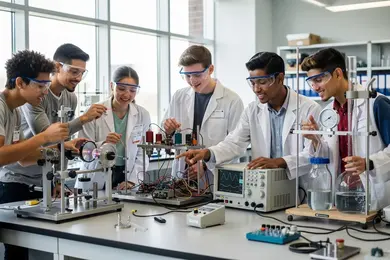
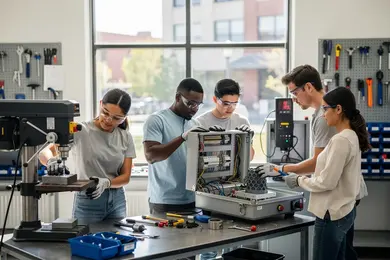
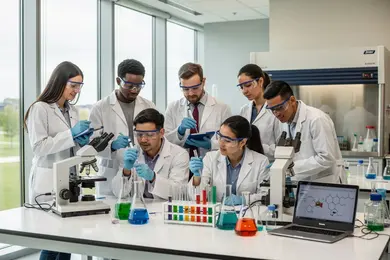
Colorado School of Mines is a public research university in Golden, Colorado, built around engineering, applied science, computing, earth systems, energy, materials, and resource-focused disciplines. It is best suited for students who want a technical campus where math, physics, lab work, design projects, and industry-connected problem solving are central rather than optional.
Mines is not a general liberal arts fit for every student. It is strongest for applicants who are comfortable with a demanding STEM curriculum and who want careers tied to infrastructure, energy transition, robotics, advanced manufacturing, water, space resources, computer science, data, geoscience, or materials. Students still take humanities and social science courses, but the center of gravity is technical depth.
The table below helps you decide whether Mines matches your academic style and career goals. Use it as a fit check before focusing only on prestige, rankings, or salary projections.
| Student profile | Why Mines may fit | When another school may fit better |
| Engineering-focused high school student | Mines offers a concentrated technical environment with design, lab, and research opportunities. | A broader university may be better if you want many non-STEM majors as backup options. |
| Student interested in energy, minerals, environment, or earth systems | Mines has historic and current strengths in geoscience, petroleum, mining, environmental, and energy systems. | A policy-heavy or environmental studies program may fit better if you want less quantitative coursework. |
| Computer science, AI, or data-focused applicant | Mines combines computing with engineering, robotics, cybersecurity, and applied data contexts. | A larger urban tech campus may offer more course breadth in media, business, or product design. |
| Undecided applicant | Mines can work if your undecided choices are mostly STEM fields. | It may feel restrictive if you are equally interested in nursing, education, arts, journalism, or social sciences. |
If you are still comparing STEM pathways, reviewing the best degrees for the future can help you see where Mines-aligned fields fit into broader labor market demand.
How competitive is Colorado School of Mines admissions and what GPA and test scores are typical?
Colorado School of Mines admissions are competitive because the applicant pool is unusually STEM-heavy. The school looks for evidence that applicants can handle calculus-based math, laboratory science, problem sets, team projects, and a fast technical pace.
Recent admissions profiles and public reporting commonly show admitted students with A-range academic records, strong math preparation, and, when submitted, SAT or ACT scores that are well above national averages. Mines has used test-optional admissions in recent cycles, so a strong transcript can matter more than a test score, but submitting a high math score may still strengthen an application when it supports the rest of the file.
The table below summarizes what "competitive" usually means at Mines. These are not guarantees or hard cutoffs; they are planning benchmarks that help applicants judge readiness.
| Admissions factor | Competitive signal | How to interpret it |
| High school GPA | Mostly A-range performance, especially in math and science | Mines is more likely to value sustained rigor than one easy semester of high grades. |
| Course rigor | Calculus, physics, chemistry, computer science, engineering, or advanced STEM electives when available | Taking the hardest relevant courses you can manage is usually better than avoiding rigor to protect GPA. |
| SAT or ACT | Optional in many recent cycles, but strong math scores can help | Submit scores if they clearly support your STEM readiness; withhold if they are weaker than your transcript. |
| Essays and activities | Clear evidence of problem solving, curiosity, persistence, teamwork, or technical initiative | Mines wants to see why you are prepared for this specific kind of education, not just why you want college. |
| Transfer record | Strong college grades in calculus, science, engineering, or computing prerequisites | Transfer applicants should focus on course equivalency and technical GPA, not only total credits earned. |
A common mistake is treating Mines like any other public university application. A generic essay, light senior-year schedule, or activity list with no STEM connection can make an otherwise qualified applicant less compelling. A better approach is to show a pattern: challenging courses, genuine technical interests, and specific reasons Mines fits your goals.
What are the core admission requirements and application deadlines for Colorado School of Mines?
For first-year applicants, the core application usually includes an online application, high school transcript, senior-year course list, essays or short responses, and optional standardized test scores when the cycle remains test optional. Letters of recommendation may be considered, and applicants should check the current Mines admissions page because requirements can change by entry term.
Deadlines matter because scholarship consideration, housing planning, and major demand can be tied to when you apply. Mines commonly uses early and regular application rounds for first-year admission, while transfer and graduate deadlines vary more by program.
Use the steps below to keep the application process organized and reduce the chance of missing a requirement.
- Confirm the application round and deadline for your entry term directly with Mines before starting the application.
- Match your senior-year schedule to your intended major, prioritizing calculus, physics, chemistry, computer science, or engineering where appropriate.
- Decide whether to submit SAT or ACT scores based on whether they strengthen your academic profile, especially in math.
- Write essays that connect your experiences to Mines' technical environment, not just to engineering in general.
- Check scholarship deadlines separately because some awards require earlier admission applications or additional materials.
- For transfer or graduate admission, verify prerequisite courses, departmental requirements, transcripts, and any faculty or research fit expectations.
Graduate applicants should pay close attention to department-level requirements. Some programs may request a resume, statement of purpose, letters of recommendation, prerequisite coursework, GRE scores if required by the department, or evidence of research or professional preparation. International applicants may also need English proficiency documentation and immigration-related materials.
Which undergraduate and graduate degree programs does Colorado School of Mines offer?
Colorado School of Mines offers bachelor's, master's, doctoral, and certificate programs across engineering, computing, applied science, economics, earth resources, and interdisciplinary technology fields. At the undergraduate level, students should expect a strong shared foundation in math, science, design, and technical communication before moving deeper into a major.
The table below groups Mines programs by broad academic area so you can compare pathways by interest rather than reading a long catalog list. Exact majors, minors, and graduate specializations can change, so confirm current offerings before applying.
| Academic area | Examples of Mines-aligned programs | Best fit for students interested in |
| Engineering | Mechanical, civil, electrical, chemical, environmental, petroleum, mining, metallurgical, and geological engineering | Designing systems, infrastructure, machines, energy processes, materials, and resource solutions |
| Computing and data | Computer science, data science, cybersecurity-related study, robotics, and computational fields | Software, AI tools, automation, modeling, data analysis, and technical computing |
| Earth, energy, and environment | Geology, geophysics, hydrology, geochemistry, energy systems, and environmental fields | Natural resources, climate and water challenges, energy transition, and subsurface systems |
| Applied science and materials | Physics, chemistry, materials science, quantitative biosciences, and related research fields | Laboratory research, advanced manufacturing, semiconductors, batteries, and scientific development |
| Economics and business-related technical fields | Engineering and technology management, mineral and energy economics, and quantitative decision fields | Technical leadership, operations, resource economics, and analytics-driven management |
When comparing majors, do not choose only by the highest salary headline. Look at the coursework, licensure relevance, graduate school expectations, and industries that recruit from that major. A student who likes coding but dislikes abstract math may experience computer science very differently from someone who enjoys algorithms, systems, and data structures.
If earnings are a major part of your decision, compare Mines majors with broader lists of the best degrees to make money, but remember that individual outcomes depend on internships, location, technical skills, and market cycles.
Can you study at Colorado School of Mines online, in person, or in hybrid formats?
Colorado School of Mines is primarily an in-person technical university, especially for undergraduate students. Labs, design projects, fieldwork, team-based engineering work, and campus recruiting are central to the experience, so students seeking a fully online bachelor's degree may find Mines less flexible than online-first institutions.
Graduate and professional learners have more flexibility. Mines Online and individual departments may offer online or hybrid options in selected areas such as data science, engineering management, space resources, mining, energy, computer science, or related technical fields, depending on the term and program.
The table below compares format options from a decision-making perspective. The best choice depends on whether you need campus immersion, work flexibility, lab access, or a credential tied to a specific employer goal.
| Format | Typical Mines fit | Best for | Trade-off |
| On-campus undergraduate study | Most traditional bachelor's programs | Students who want full campus life, labs, research, design teams, and recruiting access | Less flexible for working full time and usually higher living costs |
| Online graduate study | Selected master's degrees and certificates | Working professionals seeking technical advancement without relocating | Fewer informal campus connections and possible limits on lab-based work |
| Hybrid study | Selected professional or graduate formats when available | Students who benefit from both online flexibility and occasional campus engagement | Travel, scheduling, and course sequencing can be harder to manage |
| Non-degree or certificate study | Targeted skills in a technical specialty | Professionals testing a field or adding a focused credential | May not replace a full degree for engineering licensure or research roles |
Students who need maximum flexibility should compare Mines' technical offerings with broader online degree programs for working adults, especially if relocation, family responsibilities, or full-time employment will shape enrollment choices.
How much does it cost to attend Colorado School of Mines and what financial aid is available?
Cost is one of the biggest decisions for Mines applicants because technical degrees can involve tuition, fees, housing, books, equipment, transportation, and opportunity costs. The published cost of attendance is not the same as your net price; your actual cost depends on residency, scholarships, grants, family finances, housing choices, and borrowing.
- Colorado resident on-campus cost of attendance for 2024-25: approximately mid-$40,000 range before financial aid.
- Nonresident on-campus cost of attendance for 2024-25: commonly above $70,000 before financial aid.
The table below breaks cost into decision factors rather than only sticker price. This helps families identify where aid, planning, or alternative choices may change affordability.
| Cost factor | Why it matters | What to check before enrolling |
| Residency | Colorado residents usually pay lower tuition than nonresidents. | Residency rules, tuition classification, and whether residency can change later |
| Merit scholarships | Strong applicants may receive awards that reduce net cost. | Whether awards renew automatically and what GPA is required to keep them |
| Need-based aid | FAFSA-based grants, work-study, and loans can change affordability. | Net price estimate after grants and scholarships, not just loan eligibility |
| Housing and food | Golden and the Denver-area market can make living costs significant. | On-campus requirements, off-campus rent, transportation, and meal costs |
| Program expenses | Engineering and computing students may need software, equipment, books, or field-related costs. | Major-specific fees, laptop expectations, lab costs, and course materials |
To reduce risk, compare net price across schools, not just tuition. Also ask whether scholarships are renewable for four years, whether your major has higher fees, and how often students in your intended program complete the degree on time.
If Mines feels academically right but financially too risky, compare the total investment with lower-cost pathways, transfer options, or 1-year degree programs for career goals that do not specifically require a Mines engineering or technical credential.
What high school courses, extracurriculars, and experiences best prepare applicants for Mines?
The best preparation for Mines starts before the application. Admissions readers want evidence that you can succeed in a quantitative, problem-solving environment, and the first year at Mines can be demanding for students who have not built strong habits in math, science, and time management.
Prioritize the courses below when they are available at your school and when you can handle them without overwhelming your schedule. Mines does not expect every applicant to have identical opportunities, but it does expect applicants to make strong use of the opportunities they do have.
- Math through precalculus at minimum, with calculus strongly recommended for engineering, physics, computer science, and advanced STEM applicants.
- Laboratory science, especially physics and chemistry, with AP, IB, dual enrollment, or honors options when appropriate.
- Computer science or programming coursework for applicants interested in computing, robotics, data science, AI, or engineering design.
- English and communication courses that show you can write clearly, explain technical ideas, and work beyond problem sets.
- Engineering, design, statistics, environmental science, geology, or technical electives when your school offers them.
Extracurriculars should show depth, not random résumé padding. Strong examples include robotics, Science Olympiad, coding projects, research, engineering design teams, energy or environmental projects, math competitions, maker spaces, internships, part-time technical work, outdoor geoscience experiences, or leadership in STEM outreach.
Common mistakes include taking an easy senior year, choosing activities only because they sound impressive, or writing essays that say "I like engineering" without proof. A stronger application shows how you solve problems, recover from setbacks, collaborate with others, and connect your interests to Mines specifically.
If you need to strengthen a weak area before applying or transferring, short online courses can help build confidence, but they should supplement rather than replace core prerequisites. For targeted skill building, compare options such as 6 week college courses in math, coding, writing, or science foundations.
What STEM and energy-related career paths do Colorado School of Mines graduates pursue?
Mines graduates pursue careers across engineering, computing, energy, infrastructure, environment, manufacturing, consulting, government, research, and graduate education. The school's career value comes from the combination of technical curriculum, employer relationships, project experience, and a student body focused on STEM industries.
The table below connects common Mines-aligned pathways with the kind of work graduates may pursue. It is not a promise of placement, but it can help applicants choose a major that matches the problems they actually want to solve.
| Career path | Typical responsibilities | Relevant Mines preparation |
| Mechanical, civil, electrical, or chemical engineer | Design, test, model, build, inspect, or improve systems, infrastructure, devices, or processes | Engineering major, design projects, internships, FE exam planning where relevant |
| Petroleum, mining, geological, or energy engineer | Work on subsurface systems, extraction, safety, production, energy operations, or resource modeling | Energy, earth resources, geology, geophysics, petroleum, mining, or related engineering study |
| Computer scientist, data analyst, or software engineer | Build software, analyze data, develop algorithms, support automation, or work with AI-enabled tools | Computer science, data science, math, cybersecurity, robotics, and applied computing projects |
| Environmental, water, or sustainability specialist | Assess environmental systems, water resources, remediation, compliance, or sustainable engineering solutions | Environmental engineering, hydrology, geochemistry, geology, civil engineering, or energy systems |
| Researcher or graduate student | Conduct experiments, publish findings, model systems, or continue into doctoral-level work | Faculty research, thesis-based graduate study, lab work, and advanced technical coursework |
| Technical consultant or project manager | Translate technical analysis into decisions for clients, operations teams, or public agencies | Engineering, economics, data, communication, leadership, and project-based experience |
Current trends are reshaping these paths. AI and automation are increasing demand for engineers who can use data, modeling, simulation, and software tools, while the energy transition is expanding work around batteries, grid systems, critical minerals, carbon management, geothermal energy, water, and environmental remediation. Students should build adaptable skills instead of assuming one industry will remain stable for an entire career.
What starting salaries and long-term earnings can Colorado School of Mines graduates expect?
Salary outcomes for Mines graduates depend on major, internships, location, industry cycle, graduate education, and willingness to work in field-based or high-demand technical roles. A Mines degree can be valuable, but it should not be viewed as an automatic salary guarantee.
The table below uses BLS May 2024 median wage data for selected U.S. occupations that align with common Mines pathways. Median wage means half of workers in that occupation earned more and half earned less; it is not the same as a new graduate starting salary.
| Occupation | May 2024 U.S. median annual wage | What it means for Mines applicants |
| Petroleum engineers | $135,690 | High pay potential can come with exposure to energy market cycles and geographic concentration. |
| Computer hardware engineers | $155,020 | Strong earnings potential often requires deep technical preparation in computing, electronics, systems, or related fields. |
| Mining and geological engineers | $101,020 | Mines' historic strengths align well, but roles may involve fieldwork, safety, travel, or resource-sector volatility. |
| Environmental engineers | $104,170 | Demand can come from water, remediation, infrastructure, regulation, and sustainability-related work. |
| Mechanical engineers | $102,320 | This broad field offers flexibility across manufacturing, energy, aerospace, robotics, and product development. |
| Computer and information research scientists | $140,910 | Advanced roles may require graduate study, research experience, or specialized AI, algorithms, or systems expertise. |
For long-term earnings, the smartest strategy is to combine the degree with internships, undergraduate research, professional communication, software skills, and a clear industry target. Students should also compare debt against realistic entry-level pay in their chosen field, not against the highest-paying occupation tangentially related to the major.
How does Colorado School of Mines' accreditation, rankings, and industry partnerships affect outcomes?
Accreditation, rankings, and industry partnerships matter because they affect credibility, licensure pathways, employer confidence, and access to research or recruiting networks. Colorado School of Mines is institutionally accredited by the Higher Learning Commission, and many engineering programs are accredited by ABET, which is especially important for students who may pursue engineering licensure.
Rankings can signal reputation, but they should not be the only reason to choose Mines. A ranking does not tell you whether a specific major fits your learning style, whether you can afford the net price, or whether you will take advantage of internships and research.
The table below explains how to evaluate quality signals without overreading them. Use these factors together rather than treating any single one as decisive.
| Quality signal | Why it matters | How to use it wisely |
| Institutional accreditation | Supports federal financial aid eligibility and broad academic credibility. | Confirm the institution is currently accredited before enrolling. |
| ABET accreditation | Important for many engineering licensure and employer pathways. | Check the exact program, not just the university, because accreditation is program-specific. |
| Rankings | Can reflect reputation, selectivity, research activity, or peer assessment. | Compare methodology and avoid choosing a school solely because of rank. |
| Industry partnerships | Can support internships, capstone projects, recruiting, and applied research. | Ask which employers recruit in your specific major and how students access opportunities. |
| Research activity | Creates opportunities for labs, graduate study, and technical specialization. | Look for faculty and centers connected to your intended field. |
A practical red flag is assuming that "engineering school" automatically means every program meets your career needs. Before committing, verify accreditation, major requirements, internship outcomes, career fair relevance, graduation timeline, and whether the program supports licensure, graduate study, or the industry you want.
Other Things You Should Know About
Yes, it is competitive, especially for applicants without strong math and science preparation. It is not impossible to enter, but successful applicants usually show rigorous coursework, high grades, and a clear fit with a technical STEM environment.
Mines does not rely on one universal GPA cutoff, but competitive applicants are typically in the A range with strong performance in advanced math and lab science. Course rigor matters, so an easier schedule with a high GPA may be less persuasive than a challenging STEM schedule with strong grades.
No. Engineering is central, but Mines also offers programs in computer science, data science, physics, chemistry, geology, geophysics, economics, energy, environmental fields, materials, and interdisciplinary applied science. Still, most pathways are quantitative and technical.
It can be worth it for students who want a STEM-intensive education, use internships and research opportunities, and choose a major aligned with realistic career goals. The decision is less clear if the net price requires heavy borrowing or if you are unsure you want a technical major.
References
- Admissions Considerations - Undergraduate Admissions https://undergraduate-admissions.mines.edu/admissions-considerations/
- Mining | Specialist High Skills Major (SHSM): policy and implementation guide http://www.ontario.ca/document/specialist-high-skills-major-shsm-policy-and-implementation-guide/mining
- Mines Notable Alumni | Golden Famous Graduates https://www.academicjobs.com/employers/colorado-school-of-mines/4267/notable-alumni
- Online Programs - Mines Online https://online.mines.edu/programs/
- Payscale: Colorado School of Mines grads have fourth highest salary potential among all public universities, colleges https://www.minesnewsroom.com/news/payscale-colorado-school-mines-grads-have-fourth-highest-salary-potential-among-all-public
- Graduate Departments and Programs https://catalog.mines.edu/graduate/programs/
- Career Outcomes | Colorado School of Mines - Colorado School of Mines % https://www.mines.edu/career-outcomes/
- How the Colorado School of Mines approaches compensation and total rewards | EAB https://eab.com/resources/blog/strategy-blog/how-the-colorado-school-of-mines-approaches-compensation-and-total-rewards/
- Admissions Requirements - Graduate Programs https://gradprograms.mines.edu/admissions-requirements/
- Colorado School of Mines Admissions Information https://www.studypoint.com/admissions/colorado-school-of-mines/