2027 AI Bachelor's Degrees for Adults Over 40

Co-Founder and Chief Data Scientist
Many adults over 40 face challenges when seeking career changes into the tech field due to outdated qualifications and limited flexible learning options. Traditional bachelor's degrees often require years of commitment, which conflicts with work and family responsibilities. Additionally, the fast-paced evolution of artificial intelligence demands up-to-date, specialized knowledge that general degrees may not provide. This article explores accredited, flexible AI bachelor's degree programs designed for adults in this age group. It aims to guide readers toward practical educational paths that enable a successful transition into the artificial intelligence industry without sacrificing existing obligations.
Key Things You Should Know
- Over 40% of adults aged 40+ enrolling in AI bachelor's programs in 2026 seek career changes, with flexible online formats accounting for a 60% enrollment increase since 2024.
- Curricula now emphasize practical skills like machine learning and data ethics, addressing industry demand where AI jobs grow 25% annually, according to 2025 labor data.
- Financial aid and employer partnerships have expanded access, with 45% of adult learners receiving support to mitigate the average $15,000 annual tuition.
Are AI bachelor's degrees worth pursuing for career changers over 40?
AI bachelor's degrees for career changers over 40 offer promising opportunities, especially when aligned with clear professional goals. The U.S. Bureau of Labor Statistics forecasts a 15% growth in computer and information technology jobs between 2023 and 2033, with AI specialists among the fastest-growing roles. This strong job outlook benefits mature students entering the field.
Adults over 40 bring valuable transferable skills such as project management and industry-specific expertise. Combining these with an AI bachelor's degree creates a competitive edge, particularly in niche areas like medical data analysis or AI-driven diagnostics for former healthcare professionals. These benefits of pursuing an AI degree later in life make career transformation practical and achievable.
Many learners over 40 prefer part-time, online, or accelerated programs tailored to working adults, reducing time and financial burdens. Additionally, stacking credentials with certificates in machine learning or data science allows building expertise incrementally. Challenges include refreshing foundational math and programming skills, but programs offering preparatory courses or tutoring enhance accessibility.
Careful planning and leveraging previous experience are essential for success. Choosing flexible program formats increases the degree's value amid evolving AI applications across industries. For those wanting to explore career options, an artificial intelligence major provides diverse pathways and opportunities in a fast-growing job market.
What are the typical admission requirements for AI bachelor's programs designed for adult learners?
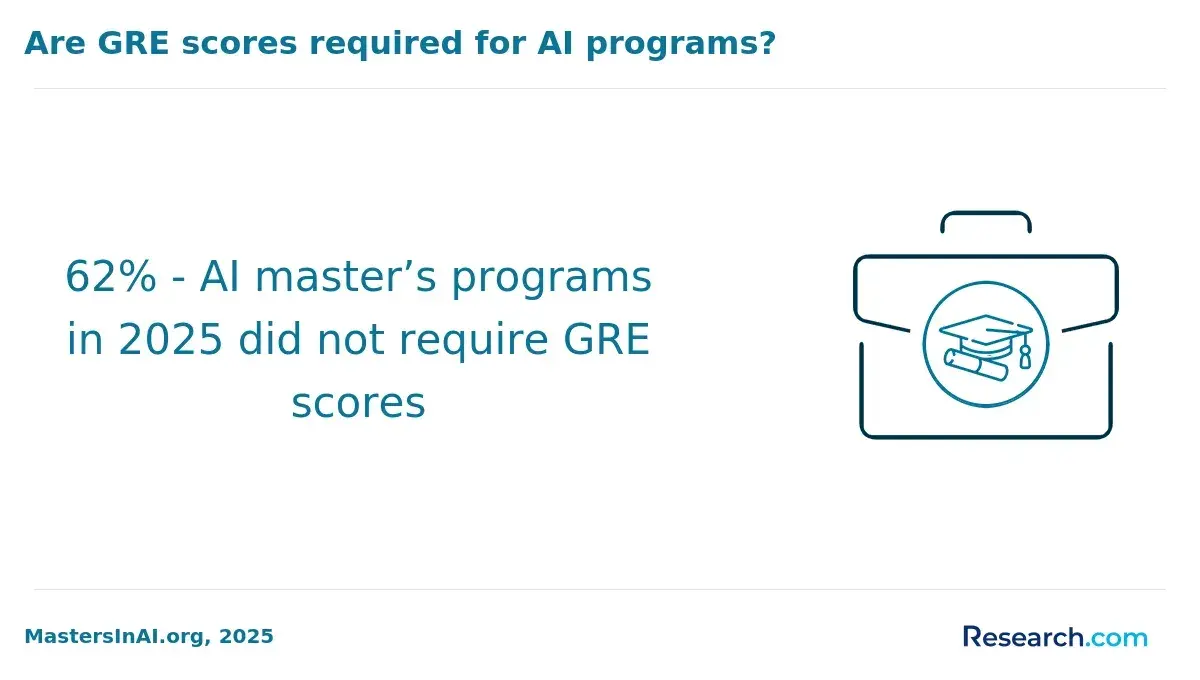
Typical admission requirements for AI bachelor's programs designed for adult learners emphasize flexibility and acknowledge diverse educational and professional backgrounds. Most of these programs no longer require standardized tests like the SAT or ACT; a survey by the National Association for College Admission Counseling showed that 73% of adult-focused bachelor's degrees waive these scores for admission.
Applicants generally must provide proof of a high school diploma or equivalent, such as a GED. Many programs also request official transcripts from prior college courses or alternative post-secondary education to assess academic readiness. In some cases, relevant career experience in technology, data science, or related areas may substitute formal prerequisites. This helps meet eligibility requirements for AI bachelor's programs for mature students.
A personal statement is typically required to explain career goals in artificial intelligence, motivation for returning to school, and professional experience. Letters of recommendation are less common but can strengthen applications by highlighting analytical or technical skills.
Admission criteria for adult learners in artificial intelligence vary by program. Some schools offer conditional admission contingent on completing preparatory coursework in math or programming. Others provide online or hybrid formats to accommodate working adults. Many institutions also require a minimum GPA on prior college work, often around 2.5 on a 4.0 scale.
Prospective students should review program-specific criteria closely, including any foundational knowledge needed in math or programming. Those interested in exploring affordable educational options may consider data science degrees, which often share overlapping skills and career paths with AI programs.
How do online AI bachelor's degrees compare to campus-based programs in terms of curriculum and outcomes?
Online AI bachelor's degrees closely align with campus programs in curriculum, offering identical core courses such as machine learning, neural networks, data mining, and natural language processing. This parity reflects how online ai bachelor's degrees differ from campus programs curriculum mainly through delivery methods rather than content. Many institutions use the same faculty, syllabi, and project requirements for both formats, ensuring consistent academic standards. Students in online programs benefit from live lectures, interactive labs, and group projects that replicate traditional hands-on learning.
Outcomes of online versus campus-based artificial intelligence degrees are increasingly similar as employers recognize the credibility of online credentials. A Gallup study shows that 73% of employers now view online degrees equally credible for technical roles, a sharp rise from 48% a few years prior. This trend underscores a shift toward evaluating skills and certifications rather than the mode of education delivery.
Despite these advances, differences remain in networking opportunities and access to campus facilities. On-campus students have more direct access to research labs and spontaneous peer interactions that can enhance collaboration skills and professional networks. Online learners should actively join virtual communities, internships, or regional meetups to build similar connections.
Adult learners over 40 often prefer online formats for their flexibility in balancing work and family obligations. Asynchronous coursework and recorded lectures provide essential adaptability while maintaining comprehensive content. Evaluating support services, career advising, and internship availability is key to achieving comparable outcomes across both types of AI degrees. Prospective students seeking cost-effective options may explore the cheapest engineering degree programs available online.
What core coursework and technical skills will you learn in an AI bachelor's degree program?
An AI bachelor's degree program combines core coursework in artificial intelligence bachelor programs with essential technical skills for this rapidly evolving field. Students master programming languages like Python, which, alongside machine learning and data analysis, ranks among the top in-demand AI skills according to industry reports. Courses in machine learning cover algorithms for training models, including supervised, unsupervised, and reinforcement learning techniques.
The mathematics underpinning artificial intelligence is crucial, including linear algebra, calculus, probability, and statistics, enabling students to grasp model optimization and evaluation. Data structures and algorithms courses equip learners to design efficient AI systems and tackle complex computational tasks.
Technical skills learned in artificial intelligence degree programs include data analysis involving large datasets, feature engineering, and visualization techniques to interpret AI outputs accurately. Exposure to artificial neural networks and deep learning frameworks such as TensorFlow or PyTorch prepares students to design sophisticated AI models.
Specializations often include hands-on experience with natural language processing, computer vision, and robotics. Ethics and AI governance are key components, guiding responsible AI development and societal considerations. Many programs incorporate capstone projects or internships to develop real-world expertise. Graduates enter the workforce with a well-rounded skill set that addresses a 74% year-over-year increase in job postings for machine learning, Python programming, and data analysis.
For those seeking further education, exploring options like masters in data science online can enhance career prospects in this competitive field.
How long does it take to complete an AI bachelor's degree as a working adult, and what are the typical costs?
Completing a bachelor's degree in artificial intelligence as a working adult often takes between three to six years, influenced by program format and personal time constraints. While traditional full-time programs typically last four years, many part-time or online options designed for adults extend this duration. Accelerated competency-based programs allow learners to advance by demonstrating skill mastery, potentially finishing in three years or less. This flexibility is essential for adults balancing work, family, and education.
Costs vary widely: private four-year bachelor's programs average around $60,000 annually, but adult-focused accelerated programs typically range from $25,000 to $35,000 per year. These programs frequently use online platforms and streamlined courses to lower tuition and additional expenses. Public institutions may offer more affordable rates, which can be supplemented by employer tuition assistance or financial aid.
Additional expenses, including technology fees, textbooks, and occasional travel for in-person sessions, should be factored in. Choosing a program with strong industry ties can enhance career prospects and return on investment. Evaluating transfer credit policies and recognition of prior experience can also shorten completion time and reduce costs. Careful planning helps working adults find an efficient path into the evolving artificial intelligence job market.
Which accreditation bodies and standards should you verify when evaluating AI degree programs?
Verifying accreditation is vital when considering AI bachelor's degree programs to ensure academic quality and industry relevance. The leading accreditation authority for AI and related engineering fields is ABET (Accreditation Board for Engineering and Technology). ABET accreditation confirms that a program meets rigorous educational standards recognized worldwide by employers and graduate schools. Currently, only about 12% of AI and machine learning bachelor's programs have this specialized accreditation, making verification essential for prospective students.
Besides ABET, some programs hold accreditation from regional bodies like the Middle States Commission on Higher Education (MSCHE) or the Higher Learning Commission (HLC), recognized by the U.S. Department of Education. However, these accreditations primarily assess institutional quality rather than program-specific standards. Specialized accreditation such as ABET's Computing Accreditation Commission better reflects the depth and rigor of AI curricula.
Students should also examine whether the curriculum follows established AI frameworks recommended by organizations like IEEE or the Association for Computing Machinery (ACM), which outline core competencies including machine learning, robotics, and data analytics. Faculty expertise, lab facilities, and industry partnerships often align with accredited programs and indicate a stronger educational experience.
To avoid unrecognized credentials or diploma mills, always confirm accreditation status via official ABET or regional agency websites. Given the limited number of accredited programs, prioritizing accredited degrees enhances job prospects and facilitates graduate credit transfer in the competitive AI job market.
What entry-level and mid-career job titles are available to AI bachelor's degree graduates?
Graduates with a bachelor's degree in Artificial Intelligence have access to diverse entry-level and mid-career roles aligned with industry demands. Early positions include AI developer, machine learning engineer, data analyst, and junior data scientist, focusing on programming foundational AI models and managing datasets. Mid-level roles advance to AI specialist, senior machine learning engineer, computational linguist, and AI product manager, involving greater expertise and leadership.
AI developer roles emphasize programming skills in Python, R, or Java, combined with knowledge of neural networks and data structures. Mid-career roles require expertise in model optimization, system integration, and interdisciplinary collaboration.
The U.S. Bureau of Labor Statistics reports median annual salaries for AI-related roles such as machine learning engineer, data scientist, and AI specialist range between $105,000 and $130,000, highlighting strong earning potential. Key industries hiring AI graduates include healthcare, finance, automotive, and technology, where automation and data-driven decisions drive growth.
Tasks commonly involve designing AI frameworks, maintaining machine learning pipelines, and interpreting complex datasets. Continued upskilling in emerging AI tools and cloud platforms is essential for career advancement. Professionals over 40 can leverage previous experience to specialize in AI ethics, human-computer interaction, or AI-driven business strategy.
What is the current job outlook and salary potential for AI professionals with bachelor's degrees?
The job outlook for AI professionals with bachelor's degrees is exceptionally strong. According to Glassdoor's 2024 Salary Report, AI engineers holding these degrees earn an average annual salary of $127,000, reflecting an 18% increase year-over-year that surpasses many other technical fields. Demand for AI skills spans multiple industries including healthcare, finance, automotive, and technology, offering diverse career opportunities.
Common roles include machine learning engineer, data scientist, and AI software developer, with salaries typically ranging from $100,000 to $140,000 depending on experience and location. Adults over 40 entering AI careers can improve their prospects by combining a bachelor's degree with practical experience and relevant certifications, which recruiters highly value.
Employment growth for AI professionals is projected at 15% over the next decade by the U.S. Bureau of Labor Statistics, well above the average for all occupations. Expanding skills into related areas like cloud computing, cybersecurity, or business intelligence can increase marketability in competitive tech hubs.
Specializations such as natural language processing and AI research analysis often command higher salaries. Geographic location matters, with cities like San Francisco, Seattle, and New York offering compensation 20-30% above the national average.
Adults pursuing bachelor's degrees in AI benefit from programs emphasizing hands-on experience and current industry tools, improving hiring outcomes in this rapidly evolving field.
Do AI bachelor's degrees require professional certifications or licensing to work in the field?
AI bachelor's degrees do not require professional certifications or licensing to enter the workforce. Unlike regulated fields such as nursing or law, there is no legal mandate for AI professionals to hold licenses. However, many employers prefer candidates who possess at least one industry certification. According to a TechRepublic survey, 64% of hiring managers look for certifications like AWS Certified Machine Learning, Google Cloud Professional Data Engineer, or Microsoft Azure AI Engineer.
These certifications demonstrate practical skills that complement the theoretical knowledge gained through academic programs. They often emphasize cloud computing, machine learning deployment, and data management, areas crucial for applying AI in real-world scenarios. For many, especially individuals over 40 making career shifts, these credentials can bridge experience gaps and enhance job market competitiveness.
Holding professional certifications can also lead to better salary offers and greater job opportunities. While not mandatory, certifications are highly valued across industries such as healthcare, finance, and technology startups, where proficiency in cloud platforms and AI tools is essential. Prospective AI professionals should explore which certifications align best with their desired career path to increase their appeal to employers.
Though AI bachelor's degrees provide foundational eligibility, combining academic qualifications with relevant industry certifications is key to meeting employer expectations and advancing in AI-related roles.
How should you evaluate and compare different AI bachelor's programs to find the best fit?
When choosing an AI bachelor's program, focus on curriculum relevance by ensuring courses cover machine learning, neural networks, natural language processing, and AI ethics. Practical experience through hands-on projects, internships, or research is essential to build real-world skills.
Flexibility in scheduling is crucial for working adults or those with family commitments. Many adult learners prioritize programs offering online or hybrid delivery with asynchronous options that enable self-paced study without compromising quality.
Faculty expertise is another critical factor. Investigate whether instructors have current industry or research experience and if the program is associated with recognized STEM or AI research centers, which often enhances academic rigor.
Career support services such as mentorship, job placement assistance, and networking opportunities play a significant role in advancing employment prospects. Programs with connections to tech companies and AI startups can provide valuable industry access.
Compare tuition costs and check for scholarships or financial aid geared toward adult learners and career changers to manage expenses.
Finally, verify program accreditation, institutional rankings, and alumni outcomes to assess reputation and real-world value. Reading graduate reviews can offer additional insights to help you select a program aligned with your professional goals and lifestyle.
Other Things You Should Know About Artificial Intelligence
Adults over 40 may face challenges such as time management due to balancing studies with other responsibilities. They might also need to refresh foundational skills in mathematics or programming. However, their diverse professional and life experiences can enhance problem-solving and critical thinking skills in AI studies.
Yes, many AI bachelor's programs designed for adults include foundational courses that teach necessary math and programming skills from the ground up. Students without prior experience can succeed by leveraging these introductory classes alongside flexible schedules and support services such as tutoring. Commitment to consistent study and practice is essential for building proficiency.
Adults over 40 typically need a high school diploma or GED and may be required to complete foundational courses in mathematics or computer science. Some programs also expect prior college credits or related work experience. Always check specific program requirements.
Yes, many programs offer online learning options tailored for adults over 40. These programs provide flexibility in scheduling and location, allowing students to balance education with other commitments. Ensure the program is accredited and provides necessary support services like academic advising and career counseling.
Yes. Most regionally accredited universities accept transfer credit, but the total is usually capped at 90 semester credits for a 120-credit bachelor’s degree. Schools often require official transcripts, and some limit how many AI or upper-division courses can be transferred.
References
- Top College Degrees That Will Land You the Highest-Paying AI Jobs in 2026 https://www.investopedia.com/top-college-degrees-that-will-land-you-the-highest-paying-ai-careers-in-2026-11923863
- Artificial Intelligence Course Duration Guide for 2025 Beginners | Your Blog https://mammothclub.com/blog/artificial-intelligence-course-duration
- How Long to Complete An AI Course if You’re Working Full Time? https://emeritus.org/in/learn/how-long-to-complete-an-ai-course/
- Bachelor in Management and Artificial Intelligence https://www.kozminski.edu.pl/en/programs/undergraduate-programs-bachelor/bachelor-management-and-artificial-intelligence
- AI pricing: how much does AI cost in 2025? | Future Processing https://www.future-processing.com/blog/ai-pricing-is-ai-expensive/
- 16 Artificial Intelligence Career Paths https://www.calmu.edu/news/artificial-intelligence-career-paths
- Artificial Intelligence Degree Admission Requirements: What You Need https://hakia.com/degrees/artificial-intelligence/admission-requirements/
- At These Universities, Using AI Isn’t Shunned — It’s a Graduation Requirement – The 74 https://www.the74million.org/article/at-these-universities-using-ai-isnt-shunned-its-a-graduation-requirement/
- AI in International Credential Evaluation: Promise and Pitfalls | Academic Credentials Evaluation Institute, Inc. https://acei-global.org/ai-in-international-credential-evaluation-promise-and-pitfalls/
- Artificial Intelligence Course Eligibility: Requirements & Prerequisites https://www.mygreatlearning.com/artificial-intelligence/courses/eligibility