2027 Best AI Bachelor's Degrees for Computer Vision Careers

Co-Founder and Chief Data Scientist
Many professionals with undergraduate degrees outside of computer science face challenges when seeking to enter the computer vision field. Limited access to targeted education and unclear program accreditation often hinder career pivots into this specialized area of artificial intelligence. Navigating degree options that balance flexibility with industry relevance is critical for success in this rapidly evolving sector.
This article examines the best bachelor's degree programs tailored for computer vision careers, focusing on flexible, accredited pathways that accommodate working professionals and nontraditional students looking to harness artificial intelligence expertise efficiently.
Key Things You Should Know
- Bachelor's degrees focused on computer vision integrate core artificial intelligence concepts with specialized courses in image processing, machine learning, and neural networks to meet growing industry demands.
- Over 40% of AI-related job postings in the U.S. now require hands-on experience with computer vision, making relevant undergraduate programs crucial for career readiness in 2026.
- Leading universities updated curricula in 2024-2025 to include ethical AI design and real-world applications, addressing bias and accountability challenges in computer vision technologies.
What is a computer vision career, and how does an AI bachelor's degree help?
A career in computer vision involves creating systems that allow machines to analyze and interpret visual data such as images and videos. Professionals in this field develop algorithms for tasks like facial recognition, object detection, and scene understanding. With applications in autonomous driving, medical imaging, retail, and augmented reality, demand for skilled experts is rising rapidly.
An AI bachelor's degree plays a crucial role in preparing students for a computer vision career by providing foundational knowledge in machine learning, neural networks, and data processing. Students also gain experience with essential programming languages like Python and frameworks including TensorFlow and PyTorch. This practical education builds competencies in image processing, pattern recognition, and deep learning, which are vital for solving complex real-world problems.
The combination of theory and hands-on training equips graduates to meet emerging needs in sectors such as healthcare and automotive. Exploring computer vision career opportunities with an AI bachelor's degree opens doors to numerous specialized roles focused on advancing technology and innovation.
According to IDC's Worldwide AI and Generative AI Spending Guide (2024), AI spending is expected to reach $632 billion by 2028, reflecting strong growth in applied AI jobs. For those interested in accelerating their pathway, a fast track computer science degree can also help fast track their expertise and market readiness.
Which bachelor's degrees best prepare students for computer vision roles?
The bachelor's degrees that best prepare students for computer vision roles are primarily grounded in computer science and artificial intelligence. These programs provide essential knowledge in algorithms, programming, data structures, and mathematics, all critical for developing computer vision systems. According to NACE (Winter 2024 Salary Survey), the average starting salary for computer science bachelor's graduates is $76,251, reflecting strong industry demand.
Degrees focused on artificial intelligence or machine learning offer specialized courses in neural networks, deep learning, and image processing, equipping students for tasks like object recognition and real-time analytics. For those seeking top computer vision bachelor's programs in the US, programs combining theory with hands-on projects stand out.
Other valuable options include electrical engineering and robotics, which emphasize hardware integration, sensor technologies, and embedded systems that interact with physical devices such as autonomous robots or smart cameras.
Interdisciplinary degrees combining computer science with cognitive science or data science provide insights into perception and large-scale data analysis helpful for advanced computer vision careers. Evaluating programs for hands-on projects and internships is crucial. Strong coding and math skills remain essential for success. Those interested might also explore mechanical engineering online degrees as complementary options that contribute to robotics and embedded system expertise.
What should you look for in accredited AI programs for computer vision?
Accredited AI bachelor's degrees for computer vision careers in the United States must blend rigorous technical instruction with clear outcome transparency. Prioritize programs recognized by reputable bodies like ABET or regional agencies to ensure quality and industry relevance. This verification prevents investing time and money in programs lacking validity or recognition.
Top features of accredited AI programs for computer vision specialization include comprehensive courses in machine learning, image processing, neural networks, and applied computer vision methods. Hands-on projects with real datasets and industry tools such as TensorFlow or PyTorch are essential for developing practical skills that boost career readiness.
Evaluate programs that publicly disclose graduate employment rates and average starting salaries, as this data helps gauge return on investment. According to the U.S. Department of Education College Scorecard, median earnings differ significantly across "Computer and Information Sciences" programs by institution.
Look for internship opportunities, industry collaborations, and research options which enhance employability. Electives in robotics, computer graphics, or data science can provide valuable flexibility. Faculty expertise and active involvement in current research also strengthen curriculum relevance.
Small class sizes and access to advanced computing labs facilitate personalized learning and mastery of sophisticated computer vision models vital for advanced roles. For prospective students seeking affordable paths, consider the cheapest online master's in artificial intelligence as part of a strategic educational approach.
What core courses are essential for computer vision-focused AI bachelor's programs?
Core courses for computer vision course requirements for AI bachelor's degrees focus on theory and hands-on skills. Key subjects include machine learning, deep learning, convolutional neural networks (CNNs), generative adversarial networks (GANs), and reinforcement learning. Mathematics-linear algebra, calculus, and probability-is essential to understanding underlying algorithms, while data structures and algorithms improve problem-solving when handling large image datasets.
Strong programming skills, particularly in Python and frameworks like TensorFlow or PyTorch, are critical. Labs emphasize data manipulation, annotation, and model deployment, mirroring real industry workflows. The Stanford AI Index Report 2025 notes that many leading AI models arise from industry, underscoring curricula that integrate applied learning with real-world projects.
Additional courses in image processing, computer graphics, robotics, sensor fusion, and augmented reality broaden application knowledge. Electives in ethical AI and explainability address accountability challenges. Practical training with cloud computing and containerization tools like Docker supports deployment capabilities. Capstone projects and internships enhance job readiness.
Students interested in graduate advancement might explore options such as cybersecurity masters online, a field often intersecting with AI. Programs focusing on core programming and machine learning courses in computer vision AI degrees prepare graduates for dynamic roles in technology-driven sectors.
How do online AI bachelor's programs compare with on-campus options for computer vision?
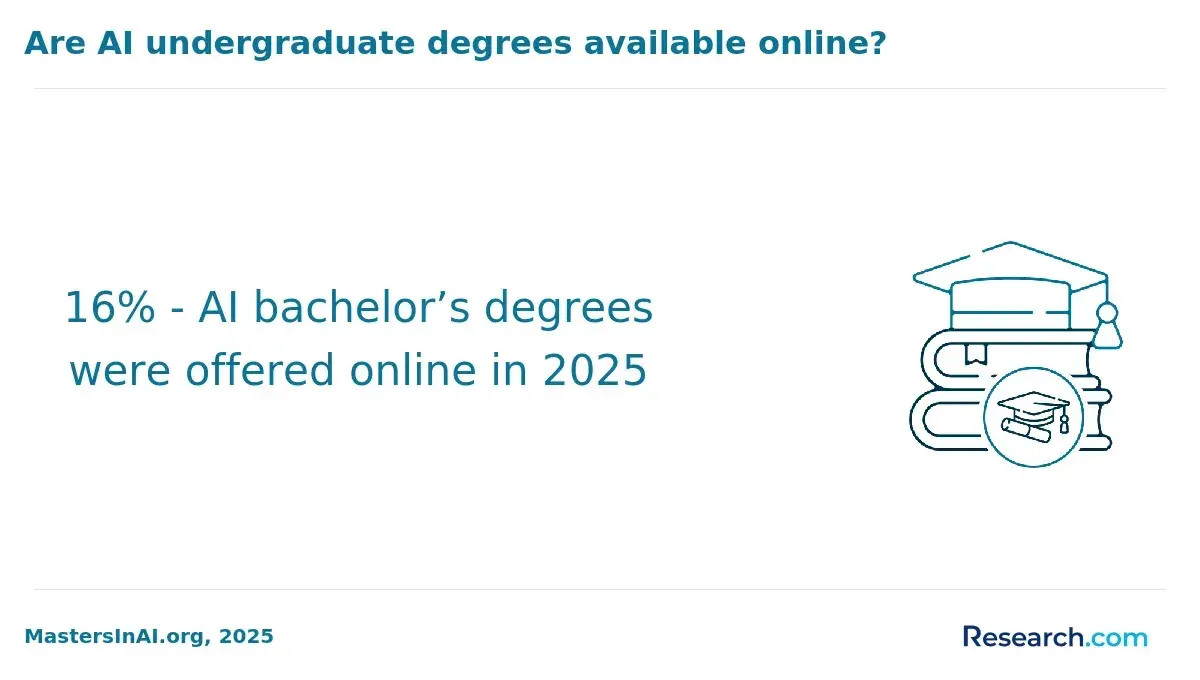
Online AI bachelor's programs in computer vision now rival traditional campus options in both curriculum quality and flexibility. While on-campus students enjoy hands-on lab access and direct interaction with faculty, top online programs offer virtual labs, real-time project collaboration tools, and remote internships to foster practical skills essential for computer vision roles. Recent data from the National Center for Education Statistics (NCES) Digest/Integrated Postsecondary Education Data System highlights that many undergraduates take at least one online STEM course, demonstrating the mainstream adoption of online education.
When choosing between online and on-campus programs, consider key factors:
- Curriculum rigor: Both offer courses in machine learning, computer vision algorithms, and data science; however, leading online options combine asynchronous lectures with optional live seminars.
- Access to technology: On-campus learners benefit from physical AI and computer vision labs, while online students rely on dependable hardware and may access cloud-based environments.
- Networking opportunities: Face-to-face research groups and career fairs favor on-campus students, but many online programs host virtual events and connect students to global mentors.
- Self-discipline and time management: Online study demands greater self-motivation, fitting well for professionals balancing work and education.
Verification of accreditation and job placement outcomes in computer vision is crucial. Both learning paths can effectively prepare students for careers in artificial intelligence when these factors are carefully weighed.
What admissions requirements do AI bachelor's programs commonly require?
Applicants to AI bachelor's programs in computer vision typically need a high school diploma or equivalent and transcripts highlighting strong performance in mathematics and science courses such as calculus, linear algebra, probability, and physics. These subjects provide essential foundations for image processing and machine learning.
Many programs request letters of recommendation emphasizing analytical and problem-solving skills. Personal statements or essays about the applicant's interest in artificial intelligence and computer vision, alongside relevant coding projects, robotics competitions, or internships, are often required.
Portfolios showcasing programming skills in Python, C++, or experience with computer vision tools like OpenCV may be required or strongly encouraged. Applicants should prepare for possible interviews or technical assessments that test critical thinking and aptitude.
Standardized test scores such as the SAT or ACT are increasingly optional, benefiting students with strong coursework but average test performance. However, submitting scores can still enhance an application if they strengthen the academic profile.
International students may need to prove English proficiency with tests like the TOEFL or IELTS. Engaging in STEM-related extracurricular activities can improve admission chances, reflecting the competitive nature of AI bachelor's programs.
How long do AI bachelor's programs take, and what do they cost?
Bachelor's degrees in artificial intelligence with a focus on computer vision typically span four years of full-time study, aligning with the usual U.S. undergraduate program length. Some schools offer part-time or accelerated paths, potentially shortening this to three years for students with prior credits or cooperative education participation. Alternatively, integrated bachelor's and master's programs can take up to five years.
Cost factors heavily into choosing a degree program. The College Board Trends in College Pricing reports that average in-state tuition and fees at public four-year institutions are about $11,000 annually. Private universities and out-of-state rates are often much higher, frequently surpassing $35,000. Additional expenses like textbooks, technology, and project materials may add thousands more.
Programs in AI and computer vision usually require between 120 and 130 credit hours and combine coursework from computer science, mathematics, and electrical engineering. Gaining practical experience via internships or research projects is essential and might extend the overall program duration if these are counted as work terms.
Students should carefully research individual schools to verify program length, tuition, and available financial aid options such as scholarships or tuition assistance, which can help reduce costs.
What projects, labs, and internships build a strong computer vision portfolio?
Developing a strong computer vision portfolio requires practical projects, dedicated labs, and internships that highlight technical skills and problem-solving ability. Focusing on real image and video datasets with Python and machine learning frameworks like TensorFlow or PyTorch is essential. Projects might include object detection systems, facial recognition, image segmentation, or activity recognition in videos. Working with open datasets such as COCO, ImageNet, or KITTI showcases familiarity with industry benchmarks.
Labs should concentrate on experimental design, model training, and evaluation metrics such as accuracy, precision, recall, and Intersection over Union (IoU). Implementing foundational algorithms like SIFT and SURF or replicating key research papers enhances conceptual understanding and coding skills. Group projects using version control simulate collaborative development environments.
Internships with tech companies or research labs that tackle applied computer vision challenges-like autonomous vehicle perception or medical imaging diagnostics-greatly improve job prospects. According to Lightcast job-posting analytics, Python and machine learning are top required skills in AI/ML roles, making portfolios with tangible models highly valuable.
What jobs can you get with an AI bachelor's focused on computer vision?
An AI bachelor's degree specializing in computer vision prepares graduates for a range of in-demand roles. Common career paths include software developers focused on computer vision applications, a field employing hundreds of thousands nationwide according to the U.S. Bureau of Labor Statistics (BLS) Occupational Employment and Wage Statistics from May 2024.
Key positions often pursued are:
- Computer vision engineer: creating algorithms that interpret visual data from various sensors.
- Machine learning engineer: developing models to process images and videos effectively.
- Robotics engineer: integrating vision systems for autonomous machines.
- Data scientist with vision expertise: extracting insights from extensive image and video datasets.
- AI research scientist: innovating new computer vision methodologies, like facial recognition or medical imaging.
Industries seeking these skills span automotive (such as autonomous driving), healthcare (diagnostic imaging), retail (visual search and inventory), and security (surveillance systems). Graduates contribute to tasks like image annotation, real-time object detection, 3D reconstruction, and video analytics.
Employers usually expect proficiency in Python and frameworks like TensorFlow or PyTorch, alongside deep learning and optimization knowledge. Strong communication skills are valuable due to the collaborative nature of interdisciplinary teams.
Entry-level salaries generally range from $70,000 to $90,000 annually, with mid-career professionals earning above $110,000, reflecting solid job stability and growth potential for computer vision-focused AI degree holders.
What salaries and job outlook can computer vision graduates expect in the U.S.?
Employment for data scientists, a field closely related to computer vision, is expected to grow 35% from 2022 to 2032, according to the U.S. Bureau of Labor Statistics (BLS) Occupational Outlook Handbook. This growth rate surpasses the average for all occupations, reflecting strong demand for AI-related specialists.
Starting salaries for computer vision graduates commonly range from $80,000 to $110,000 annually. Mid-career professionals can expect earnings between $110,000 and $140,000, while experienced experts or those in leadership roles may earn $150,000 or more. Job titles such as machine learning engineer, computer vision engineer, and AI research scientist show competitive remuneration due to specialized skills.
Industries employing computer vision experts include automotive, healthcare, robotics, and security. Proficiency in deep learning frameworks, image processing, and programming languages like Python and C++ enhances employment prospects. Geographic location also influences salaries, with tech hubs such as San Francisco, Seattle, and Boston offering higher pay but correspondingly increased living costs.
To increase market readiness, gaining internships and completing projects in computer vision is crucial. Certifications and a strong portfolio can make candidates stand out. Ongoing education is vital given the rapid advancements in the field.
Other Things You Should Know About Artificial Intelligence
In 2027, students studying AI with a focus on computer vision will explore trends such as explainable AI, real-time image processing, augmented reality advancements, and AI ethics in image recognition. Progress in these areas is integral for keeping abreast of industry demands and technological evolution.
Interdisciplinary knowledge is highly valuable, as computer vision integrates concepts from computer science, neuroscience, and cognitive psychology. Understanding how humans perceive visual information can improve algorithm design. Moreover, familiarity with data science and hardware accelerators enhances performance in real-world applications.
Yes, a bachelor's degree in artificial intelligence provides a strong foundation for research in computer vision. Many programs encourage undergraduate research through lab projects and thesis options. Engaging in research during a bachelor's degree can also facilitate entry into graduate programs and professional research positions.
Ethical concerns include privacy issues stemming from image and video data collection, potential bias in training data, and the misuse of surveillance technologies. AI professionals must be aware of these challenges and prioritize transparency, fairness, and accountability when developing computer vision applications.
References
- Top Computer Vision Courses and Training Programs - IABAC https://iabac.org/blog/top-computer-vision-courses-and-training-programs
- Artificial Intelligence Concentration https://www.fullsail.edu/degrees/artificial-intelligence-bachelor-degree-program
- The Courses You need to Succeed in your Computer Vision Career https://www.aitimejournal.com/best-computer-vision-courses/43405/
- The Best Certifications for Computer Vision and AI Careers - PyImageSearch https://pyimagesearch.com/the-best-certifications-for-computer-vision-and-ai-careers/
- Cost to Study Artificial Intelligence in 2026 https://checkmateittech.com/cost-to-study-artificial-intelligence-usa/
- List https://www.datacamp.com/pt/blog/computer-vision-projects
- Future of AI in College Education | University of Phoenix https://www.phoenix.edu/articles/online-college/ai-in-online-college-education.html
- Top Computer Vision Projects https://opencv.org/top-computer-vision-projects/
- How to Become a Computer Vision Engineer: Real Projects That Matter - AI Degree Center https://aidegreecenter.org/career-paths/computer-vision-engineer/
- Best AI Certifications to Boost Your Career in 2026 – Dataquest https://www.dataquest.io/blog/best-ai-certifications/