2027 529 Plan: Complete Student Guide

Co-Founder and Chief Data Scientist
College savings decisions are getting harder as tuition, online learning, transfer paths, and career-focused credentials all compete for the same family budget. The College Board reported that average published in-state tuition and fees at public four-year colleges reached $11,610 for 2024-25, before housing and other costs. This guide is for students, parents, grandparents, and adult learners who want to understand 529 plans clearly. You will learn what they cover, how they affect aid and taxes, and how to decide whether a 529 plan fits your education and career goals.
Key Things You Should Know
- A 529 plan is a tax-advantaged education savings account; earnings can be withdrawn tax-free when used for qualified education expenses such as college tuition, required fees, books, equipment, and certain room and board costs.
- Federal rules allow up to $10,000 per year for K-12 tuition, up to $10,000 lifetime for student loan repayment per beneficiary, and beginning in 2024, limited Roth IRA rollovers up to a $35,000 lifetime cap if strict conditions are met.
- For FAFSA purposes, a parent-owned 529 is generally treated as a parent asset, which can affect aid eligibility less heavily than student-owned assets; choosing the account owner matters.
What is a 529 plan and how does it work for college savings?
A 529 plan is a state-sponsored education savings plan designed to help families set aside money for future education costs. The account owner, often a parent or grandparent, controls the account, chooses investments from the plan's menu, and names a beneficiary, usually the student. Contributions are made with after-tax money, but investment earnings can grow tax-deferred and may be withdrawn tax-free for qualified education expenses.
There are two main types of 529 plans. Most families use education savings plans, which operate somewhat like investment accounts. A smaller number of states offer prepaid tuition plans, which let families buy future tuition credits at participating institutions. Prepaid plans can be useful, but they are usually less flexible if the student attends a different school or studies out of state.
The basic mechanics are simple, but the choices matter. A family contributes money, selects an investment option such as an age-based portfolio, and later withdraws funds when the student has eligible costs. The plan does not have to be from the family's home state, although staying in-state may provide a state income tax deduction or credit.
The table below compares the two primary 529 plan types so readers can quickly see which structure fits different education plans.
| Plan type | How it works | Best fit | Main limitation |
| 529 education savings plan | Money is invested in plan portfolios and can be used at many eligible schools. | Families who want flexibility across colleges, online programs, graduate school, or trade schools. | Investment returns are not guaranteed and fees vary by plan. |
| 529 prepaid tuition plan | Families buy future tuition units or credits, often tied to in-state public tuition. | Students likely to attend participating public colleges in the sponsoring state. | Less flexible if the student changes plans, attends a private college, or enrolls out of state. |
A 529 plan works best when it is matched to a realistic education path. A student planning a public university route may prioritize state tax benefits and low fees, while a student considering online, transfer, or graduate study may need broader school eligibility and flexible withdrawals.
What education expenses can you use 529 plan funds for?
529 funds can be used for many education costs, but not every student expense qualifies. The safest approach is to connect each withdrawal to a documented qualified expense in the same tax year, because nonqualified withdrawals can create taxes and penalties.
Qualified higher education expenses generally include the core costs required to enroll and complete a program. Families should keep receipts, billing statements, and enrollment records because the plan administrator may not verify every expense before money is withdrawn.
- Tuition and required fees at eligible colleges, universities, graduate schools, community colleges, and many vocational institutions.
- Books, supplies, software, and equipment required for enrollment or attendance.
- Computers, peripheral equipment, internet access, and related technology when used primarily by the beneficiary during enrollment.
- Room and board for students enrolled at least half time, up to the school's published allowance or the amount charged for campus housing.
- Expenses for certain registered apprenticeship programs.
- Up to $10,000 lifetime for qualified student loan repayment for the beneficiary, with additional limits for siblings.
529 plans can also support longer education routes. For example, a student who finishes an undergraduate degree and later enrolls in one of many affordable online master's programs may still be able to use remaining 529 funds if the institution is eligible for federal student aid.
Common nonqualified expenses include transportation, health insurance, application fees, test prep, club dues, and room and board for students enrolled less than half time. These costs may be real and necessary for the student's life, but they do not automatically qualify for tax-free 529 withdrawals.
How do you open a 529 plan and choose the right state program?
Opening a 529 plan is usually straightforward, but choosing the right one requires comparing taxes, investment quality, fees, and flexibility. The "best" plan is not always the one with the biggest state tax deduction, especially if the plan has higher costs or limited investment choices.
Use the following sequence to narrow your options before opening an account. This is especially important for families who may move, students who may attend school online or out of state, and grandparents who want to contribute without complicating financial aid planning.
- Check whether your home state offers an income tax deduction or credit for 529 contributions.
- Compare total plan fees, including program management fees and underlying fund expenses.
- Review investment options, especially age-based portfolios that automatically become more conservative as college approaches.
- Confirm whether the plan supports easy online contributions, gift links, and direct payments to schools.
- Read withdrawal rules, rollover rules, and beneficiary change rules before funding the account.
- Decide who should own the account based on control, estate planning, and financial aid effects.
State tax benefits can be valuable, but they should not be the only factor. A low-fee out-of-state plan may be better for some families than an in-state plan with a modest deduction and higher investment costs. If your state recaptures tax deductions when you roll money to another state's plan, include that in your decision.
The table below summarizes the main plan-selection factors and why each one matters for students and families.
| Factor | Why it matters | What to watch |
| State tax benefit | Can reduce state income tax liability for eligible contributors. | Some states limit deductions to their own plans or recapture benefits after rollovers. |
| Fees | Lower costs leave more of the investment return available for education. | Compare total expense ratios, not just enrollment fees. |
| Investment menu | Determines how the account balances growth potential and risk. | Overly aggressive investments near enrollment can expose savings to market drops. |
| School flexibility | Students may change schools, transfer, study online, or pursue graduate education. | Prepaid plans may have narrower use rules than savings plans. |
| Account ownership | Controls who can request withdrawals and change beneficiaries. | Ownership can affect financial aid treatment and family control. |
One common mistake is opening the first plan promoted by a state website without comparing alternatives. Another is choosing an investment portfolio once and never revisiting it, even as the student gets closer to enrollment.
How do 529 plans compare with other college savings options?
A 529 plan is only one way to save for education. It is often the most tax-efficient option for families confident the money will be used for eligible education costs, but it may not be ideal for every household. Liquidity, financial aid impact, tax treatment, and flexibility should all be considered.
The comparison below shows how 529 plans differ from common alternatives. It is meant to clarify trade-offs, not to rank one option as universally better.
| Option | Tax treatment | Flexibility | Best fit | Main caution |
| 529 plan | Tax-free earnings for qualified education expenses. | Flexible for many eligible schools and some noncollege uses. | Families saving specifically for education. | Nonqualified earnings may face income tax and a penalty. |
| Coverdell ESA | Tax-free earnings for eligible education expenses. | Can be useful for K-12 and college expenses. | Families who meet income limits and want broader K-12 flexibility. | Contribution limits are much lower than 529 limits. |
| Custodial account | Taxable investment account under UGMA or UTMA rules. | Money can be used for the child's benefit, not only education. | Families wanting broad flexibility. | Student ownership can weigh more heavily in financial aid formulas. |
| Roth IRA | Retirement account with tax advantages if rules are met. | Contributions may be accessible, but retirement should remain the priority. | Adults balancing retirement and education goals. | Using retirement money for college can weaken long-term security. |
| Taxable brokerage account | Investment gains may be taxable. | High flexibility with no education-only restrictions. | Families unsure whether funds will be used for school. | No special education tax benefit. |
Federal Reserve survey data published in 2024 continued to show education debt as a major household financial issue, which makes early planning valuable even when a family cannot fully fund college. A 529 plan does not need to cover the entire bill to help; even partial savings can reduce future borrowing or provide flexibility to choose a stronger-fit program.
For students who expect to rely on aid, program cost still matters. Families comparing online options may want to review cheap online colleges that accept FAFSA alongside 529 planning, because savings and federal aid can work together when the school is eligible.
Can 529 plans be used for online degree programs and trade schools?
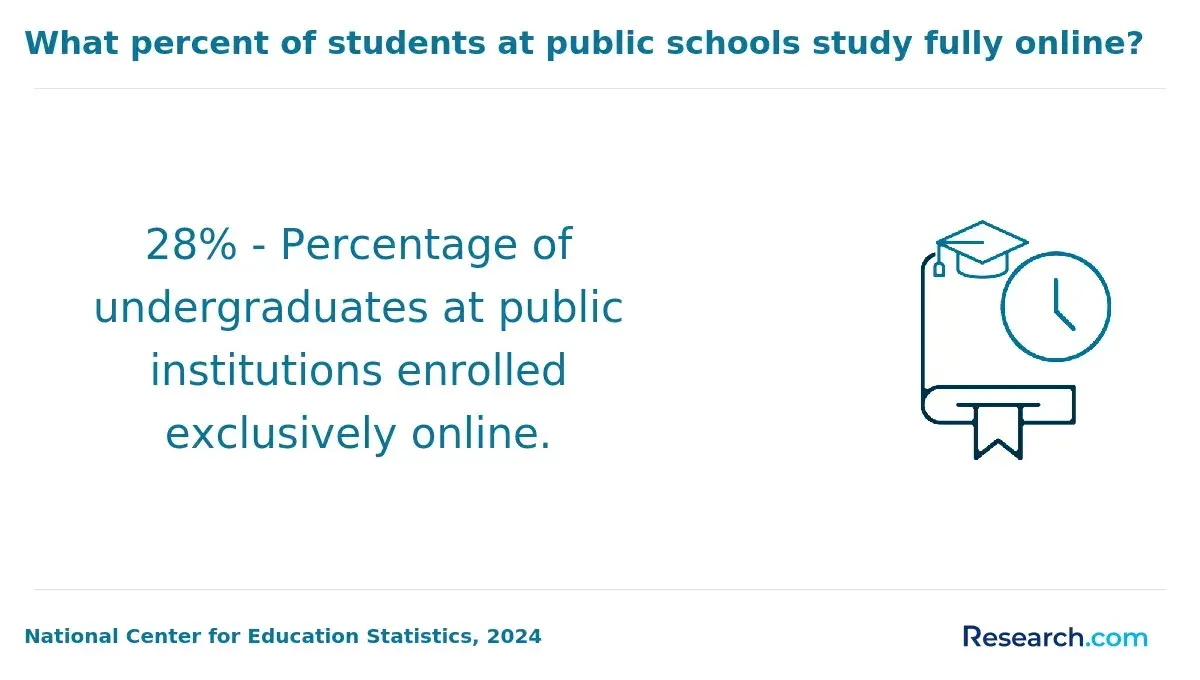
Yes, 529 plans can be used for many online degree programs and trade schools, but eligibility depends on the institution, not simply the format. The key test is whether the school is eligible to participate in federal student aid programs. Many accredited online colleges, community colleges, graduate schools, and vocational institutions meet this standard.
This matters because students increasingly combine lower-cost online coursework, transfer credits, certificates, and career programs rather than following one traditional four-year path. A 529 plan can support that flexibility if the student chooses eligible institutions and keeps documentation.
Before using 529 funds for a nontraditional program, confirm the following details with the school and plan administrator. These checks can prevent tax problems and help students avoid programs that do not match their career goals.
- Verify that the school has a federal school code or is otherwise eligible for federal student aid participation.
- Confirm whether the program is credit-bearing, noncredit, certificate-based, apprenticeship-based, or licensure-focused.
- Ask whether required tools, software, exam fees, uniforms, or equipment are billed by the school or must be purchased separately.
- Check whether online students meet the enrollment level needed for room and board eligibility.
- Keep proof of enrollment, invoices, receipts, and course requirements for tax records.
Students trying to finish faster may consider a 1-year bachelor degree online pathway if they already have substantial transfer credits. In that case, 529 savings may be especially helpful because accelerated formats can compress tuition and fee payments into a shorter period.
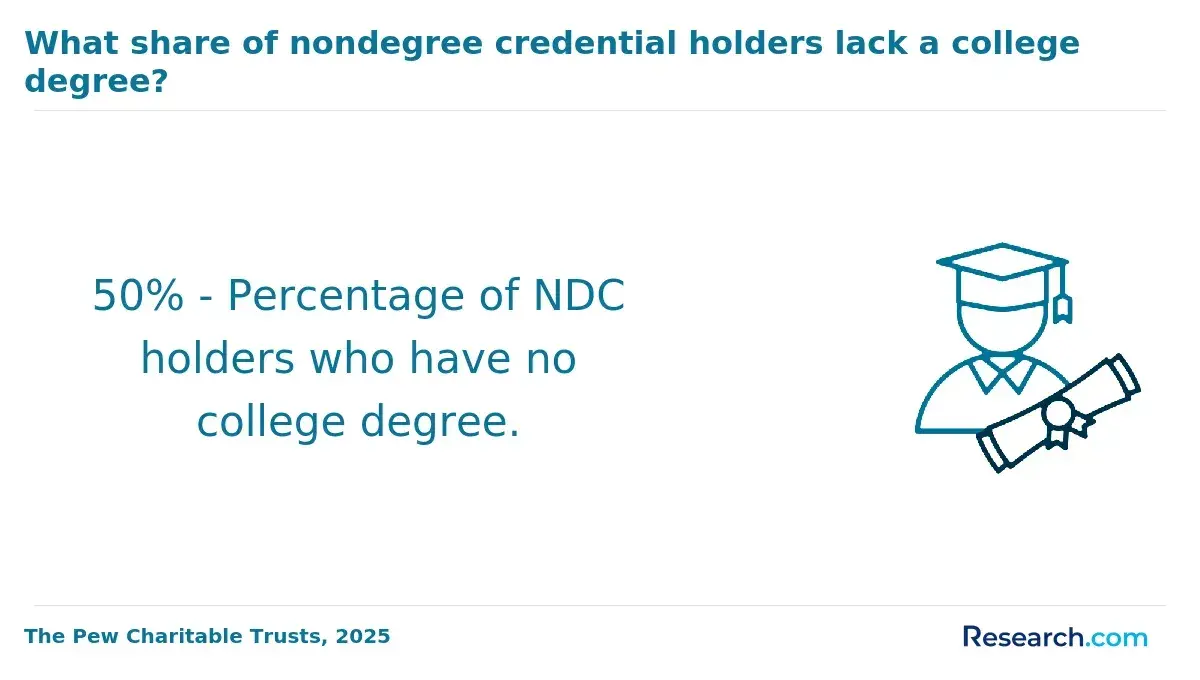
For career changers, 529 funds may also fit certain registered apprenticeships or eligible certificate programs. However, not every short-term training course qualifies, so students considering quick certifications that pay well should confirm institutional eligibility before assuming 529 money can be used tax-free.
How do financial aid, scholarships, and 529 plans interact?
529 plans and financial aid can work together, but ownership and timing matter. A 529 plan is not automatically a reason to skip the FAFSA. Many students with 529 savings still qualify for federal loans, work-study, institutional aid, or need-based grants depending on family income, assets, household size, and school cost.
Under current FAFSA rules, a parent-owned 529 for a dependent student is generally reported as a parent asset. Parent assets are assessed at a lower maximum rate than student assets, which usually makes parent ownership more aid-friendly than putting college savings directly in the student's name. FAFSA simplification also changed the treatment of certain non-parent support, making grandparent-owned 529 accounts less likely to create the same FAFSA income issue that concerned families under prior rules.
Scholarships add another layer. If a student receives a scholarship, the family may be able to withdraw an equivalent amount from the 529 without the additional 10% federal penalty on earnings, although income tax on earnings may still apply. Families can also keep the money for graduate school, change the beneficiary, or use eligible student loan repayment rules.
The table below explains common aid-related scenarios and the practical implication for a 529 owner.
| Situation | Likely 529 planning issue | Practical takeaway |
| Dependent student with parent-owned 529 | Reported as a parent asset on FAFSA. | Usually more favorable than student-owned savings, but still part of the aid picture. |
| Grandparent-owned 529 | FAFSA treatment has become more favorable under simplified rules. | Still coordinate withdrawals with the family and school financial aid office. |
| Student receives a scholarship | Some 529 funds may no longer be needed for tuition. | Consider graduate school, beneficiary changes, student loan repayment, or scholarship-related withdrawal rules. |
| Student attends a high-cost private college | 529 savings may reduce borrowing but may not cover the full bill. | Compare net price after grants, not sticker price alone. |
A common mistake is assuming that saving hurts aid so much that it is better not to save. In many cases, the benefit of having education savings outweighs the modest aid formula impact, especially when savings reduce future debt.
What are the tax benefits and penalties associated with 529 plans?
The central tax benefit of a 529 plan is that earnings can be withdrawn federally tax-free when used for qualified education expenses. Many states also offer state income tax deductions or credits for contributions, but these benefits vary widely. Some states offer no income tax benefit, and others limit benefits to residents using the in-state plan.
The main penalty applies when withdrawals are not used for qualified expenses. In that case, the earnings portion of the nonqualified withdrawal is generally subject to income tax and an additional 10% federal penalty. Contributions are not taxed again because they were made with after-tax money.
There are important exceptions and newer rules that families should understand before assuming unused money is trapped. The following items summarize the most common tax planning points.
- K-12 tuition withdrawals are federally allowed up to $10,000 per year per beneficiary, but state tax treatment may differ.
- Student loan repayment is federally allowed up to a $10,000 lifetime limit per beneficiary, with additional rules for siblings.
- Scholarship-related withdrawals may avoid the 10% federal penalty on earnings, though income tax on earnings may still apply.
- Beginning in 2024, some unused 529 funds may be rolled into a Roth IRA for the beneficiary, subject to a $35,000 lifetime cap, annual Roth IRA contribution limits, earned income requirements, and a 15-year account aging rule.
- Changing beneficiaries to eligible family members can preserve tax advantages when the original student does not use all funds.
The Roth IRA rollover option is useful, but it should not be treated as a simple escape hatch. Families should confirm account age, contribution timing, beneficiary eligibility, and annual limits before making long-term assumptions. State tax rules may also differ from federal rules.
Tax reporting is another area where mistakes happen. Families should match withdrawals to qualified expenses in the same calendar year, avoid withdrawing more than documented costs, and keep Form 1099-Q records with school bills and receipts.
How should students and families invest and manage 529 plan funds?
Managing a 529 plan is less about picking the "perfect" investment and more about matching risk to the student's timeline. A newborn's account can usually tolerate more market volatility than an account for a high school senior who will need tuition payments soon.
Many plans offer age-based portfolios that automatically shift from stock-heavy investments to more conservative allocations as the beneficiary approaches college age. These can be helpful for families who want a simple structure, although fees and portfolio design still deserve review.
The table below gives a high-level view of how investment priorities often change as enrollment gets closer. It is not personal investment advice, but it shows why timeline matters.
| Time until funds are needed | Typical priority | Risk consideration |
| 10 or more years | Growth potential | Market swings may be easier to absorb over a long period. |
| 5 to 9 years | Balanced growth and stability | Portfolio risk should begin moving closer to the student's expected enrollment date. |
| 1 to 4 years | Capital preservation and liquidity | A market decline shortly before tuition is due can be hard to recover from. |
| Currently enrolled | Cash-flow management | Withdrawals should align with qualified expenses and tax-year records. |
Families can manage a 529 plan more effectively by building a routine. The goal is to avoid emotional investment decisions and keep the account aligned with the student's changing education plan.
- Review the account at least once a year and whenever the student changes schools, enrollment plans, or expected start date.
- Compare the account balance with projected net cost, not just published tuition.
- Shift risk downward as the first withdrawal date approaches.
- Coordinate withdrawals with scholarships, grants, loans, and payment plan deadlines.
- Save documentation for every withdrawal, including bills, receipts, enrollment status, and proof that expenses were required.
Rising tuition makes early saving valuable, but overfunding is possible. A practical target is not necessarily the full cost of a private college; it may be a flexible amount that covers community college, transfer, public university costs, or part of graduate school without weakening emergency savings or retirement contributions.
What happens to a 529 plan if you change schools, majors, or beneficiaries?
A 529 plan is designed to be flexible when education plans change. Students may switch majors, transfer schools, study part time, take a gap year, or decide that a certificate, apprenticeship, or graduate program fits better than the original plan. In many cases, the account can still be used as long as expenses are qualified and the institution or program is eligible.
Changing majors usually does not affect 529 eligibility. Changing schools also does not matter if the new school is eligible. The bigger issues are whether the student remains enrolled at least half time for room and board purposes and whether specific expenses are required for the program.
If the original beneficiary does not need all the money, the account owner has several options. These choices help families avoid unnecessary taxes while keeping education funding available.
- Keep the funds in the account for graduate school or future eligible education expenses.
- Change the beneficiary to an eligible family member, such as a sibling, parent, cousin, or future child, if rules are met.
- Use limited funds for qualified student loan repayment.
- Consider a Roth IRA rollover for the beneficiary if the account meets federal requirements.
- Take a nonqualified withdrawal only after understanding the tax and penalty cost on earnings.
Students with complex backgrounds should also consider how education planning affects access, affordability, and career fit. For example, people researching degrees felons can get should evaluate program eligibility, licensing barriers, and school support services before using 529 funds for a specific path.
A red flag is choosing a school or program quickly because money is available. The better approach is to confirm accreditation, transferability, licensure relevance, employer recognition, and total cost before making withdrawals.
How does a 529 plan affect long-term education costs and career planning?
A 529 plan can reduce long-term education costs by lowering the need for loans, but it should be part of a broader career and affordability strategy. The strongest plans connect savings to likely credential requirements, school quality, completion timeline, and expected career value.
Education can still be a strong long-term investment, but outcomes vary by field, school, debt level, and whether the student completes the credential. A BLS education-pay data table published in 2024 showed that workers with a bachelor's degree had substantially higher median weekly earnings than workers with only a high school diploma. That gap does not guarantee an individual outcome, but it shows why families should evaluate both cost and career relevance before choosing a program.
Students should think of a 529 account as a tool for buying options, not just paying tuition. It can help a student choose a lower-debt route, start at community college and transfer, complete an online program while working, or reserve funds for graduate school if the career requires it.
The table below connects common education goals with 529 planning considerations. It can help families decide whether to spend funds now, save them for later, or combine them with other aid sources.
| Education goal | 529 planning question | Decision factor |
| Community college to bachelor's transfer | Should funds be saved for the higher-cost final two years? | Transfer agreements and total remaining cost. |
| Online bachelor's degree | Is the institution eligible and accredited? | FAFSA eligibility, transfer credits, and employer recognition. |
| Trade school or apprenticeship | Does the program qualify under 529 rules? | Federal aid eligibility or registered apprenticeship status. |
| Graduate school | Should unused undergraduate funds be preserved? | Career requirements and expected borrowing need. |
| Career certificate | Is the credential eligible and valuable in the target job market? | Licensure relevance, exam requirements, and employer demand. |
The best decision is usually the one that combines affordability with completion likelihood. A low-cost program that a student does not finish may have poor value, while a more expensive program may be reasonable if it is accredited, career-aligned, and supported by grants, savings, and manageable borrowing.
Other Things You Should Know About
Yes. Most 529 education savings plans can be used at eligible colleges, universities, graduate schools, and vocational institutions nationwide. However, state tax benefits may depend on where you live and which plan you use.
You can change the beneficiary to an eligible family member, save the money for future education, use limited funds for student loan repayment, consider a qualified Roth IRA rollover if requirements are met, or take a nonqualified withdrawal with taxes and possible penalties on earnings.
They can affect need-based aid, but the impact depends on account ownership and the student's FAFSA situation. A parent-owned 529 for a dependent student is generally treated as a parent asset, which is usually assessed less heavily than student-owned assets.
Yes, if the account is invested in market-based portfolios, its value can rise or fall. Families can reduce risk by choosing an investment option that matches the student's timeline and becoming more conservative as withdrawals approach.
References
- Every state offers a different 529 plan—here’s how to pick the best one for you https://www.cnbc.com/2021/05/29/every-state-offers-a-529-planheres-how-to-pick-the-best-one-for-you.html
- How to Change the Beneficiary on Your 529 Plan https://www.savingforcollege.com/article/how-to-change-the-beneficiary-on-your-529-plan
- 529 Plans: A Powerful Tool to Save for Education | Morgan Stanley https://advisor.morganstanley.com/the-california-generations-group/articles/family/529-plans-a-powerful-tool-to-save-for-college-expenses
- What If Your Beneficiary Changes Their Plan https://www.isave529.com/learn/resources/saving-resources/what-if-your-beneficiary-changes-their-plan
- Your Ohio 529 Can Pay For Trade School, Community College, And More https://www.collegeadvantage.com/blog/blog-detail/posts/2026/02/26/use-your-529-plan-at-trade-schools-apprenticeships-and-credential-programs
- 529 Plans: Questions and answers | Internal Revenue Service https://www.irs.gov/newsroom/529-plans-questions-and-answers
- Does a 529 plan affect financial aid? | Vanguard https://investor.vanguard.com/investor-resources-education/education-college-savings/financial-aid
- What is a 529 Plan? | 529 College Savings Plans | CollegeInvest https://www.collegeinvest.org/what-is-a-529-plan/
- What You Need to Know About 529 Plan Beneficiaries https://www.hartfordfunds.com/products/smart529/529-beneficiary.html
- A Guide to 529 Plans https://www.bairdwealth.com/insights/wealth-management-perspectives/2025/05/what-you-can-and-cant-pay-for-with-529-funds/