2027 Types of Trade Schools: Complete Student Guide

Co-Founder and Chief Data Scientist
Choosing a trade school means balancing speed, cost, licensing rules, and job fit. The decision matters because many skilled occupations still need hands-on training, and the U.S. Bureau of Labor Statistics reports 2024 median pay above $60,000 for several trades, including electricians, plumbers, and licensed practical nurses.
This guide is for students, career changers, and parents comparing vocational paths. You will learn the major types of trade schools, how they differ from colleges, what programs cost, which jobs they can lead to, and how to avoid expensive enrollment mistakes.
Key Things You Should Know
- Trade schools include public technical colleges, private career schools, apprenticeship programs, employer academies, and online career-training providers; the right choice depends on whether your target job requires a license, supervised hours, hands-on labs, or industry certification.
- Cost varies sharply by school type, but College Board's 2024 data lists average published tuition and fees at $4,050 for public two-year in-district colleges, while federal Pell Grants for 2024-2025 can cover up to $7,395 for eligible students.
- Career outcomes are occupation-specific: BLS 2024 data reports median pay of $62,350 for electricians, $59,810 for HVAC mechanics and installers, $44,200 for medical assistants, and $62,340 for licensed practical and licensed vocational nurses.
What are the main types of trade schools?
Trade schools are postsecondary training providers that prepare students for specific occupations rather than broad academic study. The main types differ by ownership, funding, credential, schedule, and connection to employers or licensing boards.
The table below compares the major types of trade schools a student is likely to encounter. Use it to match a school type with your career goal, learning style, and need for financial aid or licensure preparation.
| Type of trade school | Common credentials | Best fit | Important limitation |
| Public technical or community college | Certificate, diploma, associate degree | Students who want lower tuition, transfer options, and access to federal aid | Program seats, clinical placements, and lab schedules may be limited |
| Private career school | Certificate, diploma, license-prep credential | Students seeking focused training with frequent start dates | Costs can be higher, so accreditation and job placement claims need careful review |
| Apprenticeship training center | Registered apprenticeship credential, journey-level status, related instruction credits | Students entering trades such as electrical, plumbing, carpentry, or HVAC through paid work-based training | Admission may be competitive and may require employer or union sponsorship |
| Industry certification bootcamp or academy | Vendor certification, skills certificate | Students targeting IT support, cybersecurity fundamentals, cloud support, medical coding, or manufacturing technology | Not all certificates replace degrees, licenses, or experience |
| Employer-sponsored training program | Internal certificate, paid training completion, sometimes an external credential | Students who want to train directly for a company's hiring pipeline | Skills may be employer-specific and less portable unless tied to recognized credentials |
| Online vocational school | Certificate, diploma, exam-prep credential | Students in fields that can be taught partly online, such as bookkeeping, medical billing, IT, paralegal studies, and business support | Hands-on or licensed fields may still require in-person labs, clinicals, externships, or state-approved hours |
Public technical colleges are often the safest first comparison point because they commonly publish tuition, accreditation, completion expectations, and transfer policies. Private career schools can be a good option when they have recognized accreditation, transparent costs, strong employer ties, and documented licensure pass rates.
Apprenticeships are different because students train while working. They can be especially strong for construction and industrial trades, but applicants should confirm whether the program is registered, how wages progress, and whether classroom instruction counts toward state licensing requirements.
How do trade schools differ from colleges?
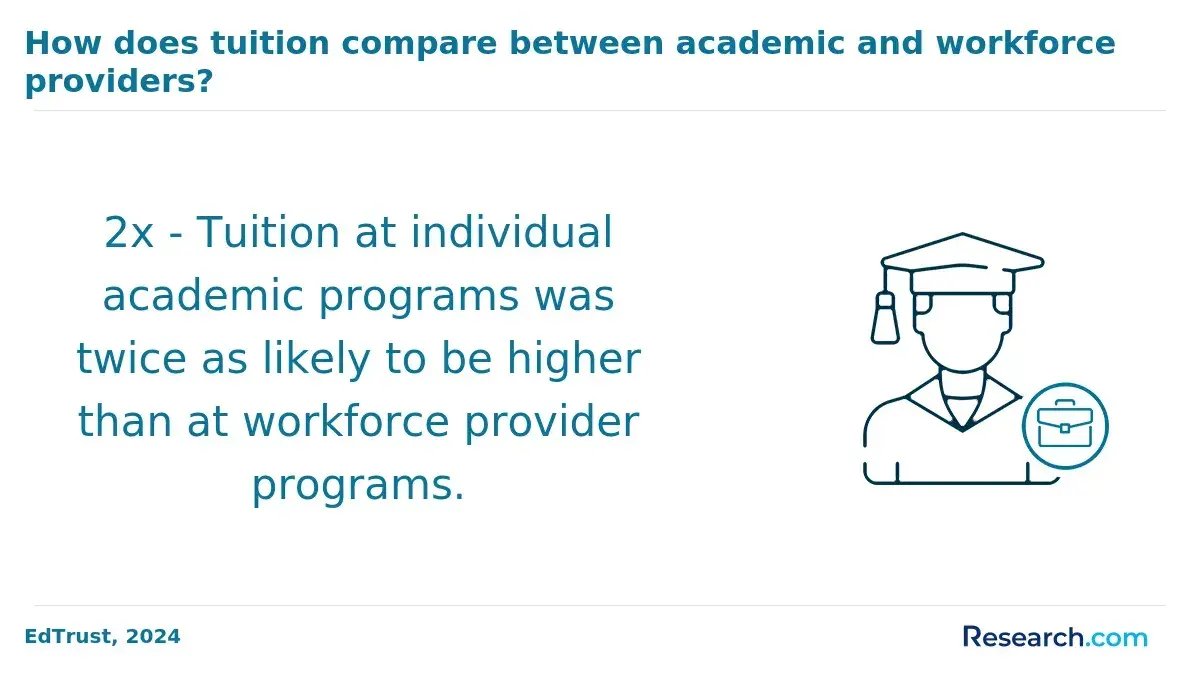
Trade schools and colleges both provide postsecondary education, but they are built for different goals. Trade schools usually focus on job-specific skills and shorter timelines, while colleges typically include broader general education and longer degree pathways.
This comparison helps clarify when a trade school is the better choice and when a college degree may offer more flexibility. The best option depends on your target occupation, not on whether one type of school is universally better.
| Factor | Trade school | College degree program |
| Main purpose | Prepare for a specific occupation or license | Build broader academic, professional, or research preparation |
| Typical credential | Certificate, diploma, associate degree, apprenticeship credential | Associate, bachelor's, master's, or doctoral degree |
| General education | Limited or occupation-specific | Usually required, especially in associate and bachelor's programs |
| Hands-on training | Often central to the program | Varies by major; may be internship-based or classroom-heavy |
| Timeline | Often months to two years, depending on the field | Usually two to four years for undergraduate degrees |
| Transfer value | Varies widely by accreditation and credit type | Often stronger when regionally accredited and credit-bearing |
| Best for | Students with a clear occupational target | Students seeking broader career mobility, graduate study, or roles requiring a degree |
A trade school makes sense when the occupation has a clear training pathway, such as HVAC, welding, medical assisting, dental assisting, aviation maintenance, cosmetology, commercial driving, or practical nursing. It may not be the best option if you are unsure about the field, need a bachelor's degree for advancement, or want a career that depends more on writing, management, analysis, or research.
Students deciding between a short credential and a degree should also consider stackable pathways. For example, someone might start with a certificate, earn an associate degree later, and eventually compare a cheap online bachelor degree if management, teaching, health administration, or technology roles become long-term goals.
What accreditation should trade schools have?
Accreditation is a quality-review process that evaluates whether a school or program meets recognized standards. It matters because it can affect federal financial aid, credit transfer, employer recognition, licensing eligibility, and whether a credential is accepted for certification exams.
There are two levels to check. Institutional accreditation applies to the school as a whole, while programmatic accreditation applies to a specific program such as nursing, dental assisting, surgical technology, radiologic technology, aviation maintenance, or cosmetology.
Before enrolling, students should verify accreditation through official databases and licensing bodies rather than relying only on admissions materials. The most important checks include the following:
- Confirm the school is listed with an accreditor recognized by the U.S. Department of Education or the Council for Higher Education Accreditation.
- Ask whether the specific program has programmatic accreditation when the occupation commonly requires it.
- Contact the state licensing board for fields such as nursing, cosmetology, electrical work, plumbing, HVAC, massage therapy, and commercial driving.
- Ask whether graduates are eligible for required exams, supervised hours, apprenticeships, or state licensure applications.
- Request written information on credit transfer, because many clock-hour certificates do not transfer like college credits.
A common mistake is assuming that "approved," "licensed," "authorized," and "accredited" mean the same thing. State authorization may allow a school to operate, but it does not always mean the program qualifies students for financial aid, professional licensure, or transfer credit.
Red flags include pressure to enroll immediately, vague accreditation claims, missing total cost information, promises of guaranteed jobs, unusually short programs for licensed fields, and refusal to share exam pass rates or completion data. If a school cannot explain how its credential connects to your target job, pause before signing an enrollment agreement.
Which programs are offered online or on campus?
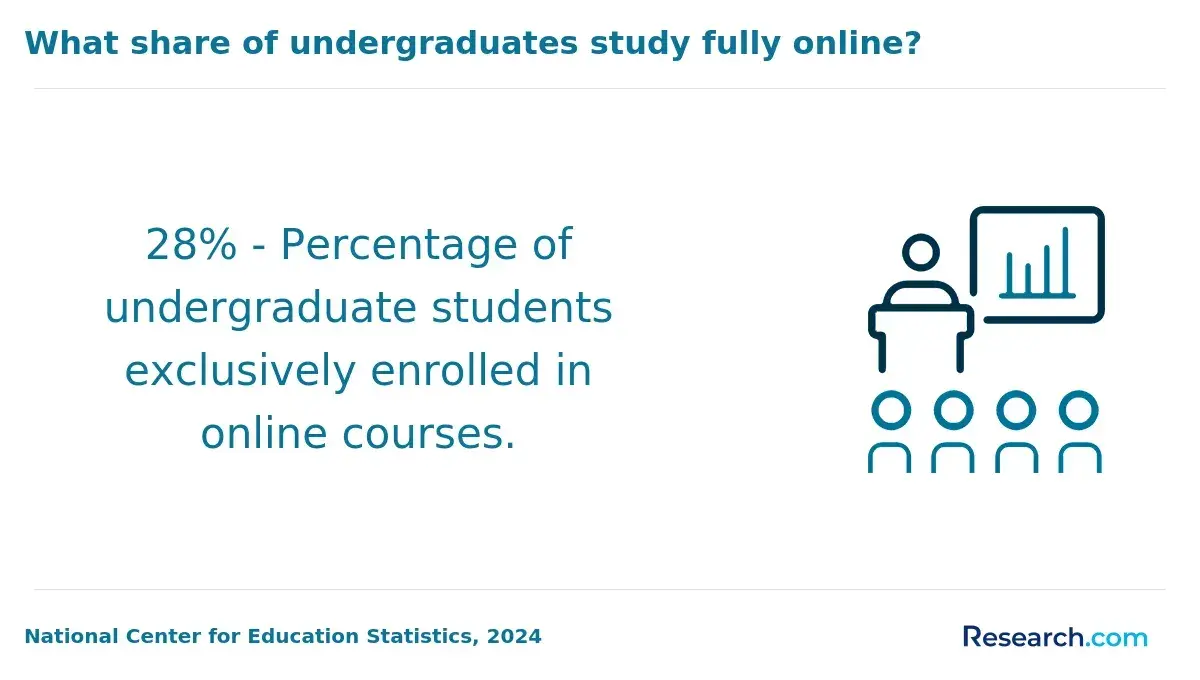
Some trade school programs can be completed mostly online, while others require substantial in-person training because students must practice physical skills, use equipment, complete clinical hours, or meet state board rules. The right format depends on the occupation, not just convenience.
The table below summarizes which programs are usually online-friendly and which typically require campus, lab, clinical, or field experience. Use it to avoid choosing a format that does not meet employer or licensing expectations.
| Program area | Online availability | Why format matters |
| Medical billing and coding | Often online | Training is largely software, terminology, coding systems, compliance, and exam preparation |
| Bookkeeping and payroll | Often online | Students can learn accounting software, records management, and tax basics remotely |
| IT support and cybersecurity fundamentals | Often online or hybrid | Labs can be simulated, though hands-on troubleshooting experience still helps |
| Paralegal or legal assistant studies | Often online or hybrid | Research, writing, legal technology, and document preparation can be taught remotely |
| Medical assisting | Usually hybrid or campus-based | Students need clinical skills practice and often an externship |
| Dental assisting | Usually campus-based or hybrid | Radiography, infection control, chairside assisting, and state rules require supervised practice |
| Welding, HVAC, electrical, plumbing, and automotive | Mostly campus, shop, or apprenticeship-based | Students must use tools, equipment, safety procedures, and jobsite skills |
| Cosmetology and barbering | Mostly campus-based | State boards typically require supervised practical hours |
| Practical nursing | Campus or hybrid with clinical placement | Clinical hours and state board approval are essential |
Online programs work best when the job involves digital tools, documentation, administrative systems, coding, analysis, or customer support. They are less suitable when the program's value depends on tactile skills, patient care, safety checks, or state-required supervised hours.
Students who want flexible work should distinguish between remote training and remote jobs. Some online vocational programs lead to office or hybrid roles, while others lead to in-person work; readers comparing long-term flexibility may also review best degrees for work from home jobs to see when a degree pathway may support broader remote-career options.
What do trade school programs teach?
Trade school programs teach the technical, safety, professional, and exam-preparation skills needed for a specific occupation. A strong program should connect every major course to tasks students will perform on the job.
Although curricula vary by field, most quality vocational programs include several learning components. These components help students move from classroom knowledge to employable skill:
- Technical theory: the concepts behind the work, such as anatomy for allied health, electrical theory for electricians, engine systems for automotive technicians, or building science for HVAC students.
- Hands-on practice: lab, shop, simulation, clinical, or externship work where students perform job tasks under supervision.
- Safety and compliance: OSHA practices, infection control, patient privacy, equipment handling, workplace documentation, or state regulations.
- Tools and technology: software, diagnostic devices, instruments, machinery, coding systems, or digital platforms used in the field.
- Certification or licensure preparation: exam review, competency checkoffs, portfolio work, or required contact hours.
- Employability skills: communication, attendance, teamwork, customer service, documentation, and professional ethics.
The strongest programs publish course descriptions, lab requirements, externship expectations, and the credentials students are prepared to pursue. If a school only describes the career in broad terms but does not explain what students actually practice, ask for a detailed curriculum map.
Certification alignment is especially important in fields where employers screen applicants by credential. Students comparing shorter options can also research certifications for jobs, but they should confirm whether a certificate is enough for their target role or only a starting point.
What are the admission requirements for trade schools?
Trade school admission requirements are usually more direct than bachelor's degree admissions, but they are not always automatic. Programs tied to safety, licensure, clinical work, apprenticeships, or limited lab space may have extra screening steps.
Most applicants should be ready to provide basic academic and identity documents. Selective or regulated programs may also ask for the following:
- High school diploma, GED, or approved equivalent.
- Placement test scores or proof of college readiness in reading, math, or English.
- Minimum age requirement, often tied to equipment use, clinical placement, or commercial driving rules.
- Immunization records, drug screening, background check, or CPR certification for health-related programs.
- Driver's license or clean driving record for transportation, CDL, utility, or field-service programs.
- Physical ability documentation for programs involving lifting, standing, climbing, or tool use.
- Prerequisite courses for practical nursing, radiologic technology, surgical technology, or competitive allied health tracks.
- Interview, aptitude test, or employer sponsorship for some apprenticeship programs.
Students should not assume that open admission means immediate entry into every program. A community college may admit a student to the institution while still requiring a separate application for nursing, dental hygiene, aviation maintenance, or other high-demand programs.
Before applying, ask admissions whether there is a waitlist, how often cohorts begin, how students are selected, and whether prerequisites can be completed online. Also ask what happens if you fail a licensing exam, cannot secure an externship site, or need to repeat a lab course.
How long do trade school programs take?
Trade school timelines range from a few weeks to two years or more, depending on the occupation, credential level, state-required hours, and whether the student attends full time. Faster is not always better if a job requires supervised practice or exam eligibility.
The table below gives a practical timeline comparison by program type. Use it to set expectations before comparing tuition, wages, and start dates.
| Program type | Common length | What can affect the timeline |
| Short workforce certificate | Several weeks to a few months | Exam schedule, internship requirement, part-time attendance, or employer hiring cycle |
| Medical billing, coding, bookkeeping, or IT support certificate | A few months to one year | Certification exam preparation, software labs, and student pace |
| Cosmetology or barbering | Usually about one year or longer | State-required clock hours and school schedule |
| HVAC, welding, automotive, or electrical technology certificate | Six months to two years | Lab access, safety modules, apprenticeship connection, and whether the credential is a certificate or associate degree |
| Practical nursing | About one year full time in many programs | Clinical availability, state board approval, prerequisite courses, and exam readiness |
| Associate degree in applied science | About two years full time | General education, clinical rotations, transfer credits, and part-time enrollment |
| Registered apprenticeship | Several years | Required on-the-job hours, classroom instruction, employer placement, and licensing rules |
Accelerated programs can be useful for students who have a clear goal, reliable schedule, and financial support while studying. They can be risky for students who need to work full time, have caregiving responsibilities, or need extra help with math, science, English, or test preparation.
Students who want a credential quickly but may later need college credit should ask whether the trade program is credit-bearing. If an associate credential is part of the plan, comparing the fastest associates degree online can help show how accelerated academic options differ from occupation-specific trade training.
How much do trade schools cost?
Trade school costs depend on the provider, program length, equipment, books, tools, uniforms, exam fees, background checks, licensing fees, and whether the school is public or private. Tuition alone is not enough to compare programs because a low-tuition option can still become expensive if supplies, repeat courses, commuting, or unpaid clinical hours are not planned for.
College Board's 2024 Trends in College Pricing reports average published tuition and fees of $4,050 for public two-year in-district students. That figure is useful because many technical programs are housed at community or technical colleges, but program-specific fees can still make certain fields cost more than the college-wide average.
- Public two-year in-district published tuition and fees average: $4,050
- Maximum federal Pell Grant for eligible students in 2024-2025: $7,395
Those figures show why public technical colleges can be cost-effective for eligible students, especially when Pell Grants, state grants, workforce scholarships, or employer tuition benefits apply. However, private career schools, specialized equipment programs, and non-credit clock-hour programs may have different pricing and aid eligibility.
To compare total cost, students should request a written cost of attendance, not just a brochure price. The most important cost questions are:
- What is the total tuition and fee amount for the entire program?
- Are books, tools, uniforms, protective equipment, software, exam fees, and licensing fees included?
- Is the program eligible for federal financial aid, state grants, workforce funding, veterans benefits, or employer sponsorship?
- What happens financially if I withdraw, fail a course, repeat a clinical, or need extra time?
- Will I be able to work while enrolled, or does the schedule make employment difficult?
- Does the credential qualify me for the job I want in my state?
A common mistake is choosing the cheapest program without checking completion rates, licensure eligibility, lab quality, and employer connections. Another mistake is choosing the fastest program without calculating lost wages, transportation, childcare, and the time needed to pass certification exams.
What jobs can trade school graduates get?
Trade school graduates can qualify for jobs in construction, manufacturing, transportation, health care, personal services, information technology, legal support, and business operations. The exact job depends on the program, state rules, credential, and whether the student completes required exams or supervised hours.
The table below connects common trade school program areas with realistic entry-level roles and core responsibilities. This helps students evaluate whether the daily work actually matches their interests.
| Program area | Possible entry-level jobs | Typical responsibilities |
| Electrical technology | Electrical apprentice, electrical helper, low-voltage technician | Install, test, maintain, and troubleshoot wiring and electrical systems under supervision |
| HVAC | HVAC installer, service technician trainee, maintenance technician | Install, inspect, repair, and maintain heating, cooling, and ventilation systems |
| Welding | Welder, fabrication helper, metalwork trainee | Read blueprints, prepare materials, join metal parts, and inspect weld quality |
| Automotive technology | Automotive service technician, lube technician, diagnostic trainee | Inspect vehicles, perform maintenance, diagnose issues, and repair systems |
| Medical assisting | Medical assistant, clinical assistant, front-office medical assistant | Record patient information, assist with procedures, schedule visits, and manage clinical documentation |
| Practical nursing | Licensed practical nurse or licensed vocational nurse after licensure | Provide basic nursing care, monitor patients, administer medications where allowed, and document care |
| Dental assisting | Dental assistant, orthodontic assistant, sterilization technician | Assist dentists, prepare rooms, manage instruments, take radiographs where permitted, and support patients |
| IT support | Help desk technician, desktop support technician, technical support specialist | Troubleshoot hardware, software, accounts, networks, and user access issues |
| Medical coding | Medical coder, billing specialist, revenue cycle assistant | Assign codes, review documentation, process claims, and support compliance |
| Paralegal studies | Legal assistant, paralegal assistant, litigation support clerk | Prepare documents, organize case files, conduct legal research, and support attorneys |
Advancement often requires experience, additional certifications, a license upgrade, supervisory training, or a degree. For example, an HVAC technician may move into controls, energy management, or service supervision; a medical assistant may move into office management, nursing prerequisites, or health information; and an IT support technician may progress into networking, cybersecurity, or cloud administration.
Students planning for long-term advancement should ask whether credits transfer into higher credentials. In some fields, a certificate is enough to start, but leadership or specialized roles may eventually make an associate, bachelor's, or even online 1-year masters programs relevant later in the career path.
What salaries and job outlook do trade schools offer?
Trade school salary and job outlook vary by occupation, state, employer, union status, overtime availability, experience, and licensing level. A program should be judged by the specific job it prepares students for, not by broad claims about "high-paying trades."
The table below uses BLS 2024 median annual wage data for selected occupations often connected to trade school, apprenticeship, or technical training. Median wage is not a starting salary; it is the midpoint for workers in the occupation, so new workers may earn less while experienced or specialized workers may earn more.
| Occupation | 2024 median annual wage | Career context |
| Electricians | $62,350 | Often requires apprenticeship, state licensing, and strong safety knowledge |
| Plumbers, pipefitters, and steamfitters | $62,970 | Licensing and apprenticeship requirements vary by state and locality |
| Heating, air conditioning, and refrigeration mechanics and installers | $59,810 | EPA refrigerant certification and hands-on troubleshooting skills are commonly important |
| Licensed practical and licensed vocational nurses | $62,340 | Requires completion of an approved program and passing the NCLEX-PN |
| Welders, cutters, solderers, and brazers | $51,000 | Pay varies by industry, certifications, travel, and ability to read specifications |
| Automotive service technicians and mechanics | $49,670 | ASE certifications and manufacturer training can influence advancement |
| Dental assistants | $47,300 | Radiography and expanded-function requirements vary by state |
| Medical assistants | $44,200 | Certification may improve competitiveness, depending on employer preference |
Outlook should be read alongside local demand. BLS national projections are helpful, but a student's real opportunity depends on regional construction activity, health care employers, commuting range, union or apprenticeship availability, and whether local employers recognize the school's credential.
Technology is also changing trade work. Electricians increasingly encounter smart buildings and renewable-energy systems, HVAC technicians use digital diagnostics and building automation, medical coders work with electronic health records and compliance software, and automotive technicians handle advanced driver-assistance systems and electric vehicle components. These trends do not remove the need for skilled workers, but they reward students who are comfortable with both tools and technology.
To evaluate return on investment, compare total program cost with realistic entry-level wages, not only median wages. Also consider whether the career offers overtime, union progression, employer-paid training, portable licenses, and a path to self-employment or supervision.
Other Things You Should Know About
Trade schools can be worth it when the program is accredited or state-approved, the credential is required or valued for your target job, and the total cost is reasonable compared with local entry-level pay. They are less worth it if the school cannot document licensure eligibility, completion outcomes, or employer recognition.
No trade is easy if it requires safety, precision, customer service, or licensing. Shorter programs often include medical billing, bookkeeping, basic IT support, and some office-focused certificates, while hands-on licensed fields such as nursing, electrical work, plumbing, cosmetology, and HVAC usually require more supervised practice.
Yes, but only some fields fit fully online study. Online formats are more common for medical coding, bookkeeping, IT support, paralegal studies, and administrative programs. Hands-on fields usually require campus labs, clinical hours, externships, apprenticeships, or state-approved practical training.
Ask about accreditation, total cost, financial aid eligibility, licensure approval, certification exam pass rates, completion rates, job placement methods, required supplies, schedule, refund policy, and whether credits transfer. Get important claims in writing before signing an enrollment agreement.
References
- Top Highest-paying Trade School Careers Explained https://tidewatertechtrades.edu/blog/highest-paying-trade-school-careers/
- Online Colleges in Washington | OEDb.org https://www.oedb.org/washington/
- Trade Schools Overview | ACT https://www.act.org/content/act/en/students-and-parents/career-planning/career-planning-resources/trade-schools.html
- Best Online Colleges In Washington State https://www.affordablecollegesonline.org/online-colleges/washington/
- Trade Schools - SHS COUNSELING https://www.santiagocounseling.com/trade-schools.html
- How to Get into Trade School: A Step-by-Step Guide https://leveluptoday.org/blog/21/how-to-get-into-trade-school-a-step-by-step-guide
- Accreditation In Trade Schools https://www.accreditedschoolsonline.org/vocational-trade-school/accreditation/
- What Makes a Good Trade School? https://www.lincolntech.edu/news/skilled-trades/what-makes-good-trade-school
- Trade School vs College: What You Need to Know - Tlingit & Haida https://tlingitandhaida.gov/news/trade-school-vs-college-what-you-need-to-know/
- Trade School vs. College: Weighing cost, timelines & More https://www.midwesttech.edu/resources/careers/trade-school-vs-college-a-guide-to-weighing-your-options/