2027 Merit Based: Complete Student Guide

Co-Founder and Chief Data Scientist
Merit-based aid can change which college is affordable, but award rules are often hard to compare. College Board's 2024 tuition data lists average published tuition and fees at $11,610 for in-state public four-year colleges and $43,350 for private nonprofit colleges, making scholarships a major decision factor. This guide is for students and families comparing colleges, online programs, and external awards. You will learn how merit aid works, what affects eligibility, how to apply, and how to judge whether an offer truly lowers your total cost.
Key Things You Should Know
- Merit-based aid is awarded for achievement, talent, leadership, academics, service, or specialized skills rather than financial need, though some colleges consider both merit and need in the same package.
- College Board's 2024 data shows average published tuition and fees of $11,610 at in-state public four-year colleges and $43,350 at private nonprofit colleges, so even partial merit awards can materially affect affordability.
- The strongest merit strategy is to apply where your GPA, course rigor, test scores if submitted, portfolio, or leadership record places you above the school's typical admitted-student profile.
What does merit-based financial aid mean for college students and how does it work?
Merit-based financial aid is money awarded because of what a student has achieved or can contribute, not primarily because of family income. Colleges, departments, honors programs, athletic programs, foundations, employers, civic groups, and professional associations may all offer merit awards.
For undergraduates, merit aid often appears in the admission offer or financial aid package. Some awards are automatic if the applicant meets published criteria, while others require separate essays, interviews, auditions, portfolios, or nomination by a school counselor. At the graduate level, merit support may include fellowships, assistantships, tuition waivers, or research funding; students comparing PhD programs online should pay close attention to whether awards reduce tuition only or also include stipends.
Merit aid usually works in one of three ways. The type matters because it affects predictability, renewal rules, and how much effort you need to invest before applying.
| Merit aid type | How it is usually awarded | What to watch |
| Automatic institutional scholarship | Based on admission data such as GPA, curriculum, class rank, or test scores if considered | Renewal GPA, full-time enrollment rules, and whether the award stacks with other aid |
| Competitive scholarship | Based on a separate review, interview, essay, audition, portfolio, or competition | Deadlines may be earlier than the regular admission deadline |
| Departmental or talent award | Based on major, artistic ability, athletic ability, research interest, leadership, or service | Changing majors or leaving an activity may reduce or remove the award |
A key point is that merit aid is not always "free money with no strings attached." Many awards require satisfactory academic progress, a minimum GPA, continuous enrollment, or participation in a specific program. Before counting on an award for all four years, verify renewal conditions in writing.
Who qualifies for merit-based scholarships and what are the typical eligibility criteria?
Students qualify for merit-based scholarships when their record matches the sponsor's definition of achievement. That definition can be broad: a student with a strong GPA may qualify academically, while another student may qualify through music, debate, entrepreneurship, community service, athletics, military affiliation, or a high-demand major.
Most merit committees look for evidence that a student will strengthen the class, department, campus community, or profession. The most common criteria fall into several categories.
- Academic strength, including GPA, course rigor, class rank, honors or Advanced Placement coursework, dual enrollment, and strong grades in the intended major area.
- Test scores, where applicable, especially at colleges that still use SAT, ACT, GRE, GMAT, LSAT, or other scores for scholarship consideration.
- Leadership and service, including student government, volunteering, work experience, mentoring, religious or civic involvement, or sustained community projects.
- Talent-based achievement, such as music auditions, art portfolios, theater performance, journalism awards, coding competitions, science fairs, entrepreneurship, or athletics.
- Program fit, including interest in a priority major, honors college participation, research potential, or commitment to an underserved profession or region.
Eligibility can also depend on citizenship or residency status, enrollment level, major, campus, first-year versus transfer status, and full-time versus part-time study. Transfer students should be especially careful because some colleges reserve their largest merit awards for first-time freshmen, while others have strong transfer scholarship programs.
The best candidates are not always the students with the single highest GPA. Scholarship readers often reward sustained effort, clear goals, strong recommendations, and a record that fits the award's mission. A student applying for an engineering scholarship, for example, may be more competitive with rigorous math and science coursework, a robotics project, and a clear engineering essay than with a general résumé that does not show technical direction.
How do you find and apply for merit-based scholarships at colleges and external organizations?
Finding merit-based scholarships requires a two-track search: institutional awards from colleges and external awards from organizations outside the college. Institutional awards are often larger and easier to apply to because they may use the admission application, while external awards can add flexibility but usually require more separate applications.
Start with the colleges on your list, because many of the largest awards are controlled by the institution. Use a structured process so you do not miss early deadlines or separate scholarship portals.
- Check each college's scholarship page before applying and note whether awards are automatic, competitive, departmental, talent-based, or honors-college based.
- Compare scholarship deadlines with admission deadlines because priority scholarship dates may fall weeks or months earlier than regular admission.
- Ask whether test-optional applicants are considered equally for merit awards or whether submitting scores can increase award eligibility.
- Look for major-specific scholarships through academic departments, especially in STEM, business, education, nursing, music, design, and public service fields.
- Submit polished essays and activity descriptions that show measurable impact rather than simply listing clubs or honors.
- Track renewal rules, stacking policies, and whether outside scholarships reduce loans, work-study, unmet need, or institutional grants.
External scholarships can come from local foundations, employers, unions, religious organizations, credit unions, professional associations, civic clubs, and national competitions. Smaller local awards may be less competitive than large national scholarships, so do not ignore them. If you are using lower-cost transfer credits or easy online college courses to reduce total tuition, confirm that those credits will not affect your first-year or transfer scholarship eligibility.
Common application mistakes can cost students real money. Avoid recycling an essay without adapting it to the scholarship's mission, missing optional scholarship questions in the admission portal, assuming nomination-based awards do not require action, or submitting a résumé that lists activities without outcomes. A stronger application explains what you did, why it mattered, and how it connects to your academic or career plan.
How do GPA, test scores, and extracurriculars impact your chances for merit-based awards?
GPA, test scores, and extracurriculars influence merit aid differently depending on the college and award type. Some scholarships use a formula, while others use holistic review. A formula-based award may publish clear GPA and score thresholds, but a competitive award may evaluate rigor, leadership, essays, recommendations, and fit with institutional priorities.
GPA matters most when it is interpreted in context. A high GPA in less rigorous courses may be viewed differently from a slightly lower GPA in honors, Advanced Placement, International Baccalaureate, or dual-enrollment coursework. Colleges often want to see that students challenged themselves in subjects related to their intended major.
Test scores still matter at some institutions, even in a test-optional admissions environment. Some colleges consider test scores only if submitted, some use them for specific scholarship tiers, and others have fully test-blind scholarship policies. If your scores are above a college's typical admitted-student range, submitting them may help at schools that still consider scores for merit. If they are below range, ask the scholarship office how test-optional review works before deciding.
Extracurriculars are most valuable when they show depth, leadership, impact, or unusual skill. Scholarship committees usually prefer sustained commitment over a long list of short-term activities. The table below shows how different evidence can strengthen a merit profile and what limitation students should understand.
| Application factor | How it can help | Important limitation |
| GPA | Signals academic consistency and readiness for college work | Colleges may recalculate GPA using core academic courses only |
| Course rigor | Shows preparation for demanding college programs | Access to advanced courses varies by high school, so context matters |
| Test scores | May unlock automatic tiers at some schools | Many colleges are test-optional, and policies differ for scholarships |
| Extracurricular leadership | Demonstrates initiative, commitment, and campus contribution | Titles alone are weaker than evidence of results or responsibility |
| Portfolio, audition, or project work | Can prove talent in arts, design, music, research, coding, or entrepreneurship | Quality standards are often judged by faculty or program specialists |
The practical takeaway is to build a scholarship list around match and leverage. If your academic profile is far above a college's median admitted-student profile, you may have stronger merit potential there than at a highly selective college where nearly every applicant has exceptional credentials.
How do merit-based scholarships differ from need-based aid, grants, and tuition discounts?
Merit-based scholarships, need-based aid, grants, and tuition discounts can all lower the bill, but they are not the same. Understanding the difference helps you compare real affordability rather than focusing on the largest-sounding award.
College Board's 2024 pricing data shows a wide gap between published tuition at public in-state and private nonprofit institutions. That gap is one reason families should compare net price, not sticker price: a college with higher tuition may become affordable after grants and scholarships, while a lower-tuition college may offer less discounting.
| Aid type | Main basis | Common source | Repayment required? |
| Merit-based scholarship | Achievement, talent, leadership, academics, or program fit | College, department, foundation, employer, or professional group | No, if requirements are met |
| Need-based grant | Financial need calculated from FAFSA, CSS Profile, or institutional method | Federal government, state agency, or college | No, if eligibility rules are met |
| Tuition discount | Institutional pricing strategy, enrollment goal, or student profile | College or university | No, but it may not cover fees or living costs |
| Student loan | Eligibility to borrow for education costs | Federal government or private lender | Yes, with interest and loan terms |
| Work-study or campus employment | Need, availability, and job placement | Federal program or college employer | No, but funds are earned through work |
A common misconception is that merit aid always stacks on top of need-based aid. In practice, schools may reduce loans first, reduce unmet need, or reduce institutional grants when an outside scholarship arrives. The best outcome is when new scholarships replace borrowing or out-of-pocket cost, so ask the financial aid office exactly how the award will be applied.
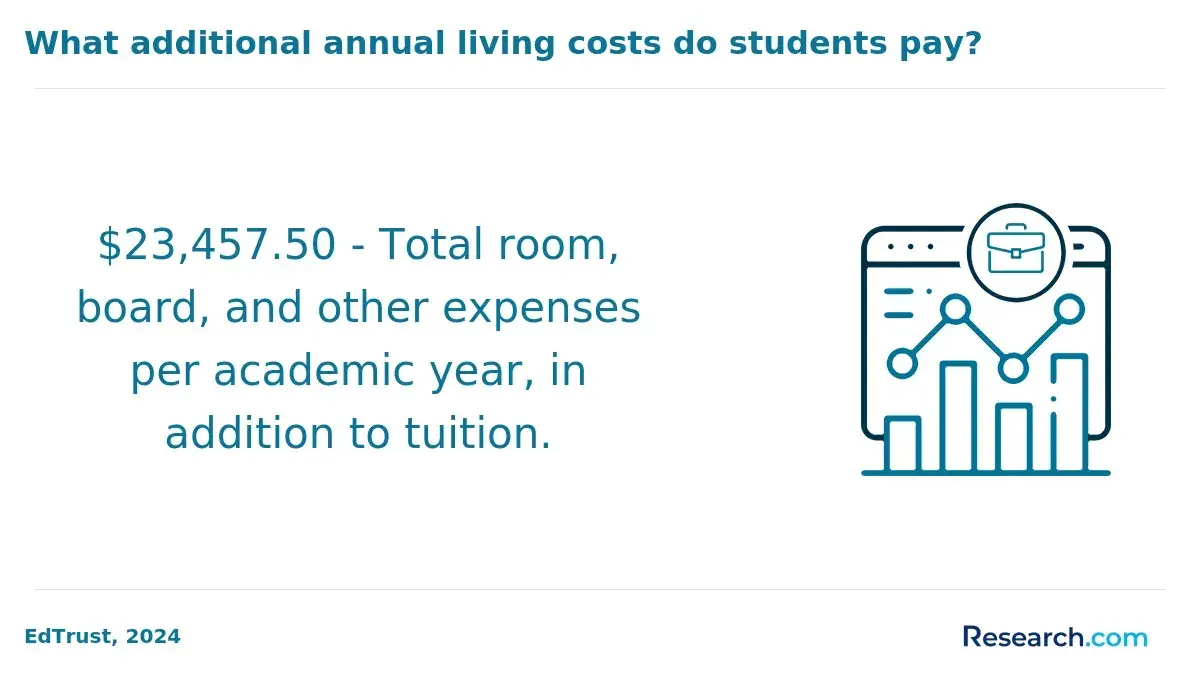
Another mistake is assuming the largest scholarship is the best offer. A $25,000 scholarship at a high-cost college may still leave a higher net price than a smaller award at a public university. Always compare the full cost of attendance, including tuition, fees, housing, food, books, supplies, transportation, health insurance, and personal expenses.
How do online, hybrid, and campus programs handle merit-based aid differently?
Online, hybrid, and campus programs can handle merit-based aid differently because their pricing, enrollment calendars, and student populations differ. Traditional campus programs often have first-year scholarship grids, honors awards, and residential scholarships. Online programs may offer tuition discounts, transfer awards, employer partnerships, military benefits, or adult-learner scholarships instead of classic freshman merit packages.
Format matters because scholarship rules may depend on enrollment intensity and program type. Students considering self-paced online college should verify whether competency-based or subscription-style tuition qualifies for the same institutional scholarships as semester-based programs.
The comparison below highlights practical differences students should expect when evaluating delivery formats. Use it to ask more precise questions before enrolling.
| Program format | How merit aid is commonly handled | Best fit | Potential drawback |
| Campus | First-year scholarships, honors programs, talent awards, athletic awards, and residential awards | Students seeking a traditional college experience and campus-based opportunities | Housing and fees can make total cost higher even with scholarships |
| Hybrid | May combine campus scholarship rules with online course flexibility | Students who need flexibility but still want campus access | Eligibility may depend on campus, program, or credit load |
| Fully online | May offer transfer scholarships, adult-student discounts, employer tuition partnerships, or program-specific awards | Working adults, transfer students, military-affiliated students, and students needing location flexibility | Some online programs have fewer competitive merit awards than residential programs |
Online students should also check whether scholarships require full-time enrollment. A working adult taking six credits per term may lose access to awards designed for full-time students, even if their academic record is strong. Conversely, some online colleges price programs lower up front and offer fewer discounts, so the net cost may still be competitive.
What role do accreditation and institutional quality play in merit-based scholarship opportunities?
Accreditation and institutional quality matter because a scholarship is only valuable if it helps pay for a credential that is recognized by employers, graduate schools, licensing boards, and transfer institutions. Institutional accreditation is especially important for federal financial aid eligibility and for the transferability of credits.
Students should check accreditation through the U.S. Department of Education's recognized accreditor database or the Council for Higher Education Accreditation. Programmatic accreditation may also matter in fields such as nursing, education, social work, counseling, engineering, business, architecture, and allied health. When comparing prestigious online universities, do not rely on reputation alone; confirm the specific program's accreditation and outcomes.
Quality also affects the true value of merit aid. A large scholarship at a school with weak retention, poor advising, limited career support, or unclear licensure alignment may be less valuable than a smaller award at a program with stronger student outcomes. The lowest net price is not always the best investment if it increases the risk of delayed graduation or non-transferable credits.
Watch for red flags before accepting a merit award. These signs do not automatically mean a school is a poor choice, but they should trigger additional questions.
- The school is vague about whether it holds recognized institutional accreditation.
- The scholarship offer is large, but renewal requirements are difficult to find or not provided in writing.
- The program claims broad career or licensure outcomes without explaining state-specific requirements.
- Credits have limited transferability, especially if you may change schools later.
- The award applies only to tuition while mandatory fees, technology charges, or clinical costs remain high.
A strong scholarship decision combines affordability with academic fit, accreditation, completion support, career services, and realistic time to graduation. Merit aid should make a good program more affordable, not distract from quality concerns.
How much can students typically receive in merit-based aid and what costs are covered?
Merit-based awards can range from small one-time scholarships to full-tuition or full-ride packages. The amount depends on the school's budget, selectivity, enrollment goals, donor restrictions, student profile, and whether the award is automatic or highly competitive.
Because colleges define scholarship coverage differently, students should look beyond the headline amount. The table below explains common coverage categories and why each one matters when estimating the real bill.
| Award coverage | What it may pay for | What may still be unpaid |
| One-time award | A single semester or first-year charge | Future years unless renewed or replaced |
| Annual fixed amount | A set amount toward tuition, fees, or total cost each year | Cost increases beyond the fixed award amount |
| Partial tuition | A portion of tuition charges | Fees, housing, food, books, transportation, and personal expenses |
| Full tuition | Tuition charges, usually for a defined number of semesters | Fees and living costs unless specifically included |
| Full ride | May include tuition, fees, housing, food, books, or other education costs | Personal expenses or costs outside the scholarship's definition |
One useful benchmark is the school's published cost of attendance, not just tuition. College Board's 2024 data shows average published tuition and fees of $30,780 for out-of-state students at public four-year colleges, before housing and other costs. A partial tuition scholarship may help significantly, but families still need to budget for living expenses and annual price increases.
Ask whether the award is renewable for four years, whether the amount changes if tuition rises, and whether it applies during summer terms. Students in majors with extra costs, such as nursing, aviation, art, music, engineering, or health sciences, should also check whether lab fees, equipment, clinical fees, flight fees, or studio supplies are covered.
How do merit-based scholarships affect future earnings, student debt, and return on investment?
Merit-based scholarships can improve return on investment by lowering the amount a student pays or borrows for the same credential. The benefit is strongest when the scholarship reduces loans, allows on-time graduation, and supports a program aligned with realistic career goals.
Education still has a labor-market payoff on average, but outcomes vary by major, region, experience, and employer demand. The U.S. Bureau of Labor Statistics' 2024 education data reports median weekly earnings of $1,543 for workers with a bachelor's degree, compared with $930 for workers with a high school diploma. This does not mean every degree or college pays off equally, but it shows why reducing the cost of a recognized credential can matter over a career.
Merit aid can affect ROI in several ways. It may reduce principal borrowed, reduce interest paid over time, allow a student to choose a stronger academic fit, or make graduate school more financially realistic. However, a scholarship should not be used to justify attending a college that is still unaffordable after aid.
To judge whether a merit offer improves long-term value, focus on the factors that connect cost to completion and earnings potential.
- Net price after all grants and scholarships, not the size of the merit award alone.
- Renewability, including GPA, credit load, major, residency, and conduct requirements.
- Time to completion, because an extra semester can erase part of the scholarship's value.
- Program outcomes, including graduation rates, licensure pass rates where relevant, internship access, and career services.
- Borrowing level, especially whether scholarships reduce unsubsidized or private loans.
Students should also consider opportunity cost. A college with a smaller scholarship but better transfer credit acceptance, stronger advising, or a shorter path to graduation may produce a better financial result than a larger award with restrictive renewal rules.
How can you compare colleges' merit-based aid offers and negotiate a better package?
Comparing merit-based aid offers is a financial decision, not just an admissions celebration. Colleges may present awards differently, so families should convert every offer into the same format: total cost of attendance minus gift aid equals estimated net price before loans and work.
The following comparison framework helps separate a strong offer from one that only looks generous. Use it before committing to a deposit.
| Comparison factor | Why it matters | Stronger offer usually shows |
| Total cost of attendance | Includes costs beyond tuition | Transparent estimates for tuition, fees, housing, food, books, transportation, and personal expenses |
| Gift aid | Does not require repayment | Clear separation of scholarships and grants from loans and work-study |
| Renewal rules | Determines multi-year value | Reasonable GPA and credit requirements stated in writing |
| Stacking policy | Controls how outside scholarships affect the package | Outside awards reduce loans or unmet cost before reducing grants |
| Completion support | Affects whether the student can keep the scholarship and graduate on time | Strong advising, tutoring, career support, and clear degree plans |
You can also appeal or ask for reconsideration, especially if your financial situation changed, a competing college offered a stronger package, or new achievements occurred after admission. Be polite, specific, and realistic. Financial aid offices are more likely to help when you provide documentation and explain that affordability affects your enrollment decision.
A practical appeal process usually includes these steps.
- Calculate each college's net price using the same cost categories.
- Gather competing offers, updated grades, new test scores if relevant, awards, leadership roles, or changed financial circumstances.
- Email the admissions or financial aid office and ask whether merit reconsideration or a scholarship appeal process is available.
- Explain why the college remains a top choice and state the affordability gap clearly.
- Ask how outside scholarships, housing choices, transfer credits, or earlier start terms could change the final cost.
Students comparing flexible enrollment options, including online colleges that start soon, should ask whether accepting a later or nontraditional start date changes scholarship eligibility. Some awards are tied to fall entry, full-time status, or a specific cohort.
Do not negotiate by exaggerating offers or threatening to enroll elsewhere unless you are prepared to do so. A better approach is to present facts, show fit, and ask whether additional institutional, departmental, honors, or donor-funded scholarships are available.
Other Things You Should Know About
No. Strong grades help, but many awards consider leadership, service, artistic talent, athletics, research potential, entrepreneurship, major choice, or community impact. Some scholarships are designed for well-rounded students rather than only top academic performers.
Yes, many students receive both. However, colleges have different stacking policies, so an additional scholarship may reduce loans, unmet need, or institutional grants. Ask the financial aid office how each award changes your net price.
Usually no, as long as you meet the award rules. You may lose future eligibility if you fall below the required GPA, drop below full-time status, change majors, or fail to meet participation requirements.
Yes, but they may look different from campus scholarships. Online students may see transfer awards, adult-learner scholarships, employer partnerships, military discounts, or program-specific aid. Always confirm whether your enrollment format and credit load qualify.
References
- View of The Relationship Between State Funded Merit Scholarships and Student Loan Debt https://ojed.org/hepe/article/view/3688/1585
- Top 210 Merit-Based Scholarships to Apply for in April 2026 https://bold.org/scholarships/by-type/merit-based/
- A Guide to Merit Scholarships + List of 25 Great Merit-based Scholarships https://www.collegeessayguy.com/blog/merit-scholarships
- My College Offers - Road2College https://compareoffers.road2college.com/
- The Ultimate Guide to Finding and Applying for Merit Scholarships https://www.ivywise.com/blog/merit-scholarships/
- The Role of Rankings and Accreditation in Choosing a University - Zylentrix https://zylentrix.net/rankings-and-accreditation-choosing-a-university/
- Online and hybrid college programs explained. Flexibility, risk, and the real value equation | CG https://collegegrind.org/posts/online-and-hybrid-college-programs-explained/
- Unlocking Merit-Based Scholarship Opportunities: Your Guide to Eligibility for Scholarships https://www.personalizedprep.com/post/unlocking-merit-based-scholarship-opportunities-your-guide-to-eligibility-for-scholarships
- What You Need to Know about Merit-Based Financial Aid https://www.mefa.org/article/what-you-need-to-know-about-merit-based-financial-aid/
- Quality in Higher Education Institutions as a Transversal Tool in Institutional Accreditation: A Bibliometric Review https://www.eu-jer.com/quality-in-higher-education-institutions-as-a-transversal-tool-in-institutional-accreditation-a-bibliometric-review