2027 Automotive Engineering Schools: Complete Student Guide

Co-Founder and Chief Data Scientist
Choosing an automotive engineering school is a major decision because the field is shifting from combustion-only design toward electrification, software, automation, and advanced manufacturing. The U. S. Bureau of Labor Statistics projects mechanical engineering jobs to grow 11% from 2023 to 2033, a signal that vehicle-focused engineering skills remain relevant. This guide is for students comparing degrees, costs, accreditation, hands-on labs, online options, and career outcomes. You will learn how to judge program quality, avoid costly mistakes, and choose the path that best fits your goals.
Key Things You Should Know
- Automotive engineering is usually offered as a mechanical engineering, automotive engineering, vehicle systems, mobility engineering, or motorsports engineering pathway; ABET accreditation is the most important quality signal for bachelor's-level engineering programs.
- The median annual wage for U.S. mechanical engineers was $102,320 in May 2024, but automotive-focused salaries vary by role, location, employer, degree level, and specialization.
- For 2024-25, published tuition and fees averaged $11,610 at public four-year colleges for in-state students and $43,350 at private nonprofit four-year colleges, so total cost and financial aid can change the value of a program significantly.
What is automotive engineering and how do U.S. schools prepare students for this field?
Automotive engineering is the branch of engineering focused on designing, testing, manufacturing, and improving vehicles and mobility systems. It overlaps heavily with mechanical engineering, electrical engineering, computer engineering, materials science, software development, manufacturing, and systems engineering.
U.S. schools prepare students by combining engineering science with vehicle-specific applications. A strong program does not only teach how engines, brakes, batteries, or chassis systems work; it also teaches students how to solve design problems under constraints such as safety rules, cost, energy efficiency, emissions, reliability, and manufacturability.
Automotive engineering is a good fit for students who enjoy applied math, physics, design trade-offs, lab testing, and teamwork. It may not be the best fit for students who want a low-math major or a program with mostly conceptual coursework and little hands-on problem-solving. Students still exploring technical fields may also want to compare automotive engineering with other best college majors for the future, especially if they are deciding between mobility, robotics, energy, software, or manufacturing careers.
The table below summarizes how common academic areas connect to real automotive engineering work. This matters because the program name alone does not tell you whether a school will prepare you for the vehicle systems you actually want to work on.
| Academic area | Automotive application | Best fit for students interested in |
| Mechanical engineering | Powertrains, thermal systems, structures, vehicle dynamics, manufacturing | Design, testing, performance, durability |
| Electrical or computer engineering | Battery systems, sensors, controls, embedded electronics, driver-assistance systems | EVs, autonomous systems, vehicle electronics |
| Software engineering or computer science | Simulation, perception systems, diagnostics, connected vehicle platforms | Autonomous vehicles, mobility software, data systems |
| Materials engineering | Lightweight materials, crashworthiness, corrosion resistance, battery materials | Safety, sustainability, advanced manufacturing |
| Industrial or manufacturing engineering | Assembly systems, quality control, lean production, supply chains | Plant engineering, production, operations |
Most students should think of automotive engineering as a specialization rather than a single narrow major. A mechanical engineering degree with strong vehicle electives, Formula SAE participation, co-ops, and industry-sponsored capstone projects can be just as career-relevant as a degree with "automotive" in the title.
What types of automotive engineering degrees can you earn in the United States?
Automotive engineering pathways exist at several levels, from technician-oriented associate degrees to research-focused doctorates. The right choice depends on whether you want to repair and test vehicles, design components, manage manufacturing systems, or lead advanced research.
The table below compares the most common degree options. Use it to match your current academic background, career target, and tolerance for time and cost.
| Degree type | Typical length | What it prepares you for | When it makes sense |
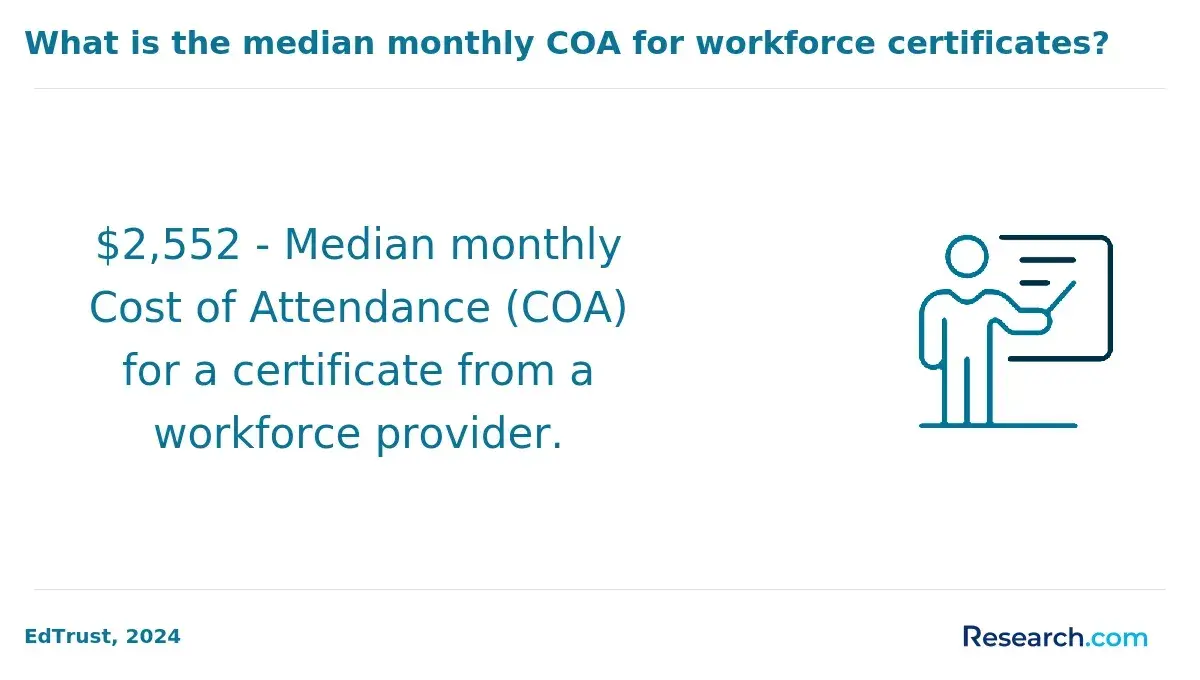
| Certificate or diploma | Several months to 1 year | Automotive service, EV safety basics, diagnostics, manufacturing skills | You want a fast workforce credential or to add a narrow skill |
| Associate degree | About 2 years | Automotive technology, testing support, technician roles, transfer preparation | You want an affordable starting point or a hands-on technical route |
| Bachelor's degree | About 4 years | Entry-level engineering design, testing, manufacturing, systems roles | You want to become an engineer rather than primarily a technician |
| Master's degree | About 1 to 2 years after a bachelor's | Advanced vehicle systems, EVs, controls, autonomy, research and development | You want specialization, advancement, or access to more technical roles |
| Doctorate | Often 4 to 6 years after a bachelor's | Research, university teaching, advanced simulation, novel vehicle technologies | You want a research-intensive career or academic pathway |
An associate degree can be a smart option if you want to start in diagnostics, testing, dealership technology, fleet maintenance, or manufacturing support before deciding whether to transfer into engineering. Students who need flexibility can compare an online associate degree with local lab-based programs, but vehicle-focused associate programs usually still require in-person shop or lab work.
For engineering roles, the bachelor's degree is the standard entry point. A certificate alone usually does not qualify someone for engineer-titled design positions, but it can help students build employable skills in areas such as CAD, EV safety, welding, CNC machining, quality control, or automotive diagnostics.
How do you choose an accredited automotive engineering school that meets industry standards?
The most important accreditation question is whether the engineering program is accredited by ABET's Engineering Accreditation Commission. ABET accreditation is widely recognized by employers, graduate schools, and licensing boards because it indicates that the program meets standards for math, science, design, ethics, teamwork, and continuous improvement.
Accreditation should not be the only factor, but it should be one of your first filters. A school can have an impressive automotive lab or racing team and still be a poor fit if the degree will not support your long-term engineering goals.
Use the following steps to evaluate a school before applying or enrolling. These checks help you compare programs beyond rankings and marketing language.
- Confirm ABET accreditation for the specific engineering program, not just the university.
- Review whether automotive coursework is a formal concentration, a minor, a certificate, or only a few electives.
- Look for required labs in thermodynamics, fluids, materials, controls, electronics, manufacturing, and vehicle systems.
- Check whether students complete capstone projects with automotive companies, suppliers, motorsports teams, or mobility startups.
- Ask about co-op and internship placement with OEMs, Tier 1 suppliers, testing labs, fleet operators, aerospace firms, and manufacturing employers.
- Compare faculty expertise in EVs, batteries, autonomy, powertrains, simulation, safety, manufacturing, or motorsports.
- Review transfer credit rules before assuming community college courses will count toward the engineering major.
Common red flags include vague claims about "industry alignment," lack of transparent lab access, unclear accreditation language, weak math and physics requirements for an engineering degree, and career outcomes that are described only with broad salary promises. If a program sounds easier than a traditional engineering degree but claims to lead to the same engineering roles, ask very specific questions before committing.
What are the typical admission requirements for automotive engineering programs?
Admissions requirements vary by school and degree level, but automotive engineering applicants should expect a math- and science-heavy review. Selective bachelor's programs often look for evidence that students can handle calculus, physics, lab science, and project-based engineering work.
Most programs evaluate a mix of academic preparation and fit. The list below shows the requirements students commonly encounter and why each one matters.
- High school diploma or equivalent for undergraduate admission, with strong preparation in algebra, trigonometry, pre-calculus, calculus, physics, and chemistry when available.
- Minimum GPA requirements that may differ for general university admission and admission to the engineering major.
- Standardized test scores if required or submitted under a test-optional policy, especially for programs that still use math scores for placement.
- Prerequisite college courses for transfer students, often including calculus, calculus-based physics, chemistry, English composition, and introductory engineering.
- Portfolio, project, robotics, automotive club, or competition experience when programs consider hands-on preparation.
- For master's programs, a bachelor's degree in engineering or a closely related field, plus prerequisites in mechanics, thermodynamics, controls, programming, or circuits depending on the specialization.
- For international applicants, English language proficiency and transcript evaluation requirements set by the institution.
Students who are not ready for calculus-based engineering should not automatically give up on the automotive field. A community college pathway, automotive technology associate program, or targeted skills credential can build momentum. If your goal is faster employment rather than engineer-titled work, explore short certificate programs that pay well and compare them with longer degree options.
Avoid the mistake of applying only to reach schools with highly competitive engineering admissions. A balanced list should include accredited programs where your math preparation, finances, location needs, and learning style are a realistic match.
What core courses and technical skills are taught in automotive engineering majors?
Automotive engineering programs build from general engineering fundamentals into vehicle-specific design and testing. The early coursework can feel broad, but it is necessary because modern vehicles are complex systems that combine mechanics, electronics, software, materials, and manufacturing.
Students should expect the following course and skill areas in a rigorous program. These topics matter because employers often hire for demonstrated ability to model, test, troubleshoot, and communicate engineering decisions.
- Calculus, differential equations, statistics, and numerical methods for engineering analysis and simulation.
- Physics, chemistry, statics, dynamics, mechanics of materials, and materials science for understanding forces, energy, structures, and failure modes.
- Thermodynamics, fluid mechanics, heat transfer, and internal combustion or alternative powertrain courses for propulsion and energy systems.
- Electric circuits, controls, sensors, embedded systems, and mechatronics for vehicle electronics and automation.
- Computer-aided design, finite element analysis, computational fluid dynamics, and simulation tools for design validation.
- Manufacturing processes, quality systems, lean production, and supply chain concepts for turning designs into reliable products.
- Vehicle dynamics, chassis design, braking systems, suspension, safety, NVH, emissions, batteries, EV architecture, and autonomous vehicle concepts where offered.
- Technical writing, engineering ethics, project management, and teamwork for professional engineering practice.
The strongest students graduate with more than course grades. They can point to lab reports, CAD models, test plans, competition vehicles, internships, coding projects, manufacturing improvements, or capstone results. These artifacts help employers see how a student thinks through real engineering constraints.
Current technology trends are also changing what "automotive" means. Students interested in electric and autonomous vehicles should build competence in battery systems, power electronics, controls, Python or MATLAB, sensor fusion, cybersecurity basics, and data analysis. Students focused on manufacturing should prioritize robotics, quality methods, automation, and process improvement.
How do on-campus and online automotive engineering programs compare for hands-on training?
Automotive engineering is difficult to learn fully online because vehicles require physical testing, measurement, prototyping, calibration, and safety procedures. However, online and hybrid formats can work well for general education, math, programming, simulation, graduate theory courses, or students who already have access to a workplace lab.
The table below compares online, hybrid, and campus formats. It can help you decide whether flexibility is worth the trade-offs in lab access and peer collaboration.
| Format | Strengths | Limitations | Best fit |
| On-campus | Direct access to labs, vehicles, faculty, teams, machine shops, and testing equipment | Less flexible schedule and possible relocation costs | Traditional bachelor's students and hands-on learners |
| Hybrid | Combines online coursework with scheduled labs or residencies | Requires travel or periodic campus attendance | Working students who still need practical training |
| Online | Flexible for theory, management, simulation, and some graduate coursework | Limited access to physical vehicle systems unless arranged separately | Professionals upgrading skills or students completing non-lab requirements |
If you are comparing online options, ask how the school handles labs before you ask about convenience. A credible program should be able to explain exactly which experiences are remote, which are in person, and how students demonstrate practical competence.
Students should also ask admissions or department advisors these questions before enrolling. The answers will reveal whether the format supports real automotive learning or simply delivers engineering content in a flexible schedule.
- Which courses require in-person labs, and where are they completed?
- Do online students have access to CAD, simulation, data acquisition, or embedded systems tools?
- Can remote students join capstone teams, SAE competitions, or industry-sponsored projects?
- Are internships, co-ops, or local employer partnerships available to online students?
- How are lab safety, equipment access, and hands-on assessment handled?
A fully online automotive engineering degree may be convenient, but it is not automatically the best value if it leaves you without testing, prototyping, or project evidence. For first-time bachelor's students, on-campus or hybrid programs are usually stronger for career preparation.
How long do automotive engineering degrees take and what do they cost to complete?
Program length depends on degree level, transfer credits, course load, co-op participation, and whether students need developmental math before calculus. Cost depends on tuition, fees, housing, transportation, tools, software, books, lab fees, and lost wages if studying full time.
College Board's 2024 pricing report listed average published 2024-25 tuition and fees of $11,610 for in-state students at public four-year colleges and $43,350 at private nonprofit four-year colleges. These figures are sticker prices, not net prices, so grants, scholarships, residency status, and living arrangements can change the real cost substantially.
The table below summarizes typical timelines and cost drivers. Use it to estimate the investment before comparing individual schools' financial aid offers.
| Path | Typical time to complete | Major cost drivers | Cost-control strategy |
| Certificate | Several months to 1 year | Program fees, tools, exam fees, equipment access | Choose employer-recognized credentials tied to a specific skill |
| Associate degree | About 2 years | Tuition, tools, commuting, shop fees | Use transfer agreements if planning to continue to a bachelor's |
| Bachelor's degree | About 4 years, sometimes 5 with co-ops | Tuition, housing, lab fees, software, delayed full-time earnings | Compare net price, co-op wages, scholarships, and graduation rates |
| Master's degree | About 1 to 2 years | Graduate tuition, research fees, relocation, opportunity cost | Look for assistantships, employer tuition benefits, or part-time formats |
| Doctorate | Often 4 to 6 years after a bachelor's | Time commitment, research costs, stipend level | Prioritize funded programs and advisor fit |
To evaluate return on investment, do not compare tuition alone. A lower-cost program with weak advising, limited labs, and poor internship access may take longer to finish, while a more expensive program with strong co-ops may reduce debt and improve job readiness.
Students comparing automotive engineering with other high-earning technical options can review what degrees make the most money, but salary should be only one factor. Fit, persistence in engineering math, location, debt level, and access to work experience all influence value.
Before enrolling, complete these practical cost checks. They can prevent surprises that are not obvious from the advertised tuition rate.
- Ask for the estimated total cost of attendance, not just tuition.
- Compare net price after grants and scholarships across all schools.
- Check whether engineering courses have extra lab, equipment, or software fees.
- Ask how co-ops affect graduation time, billing, and financial aid eligibility.
- Confirm transfer credit policies in writing before choosing a lower-cost starting school.
- Estimate transportation and housing costs if labs, internships, or co-ops require relocation.
What entry-level and advanced careers can automotive engineering graduates pursue?
Automotive engineering graduates can work for automakers, suppliers, testing laboratories, motorsports teams, battery companies, robotics firms, defense contractors, fleet operators, consulting firms, and manufacturing organizations. The degree can also support careers outside traditional automotive companies because vehicle engineering skills transfer to aerospace, energy, industrial equipment, and automation.
The table below maps common roles to typical responsibilities. It is useful because job titles vary widely, and many automotive careers are posted under broader engineering categories.
| Career path | Typical responsibilities | Common preparation |
| Automotive design engineer | Designs components or systems, creates models, evaluates manufacturability | Bachelor's in mechanical or automotive engineering, CAD, analysis tools |
| Test or validation engineer | Plans tests, collects data, investigates failures, verifies performance and durability | Engineering degree, lab skills, data analysis, instrumentation |
| Powertrain engineer | Works on engines, transmissions, hybrid systems, motors, or driveline systems | Thermodynamics, controls, EV or combustion coursework |
| Battery or EV systems engineer | Develops battery packs, thermal systems, charging systems, or energy management strategies | Electrical, mechanical, chemical, or systems engineering background |
| Manufacturing engineer | Improves production processes, quality, tooling, automation, and assembly efficiency | Manufacturing, quality, robotics, lean methods |
| Controls or autonomous systems engineer | Develops control algorithms, sensor systems, simulations, or vehicle automation features | Controls, programming, robotics, embedded systems |
| Engineering manager or technical lead | Leads teams, budgets, product timelines, vendor decisions, and technical strategy | Experience, communication skills, advanced degree or management training |
Entry-level graduates often start in testing, design support, quality, manufacturing, calibration, simulation, or supplier engineering. Advanced roles usually require several years of experience, a graduate degree, specialized software skills, or leadership responsibility.
Automotive engineering can suit both highly collaborative and more independent work styles. Students who prefer focused technical analysis, CAD modeling, simulation, or data-heavy validation may also want to compare related jobs for introverts that pay well, especially if they are deciding between lab, design, software, and field roles.
To prepare for the job market, students should build evidence of applied ability before graduation. Employers are more likely to trust skills that are demonstrated through projects, internships, and measurable results.
- Join Formula SAE, Baja SAE, EcoCAR, robotics, solar car, or other design-build teams when available.
- Complete at least one internship, co-op, research project, or industry-sponsored capstone.
- Build a portfolio with CAD models, test reports, code samples, simulations, and design explanations.
- Learn tools used in target roles, such as MATLAB, Simulink, Python, SolidWorks, CATIA, ANSYS, LabVIEW, or CAN tools.
- Practice explaining trade-offs involving cost, weight, safety, efficiency, reliability, and manufacturability.
What salary ranges and advancement opportunities exist in automotive engineering careers?
Automotive engineering salaries vary because the field spans mechanical design, manufacturing, electrical systems, software, testing, research, and management. Salary also depends on region, employer size, industry segment, overtime, bonuses, security clearance, union environment, and graduate education.
The U.S. Bureau of Labor Statistics reported a May 2024 median annual wage of $102,320 for mechanical engineers, the broad occupational category that includes many automotive engineering roles. This median is not an automotive-only number, but it provides a useful benchmark for students comparing engineering pathways.
The table below gives a practical view of salary context by career stage. It avoids treating any one figure as a guaranteed outcome and instead shows how responsibilities typically expand over time.
| Career stage | Common titles | Typical advancement focus |
| Entry level | Associate engineer, test engineer, design engineer, manufacturing engineer | Build technical credibility, learn tools, document results, complete supervised projects |
| Midcareer | Project engineer, systems engineer, calibration engineer, senior manufacturing engineer | Own subsystems, coordinate suppliers, mentor junior staff, improve cost or performance |
| Senior level | Senior engineer, technical specialist, principal engineer, engineering manager | Lead major designs, approve technical decisions, manage teams or specialized platforms |
| Advanced leadership or research | Chief engineer, R&D lead, director, professor, research scientist | Set strategy, lead innovation, manage budgets, publish or commercialize advanced work |
Students who want higher earning potential should focus on scarce, employer-valued skills rather than assuming the degree title alone will drive salary. EV power electronics, battery thermal management, embedded software, controls, autonomy, systems engineering, manufacturing automation, and data analysis can be especially useful depending on the employer.
Advancement may also require professional development beyond the degree. The Fundamentals of Engineering exam, Professional Engineer licensure, graduate certificates, a master's degree, Six Sigma credentials, project management training, or employer-specific technical certifications can support progression, but requirements vary by role and state.
What is the job outlook for automotive engineers, including electric and autonomous vehicles?
The job outlook for automotive engineers is shaped by broader demand for mechanical, electrical, software, and manufacturing engineering talent. BLS employment projections published in 2024 show mechanical engineering roles growing 11% from 2023 to 2033, faster than the average for all occupations. For students, this suggests that broad engineering fundamentals may be safer than a program that is too narrowly tied to one vehicle technology.
Electric and autonomous vehicles are changing the mix of skills employers want. Traditional vehicle knowledge still matters, but many openings increasingly value controls, batteries, electronics, thermal management, software, sensors, simulation, cybersecurity awareness, and systems integration.
The strongest career strategy is to prepare for multiple mobility futures rather than betting on one technology. Students can use the following approach to stay adaptable.
- Choose a broad ABET-accredited engineering base before specializing too narrowly.
- Add electives or projects in EV systems, controls, autonomy, manufacturing automation, or data analysis.
- Build hands-on experience through co-ops, internships, labs, competition teams, or undergraduate research.
- Follow job postings from automakers, suppliers, battery firms, robotics companies, and manufacturing employers to identify recurring skill requirements.
- Keep learning after graduation because tools, regulations, battery chemistries, and vehicle software platforms change quickly.
Students should also understand the limitations of labor market data. BLS categories do not isolate "automotive engineer" as a single occupation, so salary and job growth estimates usually come from related categories such as mechanical engineers, electrical engineers, software developers, industrial engineers, and engineering managers.
The main risk is choosing a program that focuses only on legacy vehicle systems without enough exposure to electronics, software, electrification, and automation. The better path is a balanced engineering education with enough specialization to signal automotive interest and enough breadth to move across industries if the market changes.
Other Things You Should Know About
Not exactly. Automotive engineering is usually a specialization within or closely related to mechanical engineering. Mechanical engineering is broader, while automotive engineering applies engineering principles to vehicles, mobility systems, manufacturing, testing, and performance.
ABET accreditation is strongly recommended for bachelor's-level engineering programs. Many employers prefer it, and it can matter for graduate school, engineering licensure, and long-term career flexibility. Always verify accreditation for the specific program, not only the institution.
Some coursework can be completed online, especially math, programming, simulation, management, or graduate theory courses. However, vehicle-focused training usually requires labs, testing equipment, prototyping, or in-person projects, so hybrid or campus programs often provide stronger hands-on preparation.
It can be worth it if you want engineering roles in vehicle design, testing, EV systems, manufacturing, controls, or mobility technology and you choose an accredited program with strong labs and work experience. It may be less suitable if you want a quick, low-cost path into automotive service or if you dislike advanced math and physics.
References
- Salary progression in Automotive Engineer https://www.whitecarrot.ai/resources/templates/progression-salary/automotive-engineer
- Automotive Engineers Career Guide: Salary, Skills, Education & Outlook https://www.assessment.com/architecture-and-engineering/automotive-engineers
- Automotive Engineering Concentration https://www.kettering.edu/academics-research/programs/automotive-engineering-concentration
- Entry Level Automotive Engineer Career Path Guide https://aiapply.co/careers/entry-level-automotive-engineer
- Automotive - academy.nit-institute.com https://academy.nit-institute.com/automotive/
- Automotive Engineering Degree – Turn Your Passion into a Career! https://www.automotiveengineeringhq.com/automotive-engineering-degree/
- Benefits of automotive engineering https://studyfans.com/en/blogs/565
- Newport University https://www.newportuniversity.eu/programs/b-sc-in-automotive-engineering/
- Entry Level Automotive Engineering Jobs: F1 & Motorsport https://tracksidecareers.com/blog/entry-level-automotive-engineering-jobs
- What is Automotive Engineering? Salary & Career Overview - Educating Engineers https://educatingengineers.com/careers/automotive-engineer/