2027 AR VR: Complete Student Guide

Co-Founder and Chief Data Scientist
Choosing an AR VR program is a bigger decision than picking a "cool tech" major; it affects your portfolio, software skills, costs, and job options. The U.S. Bureau of Labor Statistics projects software developer employment to grow 17% from 2023 to 2033, and many AR VR roles sit inside that broader software and digital design market.
This guide is for students comparing degrees, certificates, online programs, and career outcomes. You will learn what to study, what to verify, what it may cost, and how to choose a program with better long-term value.
Key Things You Should Know
- AR VR programs usually combine programming, 3D design, UX, game-engine development, spatial computing, and portfolio projects; the best fit depends on whether you want a technical, design, training, healthcare, or entertainment-focused career.
- College Board data for 2024-25 shows average published tuition and fees of $11,610 for in-state public four-year colleges and $43,350 for private nonprofit four-year colleges, so total cost and transfer credit policies matter as much as the major name.
- For salary planning, BLS May 2024 medians show related roles vary widely, with software developers at $133,080 and special effects artists and animators at $99,060, meaning outcomes depend heavily on role, skills, employer, and portfolio quality.
What is AR VR in education and training?
AR VR in education and training refers to the use of augmented reality, virtual reality, mixed reality, and extended reality tools to teach concepts, simulate tasks, and create interactive digital environments. AR overlays digital information on the real world, VR places users inside a fully simulated environment, and mixed reality blends physical and digital interaction more dynamically.
For students, AR VR is not only about headsets. Degree programs typically teach how immersive experiences are designed, coded, tested, and deployed. That can include Unity or Unreal Engine, 3D modeling, human-computer interaction, motion tracking, accessibility, and learning design.
The table below explains the main terms you will see when comparing programs. Understanding these labels helps you avoid choosing a program that sounds immersive but does not match your actual career goal.
| Term | What it means | Common education or training use |
| Augmented reality | Digital content appears over the physical world through a phone, tablet, glasses, or headset. | Medical anatomy overlays, manufacturing instructions, museum learning, field training, retail visualization. |
| Virtual reality | The user enters a fully simulated 3D environment. | Flight simulation, safety drills, game environments, therapy practice, virtual labs. |
| Mixed reality | Physical and digital objects interact in a shared environment. | Engineering prototypes, collaborative design reviews, advanced technical training. |
| Extended reality | An umbrella term that includes AR, VR, and mixed reality. | Program titles, research labs, enterprise training, immersive media production. |
Current AR VR education is also being shaped by AI-assisted development. AI tools can help generate concept art, draft code, create 3D assets, and test user interactions, but they do not replace the need for strong design judgment, programming fundamentals, and ethical decision-making.
How do AR VR degree programs prepare students for careers?
AR VR degree programs prepare students by combining technical production skills with applied projects. A strong program should help you graduate with a portfolio, not just a transcript. Employers in immersive technology often want evidence that you can build usable experiences, collaborate with artists and developers, and solve performance or user-experience problems.
Most programs build career readiness through a mix of coursework, labs, studio projects, internships, capstones, and sometimes research assistantships. If you are comparing AR VR with other technology or design majors, it may help to review broader lists of degrees that make the most money, but salary should not be the only deciding factor because AR VR roles depend strongly on portfolio quality and specialization.
The table below compares common AR VR education paths. Use it to match the credential level to your starting point, time budget, and career target.
| Program type | Best for | Typical focus | Career use |
| Certificate or bootcamp-style program | Students who already have a degree or want a focused skill upgrade. | Unity, Unreal Engine, 3D assets, interaction design, project portfolio. | Portfolio building, career pivoting, adding immersive media skills to an existing role. |
| Associate degree | Students seeking a lower-cost start or transfer pathway. | Foundational programming, digital media, 3D design, general education. | Entry-level production support or transfer into a bachelor's program. |
| Bachelor's degree | Students seeking the broadest undergraduate preparation. | Computer science, game development, UX, simulation, media production, capstone projects. | XR developer, technical artist, immersive media designer, simulation specialist. |
| Master's degree | Students who want advanced specialization or research-oriented roles. | Human-computer interaction, spatial computing, advanced graphics, learning technology, research methods. | Senior design, research, product development, higher-level technical or instructional design roles. |
A degree can be worth it if the program gives you rigorous technical training, access to current tools, faculty with relevant experience, and a portfolio that aligns with hiring needs. It may be less useful if it is mostly a general digital media degree with only one or two immersive technology courses and limited hands-on production.
What accreditation should an AR VR program have?
An AR VR program should be offered by an institution that is accredited by an accreditor recognized by the U.S. Department of Education or the Council for Higher Education Accreditation. Accreditation matters because it affects federal financial aid eligibility, credit transfer, graduate school admission, and how employers interpret your degree.
There is no single required programmatic accreditation for all AR VR degrees. Instead, the right accreditation question depends on the department. A computer science-heavy AR VR program may benefit from ABET accreditation if it is housed in computing or engineering. A design or media program may be evaluated differently, with stronger emphasis on faculty work, studio quality, portfolio outcomes, and industry partnerships.
Before enrolling, verify accreditation directly and ask how it applies to your program, not just the university as a whole. This short checklist can help you avoid common accreditation mistakes.
- Confirm the school's institutional accreditation through an official U.S. Department of Education or CHEA-recognized source.
- Ask whether the specific AR VR, game development, computer science, or digital media program has any program-level accreditation or external review.
- Check whether credits are likely to transfer to public universities or graduate programs if your plans change.
- Ask employers, alumni, or faculty how the credential is viewed in the specific industry you want to enter.
- Be cautious with schools that emphasize headset access and flashy demos but provide vague information about faculty qualifications, graduation outcomes, or credit transfer.
The biggest red flag is a school that avoids direct answers about accreditation. If admissions staff cannot clearly explain who accredits the institution, whether the program is degree-granting, and how credits transfer, pause before committing.
Should you choose an online or campus AR VR program?
Online and campus AR VR programs can both work, but they serve different types of students. The best choice depends on your schedule, equipment access, need for studio collaboration, and whether you learn better independently or in a lab-based environment.
Online AR VR programs are often attractive to working adults, caregivers, active-duty military families, and students who cannot relocate. Students with frequent moves may also want to compare flexible options such as online degrees for military spouses, especially if transferability and asynchronous coursework are priorities.
The table below compares the two formats across the factors that usually matter most for AR VR students. Use it to decide which learning environment is more likely to support your portfolio and completion timeline.
| Factor | Online AR VR program | Campus AR VR program |
| Best fit | Self-directed students who need flexibility and can manage software setup independently. | Students who want in-person labs, studio culture, and direct access to faculty and equipment. |
| Equipment | May require your own headset, high-performance computer, webcam, and software subscriptions. | May provide lab access to headsets, motion capture tools, workstations, and testing spaces. |
| Collaboration | Usually remote through version control, video meetings, shared repositories, and online critique sessions. | Often easier for team-based production, playtesting, studio critique, and rapid troubleshooting. |
| Internships | May be local, remote, or arranged independently with career services support. | May benefit from nearby employers, campus recruiting, or regional creative technology networks. |
| Risk to watch | Limited hands-on hardware access if the program does not provide equipment support. | Higher relocation, housing, transportation, and scheduling costs. |
Choose online if flexibility is essential and you are comfortable building projects independently. Choose campus if you need structured studio time, physical labs, and frequent face-to-face critique. Either way, ask to see student portfolios, capstone examples, and the exact hardware or software students use.
What courses are included in an AR VR curriculum?
An AR VR curriculum usually blends computing, design, media production, and user research. The strongest programs do not treat immersive technology as a single elective; they build a sequence that moves from fundamentals to increasingly complex interactive projects.
The table below summarizes common course areas. It can help you compare programs even when schools use different course titles.
| Course area | What students learn | Why it matters |
| Programming fundamentals | Object-oriented programming, scripting, debugging, data structures, and software logic. | AR VR experiences depend on interactive systems, not just visual design. |
| Game engines | Unity, Unreal Engine, physics, lighting, input systems, optimization, and deployment. | Many immersive experiences are built in real-time engines used across games, training, simulation, and visualization. |
| 3D modeling and animation | Asset creation, textures, rigging, animation, environment design, and production pipelines. | Students need to understand how visual assets affect performance, usability, and immersion. |
| UX and human-computer interaction | User testing, interaction patterns, accessibility, comfort, cognitive load, and interface design. | Poor UX can make immersive experiences confusing, uncomfortable, or inaccessible. |
| Spatial audio and media | Sound design, immersive storytelling, audio cues, and media integration. | Audio and narrative design can improve presence, orientation, and learning effectiveness. |
| Ethics and safety | Privacy, biometric data, accessibility, bias, motion sickness, and responsible deployment. | AR VR systems may collect sensitive user data and affect physical or psychological comfort. |
| Capstone or portfolio studio | Team-based production, documentation, playtesting, iteration, and final presentation. | Employers often evaluate projects, repositories, demos, and design rationale. |
When reviewing a curriculum, look for progression. A program with introductory 3D design but no advanced engine development may fit an artist better than a developer. A program with strong computer science but little UX testing may need to be supplemented with design coursework or portfolio practice.
What are the admission requirements for AR VR programs?
Admission requirements for AR VR programs vary by credential level and academic department. A bachelor's program may admit first-year students based on general undergraduate criteria, while a master's program may expect prior coursework in computing, design, engineering, digital media, or a related field.
Many programs are competitive because they require both academic readiness and creative or technical evidence. The requirements below are the ones students most commonly need to prepare before applying.
- High school diploma, GED, or prior college coursework for undergraduate admission.
- Official transcripts showing math, science, computing, design, or media coursework when required.
- Minimum GPA requirements that vary by school and program level.
- Portfolio, demo reel, GitHub repository, design samples, or project documentation for selective programs.
- Statement of purpose explaining your interest in AR VR and your intended specialization.
- Letters of recommendation, especially for graduate programs.
- Prerequisite programming, calculus, digital media, or design courses for technical programs.
If you do not have a strong portfolio yet, do not assume you are disqualified. Some beginner-friendly programs admit students first and build foundational skills in the first year. More advanced programs may expect applicants to complete prerequisite courses or submit independent projects before admission.
A common mistake is applying only to programs with impressive lab photos. Instead, compare the admission requirements with your actual readiness. If you lack coding experience, a computer science-based AR VR degree may be harder at first but can offer stronger technical preparation. If you already code well but lack design experience, a UX or interactive media program may round out your skills.
How long does an AR VR program take and cost?
AR VR program length depends on the credential. Certificates may take a few months to a year, associate degrees usually take about two years, bachelor's degrees commonly take four years of full-time study, and master's programs often take one to two years. Part-time and online formats can extend the timeline but may make school more realistic for working students.
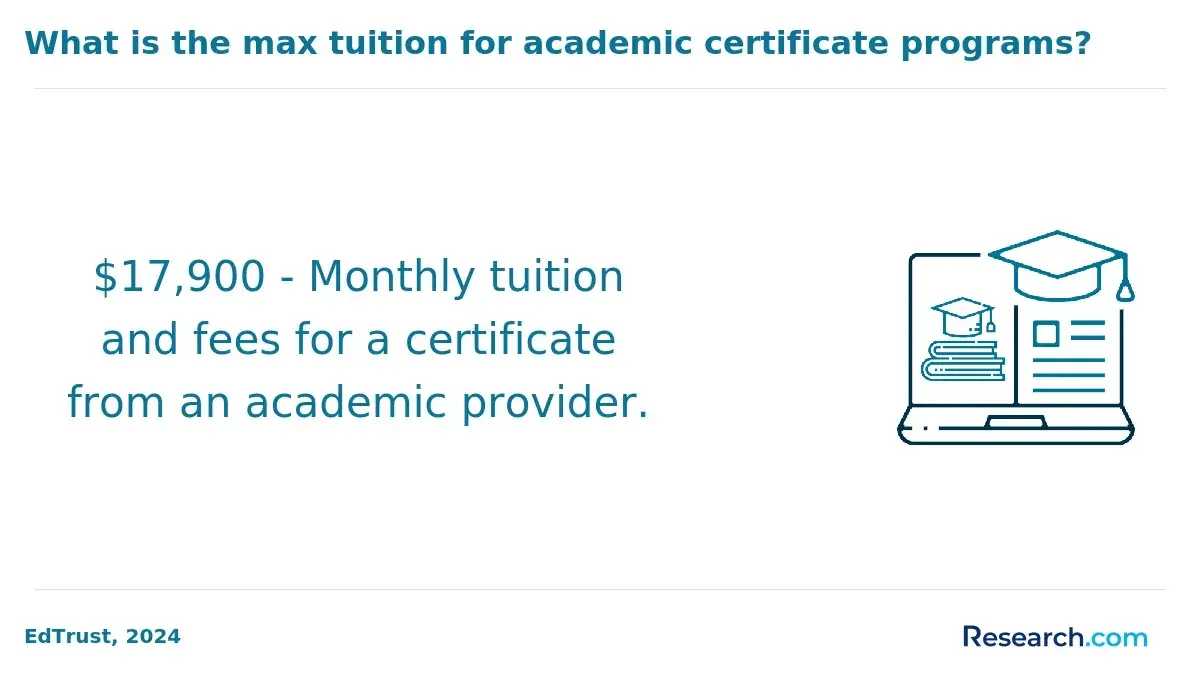
Cost varies more than program length because tuition, fees, equipment, housing, and transfer credits all affect the final price. College Board data for 2024-25 provides a useful baseline for published tuition and fees at four-year institutions:
- $11,610 average published tuition and fees for in-state students at public four-year colleges.
- $30,780 average published tuition and fees for out-of-state students at public four-year colleges.
- $43,350 average published tuition and fees at private nonprofit four-year colleges.
Those figures are not AR VR-specific, but they show why students should calculate total cost instead of comparing tuition alone. An immersive technology program may also require a powerful laptop or desktop, VR headset, external storage, graphics tablet, software subscriptions, lab fees, or travel for residencies and showcases.
If affordability is your main constraint, compare transfer pathways, community college starts, public in-state options, employer tuition assistance, and flexible online programs. Students searching for a cheap bachelor degree online should still check whether the lower-cost option includes enough AR VR coursework, portfolio support, and technical resources.
To estimate return on investment, compare the total net price after grants and scholarships with the roles you are realistically preparing for. A low-cost program with weak portfolio support may not be better than a more expensive program with strong internship access, but a high-tuition program is not automatically better either.
What jobs can you get with an AR VR degree?
An AR VR degree can lead to technical, creative, training, research, and product roles. Because "AR VR specialist" is not always a standardized job title, graduates often enter related occupations such as software development, game development, UX design, simulation, technical art, instructional design, or digital production.
BLS projects software developer employment to grow 17% from 2023 to 2033, which is much faster than the average for all occupations. That projection does not apply only to AR VR, but it matters because many immersive roles require software development skills and compete in the broader technology labor market.
The table below maps common AR VR career paths to responsibilities and useful preparation. It can help you choose electives, projects, and internships that match your target role.
| Job path | Typical responsibilities | Helpful preparation |
| XR developer | Build interactive AR VR applications, write code, integrate hardware, optimize performance, and test deployment. | Computer science, Unity or Unreal, C#, C++, 3D math, version control, portfolio projects. |
| Technical artist | Bridge art and engineering, optimize assets, create shaders, troubleshoot pipelines, and support real-time production. | 3D modeling, scripting, rendering, game engines, asset optimization, collaborative studio work. |
| Immersive UX designer | Design spatial interfaces, test user comfort, prototype interactions, and improve accessibility. | UX research, human-computer interaction, prototyping, usability testing, interaction design. |
| Simulation or training designer | Create immersive training experiences for healthcare, defense, aviation, manufacturing, or safety education. | Instructional design, scenario writing, assessment design, AR VR development, subject-matter collaboration. |
| 3D environment artist | Create virtual spaces, models, textures, lighting, and visual assets for immersive applications. | 3D art, animation, visual storytelling, asset pipelines, portfolio specialization. |
| XR product or project coordinator | Manage immersive projects, coordinate teams, translate client needs, and support launch planning. | Project management, communication, technical literacy, agile methods, portfolio documentation. |
Certificates can also help, especially when you already have a degree or professional experience. For example, students who want a faster credential may compare easy licenses and certifications to get, but AR VR hiring usually depends more on demonstrable projects than on a generic certificate name.
Students should avoid assuming that a degree title alone will qualify them for every immersive technology role. A developer position may require strong coding and math, while a design position may require portfolio polish, user testing, and visual communication. Build the portfolio for the job you want.
How much do AR VR graduates earn?
AR VR graduate earnings vary by role, employer, geography, skill depth, and portfolio strength. There is no single official salary category for every AR VR job, so students should use related BLS occupational categories as planning benchmarks rather than guaranteed outcomes.
According to BLS May 2024 wage data, software developers had a median annual wage of $133,080. That figure is useful for students aiming at technical XR development, but it should not be interpreted as the expected salary for every AR VR graduate because design, media, education, and entry-level production roles may pay differently.
The table below provides salary context for occupations commonly connected to AR VR work. Use it to compare career directions, not to predict a personal salary.
| Related occupation | BLS May 2024 median annual wage | How it connects to AR VR |
| Software developers | $133,080 | XR application development, real-time systems, tools, platforms, and interactive software. |
| Special effects artists and animators | $99,060 | 3D animation, visual effects, real-time assets, environments, and immersive media production. |
| Web developers and digital designers | $95,380 | Interactive design, digital interfaces, prototyping, user-facing experiences, and web-based XR. |
| Computer programmers | $98,670 | Code maintenance, scripting, systems support, and specialized development tasks. |
Advanced education can help in research, leadership, teaching, and specialized technical roles, but it is not always necessary for entry-level AR VR work. Students considering graduate study should compare the cost, research fit, and career payoff carefully; for some fields, flexible online doctoral programs may be relevant later, but most AR VR students should first build strong technical depth and a credible portfolio.
The strongest salary strategy is to align your coursework with a specific labor-market category. If you want higher-paying technical roles, prioritize programming, real-time engines, performance optimization, and software engineering practices. If you want creative roles, invest in a distinctive portfolio, production pipeline skills, and collaborative studio experience.
How do you choose a reputable AR VR school?
A reputable AR VR school should be accredited, transparent about costs, realistic about career outcomes, and strong enough technically to support current immersive development. Do not choose based only on headset availability, promotional videos, or a trendy program name.
Use the following steps to compare schools before you apply or enroll. These actions are more reliable than relying only on rankings or admissions promises.
- Verify institutional accreditation and confirm whether the specific program has any relevant program-level recognition.
- Review the full curriculum and check whether AR VR courses progress beyond introductions into advanced production, testing, and capstone work.
- Ask to see recent student portfolios, demo reels, capstone projects, or public showcases.
- Confirm what hardware, software, lab access, and technical support are included in tuition and fees.
- Compare total net price after grants, scholarships, transfer credits, equipment costs, and housing or travel expenses.
- Ask where recent graduates work and whether career outcomes are specific to the AR VR program or reported for the whole school.
- Check internship, employer partnership, research lab, and alumni networking opportunities.
- Ask how the program teaches AI-assisted workflows, accessibility, ethics, privacy, and user safety.
The most common mistake is choosing the most exciting-looking program without checking whether it matches your target role. A future XR developer needs a different course mix than a future 3D artist, instructional designer, or immersive UX researcher.
Another red flag is vague career marketing. Be careful with schools that imply all graduates move directly into high-paying AR VR roles but do not publish clear outcomes, portfolio examples, or employer connections. A strong school should help you understand both opportunities and limitations.
Other Things You Should Know About
An AR VR degree can be worth it if it gives you strong programming or design skills, hands-on projects, current tools, and a portfolio that matches your target role. It may not be worth the cost if the curriculum is shallow, the school is not properly accredited, or the program does not support internships or portfolio development.
Not always. Beginner-friendly undergraduate programs may teach coding from the start, but technical AR VR roles usually require programming skills. If you want to become an XR developer, expect to study scripting, real-time engines, debugging, and software design.
Yes, but online students should check equipment requirements carefully. A good online program should explain what headset, computer, software, lab access, and technical support you will need before classes begin.
Computer science is usually best for developer roles, game design is useful for interactive real-time experiences, and digital media fits students focused on visual production or storytelling. The best choice depends on whether you want to code, design user experiences, create assets, or build training simulations.
References
- AR/VR Programming Languages: The Complete Guide for 2026 https://www.arvrjobs.dev/blog/ar-vr-programming-languages
- Virtual and augmented reality in education | Esade https://www.esade.edu/beyond/en/virtual-reality-augmented-reality-education/
- How Much Does it Cost to Create a VR Application? Key Factors that Influence the Price https://smarttek.solutions/blog/how-much-does-vr-application-development-cost/
- VR & AR Development Cost in 2026: Real Enterprise Pricing https://www.vrvisiongroup.com/vr-development-costs-explained/
- Want a Career in AR/VR? 10 Industries to Consider https://www.ptc.com/en/blogs/education/want-a-career-in-ar-vr-10-industries-to-consider
- How Much Can VR and AR Developers Make? https://www.dice.com/career-advice/how-much-can-vr-and-ar-developers-make
- AR VR Curriculum for Schools https://www.stemrobo.com/ar-vr-curriculum-for-schools/
- VR & AR Developer Salaries: How Much Can You Really Earn? https://www.icertglobal.com/blog/how-much-can-vr-and-ar-developers-make-blog
- Revolutionizing Career Preparation with Augmented Reality https://www.jff.org/blog/revolutionizing-career-preparation-augmented-reality/
- Latest Trends in AR VR Developer Course Syllabus - Vytcdc.com https://vytcdc.com/latest-trends-in-ar-vr-developer-course-syllabus/