2027 Major for Nursing: Complete Student Guide

Co-Founder and Chief Data Scientist
Choosing a nursing major is really choosing a route to RN licensure, clinical training, and long-term career mobility. The decision matters because the U. S. Bureau of Labor Statistics reported a May 2024 median annual wage of $93,600 for registered nurses, but outcomes vary by degree, state, employer, and specialty. This guide is for students comparing ADN, BSN, accelerated, bridge, and online nursing options. You will learn how programs differ, what licensure requires, and how to choose a path that fits your timeline, budget, and career goals.
Key Things You Should Know
- The standard U.S. major for becoming a registered nurse is nursing, usually through an ADN, BSN, accelerated BSN, or LPN-to-RN/RN-to-BSN pathway that meets state board requirements.
- BLS May 2024 data places the median annual wage for registered nurses at $93,600, while BLS projections show RN employment growing 6% from 2023 to 2033, faster than the average for all occupations.
- Before enrolling, students should verify institutional accreditation, nursing program accreditation, state licensure eligibility, clinical placement support, NCLEX-RN preparation, and total cost-not just tuition.
What major should you choose to become a registered nurse in the U.S.?
To become a registered nurse in the U.S., the most direct major is nursing. At most colleges, this means completing either an Associate Degree in Nursing or a Bachelor of Science in Nursing, followed by passing the NCLEX-RN and meeting your state board of nursing's licensing rules. Some universities call the major "nursing," "pre-licensure nursing," "professional nursing," or "BSN nursing," but the important question is whether the program qualifies graduates to sit for the NCLEX-RN in the state where they plan to practice.
The best choice depends on your starting point. A first-time college student may compare an ADN at a community college with a four-year BSN at a university. A student who already has a bachelor's degree in another field may choose an accelerated BSN. A licensed practical nurse may pursue an LPN-to-RN bridge. If you want broader long-term mobility, the BSN is often the stronger option because many hospitals, leadership tracks, public health roles, military nursing roles, and graduate nursing programs prefer or require it. Students comparing nursing with other high-ROI bachelor's options may also review 4-year degrees that pay well, but nursing is distinctive because licensure and clinical competence matter as much as the degree title.
Use this decision framework before choosing a major name on an application. It helps separate programs that sound similar from programs that actually support your RN goal.
- Choose a pre-licensure ADN if you want a lower-cost, shorter route to RN eligibility and are comfortable completing a BSN later if your employer expects it.
- Choose a traditional BSN if you want a broader undergraduate education, stronger access to hospital-based roles, and a smoother path to graduate nursing programs.
- Choose an accelerated BSN if you already hold a non-nursing bachelor's degree and can handle an intensive full-time schedule.
- Choose an LPN-to-RN bridge if you are already licensed as an LPN or LVN and want to build on prior nursing coursework and work experience.
- Avoid non-licensure "health science" or "pre-nursing" majors if your goal is to become an RN unless you clearly understand the additional admission step into a nursing program.
What are the different nursing degree pathways and how do they compare?
Nursing degree pathways differ in length, cost, admissions competitiveness, clinical intensity, and career flexibility. The table below compares common U.S. options so you can match the pathway to your current education level and target role.
| Pathway | Best fit | Typical outcome | Main trade-off |
| ADN | Students seeking a shorter, often lower-cost route through a community college or technical college | RN licensure eligibility if the program is approved by the state board | Some employers may prefer a BSN, especially in acute-care hospitals or competitive metro areas |
| Traditional BSN | First-time college students or transfer students who want a bachelor's degree and RN preparation | RN licensure eligibility plus broader preparation in leadership, research, population health, and evidence-based practice | Usually takes longer and may cost more than an ADN |
| Accelerated BSN | Students who already have a bachelor's degree in another field | RN licensure eligibility through an intensive second-degree curriculum | Fast pace can make working full time difficult |
| LPN-to-RN or LVN-to-RN | Licensed practical or vocational nurses moving toward RN scope of practice | RN licensure eligibility after bridge coursework and clinical requirements | Credit for prior learning varies widely by school |
| RN-to-BSN | Licensed RNs who already completed an ADN or diploma program | Bachelor's degree completion, usually not initial RN licensure | Does not replace the initial pre-licensure RN program |
| Direct-entry MSN | Non-nurses with a bachelor's degree who want graduate-level nursing preparation | May lead to RN eligibility and sometimes advanced generalist preparation, depending on the program | Higher cost, heavier academic load, and careful accreditation review are essential |
Cost is a major reason students compare pathways. College Board's 2024 pricing data shows average published tuition and fees of $11,610 for in-state students at public four-year institutions and $43,350 at private nonprofit four-year institutions for the 2024-2025 academic year. That does not mean one school type is automatically better; it means you should calculate net price after grants, transfer credits, clinical fees, commuting, housing, and lost work time.
For students who need a faster credential, nursing can be less flexible than some other fields because supervised clinical training is mandatory. If speed is your main priority, compare nursing carefully with easiest online degrees that pay well, but do not assume an online or accelerated label removes state-approved clinical and lab requirements for RN licensure.
How long does it take to complete a nursing major and become licensed?
The timeline to become an RN depends on your starting education, whether you study full time, and how quickly you complete prerequisites and clinical placements. A realistic timeline should include prerequisites, nursing coursework, clinical rotations, graduation processing, NCLEX-RN preparation, and state licensure paperwork.
The following ranges are common, but individual schools may be shorter or longer because nursing programs often have sequenced courses that cannot be taken out of order.
| Route | Common academic timeline | Licensure step after graduation | Who should consider it |
| ADN | About 2 years after prerequisites, often longer if taken part time | Apply to the state board and pass the NCLEX-RN | Students prioritizing affordability and faster RN entry |
| Traditional BSN | About 4 years for first-time students | Apply to the state board and pass the NCLEX-RN | Students who want a bachelor's degree from the start |
| Accelerated BSN | Often 12 to 24 months after a prior bachelor's degree | Apply to the state board and pass the NCLEX-RN | Career changers who can manage an intensive schedule |
| LPN-to-RN | Often 1 to 2 years, depending on transfer credit and bridge design | Apply to the state board and pass the NCLEX-RN | Licensed LPNs or LVNs seeking RN practice |
| RN-to-BSN | Often 1 to 2 years for licensed RNs | No new RN licensure exam if already licensed | Working RNs seeking bachelor's completion |
Students often underestimate how much prerequisites affect the timeline. Anatomy and physiology, microbiology, chemistry, statistics, nutrition, and developmental psychology may need to be completed before admission rather than after acceptance. If a program advertises a short nursing sequence, ask whether that timeline includes prerequisites and whether clinical seats are guaranteed.
A practical way to avoid delays is to map the entire path before applying. This sequence helps you estimate the real time to licensure instead of relying only on a brochure timeline.
- List every prerequisite and note whether it must be completed before application, before enrollment, or before a specific semester.
- Ask whether admission to the college is separate from admission to the nursing program.
- Confirm whether failed or repeated science courses affect ranking or eligibility.
- Check whether clinical rotations may require daytime, evening, weekend, or travel availability.
- Plan NCLEX-RN preparation and state licensure processing time after graduation.
What are the admission requirements for nursing majors at U.S. colleges?
Nursing admissions can be more selective than general college admission because programs are limited by faculty availability, lab capacity, and clinical placement slots. Being accepted to a university does not always mean being accepted to its nursing major, especially at schools with a separate competitive nursing application.
Most programs evaluate a mix of academic readiness, science performance, testing, professionalism, and compliance requirements. Expect requirements like these, but verify them school by school.
- High school diploma, GED, or prior college coursework, depending on the entry point.
- Minimum GPA, often with a separate minimum for science prerequisites.
- Completion of prerequisite courses such as anatomy and physiology, microbiology, chemistry, English composition, psychology, and statistics.
- Entrance exam scores, such as TEAS or HESI A2, if required by the program.
- Background check, drug screening, immunization documentation, CPR certification, and proof of health insurance or liability coverage where required.
- Personal statement, interview, references, or healthcare experience for some competitive programs.
The biggest mistake is treating "pre-nursing" as a guaranteed seat. In many colleges, pre-nursing is only a preparatory track, and students must apply later to the professional nursing sequence. If admission is competitive, ask the school for recent admitted-student GPA ranges, average science grades, repeat-course policies, and the number of qualified applicants compared with available seats.
Applicants can improve their chances by planning prerequisites strategically. Strong grades in anatomy, physiology, microbiology, and math-related courses usually matter more than a last-minute essay because those courses signal whether you can handle pharmacology, pathophysiology, dosage calculation, and clinical judgment.
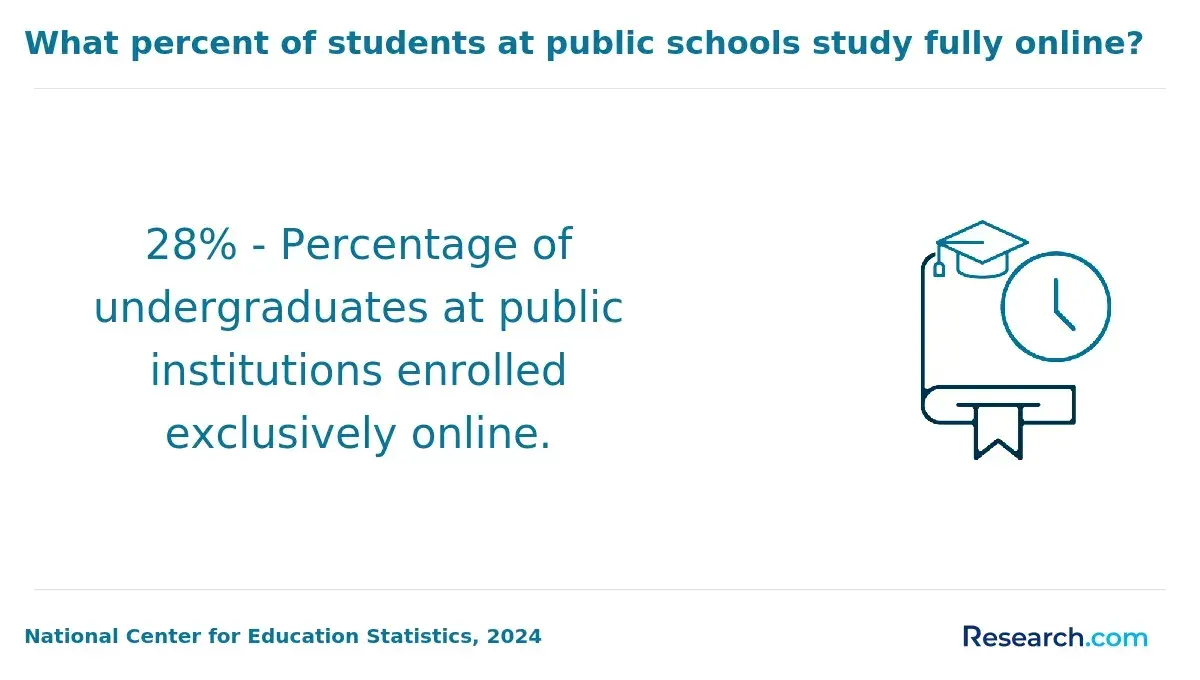
How do online nursing programs differ from campus-based programs in training and outcomes?
Online nursing programs can be a good fit, but the phrase "online nursing degree" means different things depending on whether you are already an RN. Pre-licensure nursing programs may offer online theory courses, but they still require in-person labs, simulations, and supervised clinical rotations. RN-to-BSN programs are more commonly online because students already hold RN licensure and have completed initial clinical preparation.
The table below shows the practical differences that matter most when comparing online, hybrid, and campus-based nursing options.
| Program format | What is usually online | What is usually in person | Best fit |
| Campus-based pre-licensure ADN or BSN | Some assignments or learning management system activities | Labs, simulations, skills check-offs, clinical rotations, and many lectures | Students who want structured schedules and local faculty access |
| Hybrid pre-licensure ADN or BSN | Some lectures, discussions, exams, or theory modules | Clinical rotations, labs, simulations, and assessments | Students who need some flexibility but can travel to approved sites |
| Online RN-to-BSN | Most or all didactic coursework | Practice projects may be completed locally, depending on the program | Licensed RNs completing a bachelor's degree while working |
| Online graduate nursing | Many theory, leadership, informatics, or advanced practice courses | Clinical practicums for advanced practice tracks | RNs pursuing advanced roles, if the program meets state authorization rules |
Online learning works best for disciplined students who can manage deadlines without frequent in-person reminders. It may not be ideal if you need daily campus structure, have limited access to reliable technology, or live far from approved clinical sites. When comparing online options, focus on licensure eligibility, state authorization, clinical placement support, faculty access, and student support-not just convenience.
Institution type also deserves careful review. Many reputable online nursing pathways are offered by public, private nonprofit, and private for-profit schools, but ownership alone does not determine quality. Students who prefer mission-driven institutions can compare non profit online colleges, while still checking nursing-specific accreditation, state approval, NCLEX preparation, and clinical support.
What nursing coursework, clinical hours, and skills training does a typical program include?
A nursing major combines classroom science, clinical reasoning, hands-on skill development, simulation, and supervised patient care. The goal is not only to help students memorize conditions or medications, but to prepare them to recognize changes in patient status, communicate with care teams, follow safety protocols, and make sound decisions under pressure.
Although course names vary, most pre-licensure nursing programs include a core set of academic and clinical areas. These subjects build from foundational science to increasingly complex patient care.
- Human anatomy and physiology, microbiology, chemistry, nutrition, and developmental psychology.
- Pathophysiology, pharmacology, health assessment, and dosage calculation.
- Fundamentals of nursing, adult medical-surgical nursing, maternal-newborn nursing, pediatric nursing, psychiatric-mental health nursing, and community or population health nursing.
- Evidence-based practice, nursing research, informatics, leadership, ethics, health policy, and quality improvement.
- Simulation labs, skills labs, clinical rotations, capstone experiences, and NCLEX-RN preparation.
Clinical hours are especially important because they connect classroom knowledge with real patient care. State boards and accrediting bodies influence expectations, and schools arrange placements in hospitals, long-term care facilities, clinics, community health agencies, mental health settings, and specialty units. A program with weak clinical placement support can create scheduling stress even if its online coursework looks convenient.
Students should also look for training in current workplace tools. Electronic health records, barcode medication administration, telehealth workflows, clinical decision support systems, and simulation technology are now common in nursing education. Artificial intelligence may increasingly support documentation, triage prompts, scheduling, and patient monitoring, but it does not replace the RN's responsibility for assessment, patient advocacy, ethical judgment, and safe care.
How does accreditation affect nursing programs, licensure eligibility, and credit transfer?
Accreditation affects whether a nursing program is recognized for quality, whether credits may transfer, whether graduates can pursue advanced degrees, and whether employers view the credential as credible. For nursing students, there are two levels to check: institutional accreditation for the college and nursing program accreditation or approval for the specific nursing program.
Before enrolling, verify these quality markers directly rather than relying only on advertising language. This checklist helps reduce the risk of choosing a program that does not support your licensure or transfer goals.
- Confirm the college holds institutional accreditation from an accreditor recognized by the U.S. Department of Education.
- Confirm the nursing program is approved by the state board of nursing in the state where the program operates.
- Check whether the nursing program holds specialized nursing accreditation, commonly from ACEN, CCNE, or CNEA, depending on degree level and program type.
- Ask whether graduates are eligible to sit for the NCLEX-RN in your intended state of practice.
- Review whether credits transfer to BSN, MSN, or doctoral nursing programs if you plan to continue your education.
- Ask for recent NCLEX-RN pass-rate information and compare it with state expectations, while remembering that pass rates can fluctuate by cohort size and year.
The most serious red flag is a program that cannot clearly document state board approval for the licensure path you want. Another warning sign is vague language such as "prepares you for healthcare careers" without saying that graduates are eligible for RN licensure. If you plan to move states, ask both the school and the destination state board whether the program meets educational requirements there.
Accreditation is also important for credit transfer. A student who completes an ADN at one school may later want an RN-to-BSN or MSN. If the original program lacks recognized accreditation or state approval, the student may face limited transfer options, repeated coursework, or employer concerns.
What are the steps to become a licensed registered nurse after graduation?
Graduating from a nursing program is not the same as being licensed. To practice as an RN, you must complete the licensure process required by your state board of nursing. Requirements vary, but the core sequence is similar across the U.S.
Use this step-by-step process as a practical map from final semester to RN employment. Always confirm details with your state board because fees, background checks, temporary permits, and documentation rules differ.
- Complete a state-approved pre-licensure nursing program and ensure your school sends required graduation verification to the board of nursing.
- Apply for licensure by examination through the state board where you want your initial RN license.
- Register for the NCLEX-RN with the testing provider and wait for authorization to test.
- Complete any required background check, fingerprinting, jurisprudence exam, or state-specific documentation.
- Prepare for the NCLEX-RN using practice questions, remediation tools, test plans, and structured review based on your weak areas.
- Take and pass the NCLEX-RN, then wait for the board to issue your license before practicing as an RN.
- Maintain the license through renewal, continuing education if required, and compliance with state practice rules.
The NCLEX-RN now emphasizes clinical judgment, meaning students must interpret patient information, identify priorities, and choose safe actions rather than simply recall facts. This makes program quality, simulation practice, case-based learning, and test preparation more important than memorization alone.
A common mistake is accepting a job offer or planning a move before understanding licensure timing. Some states process applications faster than others, and errors in transcripts, background checks, or name matching can delay authorization to test. Start the paperwork early in your final term and keep copies of all submissions.
What nursing career paths, specialties, and work settings can this major lead to?
A nursing major can lead to many career paths because RNs work across hospitals, clinics, long-term care, public health, schools, home health, correctional facilities, insurance organizations, government agencies, and technology-enabled care environments. Early roles often focus on direct patient care, while later paths may move into specialty practice, leadership, education, case management, informatics, or advanced practice nursing.
The table below summarizes common RN career directions and the type of work students should expect. It is not a salary ranking; it is a fit comparison to help you identify the environment and responsibilities that match your strengths.
| Career path or specialty | Typical responsibilities | Good fit for students who |
| Medical-surgical nursing | Care for adults with a wide range of conditions, medications, and recovery needs | Want broad clinical experience and a strong foundation |
| Emergency or critical care nursing | Monitor unstable patients, respond to urgent changes, and coordinate rapid interventions | Handle pressure well and like fast-paced settings |
| Maternal-newborn or pediatric nursing | Care for mothers, infants, children, and families across specialized settings | Prefer family-centered care and age-specific communication |
| Psychiatric-mental health nursing | Support patients with mental health conditions, behavioral crises, and therapeutic care plans | Have strong communication, patience, and de-escalation skills |
| Community and public health nursing | Work on prevention, education, population health, outreach, and care coordination | Want to address health beyond the bedside |
| Case management and utilization review | Coordinate care plans, review services, and work with patients, providers, and insurers | Prefer planning, documentation, and system navigation |
| Nursing informatics | Improve health technology workflows, electronic records, and data-supported care processes | Like technology, process improvement, and clinical systems |
| Advanced practice nursing | Provide higher-level clinical care as a nurse practitioner, nurse anesthetist, nurse midwife, or clinical nurse specialist where licensed | Plan to earn a graduate degree and take on expanded responsibility |
Nursing can also support less traditional work arrangements after a nurse builds experience. Some roles in telehealth, case management, informatics, quality review, insurance, and clinical documentation improvement may offer remote or hybrid options, although new graduates usually start in patient-facing settings. Students interested in long-term flexibility can compare nursing with other degrees for work from home jobs, while recognizing that bedside competence is often the foundation for remote nursing roles.
The best specialty is not always the highest-pressure or most visible one. A strong choice matches your temperament, schedule needs, physical stamina, communication style, and tolerance for emotional intensity. Shadowing, clinical rotations, nurse interviews, and student nurse externships can help you make that decision before graduation.
What salary ranges and job outlook can nursing majors expect across the U.S.?
Salary and job outlook are major reasons students consider nursing, but the numbers should be interpreted carefully. The BLS reported a May 2024 median annual wage of $93,600 for registered nurses in the U.S.; this is a national midpoint, not a promise for new graduates or a guarantee in every region. Pay can vary by state, metro area, union status, shift differentials, specialty, employer type, experience, and degree level.
BLS projections show RN employment growing 6% from 2023 to 2033. For students, that suggests steady national demand, but local hiring conditions still matter. Rural hospitals, large academic medical centers, outpatient systems, long-term care facilities, and public health agencies may have different staffing needs and different entry-level expectations.
The following table helps you think about salary variation without assuming one number applies to everyone.
| Factor | How it can affect nursing pay or opportunity | What students should check |
| Location | High-cost metro areas may report higher wages, but living costs can offset the difference | Compare local RN postings and cost of living before relocating |
| Employer type | Hospitals, outpatient centers, long-term care, government agencies, and schools may pay differently | Review job postings by setting, not just title |
| Shift and unit | Nights, weekends, critical care, and high-need units may include differentials or specialty expectations | Ask about schedule requirements and training support |
| Degree level | A BSN may improve access to some roles, but experience, licensure, and specialty skills also matter | Check whether target employers prefer or require BSN completion |
| Experience and certification | Specialty certifications and advanced skills may support progression after experience is gained | Ask when certifications become useful and whether employers reimburse them |
Graduate education can expand options into nurse practitioner, nurse educator, informatics, leadership, anesthesia, or midwifery pathways, but advanced nursing programs usually require serious time, clinical hours, and licensure planning. Be cautious with any claim that a clinical nursing graduate pathway works like a generic master degree in 6 months; many nursing master's programs cannot be compressed that far because practicum, accreditation, and state authorization requirements are central to the credential.
To evaluate return on investment, compare total program cost with realistic local wages, employer tuition reimbursement, loan repayment options, transfer credits, graduation rates, NCLEX preparation, and the likelihood that the program leads to the setting where you want to work. The "best" nursing major is the one that gets you to eligible licensure with manageable debt and credible preparation for the job market you actually plan to enter.
Other Things You Should Know About
Nursing can be both. Students major in nursing within an ADN or BSN program, while the completed credential may be an associate degree, bachelor's degree, or graduate nursing degree.
Yes, if the ADN program is state-approved and you meet licensure requirements, it can qualify you to take the NCLEX-RN. However, some employers prefer or require a BSN, so many ADN graduates complete an RN-to-BSN later.
Not usually for initial licensure. Pre-licensure RN programs may offer online coursework, but labs, simulations, and clinical rotations must be completed in person. Fully online formats are more common for RN-to-BSN programs.
The biggest mistake is enrolling without verifying state board approval, nursing accreditation, clinical placement support, and NCLEX-RN eligibility. A program that is convenient or inexpensive may still be a poor choice if it does not support licensure.
References
- Comparing Lengths of Different Nursing Degrees: Navigating Your https://www.dewv.edu/comparing-lengths-of-different-nursing-degrees/
- Nursing School Prerequisites and Admissions Requirements: 2026 Comprehensive Guide https://nightingale.edu/blog/nursing-school-requirements-prerequisites.html
- Types of Nursing Degrees—Which One Is Yours? https://www.allnursingschools.com/how-to-get-into-nursing-school/degree-options/
- CCNE Accreditation https://www.aacnnursing.org/ccne-accreditation
- Everything You Need to Know to Become a Registered Nurse (RN) in the USA | Shiftmed Blog https://www.shiftmed.com/professionals/blog/become-registered-nurse/
- Nursing Career Paths [Infographic] https://nursinglicensemap.com/blog/nursing-career-pathways/
- In-Person vs. Online Nursing Programs https://www.chamberlain.edu/blog/in-person-vs.-online-nursing-programs
- What is the Job Outlook for Nurses? | University of Bridgeport https://www.bridgeport.edu/news/what-is-the-job-outlook-for-nurses/
- What’s the Deal with Accreditation? https://nursingcas.org/resources-for-current-schools/whats-the-deal-with-accreditation
- Nursing School Classes: The Essentials https://credenzahealth.com/career-advice/nursing-school-classes-the-essentials