2027 Psychology vs. Human Services Degree: Explaining the Difference

Co-Founder and Chief Data Scientist
Choosing between a psychology degree and a human services degree is really a choice between two ways of helping people. Psychology focuses on understanding behavior, emotion, cognition, and mental processes through research and theory. Human services focuses on connecting people with support, coordinating care, and addressing practical social needs in communities, agencies, and nonprofit settings.
The two paths overlap, but they are not interchangeable. A psychology degree is often the better fit for students who want to study behavior scientifically, pursue graduate training, or move toward counseling, clinical, research, organizational, or behavioral-health careers. A human services degree is usually more applied from the start and may suit students who want earlier entry into case management, advocacy, outreach, social programs, or community support roles.
This guide compares psychology degree programs and human services degree programs by curriculum, skills, difficulty, career outcomes, cost, and decision factors. It also explains where each degree may require additional education, supervised experience, certification, or licensure before graduates can qualify for certain professional roles.
Key Points About Pursuing a Psychology vs. Human Services Degree
- Psychology degrees focus on mental processes and research, typically taking four years, with average tuition around $30,000 per year, leading to careers in therapy, research, or counseling.
- Human Services degrees emphasize direct community support and social work, often shorter programs with lower tuition averaging $20,000 yearly, preparing graduates for case management roles.
- Psychology careers often require advanced degrees for licensure, while Human Services graduates can enter entry-level jobs sooner, balancing cost, length, and career goals.
What are psychology degree programs?
Psychology degree programs study how people think, feel, learn, develop, and behave. The field is grounded in scientific inquiry, so students learn both psychological theory and the research methods used to test that theory. A psychology major is not the same as professional training to become a psychologist; for licensed psychologist roles, graduate education and supervised clinical preparation are typically required.
At the undergraduate level, a psychology degree commonly includes introductory psychology, statistics, research methods, developmental psychology, abnormal psychology, social psychology, cognitive psychology, and biological bases of behavior. Many programs also allow students to choose electives in areas such as clinical psychology, counseling, neuroscience, forensic psychology, industrial-organizational psychology, or health psychology.
A bachelor's degree in psychology typically requires around 120 credits and takes four years of full-time study. Students should expect reading-heavy courses, research papers, data interpretation, and assignments that require evidence-based reasoning. Programs may also offer labs, research assistant opportunities, internships, or capstone projects, especially for students preparing for graduate school.
Admission requirements usually include a high school diploma or equivalent. Some schools request standardized test results, though many institutions now offer test-optional admissions. A competitive GPA can strengthen an application, and some programs may recommend or require prior coursework in mathematics or science because statistics and research methods are central to the major.
Psychology programs are a strong fit for students who enjoy asking why people behave the way they do, evaluating evidence, and applying behavioral science in settings such as mental health, education, business, research, social services, and healthcare support.
What are human services degree programs?
Human services degree programs prepare students to help individuals, families, and communities access support systems. Rather than focusing primarily on research or psychological theory, these programs emphasize practical service delivery: assessing needs, coordinating resources, advocating for clients, documenting cases, and working within agencies that serve vulnerable or underserved populations.
The field is interdisciplinary. Students may study psychology, sociology, social work principles, counseling methods, ethics, public policy, nonprofit administration, crisis response, and community health. The goal is to understand both the person and the system around that person, including barriers related to housing, healthcare, disability, family support, employment, substance use, aging, and poverty.
A bachelor's degree in human services typically requires 120 to 132 credits and usually takes four years of full-time study. Some institutions also offer accelerated or online formats, which can help working adults, transfer students, and students with caregiving responsibilities complete the degree with more flexibility.
Common courses include introduction to human services, counseling methods, abnormal psychology, social work principles, community psychology, case management, crisis intervention, ethics, and program planning. Many programs include supervised internships or field placements because employers often value direct experience with clients, agencies, documentation systems, and multidisciplinary teams.
Admission standards generally require a high school diploma or equivalent. Some programs set minimum GPA requirements or prerequisite coursework. Students considering this major should look closely at fieldwork expectations, internship placement support, online versus in-person requirements, and whether the curriculum aligns with the roles they want after graduation.
What are the similarities between psychology degree programs and human services degree programs?
Psychology and human services degrees both attract students who want people-centered work. Each program builds knowledge of human behavior, communication, ethics, diversity, and support systems. Both can also serve as foundations for graduate study, although the best next step depends on the student's intended career.
The main similarity is that neither degree should be viewed only as a classroom credential. Employers and graduate programs often look for applied experience, strong writing, ethical judgment, cultural awareness, and the ability to work with people in difficult situations.
| Area of overlap | How it appears in both degrees |
| Human behavior | Both programs examine why people make decisions, how they respond to stress, and how family, social, cultural, and environmental factors shape behavior. |
| Ethics and professional responsibility | Students learn the importance of confidentiality, boundaries, documentation, informed decision-making, and responsible service to clients or research participants. |
| Communication skills | Both degrees require clear writing, active listening, professional interviewing, teamwork, and the ability to explain complex information in understandable terms. |
| Diversity and cultural competence | Programs commonly address how identity, culture, socioeconomic status, disability, trauma, and community context affect needs and outcomes. |
| Preparation for helping professions | Graduates may pursue entry-level roles in behavioral health, social services, nonprofits, education support, community programs, or related fields. |
Both paths can also support later specialization. A psychology graduate may continue into counseling, clinical psychology, school psychology, research, or organizational psychology. A human services graduate may pursue advanced study in social work, counseling, public administration, nonprofit leadership, or human services management.
Students comparing these degrees should not assume that one is automatically more employable than the other. Outcomes depend on internships, local labor-market demand, graduate school plans, credentials, and the type of work the student wants to do. Students exploring additional career-focused credentials can also review options such as career certificates with strong earning potential alongside either degree path.
The clearest difference is emphasis. Psychology asks, “How can we understand and measure behavior and mental processes?” Human services asks, “How can we help people access the support, programs, and interventions they need?” Both questions matter, but they lead to different coursework, training experiences, and career expectations.
| Comparison point | Psychology degree programs | Human services degree programs |
| Primary focus | Scientific study of behavior, cognition, emotion, development, and mental processes. | Practical support for individuals, families, groups, and communities through service coordination and advocacy. |
| Academic style | More theory- and research-driven, with significant attention to statistics, research design, and evidence evaluation. | More practice-oriented, with emphasis on case management, intervention planning, crisis support, and agency-based work. |
| Typical training activities | Research papers, data analysis, lab work, behavioral observation, literature reviews, and psychological theory application. | Fieldwork, internships, client assessment exercises, service plans, community projects, and agency documentation practice. |
| Common career direction | Entry-level behavioral health, research support, business, human resources, education support, or graduate study for clinical and counseling roles. | Case management, outreach, advocacy, program support, social service coordination, and nonprofit or community agency roles. |
| Licensure considerations | Many clinical, counseling, and psychologist roles require graduate education, supervised experience, and licensure. | Some roles are available at the bachelor’s level, though counseling, clinical social work, and specialized licensed roles require additional education and credentials. |
Career preparation also differs. Psychology can be broader and more flexible, but some of its best-known careers require graduate school. Human services can lead more directly into social service work after a bachelor’s degree, but advancement may depend on experience, agency requirements, certifications, or a graduate degree.
Salary comparisons should be handled carefully because job titles vary widely. For example, human services-related roles such as social and community service management had a median annual salary of $74,240 in 2024. That figure does not represent every human services graduate’s salary; it reflects a specific occupational category and may be more relevant to management-level positions than entry-level roles.
Psychology and human services programs both build people-focused skills, but they train students to use those skills differently. Psychology emphasizes analysis, research literacy, and understanding behavior. Human services emphasizes service coordination, client support, and practical problem-solving in social systems.
Skills gained in psychology degree programs
- Research design and evidence evaluation: Students learn how to read studies, assess research quality, understand variables, and avoid unsupported claims about behavior and mental health.
- Statistics and data interpretation: Coursework often includes quantitative reasoning, statistical analysis, and interpretation of behavioral data. Some students may use tools such as SPSS or R depending on the program.
- Behavioral observation and analysis: Psychology students learn to connect behavior with theories of development, learning, cognition, motivation, personality, and social influence.
- Scientific writing and communication: Students practice explaining evidence clearly, writing research papers, presenting findings, and communicating complex ideas without overstating conclusions.
- Preparation for advanced clinical or research training: The degree can build a foundation for graduate programs, though it does not by itself qualify graduates for licensed psychologist roles.
Skills gained in human services degree programs
- Case management: Students learn to identify client needs, create service plans, coordinate referrals, track progress, and document support accurately.
- Crisis response and intervention planning: Programs often introduce strategies for responding to urgent client needs while following ethical and agency protocols.
- Advocacy and systems navigation: Graduates learn how to help clients understand and access social, healthcare, housing, employment, disability, and community resources.
- Client interviewing and interpersonal support: Human services students practice active listening, rapport-building, professional boundaries, and culturally responsive communication.
- Program and community awareness: Coursework may include nonprofit services, public policy, community needs assessment, and agency operations.
The best skill match depends on how a student wants to spend the workday. Students who prefer analyzing patterns, conducting research, or preparing for graduate clinical training may lean toward psychology. Students who prefer direct support, coordination, advocacy, and agency-based work may find human services more aligned with their strengths.
Students comparing academic fit and admission flexibility may also want to review guidance on accessible bachelor’s degree options, but “easy” should not be the main criterion. The better question is which program builds the skills required for the career the student actually wants.
Psychology is often more academically difficult for students who struggle with research methods, statistics, scientific writing, or abstract theory. Human services can feel more difficult for students who are less comfortable with fieldwork, emotionally demanding client situations, agency documentation, and direct interpersonal work. The harder degree depends on the student’s strengths, not just the major name.
Psychology programs usually require strong analytical reading and comfort with empirical evidence. Students may need to design studies, interpret data, write literature reviews, critique research, and apply theories to complex behavioral questions. Courses in statistics and research methods can be especially challenging for students who did not expect a social science major to involve quantitative work.
Human services programs tend to be more applied, but that does not mean they are easy. Students may complete field placements, role-play interviews, assess client scenarios, write service plans, and learn how agencies respond to crisis, poverty, trauma, disability, family needs, and community barriers. The challenge is often practical and emotional rather than mathematical or laboratory-based.
| Student strength or preference | Degree that may feel more manageable | Reason |
| Comfort with statistics and research | Psychology | The curriculum often rewards analytical thinking, evidence review, and data interpretation. |
| Preference for direct service | Human services | Fieldwork, communication, and practical support are central to the program. |
| Interest in theory and behavior science | Psychology | Students spend more time studying mental processes, development, cognition, and behavior models. |
| Interest in community systems and advocacy | Human services | The curriculum focuses on resources, agencies, social barriers, and coordinated support. |
| Discomfort with emotionally intense situations | Psychology may feel easier at the undergraduate level | Human services fieldwork can involve direct exposure to difficult client circumstances. |
Students planning to continue into graduate school should also consider the long-term difficulty. A psychology bachelor’s degree may be only the first step toward competitive graduate admission, supervised training, and licensure. Human services graduates can often enter the workforce sooner, but advancement into counseling, clinical, or leadership roles may still require further education.
For students comparing long-term education pathways, resources on affordable online doctoral programs may be useful later. At the bachelor’s level, however, the immediate decision should be based on learning style, career goals, fieldwork expectations, and tolerance for research-heavy versus practice-heavy coursework.
Psychology and human services graduates can both work in helping professions, but their strongest career outcomes often come from different strategies. Psychology graduates may benefit from pairing the degree with research experience, business skills, behavioral health experience, or graduate education. Human services graduates often benefit from internships, agency experience, case-management training, and familiarity with community resources.
Career outcomes for psychology degree programs
A psychology bachelor’s degree can lead to roles in behavioral health support, human resources, research assistance, social services, education support, sales, training, and market research. The degree is broad, which is useful for students who want flexibility, but it also means graduates may need to translate their skills clearly for employers.
Typical workforce demand includes positions like HR specialists with 957,139 annual openings, reflecting growth in organizational and social applications. Common roles associated with psychology training include:
- Caseworker: Supports clients, documents needs, and applies behavioral understanding in social service or community settings.
- Behavioral Health Technician: Assists patients in mental health or substance use treatment environments under the supervision of licensed professionals.
- Market Research Analyst: Uses data, consumer behavior insights, and research skills to support business and marketing decisions.
Students who want to become licensed psychologists, therapists, or counselors should verify graduate education and licensure requirements early. A bachelor’s degree in psychology can be an appropriate foundation, but it is not usually the final credential for independent clinical practice.
Career outcomes for human services degree programs
Human services graduates commonly pursue direct-service roles in social service agencies, healthcare organizations, nonprofits, community programs, schools, correctional settings, and public assistance programs. The degree is designed to prepare students for practical work with clients and communities, especially when the program includes supervised field experience.
The field includes opportunities such as case managers and outreach workers, with 365,404 annual job openings for caseworkers signaling solid demand. Common roles include:
- Case Manager: Coordinates services, referrals, and follow-up support for people facing health, social, housing, employment, or family-related needs.
- Community Outreach Worker: Builds connections with local populations, shares information about services, and helps organizations reach people who may not otherwise receive support.
- Patient Advocate: Helps patients understand healthcare processes, communicate needs, and connect with appropriate care or support resources.
Both psychology and human services graduates may work in behavioral health environments, with 125,053 roles in mental health support and psychiatric technician positions. However, job duties, supervision, and advancement vary by employer, state requirements, and credential level.
Students seeking specialized psychologist roles typically need graduate education and should be cautious about any program that implies fast or guaranteed licensure. Resources on accelerated doctoral program options can help with long-term planning, but students should always confirm accreditation, supervised experience rules, and licensing requirements for their intended state and profession.
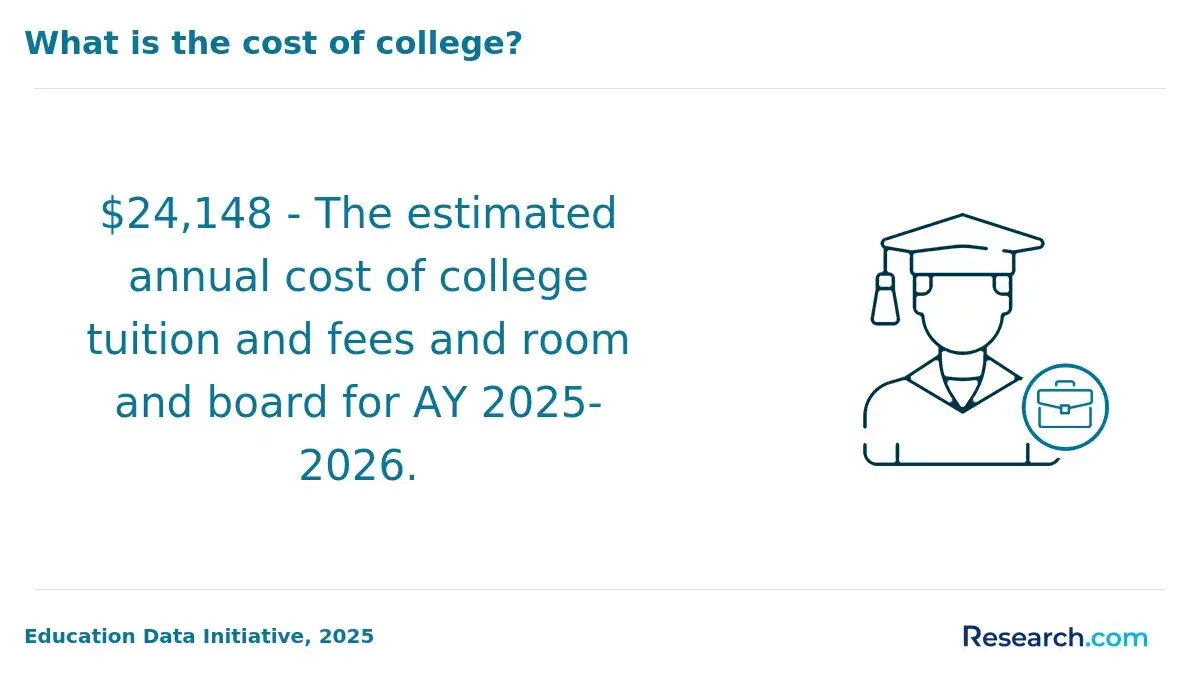
The cost of a psychology or human services degree depends on the school, residency status, delivery format, transfer credits, financial aid, and whether the student attends full time or part time. The sticker price is not the most important number; students should compare the net price after grants and scholarships, plus indirect costs such as transportation, books, fees, technology, lost work hours, and internship requirements.
For undergraduate psychology programs, online tuition averages about $11,998 annually, with an average net price after aid of $7,471. On-campus psychology degrees usually cost more, averaging $17,797 in tuition and fees and about $8,536 net. These figures suggest that online psychology programs may offer a lower-cost route for some students, but program quality, support services, transfer policy, and graduate-school preparation still matter.
Human services bachelor’s degrees show more variation by institution. Some public institutions, including Brigham Young University - Idaho, offer online tuition as low as $5,370 per year. Other economical options include Great Basin College at $5,715 and Florida State College at Jacksonville at $5,507 annually. On-campus programs may cost more; for example, Metropolitan State University may cost up to $27,240 for in-state students.
Private institutions can be much more expensive. Washburn University's BAS in Human Services charges $35,040 for in-state students and $79,320 for out-of-state students. Because human services careers may start in modestly paid direct-service roles, students should be especially careful about borrowing and should compare total program cost with realistic entry-level earnings and advancement plans.
| Cost factor | What students should check |
| Net price | Use the school’s net price calculator and compare costs after grants, scholarships, and institutional aid. |
| Residency status | Public universities may charge different rates for in-state and out-of-state students. |
| Online versus campus format | Online programs may reduce commuting or housing costs, but students should check technology fees and in-person requirements. |
| Fieldwork or internship costs | Human services programs and some psychology programs may require placements that affect work schedules and transportation. |
| Future education | Students pursuing licensed counseling, psychology, or clinical roles should budget for graduate school and supervised training requirements. |
In both fields, the most affordable option is often a public institution, in-state tuition, transfer-friendly policies, and strong financial aid. Students should also confirm accreditation and avoid choosing a program based only on low tuition if it lacks advising, field placement support, or a curriculum aligned with their career goals.
The best choice depends on the work you want to do after graduation and whether you are willing to pursue additional education. Psychology is usually the better fit for students drawn to behavioral science, research, assessment, and graduate clinical pathways. Human services is often the better fit for students who want applied community work, client support, case management, and earlier entry into social service roles.
Choose psychology if you want to:
- Study behavior, emotion, cognition, development, and mental processes in depth.
- Build research, statistics, and evidence-evaluation skills.
- Prepare for graduate programs in counseling, clinical psychology, school psychology, research, or related fields.
- Keep options open across behavioral health, business, human resources, research support, education support, and nonprofit work.
- Work toward licensed clinical or counseling roles, understanding that a bachelor’s degree alone is usually not enough for independent practice.
Choose human services if you want to:
- Work directly with clients, families, and communities in practical support roles.
- Learn case management, advocacy, crisis support, and resource coordination.
- Enter social service, nonprofit, healthcare support, or community agency work after a bachelor’s degree.
- Focus on systems such as housing, healthcare, public benefits, disability services, family support, and community programs.
- Gain supervised field experience that connects classroom learning with agency practice.
Questions to ask before enrolling
- What job do I want first after graduation? If the target role is case manager or outreach worker, human services may be more direct. If the target is research assistant, behavioral health technician, HR specialist, or graduate study, psychology may fit better.
- Will I need graduate school? Many psychology-related clinical careers require it. Some human services graduates can work right away, but counseling, clinical, and advanced leadership roles may still require more education.
- How much field experience does the program include? Internships and supervised placements can be decisive for employment in both fields.
- Is the program properly accredited? Accreditation affects financial aid eligibility, transferability, graduate school admission, and employer confidence.
- What support does the school provide? Look for advising, internship placement help, career services, licensure guidance, and faculty with relevant professional experience.
Students who are genuinely interested in both fields can also consider minors, concentrations, certificates, or combined study plans. Some may explore dual degree opportunities, though a double-degree route should be chosen only when the extra time and cost clearly support a defined career plan.
What Graduates Say About Their Degrees in Psychology Degree Programs and Human Services Degree Programs
- Completing my Psychology Degree was challenging but incredibly rewarding. The program offered hands-on research opportunities which deepened my understanding of behavioral science. Since graduating, I have seen a notable increase in my career prospects and earning potential, especially in clinical settings. - Fisher
- The Human Services program gave me unique exposure to community outreach and counseling, which I hadn't encountered before. Balancing coursework with practical internships was tough, but it prepared me well for real-world scenarios. The outlook in this field continues to grow, and I feel confident about contributing meaningfully to social welfare. - Cairo
- Enrolling in the Psychology Degree opened doors to diverse workplace environments, from mental health clinics to corporate wellness programs. The curriculum's focus on applied training really set me apart when job hunting. Reflecting on my journey, I appreciate the professional growth and stability this career path provides. - Austin
Graduate reflections can be useful, but students should treat them as individual experiences rather than guarantees. Outcomes vary by school quality, location, internships, networking, graduate education, licensure rules, and the specific jobs available in a student’s region. The most reliable decision combines personal fit with program data, cost, accreditation, fieldwork quality, and realistic career planning.
Other Things You Should Know About Psychology Degree Programs & Human Services Degree Programs
Psychology is usually stronger for graduate study because it includes research methods, statistics, and upper-division theory courses that admissions committees expect. Human services can still qualify for counseling, social work, or public administration programs if the transcript shows psychology, human development, or research prerequisites.
In 2027, psychology graduates often need state licensure and possibly a master's or doctoral degree for practice. Human services degree holders generally don't require licensure for entry-level roles but may need it for advanced positions, depending on state regulations and job specifications.
Psychology degree programs in 2027 focus on courses like cognitive psychology and experimental methods, while human services programs emphasize client management and case management studies. Each curriculum tailors its subjects to prepare students for distinct professional roles in their fields.
- Psychology & Human Services | Bluefield University https://www.bluefield.edu/academics/programs-of-study/psychology-human-services
- UCF Parents | My daughter is a psychology major | Facebook https://www.facebook.com/groups/40396224038/posts/10160722546759039
- Skills of a Psychology Major - Psychology Department https://wagner.edu/psychology/skills
- The mental health impacts of health and human service work: Longitudinal evidence about differential exposure and susceptibility using 16 waves of cohort data - ScienceDirect https://www.sciencedirect.com/science/article/pii/S2211335519300166
- BS in Psychology vs. BS in Human Services: Which Is Right for You? | Walden University https://www.waldenu.edu/online-bachelors-programs/resource/difference-between-bs-in-psychology-vs-social-work-vs-human-services
- Bachelor's in Human Services Vs. Psychology Degree [2025] https://www.psychologyschoolguide.net/bachelors-in-human-services-vs-psychology-degree
- Human Services Degree: What Is It? What Can I Do with It? | Spring Arbor University https://online.springarbor.edu/news/what-can-you-do-with-human-services-degree
- Psychologists : Occupational Outlook Handbook: : U.S. Bureau of Labor Statistics https://www.bls.gov/ooh/life-physical-and-social-science/psychologists.htm
- BS in Psychology and Human Services at William James College https://www.williamjames.edu/academics/counseling/psychology-and-human-services-bs/index.html
- Application and tuition fees - SWPS University https://english.swps.pl/programs/apply/application-and-tuition-fees