2027 Online Electrical Engineering Degrees With Scholarships for Adult Learners

Co-Founder and Chief Data Scientist
Choosing an online electrical engineering degree is a high-stakes decision because the field is technical, regulated by employer expectations, and often expensive. The U.S. Bureau of Labor Statistics projects electrical and electronics engineering employment to grow 9% from 2023 to 2033, faster than the average for all occupations.
This guide is for working adults comparing accredited online programs, scholarships, costs, timelines, and career outcomes. You will learn how to judge quality, reduce debt, and choose a program that fits your schedule and goals.
Key Things You Should Know
- ABET accreditation matters most for bachelor's-level online electrical engineering degrees because many employers, graduate programs, and Professional Engineer licensing boards use it as a quality signal.
- The College Board reported average published tuition and fees of $11,610 for in-state public four-year colleges and $30,780 for out-of-state public colleges in 2024-25, so residency, transfer credit, and aid can sharply change total cost.
- BLS data published in 2024 lists the median annual wage for electrical engineers at $111,910, but actual pay varies by industry, location, clearance requirements, experience, and specialization.
What is an online electrical engineering degree and how does it work for adult learners?
An online electrical engineering degree is a college program that teaches circuit analysis, electronics, electromagnetics, signals, power systems, embedded systems, control systems, and engineering design through a distance-learning format. For adult learners, the main appeal is the ability to complete lectures, assignments, simulations, and some labs around work and family obligations while still earning a credential from an accredited institution.
At the bachelor's level, the degree is usually a Bachelor of Science in Electrical Engineering or Bachelor of Science in Engineering with an electrical engineering concentration. At the graduate level, it may be a Master of Science in Electrical Engineering, Master of Engineering in Electrical Engineering, or a related specialization in power, communications, robotics, semiconductor systems, or signal processing.
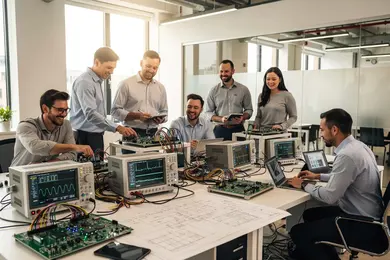
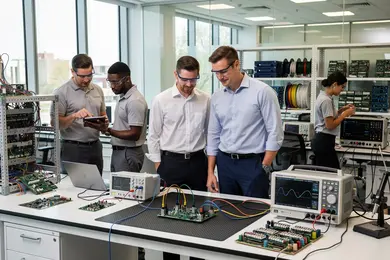
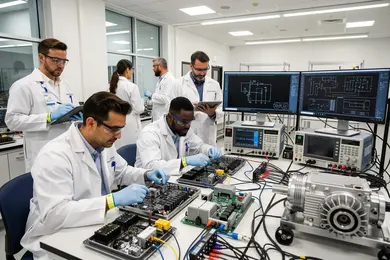
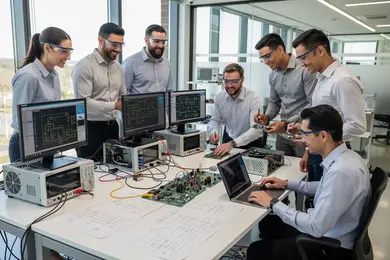
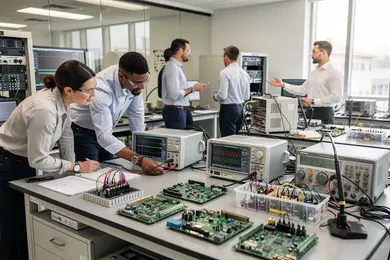
Online does not mean "hands-off." Strong programs still require intensive math, design projects, lab work, exams, and faculty interaction. Labs may be completed through mailed lab kits, simulation software, remote instrumentation, scheduled campus visits, approved local proctors, or hybrid sessions. Students comparing engineering degrees should look closely at how each school delivers labs, not just whether courses are advertised as online.
For adult learners, online electrical engineering can make sense when you already have transferable college credits, military technical training, employer tuition assistance, or industry experience in electronics, energy, manufacturing, telecommunications, aerospace, or automation. It may be a poor fit if you need daily in-person support, are not ready for calculus-based coursework, or cannot reserve consistent weekly study time.
The most common online formats differ in how much structure they require. This comparison can help you identify which model fits your life before you apply.
| Program format | How it usually works | Best fit for adult learners | Main trade-off |
| Fully online asynchronous | Lectures and assignments are completed on your schedule within weekly deadlines. | Working adults with changing shifts or caregiving responsibilities. | Requires strong self-discipline and planning. |
| Online with live sessions | Courses include scheduled evening or weekend class meetings by video. | Students who want more structure and direct faculty interaction. | Less flexible for rotating work schedules. |
| Hybrid or low-residency | Most coursework is online, but some labs or exams require campus visits. | Students who live within travel distance or can plan short residencies. | Travel costs and time away from work can add up. |
| Degree-completion online | Upper-division engineering courses are online after prerequisites are completed elsewhere. | Adults with community college credits or an associate degree. | Admission may depend on completing calculus, physics, and foundational engineering courses first. |
How do online electrical engineering programs compare with campus-based options for flexibility and quality?
Online and campus-based electrical engineering programs can be comparable in academic quality when they share the same faculty standards, curriculum outcomes, assessment methods, and accreditation status. The difference is usually not the degree title; it is how the program supports labs, teamwork, advising, tutoring, and access to equipment.
Adult learners often choose online programs for flexibility, but flexibility should not be confused with lower workload. Electrical engineering remains math-intensive, and ABET-aligned programs require evidence that students can design, test, analyze, and communicate engineering solutions. That means online students still need time for labs, design reports, coding, simulations, and group projects.
Hands-on learning is the biggest comparison point. The right format depends on how a school verifies that students can apply theory to real systems. This issue appears across many applied online fields, from engineering to an online sports science degree, where practical competencies must be assessed rather than simply watched in a lecture.
The table below summarizes the main decision factors for adults comparing online and campus-based electrical engineering options.
| Factor | Online electrical engineering | Campus-based electrical engineering | Decision guidance |
| Schedule flexibility | Often better for working adults, especially asynchronous courses. | Usually tied to daytime course blocks and lab schedules. | Choose online if keeping your job is essential to affordability. |
| Lab access | May use lab kits, simulations, remote labs, or short residencies. | Direct access to campus equipment and makerspaces. | Choose campus if you want frequent in-person equipment access. |
| Peer interaction | Depends on discussion boards, video meetings, and team software. | More spontaneous collaboration and study groups. | Choose online only if you are comfortable initiating communication. |
| Academic quality | Can be strong when regionally accredited and ABET-accredited where relevant. | Can be strong, but quality still varies by school. | Do not assume campus is better; compare accreditation and outcomes. |
| Total cost | May reduce relocation, commuting, and lost-wage costs. | May offer more campus-funded research or assistantship access. | Compare total cost of attendance, not only tuition. |
A practical rule: choose online if you need schedule control and can learn independently; choose campus if you need structured in-person support, daily lab access, or a traditional college environment. Either route can be reputable, but only if the program has transparent accreditation, realistic lab requirements, and strong student support.
Which accredited U.S. schools offer online electrical engineering degrees with scholarships for adults?
Several U.S. universities offer online or mostly online electrical engineering degrees that may be suitable for adult learners. Scholarship availability changes by academic year, residency, financial need, transfer status, military status, employer partnership, and department funding, so students should confirm deadlines directly with each school's financial aid and engineering departments.
The table below focuses on accredited U.S. options commonly considered by distance learners. For bachelor's degrees, look for Engineering Accreditation Commission of ABET accreditation for the electrical engineering program itself; for master's degrees, regional accreditation and departmental reputation are usually more relevant because ABET accreditation is primarily associated with undergraduate engineering programs.
| School | Online electrical engineering option | Accreditation notes | Scholarship and aid considerations for adults |
| Arizona State University | Online Bachelor of Science in Engineering in Electrical Engineering | ABET-accredited electrical engineering program. | Students can review ASU scholarship listings, transfer pathways, employer partnerships, military benefits, and federal aid eligibility. |
| University of North Dakota | Online Bachelor of Science in Electrical Engineering | ABET-accredited electrical engineering program. | Adult learners should ask about transfer scholarships, distance-student aid, military education benefits, and employer reimbursement coordination. |
| Florida International University | Online Bachelor of Science in Electrical Engineering | ABET-accredited electrical engineering program. | Students can explore FIU scholarships, need-based aid, Florida residency policies, and transfer-student funding opportunities. |
| Stony Brook University | Online electrical engineering degree-completion pathway | Students should verify current ABET coverage, residency requirements, and degree-completion rules before applying. | Best suited for students with prior credits; ask about transfer credit evaluation, state aid eligibility, and department-level awards. |
| Mississippi State University | Distance Bachelor of Science in Electrical Engineering | Students should confirm the current ABET status and whether online students follow the same accredited curriculum. | Potential funding sources may include university scholarships, employer benefits, military benefits, and federal student aid. |
| Ohio University | Online Master of Science in Electrical Engineering | Regionally accredited university; ABET is generally not the central quality marker for master's-only engineering programs. | Graduate students should ask about employer reimbursement, graduate scholarships, payment plans, and professional organization awards. |
| University of Idaho | Online Master of Engineering or Master of Science options related to electrical and computer engineering | Regionally accredited university with established engineering programs. | Adult learners should compare thesis versus non-thesis options, graduate funding, and employer-sponsored tuition support. |
Before applying, confirm three details in writing: whether the specific degree is available in your state, whether the online pathway is covered by the accreditation status you need, and whether scholarships are open to part-time or fully online students. These details can change and may affect both cost and career value.
What admission requirements and prior experience do online electrical engineering programs expect from adult learners?
Online electrical engineering programs usually expect adult learners to show readiness for rigorous, calculus-based technical work. Prior work experience can strengthen an application, but it rarely replaces required math, physics, and engineering prerequisites.
Admissions requirements differ by degree level. Bachelor's programs are designed for students earning their first engineering degree, while master's programs typically expect a prior bachelor's degree in electrical engineering, computer engineering, physics, or a closely related field. Students from engineering technology or technician backgrounds may need bridge courses.
Most schools evaluate several readiness factors before admitting online electrical engineering students. These requirements matter because missing prerequisites can delay graduation and increase cost:
- College-level math readiness, usually including calculus and sometimes differential equations before upper-division engineering courses.
- Calculus-based physics with lab, especially mechanics and electricity and magnetism.
- Prior coursework in chemistry, programming, digital logic, circuits, or engineering design, depending on program level.
- Official transcripts from all colleges attended, including community colleges, military education, and prior universities.
- Minimum GPA requirements that may be higher for engineering major admission than for general university admission.
- For graduate programs, a relevant bachelor's degree, statement of purpose, letters of recommendation, and sometimes prerequisite deficiency review.
Adult learners should also ask how the school treats transfer credit, industry certifications, military training, and prior engineering technology coursework. Some credits may satisfy electives but not core engineering outcomes, especially in ABET-accredited bachelor's programs.
The most common mistake is applying before completing prerequisite planning. A student may be admitted to the university but not yet eligible for upper-division electrical engineering courses. To avoid this, request a preliminary degree audit before enrolling and ask which courses must be completed in sequence.
What core courses and specializations are typically included in an online electrical engineering curriculum?
An online electrical engineering curriculum is built around the same core question as a campus curriculum: how do electrical systems generate, transmit, process, control, and use information and energy? The degree combines mathematics, physical science, computing, design, and hands-on engineering analysis.
Students should expect a sequence of foundational courses before they reach advanced electives. The exact course names vary, but most reputable programs include the following areas because they support ABET-style engineering outcomes and employer expectations.
- Calculus, differential equations, linear algebra, probability, and engineering statistics.
- General physics, electricity and magnetism, and sometimes chemistry or materials science.
- Circuit analysis, electronics, semiconductor devices, and digital logic design.
- Signals and systems, communication systems, control systems, and electromagnetics.
- Power systems, energy conversion, renewable energy, or electric machines in programs with power-focused tracks.
- Programming, embedded systems, microcontrollers, hardware description languages, or computer engineering electives.
- Engineering design projects, lab courses, technical writing, ethics, and a senior capstone or graduate project.
Specializations help students align the degree with a career path. For adults already working in a technical field, choosing electives that match current job experience can improve the usefulness of the degree and make employer tuition support easier to justify.
| Specialization | Typical topics | Career alignment |
| Power and energy systems | Power electronics, electric grids, renewable integration, protection systems. | Utilities, renewable energy, manufacturing, defense, transportation electrification. |
| Communications and signal processing | Digital signal processing, wireless systems, antennas, information theory. | Telecommunications, aerospace, defense, radar, audio and imaging systems. |
| Embedded systems | Microcontrollers, real-time systems, firmware, sensors, hardware-software integration. | Automotive, robotics, medical devices, consumer electronics, industrial automation. |
| Controls and robotics | Feedback systems, automation, mechatronics, dynamic systems. | Manufacturing automation, robotics, aerospace, process control. |
| Microelectronics and semiconductors | Devices, VLSI, integrated circuits, fabrication concepts. | Semiconductor design, electronics manufacturing, hardware development. |
Current trends are also shaping curricula. More programs now incorporate machine learning for signals, cybersecurity for embedded devices, smart-grid analytics, renewable energy integration, and semiconductor workforce preparation. These trends do not replace core circuit and physics knowledge; they add modern applications to the traditional foundation.
How long do online electrical engineering degrees take and what do they cost, including financial aid?
Time to completion depends heavily on transfer credit, placement into math courses, enrollment intensity, and whether labs require scheduled sessions. A first-time bachelor's student may need about four years of full-time study, while a working adult attending part time may need longer. Degree-completion students with strong community college preparation may finish faster, but only if prerequisites match the university's engineering sequence.
Cost is equally variable. The College Board reported average published tuition and fees of $11,610 for in-state public four-year institutions and $30,780 for out-of-state public four-year institutions in 2024-25. For online electrical engineering students, this means residency rules and distance tuition policies can matter as much as the sticker price.
The cost categories below are the ones adults should compare before enrolling. They help reveal the true price of the degree beyond the advertised tuition rate:
- Tuition, including whether online students pay in-state, out-of-state, flat-rate, or per-credit pricing.
- Mandatory distance-learning, technology, engineering, lab, proctoring, and graduation fees.
- Books, software, calculator, lab kits, electronics supplies, and simulation tools.
- Travel costs for required campus labs, orientation, exams, or senior design presentations.
- Lost income if course schedules require reducing work hours.
- Interest costs if loans are used and repayment extends after graduation.
The table below summarizes common timeline and cost drivers so you can compare programs on practical fit, not only tuition. It is especially useful when two schools appear similar but differ in transfer policy or lab structure.
| Student profile | Likely timeline | Cost factors to watch | Best affordability strategy |
| First-time bachelor's student | Often four or more years depending on full-time status. | General education, math placement, lab fees, repeated courses. | Start with a clear math plan and avoid excess credits. |
| Community college transfer student | Often shorter if prerequisites transfer cleanly. | Credit loss, mismatched engineering sequences, residency rules. | Use formal transfer guides and get a written degree audit. |
| Working part-time student | Often extended because courses are sequential. | Per-term fees, slower progress, work schedule conflicts. | Take prerequisite chains in the right order and use employer benefits. |
| Graduate student | Often one to three years depending on course load. | Graduate tuition rates, thesis requirements, software costs. | Choose electives aligned with employer reimbursement and career goals. |
Financial aid can reduce out-of-pocket cost, but aid rules differ for undergraduate and graduate students. For 2024-25, the maximum federal Pell Grant was $7,395 for eligible undergraduates. Graduate students generally do not receive Pell Grants, so they often rely more on employer tuition assistance, scholarships, assistantships, payment plans, or federal loans.
STEM shoppers often compare cost across majors before choosing a path. If you are also weighing computing programs, reviewing computer science cost can help you understand how tuition, software, transfer credit, and career alignment differ across technical degrees.
What types of scholarships, grants, and employer tuition benefits support adult electrical engineering students?
Scholarships for adult electrical engineering students come from several sources: universities, engineering departments, professional associations, employers, unions, military education benefits, state agencies, and private foundations. The key is to apply broadly and early because many awards have deadlines months before the academic term begins.
Adult learners should not assume scholarships are only for recent high school graduates. Many awards consider financial need, academic performance after returning to college, military service, transfer status, professional goals, identity-based eligibility, or commitment to energy, semiconductor, aerospace, transportation, or public infrastructure fields.
The most useful funding sources usually fall into the categories below. Each one has different eligibility rules, so the smartest strategy is to combine several smaller sources rather than waiting for one large award.
- University-wide scholarships for transfer students, returning adults, online learners, veterans, first-generation students, and students with financial need.
- Engineering college or department scholarships tied to academic performance, major, research interests, or donor priorities.
- Professional association scholarships from engineering organizations, including groups focused on power, electronics, women in engineering, minority engineers, and veterans.
- Federal and state grants for eligible undergraduate students, including need-based aid that requires the FAFSA.
- Employer tuition assistance or reimbursement for workers in utilities, manufacturing, defense, telecommunications, automation, semiconductors, and energy.
- Military and veteran education benefits, including GI Bill benefits, Yellow Ribbon participation where applicable, and tuition assistance for active-duty service members.
Employer tuition benefits can be especially valuable for adults, but they often come with conditions. Some employers require that courses relate to your current job, that you earn a minimum grade, or that you stay with the company for a period after reimbursement. Ask human resources whether online ABET-accredited engineering courses qualify before you commit.
Students moving toward data-heavy engineering roles may also consider graduate study later in analytics, machine learning, or computational engineering. If that path interests you, comparing the best data science masters options can help you decide whether a future data-focused credential would complement an electrical engineering foundation.
To improve your odds of receiving aid, build a funding calendar before applying. Include FAFSA submission, university scholarship deadlines, department deadlines, employer reimbursement dates, and professional association scholarship windows. Missing one deadline can cost more than choosing a slightly cheaper program.
What careers can you pursue with an online electrical engineering degree and what roles are in demand?
An online electrical engineering degree can lead to roles in energy, electronics, automation, aerospace, defense, transportation, telecommunications, medical devices, semiconductor systems, and manufacturing. The best path depends on degree level, project experience, clearance eligibility where relevant, internships, industry certifications, and the technical focus of your electives.
The BLS projections published in 2024 show electrical and electronics engineers are expected to grow 9% from 2023 to 2033. For readers, the important point is not that every graduate will have the same opportunity; it is that demand is being supported by infrastructure modernization, automation, electrification, semiconductor investment, and advanced communications systems.
The table below connects common electrical engineering roles with typical responsibilities. Use it to match programs and electives to the work you actually want to do.
| Career role | Typical responsibilities | Useful degree focus | Industries hiring |
| Electrical engineer | Design, test, and improve electrical systems, components, and equipment. | Circuits, power, electronics, controls, design projects. | Utilities, manufacturing, aerospace, defense, construction engineering. |
| Power systems engineer | Work on generation, transmission, distribution, protection, and grid reliability. | Power systems, renewable energy, power electronics. | Electric utilities, renewable energy, grid technology firms. |
| Electronics engineer | Develop electronic devices, boards, sensors, or communications hardware. | Analog electronics, digital systems, microelectronics. | Consumer electronics, defense, aerospace, medical devices. |
| Controls engineer | Design automation, feedback, and process control systems. | Control systems, robotics, programming, instrumentation. | Manufacturing, robotics, automotive, process industries. |
| Embedded systems engineer | Integrate hardware, firmware, sensors, and real-time software. | Microcontrollers, C programming, digital logic, computer engineering. | Automotive, IoT, industrial automation, medical devices. |
| Test engineer | Develop test plans, evaluate performance, troubleshoot failures, and document results. | Labs, measurement, instrumentation, quality systems. | Semiconductors, electronics manufacturing, aerospace, defense. |
AI and automation are changing the work rather than eliminating the need for engineering judgment. Electrical engineers increasingly use simulation, automated testing, machine learning-assisted design, digital twins, and data analytics, but they still need to understand physical systems, safety, reliability, constraints, and trade-offs.
Adult learners can improve career outcomes by building evidence of applied skill while enrolled. Strong portfolio items include circuit design reports, embedded systems projects, power-flow analyses, MATLAB or Python simulations, PCB layouts, senior design documentation, and lab notebooks. These artifacts can help compensate for limited internship availability if you are working full time.
What salary ranges and earning growth can electrical engineers expect across different U.S. industries?
Electrical engineering pay varies by industry, region, experience, security clearance, graduate education, and technical specialization. BLS wage data published in 2024 lists the median annual wage for electrical engineers at $111,910. Use that figure as a labor-market benchmark, not as a promise of what any individual graduate will earn.
Industry matters because electrical engineers work in very different environments. A utility power engineer, semiconductor test engineer, federal contractor, and manufacturing controls engineer may all use electrical engineering skills but face different pay structures, overtime expectations, promotion paths, and credential requirements.
The table below provides a practical way to think about earning growth without treating salary as guaranteed. It connects career stage with the types of responsibilities that often influence compensation.
| Career stage | Common responsibilities | What can influence earning growth |
| Entry-level engineer | Testing, design support, calculations, documentation, troubleshooting, supervised project work. | ABET-accredited degree, internships, co-ops, project portfolio, software and lab skills. |
| Experienced engineer | Independent design work, client or production support, systems analysis, mentoring junior staff. | Specialization, industry demand, professional network, advanced tools, employer type. |
| Senior or lead engineer | Technical leadership, architecture decisions, design reviews, reliability and safety decisions. | Deep technical expertise, project leadership, PE license in applicable fields, security clearance where relevant. |
| Engineering manager or technical specialist | Budgeting, team leadership, strategy, high-level design authority, cross-functional coordination. | Management skill, graduate education, business knowledge, complex project experience. |
Some industries may offer higher compensation because they require scarce technical skills, clearance eligibility, travel, high reliability standards, or specialized design knowledge. However, higher pay can come with trade-offs such as longer hours, compliance requirements, relocation, or narrower specialization.
For adult learners evaluating return on investment, compare expected debt against realistic local job options. A lower-cost program with strong accreditation, transfer acceptance, and employer reimbursement can be more financially sensible than a more expensive program with a famous brand but poor fit for your schedule.
How can adult learners evaluate and choose a reputable, ABET-accredited online electrical engineering program?
Choosing a reputable online electrical engineering program requires more than scanning rankings. Adult learners should verify accreditation, lab delivery, transfer policy, total cost, student support, and career alignment before paying an application fee or committing to loans.
ABET accreditation is especially important for bachelor's programs in electrical engineering. It signals that the program has been reviewed against engineering education standards. It may also matter for Professional Engineer licensure, certain employers, federal roles, defense contractors, and graduate admissions. For master's programs, ABET is less commonly the deciding factor, but regional accreditation and departmental quality still matter.
Use the following steps to evaluate programs in a practical order. This sequence helps prevent common mistakes such as choosing a school before confirming prerequisites or funding.
- Confirm that the institution is regionally accredited and that the specific bachelor's electrical engineering program is ABET-accredited if you need that credential.
- Ask whether online students earn the same degree title as campus students and whether the diploma or transcript distinguishes delivery format.
- Request a written transfer evaluation before enrollment, especially for calculus, physics, circuits, and engineering fundamentals.
- Review how labs are completed, including kits, simulations, remote labs, proctors, campus visits, and any extra costs.
- Compare total cost of attendance, including fees, software, lab materials, travel, and the effect of part-time enrollment.
- Ask whether scholarships, grants, and department awards are available to online, transfer, part-time, or adult students.
- Check course rotation and prerequisite chains so you know whether missing one course can delay graduation by a semester or year.
- Evaluate advising, tutoring, faculty access, disability accommodations, veteran services, and career support for online learners.
- Look for career-relevant outcomes such as senior design projects, employer partnerships, internship support, alumni examples, and graduate school placement information.
Red flags include vague accreditation language, unclear lab requirements, pressure to enroll quickly, no written transfer plan, unusually high fees hidden outside tuition, weak math support, and claims that online study will be easy. Electrical engineering is demanding; a trustworthy school should be honest about the workload.
The best program is not automatically the cheapest, fastest, or highest ranked. For most adult learners, the best choice is the accredited program that accepts the most useful transfer credit, fits your weekly schedule, offers realistic lab access, provides meaningful aid, and aligns with the industry you want to enter.
Other Things You Should Know About Electrical Engineering Degrees
It can, but requirements vary by state licensing board. Many boards prefer or require an ABET-accredited engineering bachelor's degree, passing the FE exam, qualifying work experience, and passing the PE exam. Always confirm rules with the state where you plan to seek licensure.
Many universities do not list "online" on the diploma, but policies vary. Ask the registrar whether the diploma and transcript show the delivery format before enrolling if this matters to you.
Yes, scholarship money used for tuition, required fees, books, and lab supplies is usually tax-free under IRS rules. Amounts used for housing, meals, or other nonqualified expenses are taxable income. Graduate students should keep award letters and receipts for 2027 filing records.
In 2027, numerous scholarships cater to adult learners pursuing online electrical engineering degrees. Options include the IEEE Power & Energy Society Scholarship and the AACE International Scholarship Program. These scholarships often require maintaining a specific GPA, demonstrating financial need, or pursuing specific fields within electrical engineering.
References
- Find Programs - ABET https://www.abet.org/accreditation/find-programs/
- Why Choose an ABET-accredited Electronics Engineering Program https://www.uagrantham.edu/blog/abet-accredited-electronics-engineering-program/
- Online Electrical Engineering Degrees - BSEE, MSEE https://www.onlineengineeringprograms.com/electrical
- Fueling the Talent That Will Shape the Future https://www.electronicsworkforce.com/student-scholarships-grants