2027 Online Electrical Engineering Degrees That Help Build Systems Analysis Skills

Co-Founder and Chief Data Scientist
Choosing an online electrical engineering degree is really a decision about systems: power grids, embedded devices, control loops, sensors, communications, and the software that connects them. The field matters now because the U. S. Bureau of Labor Statistics reports a May 2024 median annual wage of $111,910 for electrical engineers, reflecting strong demand for technical problem-solvers.
This guide is for students comparing online programs, career changers, and working technicians who want analytical engineering roles. You will learn how programs differ, what they cost, which skills matter, and how to choose a credible path.
Key Things You Should Know
- Systems-focused online electrical engineering degrees are strongest when they combine circuit theory, signals, controls, power systems, embedded systems, modeling, simulation, and design projects rather than teaching hardware topics in isolation.
- For bachelor's programs, ABET accreditation is one of the most important checks because it can affect engineering licensure, graduate school options, and employer screening; many master's programs rely more on institutional accreditation and curriculum fit.
- Cost and timeline vary widely, but the College Board reported average published tuition and fees of $11,610 for in-state public four-year institutions and $43,350 for private nonprofit four-year institutions in 2024-25, so total program cost should be compared before enrolling.
What is an online electrical engineering degree that emphasizes systems analysis skills?
An online electrical engineering degree is a bachelor's or master's program delivered primarily through distance learning that teaches students how to design, analyze, test, and improve electrical and electronic systems. A systems analysis emphasis means the program goes beyond individual circuits and components. It trains students to understand how parts interact, how signals move through a system, how performance changes under constraints, and how design decisions affect reliability, cost, safety, and scalability.
In electrical engineering, "systems" can mean many things: a renewable energy microgrid, an autonomous vehicle sensor network, a medical device, a satellite communication link, a factory control system, or a semiconductor test platform. Students develop the ability to model inputs and outputs, identify failure points, run simulations, interpret data, and optimize trade-offs. This is different from a narrowly hands-on electronics program that may focus mainly on installation, maintenance, or troubleshooting.
The degree can make sense for students who want engineering roles that involve design, modeling, validation, or technical leadership. It is also useful for working technicians who already understand equipment but need the mathematical and analytical foundation required for engineering advancement. It may not be the best fit for students who dislike advanced math, want only short-term job training, or prefer careers centered on business, sales, or project coordination rather than technical design.
Students comparing online science and engineering programs should also think about the kind of systems they want to work on. For example, an environmental engineering degree may be a better fit for learners who want to model water, air, energy, and infrastructure systems from an environmental perspective rather than an electrical one.
The main degree options differ by career stage and technical depth. The table below shows how common online electrical engineering credentials compare for systems analysis goals.
| Degree option | Best fit | Systems analysis value | Important limitation |
| Bachelor of Science in Electrical Engineering | Students seeking entry-level engineering roles or future licensure | Builds the broadest foundation in circuits, math, electronics, signals, power, controls, and design | Requires substantial calculus, physics, lab work, and time commitment |
| Bachelor of Science in Electrical and Computer Engineering | Students interested in embedded systems, robotics, sensors, or hardware-software integration | Blends electrical systems with computing, firmware, digital logic, and communications | May include less depth in power systems than a traditional electrical engineering program |
| Master of Science in Electrical Engineering | Engineers seeking specialization or advancement | Allows focused study in controls, signal processing, power, communications, RF, photonics, or machine learning for engineering systems | Usually assumes prior engineering, physics, or advanced math preparation |
| Engineering technology bachelor's degree | Students who prefer applied testing, implementation, and operations roles | Develops practical troubleshooting and applied system knowledge | May not qualify for the same design engineering or licensure pathways as an ABET-accredited engineering degree |
How do online electrical engineering programs compare with campus-based options for systems analysis?
Online and campus-based electrical engineering programs can cover the same core theory, but the learning experience is different. The best choice depends on your schedule, lab needs, career goals, and how much direct faculty and peer interaction you want.
The comparison below focuses on systems analysis because this skill depends on both theory and practice. Strong programs, regardless of format, should give students repeated opportunities to model, simulate, build, test, and revise complex designs.
| Factor | Online electrical engineering | Campus-based electrical engineering | Decision point |
| Schedule flexibility | Often asynchronous or hybrid, which helps working adults and military students | Usually tied to scheduled lectures, labs, and project meetings | Online is often better if you need to keep working while enrolled |
| Laboratory experience | May use mailed lab kits, remote instrumentation, simulation software, short residencies, or proctored labs | Typically provides direct access to labs, equipment, faculty, and research spaces | Campus may be stronger for students who want intensive hands-on hardware work |
| Systems modeling | Can be very strong when programs use MATLAB, Simulink, SPICE, Python, HDL tools, and cloud labs | Also strong, especially when tied to research labs and design teams | Compare actual course projects, not just delivery format |
| Networking | Often depends on virtual office hours, online cohorts, employer partnerships, and internships near the student | Usually easier through student clubs, labs, career fairs, and faculty research groups | Online students should ask how the school supports internships and capstone teams |
| Cost structure | May reduce relocation and commuting costs, though tuition can still be high | May include more campus fees, housing, transportation, and lost work time | Total cost should include fees, software, equipment, travel, and opportunity cost |
Online learning works particularly well for systems analysis when the program intentionally uses simulation, digital twins, data logging, and remote testing. These tools mirror current engineering practice, where teams often analyze systems before building expensive prototypes. However, students who learn best through in-person labs, spontaneous peer study, or faculty research work may benefit from campus-based study.
Before choosing either format, ask how often students complete open-ended design projects. A program that relies only on recorded lectures and exams may teach theory but leave students underprepared for system-level engineering judgment.
Which accredited U.S. schools offer online electrical engineering degrees focused on systems analysis?
Several U.S. universities offer online electrical engineering or closely related electrical and computer engineering programs that can support systems analysis skills. For bachelor's degrees, check whether the specific program is accredited by the Engineering Accreditation Commission of ABET. For graduate degrees, ABET is less common and less central, so institutional accreditation, faculty expertise, and course alignment become especially important.
The table below lists examples of accredited U.S. institutions with online electrical engineering options. Program names, delivery formats, tuition, and accreditation details can change, so students should verify the current catalog before applying.
| School | Online degree example | Systems-related strengths to investigate | Accreditation check |
| Arizona State University | Online Bachelor of Science in Electrical Engineering | Signals, circuits, power, embedded systems, design projects, and engineering problem-solving | Verify current ABET program accreditation and institutional accreditation |
| University of North Dakota | Online Bachelor of Science in Electrical Engineering | Power, controls, electronics, communications, labs, and design sequence | Verify current ABET program accreditation and institutional accreditation |
| Florida International University | Online Bachelor of Science in Electrical Engineering | Electronics, electromagnetics, power, systems, communications, and senior design | Verify current ABET program accreditation and institutional accreditation |
| Arizona State University | Online Master of Science in Electrical Engineering | Advanced systems, signal processing, power, electromagnetics, and semiconductor-related coursework | Verify institutional accreditation and graduate curriculum requirements |
| Purdue University | Online graduate programs in electrical and computer engineering | Controls, communications, microelectronics, signal processing, and advanced engineering analysis | Verify institutional accreditation and graduate admission expectations |
| Johns Hopkins University | Online Master's in Electrical and Computer Engineering | Communications, signal processing, photonics, systems, and applied engineering for working professionals | Verify institutional accreditation and program requirements |
When reviewing schools, do not assume that an online program has the same accreditation status as an on-campus program with a similar name. Accreditation applies to specific programs, degrees, and delivery structures. This distinction matters most for students who may later seek professional engineering licensure, government engineering roles, or graduate admission that requires an accredited engineering background.
Students considering a long-term research or analytics path may also compare electrical engineering with fields such as data science. An online data science PhD is a different route, but it can be relevant for engineers who want to specialize in AI, modeling, optimization, or large-scale technical decision systems.
What courses and technical topics build systems analysis skills in online electrical engineering curricula?
Systems analysis skill comes from connecting theory to decisions. A student should be able to look at an electrical system, define performance requirements, model behavior, identify constraints, test assumptions, and recommend improvements. That requires a balanced curriculum rather than a random collection of electronics courses.
The table below summarizes the course areas that most directly build systems thinking in electrical engineering. Use it when reading degree plans and elective lists.
| Course or topic area | What students learn | Why it matters for systems analysis |
| Circuit analysis and electronics | Voltage, current, impedance, amplifiers, filters, and semiconductor devices | Provides the component-level foundation needed to understand larger electrical systems |
| Signals and systems | Time-domain and frequency-domain behavior, transforms, filtering, and system response | Helps students predict how systems process information, noise, and dynamic inputs |
| Control systems | Feedback, stability, transfer functions, controllers, and response tuning | Essential for robotics, automation, aerospace, manufacturing, and power regulation |
| Power systems | Generation, transmission, distribution, power electronics, protection, and grid behavior | Supports analysis of energy infrastructure, renewables, microgrids, and electrification projects |
| Embedded systems and digital logic | Microcontrollers, FPGA concepts, firmware, timing, interfaces, and hardware-software integration | Builds skills for smart devices, vehicles, industrial equipment, and sensor platforms |
| Communications and electromagnetics | Modulation, antennas, propagation, RF behavior, and networked signals | Supports wireless, satellite, defense, IoT, and telecommunications systems |
| Probability, data, and engineering statistics | Uncertainty, reliability, measurement error, random processes, and data interpretation | Helps engineers evaluate risk, performance variation, and test results |
| Capstone design | Requirements, trade-offs, prototyping, testing, documentation, and teamwork | Pulls together system-level analysis under realistic constraints |
Students should look for programs that teach modern tools, not just concepts. Commonly useful tools include SPICE-based circuit simulation, MATLAB or Simulink, Python, LabVIEW, CAD tools for circuit boards, HDL environments for digital design, and power-system analysis software. Tool names matter less than whether assignments require students to compare models with measured or simulated results.
Current engineering trends make this skill mix more valuable. AI-assisted design, digital twins, grid modernization, semiconductor automation, robotics, and cyber-physical systems all require engineers who can reason across hardware, software, data, and operating constraints. Students interested in human performance technology, wearable sensors, rehabilitation devices, or biomechanics may also compare electrical engineering with exercise science degrees, especially if their goal is to work at the intersection of health data and devices.
To judge whether a curriculum is truly systems-oriented, review assignments and projects, not only course titles. Strong indicators include the following features:
- Projects that start with requirements and end with testing, validation, and design revision.
- Courses that require mathematical modeling, simulation, and interpretation of results.
- Labs that use real or remote instruments rather than only multiple-choice assessments.
- Electives in controls, signal processing, power systems, embedded systems, communications, robotics, or reliability engineering.
- A capstone project completed with a team, client, faculty mentor, or documented engineering design process.
What admission requirements and prerequisites do online electrical engineering programs typically have?
Admission requirements vary by school and degree level, but online electrical engineering programs are usually more math-intensive than many other online majors. Applicants should expect schools to verify whether they are ready for calculus-based engineering coursework, lab science, and programming or computational work.
For online bachelor's programs, common requirements include a high school diploma or equivalent, transcripts, placement testing or prior college credit, and prerequisites in algebra, trigonometry, precalculus, chemistry, and physics. Transfer applicants may need completed calculus, calculus-based physics, and introductory engineering courses. Some programs admit students directly into the major, while others require students to complete a pre-engineering sequence before advancing.
For online master's programs, applicants usually need a bachelor's degree in electrical engineering, computer engineering, physics, or a closely related field. Students from adjacent fields may be admitted conditionally, but they may need bridge courses in circuits, signals, electromagnetics, probability, programming, or differential equations. Competitive programs may request a statement of purpose, resume, recommendation letters, and evidence of technical work experience.
Students can reduce admissions surprises by checking these items before applying. The list is especially important for transfer students and working adults returning after several years away from school.
- Confirm the highest math course required before engineering major coursework begins.
- Ask whether online students have the same lab, project, and capstone requirements as campus students.
- Request a transfer credit evaluation before enrolling, not after committing to the program.
- Ask whether prerequisites expire or need to be repeated if completed many years ago.
- Check whether the program requires synchronous exams, proctoring, short residencies, or in-person lab sessions.
- Review minimum technology requirements, including operating system, internet speed, software licenses, and hardware kits.
A common mistake is assuming that online means easier. In electrical engineering, the opposite can be true for students who need structure. Online learners must manage long problem sets, lab reports, simulation assignments, and group projects without the built-in rhythm of a campus schedule.

How long do online electrical engineering degrees take, and what do they cost?
Most online bachelor's degrees in electrical engineering require about four years of full-time study for first-time students, though transfer students may finish faster if prior credits apply. Part-time students often take longer because prerequisites stack in sequence; for example, circuits may require calculus and physics, and advanced systems courses may require signals, electronics, and differential equations.
Online master's degrees commonly take one to three years depending on course load, thesis or non-thesis format, and whether the student is working full time. Accelerated options can be appealing, but electrical engineering is cumulative. Taking too many advanced courses at once can weaken learning, especially in controls, signal processing, electromagnetics, and power systems.
Cost depends on tuition rate, residency status, fees, transfer credit, pace, employer tuition assistance, military benefits, and required equipment. The College Board reported average published tuition and fees of $11,610 for in-state public four-year institutions in 2024-25, compared with $43,350 at private nonprofit four-year institutions. That gap does not automatically determine value, but it shows why students should compare total net price rather than list price alone.
Common cost components include the following. These items can change the real price of an online engineering degree even when advertised tuition looks manageable.
- Tuition per credit or per term, including any separate online tuition rate.
- Mandatory technology, distance learning, engineering, laboratory, or proctoring fees.
- Software licenses, simulation platforms, calculators, lab kits, components, and measurement tools.
- Books, digital access codes, cloud computing tools, and exam platforms.
- Travel for required campus labs, orientation, exams, or capstone presentations.
- Opportunity cost if the program requires reducing work hours.
Students comparing program costs should calculate the price to completion, not only the price per credit. A lower per-credit rate may become more expensive if few transfer credits apply, if many prerequisites are missing, or if the school charges repeated fees each term.
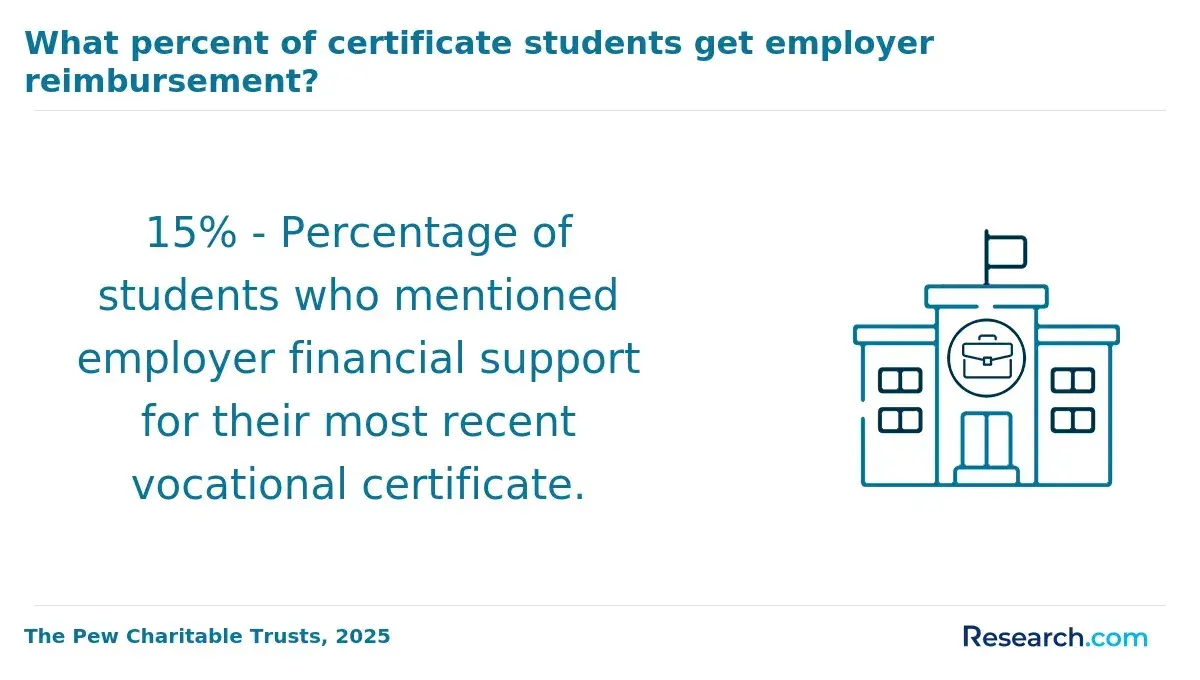
To control cost, start with public universities that accept transfer credit, ask employers about tuition reimbursement, file the FAFSA if eligible, and compare net price after grants or scholarships. Avoid using salary data as a guarantee of repayment capacity. Engineering salaries vary by region, industry, clearance requirements, work experience, and specialization.
What electrical engineering careers rely most on strong systems analysis skills?
Systems analysis is valuable in roles where engineers must understand interactions among hardware, software, signals, power, data, safety constraints, and users. These roles often involve design reviews, requirements analysis, simulation, validation testing, failure analysis, or optimization.
The table below highlights electrical engineering career paths where systems thinking is especially important. Job titles vary by employer, so students should read postings for required tools, domain knowledge, and degree expectations.
| Career path | Typical responsibilities | Systems analysis connection |
| Electrical systems engineer | Define requirements, coordinate subsystems, analyze performance, and support integration testing | Requires broad understanding of how components interact under real operating conditions |
| Power systems engineer | Analyze generation, transmission, distribution, protection, load flow, and grid reliability | Uses modeling to balance safety, reliability, efficiency, and renewable integration |
| Controls engineer | Design and tune feedback systems for machines, vehicles, processes, or robotics | Depends on stability analysis, dynamic modeling, sensor feedback, and controller design |
| Embedded systems engineer | Develop hardware-software systems for devices, vehicles, medical equipment, or industrial products | Connects electronics, firmware, timing, communication protocols, and reliability constraints |
| Signal processing engineer | Develop algorithms for audio, imaging, radar, communications, sensors, or biomedical data | Requires analysis of signals, noise, filters, transforms, and system response |
| Test and validation engineer | Create test plans, analyze failures, verify requirements, and improve product reliability | Uses data and system behavior to determine whether a design works as intended |
| RF or communications engineer | Design and evaluate wireless, antenna, microwave, satellite, or networked communication systems | Requires modeling of propagation, interference, bandwidth, and signal integrity |
Early-career graduates may start as electrical engineer I, associate systems engineer, test engineer, field applications engineer, controls engineer, power engineer, or hardware engineer. Advancement often comes from building domain expertise, documenting successful projects, learning industry tools, and developing the communication skills needed to explain technical trade-offs to non-engineers.
Students who like information architecture, knowledge systems, and technical documentation more than circuits or hardware may find that a library science masters better matches their strengths. Electrical engineering is best for learners who want to analyze physical and digital systems using math, physics, and design constraints.
What salary ranges can graduates with systems-focused electrical engineering degrees expect?
Salary outcomes depend on degree level, industry, region, clearance eligibility, internship history, technical specialization, and work experience. Systems-focused electrical engineering degrees can support access to higher-paying engineering roles, but no degree guarantees a specific salary.
The U.S. Bureau of Labor Statistics reported a May 2024 median annual wage of $111,910 for electrical engineers. Use that figure as a labor-market benchmark, not as a personal forecast. Entry-level roles may pay less, while specialized roles in semiconductors, defense, aerospace, energy, communications, or advanced computing may pay more depending on employer needs.
The table below summarizes salary context for related roles where systems analysis may be important. These are occupation-level benchmarks rather than degree-specific outcomes.
| Role category | Relevant systems focus | Salary context |
| Electrical engineer | Power, controls, electronics, systems design, testing, and integration | BLS May 2024 median annual wage: $111,910 |
| Electronics engineer | Communications, embedded systems, signal processing, defense electronics, and instrumentation | Often comparable to or higher than general electrical engineering roles depending on industry and specialization |
| Computer hardware engineer | Digital systems, processors, boards, embedded platforms, and hardware validation | Often requires strong hardware-software systems understanding and may favor candidates with computer engineering depth |
| Engineering manager | Technical leadership, design review, system requirements, budgets, and team coordination | Usually requires substantial engineering experience beyond the degree |
Students evaluating return on investment should compare expected debt with realistic early-career salaries in their region, not only national medians. A lower-cost program with strong accreditation, transfer credit acceptance, and relevant projects may outperform a more expensive program if it leads to the same employer screening outcomes.
Portfolio evidence can also affect early opportunities. Online students should save project documentation, simulations, test results, design reports, code repositories, and capstone materials that show how they analyze systems rather than simply complete assignments.
What is the job outlook for electrical engineers specializing in systems analysis in the U.S.?
The outlook is favorable for electrical engineers who can work across systems, but demand varies by industry. The U.S. Bureau of Labor Statistics projects employment of electrical and electronics engineers to grow 9% from 2024 to 2034. For students, that means the field is not only tied to traditional utilities and manufacturing; it is also connected to newer growth areas such as electrification, automation, communications, semiconductors, and intelligent devices.
Systems analysis skills are especially relevant because many employers now need engineers who can integrate older infrastructure with newer digital technologies. Examples include grid modernization, renewable energy integration, electric vehicle charging networks, industrial automation, connected medical devices, aerospace electronics, defense systems, and semiconductor manufacturing equipment.
AI is changing the work, but it is not eliminating the need for engineering judgment. AI-assisted simulation, code generation, predictive maintenance, and design optimization can speed up analysis. However, engineers still need to define requirements, validate models, interpret physical constraints, assess safety, and explain why a design is acceptable. Students who combine electrical engineering fundamentals with data analysis and simulation tools may be better positioned than those who rely only on manual calculations or only on software shortcuts.
Geography also matters. Regions with defense contractors, semiconductor facilities, energy infrastructure projects, aerospace employers, research labs, utilities, and advanced manufacturing clusters may offer more systems-oriented roles. Online students should investigate the employers near them before choosing electives, because a power systems track and an embedded systems track may lead to different local opportunities.
How can students evaluate and choose a reputable online electrical engineering program?
A reputable online electrical engineering program should be transparent about accreditation, curriculum, labs, faculty, student support, transfer credit, outcomes, and total cost. The best program is not always the highest-ranked or most expensive one; it is the one that matches your career goal, preparation level, schedule, and budget.
Use a structured evaluation process before applying. These steps help reduce the risk of choosing a program that looks convenient but does not support engineering career outcomes.
- Verify institutional accreditation through the school and the U.S. Department of Education-recognized accreditor.
- For bachelor's programs, confirm whether the specific electrical engineering program is ABET-accredited and whether the online delivery format is included.
- Map the curriculum against your target role, such as power systems, controls, embedded systems, communications, or signal processing.
- Ask how labs are completed, including whether students use lab kits, remote equipment, simulations, campus visits, or partner sites.
- Review faculty expertise and look for instructors who publish, consult, or work in systems-related electrical engineering areas.
- Request details on transfer credit, prerequisite sequencing, course availability, and whether required courses are offered every term.
- Compare total cost to completion, including fees, equipment, software, travel, and lost work time.
- Ask career services how online students access internships, employer events, resume support, and capstone project opportunities.
- Look for evidence of student design work, such as capstone descriptions, project showcases, competition teams, or employer-sponsored projects.
Red flags deserve attention. Be cautious if a school will not clearly answer accreditation questions, hides fees, advertises unusually fast completion without explaining prerequisites, lacks real lab requirements, uses vague course descriptions, or promises specific salaries after graduation. Engineering programs should be challenging and transparent.
Students should also choose based on fit. A low-cost public online program may be ideal for a transfer student who needs an ABET-accredited bachelor's degree. A higher-cost private or research-focused graduate program may make sense for an employed engineer seeking a specialized master's in signal processing, RF, controls, or power systems. A certificate may be enough for someone who already has an engineering degree and only needs targeted skills, but it usually will not replace a bachelor's degree for entry-level engineering roles.
Practical rule: choose the program that can prove three things before you enroll: recognized accreditation, systems-relevant coursework, and a realistic path to completion at a cost you can manage.
Other Things You Should Know About Electrical Engineering
Yes, some programs use mailed lab kits, simulation tools, remote lab equipment, or short campus residencies. Students should ask exactly which courses require hardware, whether equipment is included in fees, and whether any in-person attendance is mandatory.
Not always. Many electrical engineers in electronics, software-adjacent hardware, semiconductors, and private industry work without a PE license. Licensure is more important in areas involving public infrastructure, utilities, consulting, building systems, and work that must be signed and sealed under state engineering laws.
Students in online electrical engineering programs should be proficient in tools like MATLAB, Simulink, AutoCAD, and PSpice. Familiarity with programming languages such as Python and C++ is also crucial. These skills are essential for building systems analysis capabilities and succeeding in 2027's academic and professional landscape.
Many online electrical engineering bachelor’s programs require a capstone in the final year, usually worth 3 to 4 credit hours. The project often involves system modeling, simulation, documentation, and a final presentation, all of which directly support systems analysis skills.
References
- Our Visitor https://kimteducation.com/bachelor-of-systems-engineering/
- Top 10 Most Demanding Skills for Electrical Engineers [2025] https://smvec.ac.in/most-demanding-skills-for-electrical-engineers/
- Inside the Best Online Bachelor's in Electrical Engineering Degrees https://www.onlinecolleges.me/engineering-degrees/bachelors/electrical-engineering/
- Courses in Electrical & Computer Engineering | University at Albany https://www.albany.edu/undergraduate-bulletin/electrical-computer-engineering-courses.php
- Electrical Engineering Course with Practical Training https://stepinengineering.com/blog/electrical-engineering-course/
- Online Electrical Engineering Degrees - BSEE, MSEE https://www.onlineengineeringprograms.com/electrical
- Top Ten Electrical Engineering Courses for Career Growth | EEP https://electrical-engineering-portal.com/top-ten-electrical-engineering-courses-for-career-growth
- Electrical Engineering Job Market: 2026 Outlook & Pay https://pathwise.io/electrical-engineering-job-market/
- PSE400 Power Systems Engineering Course https://eesasha.com/pse/power-systems-engineering-course/
- Online Electrical Engineering Programs to Advance Your Career | EffortlessHR https://www.effortlesshr.com/blog/online-electrical-engineering-programs-to-advance-your-career/